Feeds:
Posts
Comments

Posts Tagged ‘nature’

[with 4 poems by Jane Mead]

What is Leafy yet has no Leaves?

On our way home Mike and I pull over at Newfound Gap but not for the Appalachian vistas: it’s our last stop to hunt lichens before we leave the Smokies. And maybe an opportunity to spread some lichen joy.

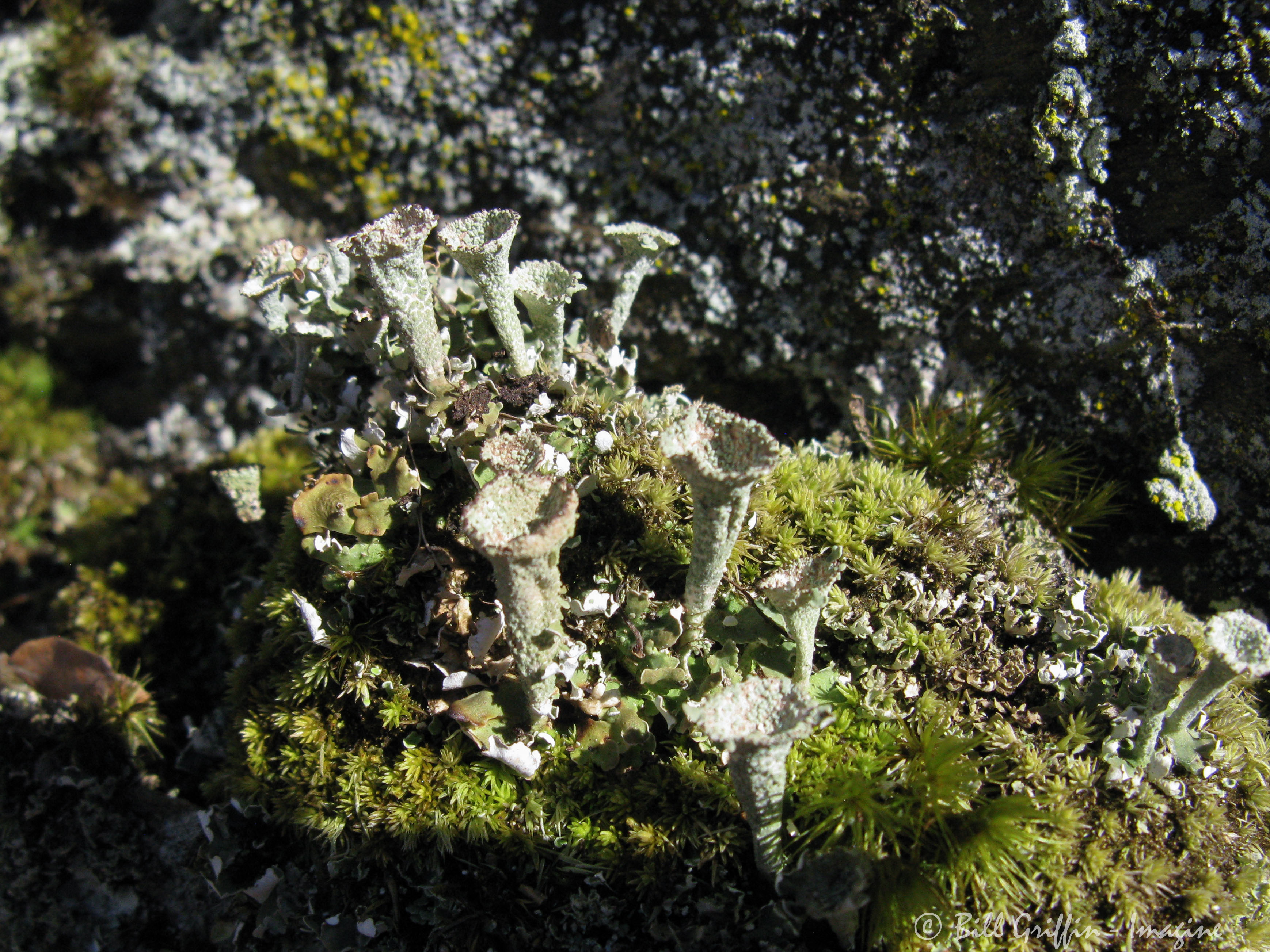
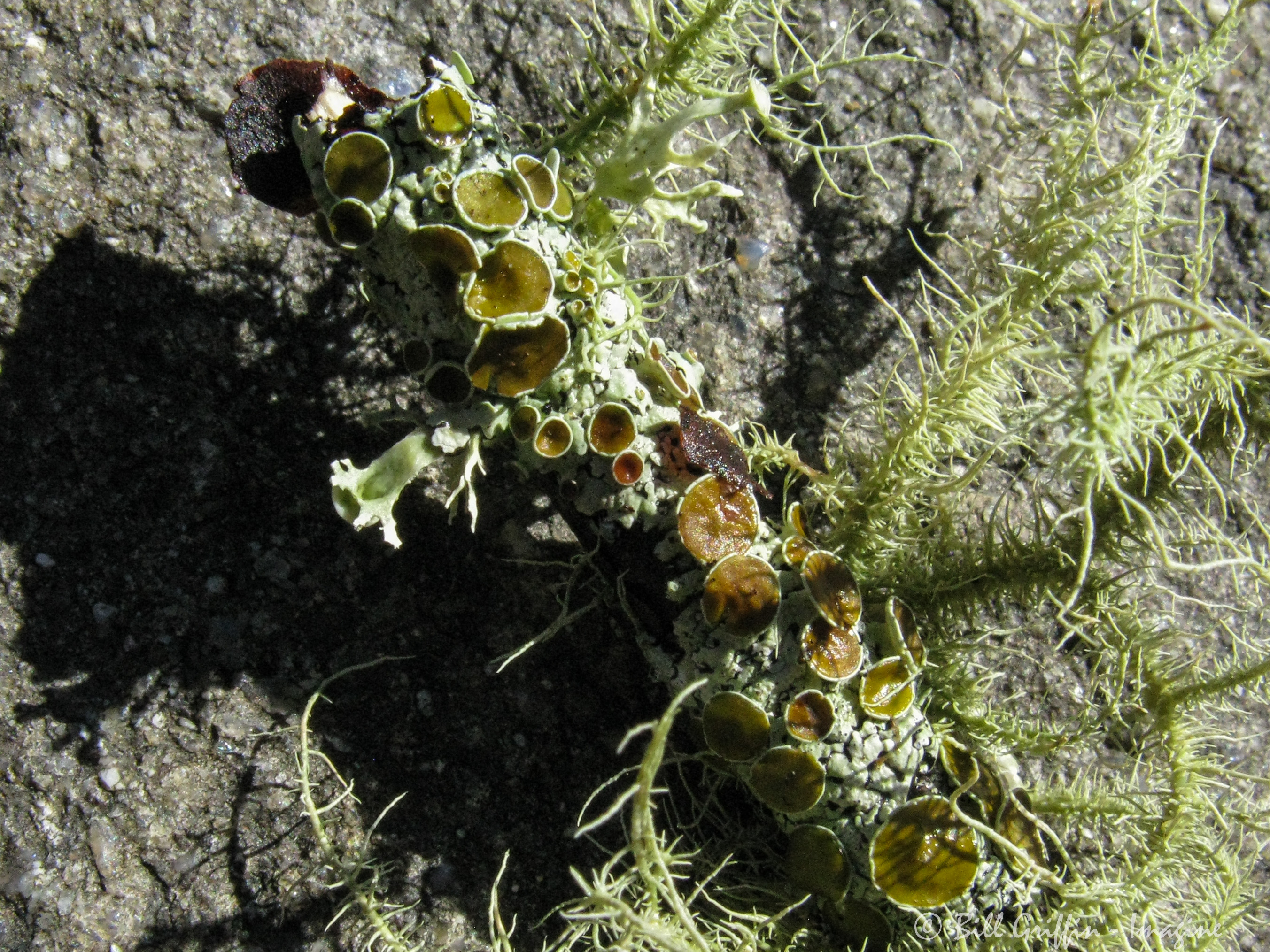
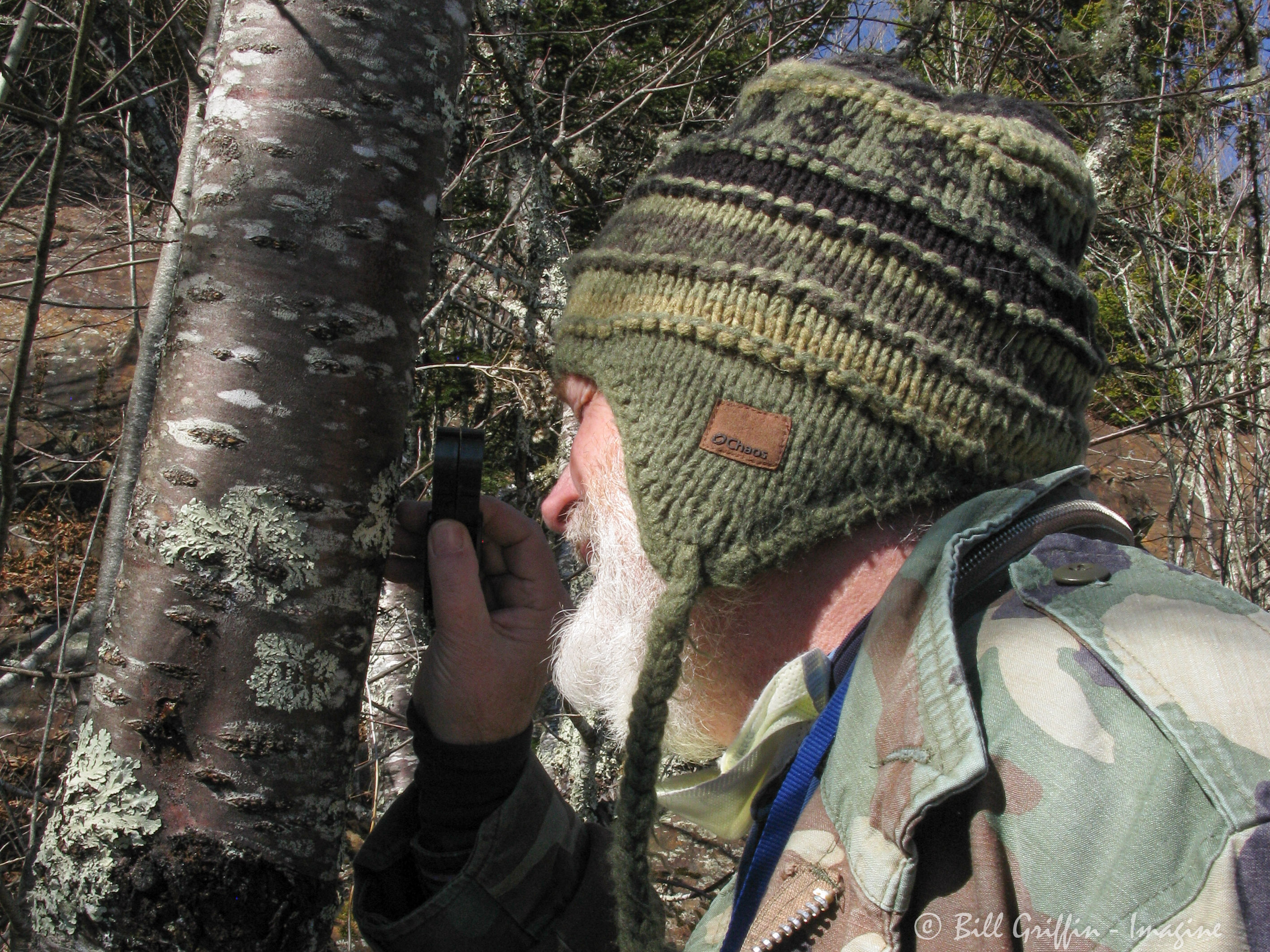
No need to hunt – stop moving long enough and a lichen will find you. Two old guys squinting through magnifying glasses at rocks and bark, though, and it also isn’t long before a passing family asks, “What gives?” “Looking at all the lichens,” Mike answers. “What’s a lichen?” Jackpot! Mike begins to tell their story . . . “a whole little world of fungus and algae” . . . while I wander on.

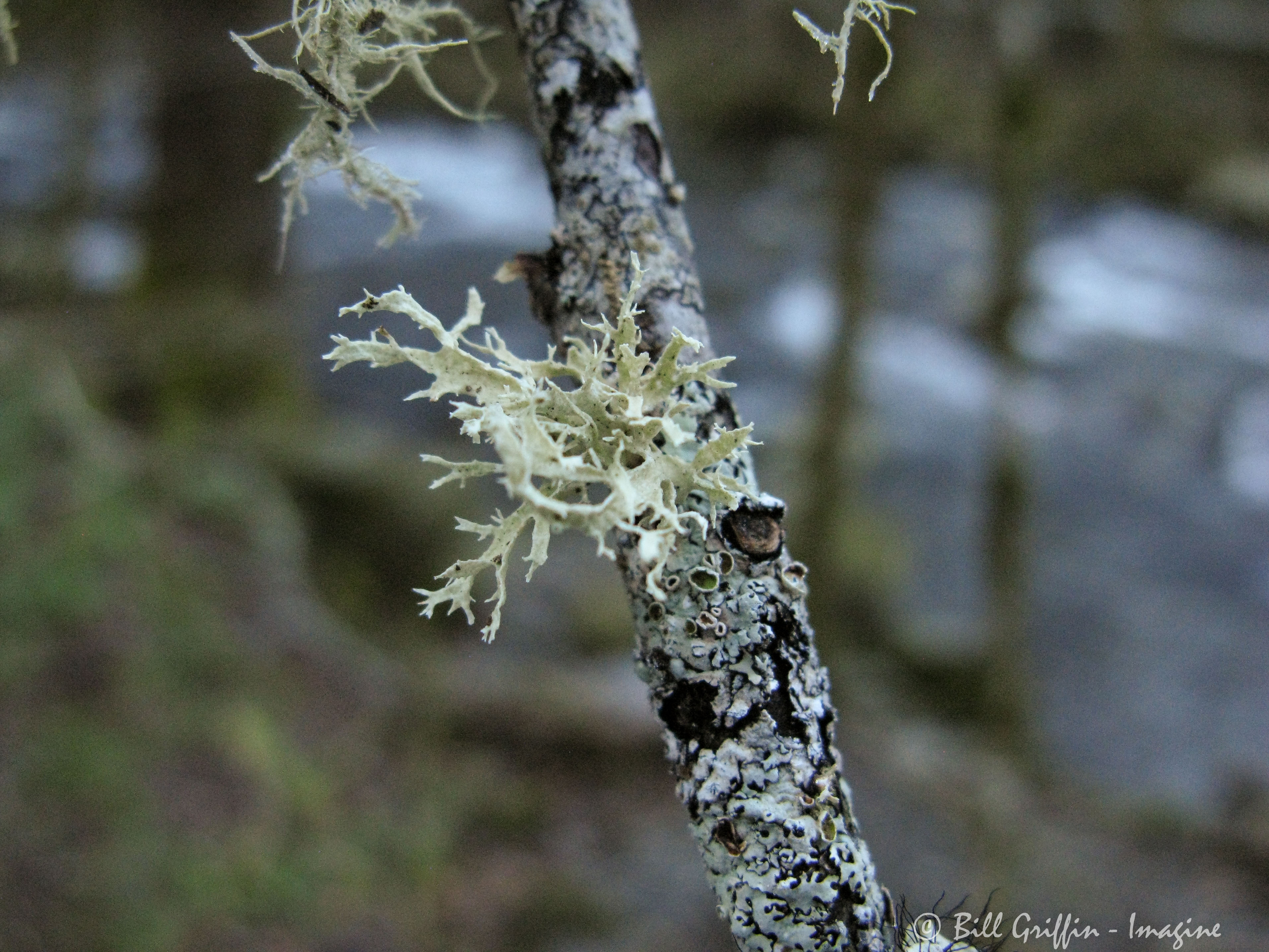
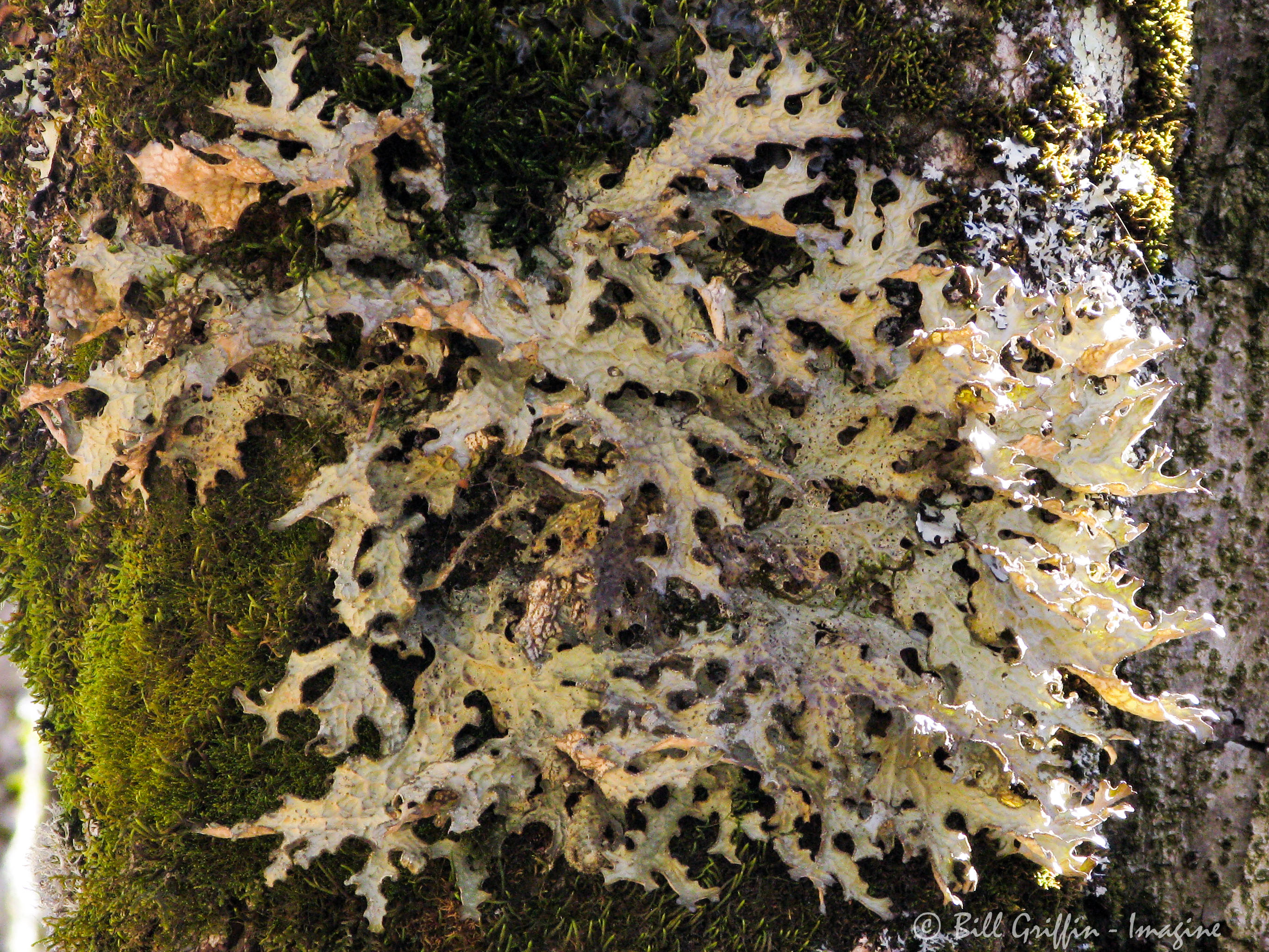
Now a couple asks me why I’ve raised my camera toward this one tree among the millions. Spreading from its bark are crooked fingers, hands of crones, veined, flattened, beseeching. “That’s lichen?” says the woman when I tell her. “I thought it looked like wind had plastered leaves against the trunk.” Exactly, that’s just how it looks. But it has no leaves!

Lobaria pulmonaria: Lungwort, you need a new name. Not even remotely kin to spiderworts, toothworts, liverworts, you are no wort at all – though your presence is atmosphere’s benediction. Draw deeply, my lungs! Exhale wonder! What shall we call you, Leafy without Leaves? Troll’s Greeting? Across the Aisle? Or maybe simply Lichen Welcome.

.     .     .     .     .     .     .

.     .     .     .     .     .     .
Three Candles
And a Bowerbird

I do not know why
the three candles must sit
before this oval mirror,

but they must. –
I do not know much
about beauty, though

its consequences
are clearly great – even
to the animals:

to the bowerbird
who steals what is blue,
decorates, paints

his house; to the peacock
who loves the otherwise
useless tail of the peacock –

the tail we love.
The feathers we steal.
Perhaps even to the sunflowers

turning in their Fibonacci
spirals the consequences
are great, or to the mathematical

dunes with ripples
in the equation of all things
windswept. Perhaps

mostly, then, to the wind.
Perhaps mostly to the bowerbird.
I cannot say.

But I light the candles: there is
joy in it. And in the mirror
also, there is joy.

Jane Mead (1958-2019)

.     .     .     .     .     .     .

These poems by Jane Mead appear in To the Wren: Collected & New Poems (Alice James Books, Farmington ME, © 2019). The book spans three decades of Mead’s life: running her family’s vineyards in Napa Valley; the death of her mother; her own cancer which ultimately took her life. All through her poetry there is a fierce seeking for identity – But always it’s either I or world. / World or I.  Relentlessly she seeks justice for the earth, for creatures, for the self. Poet Gerald Stern writes, “Jane Mead’s mission is to rescue—to search and rescue; and the mind, above all, does the work…. Her poems are a beautiful search for liberation and rebirth.” Nature is not something we write about; nature is what we are.

[Above poem excerpt by Jane Mead is from In Need of a World.
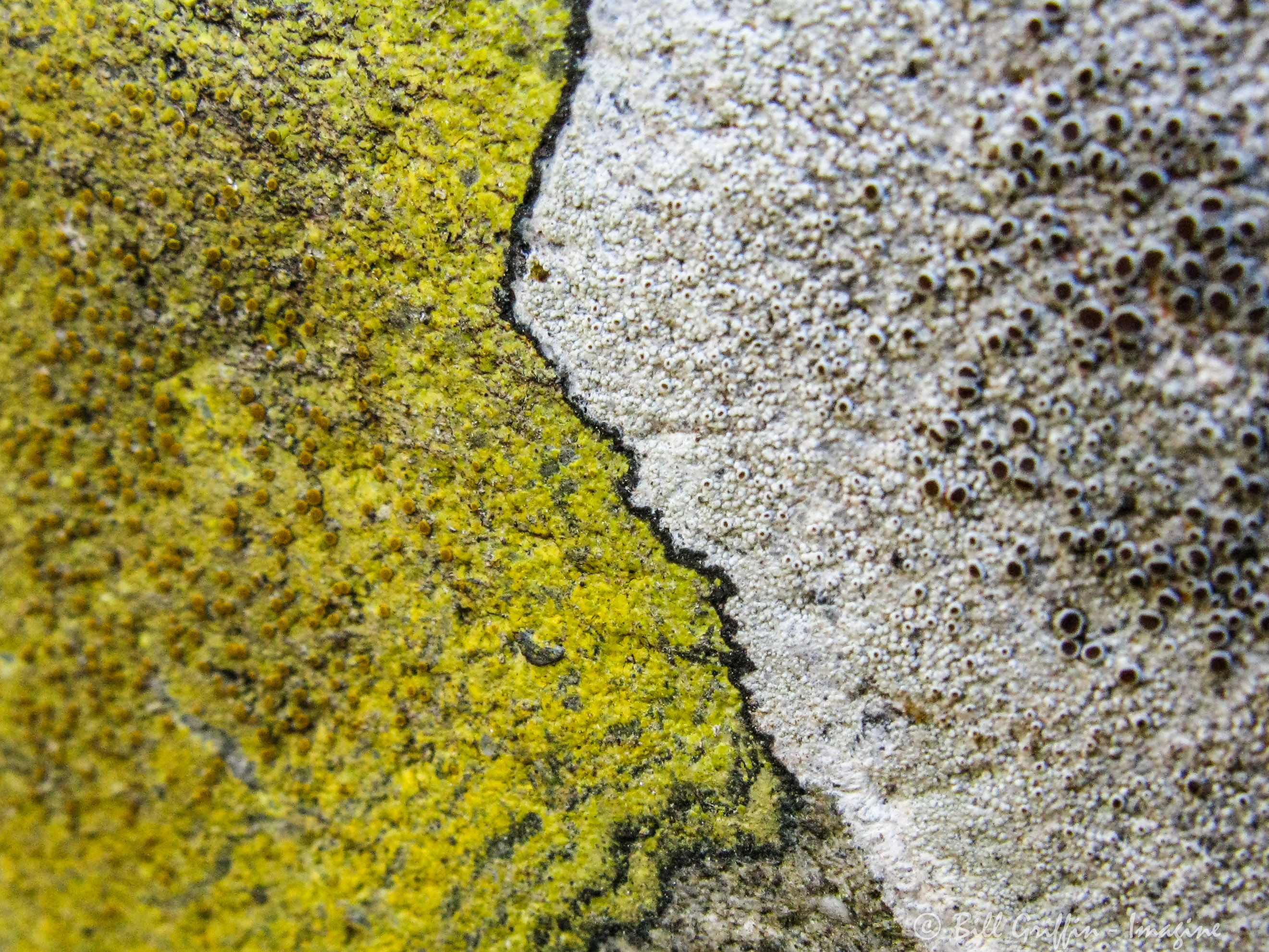
Three bright yellow lichens of the Smokies found at Newfound Gap:
= Xanthomendoza weberi
= Caloplaca falvovirescens, “Colonel Mustard”
= Caloplaca flavocitrina, “Continental Firecrackers”
++++  – – Species identification revised 2/28/2022 after review by Dr. Lendemer]

.     .     .     .     .     .     .

The Argument Against Us

The line of a man’s neck, bent
over welding, torchlight breaking
shadows on his face, hands cracked
into a parched map of fields he has woken –
the gods wanted us.

Think of their patient preparation:
the creature who left the rocking waves behind,
crawling up on some beach, the sun
suddenly becoming clear. Small thing
abandoning water for air, crooked body
not quite fit for either world, but the one
that finally made it. Think of all the others.

Much later, spine uncurls, jaw pulls back, brow-bone
recedes, and as day breaks over the dry plain
a rebellious boy takes an upright step
where primitive birds are shrieking above him.

He did it for nothing. He did it
against all odds. Bone of wrist, twist
of tooth, angel of atoms – an infinity
of courage sorted into fact
against the shining backdrop of the world.

The line of one man’s neck, bent –
torchlight breaking shadows on his face.

There was a creature who left the waves behind
and a naked child on a windy plain:
when the atom rips out into our only world
and we’re carried away on a wave of hot wind
I will love them no less: they are just how much
the gods wanted us.

Jane Mead (1958-2019)

.     .     .     .     .     .     .

The Geese

slicing this frozen sky know
where they are going –
and want to get there.

Their call, both strange
and familiar, calls
to the strange and familiar

heart, and the landscape
become the landscape
of being, which becomes

the bright silos and snowy
fields over which the nuanced
and muscular geese are calling.

Jane Mead (1958-2019)

.     .     .     .     .     .     .

To the Wren, No Difference
No Difference to the Jay

I came a long
way to believe
in the blue jay

and I did not cheat
anyone. I
came a long way –

through complexities
of bird-sound and calendar
to believe in nothing

before I believed
in the jay.

Jane Mead (1958-2019)

.     .     .     .     .     .     .

.     .     .     .     .     .     .

When Mike Barnett and I stopped at Newfound Gap (on US 441 smack in the middle of Great Smoky Mountains National Park) we were returning from the weekend lichens course at Tremont, part of the Southern Appalachian Naturalist Certification Program. We bow down in gratitude to John DiDiego, Education Director at Great Smoky Mountains Institute at Tremont, for convincing Dr. James Lendemer to teach this course. Dr. Lendemer is chief lichenologist at New York Botanical Gardens and literally wrote the book: Field Guide to the Lichens of Great Smoky Mountains National Park (which weighs 1.48 kg, not so much a “field guide” as an entire encyclopedia!).

Dr. Lendemer in his book names L. pulmonaria “Crown Jewel of America” – it is the biggest baddest lichen of them all. Thank you, James – we love lichens! Thank you GSMIT and SANCP and GSMNP. And thanks to all you little fungal hyphae, algal photobionts, cyanobacteria – you look mah-velous.

Resources:

More by and about Jane Mead at Poetry Foundation.

Field Guide to the Lichens of Great Smoky Mountains National Park, Erin A. Tripp and James C. Lendemer, University of Tennessee Press, Knoxville, © 2020.

Great Smoky Mountains Institute at Tremont, Southern Appalachian Naturalist Certification Program.

.     .     .     .     .     .     .

2019-02-09 Doughton Park Tree

Read Full Post »

[with poetry by William Stafford]

Limbs in the water, shrubby but clean across the stream, three weeks along no change in the heap. Grassy Creek backed up to meadowbank, no flood. Felled beech, bark gnawed away, most but not all. Incisored branches laid straight, unshifted, uneaten. Two brass shell casings, .380 auto.


.     .     .     .     .     .     .

After the first mile rhythm kicks in. Metronomic footfall. Downbeat rimshot, trekking poles. Syncopated squeaking pack straps (or is that my right knee cartilage?). Inhale . . . Exhale . . . Inhale.

All this rhythm discombobulates at the first uphill. Cross Grassy Creek on Hurt Bridge (named for the land donor, not the ensuing incline). Switchbacks, elevation, what is this jazz riff, 7/4 or 5/2 or both at once? Knee definitely squeaking. Inhale . Exhale . Inhale . Exhale.

Leveling out again, buck up, it wasn’t even half a mile. Here’s a turnoff and sign – spur trail to Grassy Creek Winery. Tempting . . . .

.     .     .     .     .     .     .

Sky

I like you with nothing. Are you
what I was? What I will be?
I look out there by the hour,
so clear, so sure. I could
smile, or frown – still nothing.

Be my father, be my mother,
great sleep of blue; reach
far within me; open doors,
find whatever is hiding; invite it
for many clear days in the sun.

When I turn away I know
you are there. We won’t forget
each other: every look is a promise.
Others can’t tell what you say
when it’s the blue voice, when
you come to the window and look for me.

Your word arches over
the roof all day. I know it
within my bowed head, where
the other sky listens.
You will bring me
everything when the time comes.

William Stafford (1914-1993)

.     .     .     .     .     .     .

Wherever God has sent me,
the meadowlarks were already there.
++++ from Put These in Your Pipe

Today’s poems are from The Way It Is: New & Selected Poems, William Stafford, Graywolf Press, 1998. The book contains poems chosen from all of William Stafford’s books from 1977 through 1991 plus a lengthy section of new poems from the last two years of his life. It includes the poem he wrote on the morning of his death.

This is a book you can simply open to any page, sit down, and listen to Mr. Stafford’s voice. It’s a book you can read straight through page by page and discover his deep connections: to the earth, the world, the daily, to you. William Stafford grew up on the Great Plains, lived in the West and Northwest, but especially he lived in the moment and in the particulars of place. He lived through World War II, Korea and Viet Nam as a pacifist. He taught, he argued, he encouraged, but most especially he felt deeply.

I’m reading the book in both ways, meandering trail of pages but also skipping about, bushwhacking. I’m hearing a voice that challenges my heart, pries it open, offers to heal.

.     .     .     .     .     .     .

You and Art

Your exact errors make a music
that nobody hears.
Your straying feet find the great dance,
walking alone.
And you live on a world where stumbling
always leads home.

Year after year fits over your face –
when there was youth, your talent
was youth;
later, you find your way by touch
where moss redeems the stone;

And you discover where music begins
before it makes any sound,
far in the mountains where canyons go
still as the always-falling, ever-new flakes of snow.

William Stafford (1914-1993)

.     .     .     .     .     .     .

For a Daughter Gone Away

1
When they shook the box, and poured out its chances,
you were appointed to be happy. Even in a prison
they would give you the good cell, one with warm pipes
through it. And one big dream arched over everything:
it was a play after that, and your voice found its range.
What happened reached back all the time, and “the octo,”
“the isped,” and other patterns with songs in them
came to you. Once on the Yukon you found a rock
shaped like a face, and better than keeping it, you placed
it carefully looking away, so that in the morning when
it woke up you were gone.

2
You aw the neighborhood, its trees growing and houses
being, and streets lying there to be run on;
you saved up afternoons, voluptuous warm old fenders
of Cadillacs in the sun, and then the turn of your thought
northward – blends of gold on scenes by Peace River . . .

3
It was always a show, life was – dress, manners –
and always time to walk slowly: here are the rich
who view with alarm and wonder about the world
that used to be tame (they wear good clothes, be courteous);
there are the poets and critics holding their notebooks
ready for ridicule or for the note expressing
amusement (they’re not for real, they perform; if you
take offense they can say, “I was just making
some art”); and here are the perceivers of injustice; they
never have to change expression; here are the officials,
the police, the military, all trying to dissemble
their sense of the power of their uniforms. (And here
at the end is a mirror – to complete the show for ourselves.)

4
Now, running alone in winter before dawn has come
I have heard from the trees a trilling sound, an owl I
suppose, a soft, hesitant voice, a woodwind, a breathy
note. Then it is quiet again, all the way out
in that space that goes on to the end of the world. And I think
of beings more lonely that we are, clinging to branches or drifting
wherever the air moves them through the dark and cold.
I make a sound back, those times, always trying for only
my place, one moving voice touching whatever is present
or might be, even what I cannot see when it comes.

William Stafford (1914-1993)

.     .     .     .     .     .     .

.     .     .     .     .     .     .
IMG_1827

Read Full Post »

[poems by Kathleen Wakefield]

A slew of 35 degree days and 20 degree nights make the rare and lovely snow hard as a skillet and slick as spilt grease (olive oil in my case). Our favorite trails want to maim us. I tried walking down the ridge back of our house and made it about twenty yards before I realized just one slip and I’d be sliding on my butt all the way into Dutchman Creek. When I turned back uphill I couldn’t take a step. My trekking poles wouldn’t pierce the crust.

Yesterday I ventured back to Grassy Creek and the MST for the first time in two weeks. Shaded areas were crunchy and slippy but sunkissed slopes had cleared. As I hiked I was specifically looking for leaves poking through the snow to photograph: cranefly orchid, wild ginger, pipsissewa. And then I came upon eight little alien life forms such as I’d never seen.

Imagine a thumb-sized lemon cupcake with a beak of orange icing in the center. The cupcake papers peel back to make a grungy collar. Each little cakelet is elevated on a 3 inch tangled stalk like chewed up rutabaga or moldy hemp. One of the cupcakes is broken and oozing white custard. And they are all peering through the snowy crust as if they intend to take over this dormant and unsuspecting planet.

I figured weird looking = fungus. After much searching I learned their identities – Calostoma lutrescens. Yellow-stalked puffball (not actually in the same clade as true puffballs), “pretty mouth,” or “hot lips.” Listed as common in the Southern Appalachians. Shoot, thought I’d found something new and rare. On the other hand there was only this one little cluster of eight fruits in four miles of trail; their little cupcakes will no doubt dry, shrivel, and disappear within a few days; I’d certainly never seen anything like them before.

Common does not preclude rare. Old they are, but new to me.

.     .     .     .     .     .     .

Why We Do Not Cut the Meadow Down

It establishes itself like the sea.
We ride its swells.
Two kinds of dragonfly, cobalt and crimson,
a pair of catbirds, orioles skim the tops of the grasses,
insect glints, multitudes unnamed.

Once it was an orchard, a woods,
before that a real sea that left us a lake.
Today the dry meadow is all fire and pulse –
hot sputter of crickets, bees cruising the nightshade,
the wings of a small white butterfly dipping at this and that,
yes and yes above the brasses where light assembles.

The meadow admits stray saplings, cottonwood and ash.
Opens to rain like a body full of desire.
The fringed flags of the grasses take note of
the least wind: when you think it’s still
a cloud of pollen swells and lifts.

The meadow does not mistake the seed –
scutcheoned, tasseled or winged – for anything else
Whatever comes into the meadow, earthworm, black beetle, ant,
feels the long fall of sunlight on its back
before it descends.

Kathleen Wakefield
+++ from Grip, Give and Sway, Silver Birch Press, © 2016

.     .     .     .     .     .     .

Reverent. Grateful. Seeking. The poems in Kathleen Wakefield’s Grip, Give and Sway require attention from the reader but they hold nothing back. Their beauty bewitches but also unsettles, like dawn when the dark forest holds its breath and anticipates light. Gradually the shapes of trees arise. I found myself reading each poem twice, then again, to take in everything it wanted to impart.

Each of the book’s four sections has its own subtle voice: imagistic and deeply rooted, lyrical and lingering on the tongue, lightly touching the moment to make it universal. In the final section the invisible stenographer observes and records the millennia and their follies but sometimes forsakes her reserve and becomes a participant. This is a book that inspires both deep feeling and deep thought, that invites contemplation about what is within us and what is without us.

.     .     .     .     .     .     .

The Invisible Stenographer Tries Not to Look in the Mirror

What would she see –
++++ ++++ ++++ transparency
of oxygen, or eyes smudged with kohl?

Head-binding wimple.
++++ ++++ ++++ Sky blue burkha.
Iron brank tearing into the tongue
which said too much.

A cat mask, candle-lit, trimmed
with gold sequins and feathers
++++ ++++ the color of a bishop’s robe.

Hematite lips, lips drawn in rose madder;
cheeks ash streaked; tattooed;
++++ white powdered, porcelain smooth

++++ A single pearl drop earring
dangling above a creamy ruff
++++ ++ of belgian lace
stained from centuries of use.

Is everything she sees
who she is?
++++ Why not a coiled forest of dreadlocks,
or the shapeliness of a head
shaved to the cool shine of the moon?

Or worry crossing a woman’s brow
++++ like cloud shadow troubling a wheatfield,
as if she were remembering a stove
on at thome, the child left
too long alone.

Kathleen Wakefield
+++ from Grip, Give and Sway, Silver Birch Press, © 2016

.     .     .     .     .     .     .

Rumors

All night the bee that’s clung
++++ to the sunflower, dark as
++++ ++++ coffee, waits for the sun

to warm its stilled apparatus,
++++ one leg ticking like the hand of a tiny clock
++++ ++++ that can’t get started.

See how the morning glories,
++++ like closed umbrellas glazed
++++ ++++ with rain, open in the cool air

to cobalt cups of heaven
++++ or the idea of heaven, gone
++++ ++++ by noon. The wood thrush

I’ve never seen repeats
++++ last night’s song, trill and lick
++++ ++++ spilling from the flute of its throat

as if it knows a rigorous joy,
++++ as if the world’s consolable.
++++ ++++ Blue sky, clear and widened

like a mind that’s looked into itself and beyond,
++++ is this what we fear, or long for?
++++ ++++ Caught

in the undertow of the linden’s shade,
++++ rumors of something sweet and light
++++ ++++ and never forgotten.

Kathleen Wakefield
+++ from Grip, Give and Sway, Silver Birch Press, © 2016

.     .     .     .     .     .     .

.     .     .     .     .     .     .

I learned about Kathleen Wakefield and her poetry through her friend Patricia Hooper, also featured in these pages. She has worked as a poet-in-the-schools and taught creative writing at the Eastman School of Music and University of Rochester.

Give, Grip and Sway and Silver Birch Press.

More about the Calostoma genus, which includes the irresistibly named and undeniably repugnant “tomato-in-aspic” fungus.


.     .     .     .     .     .     .

IMG_0768


Read Full Post »

« Newer Posts - Older Posts »