Feeds:
Posts
Comments

Posts Tagged ‘nature photography’

[with 3 poems by Maureen Ryan Griffin]

At the National Zoo in DC the Maned Wolves are sniffing them out – crunch; the Red River Hogs have dug up their entire enclosure to welcome them; the Big Cats just couldn’t care less about them; the River Otters bat them like shuttlecocks a few times, then crunch; the Keepers are busy calculating how much less protein to allot each daily feed because of all the crunching of them.

Here in Elkin an army of little workmen fill the trees, each holding in his middle arms and forward arms a tiny leaf blower set on max. Their women can’t resist that sound. Cedar waxwings can’t resist coming down from the heights where they usually hang out to nab nymphs climbing up the oak trees. Yellow-billed cuckoos are planning three broods this summer after checking out the buffet.

In 10th grade Mrs. Schilling made sure we learned the major orders – Lepidoptera, Diptera, Hymenoptera, etc., not least Hemiptera, the True Bugs (you’d better not call a Coleoptera a “bug”). Stink Bugs, you guys are old news after this year’s Hemiptera (suborder Homoptera) emergence — Magicicada septendecim Brood X, The Great Eastern Brood, magical indeed, to you we doff our hats. Second thought I’ll keep mine on.

.     .     .     .     .     .     .

Ten Thousand Cicadas Can’t Be Wrong

Summer sings sweet songs for her supper,
but her golden slippers aren’t for sale – no unless
you happen upon some celestial bargain basement
of goodly delights. There, nearly hidden under
last year’s turquoise silk sky, raspberries ripen, rampant,
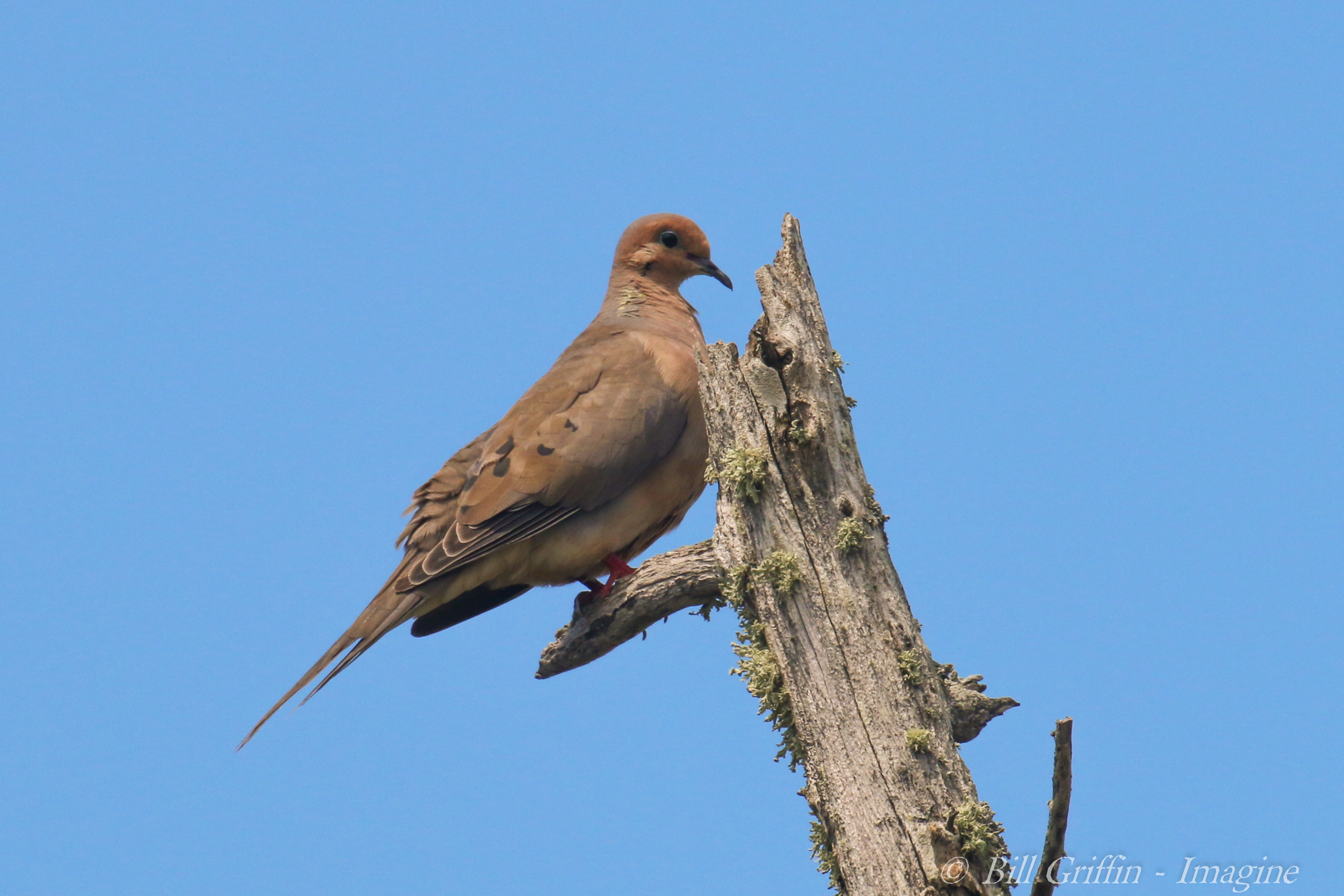
as the mourning dove’s plum notes whirr, winged
into basil-drenched dreams. All this, and watermelon, too,
and fireflies, and the daylilies from your mother’s
last garden, double-headed. Just don’t forget
there are chiggers, and mosquitoes, of course, and that heat
everyone speaks of, muggy, tasting of
mildewed shower shoes, sounding for all the world like
kudzu unfurling in Jackson, Mississippi, where Janis Joplin
might have sung supper songs of her own. I don’t know.
I’ve never been there. I do know freedom’s not
just another word for nothin’ left to lose, and that you’ll never
find that bargain basement, no matter how long you look.
Listen, ten thousand cicadas can’t be wrong.
Anybody knows larvae never lie, not as long as
persimmons pucker and peaches procrastinate.
Lollygag in your hammock if you must, whenever
the tomatoes lean, but remember
that the persnickety bookie of guilt and doubt
is keeping score. You can’t hide but you can
run. You can steal the chiggers right out from under
the blackberries. You can rob from the raspberries
in bruised homage to the summer afternoon
the two most beautiful words in the English language,
according to Henry James, whose afternoons
are elsewhere now. Tu connais Uncle Death?
No worries. Aunt Morning will waltz willfully
wanton beyond noon, yea, and onward, well past dusk,
in Sister Summer’s silver slippers, the ones
deep in her closet that she seldom thinks to wear.

Maureen Ryan Griffin

.     .     .     .     .     .     .

.     .     .     .     .     .     .
Could there be a more perfect moment to re-read Maureen Ryan Griffin’s book Ten Thousand Cicadas Can’t Be Wrong? Her poetry is often about the changing seasons, the changes in our lives, the mile markers and wrong turns and new pathways discovered in the process. Nature and human nature interwoven, the book is rich and broad-ranging; I’d add even more selections from the Ten Thousand but when the sun comes out the little leaf-blowers rev up and soon I can’t hear myself think.

[Rather than 10 to the 4th we’re dealing with 10 to the 13th = tens of trillions. But they are nice and crunchy.]

Maureen (no kin to this writer) is best known as “midwife to dreams” for the many writers she has instructed, encouraged, and inspired through the years. Visit her website WORDPLAY and learn more about “spinning words into gold” through her contributions to the award-winning CHARLOTTE READERS PODCAST.

.     .     .     .     .     .     .

I’d like to think it isn’t greed

impelling us
to gather
far beyond need, whatever
our predilection –
++++++ blackberries
++++++ buckeyes
++++++ daylilies
++++++ fireflies
++++++ olive shells
++++++ sand dollars
++++++ stones –
++++++++++++ rather,
the feel of familiar
texture, convexity,
the comfort
of a particular weight
cradled in a palm.
Who knows
what it is that sings
as we fill
+++ baskets to overflowing
with our own peculiar harvests.
We feel the lure
+++ cull just one more
as if it were important to
keep this bit of fruit
from what we think of
as waste, to save
another shell from being
shattered by the sea,
to make ourselves a home among
the things of this world.

Maureen Ryan Griffin

.     .     .     .     .     .     .

When the Leaves Are in the Water

When my brother and I walked
through these woods, he pointed out
subtleties of bark and branches,
read growth rings, spoke of drought
and rainy years. Said I look

like Mother. What I love
about trees: they endure
the seasons. I yearn
to be sweet gum, sugar maple.
My brother named me

ironwood, divined my rusting
heart, too hard to yield
forgiveness. Would we agree on oak,
my gallnuts early griefs
painstakingly transformed?

Arriving at the creek bank,
I let silt run through my fingers,
minute bits of pebble
with unseen roughness.
I wasn’t looking when my hands

turned into hers. I plunge them
into cold creek water.
I once thought
forgiving her was clean,
balsam on a wound

to make it heal. It’s more
like washing hands
before a meal. I have to do it
over and over: forgiveness
to the third power. I feel

it’s time, but loss spirals
deeper each succeeding
season. What will I be without
my holy anger – stripped bare
like the skeleton of a tree,

my stipule scars, my leaf
scars showing. Trees are born
to nakedness – I’m not ready.
My brother told me
the Cherokee believe

it’s a time of great power
when the leaves are in the water.
I fling in handfuls of
hard memories, watch the current
carry them away.

Maureen Ryan Griffin
all selections from Ten Thousand Cicadas Can’t Be Wrong, New and Selected Poems, Main Street Rag Publishing, © 2014 Maureen Ryan Griffin

Magicicada

Brood X

.     .     .     .     .     .     .

.     .     .     .     .     .     .
 

IMG_6432

Read Full Post »

[an essayette by poet Ross Gay and a poem by Bill Griffin]

Joy is Such a Human Madness: The Duff Between Us

Or, like this: in healthy forests, which we might imagine to exist mostly above ground, and be wrong in our imagining, given as the bulk of the tree, the roots, are reaching through the earth below, there exists a constant communication between those roots and mycelium, where often the ill or weak or stressed are supported by the strong and surplused.

By which I mean a tree over there needs nitrogen, and a nearby tree has extra, so the hyphae (so close to hyphen, the handshake of the punctuation world), the fungal ambulances, ferry it over. Constantly. This tree to that. That to this. And that in a tablespoon of rich fungal duff (a delight: the phrase fungal duff, meaning a healthy forest soil, swirling with the living the dead make) are miles and miles of hyphae, handshakes, who get a little sugar for their work. The pronoun who turned the mushrooms into people, yes it did. Evolved the people into mushrooms.

Because in trying to articulate what, perhaps, joy is, it has occurred to me that among other things–the trees and the mushrooms have shown me this–joy is the mostly invisible, the underground union between us, you and me, which is, among other things, the great fact of our life and the lives of everyone and thing we love going away. If we sink a spoon into that fact, into the duff between us, we will find it teeming. It will look like all the books ever written. It will look like all the nerves in a body. We might call it sorrow, but we might call it a union, one that, once we notice it, once we bring it into the light, might become flower and food. Might be joy.

from The Book of Delights, Ross Gay, Algonquin books of Chapel Hill, © 2019

.     .     .     .     .     .     .

My daughter Margaret gave me this book by Ross Gay for my birthday in 2020 and it’s been waiting patiently with its companions on the to-be-read-someday shelf until this month. I flipped it open and read a couple of the daily musings on delight (a page or two, observations and reflections that Ross decided half-way through the project to call essayettes). They are like a Whitman’s Sampler – once you’ve opened the box you know you’re going to eat every one.

So I’ve left the book beside the couch and picked it up when random minutes offered themselves unfilled. It’s hard to read just one or two, though – coffee has cooled and soup has threatened to boil over.

This particular entry, though, stopped me in my tracks. I read it over and over. Not only because it followed the amazing interview with Merlin Sheldrake I had just discovered in the May issue of The Sun, all about mycorrhizal networks and sentient fungi and the meaning of life and everything, but because of the way Ross Gay interweaves joy and sorrow and delight and death. Maybe he is right, as many of his essayettes seem to suggest – if we face the one thing we all share in common, which is death, and even God forbid talk about it, maybe we can discover that it is possible to step past the fear into a space that reveals joy – delight – every day.

Which is to say: Hey, life is suffering – along the way let’s you and I share a little delight.

.     .     .     .     .     .     .


Rule #1 No Hurting

I tell you this while you whack me
with your little plastic hammer: what I mean
is no hurting other people, not that you
could really damage me
with those little boy hands I love
but sometimes it does sting. Maybe I’m worried
about your buddies at playschool: hitting
begets automatic time out. Or do I mean
your Mom and Dad: see their tears
when you fall? When you are bruised?
And pain you can’t see: someday
you are bound to bruise their hearts.

How we do hurt each other, and how
could it be otherwise, two souls
all entangled while we stumble,
lash out, grab for help, and I
won’t tell you now but I know this:
you will hurt me too, although I
will have handed you the knife
of loving you and hoping
life won’t leave its scars.
But this is what Rule #1 doesn’t mean:
No hurting inside. I’m sorry, Grandson,
no platitudes about for your own good
you will suffer because you too
are human and our world makes no
distinction. Just remember Rule #2:
I will cry with you.

Bill Griffin

from Tar River Poetry, Vol. 55, Nr. 2; Spring, 2015

.     .     .     .     .     .     .

Additional links for Ross Gay:

Review of The Book of Delights

Books

The On Being Project


.     .     .     .     .     .     .

Read Full Post »

Forest Bathing Trail, Grassy Creek off Mountains-to-Sea Trail

[with poems by Lucinda Trew and Jane Craven]

Last week I took a walk in the woods with my oldest friend Bill (distanced by 2-meter dog leash). We were forest bathing (shinrin yoku): phones off, listening to Grassy Creek accompany our rustic trail, smelling leafmold, fungus, pines, going nowhere and getting there; reflecting on the moment, simmering in our conjoined past which stretches all the way back to our grandfathers who worked together on the same railroad 60 years ago.

Every trail, though, has a way of turning. Almost back to our cars, Bill happened to ask, “What are you going to do with your stuff before you die?” Us old guys, especially old poets, think about dying. Good story fodder. Let me tell you the one about . . . . Just not usually as concrete as what will become of our earthly matter when no one wants it any more.

Stoff: German, translates as substance. Two synonyms for Oxygen are Sauerstoff and Atemluft, the first meaning acid substance (early chemists’ misconception that all acids must contain oxygen) and the second meaning air for breathing. We humans can live about 3 minutes without oxygen before our brains lose neurons and our substance begins to degrade, but oxygen is pure poison to many microorganisms and tricky to deal with even for our own mammal cells (or why else would anti-oxidants be such a big deal?).

Stuff is pretty frangible. Are the moment’s mental occupations or the day’s consuming concerns any more tangible? Bill shared with me a photo of his granddad Enoch Blackley in his engineer’s gear from the 30’s, outline of pocket watch visible through the denim of his overalls. I have one very similar of my granddaddy Peewee Griffin. The bit of stuff comprising those old prints, grains of silver on paper, is mere milligrams of matter; the cubic volume of memory those images reveal is larger than many lives.

My Stoff – carbon, nitrogen, phosporus – will feed the trees. May I leave behind the tempo of my walk, the sound of laughter, honest tears of compassion, a couple of good poems. Maybe that’ll do.

.     .     .     .    .     .     .

These two poems are from Kakalak 2020, the annual anthology of Carolina poets, by writers whom I don’t know and hadn’t read before. Lucinda Trew’s Of Stars fills me with wonder, all the universe in a crow-eye seed, somewhere within the secrets of universe wanting to be spilled out. Jane Craven’s Speaking of the World does just that, the image of a small flower expanding to hold the pain and contradictions of the most intimate relationships.

Metaphor is the tool that communicates the mysteries which swirl around us and within us, the inexplicable spark of our synapses, the spin of our electrons. Some things can’t be spoken, only sung.

Forest Bathing Trail, Grassy Creek off Mountains-to-Sea Trail

.     .     .     .    .     .     .

Of Stars
If you wish to make an apple pie from scratch, you must first invent the universe. – Carl Sagan

The conjuring orchard man
holds hemispheres in sturdy hands
cupping chaos and creation
presenting apple halves
for inspection
and the revelation

of stars
a crop circle enigma etched
within sweet flesh
five symmetrical rays cradling
crow-eye seeds
small enough to spit
vast enough to hold eternity –
the very dust and stuff

of stars
carbon, nitrogen, oxygen
phosphorus – the breath and wingbeat
of birds who rise from reeds and nest

the rush and thrum
of boys who scrabble up bark, swagger
wave applewood swords

the sway and silhouette
of branches, girls dancing
longing for the moon

of pulse and surge
of cities, song, engines
prayer

the earthen realm
of roots and worm, turnips
and bones

the axial turn
of tides and shells
molecular chains

and of apples
twisted exquisitely, evenly
in half
spilling stars
and seeds and secrets
of the universe

Lucinda Trew, Kakalak 2020, Main Street Rag Publishing Company

.     .     .     .    .     .     .

Forest Bathing Trail, Grassy Creek off Mountains-to-Sea Trail

.     .     .     .    .     .     .

Speaking of the World

Pinprick faces open in a violet fever behind my house – swathes
of mazus flowering downhill. A cultivar

from the Himalayas, it’s bred to survive scarcity and climate extremes.

In your world, the doctors have gone, left your body

a prescribed burn, lightly
elevated in a rented hospital bed, handfuls of pills labeled for days.

The trees, to a one, freeze beneath a milky lichen – and you who sleep

year round with open windows are speaking of the world –
of the last deer you saw weaving through balsam, of the bear

who bent double the birdfeeder, wild turkeys and their long-
neck chicks, a lone slavering coyote crossing the yard.

Grief, you say
three times,
each a dry leaf
papering
from your lips.

I left you in the boreal world, rushed back to my own life.
And I admit this with unnatural ease, like there’s no shame

in turning toward the sun, in enduring.

Jane Craven, Kakalak 2020, Main Street Rag Publishing Company

.     .     .     .    .     .     .

Lucinda Trew: http://trewwords.com/about/
Jane Craven: https://www.janecraven.com/bio

.     .     .     .    .     .     .

2020-11-03b Doughton Park Tree

Read Full Post »

« Newer Posts - Older Posts »