Feeds:
Posts
Comments

Posts Tagged ‘Kim Hayes’

 . 
[with 4 poems by Kim Hayes]
 . 
Winter Wind and Chimes
 . 
All this winter, the wind has moaned,
its deep modal harmonies
rolling up the valley’s throat
like a procession of monks, chanting.
And at the darkened door,
they strike the chimes –
cowled visitors
shifting restlessly, foot to foot,
on the icy steps.
 . 
All this winter, like metronomes,
two ghostly porch chairs
have, in unison, rocked a rhythm
for strange sulfurous chords;
invented, frenzied arpeggios;
or just one strident not repeated,
brassy as a storefront bell –
wind and chimes tangled in
an endless ensemble.
 . 
All this winter, she has listened,
even going out once to tie a string
around one pitchless chime,
hoping to set it better in tune.
But the wind worried loose the knot
and snatched it off.
Come spring, she thought,
I will take down these chimes.
 . 
All this winter, the wind has composed
for chimes and chairs and a woman
who will, on second thought,
let the wind have its way,
leave the chimes alone
to be played by softer breezes
on a warm summer day.
 . 
Kim Hayes
from As If She Spoke in Tongues, Grateful Steps Foundation, Asheville, NC; © 2023
 . 
❦ ❦ ❦
 . 
Technical challenge, that’s one of the reasons I love choral singing. Will I even be able to learn this tenor part with its oddball intervals and syncopation? Can I project a clear open tone all the way up to that G sharp, maybe the A? Can I keep balance & rhythm and avoid falling off the stage when the time signature flips from 6/8 to 2/2? Can I listen so perfectly to this alto standing next to me that our voices may create something beyond the sum of us two?
 . 
This last challenge transcends technical. In an ensemble, the emphasis is not on the individual but the communal voice. Perhaps blend and modulation are learned skills, but the birth of art is in the give and take, the sharing, the group coming together as a single organism. What a fine metaphor for poetry. Writer and reader are not performer and audience. The poet can learn craft, devise image and simile, tinker with language and rhythm, but all the poem’s music is flat until the reader breathes it in and the lines begin to sing in her heart.
 . 
This is the spark both music and poetry yearn to ignite: beyond technical and communal, the beauty and truth which burn into us and set us afire. Several times in this season of many rehearsals and concerts I have felt a moment’s elevation to that mysterious plateau. In a blink, the magic of notes, harmonies, lyrical language swell my heart until I can’t read the score for my tears. I couldn’t say the epiphany arises from the instruments, from the lines of verse, from the voices surrounding me – it takes life from all of these together. The music communicates its message directly to the heart.
 . 
The choir releases its music into the air. The poet surrenders her lines to the universe. A new language is revealed. A new voice speaks from which some ear, some mind may discover some new life never before imagined. Our spirit breathes in these vaporous things and is exalted.
 . 
 . 
❦ ❦ ❦
 . 
The Grandmothers
 . 
Thanksgiving morning,
before the sun, I wait
in the dark kitchen
for the gentle ghosts
of my grandmothers.
 . 
I welcome them
as I heat the oven,
feel them gathering,
like the warm aromas
of brown sugar and
cinnamon, to watch me
as I baste and bake.
 . 
In the drifting dust of sifted flour,
their hands guide mine:
a pinch more of this or
a little salt in the broth or
give that a stir before it sticks.
 . 
A I set the table, they lean in,
sighing, fingers smoothing,
lingering over each fine stitch
in the embroidered
tablecloth, handed down,
daughter to daughter;
they smile as I take out
the old rose-patterned
wedding china.
 . 
And so, they keep me company,
chat, chuckle and chide
all morning long as they
share my kitchen,
the grandmothers who,
by being who there were,
make me who I am.
 . 
Kim Hayes
from As If She Spoke in Tongues, Grateful Steps Foundation, Asheville, NC; © 2023
 . 
❦ ❦ ❦
 . 
. . . as long as she kept [her words] to herself, they were one language. Her language. It was only when she gave them up, like babies for adoption, that they slipped from her grasp and became subject to interpretation. . . . No translation was the same. No understanding was universal. The language of her words unfolded into many languages, many understandings, as if she spoke in tongues.
 . 
From the Author’s Note in As If She Spoke in Tongues by Kim Hayes, this is a mysterious and provoking expression of the potential and power of words. Innocent-sounding words spoken with heat might spark a conflagration. Words fumbling for meaning may yet reach their mark and forge strong bonds. Even we writers with the opportunity to pause and ponder, we who strive to select from all options the perfect words, can never know how they will be received. From this mystery rises poetry’s power to connect.
 . 
The poems in Kim’s collection connect in all these mysterious ways. Her poems span generations and geographies. The speaker may be obvious and defined or intentionally obscure, thereby becoming universal. We humans are not, thank all stars, telepathic. Therefore from the writer’s images and memories we must create our own imagery and resurrect our own memories. And doesn’t this surprising connection we discover within ourselves also fire a feeling of connection to the writer?
 . 
We cast our words into the breeze like feathered seeds and cannot know what will bloom. As in this line from Adrienne Rich, But poems are like dreams: in them you put what you don’t know you know. And these lines from Poems for Sale by Kim Hayes: a poem like a trick of the eye, / peripheral flicker – / what might or might not be, / glimpsed and gone; // I have for you today . . .
 . 
[Order As If She Spoke in Tongues   HERE  ]
 . 
 . 
❦ ❦ ❦
 . 
Rocks and Hard Places
 . 
Barefoot, I walk
on a dream road
paved with all your
rocks and hard places,
misery and discontent.
“I only had to bury him once,” you said.
“It’s the god-damned memories that won’t
stay in the ground.”
 . 
Sharp-honed memories like flint shards,
chiseled by every hard place
you ever knew ( and there were plenty),
stabbing themselves upward to the surface,
resurrected and designed to cut deep.
 . 
My feet are bleeding now.
 . 
But tonight, I still plan to dance
with your unearthed undead,
twirling on yet another hard place,
by bloody footprints leaving
gritty, blushing rosettes,
 . 
while you wait somewhere in the dark,
another rock in your hand.
 . 
Kim Hayes
from As If She Spoke in Tongues, Grateful Steps Foundation, Asheville, NC; © 2023
 . 
 . 
❦ ❦ ❦
 . 
My Heart of Stone
 . 
Running a thumb over
the worn and rounded edges
of this cold, found rock,
I try to think
of strength.
 . 
This worry stone,
gemstone,
whetstone,
pocked and veined
with sparks
of fool’s gold, cools
 . 
as I hold it,
no heart to part
with it today, although
I have often thought of
giving it away, until
 . 
feeling the pull of it,
charged, magnetic,
I always come home,
press my heart of stone
into the warm palm of
your open hand.
 . 
Kim Hayes
from As If She Spoke in Tongues, Grateful Steps Foundation, Asheville, NC; © 2023
 . 
 . 
❦ ❦ ❦
 . 
IMG_1948
 . 

Read Full Post »

 . 
[with poems by the 2023 Tremont Poetry Cohort]
 . 
Awaken
 .  . 
You came because the river quiets your soul,
the sassafras soothes and sweetgum settles.
Have you gotten your breath? Do you remember who you are?
Leave us, now; it’s our time to sleep. You go, awake.
 . 
Sarah Small / Alcoa, Tennessee
postcard – Mother bear & cubs
 . 
❦ ❦ ❦
 . 
The Little River is singing ‘October Blues’ and I can listen if I’ll just roll down my window. Leaving the Smokies on a Sunday morning, who would have imagined such a glut of traffic, but I can make the choice to gentle my right foot and blend with the flow. And here on the right comes another choice: I pull off at Chimneys and flush the press of schedule and itinerary from my mind.
 . 
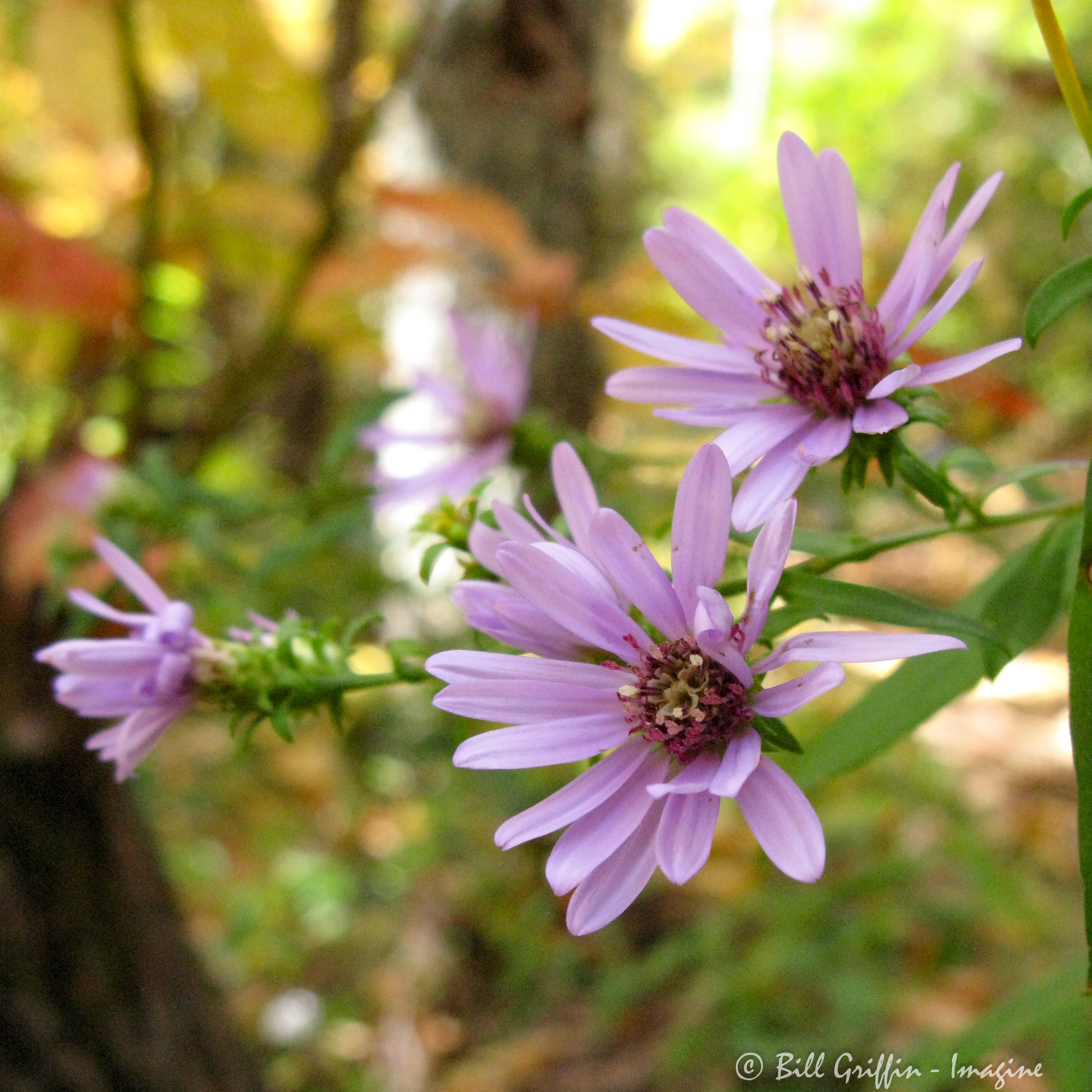
A ten minute climb into old growth hardwood cove and road noise no longer penetrates. Every few steps another chipmunk whistles its alarm. Fecund – whoever coined that word was smelling this place. The carpet is bright green hepatica saving up to flower in just a few months, the understory is summer seedhead bounty and autumn wood asters blooming like crazy, and the overstory is way up there, crooked and knobbed, reaching and mingling and only allowing an occasional glimpse of Balsam Point.
 . 
I’ve been waiting since breakfast and now I pull out the small slip of lined paper Renée gave me, a personal parting note; she prepared one for each of us in the cohort. “Read it later,” she had said. I’m going to trust she won’t mind if I share one line: “I came to this conference with some heaviness and I’m leaving with light and a sense of belonging.” A mystery, a wonder, an inexplicable blessing that in just a few days eight strangers can so deeply connect.
 . 
 . 
❦ ❦ ❦
 . 
[untitled]
 . 
You’re not a flightless bird,
+++++ your wings held tight
against your breast;
+++++ unfurl your plumage,
Go from here with boldness,
+++++ revel in your glory.
 . 
Jeannine Jordan / Lima, Ohio
postcard – Wild Turkey
 . 
 . 
Community
(the Park speaks)
 . 
Inspire, breath in, be filled with spirit –
think I’d tip you like a funnel and pour
right in? Look around this circle and take
a lesson from the Queen of Connection.
 . 
Bill Griffin / Elkin, North Carolina
postcard – entrance to GSMNP
 . 
❦ ❦ ❦
 . 
Frank fans the deck and asks us each to select one. They’re postcards, of Great Smoky Mountains National Park, face down so we can’t see what we’ve picked. “The card has picked you,” Frank suggests. “What is it telling you about why you are here and what you’ll take with you when you leave?”
 . 
This is our last exercise during our last session of this inaugural Tremont Writers’ Conference. Can it be only three days ago that Frank X Walker introduced himself to us as an artist who speaks Poet? Besides the language of linebreak and word choice, what Frank so incisively speaks is creativity, challenge, connection, community. Oh yes, we learn to critique each other’s poems through his quiet observations. Yes, we engage in color studies and sound studies and we write to prompts. But Frank is not teaching us to be writers – he is teaching us to be human. His carefully considered comments touch our gifts and expose our needs, and even more than that he weaves us seven into a whole whose true commitment is to bring out the best in each other.
 . 
After ten or fifteen minutes of writing – channeling the voice we are hearing in our card’s image – Frank stops us and presents his next to last prompt: now break that all down into four lines. We probably should have seen this coming. We really aren’t ready, though, for his final instruction. He has us each pass our card two people to the left, write our home address on the fresh card we’re holding, then pass it back right to its original owner. Each of us will write our four-line poem on our card and mail it, and in a few days we will each receive a poem from one other member of the cohort.
 . 
We won’t be driving home from this gathering to resume our scribbling in isolation. We will be watching the mailbox (and text messages) with a tingle. We are now a creative family. We are connected.
 . 
 . 
❦ ❦ ❦
 . 
The Experience
 . 
Like me, a yearling bear,
caged and carried away.
You came for the experience.
Imagine me gone. Write it.
 . 
Kim Hayes / Weaverville, North Carolina
postcard – Ursus americanus, Black Bear
 . 
 . 
Somewhere, Sometime
 . 
Sunlight  in this open field
Safely wander, graze
Trust the treeline
Grow. (I am growing, too.)
 . 
Suzanne Bell / Pisgah Forest, North Carolina
postcard – deer graze in Cades Cove
 . 
❦ ❦ ❦
 . 
Connecting People with Nature is the motto of Great Smoky Mountains Institute at Tremont. Amen! In completing the Southern Appalachian Naturalist Certification Program at Tremont, I have felt the web of connections forged there welling up in me and changing me. One begins with the name of a thing, then comes to recognize how it makes its living and gets along with its neighbors, until at last there dawns an appreciation of the deep interdependence and kinship of all life, place, and planet. One living community.
 . 
But if ecology is the study of living communities, poetry also has its ecology. How does the poem bring together all these living bits that make it come alive? Its images, its allusions, its music? How does the poem make its world equally real to or perhaps even more real than the world speeding by outside my window?
 . 
It seems to me that the technique we learn at Tremont, the Naturalist Method, is entirely congruent with the Poetic Method – Pay Attention; Ask Questions; Make Connections; Share. All of this we try to do when we “speak Poet.” And Frank X Walker has certainly enabled every bit of this in us during our few days of communion with mountains, rivers, bears, each other. It is a language of laughter and surprise. It is a language of change and growth. It is a language of discovery, insight, and awe. We are leaving Tremont bubbling with its voice and overflowing with its joy. Poetry, and Nature, are how we connect.
 . 
 . 
 . 
❦ ❦ ❦
 . 

[untitled]
 .
Born on the top, nestled through the sides, tumbled to the bottom.
Again and again.
Those mountains captured and created.
Then they carried.

Renée Whitmore / Vass, North Carolina
postcard – sunrise through mountains in Cades Cove

 . 
 . 

Clouds in my Skin

You are here
Not to burn through the mist
To roll around in the slick slopes
Of your soft hope—this knowing, this peace

Sophia Fortunato / Bozeman, Montana
postcard – mountain ridges fading into blue mist

 . 
❦ ❦ ❦
 . 
The Poetry Cohort of the First Tremont Writers’ Conference, October 15-29, 2023, is Jeannine Jordan, Bill Griffin, Sophia Fortunato, Sarah Small, Renée Whitmore, Kim Hayes, and Suzanne Bell. Our teacher, mentor, guide, and brother is Frank X Walker from Lexington, Kentucky, speaker of poetry, professor at University of Kentucky, and former state Poet Laureate.
 . 
Other instructors at this inaugural conference are Janet McCue (Non-Fiction) and Annette Saunooke Clapsaddle (Fiction) and the featured speaker is Richard Powers, Pulitzer Prize-winning author of The Overstory. Jeremy Lloyd, Tremont Manager of Field and College Programs, has been the primary organizer, assisted by Tremont staff Elizabeth Davis, Erin Cantor, Lyndsey Kessler, education director John DiDiego, and many others.
 . 
This conference was also made possible through the integral participation and partnership of Great Smoky Mountains Association and Creative Services Director Frances Figart. Thank you!
 . 
 . 
 . 
 . 
 . 
❦ ❦ ❦
 . 
IMG_1783

Read Full Post »