Feeds:
Posts
Comments

Posts Tagged ‘Joan Barasovska’

Saturday morning readers share:
Maria Rouphail and Joan Barasovska
 . 
This small house, this big sky . 
 .  . Shapes of things: so much the same
 .  .  .  . they feel like eternal forms
 .  .  .  .  . (Adrienne Rich, “Sources”)
 . 
This small house
my heart’s center
where the world entered and sat down
and I greeted it
as a mysterious guest
my first words swelling into
sentences and song
north to the barred owl in the backyard oak
and the clothesline strung with bedsheets post to post
south to the sawmill
and the draft horses pulling flatbeds of logs
east where a gravel road snaked toward the bay
and long clouds steamed from the loud freight train
west and a highway curving into the pines
and the pond where we swam
where a laughing boy in my class
did not drown one afternoon
but caught polio instead
he never walked again
his mother cried
my mother kept me close
and the sky stared at us in silence
every day in those days
I wondered why
that boy
and not me
 . 
Maria Rouphail
 . 
This is the title poem of my 2025 book, This small house, this big sky (Redhawk Press).  I deliberately avoided punctuation, hoping to effect a kind of seamless stream of consciousness.
 . 

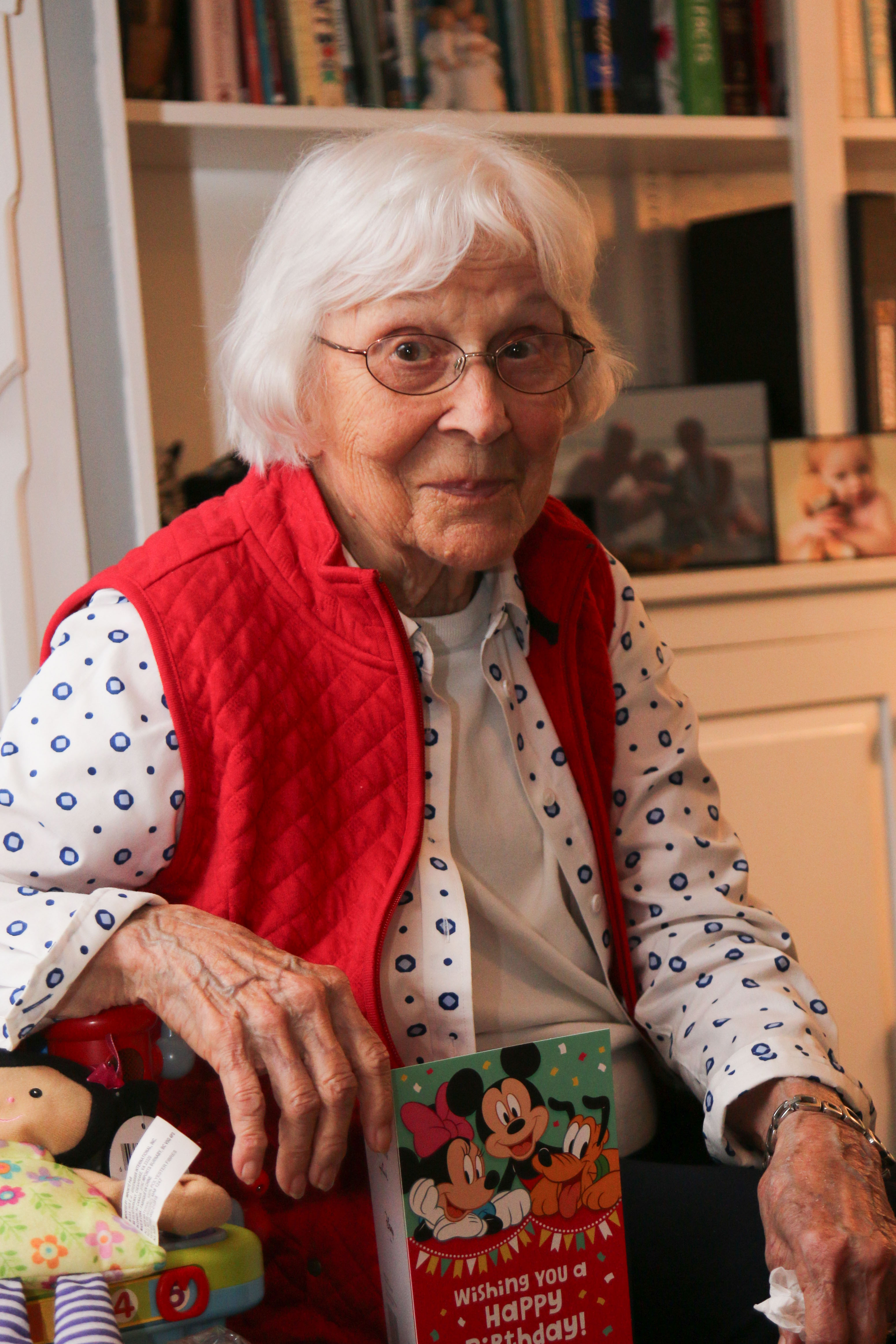
Papa and me, circa 1952

 . 
Here’s something weird: since childhood I’ve had the ability to “mirror write,” and spontaneously and without pause. Could be because I’m left-handed. Long ago, I was told that DaVinci had the same ability, but I’m certainly no DaVinci! 
 . 
Additional poetry by Maria Rouphail at Verse and Image:
 . 
❀   ❀   ❀   ❀   ❀
 . 
Scarcity
 . 
Love, ever a torment,
a yearning—the knot
 . 
I’ve got for what I need.
Love, not blind, but stupefied
 . 
like grief, like bleeding.
The trouble with me
 . 
is agony, the piercing note
of longing, its persistence.
 . 
It’s plainly the shame
of scarcity, the freeze
 . 
of what I sprang from.
I guess I cried.
 . 
Joan Barasovska
 . 
Scarcity is forthcoming in the winter edition of Persimmon Tree.
 . 
I am sitting at my small desk, above which I have placed many, many things: a photo of the sign that hangs outside of the Grolier Poetry Book Shop in Cambridge, Massachusetts; the cracking cover of an old Penguin paperback of George Bernard Shaw’s Saint Joan with Joan in armor on her steed looking skyward; a clipping of a newspaper headline: “The Courage to Be Alone”; my dad’s business card; a Bazooka Joe comic in Hebrew; the poem “Crossing” by Jericho Brown; lines from Eudora Welty, Borges, Eliot, Mark Strand, Raymond Carver; Bertolt Brecht; a note from Bill Griffin: “You are the beating heart of NCPS, not to mention spleen and gizzard”; a framed arrangement of dried flowers and ginkgo leaves. More. But there’s a yellowed, brittle piece of newsprint, probably from The American Poetry Review, with these lines: “There the wind blows / There the rain falls / There god roams / on his palms, on his all four palms” Can anyone identify this? Is it familiar? I would love to know.
 . 
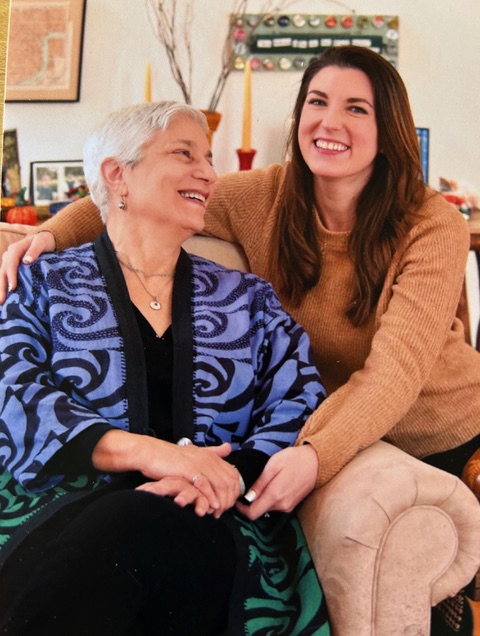
Also on my desk, this photo with my daughter Clare in my living room 
 . 
Additional poetry by Joan Barasovska at Verse and Image:
❀   ❀   ❀   ❀   ❀
 . 
Saturday Morning Submissions – Once a week on Saturday I feature one or two poems shared with me by readers. If you would like to consider having a favorite poem appear, either by you or by a poet you admire, please see the GUIDELINES here:
 . 
 . 
 . 
Read Full Post »

 . 
[with 3 poems by Joan Barasovska]
 . 
The Box
 . 
They are quiet in their photographs,
my mother’s dead.
 . 
They speak to me, entreat me to explain.
 . 
A magnifying glass held to their fading faces
proves scant help.
 . 
To listen, I must listen to myself,
to memory.
 . 
Joan Barasovska
from Unblessed, Unsung, Main Street Rag Enterprises, Edinboro PA; © 2025
 . 
❦ ❦ ❦
 . 
To speak with the dead, one must listen to oneself.
 . 
Before my mother died we talked about dying. Her dying. When I helped her fill out the living will forms. Before the first visit from the palliative care nurse. As her health took yet another sudden stepwise decline. I asked her, not at all for the first time, “Do you want to go to the doctor? To the hospital?” “No. No.” And then we didn’t talk about it any more.
 . 
Instead we talked with the dead. Some people approaching the end of their life close themselves off. They draw the veil about their diminishment and turn inward. My mother, though, turned outward, like a great flower that slowly pivots throughout the day to face the sun. Like one of those giant radio telescopes that can hear the earliest whispers of creation, she became a passive receptor who welcomed anything anyone desired to bring her. I brought her the dead.
 . 
Photographs of the dead. Some were in antique frames, some dropping from ancient scrapbooks, most of them loose in envelopes or the bottom of cartons. She and I collected them all into a grand new album and along the way we told each other stories. “Isn’t that Lucy and Ted just married? Linda and I met them at Nana’s reunion 50 years ago. And there’s you with Lucy, both teenagers. Now here’s Carlyle in the little car Grandpop built for him. I guess it was already obvious he’d be crazy for cars the rest of his life.”
 . 
Some stories she told me; some I imagined while she fingered the photos and nodded in silence. At the moment of shutterclick, each photo was created within its world of vast significance. Those worlds dissipate, decrescendo in brilliance like photons that have traveled light-years to reach our eyes, red-shifted with distance in an expanding universe. But during those moments together my mother could enter their world and hear them, the dead, their voices.
 . 
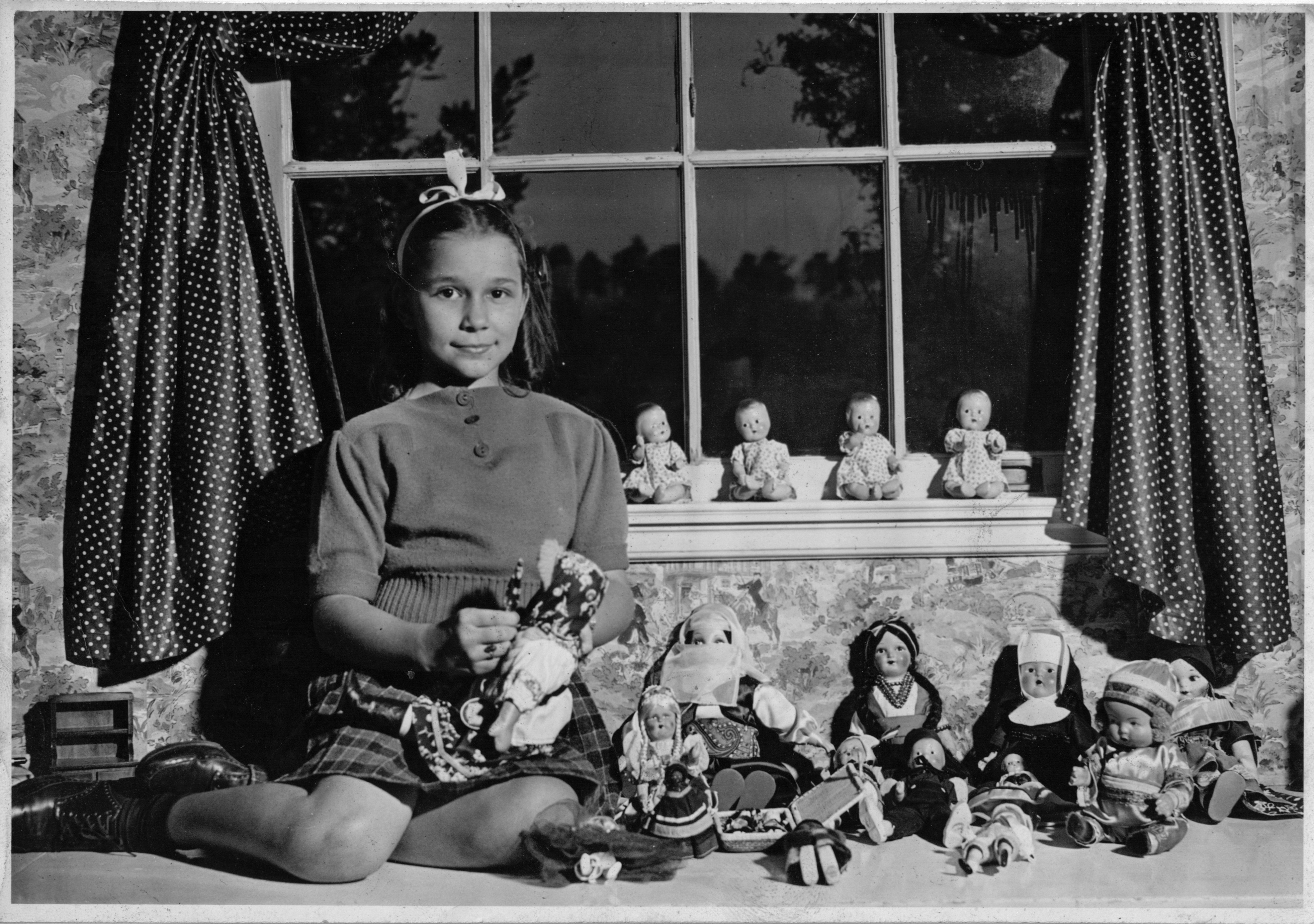
Next month it will have been a year since my mother exhaled her last breath. Her living essence has joined the whispers of the cosmos. Her essence still lives in me and all who knew her and who have not yet joined the dead. Yesterday I found a photo Grandpop took of Mom at age 10 surrounded by her wonderful collection of dolls. There it is, that hint of a smile on her lips, in her eyes, the joyful teasing hint I have seen in person a million times. But looking at that photo is not when I miss her most. The pang of absence strikes me most sharply when a random question pops into my head: “Did you have boy friends before Dad? What was it like to be living 500 miles from Nana and Grandpop when I was born? Who is that standing behind you in this photo?”
 . 
Some of the questions I may once have asked but don’t recall her answers. Most are questions it never occurred to me to ask while we were together on the earth. Now when I pull that grand album off the shelf, her picture will also be among those gone mute. But not completely so. Memory tangles and untangles itself to create new stories. I will listen to my heart. I am now the one who must speak with the dead.
 . 
 . 
❦ ❦ ❦
 . 
In Shul on Rosh Hashonah
 . 
Elizabeth is home with the baby; Ben sits beside his sons
on the hard bench. All three wear yarmulkes, Ben is draped
in his tallis – Reuben and Joseph are too young. The black
straps of tefillin tightly encircle his left hand and arm;
the boxes press into his forehead and bicep.
 . 
The drone of men praying, the vibrato of the old rebbe raised
above their voices, the distant murmur and rustle of women
and girls in the balcony above, and Ben’s own chanted Hebrew,
eyes closed, davening deeply – all are as necessary and familiar
as his heart’s beats and his quiet breaths.
 . 
His boys can barely wait for the blowing of the shofar,
the twisted, ridged ram’s horn the see near the ark.
Ben hears Joe whisper to Rube, “When?” and Rube’s loud
“Shush!” Ben is clean-shaven, unlike the older men. He goes
daily to Boris Adelman, the barber on 21st Street, who keeps
a chin mug painted with his name, Benjamin Nax, on a shelf.
His disc of soap, his ivory brush. Boris strops the razor on a
lng leather strap It’s sinful to let his mind wander like this
on a Day of Awe. He gives thanks for his children: Rube,
a little man; Joseph, their angel. now Elsie.
 . 
He was once a boy sitting with is father and grandfathers
in shul. His chest hollows around their absence. They could easily
be dead, and his uncles and mother, lined up to be shot on the
edge of a ditch. No wisdom from grandfathers for his boys.
 . 
The cantor raised the shofar to his lips and fills his lungs.
Joe has fallen asleep leaning against him, and starts awake at the
first blast. Intervals of blast and chant: Tekia! Sevarim! T’ruah!
Renew our days! Mercy is aroused! Judgement is removed!
Reverberating in the small chilly building, this uncanny sound
of the desert, the First Temple, the shtetl, and the ninety-nine
synagogues of Minsk.
 . 
Ben takes his boys’ hands, and the three are surrounded
on the sidewalk by greetings: L’shonah tovah! Gut yontif!
A gut gebentsht yor! It isn’t his name, Benjamin Nax.
It was changed at Ellis Island, from Binyomin Nakhimovsky.
What is there to believe, in America?
 . 
Joan Barasovska
from Unblessed, Unsung, Main Street Rag Enterprises, Edinboro PA; © 2025
 . 
❦ ❦ ❦
 .  .  .  .  . 
Love flares in the sleeper’s dream,
blue as a Sabbath candle flame, warm as
the kitchen of her grandmother’s house.
from Elizabeth’s Travels
 . 
Her story begins in cruelty concealed and unspoken. It wends its way through hardship and regret, between guilt and resentment. It ends as it started, in death. But that is not all. That is only one harsh thread of the story. The story feeds itself with family love and devotion. It clings to hope in darkness. The story opens its pages because of the expansive heart of the one who desires to be its guardian, its intrepid explorer, its teller. Thus the journey of Unblessed, Unsung by Joan Barasovska.
 . 
There is a bit of mountain trail that winds across a mile or two of bald slopes at Bluff Ridge along the Blue Ridge Parkway. If the summer grass has grown waist high and the cows have not been pastured there this season, the trail is obscured, untraceable except for this: in the 1930’s, the Civilian Conservation Corps placed concrete markers, posts two feet tall, to guide the hiker along the path. Joan has found her own waypoints to reveal her own path into her past: a few fading sepia photographs; recollections written down by cousins; conversations with a last survivor. To these she has applied the poet’s toolkit, observation and imagination, to render this book and bring it to life.
 . 
Some of the questions Joan must ask about her grandparents have discernable answers. Where did they grow up? What year did they arrive in America? But many answers are as intangible as smoke from an extinguished candle and as difficult to clasp. Joan uses what clues she can amass – a facial expression in an old photo; a fragment of tale from a distant cousin – to build an enlarging picture. If we don’t always know exactly how this man and that woman felt, at least we know that they did feel and we can hope to project their circumstances into our own dilemmas and responses. Considering another person’s memories is a fruitful impetus to reliving our own memories. At the beginning of Unblessed, Unsung Joan quotes Zora Neale Hurston: There is no agony like bearing an untold story inside you. Here is a story borne and bared. May these poems now weave and tangle more stories, a never-completed tapestry.
 . 
 . 
Joan Barasovska lives in Orange County, North Carolina, USA, and has authored three previous poetry collections. Unblessed, Unsung is available from MAIN STREET RAG.
 . 
 . 
❦ ❦ ❦
 . 
Listen
 . 
If I told you I hear their voices
in the apartment on Christian Street,
would you visit there with me?
 . 
At the table where they take their meals,
or by the stove, where Elizabeth stands,
adding potatoes to stretch a soup?
 . 
Between husband and wife,
what heat, what chill, what
balance of force and yield?
 . 
The rooms are scrubbed raw-clean,
it’s crowded, voices are raised,
the three children witness everything.
 . 
It’s a time before parents learned
to safeguard childhood. If I told you I hear
cruelty, in word if not in deed, trust me.
 . 
Joan Barasovska
from Unblessed, Unsung, Main Street Rag Enterprises, Edinboro PA; © 2025
 . 
❦ ❦ ❦
 . 
 . 
 . 

Read Full Post »

 . 
April 17, 2024
 . 
While calling ourselves intelligent, we’ve lost touch with the natural world. As a result, we’ve lost touch with our own souls. I believe we can’t access our full intelligence and wisdom without some real connection to nature.
I think of soul as anything’s ultimate meaning which is held within. Soul is the blueprint inside of every created thing telling it what it is and what it can become. When we meet anything at that level, we will respect, protect, and love it.
++++++ Richard Rohr
 . 
❦ ❦ ❦
 . 
This Hill
 . 
this hill
crossed with broken pines and maples
lumpy with the burial mounds
of uprooted hemlocks (hurricane
of ‘thirty-eight) ++ out of their rotting hearts
generations rise trying once more
to become the forest
 . 
just beyond them
tall enough to be called trees
in their youth like aspen++ a bouquet
of young beech is gathered
 . 
they still wear last summer’s leaves
the lightest brown almost translucent
how their stubbornness decorates
the winter woods
 . 
on this narrow path
ice holds the black undecaying
oak leaves in its crackling grip
oh ++ it’s become too hard to walk
++ ++ ++ a sunny patch ++ I’m suddenly
in water to my ankles ++ April
 . 
Grace Paley (1922-2007)
from Fidelity, Farrar, Straus, and Giroux © 2008
 . 
Shared by Joan Barasovska, Chapel Hill NC, who writes:
 . 
I’m precisely connected to this poem in several ways. Grace Paley grew up in New York City — I grew up in nearby Philadelphia — but writes occasionally about her connection to the natural world, as I do. I live in a wooded area, and although the trees surrounding me aren’t birches or aspens, in mid-March they are bare and some “still wear last summer’s leaves.” When Paley wrote “This Hill” she was an older woman, and walking in the woods was becoming difficult, though the desire was there, all true for me.
 . 
++++++ Joan
 . 
 . 
The Day I Walked on Fire
 . 
it wasn’t fire
it was ginkgo leaves
the sun lit them yellow
they were juicy with heat
 . 
the day I walked on ginkgo leaves
I imagined they were fire
that my shoes were melting
that my feet were burning
 . 
and I felt no pain
on that autumn day
when I burned to be
a holy woman
 . 
Joan Barasovska
from Orange Tulips, Redhawk Publishing, © 2022
 . 
IMG_1677.jpg
 . 
❦ ❦ ❦
 . 
When power leads man toward arrogance, poetry reminds him of his limitations. When power narrows the areas of man’s concern, poetry reminds him of the richness and diversity of his existence. When power corrupts, poetry cleanses.
++++++ John Fitzgerald Kennedy
 . 
❦ ❦ ❦
 . 
Trees
 . 
I think that I shall never see
A poem lovely as a tree.
 . 
A tree whose hungry mouth is prest
Against the earth’s sweet flowing breast;
 . 
A tree that looks at God all day,
And lifts her leafy arms to pray;
 . 
A tree that may in summer wear
A nest of robins in her hair;
 . 
Upon whose bosom snow has lain;
Who intimately lives with rain.
 . 
Poems are made by fools like me,
But only God can make a tree.
 . 
Joyce Kilmer (1886 – 1918)
https://poets.org/poem/trees; this poem is in the public domain
 . 
Shared by Dee Neil, Elkin NC, who writes:
 . 
We recited this poem every day in Mrs. Black’s first grade class and I have always loved it. I was supposed to go camping there [Joyce Kilmer Memorial Forest in western North Carolina] with my son’s family last summer, but I fell and broke my arm the week before we were scheduled to go. Still on my bucket list for this year. This is on the back of a hiking journal my daughter-in-law made for me for the trip.
 . 
++++++ Dee
 . 
❦ ❦ ❦
 . 
Paying attention is a form of reciprocity with the living world, receiving the gifts with open eyes and open heart. 
++++++ Robin Wall Kimmerer
 . 
Margaret&Birds
 . 
❦ ❦ ❦
 . 
Banding Hummingbirds 
 . 
+++ San Pedro River, Arizona
 . 
+++ +++ I, who know nothing of ornithology,
wear sticker number nineteen. This release,
the last of the day, is mine. Under the awning
the ornithologist at the table puts a straw to her lips
and blows, parting the feathers to check for mites.
There are mites.
 . 
+++ +++ She cradles the bird in one hand,
sexes it, names the species (Anna’s), and figures
the approximate age. Places it in a miniature sling
and weighs it, wraps the metal band around one leg.
I walk over to the designated grassy area,
both hands in my pockets.
 . 
+++ +++ +++ The day is raw.
When it’s time, I hold out a palm, now warm.
The assistant fits the tubes of a stethoscope
to my ears, pressing the disc against my bird.
I hear a low whir, a tiny motor running in my hand.
Up to twelve hundred beats a minute, she says.
 . 
+++ I, who know so little,
barely take a breath. My bird’s head is a knob
of red iridescence on the fleshy pad of my hand.
I am nothing but a convenient warming bench,
yet for now I am that bench. Warm.
His breast is thin-bone hollow, she says,
 . 
+++ +++ where he should be round.
His eyes dark and still, his feet tucked
behind his body. He lies there, that tiny motor.
I don’t think of years ago, my mother, my father-
those I loved who, having lain down, never rose up.
For once, I know the worth,
 . 
++++++ at least to me.  What I don’t know
is whether this bird in hand will rouse
the way he did earlier, pinched between thumb
and index finger and tipped toward a feeder,
when he drank with conspicuous hunger.
You could see the tongue.
 . 
Susan Laughter Meyers
from My Dear, Dear Stagger Grass, Winner of the 2012 Cider Press Review Editor’s Prize
 . 
Shared by Richard Allen Taylor, Myrtle Beach SC, who writes:
 . 
I was wracking my brain and finally it occurred to me to look on my bookshelf for Susan Laughter Meyers’s My Dear, Dear Stagger Grass. There are actually several poems in the book that might be candidates for Earth Day, but I was especially attracted to this one for several reasons. It reminds me that sometimes you can tell the story through the images (even if literal) rather than trying to “explain.” (I need to be reminded of that every day, it seems.) The poem has a little mystery. (Why are they banding the hummingbirds? Do the mites present a danger to their health? Are the bones in the chest supposed to be hollow or has the bird been sick? I’ll have to look this stuff up or else I won’t sleep tonight.) 
++++++ Richard
 . 
❦ ❦ ❦
 . 
. . . when man and nature
got married they agreed never to divorce although
they knew they could never be happy & would have only
the one child Art who would bring mostly grief
to them both . . .
++++++ Firewood, Midquest, Fred Chappell
 . 
 . 
❦ ❦ ❦
 . 
To celebrate EARTH DAY 2024 we are featuring seven posts of poems submitted by readers – poems by William Blake to Walt Whitman, Robinson Jeffers to A.R.Ammons to Linda Pastan, and by a number of contemporary poets. Check in every day or two – connect to the earth and to each other!
 . 
❦ ❦ ❦
 . 
Doughton Park Tree 2021-10-23
 . 
 . 

Read Full Post »

Older Posts »