.
[with 3 poems by Regina YC Garcia]
.
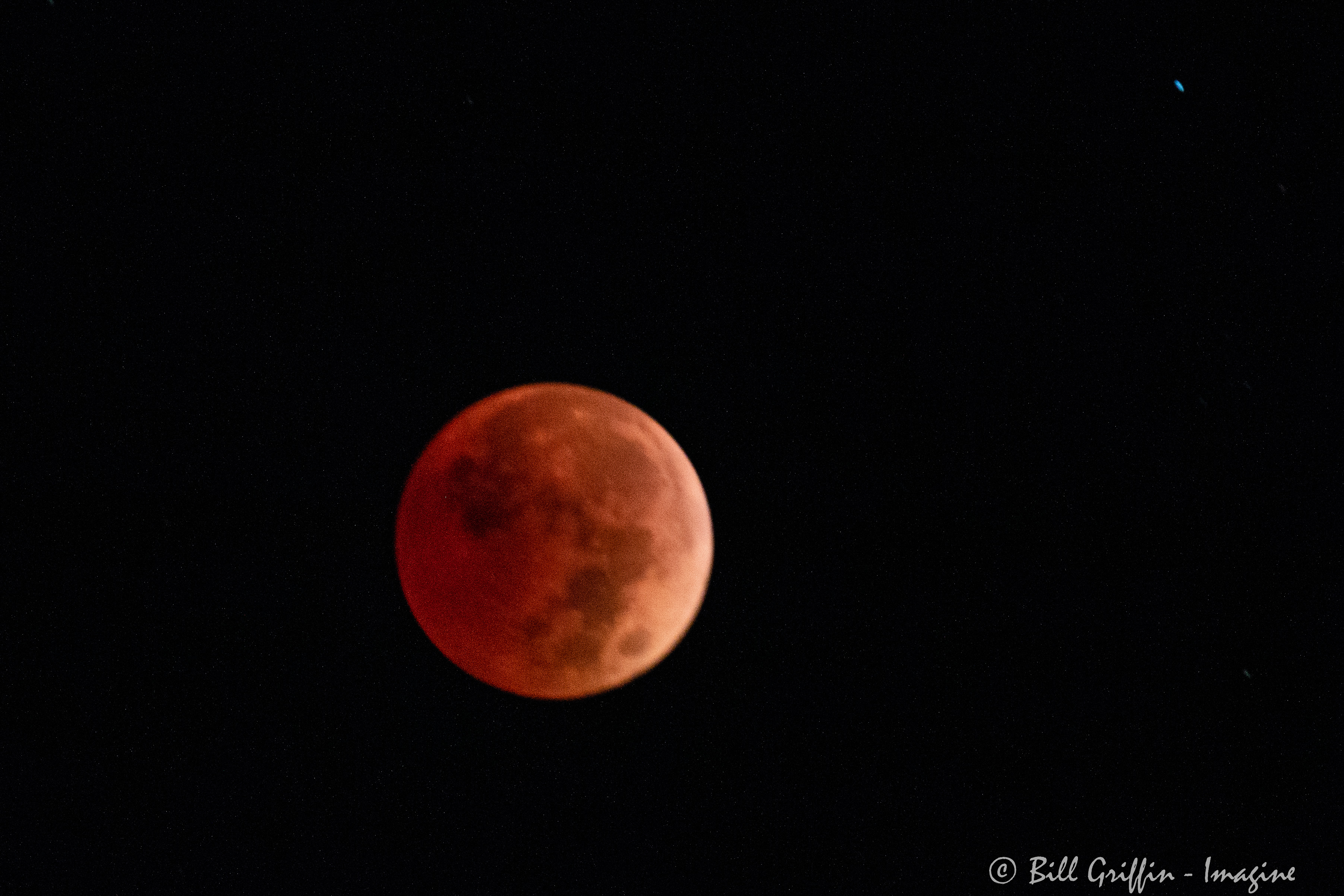
Maybe God is the Moon
.
Maybe it was the Moon
that bore me up
placed me on its Moon back
when my light was low
so low I could not speak,
could not utter, when I was
sliced and excluded from
my own voice.
.
Maybe it was the Moon that
circled me through stages,
plunged me into cold and
silent darkness, turned me away
from the light of a prideful sun,
shocked and awakened my skin,
nestled me in craters where my
breath did not matter, allowed me to
emerge in stages so that I,
perched high, could witness that
indeed, the wages of living is Death,
paid early or late, and the tides
will live longer than I
.
Maybe it was the Moon that tenderly
slid me down its beam back into the fray
reminded me of how to walk, to hide, to emerge
to cry for, to try to find a
human space of other MoonMadeOvers
.
Maybe it was the Moon that reanimated
my soul, filled it with purpose, taught me
how to line this pathway back to wherever
I need to be . . .
.
Regina YC Garcia
from Whispers from The Multiverse: Poems from the AfroDeep, Willow Books, Aquarius Press; © 2025
.
❦ ❦ ❦
.
With every passing year we know there is more we don’t know. We have made better and more detailed maps of the surface of the moon than we have of the floor of our own oceans. When we look out into the cosmos we aren’t certain whether it would look the same to any observer from any different space or time, and we wonder: do the same laws of physics apply everywhere? The stuff that makes the sun and the earth, that makes felines and fish and blackflies, that makes oak trees and brain cells, the “ordinary matter” of atoms like Carbon, Hydrogen, Oxygen, and all those other elements, all that stuff only adds up to 15% of the matter in the universe – what is the other 85%?
.
The word galaxy derives from Greek, the same root as galactose, milk sugar: the Milky Way, our home sweet home. In the 1960’s astrophysicist Vera Ruben and her collaborator Kent Ford build the most advanced cosmic spectrograph to date. They used it to measure the spins of distant galaxies, their rates of revolution. The data didn’t add up. When Dr. Rubin estimated each galaxy’s mass (based on its luminous stars), it should be spinning far more slowly than their measurements showed. A whole lot of mass was missing. Were Isaac Newton and the laws of gravity wrong, or did the galaxy contain vast quantities of matter Rubin couldn’t see? Sixty years later and physicists still don’t know exactly what Dark Matter is — maybe WIMP’s (weakly interactive massive particle), maybe a proposed theoretical particle they named axion, maybe something even weirder. They know they don’t know.
.
The Vera C. Rubin Observatory is now coming online in Chile. It uses the largest digital camera ever produced (3.2 gigapixels) to create wide-field images of the entire Southern sky every few nights as it pursues its LSST mission, the Legacy Survey of Space and Time. Besides mapping the Milky Way (perhaps in more detail than maps of our own oceans’ floor) it will study Dark Energy and Dark Matter. Tonight I’ll be reading the final chapters of Lonely Hearts of the Cosmos by Dennis Overbye. He follows the lives and discoveries of twentieth century cosmologists like Hubble, Sandage, Hawking, Rubin as they ask the big questions: How old is the universe? How big? How did it begin? What is it made of? And Why?! Astrophysicist Overbye wrote his book in 1991. With every year that has passed since then, I know there is even more that I don’t know!
.

.
❦ ❦ ❦
.
Brown Girls Jumping
.
While seeing The Original Pinettes at Bullets NightClub, New Orleans, Louisiana
.
I went to Louisiana
Me, a North Carolina Bama
& I found my power
in my hair
the hair that I shook
to an all-girl brass band
Yea . . . the baddest
The trumpets blared &
the tuba thumped &
the Brown girls jumped
& shook that hair &
didn’t care
if they had a little
a lot
or none
. . . didn’t care
what vile people said
Their manes were present
or invisibly gifted through
special dispensation from God
An aura just
flowing
around their shoulders
down their back
swinging
blowing
showing the world that
it doesn’t matter what people say
Their strength comes from some
ethereal
divine
supernatural
sublime force
cloaked in music &
revealed as a spirit
felt behind
closed eyes
tingling in
dancing feet &
snapping fingers
The train from their manes
envelops
endows
entreats
favor and power
See, if Delilah had really felt her own
She would have left Samson alone
For his emasculation did not lead to her divination
Swing your hair, Brown girls &
cast your cares
to that which protects & inspires
your own strength
Brown girls jumping
Music thumping in NOLA
Me, a NC Bama on a holiday mission . . .
taking two fish, a few loaves
and a little hot sauce . . .
Hands folded in prayer . . .
. . . praying that this holy meal multiplies
before my season ends.
.
Regina YC Garcia
from Whispers from The Multiverse: Poems from the AfroDeep, Willow Books, Aquarius Press; © 2025
.
❦ ❦ ❦
.
Regina Garcia is a Black Whitman. She summons and channels the ancestors – within her there are multitudes. She sings the Black body electric. Songs loud and joyful, songs longing and plaintive, elegy and celebration and prophecy all flow from her pen. The voices that whisper from the multiverse crack open dimensions and crack our minds open to reveal a person, a family, a people leaping to reach for our hands and dance us into new knowing. Before I read Whispers from The Multiverse, I pattered along in a different cosmos. I am now filled with joy to have crossed into this real one.
.
❦
.
Read more about Regina YC Garcia and Whispers from The Multiverse HERE, and order your copy from Willow Books/Aquarius press HERE.
.
Regina’s written and video poetry has been published widely in a variety of journals, reviews, compositions, and anthologies such as South Florida Poetry Journal, Main Street Rag, The AutoEthnographer, Amistad, The Elevation Review and others. Her poetic work for The Black Light Project, a documentary focused on real and often untold narratives of African American males in the United States, was featured on a Mid-South Emmy-Award winning episode of PBS Muse. She teaches English and is the Coordinator of Global Programs at Pitt Community College in Winterville and Greenville, North Carolina.
.

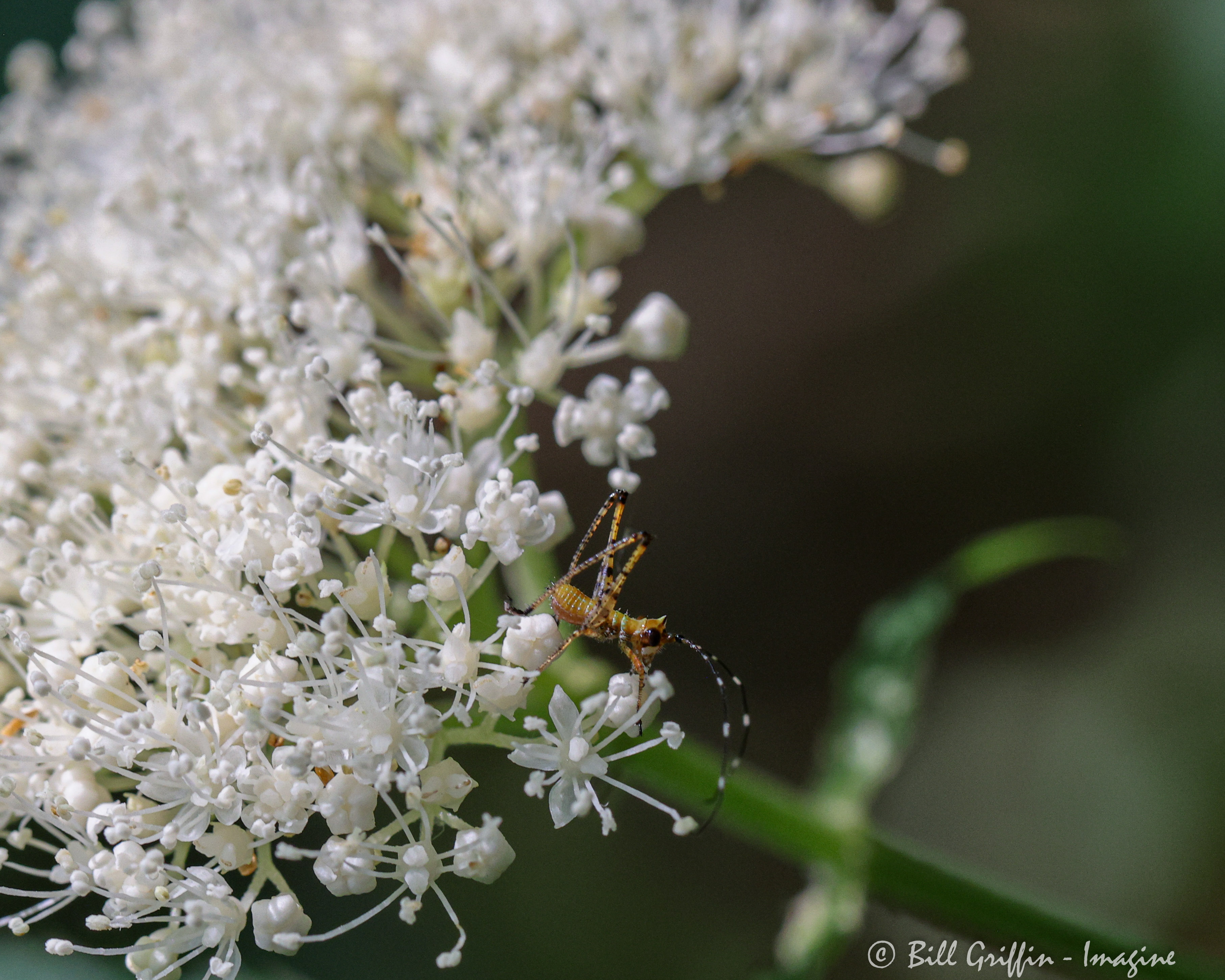
Stellaria pubera – Star Chickweed
.
❦ ❦ ❦
.
Windsor of the Water
The Truth and Speculation of Windsor Wade
.
Sea misted brown skin
skirted the winds and battled the waves
that he might see a glorious
future despite his inglorious condition
. . . that his conscription to pulling nets
would not be for naught
thinking beyond bondage and living beyond
shackles . . . H would see Shackleford Banks and Jack’s
Lump as victory for himself . . . . . . for his family
.
. . . and so from Windsor to Nancy to
Rachael to others to me . . .
We still sing the victory
.
Ancestral voices still trill in the wind
as today, the wild horses run unfettered, free
.
Regina YC Garcia
from Whispers from The Multiverse: Poems from the AfroDeep, Willow Books, Aquarius Press; © 2025
.
❦ ❦ ❦
.
The Cosmological Principle states that the universe, when observed at a large enough scale, is homogenous – smooth, not lumpy – and that the properties of the universe are the same for all observers. In other words, the laws of physics operate the same in every part of the universe and the universe is not just playing with us when we try to observe it.
.
❦ ❦ ❦
.









 V E R S E and I M A G E
[…] About/Submit […]