Feeds:
Posts
Comments

Posts Tagged ‘family’

[with poems by Joan Barasovska and Kathy Ackerman]

Everything or nothing. The radio is off. The screen is frozen. The refrigerator snores. The clock won’t tick any faster, any slower. In an hour we leave for Raleigh to see our grandson (backyard, distanced, masked) but right now nothing is happening

I’m no good at nothing. If I wake in the dark my brain whirls venom trying to bite its tail. Where is dawn’s blessed peace? If I take deep breaths, watch the feeder, daily agendas begin to scroll down the back of my cornea. How many seconds after emptying myself before I fill back up with everything?

We are entering the season of nothing. The azalea may feint a few off-season blossoms but will we ever bloom again? We are in the season of waiting. Where is the so fragrant earth we lost so long ago? Where is the muscle and spunk of summer that convinced us we might carry through? The season of turning. What justice like waters, what righteousness like an ever-flowing stream? When? How do these shortened days stretch so long?

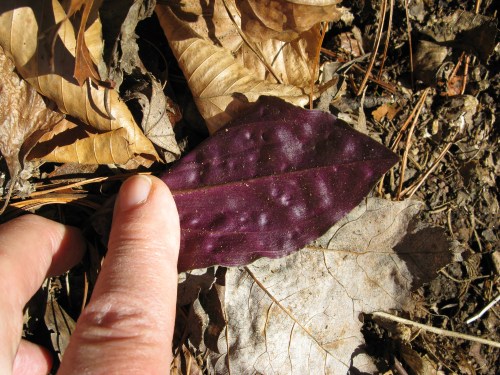
In the woods, something is happening. Orchids are making sugar. How have I missed that? One species will bloom in May, the second in August, but their leaves are now. Their delicate little tenacious tough-ass corms swell all winter waiting to rocket up a spike of summer flowers into a leafed-out overshaded world.

Something is always happening. Something is deeper than those scrolling agendas. Something in the world and something behind my optic chiasm in deep matter. Something that maybe wants me to be still and notice. Something to hope for, to wait for, to go forth and meet.

There is no nothing. It’s all everything.

.     .     .     .     .     .

These two poems are from Kakalak 2020, the annual anthology of Carolina poets. It is an eclectic volume – conversational, confessional, contemplative. Not as many COVID poems as I expected but wait until 2021.

The poems by Joan Barasovska and Kathy Ackerman speak to me of the winding thread that connects our past to our present. Knots and tangles, yes, but also a lashing to secure us in the lashing storm. The something that is happening every day is us becoming human.

.     .     .     .     .     .

Cranefly Orchid, Tipularia discolor

.     .     .     .     .     .

Her Breath

Mike and I exchange a glance
over her cooling body.
Our eyes are dry.
Elsie wears a faded housedress
with a pattern of flowers.
Thirty minutes ago
an aide crossed
her swollen hands.

All morning we sat waiting
while Death rattled her.
She died in the afternoon
while we were out walking.
Our mother took a slow
rollercoaster ride to this day,
dragging us with her on
every shivery dip and climb.

Back from the dead,
Mike said when she woke
from a coma, angry to find herself
in a clean hospice room.
She raged until he put her back home.
Frail, sick, ninety-three, hanging on
ten hears after Dad’s death.
She scolded me yesterday.
I was late for lunch.
I had forgotten to pick up her mail.

Their old bed had been replaced
by a narrow hospital bed
rolled in the hospice workers
while she fumed in the living room
and I boiled water for tea.
Now her jaw is slack,
her last silent treatment.
Above her head hangs
a sad-eyed portrait of me at nine,
painted in blues and grays.

Mike and I are limp with relief.
the secret of Elsie’s anger died with her,
but it was probably sadness.
We are second-generation Americans,
inheritors of the sadness seed.

This mother
lying flat between us
birthed me sixty years ago.
With her last breath,
She’s in a better place
and so am I.

Joan Barasovsaka, Kakalak 2020, Main Street Rag Publishing Company

.     .     .     .     .     .

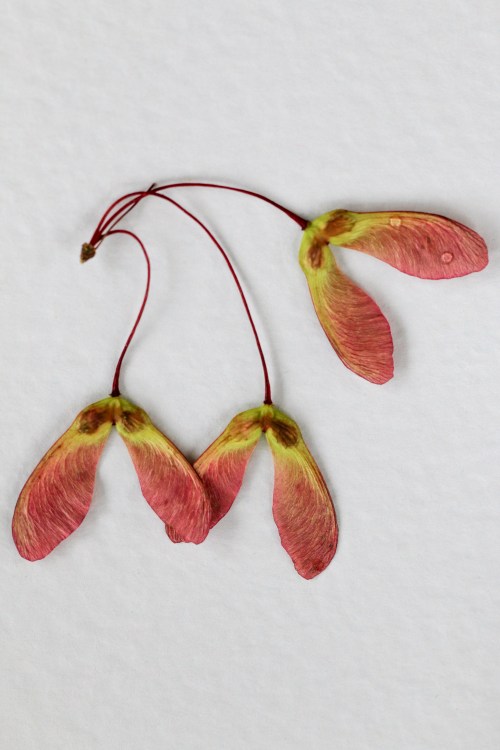
Adam-and-Eve Orchid, “Puttyroot,” Aplectrum hyemale

.     .     .     .     .     .

Misnomer
for Goliath, my father

i.
This story begins when I believed every word my daddy said.
Honeysuckle, he called them, tending the cuttings
that go all the way back to Rock Creek 50 years,
Aunt Gracie’s yard in the hills where I never lived.

Honeysuckle was all I had to root me to that ancient soil,
so every home I bought I planted some
from Daddy’s supply, rooted in plain clear water.
I wondered why it had no scent, was not a vine,
was pink, for crying out loud.

Now shopping for plants for house #5,
I see the truth in 5-gallon pots before me:
Weigela.

I imagine old Aunt Gracie shooing my father away
from her quilting or canning or sitting alone.
Go cut back that honeysuckle
before it swallows up the outhouse.

Later, seeing his mistake, she didn’t correct him –
a name is just a name –
Grace just glared at tiny Goliath
so proud of his mound of pink and green
already wilting

while the roof of the outhouse
still plushed with yellow sweetness
he’d confuse for 80 years
with a plant that belongs
to the same family, after all,
but so much harder to say.

ii.
Start me some honeysuckle, Daddy, I blurt out
in one of awkward lulls.
I want to imagine his hands on the branch,
the snip of sprigs of coal country
where Gracie’s old feist
barked me all the way to the outhouse and back
when I was too small to know
how hard it is
to keep what lives alive.

Kathy Ackerman, Kakalak 2020, Main Street Rag Publishing Company

.     .     .     .     .     .

.     .     .     .     .     .

Let justice roll down like waters, and righteousness like an ever flowing stream.
Amos 5:24

.     .     .     .     .     .
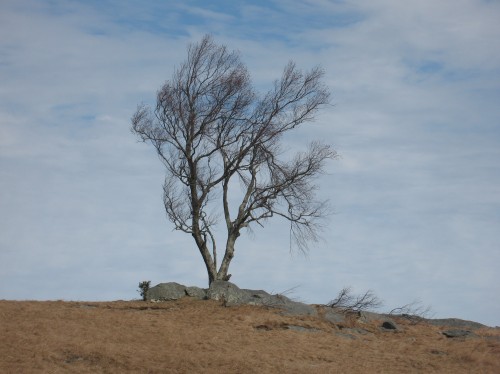
2019-02-09 Doughton Park Tree

Read Full Post »

This evening at suppertime she peers into the beef and carrots simmering on the right burner; I snip pea pods and spinach into the black bean broth on the left burner. Pretty soon both pots are smelling darn good. It’s usually something like this, the scene in our kitchen all the years since I decided to stop eating meat and she didn’t. Separate skillets, or sequential nuking, then sit down together.

But then every once in a while it’s all her show. She steams the broccoli while I sit near the lamp and read. I start on a little dry white wine (she’ll accept two ounces for herself later – Pastor Jan, pretend you didn’t read this) while she simmers the pasta. She serves two blue patterned Japanese bowls we’ve owned since year one. Then we sit down together.

When I die, sorry to say, I have no faith that there will be an angel in heaven who can make broccoli Alfredo this good.


.     .     .     .     .     .     .

Getting home from the office early these days, I’m revisiting the overflowing stacks beside my desk. Poetry, philosophy, poetry, nature, poetry — I’ve rediscovered that all of Terri Kirby Erickson’s poems are home.

Lots of poetry is about home – you get a peak through the curtains and maybe you can imagine life on the other side of the pane. Terri’s poems are home. Welcome in. Don’t mind the mess. Maybe you didn’t understand this is your home but for twenty or thirty lines you will be part of the family. So many families. So many homes longed for, left behind, returned to. Soft light, hard edges. Sweet and harsh and all shades between. Come on in. Let’s sit down together.


.     .     .     .     .     .     .

from In the Palms of Angels, Terri Kirby Erickson, Press 53 © 2011


Wayfarer

He seems like a man
you’d see walking down a long
stretch of road, the kind
with dust

rising

in a red haze beneath the wheels
of pickup trucks, cutting
through fields of golden

wheat. Scudding clouds cast
shadows
across the ground like whales

swimming through clear
water, and the air carries the scent
of grain and loam.

Every few miles, the glint of a silo
(startling against the lonesome

sky)

signals a farm house
where peach pies sit cooling
on window sills, and patterned
carpets are worn-out from parents

pacing to and fro with fretful babies
in their arms.

He’s traveling toward the horizon
with the steady gait of someone
with a place to go, whose tender

gaze

will soon find home, that place
more sacred than communion wafers
nestled in the palms
of angels.

.     .     .     .     .     .     .

Rosary

Down by the creek,
we sit on dry
stones,

our shoes and socks
jumbled in a pile.
The sun

warms our toes
and casts its
net of light

from bank to bank,
where willows
trail their

fingers in the water,
and snakes look
like branches

floating by
them. Mosquitoes
lay their eggs

in stagnant pools,
far from leaves
and grasses snagged

by rocks, twisting
in the current.
Tadpoles swim

in tight formation,
wiggling their tails
in tandem,

as salamanders
scuttle by, searching
for places to nap.

Dragonflies hover,
then hurry
away,

their wings
thrumming a one-note
song – while we,

silent as nuns in prayer,
count the beads
of summer.

.     .     .     .     .     .     .

[Rosary first appeared in Basilica Review; other collections by Terri Kirby Erickson from Press 53 include: Telling Tales of Dusk; A Lake of Light and Clouds; Becoming the Blue Heron.]

Author Page, Terri Kirby Erickson, Press 53, Winston-Salem, NC.

.     .     .     .     .     .     .

IMG_0880


Read Full Post »

Linda’s Mom preferred to assume the garb and persona of Mother Goose rather than Conan the Librarian, but if there were ever a muscular champion of children and books, Donna Unger French was it.  She began in the Sixties as library volunteer in an elementary school that didn’t have a library – Mom French created one in a wide place in a hallway.  Eventually each of the Aurora Public Schools had its library, and with Mom’s magical touch they became temples of creativity and imagination.  They were holy refuges for readers.  They were FUN! At its acme the middle school library included: an old clawfoot bathtub lined with purple shag carpet where students could lounge and read; a life-size E.T. and a menagerie of giant cut-out Sendak Wild things; doll houses and dragons, cowardly lions and witches, masks and puppets.  And every good book.

Mom French’s home is still overflowing with books.  Every Newberry.  Every Caldecott.  Racks and stacks of Bill Peet, Wallace Tripp, Richard Scary, Tomie DiPaola.  When we took our kids to visit it was a marathon of reading on Grandma’s lap.  Before Margaret and Josh themselves could read they could name each book’s artist with a single glance.  Thirty years later, Saul knows that when he and Dad go to the used book sale at the library, they are going to come home carrying a huge sack of books.

.     .     .     .     .

The Fairies
William Allingham (1824-1889)

Up the airy mountain
Down the rushy glen,
We dare n’t go a-hunting,
For fear of little men;
Wee folk, good folk,
Trooping all together;
Green jacket, red cap,
And white owl’s feather.

Down along the rocky shore
Some make their home,
They live on crispy pancakes
Of yellow tide-foam;
Some in the reeds
Of the black mountain-lake,
With frogs for their watch-dogs,
All night awake.

High on the hill-top
The old King sits;
He is now so old and gray
He’s nigh lost his wits.
With a bridge of white mist
Columbkill he crosses,
On his stately journeys
From Slieveleague to Rosses;
Or going up with music,
On cold starry nights,
To sup with the Queen,
Of the gay Northern Lights.

They stole little Bridget
For seven years long;
When she came down again
Her friends were all gone.
They took her lightly back
Between the night and morrow;
They thought she was fast asleep,
But she was dead with sorrow.
They have kept her ever since
Deep within the lake,
On a bed of flag leaves,
Watching till she wake.

By the craggy hill-side,
Through the mosses bare,
They have planted thorn trees
For pleasure here and there.
Is any man so daring
As dig them up in spite?
He shall find the thornies set
In his bed at night.

Up the airy mountain
Down the rushy glen,
We dare n’t go a-hunting,
For fear of little men;
Wee folk, good folk,
Trooping all together;
Green jacket, red cap,
And white owl’s feather.

Copied from a well-thumbed edition of Volume 1 of CHILDCRAFT, (c) 1954 by Field Enterprises, Inc.  Mom French gave each of her seven children a set of Childcraft books when they left home on their own.

.     .     .     .     .

IMG_3704

A true story: When Mom French finally retired after forty (fifty maybe?) years as Aurora schools librarian, she still returned as a volunteer to read stories.  We’re not sure just how she arranged this, but one Saturday night she loaded the car with books, put on her Mother Goose outfit – pointy hat, shawl, wire-rims – and drove to downtown Cleveland to a bar near the Cuyahoga River.  While the longshoremen raised their beers, she read them nursery rhymes, poems, and bedtime stories.  They begged her to come back again.

Mom, in each story we read and in each one read to us, we will always hear your voice.

.     .     .     .     .

IMG_0768

Read Full Post »

« Newer Posts - Older Posts »