Feeds:
Posts
Comments

Posts Tagged ‘ecology’

[including a poem by Rebecca Lindenberg]

I am still not sure what Will was thinking but he was very distant that evening. It was the last night of our backpacking trip through the Smokies. I knew he lived for wilderness – maybe he was simply ruing how long it would be until he’d have another chance to return to these mountains. Maybe he was doubting his chosen vocation, family doctor, the hectic office where we’d be working together again day after tomorrow. Maybe . . . maybe each of us longs to hang onto those few moments when we really feel we belong in the universe. And then they slip away.

We’d planned this trip together, just the two of us, for months. Now we were cooking our last supper. We had distanced ourselves from Mt. Collins shelter and the other hikers with their butane stoves that roared like jet liners. Will had fashioned a little alcohol stove out of a 7-Up can. Our noodles and dried vegetables simmered in silence.

When we’d finished eating and Will picked up the “stove,” his funk hit bottom. Our heat had fried a pygmy salamander (Desmognathus wrighti). Will lifted its weightless form and we grieved. We didn’t have much of anything more to say to each other that night.

In the morning we headed south on the AT to where our car waited at Clingman’s Dome. Bleached dead Frazer Fir flanked the trail with their mute accusations but the sun was cool and jeweled the dew on ridgeline grasses. About a mile from trail’s end, Will stopped and pointed. Perched on a stem sunning itself – Jordan’s Red-cheeked salamander, Plethodon jordani. Endemic to the Smokies, endangered, icon of biodiversity, preservation, and evolutionary variety. Was it waiting here to condemn us or to offer absolution?

Or to invite us to keep traveling until we discover where we belong?

.     .     .     .     .     .     .

It feels terrible to feel terrible // and so we let ourselves / start to forget.

There are plenty of pygmy salamanders but let me not forget that one. I haven’t heard a whip-poor-will in five years; let me not forget. I can choose to love this or that or the other . . . or you – let me not forget to hold tight to the choices that will hold you and me together.

We celebrate Earth Day with the other inhabitants of our single habitable planet on April 22, but how we venerate earth day depends on the choices we make every day.

They’re not wonders, but signs // and therefore can be read.


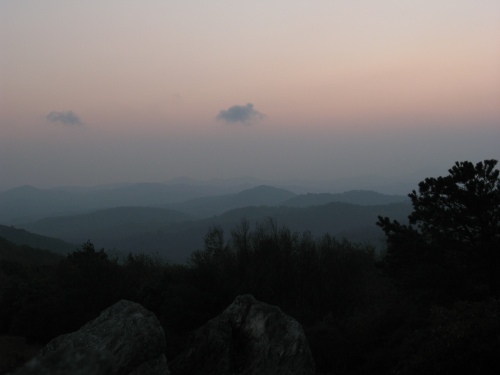
[#Beginning of Shooting Data Section]<br /> Nikon CoolPix2500<br /> 0000/00/00 00:00:00<br /> JPEG (8-bit) Normal<br /> Image Size: 1600 x 1200<br /> Color<br /> ConverterLens: None<br /> Focal Length: 16.8mm<br /> Exposure Mode: Programmed Auto<br /> Metering Mode: Multi-Pattern<br /> 1/59.9 sec - f/8<br /> Exposure Comp.: 0 EV<br /> Sensitivity: Auto<br /> White Balance: Auto<br /> AF Mode: AF-S<br /> Tone Comp: Auto<br /> Flash Sync Mode: Front Curtain<br /> Electric Zoom Ratio: 1.00<br /> Saturation comp: 0<br /> Sharpening: Auto<br /> Noise Reduction: OFF<br /> [#End of Shooting Data Section]

.     .     .     .     .     .     .

A Brief History of the Future Apocalypse

Worlds just keep on ending and
ending, ask anybody who survived

an earthquake in an ancient city
its people can’t afford to bolt

to the bedrock, or lived to testify
about the tyrant who used his city’s roofs

like planks to walk people off,
his country’s rivers like alligator pits

he could lever open and drop a whole
angry nation into. Ask anyone

who was watched their own ribs emerge
as hunger pulls them like a tide,

who watched bloody-sheet-wrapped
bodies from the epidemic burn,

or fled any of the wars to come.
The year I was eleven, I felt

the ground go airplane turbulent
beneath me. Its curt shuddering

brought down a bridge and a highway
I’d been under just the day before.

And I was not afraid, but should have been
the first time love fell in me like snow.

How could I know it would inter us
both, so much volcanic ash –

how could I not? The world must
end and I think it will keep ending

so long as we keep failing to heed
the simple prophecies of fact –

hot-mouthed coal-breathing machines
fog our crystal ball, war is a trapdoor

sprung open in the earth that a whole
generation falls through, love ends,

if no one errs, in death. When
my love died, I remember thinking

this happens to people every day,
just – today, it’s our world

crashing like an unmanned plane
into the jungle of all I’ve ever

had to feel, or imagine knowing.
It feels terrible to feel terrible

and so we let ourselves
start to forget. That must be it.

Why else would we let the drawbridge
down for a new army, water

the Horseman of Famine’s red steed
with the last bucket from the well

or worse – give up then. A heart
sorrow-whipped and cowering

will still nose its ribcage to be petted.
Will still have an urge for heroics.

And anyway, when has fear of grief
actually kept anyone from harm.

Some hope rustles in my leaves
again. It blows through, they eddy

the floor of me, unsettling
all I tried to learn to settle for.

Would I be wiser to keep
a past sacrament folded in my lap

or would I be more wise to shake
the gathered poppies from my apron,

brush off soft crimson petals
of memory and be un-haunted –

I don’t know. So I choose you and we
will have to live this to learn what happens.

And though it’s tempting to mistake
for wonders the surge of dappled

white-tailed does vaulting through
suburban sliding glass doors,

they are not. Not vanishing bees
blown out like so many thousands

of tiny candle-flames, neither
the glinting throngs of small black birds

suddenly spiraling out of the sky,
the earth almost not even dimpling

with the soft thuds of feathered weight.
Nor the great wet sacks of whale

allowing the tide to deposit them alive
on a strand, nor even the sudden

translucent bloom of jellyfishes.
They’re not wonders, but signs

and therefore can be read. I didn’t
always know that apocalypse

meant not the end of the world but
the universe disclosing its knowledge

as the sea is meant to give up its dead,
the big reveal, when the veil blows back

like so many cobwebs amid the ruins
and all the meaning of all the evidence

will shine in us to finally see –
And there you’ll be and I’ll know you

not by the moon in your voice but the song
rung in my animal self. For I feel you,

my sure-handed one, with something
sacreder than instinct but just as fanged.

Then unfold me the way you know
I want so I can watch the stars

blink back on over the garden as we grapple
in the dimming black like little, little gods.

Rebecca Lindenberg

from Best American Poetry 2019; Major Jackson, editor, David Lehman, series editor; Scribner Poetry 2019
first appeared in Southern Indiana Review; reprinted by permission from Rebecca Lindenberg

More by Rebecca . . . https://www.poetryfoundation.org/poets/rebecca-lindenberg

.     .     .     .     .     .     .

Rebecca Lindenberg teaches in the MFA program at Queens University, Charlotte, and is an Assistant Professor at the University of Cincinnati where she is also Poetry Editor of the Cincinnati Review. She holds a Ph.D. in Literature and Creative Writing from the University of Utah. She is the author of Love, an Index (McSweeney’s 2012) and The Logan Notebooks (The Center for Literary Publishing at Colorado State 2014), winner of the 2015 Utah Book Award.

.     .     .     .     .     .     .

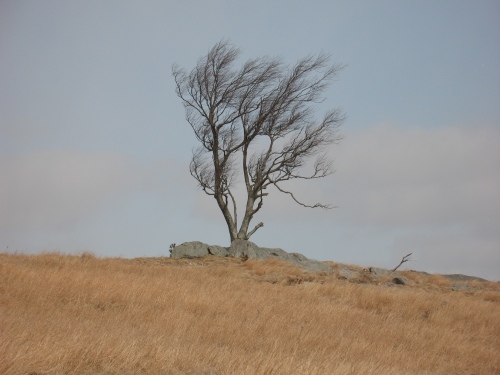
[#Beginning of Shooting Data Section]<br /> Nikon CoolPix2500<br /> 0000/00/00 00:00:00<br /> JPEG (8-bit) Normal<br /> Image Size: 1600 x 1200<br /> Color<br /> ConverterLens: None<br /> Focal Length: 11.8mm<br /> Exposure Mode: Programmed Auto<br /> Metering Mode: Multi-Pattern<br /> 1/30 sec - f/4<br /> Exposure Comp.: 0 EV<br /> Sensitivity: Auto<br /> White Balance: Auto<br /> AF Mode: AF-S<br /> Tone Comp: Auto<br /> Flash Sync Mode: Front Curtain<br /> Electric Zoom Ratio: 1.00<br /> Saturation comp: 0<br /> Sharpening: Auto<br /> Noise Reduction: OFF<br /> [#End of Shooting Data Section]

.     .     .     .     .     .     .

[Behind the scenes karma: I received Best American Poetry 2019 as a gift last Christmas (Oh Santa, you are so good at taking hints!) but I hadn’t read it until this week. I was hoping to discover something that would evoke April as Earth Month anticipating Earth Day, resigned to forgoing my usual focus on Carolina writers. Rebecca Lindenberg’s poem leapt from the page; it is the best of the Best, the Best American Poem of 2019 in my opinion. It wasn’t until after I had asked her permission to use it that I discovered Rebecca’s connection to Queens University and probably to many of the other writers who have appeared in this space. Karmic connection comes through.  – B ]

Read Full Post »

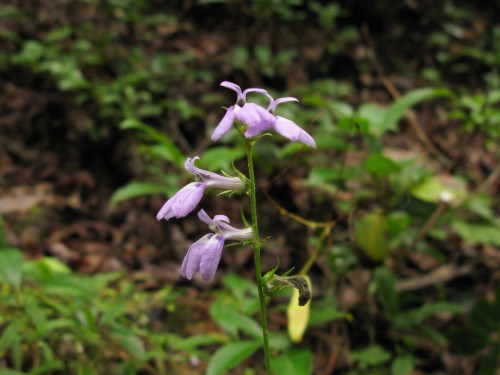
Southern Lobelia, Lobelia amoena, Campanulaceae (Bellflower family)

[with poems by Robert Frost, Paulann Peterson, Edwin Markham]

Tree At My Window

Tree at my window, window tree,
My sash is lowered when night comes on;
But let there never be curtain drawn
Between you and me.

Vague dream head lifted out of the ground,
And thing next most diffuse to cloud,
Not all your light tongues talking aloud
Could be profound.

But tree, I have seen you taken and tossed,
And if you have seen me when I slept,
You have seen me when I was taken and swept
And all but lost.

That day she put our heads together,
Fate had her imagination about her,
Your head so much concerned with outer,
Mine with inner, weather.

Robert Frost (1874-1963)

.     .     .     .     .     .     .

Why the Aging Poet Continues to Write

At a coneflower’s seed-making center,
hundreds of tiny dark florets—
each stiff and sharp—
take turns oozing
their flashes of pollen.
A flagrant
bee-stopping show.

Making a bright circle,
the outermost spiky blossoms
open first to then fade.
Shrinking day by day,
the ring of yellow flame
moves inward.
That heart—what’s at
the flower’s very core—
blazes last.

Paulann Petersen, from Understory, Lost Horse Press, 2013

.     .     .     .     .     .     .

These two poems are collected in The Poetry of Impermanence, Mindfulness, and Joy; edited by John Brehm; Wisdom Publications, 2017.

Spreading False Foxglove, Aureolaria patula, Scrophulariaceae (Figwort family)

.     .     .     .     .     .     .

No plant community is static. Even the “climax forest” is in constant flux, the flow that is the marker of time’s passage, that is time. All things flow: change, the primary mutable immutable that creates reality.

Observe the climax forest for enough generations (its generations, not ours) and see that its steady state is illusion. Water cycles, carbon cycles, death and reclamation and regeneration: constant flux. Apt metaphor for our life as human individuals. Observe the plant community’s encroachers and invaders, its fuzzy boundaries, its balance never balanced for long – also a metaphor for human communities.

During pandemic if there is one factor that underlies our existential fears it must be separation from community. How small has our circle shrunk? How unwilling are we to step outside or let in the unknown? Anger, anxiety, dread: they must all have the same roots.

When the soil is shallow the tree sends its roots wider. When moisture or minerals are scarce the rootlets’ embrace by mycorrhizal fungi becomes even more welcome.

Human ecology: I watch the Zoom gallery nod and smile and imagine that they are seeing me, too. I step off the trail when other hikers pass but we wave and share a few words at distance. I sit nearby during Linda’s long phone calls with sisters: essential, restoring, redeeming. I even (gasp!) write a few letters. Aren’t we all reaching out to discover some new way of connecting, some way amidst the flux to re-forge community?

Wider, draw the circle wider!

.     .     .     .     .     .     .

He drew a circle that shut me out-
Heretic, rebel, a thing to flout.
But love and I had the wit to win:
We drew a circle and took him in!

Outwitted – Edwin Markham (1852-1940)

.     .     .     .     .     .     .

Many thanks to the organizers and instructors of Great Smoky Mountains Institute at Tremont who continue their mission of connecting people with nature even during pandemics. Their science-based educational programs have evolved with science-based precautions and modifications to allow small communities to form for a weekend at a time.

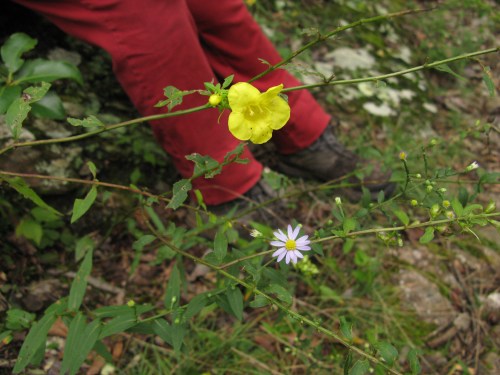
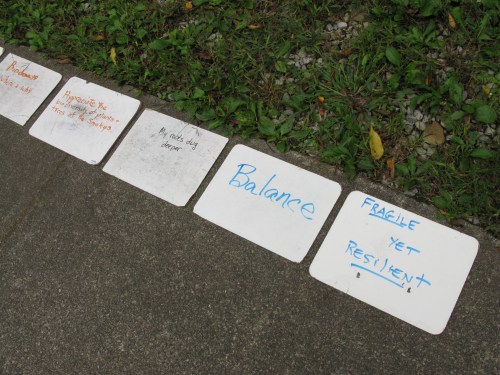
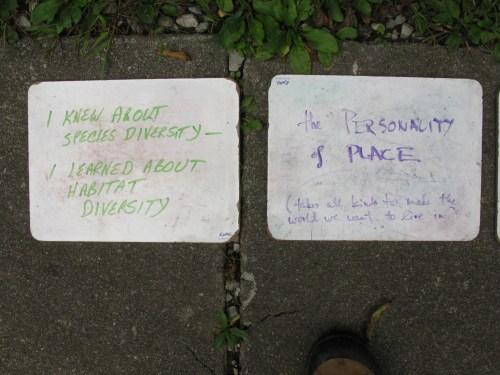
One word sums the program and purpose of Great Smoky Mountains National Park: BIODIVERSITY. These photos are from the September 2020 GSMIT program Southern Appalachian Ecology. Immersed in that diversity, I continue to absorb the enrichment, root, stem and blossom, of that community of seekers.


.     .     .     .     .     .     .

Read Full Post »

Appalachian Trail near Clingman’s Dome, 2003

[with two poems by Kathryn Stripling Byer]

.     .     .     .     .     .     .

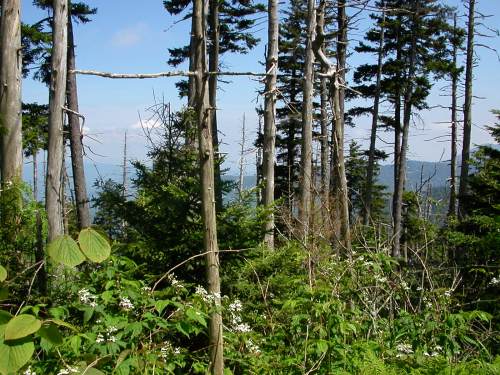
Summer has skimmed the high ridge like a chimney swift, rarely perching for long. Now on September mornings you can see your breath. First frost certainly won’t dally. Above 6,000 feet you wonder, Where is the South in Southern Appalachians?

And what about these bleached spines and gnarled knucklebones? This phalanx of snags that palisades the highest elevations against the green upon green below? The balsam wooly adelgid arrived on Clingman’s Dome in 1957. By the 1980’s the tiny insect invader from Europe, order Hemiptera, had destroyed more than 90% of the Fraser Fir in Great Smoky Mountains National Park.

This year, though, the Park Service has declared a tenuous truce. Some of those dead snags are forty years old but younger trees spared by the adelgid have matured and are making fertile cones. The very oldest trees, with thicker bark, also seem less susceptible. The insects are still around but you have to hunt for them, whereas during the earliest infestations biologists described the branches covered in wooly bugs as if they had been “whitewashed.”

What is the fulcrum of this new equilibrium? Perhaps the adelgid found easy pickings among whole communities weakened for decades by acid deposition, bad air. Coal-burning power plants up the Appalachian ridge to Canada have added scrubbers. The red spruce that had stopped growing in the ‘80’s are laying on new rings of cambrium. Leave a patch of ground alone long enough and it will grow into what it is meant to be.

Or will it? Depends on what you mean by leave alone. The fir that survive are a little more resistant to the insect, a little more acid tolerant. But what happens as their subalpine microclimate becomes less like Canada and more like Atlanta? Scrubbers remove the nitrogen and sulfur that oxidize to form acids but when you burn carbon you get carbon dioxide. Can’t scrub that out. How many degrees of warming can Fraser fir tolerate? Go higher, it gets cooler. Here in the Park you can’t go any higher than Clingman’s Dome.

Mountain Angelica, Angelica triquinata (Apiaceae - parsley family)

.     .     .     .     .     .     .

Last week I shared two poems from Kathryn Stripling Byer’s first book (1986). The two poems that follow here are from her final book, Trawling the Silences, published in 2019 two years after her death.

Kay Byer takes me into wild places and she brings me home. She names the earth, just naming a thing is a prayer, and she leaves nameless the mysteries that mist from her verses into my soul. She has left this earth, and she has left this earth to me to hold close for the days I will remain. Notice. Learn. Cherish. Tell it.

.     .     .     .     .     .     .

Three for My Trail Guide
for Jim

1.

Ascent

Before I can catch
my breath you right away
start to identify

Wild Ginger,
Mayapple,
Bloodroot.

I’m dizzy with switchbacks
I see rising into
the hardwoods you hail

Sarvis,
Sycamore,
Tulip Tree.

Trillium sweeps down
the hillside like angel wings
come to rest creekside.

You chanting hepatica,
stonecrop, anemone,
we climb until

we reach the summit,
where underfoot
some stubborn lichen

you can’t name
has already claimed
the best view.

2.

Star Grass

You name it
and there it is
at the edge
of the outcropping
over the Gorge.

Not to worry,
I placate the ravens
that harry us,
we won’t be lingering
long in your aerie.

See? Even now we are
striding away
into star grass,
its small spikes of clear
recognizable light.

3.

Galax

Squatting behind bushes,
I smell it nearby, neither bear scat

nor carrion vine, to which naturalists
liken its scent, but the breath

of an old woman lowering herself
to her chamber pot, sighing

as I heard her sigh while I tried
not to listen. Hoisting my backpack

I leave her behind in the underbrush,
glad to be back on the trail

with you, sidestepping tree stump
and blowdown, splashing through

creek bed, striding from switch back
to switch back toward sky we see,

step by step, open its window,
when, almost to summit, I stop.

Breathing hard. The scent
of her following me.

Kathryn Stripling Byer, from Trawling the Silences (Jacar Press, 2019)

.     .     .     .     .     .     .

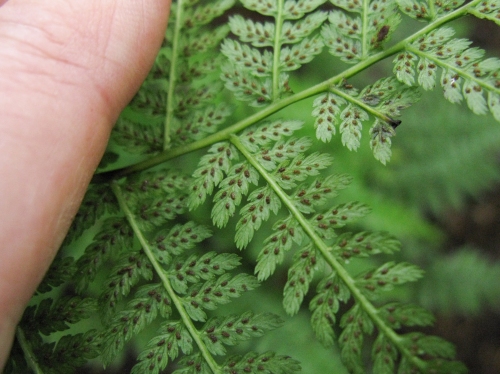
Silvery Glade Fern, Deparia acrostichoides (Dryopteridaceae - Wood Fern Family)

.     .     .     .     .     .     .

Trawling the Silences

This end-of-March day, I’d rather watch hawks surf the
thermals than contemplate what lies ahead.
Or behind in its wake. In the few hours left, let me keep
my doubts shut, my windows wide open, their sheer curtains
billowing. It’s March, after all, having come in
a lamb and departing a lioness, stalking my back yard,

leaving her paw prints alongside the patient ephemerals
rising again out of leaf litter. Squirrel corn. Spring beauty.
The first rue anemone. Today I would rather
read field guides, repeating the whimsical names
of our nice-dwelling mussels about to be wiped out by backhoes
and bulldozers. Pimpleback, Snuffbucket. Monkeyface
Pearlymussel. Don’t let their names be forgotten,
I’d pray if I prayed, though just naming a thing is a prayer,

wrote Simone Weil, turning her face to the almighty
silences. The silences. Where would we be
without them, what were we, what will we be, oh to be,
and again be, that damn linking verb. I’d rather be tracking
my lioness up to the rim of that mountain top,
I’d rather let be and let go. Let the anemone
cling, the hawks soar, the lioness squander another day
trying to find what she’s looking for. Give her another day,
I ask the Almighty. Give the birds one more day
scolding the rapscallion squirrels stealing birdseed.
I rest my case, carapace, my own little voice trawling
the silences, the bully wind boasting its presence in present-tense,
no linking verb to shut down the show. Let
my lioness lounge in the sally grass. Licking her paws.

Kathryn Stripling Byer, from Trawling the Silences (Jacar Press, 2019)


.     .     .     .     .     .     .

Spruce-Fir forests covered vast areas of the Southeast when glaciers reached their southernmost extent 18,000 years ago. As the glaciers retreated north the Spruce-Fir communities also retreated to higher elevations and now remain only along the highest peaks and ridges above 4,000 feet elevation, mostly higher. Clingman’s Dome at 6643 feet is the highest point in Great Smoky Mountains National Park and indeed along the entire Appalachian Trail. Its impressive swath of Spruce-Fir is also home to the rare Jordan’s Red-Cheeked salamander (Plethodon jordani) found only in the Park. The naturally acid soil and severe climate limit biodiversity compared to lower elevations, but other distinctive high elevation species include mountain ash (Rose family), mountain wood sorrel, mountain asters, glade fern. After sixty years the Fraser Fir seem to be surviving the balsam wooly adelgid invasion, air pollution, acid rain; it remains to be seen how long they will remain in the face of advancing climate change.

from SNAKE DEN RIDGE, A BESTIARY, illustration by Linda French Griffin

from SNAKE DEN RIDGE, A BESTIARY, illustration by Linda French Griffin

.     .     .     .     .     .     .

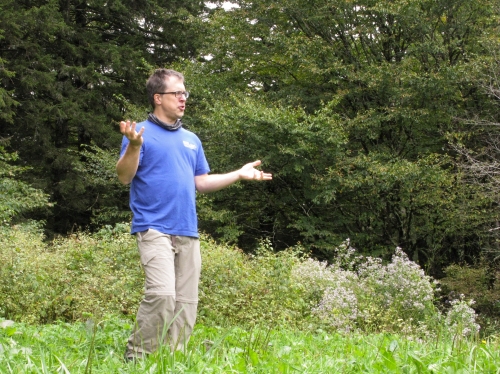
Photos by Bill Griffin from Southern Appalachian Naturalist Certification Program; Southern Appalachian Ecology, September 2020, Great Smokies Institute at Tremont; instructors Jeremy Lloyd and Elizabeth Davis.


.     .     .     .     .     .     .

IMG_1822

IMG_1609

Read Full Post »

« Newer Posts - Older Posts »