
[with 3 poems by Shelby Stephenson]
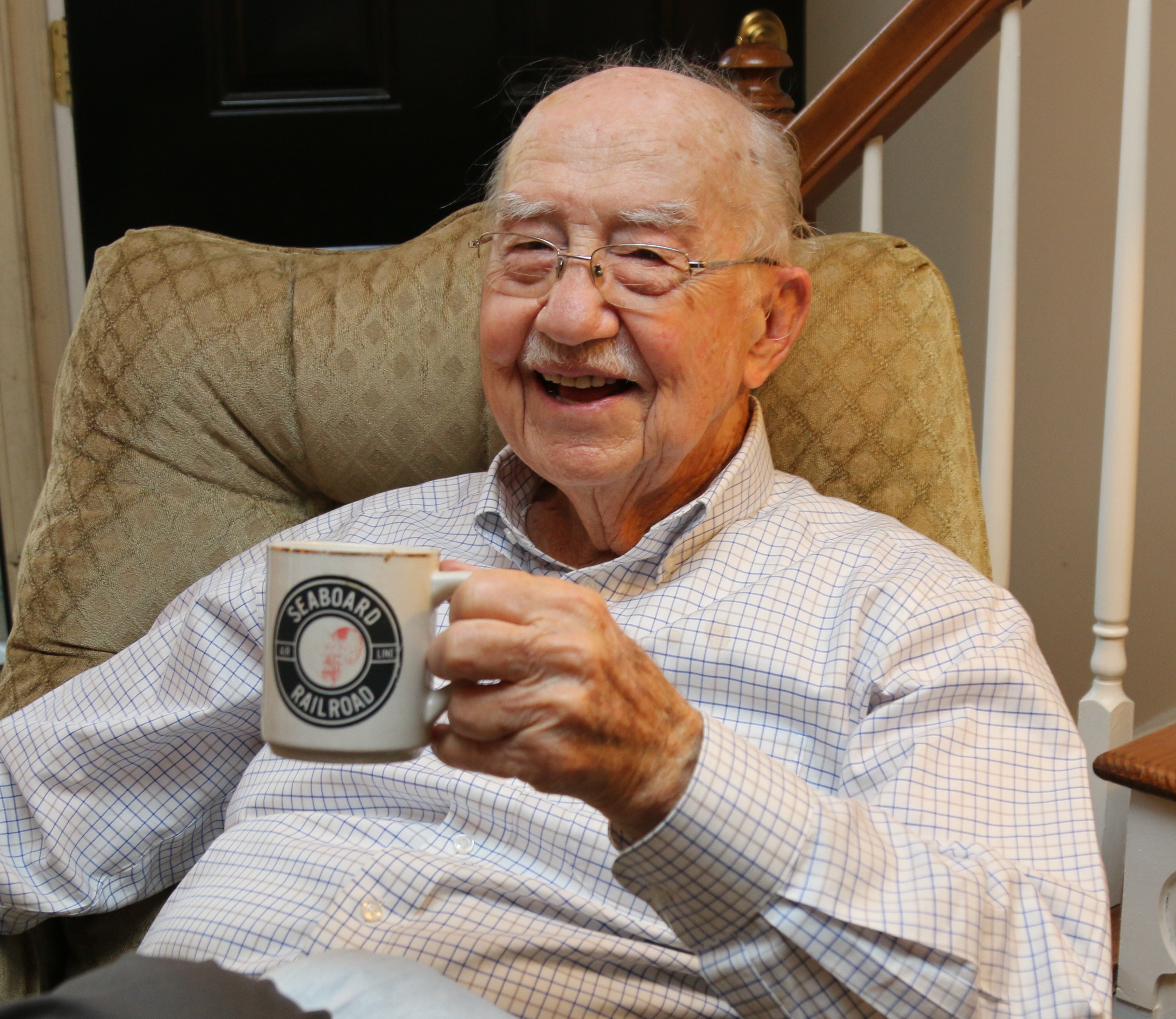
While I sit with Dad in the hospital we make a checklist of everything we need to do to close up the house. He had a TIA last night – “a little health problem” is how he’ll describe it to the agent at the News & Observer to explain why he’s canceling his subscription. His scans show no stroke. We wait for the doctor to discharge him, then he’ll take it easy (will he?) for a few days while I do laundry and winterize the cottage in Pine Knoll Shores, avoid the Labor Day traffic for the drive back to Winston.
Check lists. Dad already has a dog-eared collection, each one another page on his yellow pad. I create an updated list on my phone while we wait – first entry, “check Dad’s check lists.” When we finally buckle in on Tuesday and tick off the last item we will have accomplished something.
Or so I want to think. The next five hours in the car generate their own list: find accessible bathrooms, some roadside shade for the lunch we packed. Damn, forgot to give Mom a COVID mask at the rest stop. Unload, unpack, raid the freezer for supper. Make sure we’ve sequestered all the medical records for his appointment with his local doctor.
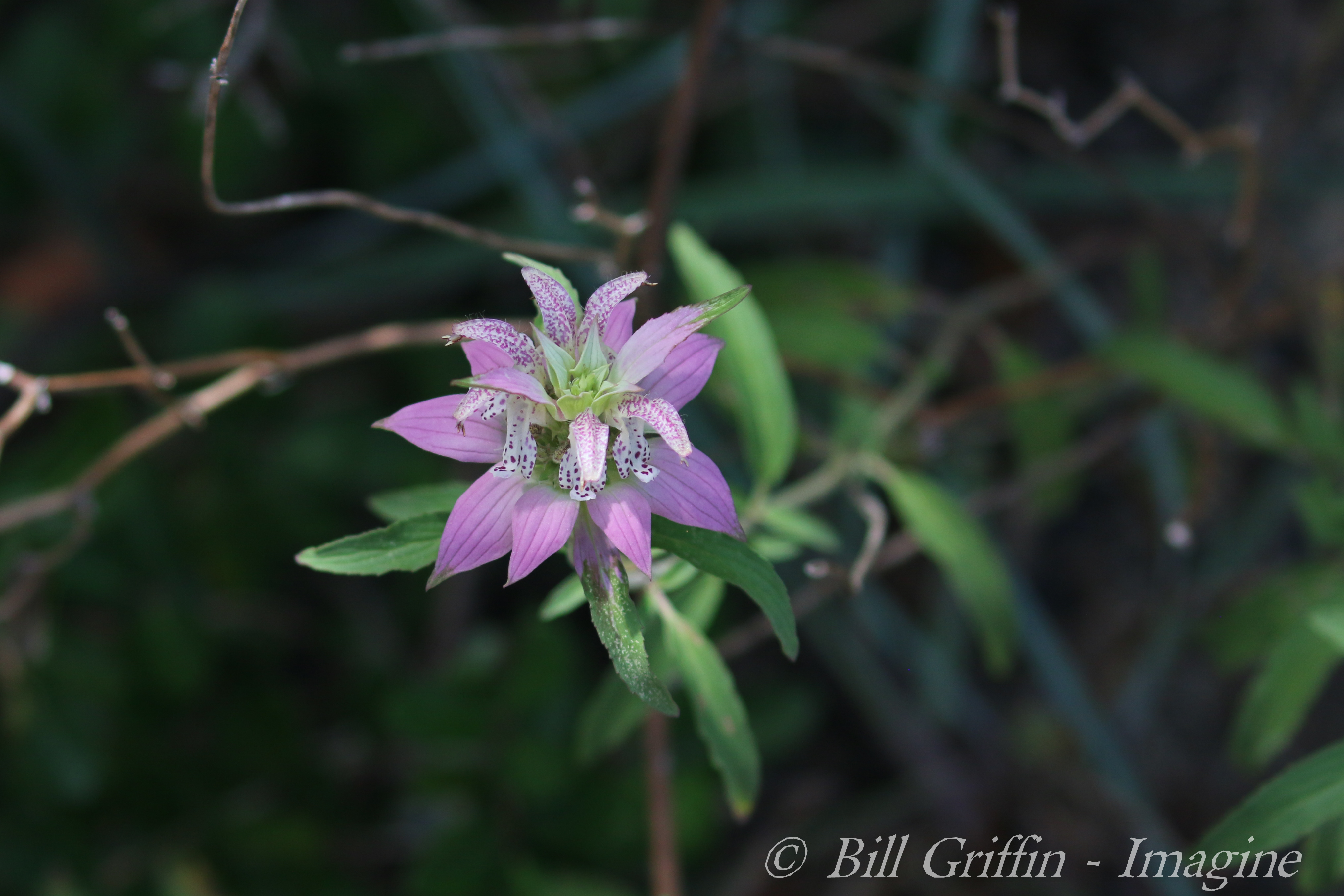
When I shoot a macro of a flower I want that anther tack sharp, but the blur of stem and leaves hinders identification of the species. Hey, I know all these lists I make are just to keep me hopping from one moment’s task to the next but I see the big picture. I read Dad’s echocardiogram and joke that he’s 94 in the body of an 80-year old. I know there’s a check list whose final box is his final breath.
But then flip the page. Another list. At the top: Remember. Let me tell you all the stuff we talked about on that drive home.
. . . . . . .
[TIA – transient ischemic attack: a brief episode of decreased brain perfusion
that may herald an impending stroke]
. . . . . . .
The Local Falls
When I come home I walk to Middle Creek
through thirty minutes of springtime bushes
to where the Mouth of Buzzard Branch trickles
with water to bridge the bubbly rushes.
Dangling their legs, a few bank-fishermen
mumble to Chub Robin full moon in May,
cigars and cigarettes in roll-your-owns,
eyes on lead-lines for bottom feeders they
bait with grub-worms dug behind the outhouse.
They fish too with fat swamp-worms freed from mud
near head of Cow Mire’s spring, a pudding-souse
Time works into clumps like huge Angus cuds.
All’s quiet: Daddy sets a turtle-hook
and baits it with chicken guts, one motion
as he stabs the stob, slings the cord the brook
settles, waffling under his location.
His hands gather Nature’s complete cunning.
Love allows for fresh food on our table,
His tongue, lips, face, limbs, and actions winning
affection of his wife, my mother, Maytle.
He’s gone; I help turtles cross Sanders Road.
Interstate-40 whizzes loud nearby.
Every waking day’s a different load.
What glory warriors must have wooed with sighs.
Pollution’s out of honor and our shame.
The sunfish’s eyes bloat like old eyes.
They wear bumps like my psoriasis (blame
chemicals on crops – fertilizers).
I bid the owl keep me pitched with tenor
to carry this: run blue-tailed swamp-rabbit?
I hear the beagles yow-yowing: Jake Mills
says those rabbits taste like the swamp run-off.
Shelby Stephenson
. . . . . . .
These selections are from more, by Shelby Stephenson; Redhawk Publications, Hickory, North Carolina; © 2020 Shelby Stephenson. Used by permission of publisher.
A new book by Shelby Stephenson in his 82nd year is an anchor to the past and a beacon to the future. His lines settle you down and hold you fast like the mud near Cow’s Mire spring. His lines open your heart to love, death, redemption – to all of life. His lines advocate for the heritage of language and the language of heritage spoken in unflinching truth. There is no sentimentality here. And woven through each poem is the music of his tenor cum baritone – never forget Hank Williams! – and the gentle humor that wraps an arm around your shoulder and lets you know you’re welcome here.
Shelby has been professor, editor, NC Poet Laureate, minstrel, and most of all traveling ambassador of the word. If you’ve met him or heard him, you’ve been encouraged to read more, to write more. During years of submitting to Pembroke Magazine while Shelby was editor, I came to treasure his rejections, hand written on a tiny slip, invariably with a message like “not quite, Bill, but keep trying.”
Shelby Stephenson still lives on his family farm, Paul’s Hill; his family has “owned” it for generations. Shelby always adds those quotation marks. It must be quite a lofty hill because from there Shelby seems to be able to survey and discern all of human nature, as well as animal and earth nature. His poems may nest in the springtime bushes near Middle Creek but they fly over the countryside and lighten all the sky. He reminds me of North Carolina’s second Poet Laureate, James Larkin Pearson (1879-1981), who in his poem Fifty Acres (1937) sees all the world from his home in Boomer, Wilkes County, NC.
I’m just beginning to see a bit myself.
More please, Shelby – more!
. . . . . . .
Circling Sonnet Number Two
You call it “realistic” that we should stay
where we are, you among your friends for life
and I, here, on Paul’s Hill miles away
from you and the very feel of a knot
sanctimonious ceremonies would
sour tightly sweaty aspersions barren
of Discord and Disdain and just a ton
of regret that we two should let heaven
outstrip all praise for earthly things and fame.
The easy new is not décor but blood
turned jelly in emotions and refrain.
Your reputation may dull those whose load
might turn both sides from love’s scent
if we do not sound out Love’s instrument.
Shelby Stephenson
. . . . . . .
For Robert Frost
When you came to Memorial Hall to read,
Your black coat made your white shirt muss your hair,
As if you were standing outside in wind.
In a speech class I presented a “there”
in “Birches,” letting music in your lines
Lead the way of conversation in rhyme.
I did not try to imitate you, as ome would.
That crackle down in your throat, the doting
Tone seeking for you that turn in your woods,
When you paused, said someting about the road
You took that made for you the difference.
You reminded me of Luke the Drifter,
One of my childhood heroes who brought me
To songs and music, along with sermons
That wadded the pulpit at my Rehobeth
Primitive Baptist Church, yes, the come-ons,
A Brother, never a Sister, lining
Off a hymn for me in perfect timing.
I had never been to a poetry
Reading, by the way, would not have been there
Except for Charlie Whitfield who barged in
My dorm room in Lewis, saying, “Shelby,
You want to see a cadaver?” (Charlie
Was studying hard for medical school.)
I was silent; my mind flashed to Rehobeth,
Mortality, death, promises, and grace,
While there beside a long scalpel she lay,
Uncovered, more naked that a fish, scaled.
I said, “Charlie, let’s get out of this place.”
We arrived at The Hall; I sat blank-faced.
A few years later I failed the law; my
Memory never did lose your presence.
I bought easements, rights-of-way, for towers
Around New Hampshire, saw birches bending,
And boulders sunning, plus those rambling walls,
And I could hear you leading me, always.
Shelby Stephenson
. . . . . . .

. . . . . . .

. . . . . . .






[…] https://griffinpoetry.com/2021/04/21/earth-day-eve/ https://griffinpoetry.com/2021/01/08/we-do-favor/ . . . ❀ ❀ ❀ ❀ ❀ . Thank you for visiting…