Feeds:
Posts
Comments

Posts Tagged ‘Bill Griffin’


[with 3 poems by Susan M. Lefler]

Forty-four years ago this month, Linda delivered our son Josh after an epic display of Lamaze prowess. We had celebrated Thanksgiving with friends; we suspect the sweet potato pie induced labor. We lived in Durham, NC, and her parents and mine plus all our family lived in Ohio, five hundred miles away. Ooh, how they wanted to get their hands on that baby boy. First grandchild on both sides, Linda and I both the oldest sibs.

I was just weeks away from my last day of med school at Duke. Benevolent powers granted me Christmas off and my Dad, as I recall, bought the tickets with a plane change in Pittsburgh. If you notice that current day lavatories have baby stations it’s probably because so many callers contacted the authorities after being grossed out by us changing poopy diapers on the main concourse.

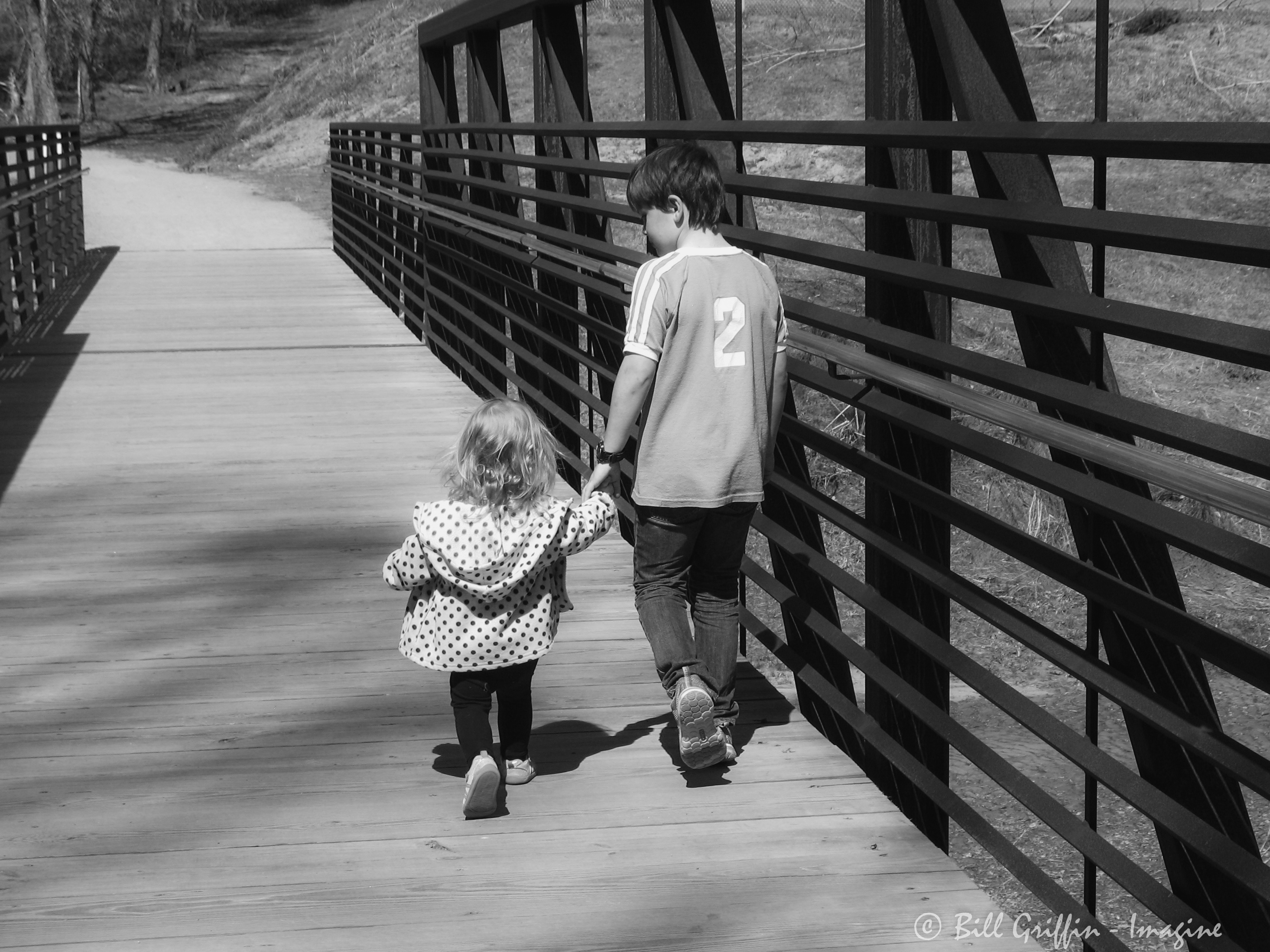
We finally cinched ourselves in for the last leg. The flight attendant noticed us – curly brown locks, rosy cheeks, has anyone ever been so young? – and remarked, “You must be brother and sister!”

Then she saw the tiny well-blanketed bundle nuzzling Linda’s breast. “Ahhh,” she said, “I guess not.”
. . . . .

Yesterday Linda and I got our COVID boosters at Walgreens. There was a moderate queue (Yay, Surry County, y’all go get them shots, OK?!). Waiting, masked, yawn, plenty long enough for Linda to forge friendship with the white-haired woman ahead of us and share a few chuckles. We were last in line when the pharmacist stuck her head out the door of the procedure room and called, “Griffins!”

I asked if we should come in together. She looked us over – hiking boots, matching gray pony tails, has anyone ever been together so long? – and said, “Yeah, if you really are together and it’s not just a coincidence that you both have the same last name.” The pharmacist never cracked a smile but I think she looked pleased when, after our needle jabs, Linda said she wished she could hug her.

Define long. In 1985 Linda and I figured we’d been “going together” longer than we hadn’t. In 1995 we calculated we’d lived in North Carolina half our lives. Are there any family stories we haven’t already told each other twice? Is it still likely a stranger would think we’re brother and sister?

When I look at Linda I see her father. When she speaks I hear her mother. What does a stranger see when they look at you? Your history is a cipher. Your thoughts inscrutable. Your desires a swirling mist. The most that stranger can know about you is how you respond to the next person in line. How you react to the person that hurts you.


.     .     .     .     .     .     .

Midwinter Garden

While I stir the soup, my husband digs.
He’s building me a garden in the center
of the barren yard. He marks out paths
with careful edges, makes them long
and straight. Already he plans walls, a gate.

Mind you, nothing grows yet.

While he digs and scatters time
like seeds, he dreams the blooms
full as we were at the start
when gardens grew from us, opening
like Fuji mums released from the confines
of their nets. He leaves the center blank
for a fountain, for the pond, a waterfall . . .
he dreams big and works to prove
that we can look at frozen ground and see
the cold tight seed begin to break,
greening toward spring.

In case spring should come late
leaving the garden t its frozen fate,
I stir the soup.

Susan M. Lefler
all selections from Rendering the Bones, Wind Publications, © 2011 by Susan M. Lefler

.     .     .     .     .     .     .

Susan Lefler is a native North Carolinian who lives in Brevard and has authored a photographic history of that area published by Arcadia Press. The three sections of her poetry collection Rendering the Bones delicately weave family heritage into a journey of moods, observations, trials – the longing we all have to find our way home. In the final section she cares for her parents as they decline through their last days. If we are to live in this world, we must all join her struggle through grief to discover meaning. To see, even in frozen ground, the cold tight seed begin to break.

.     .     .     .     .     .     .

Moon Stick

I want a counting stick to count the moon,
one notch at a time to mark, one thousand
and eight moons since my father’s birth,
five wards, depending how you count,
each month rolled into years, each year
into the next until we couldn’t tell
that time had passed, but we could see
his energy sigh out of him, and I leaned in
to ask old Cowboy Death, astride his big-assed
horse with the sag in the middle like a nag
too worn for use: how wide is dying?
Or is it dry and thin? Is it round
like the blood moon that lifts
above the mountain, or narrow as a bone
and hard to penetrate?

I want to ask if he keeps company with those
he’s taken out, or do new prospects
occupy his time? I want to ask
how many moons he plans to let go by
until he takes my father up, slings
him over the back of that old horse,
and heads away, letting the last moon
slide behind the mountain as he goes.

Susan Lefler

.     .     .     .     .     .     .

About Ashes

Ash Wednesday in the church, I listen
to the ancient words of dust and grief
punctuated with the hiss
of oxygen. Words crunch in my mouth
like little bones.

Slow bodies move forward
to the rail, kneel, submit
to ashes marked on skin, remembering
the palm green fronds, the bloom, the fire
that brought them here.

At home, I shovel ashes from the hearth
until I fill a scuttle full, the very one
my grandfather used to load coal
from the towering pile
next to the chickenyard, piece
by piece to keep the grate alive.

I load the remnants of dead trees
into a heap and haul them to the yard.
I’ll feed the lilacs with them.
They like ashes.

When the shovel lifts
for the last time, one spark
smolders still, telling the tale
once more of who we were,
of who we long to be, of what it means
to come awake, and waking
see.

Susan M. Lefler

.     .     .     .     .     .     .

.     .     .     .     .     .     .

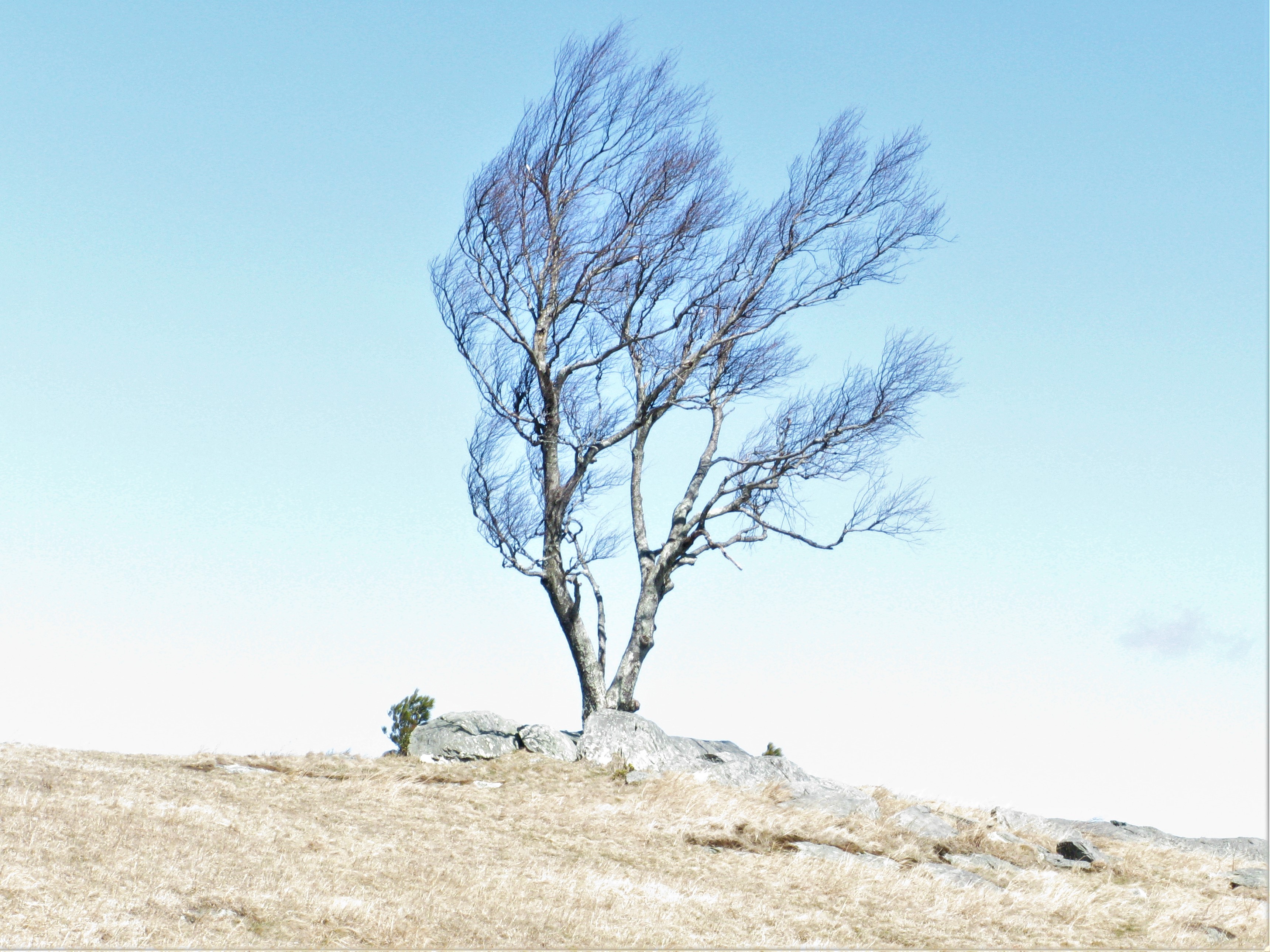
2014-06-30a Doughton Park Tree

.     .     .     .     .     .     .

Read Full Post »

[with poems by Jonathan Revere, Maggie Dietz, William Butler Yeats ]

Actually, that’s a Herring Gull.

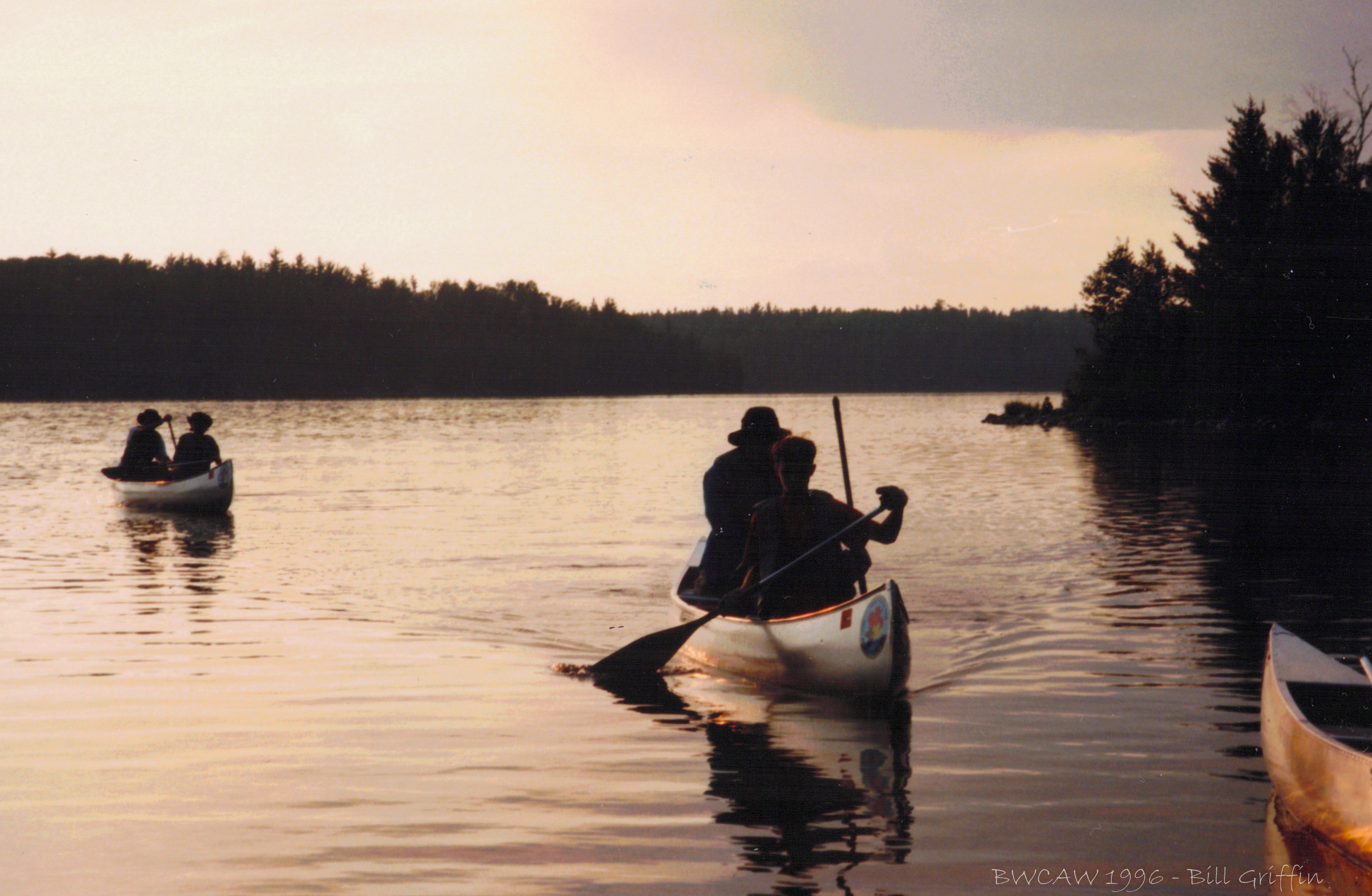
Day 7 of our Boundary Waters Canoe Area Wilderness adventure and Josh and I are feeling pretty fit in the lead canoe this morning. We’re almost across Ima Lake to our next portage, the other two canoes lagging. A quarter mile to starboard on a high bluff we spy a campsite of Girl Scouts watching and waving. We paddle our manly J-strokes and pay no attention to the big rocky crag jutting up out of the lake to port.

Until Fury rains from the skies.

Actually, more like flaps and squawks. Atop the crag one big frizzed-out Herring Gull chick gangles from its nest and Mom & Dad are divebombing our canoe. Josh and I whoop and splash and all but capsize as we invent a whole new series of paddle strokes.

We finally manage 50 yards of headway; the attackers call truce and return to the nest. Josh and I take a break while we check our heads for gull guano. The Girl Scouts seem to be convulsing – dreadful concern or laughter? And here come Matt and Greg and Little Brad around the point. They’re fixated on the Girl Scouts. They haven’t even noticed us.

Josh and I scull the canoe around and take a sighting. Hmmm. Direct line from us to the crag to oblivious canoe number two.

“Hey guys! Here we are! This way!”

Matt, Greg, and Brad are twenty feet from the crag when the gulls open fire. The guys cower so far below the gunwales they can’t even get a paddle into the water. It’s a couple of minutes before Josh and I can even breathe for laughing, then we start hollering that they’re going to have to put some distance between themselves and that rock.

The guys end up paddling with their hands, scrunched down in the canoe like drowned haversacks. Finally they catch up to us and they ain’t laughing. Or showing their faces to the Girl Scouts. At least we can’t see any fresh blood.

The five of us cool off for a minute. We look back. Around the point come Everett and Big Brad in canoe number three. Hmmm.

.     .     .     .     .     .     .

.     .     .     .     .     .     .

Gull Skeleton

In the first verse I find his skeleton
nested in shore grass, late one autumn day.
The loss of life and the life which is decay
have been so gentle, so clasped one-to-one

that what they left is perfect; and here in
the second verse I kneel to pick it up:
bones like the fine white china of a cup,
chambered for lightness, dangerously thin,

their one clear purpose forcing them toward flight
even now, from the warm solace of my hand.
In the third verse I bend to that demand
and – quickly, against the deepening of the night,

because I can in poems – remake his wild eye,
his claws, and the tense heat his muscles keep,
his wings’ knit feathers, then free him to his steep
climb, in the last verse, up the streaming sky.

Jonathan Revere

POETRY magazine, April 1971, The Poetry Foundation.

.     .     .     .     .     .     .

.     .     .     .     .     .     .

Seasonal

Summer-long the gulls’ old umbra cry
unraveled ease
but certain waves went by, then by.
The sky shook out the days.

The seabirds’ hunger rose in rings,
flung rock-clams to their shatterings,
raked gullets full, the bone-bills scraped.

High noon: oceans of time escaped.

++++++++++ *

All winter we slept benched together,
breakers, sleepdrunk children in a car
not conscious where they go.

We kneaded bread, kept out the weather,
while old suspicions huddled by the door,
mice in the snow.

++++++++++ *

In spring, the leaving bloomed—
oak leaf unfurled, a foot, resplendent
vigorous, aching to shake loose
but still dependent.

One morning moongreen loaves
rose into bones that rose to lift
our skin like sleeves,
our time together’s revenant.

++++++++++ *

Perennial fall, come cool the cliffs,
bring quiet, sulfur, early dark.
Represent as you must: dusk, dying, ends
and row us into winter’s water:

The body, wind-whipped, forms stiff peaks,
ice settles in the marrow bone.
At the chest, the live stone breaks against the beak,
beak breaks against stone.

Maggie Dietz

from Perennial Fall. Copyright © 2006 by Maggie Dietz. Reprinted in POETRY magazine online, The Poetry Foundation.


.     .     .     .     .     .     .

.     .     .     .     .     .     .


On a Political Prisoner

She that but little patience knew,
From childhood on, had now so much
A grey gull lost its fear and flew
Down to her cell and there alit,
And there endured her fingers’ touch
And from her fingers ate its bit.

Did she in touching that lone wing
Recall the years before her mind
Became a bitter, an abstract thing,
Her thought some popular enmity:
Blind and leader of the blind
Drinking the foul ditch where they lie?

When long ago I saw her ride
Under Ben Bulben to the meet,
The beauty of her country-side
With all youth’s lonely wildness stirred,
She seemed to have grown clean and sweet
Like any rock-bred, sea-borne bird:

Sea-borne, or balanced in the air
When first it sprang out of the nest
Upon some lofty rock to stare
Upon the cloudy canopy,
While under its storm-beaten breast
Cried out the hollows of the sea.

William Butler Yeats

reprinted in POETRY magazine online, The Poetry Foundation.


.     .     .     .     .     .     .

Yeats wrote On a Political Prisoner at the beginning of 1919 as the Anglo-Irish war for independence was about to explode. It refers to a woman he admired and loved (scholars differ on her exact identity) who had been imprisoned for her strong nationalistic beliefs. Yeats supported Irish home rule but had become disenchanted with radical politics, and the poem reflects that ambivalence in describing the woman’s mind as bitter, abstract thing while still admiring her patience and gentleness in befriending the gull.

.     .     .     .     .     .     .

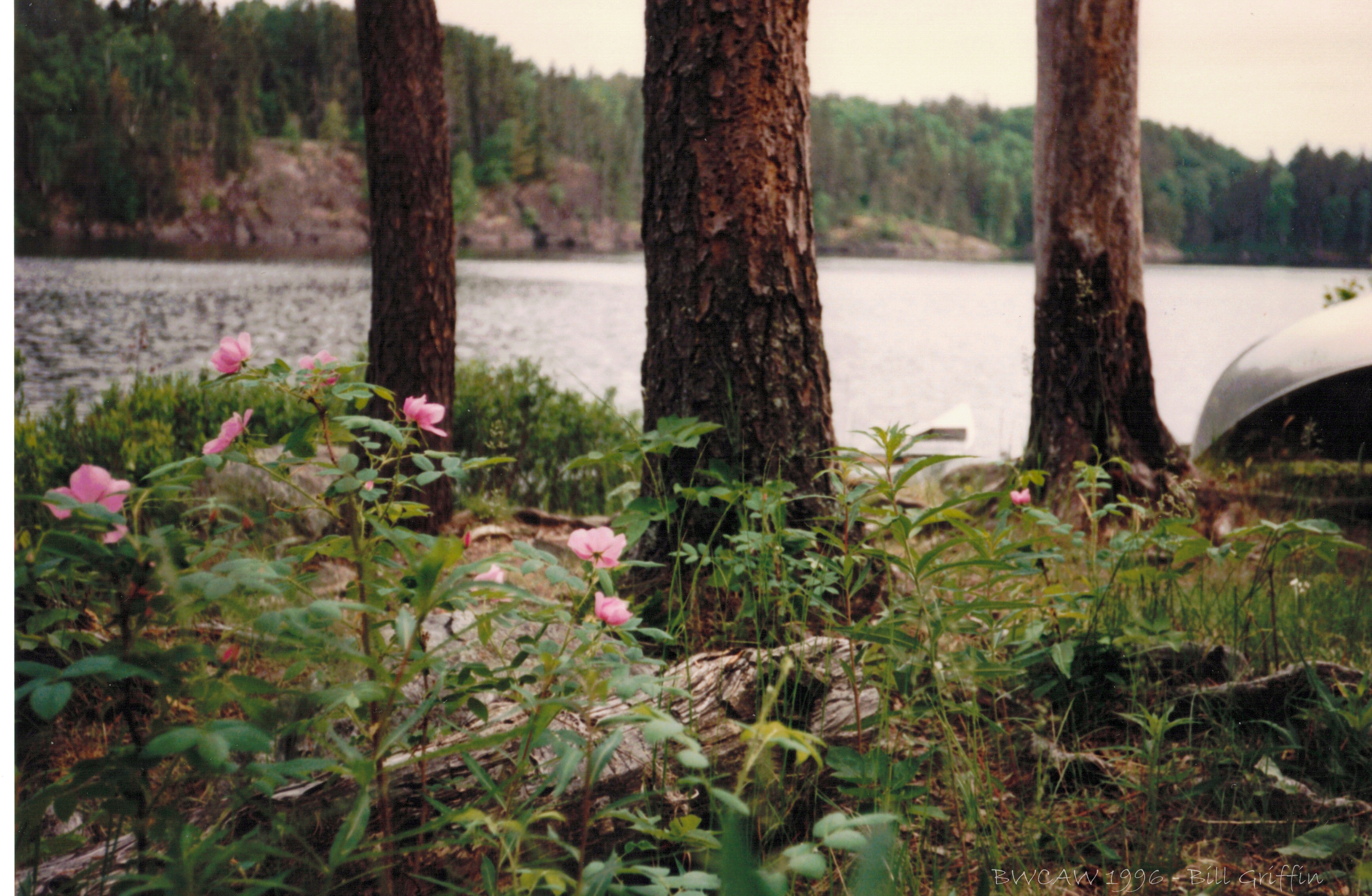
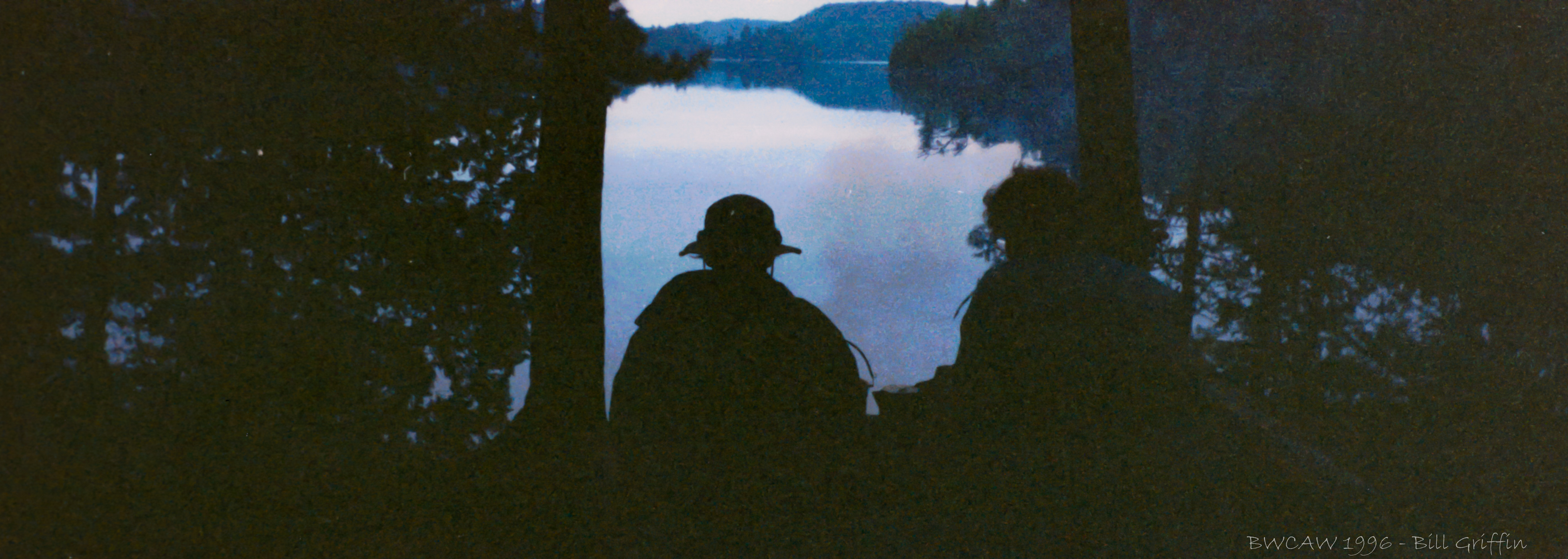
The Terror of Gull Rock occurred in June, 1996 when I and my son Josh as co-leader shepherded a little crew of Boy Scouts through the Boundary Waters Canoe Area Wilderness in northern Minnesota. Nine days on the water, 28 lakes traversed, 33 portages (carrying packs and canoes) = 70 miles afloat and afoot. We lived to tell the tales and there were plenty of tales. Thank you for all that paddling and for eating my cooking to Everett, Greg, Matt, and Brad, and to Big Brad our summer intern. There ain’t no place more glorious than the middle of nowhere.


.     .     .     .     .     .     .

IMG_1609

Read Full Post »

[with poems by Donald Hall and Charles Martin]

Have you ever imagined, while walking a well-worn woodland trail, simply stepping off into the forest? What if you moved just ten feet, twenty, into the trees? Would you be standing on a spot untouched by human feet for years? Decades? Forever?

I considered this years ago when I led, with my son Josh as co-leader, a little crew of Boy Scouts on a 10-day canoe trek in the Boundary Waters Wilderness of northern Minnesota. We camped each night on the shore of different lake. Some mornings (sunrise 0400) while they still slept I walked away from the water into the trackless forest. Did the last human rest on this lichen crusted boulder more than a hundred years ago, a French voyageur taking a break from trapping? A thousand years ago, a young Anishinaabe scout hunting meat for his village? Ten thousand years ago?

Now Josh spends every day it’s not raining trekking the Blue Ridge & foothills as a surveyor. When did a human foot last jump this creek or climb this unforgiving steepness? This corner marked by a chestnut ten feet in girth – today Josh must discover the remnant of its stump. How long must the earth rest from the tread of human feet before all sign of our passage is erased? How far is it from here to the middle of nowhere?

Last Saturday I joined a trail crew to maintain a little section of the Mountains-to-Sea trail near Elkin. The MST is a work in progress – departing Elkin hiking east, you follow Rte 268 most of the way to Pilot Mountain. Our day’s assignment was an orphan – 1 ½ miles of footpath leading away from the road and on through the woods with no trailhead or connectors. Probably no one had walked this way since it was last maintained in 2020.

Everywhere a little sun penetrates the undergrowth thrives: Goldenrod, Burnweed, Wingstem, Boneset, all manner of grasses native and exotic – summer asters up to eight feet tall, especially through the Duke Energy right-of-way beneath power lines. Add obstructions from grapevine, Smilax, fallen trees and in one single year the trail had become impenetrable, almost disappearing except for the white circular MST blazes on the trees.

In a few more years it might have lead to the middle of nowhere. Which is how you get to the middle of everywhere. Which is the trail I want to walk.

.     .     .     .     .     .     .

.     .     .     .     .     .     .

Surface

The surveyor climbs a stonewall into woods
scribbled with ferns, saplings, and dead oaktrees

where weltering lines trope themselves into stacks
of vegetation. He sees an ash forced around a rock

with roots that clutch on granite like a fist
grasping a paperweight. He stares at hemlocks

rising among three-hundred-year-old sugarmaples
that hoist a green archive of crowns: kingdom

of fecund death and pitiless survival. He observes
how birch knocked down by wind and popple chewed

by beaver twist over and under each other, branches
abrasive when new-fallen, turning mossy and damp

as they erase themselves into humus, becoming
polyseeded earth that loosens with lively pokeholes

of creatures that watch him back: possum, otter,
fox. Here the surveyor tries making his mark:

He slashes a young oak; he constructs a stone
cairn at a conceptual right-angle; he stamps

his name and the day’s date onto metal tacked
to a stake. His text established, he departs

the life-and-death woods, where cellular life keeps
pressing upward from underground offices to read

sun and study slogans of dirt: “Never consider
a surface except as the extension of a volume.”

Donald Hall

from Poems for a Small Planet: Contemporary American Nature Poetry. Edited by Robert Pack & Jay Parini, A Bread Loaf Anthology, © 1993, Middlebury College Press.

.     .     .     .     .     .     .

.     .     .     .     .     .     .

Both of today’s poems are from Poems for a Small Planet, edited by Robert Pack & Jay Parini. This next one by Charles Martin stuck to my soul like beggar lice – I’ve imagined myself stuck in a dry spell for the past several weeks. I can’t resist the epigraph by Randall Jarrell, one of North Carolina’s most luminous poets. While waiting for lightning to strike I’ll learn to endure the rain running off my chin.

.     .     .     .     .     .     .

Reflections after a Dry Spell

++++ A good poet is someone who manages, in a
++++ lifetime of standing out in thunderstorms, to be
++++ struck by lightning five or six times.
++++ — Randall Jarrell

And the one that took this literally
Is the one that you still sometimes see
In the park, running from tree to tree

On likely days, out to stand under
The right one this time – until the thunder
Rebukes him for yet another blunder. . . .

But the one who knew it was nothing more
(That flash of lightning) than a metaphor,
And said as much, as he went out the door –

Of that one, if you’re lucky, you just may find
The unzapped verse or two he left behind
On the confusion between World and Mind.

Charles Martin

from Poems for a Small Planet: Contemporary American Nature Poetry. Edited by Robert Pack & Jay Parini, A Bread Loaf Anthology, © 1993, Middlebury College Press.

.     .     .     .     .     .     .

.     .     .     .     .     .     .

[My immense gratitude to the Elkin Valley Trails Association for imagining, creating, maintaining, and improving the Mountains-to-Sea Trail from Stone Mountain State Park to Elkin and onward east through Surry County, North Carolina. And for inviting this lunkhead with a shovel to join in.]

.     .     .     .     .     .     .

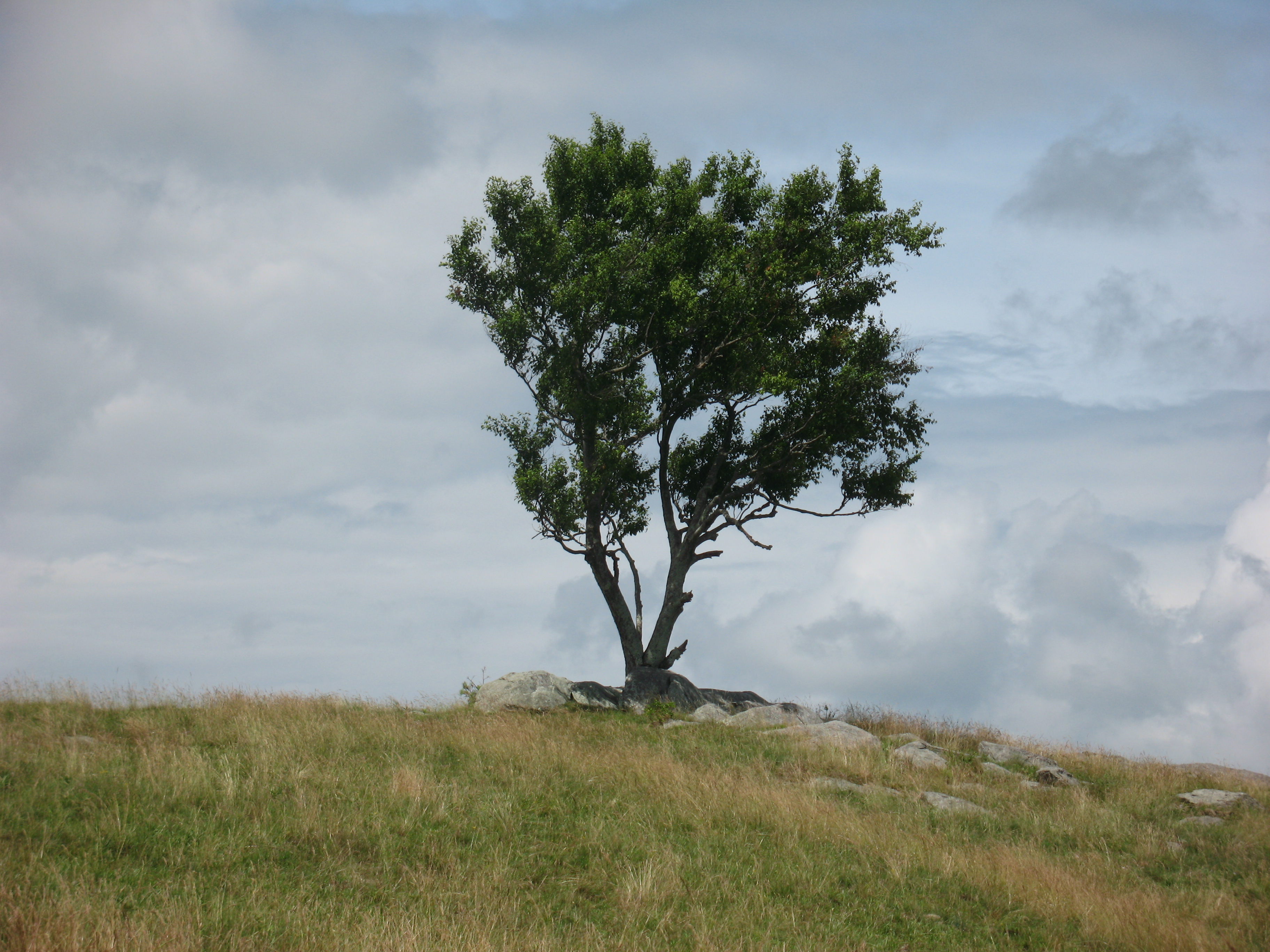
2016-10-17a Doughton Park Tree

Read Full Post »

« Newer Posts - Older Posts »