Feeds:
Posts
Comments

Posts Tagged ‘Bill Griffin’

[with poems from PINESONG 2023, NC Poetry Society Anthology]


Ghazal: Ghost Apples (Kent County, Michigan)


Ice-encrusted boughs from which transparent versions
of apples hang – each fragile as hand-blown glass.
+++
Their history: fruit on the cusp of rot, winter storm trundling
down a hillside, sleet coating each apple in sudden glass.
+++
Viscous fruit leaked from apertures until only icy shells
remained – December trees bearing quicksilver bulbs of glass.
+++
Imagine them a vivid red or green, like cascades of apples
even humble grocery stores offer on the far side of plate glass.
+++
If we shattered these globes, would they taste like hard cider
or the cloying sweetness of pulp, like edible versions of glass?
++++++
Soon these crystalline shells will melt to nothingness, the way
we all disappear. Beloved, step lightly upon grief’s bitter glass.
+++
Lavonne Adams
Joanna Catherine Scott Award First Place, Pinesong 2023
+++
❦ ❦ ❦
+++
Diversity often blooms at the edge. This little trail heading out from Isaac’s Trail Head on the MST is limn upon limn . . . boundary . . . transition. The wide riparian border along Grassy Creek attracts neotropical migrants for a rest stop each spring; Louisiana Waterthrush, White-Eyed Vireo, and Common Yellowthroat stay behind to breed here. The footpath parallels a pasture fenceline, and while cows with their calves stand flank-deep in meadow grass and blackberry bramble, all manner of wildflowers hug the margin of No Grazing: Blue Toadflax, Venus’s Looking Glass, Carolina Crane’s-Bill. Leaving creekside, the trail is hemmed by a moist rising woodland: Rattlesnake Fern, Sensitive Fern, Southern Lady Fern. And by the end of summer, if the farmer hasn’t sprayed, the trail edges will fill with Blue-Curl, Cardinal Flower, Goldenrod, Wingstem.
+++
Smaller fields and many interruptions make for many edges; diversity begets diversity. At one point along the trail a wide acreage of corn abuts a small hay field of mixed grasses. The corn field is solemn in its solitude; above the hay the air is filled with swallows, Bluebirds and Phoebes perch along the wire, and as we hike past we’re apt to flush an Indigo Bunting foraging.
+++
But then there are Cowbirds. For centuries they followed prairie bison herds and no doubt also the woodland bison of the Carolina piedmont. Now they follow every human disturbance, common in cow pasture but just as common on suburban lawns. Cowbirds are exclusively brood parasites, known to lay their eggs in the nests of over 220 other species. To their detriment. Kirtland’s Warbler has been pushed beyond the edge of “endangered” by Cowbird predation, and most birds do not have the ability to recognize the foreign eggs which will hatch and out-compete the rightful occupants. How to resist? Escape the edges. Reverse the fragmentation. Cowbirds will not follow into deep woods – warblers nesting deep in the forest are safe.
+++
It isn’t the Cowbird that threatens wood warblers, whip-poor-wills, vireos. It is shrinking habitat. Many species thrive at the edge. Some, though, require wide wild expanses. How much wild can we leave?
+++
+++
Upon which side of the boundary does poetry perch, thrive or decline? And what would it look like, that restored, invigorated poetry habitat, a definite nudge toward thriving? More fifth graders setting pen to page and seeing their lines is print, as they have in this year’s annual Pinesong anthology by the North Carolina Poetry Society? More opportunities and promptings to write – whatever one’s background, training, preferred theme, chosen form? And more readers?
+++
That’s where we come in. This morning I broke a nice sweat hiking miles along meadow and creek, through upland forest to lakeshore and back. This afternoon with feet up I’ve covered another rewarding meander through the pages of Pinesong. Student poets, grades 4 through undergrad; dozens more of adult poets, many names entirely new to me. I’ve traveled new places, I’ve encountered the unexpected and enlightening, I’ve paused long to reflect, and I’ve even laughed out loud. As Robert Frost wrote in The Pasture: “You come, too.”
+++
❦ ❦ ❦
+++
Eleven Lines In Search of the Perfect Rhyme
+++
Is it accidental that bereft almost rhymes with death?
+++
Watching geese rise in a chevron formation The New River
at Grassy Creek, flying south to warmer waters, I think of how
+++
sons and daughters grow up, how the nest – that like death
almost rhymes with bereft, – empties with their flight.
+++
How these words fly out of my mouth like startled birds.
+++
How we dream of loved ones who are dead. How we forget
what happened in the dream, what we did, what we said.
+++
How there are hundreds of ways to leave, not only the 50 ways
in Paul Simon’s song, and thousands of ways to grieve, bereft.
+++
How you can both the lover leaving and the lover left.
+++
Beth Copeland
Carol Bessent Hayman Poetry of Love Award Honorable Mention, Pinesong 2023
+++
❦ ❦ ❦
+++
Pinesong is the annual publication of contest winning poems by the North Carolina Poetry Society, founded in 1932. Pinesong 2023 is Number 59, edited by Sherry Pedersen-Thrasher with assistance from Joan Barasovska. This year’s volume is dedicated to David Radavich, former NCPS President and steadfast supporter of poetry and the arts.
+++
You can learn more about North Carolina Poetry Society and its contests, plus read previous years’ editions of Pinesong . . . here.
+++
If you would like to purchase Pinesong ($12, postage included) please contact NCPS Vice President of Membership Joan Barasovska: msjoan9[at]gmail[dot]com
+++
A free issue of Pinesong is available to all NCPS members in good standing who request ($2 mailing expense). Please contact Joan, as above.
+++
❦ ❦ ❦
+++
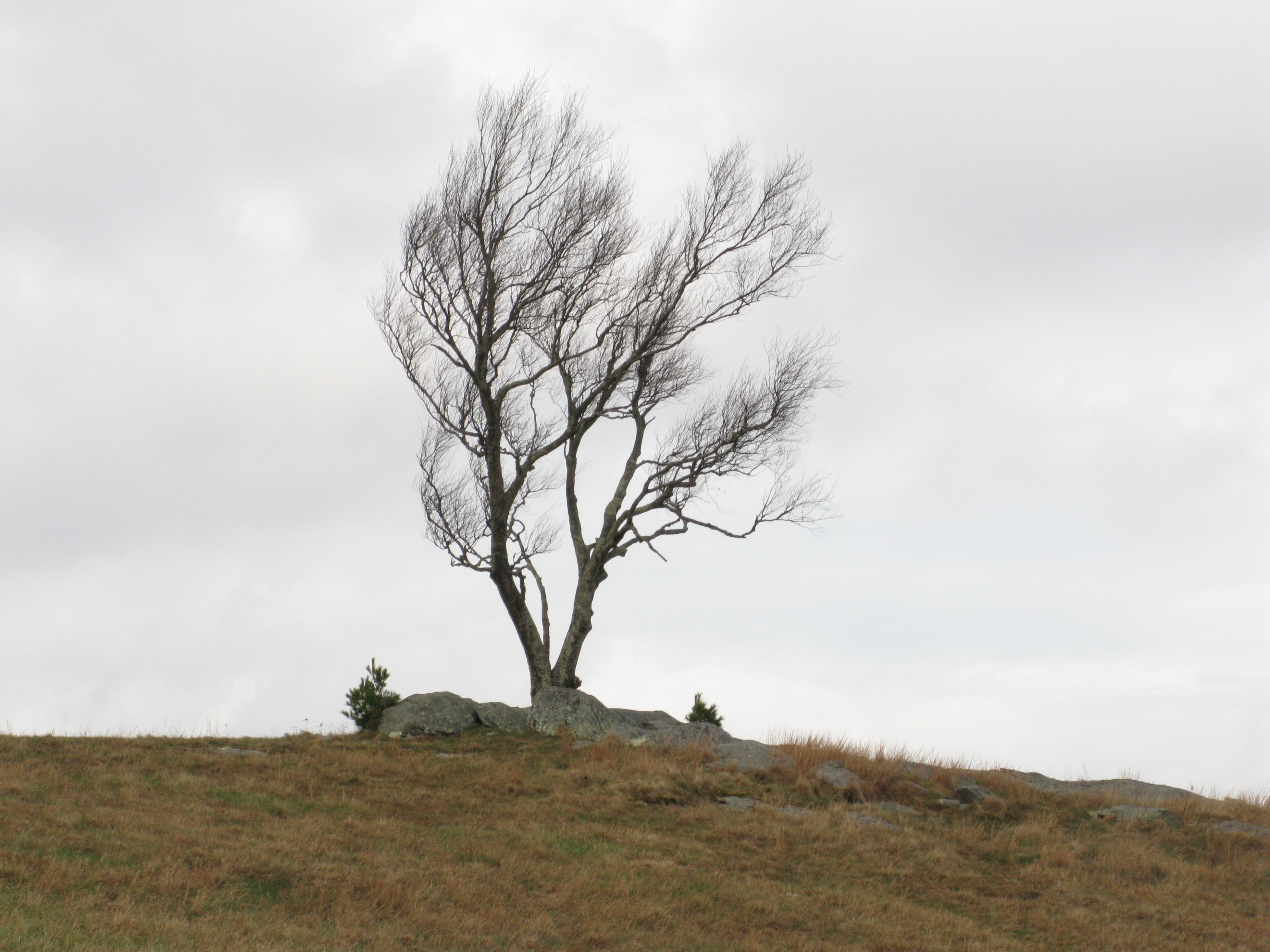
2020-09-08b Doughton Park Tree

Read Full Post »

[featuring two poems by Regina Garcia]

This Fire Tastes Like . . .

This fire won’t taste like the last ones did
Singed souls torn up, crying, wandering,
wondering how to get love back
How to fix life
How to repair
The last fires tasted like . . .
Tasted like loss
Tasted like shame
Tasted like despair
Tasted like mourning
Tasted like no way out
Tasted like no way back
tasted like Tulsa
Tasted like Elaine
Tasted like Watts
Tasted like Wilmington
Tasted like old Eppes High . . .
Tasted like all that it had consumed

This fire tastes different
This fire tastes fed up
This fire has eyes set
Beyond loss
Beyond prison
Beyond death
Beyond the graves
This fire has new eyes
Fixed on that “New New”
Jerusalem
New fire gonna propel these children into
promised land
They won’t need the water fo the oppressor
Because they are children of living waters
And Raging Fires
And earth tht has promised fertility
Yet pushed out weeds to choke and distract

This fire tasted different
It tastes like energy

Tastes like righteous fury
Its fuel is dark kindling root
It will combust from a place to deep
So misunderstood
So, underestimated
That it will not be contained
This fire tastes different
It tastes like resolve

It will reject any attempts to thwart combustion
The internal combustion
It will incinerate attempts at trickery for
It has seen the video and believes
It waw murderous hubris
It saw The Dead that were tried for dying
It saw the solid stance of patronizing defiance of other fires
It saw the lies stifling acrid air
This fire tastes different
It tastes alive
It will not stop until there is nothing left that can stop it
It will then scoop the ashes and build
Jerusalem
Yeah
This fire tastes different
This fire tastes like revelation
This fire tastes like change
This fire tastes like
Hope

Regina YC Garcia
from The Firetalker’s Daughter, Finishing Line Press, © 2023


❦ ❦ ❦

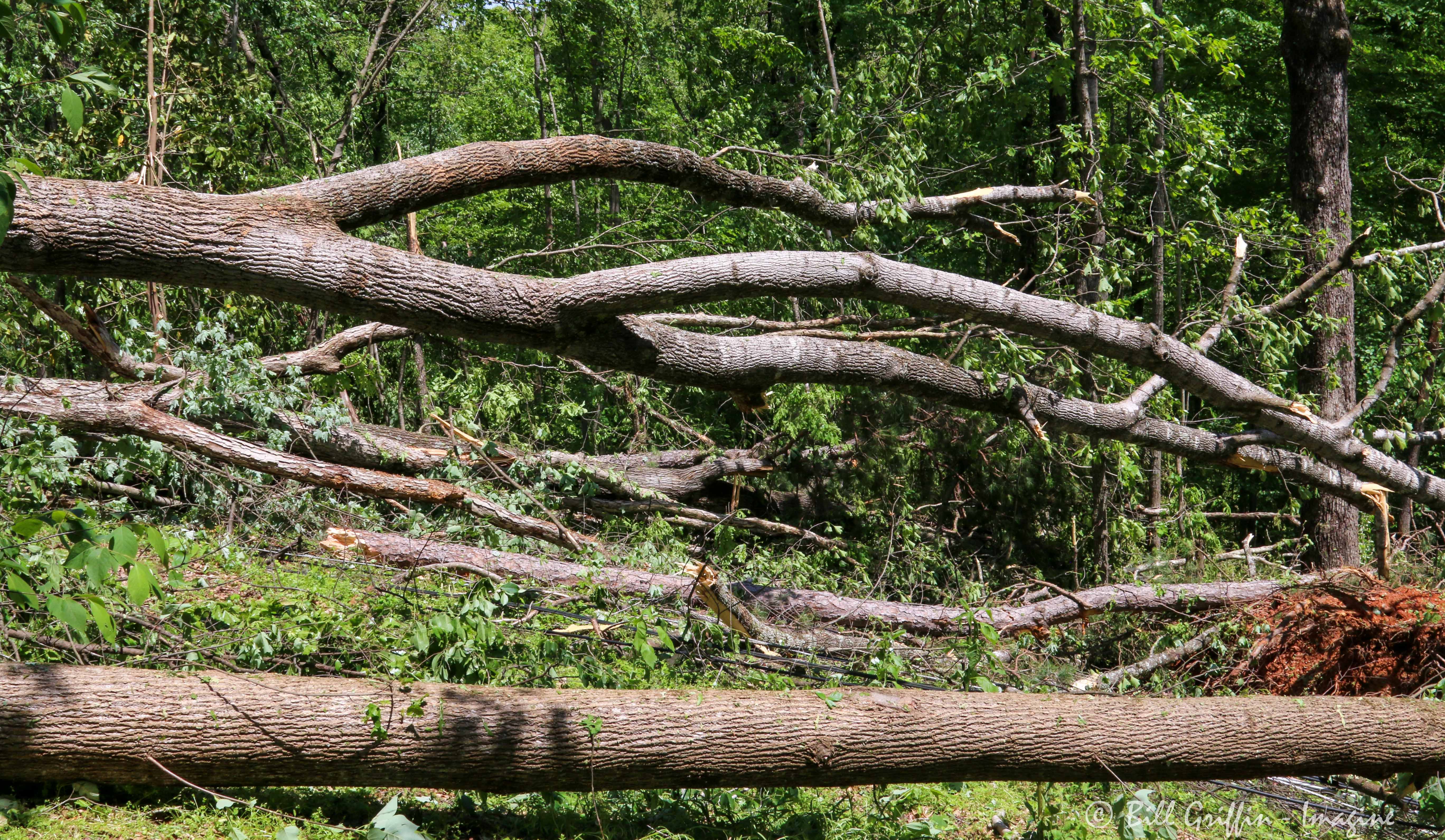
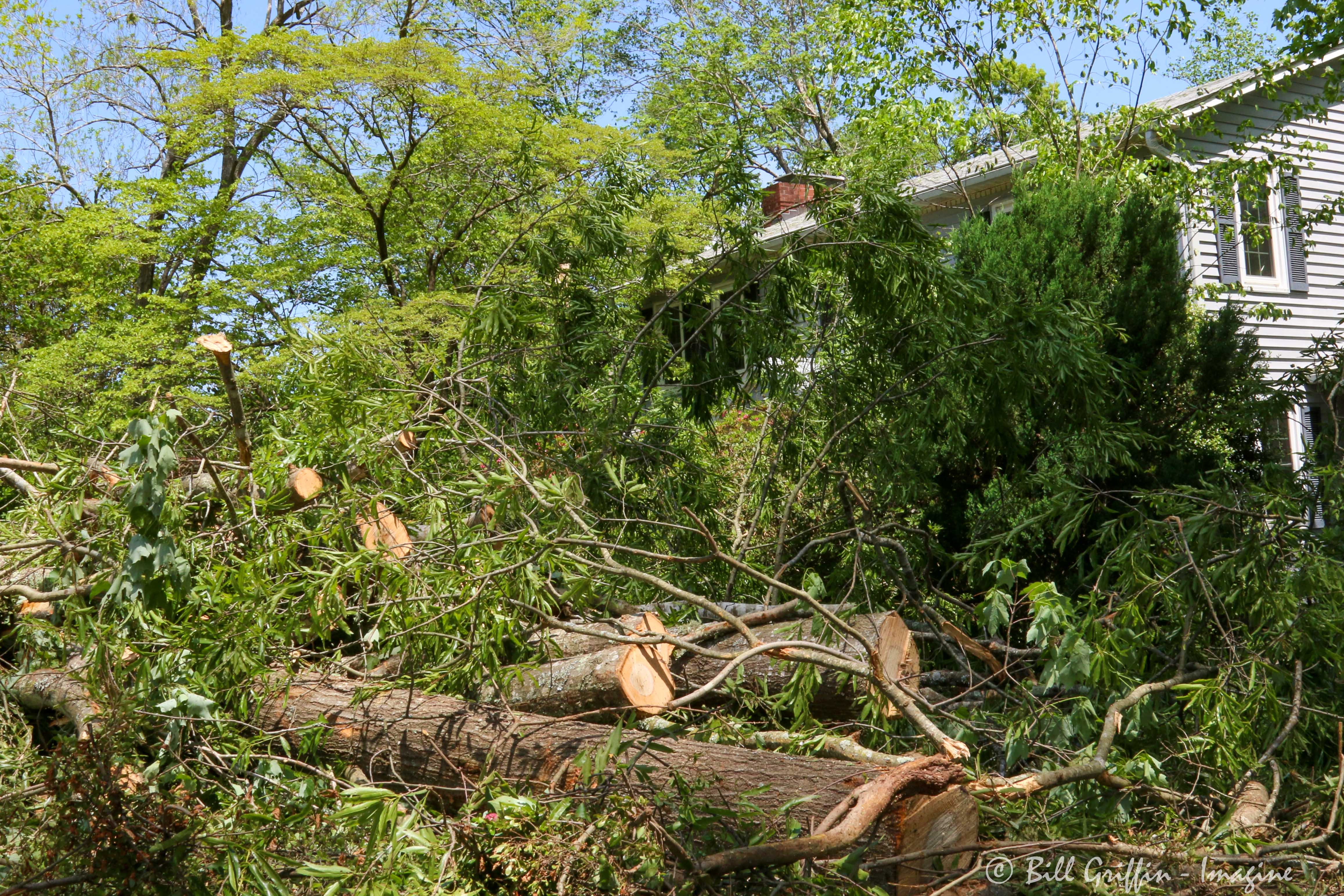
Rainstorm, windstorm, limbs thrashing the house in panic, rain attacking the windows through the screens: we can feel Amelia’s mounting fear each time the sky grows dark and she asks, “Is this a tornado?” No, Honey, just a big storm. We don’t get tornados around here.

Until this afternoon. Severe Thunderstorm pings on the phone while we’re watching a movie with Amelia in the living room. Within minutes the sky is slate and the TV goes black. When hail peppers the porch we lurch for the basement. Amelia makes it into a game, the divine gift of the seven-year old, and while we play with flashlights we hear the drumming of rain but assume those contrabasso reverberations are thunder.

It’s all over in fifteen minutes. We climb the stairs and open the front door – our neighbor’s venerable willow oak, trunk at least two meters in diameter, is angled across the road into our driveway. Not crushing our living room. One sugar maple at the end of our house has had its spine snapped and hurled, but not into our bedroom. As our neighbors emerge, we tally and discover no one is injured (although not true of several roofs).

Everyone’s yard is full of twisted trunks and limbs or huge redclay balls of the uprooted. We notice most of the trees aligned prostrate in the same direction and we mutter, “Downburst.” “Straight-line wind.” Two days later, though, the National Weather Service makes its proclamation: an E0 tornado. We wonder if Amelia will ever want to finish that movie we had started. And if we ever get our power back on, we’re ordering some more flashlights.


Regina Garcia’s new poetry collection, The Firetalker’s Daughter, is elemental – wind, earth, water, fire. She describes her mother and her son as Firetalkers – they can speak to pain and talk it into submission. And isn’t that what these poems do, speak to the pain? If words could remove the pain of the world, the inescapable pain of living, perhaps a new day would dawn when the earth would have no more need of words. We will never see that day.

But strong words, words of compassion and truth, can raise us out of the pain. We can stand on the shoulders of the poetry, the hymns, the stories of the Firetalker and see a way beyond the pain. We can see a road before us where pain can’t wield its power over us. We can live in this world of pain and still proclaim joy, the rise of indomitable spirits from the embers. Oh, Regina Garcia, may your poetry lead us there. You are the Firetalker.

❦ ❦ ❦

The Fire That Consumes: The Burnings of Black Histories

Have you ever seen fire, the kind that consumes . . . ?
a house, a block, a street?
a community?
a town?
a nation?

Have you ever stretched fingers towards fire just because you wanted to feel
the last gusts of breath before the flames melted . . . ?
Mortar from brick?
Wood from steel?
Skin from meat from sinew from bone?
Have you ever jumped at the crack and splinter before the crash?
Hid your face to escape the blowing soot?
Covered your nose to block the smell of escaping gases the incineration of
flesh? Squeezed eyes shut to restrain the release of tears?

Fire destroys completely
Everything
Except memory
Those who have lived through fire never forget that all that was lost cannot
be returned, cannot be restored
Pre-fire life flickering in memory

Have you ever known the indignity of stolen memory?
Of erasure of thought?
A disallowing of necessary history passed on from ind to mind
No collective storage
Trashed as disposable waste
Scores of nations and families of people relegated to one layer of life lived
while other layers burned away
Withdrawn from the light of day
Layers that could have lit
the illumination of minds
the awareness of conditions

the recognition of irreverence and unrighteousness
the tackling of generational traumas
the overcoming of fear
the pride of resilience

Layers of heated memory
Deemed villainous
Tossed into the ashes
By thieves, those who dread
The power that it brings
And the rise of indomitable spirits from the embers

Regina YC Garcia
from The Firetalker’s Daughter, Finishing Line Press, © 2023

❦ ❦ ❦

Read Full Post »

[This is a re-posting of one of my personal favorites, from July 27, 2020. May we each discover what is most perfectly suited to our individual nature; may we discover the perfect curvature and gravity of the universe. And may we continue to re-discover the poetry of the late David Treadway Manning, one of my favorite human beings.

I am re-posting rather than creating an original offering for this date because our neighborhood is still digging out from a tornado that struck us on April 28, 2023. No people injured, many hundreds of trees down, brighter wider horizons absent their green banners, a few nights of darker skies and brighter stars and the company of the waxing moon.    —-   Bill ]

Young Isaac is strolling through the orchard, another undifferentiated non-linear autumn afternoon of this perplexing equation we call life. Some of the fruit has detached itself and translocated several meters closer to the center of the earth. It has begun, with the help of fermenting microorganisms, to succumb to entropy. Isaac steps in it. He slips.

Isaac’s 70 kilograms, density of water, accelerate at 9.8 meters per second per second. Suddenly prone, the gravity of the situation strikes him. There, 10 centimeters from the tip of his nose, lies a perfect red spheroid. Glossy. Fragrant. The tiny lenticels on its taut unblemished skin are arranged with the symmetry of stars distributed across the heavenly sphere. “What an apple!” young Isaac exclaims, “Artios!” (his years of Greek instruction now finally relevant): That which is perfectly suited to its nature. The essence of appleness.

And how will Isaac’s own essence be transformed by this epiphany? How will yours and mine? No longer undifferentiated, will he discover his many gifts and their ideal trajectory? Will we ours? For are we not each of us an essence, our process of formation either distracted and garbled by the noisy physics of our history and our surroundings or alternatively able to grasp that trajectory perfectly suited to our unique nature? Besides mass and density and the ability to struggle upright against gravity, don’t we human animals also possess the agency of choice and change and discovery?

Isaac sits up and regards the apple. You know where this is headed. It will be 218 years before young Albert slips and falls and realizes that what Isaac experienced is actually the curvature of space. Meanwhile why don’t we all, each of us, sit up and regard our nature. Artios! To become that which is the perfect expression of our nature. It’s about time.

.     .     .     .     .     .     .

I have been a DAVID MANNING fan since I first sat up and discovered poetry. Whether he does it with a compassion that draws me deeper into the circle of human family or with a wry and pointed barb that makes me snort, he regards human nature and tells its truths. I will be the first person in line when his NEW AND SELECTED is released from PRESS 53 later this year.

And I have been favored to preview the manuscript. Wandering these wonderful poems spanning decades I enter an inner landscape and pass from reader to personal companion. There is a deep imagination at work; there is joy and no lack of laughter and sometimes a little weirdness; there are bright moments of insight and connection.

Most of all there is WONDER. No aspect of our human situation or our confounding universe goes unnoticed. David’s artistry gathers a desert landscape, a snatch of opera, a funky conversation and weaves from them with perfect sense and sensitivity an affirmation. When I reach the final page I say, “YES, that is the way it is.”

.     .     .     .     .     .     .

Sailing with Anne

Santa Monica, California, 1950

After her sailing class we cast off
into the ruffled Pacific blue, tide
incoming, echoes of great breakers
lapping the dock. She-the sailor,
the tiller, mine.

As we headed west, tacking
into a strong breeze I remember
marveling at who she was
to do these things. I imagined her
at the helm become Anne Bonny,
running a four-master down,
the setting sun turning red lights
in her hair.

I hope we left something there-
if only a boat paint-scrape
or salt spray from her hair.
Maybe something from that day
was never lost, but joined
the Pacific’s history, some trace
still riding the blue circuit
between the poles, with the sea-grape
and tiny life that make the coral.

.     .     .     .     .     .     .

Star Journey

Sometimes at night I return

to the Griffith Park planetarium

where stars from the surrounding hills

come out to music.

North of Los Feliz

I step from city lights into the night

sky of Patagonia with its wind-swept shores

under the warm lights of Fornax,

Fomalhaut, Alpha Crucis, a bright canopy

of southern stars, to music-Gymnopedie,

Satie’s barefoot dance.

Then, under the soft night sky,

I take off my shoes

and find my way into the stars.

.     .     .     .     .     .     .

David Manning’s NEW AND SELECTED POEMS is anticipated later this year from Press 53.

Star Journey first appeared in KaKalaK 2017 – Anthology of Carolina Poets
Sailing with Anne first appeared in Pinesong: The North Carolina Poetry Society

.     .     .     .     .     .     .

.     .     .     .     .     .     .

IMG_0880

Read Full Post »

« Newer Posts - Older Posts »