Feeds:
Posts
Comments

Posts Tagged ‘Bill Blackley’

 . 
[including Carbon Canyon by David Duchovny]
 . 
We cannot know how good for us
the bad times were. 
. . . . . . . . . . . . . . . . . . . .High Five in the Sky
 . 
Bill and I decide to take a walk together this autumn afternoon. The year is 2020. Does visceral memory plunge you into context? When did he and I last see each other, if only above the nasal hem of an N-95? But today we will be together outdoors, the light breeze adequate to disperse particulates as we pick our way along the steep trail down to Dutchman Creek below our homes. Near neighbors, nearly always separate in our daily meanderings. Today reconnecting. Today again confessing to each other that we are connected somewhere deep in our guts, spleen & pancreas, since that first day in 1979 when Bill introduced himself to me as my Senior Resident and I stepped onto the wards at Durham County General as an Intern.
 . 
That first night we stumbled on the brink of fucking up completely. One patient we had stabilized and put to bed crashed at 3 AM while we were looking elsewhere. We were able to bring her back and at 0600 coffee before rounds with the Attending we listed to each other all the things we’d just learned. Still learning now, forty-one years later, Bill on the bench I’ve planted on my hill and me on a rock six feet distant. We confess completely fucking up again, this time our friendship when we split ten years after that very first connection. Time is not calligraphy, an artful line advancing with curlicues that mark each pleasant memory. Time is a patchwork of craters where the bombs went off. Time may soften a few scars, allow fireweed and fleabane to bloom amidst the desecration, but be careful you don’t stumble at the lip of former chaos.
 . 
Or do stumble. Look up for once from always looking down. Pull up your sleeve and share the bruises. I’m talking to you, one Bill to another Bill. I am grateful to have you as my friend.
 . 
 . 
❦ ❦ ❦
 . 
Carbon Canyon
 . 
We lived in Carbon Canyon the, before the fire,
unpack that given irony – were there no
carbon copies, we so unique and blessed?
 . 
There was a time when I walked
with my three-year-old daughter
(I think three . . .).
Anyway, I know we were walking the deep decline
of Carbon Canyon
on one of those short, mommyless jaunts . . .
And we came upon
the recently car-crushed carcass
of a gray field mouse, part three-dimensional
as in life,
part flattened as in a drawing,
the weight of the car
having made its lower half unreal, a cartoon.
The drive long gone,
unaware of their handiwork, guiltless.
 . 
A tiny trickle of blood from its slightly opened
mouth, a last profound unheard utterance,
so perfectly dramatic and telling
as if to seem placed by a movie crew
hiding in the bushes perhaps.
 . 
And my daughter (two, three, four?)
about to spy it on the ground, and I, a daddy,
with knowledge spilling out of my pockets,
life lessons, sense a teaching moment for the disquisition
on mortality that very parent believes
every three-year-old needs –
(see, it all ends, best laid plans and all that,
life’s unfair; carpe diem, little one;
Latin for . . . heaven; there but for the grace of god –)
in these moments, I realize I am nothing but a recording
of my own parents’ voices – their greatest hits,
my soul their phonograph . . .
 . 
Fade in: a father slows his daughter, allowing
the chance to happen upon a dead mouse,
it/death knowledge. Consequence. Mortality.
But it is only now, as we kneel,
that I notice the vibrant cha-cha line of ants
dancing in and out of the ruined creature
in all their anarchic discipline,
carrying to and fro unseeable bits of meat
and nutrient mouse ooze.
 . 
And my breath catches
because suddenly this lesson is for Daddy,
and it is Daddy who cannot face too much death,
the death after death, my death
in this mouse’s mouth, my daughter’s death.
I’ve not quite stomach enough
to face the pieces of us all carried off into oblivion,
eaten till we are unrecognizable, digested,
shit. Roadkill.
 . 
Dizzying, I say, “Oh, let’s go sweetheart . . .”
 . 
But it’s too late – my daughter,
two or three or four, has seen
leans down farther, her blue eyes
in inch or two from the ground, and says,
“Daddy, look the ants, there’s so many of them.”
“Yes, I see. Maybe we should let the mouse sleep, let her
sleep.”
 . 
I take her hand to lead her, though I don’t know where.
I know I am blind and unprepared,
a child leading a child,
and the little one stops and smiles,
and points back to the carnage –
 . 
“No, the ants, Daddy, the ants – look how much they love
her.”
 . 
David Duchovny
from About Time, Akashic Books, Brooklyn NY; © 2025
 . 
❦ ❦ ❦
 . 
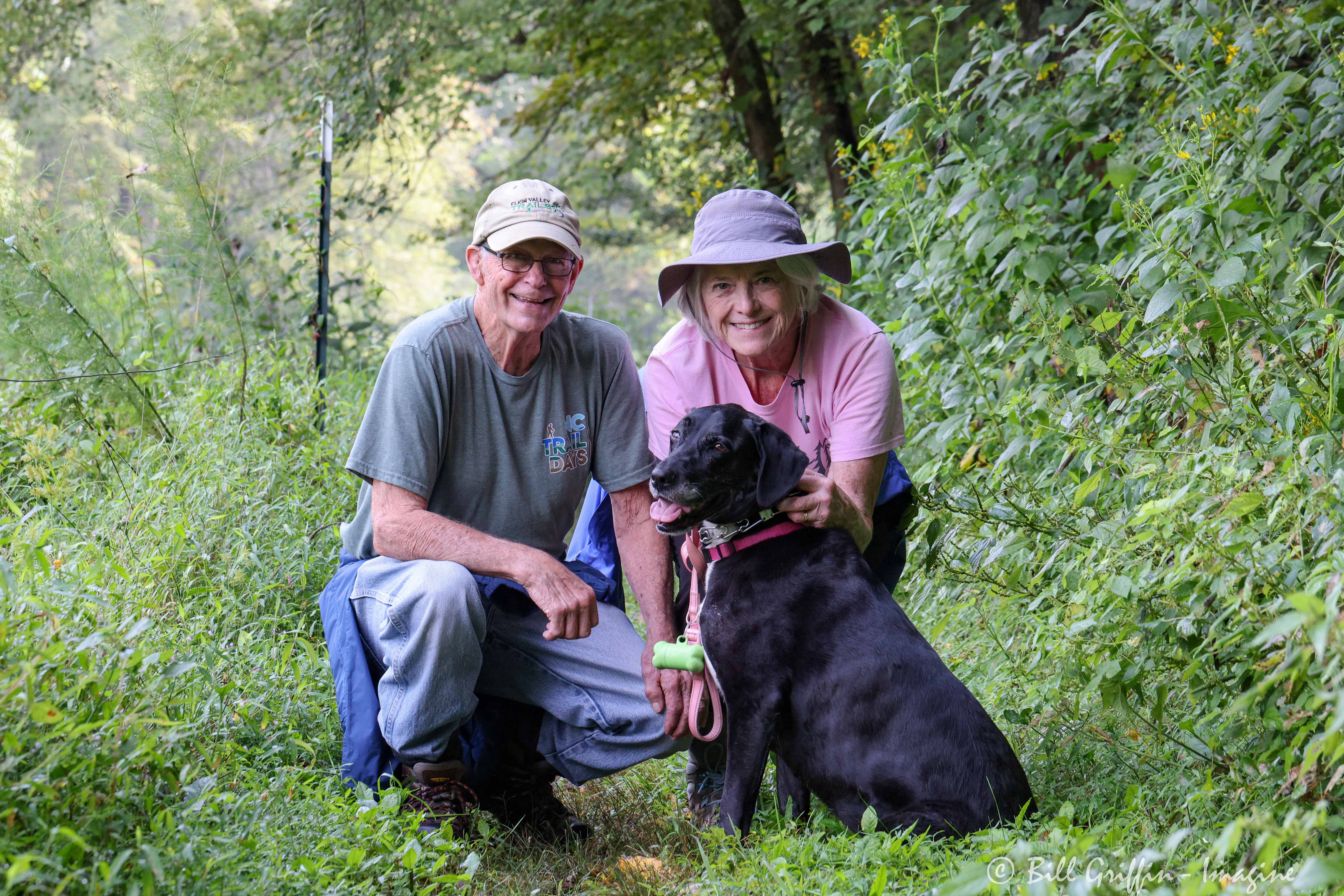
This morning, 6 Sept. 2025, I pick Bill up at his door for another walk. Before we get in the car he hands me a gift, a book, a book of poetry. Poetry, admit it, has been the gravity that brought Bill and me back to earth after we had orbited so far apart. Years of smoldering enmity smoke out when a friend made us sit down together in the sam room to read poetry, to write it, to share it with each other. Something as tenuous as spider silk can still contain the angry wasp – we did indeed think we were still intent on stinging each other until we discovered we weren’t. One line leads to another. Today Bill reaches out to give me David Duchovny’s book after he himself has read it, most pages heiroglyphed with his own lightly pencilled checkmarks and squiggled connectors. Which I will pay more attention to than the words themselves.
 . 
Time, I tell myself, is a crap teacher. I’m always ever looking backwards at the time I’ve mangled and wasted, misunderstood and misspent. If time is so instructive, why can’t I look forward and craft a hunk of time into the shape I hope it shall become? Now time has brought Bill himself across a health threshold from which there is, this time, no returning. We talk about it as we reach our trailhead; we live within its reality as we walk the trail. We reach our limit, turn around, walk back towards the car, and time keeps on arrowing in its singleminded direction. Here we stand in the mess and glory of autumn blooming. Some flowers, dying and dry, want their seeds to hitch a sticky ride on our pants; some pods pop as we brush by; some buds are just this day erupting. Time is not a thread. Time is a thousand threads, a billion-billion threads and all tangled and intertwined like this patch of hog peanut within the thicket of goldenrod. You can’t pick it apart but here and there you can find the flowers. Wherever our threads have crossed and re-crossed, Bill, I will keep learning to be grateful.
 . 
❦ ❦ ❦
 . 
David Duchovny is an actor, director, singer-songwriter, podcaster. About Time, his first full length poetry collection, follows four published novels and is available HERE.
 . 
❦ ❦ ❦
 . 
 . 
 . 
Read Full Post »

Forest Bathing Trail, Grassy Creek off Mountains-to-Sea Trail

[with poems by Lucinda Trew and Jane Craven]

Last week I took a walk in the woods with my oldest friend Bill (distanced by 2-meter dog leash). We were forest bathing (shinrin yoku): phones off, listening to Grassy Creek accompany our rustic trail, smelling leafmold, fungus, pines, going nowhere and getting there; reflecting on the moment, simmering in our conjoined past which stretches all the way back to our grandfathers who worked together on the same railroad 60 years ago.

Every trail, though, has a way of turning. Almost back to our cars, Bill happened to ask, “What are you going to do with your stuff before you die?” Us old guys, especially old poets, think about dying. Good story fodder. Let me tell you the one about . . . . Just not usually as concrete as what will become of our earthly matter when no one wants it any more.

Stoff: German, translates as substance. Two synonyms for Oxygen are Sauerstoff and Atemluft, the first meaning acid substance (early chemists’ misconception that all acids must contain oxygen) and the second meaning air for breathing. We humans can live about 3 minutes without oxygen before our brains lose neurons and our substance begins to degrade, but oxygen is pure poison to many microorganisms and tricky to deal with even for our own mammal cells (or why else would anti-oxidants be such a big deal?).

Stuff is pretty frangible. Are the moment’s mental occupations or the day’s consuming concerns any more tangible? Bill shared with me a photo of his granddad Enoch Blackley in his engineer’s gear from the 30’s, outline of pocket watch visible through the denim of his overalls. I have one very similar of my granddaddy Peewee Griffin. The bit of stuff comprising those old prints, grains of silver on paper, is mere milligrams of matter; the cubic volume of memory those images reveal is larger than many lives.

My Stoff – carbon, nitrogen, phosporus – will feed the trees. May I leave behind the tempo of my walk, the sound of laughter, honest tears of compassion, a couple of good poems. Maybe that’ll do.

.     .     .     .    .     .     .

These two poems are from Kakalak 2020, the annual anthology of Carolina poets, by writers whom I don’t know and hadn’t read before. Lucinda Trew’s Of Stars fills me with wonder, all the universe in a crow-eye seed, somewhere within the secrets of universe wanting to be spilled out. Jane Craven’s Speaking of the World does just that, the image of a small flower expanding to hold the pain and contradictions of the most intimate relationships.

Metaphor is the tool that communicates the mysteries which swirl around us and within us, the inexplicable spark of our synapses, the spin of our electrons. Some things can’t be spoken, only sung.

Forest Bathing Trail, Grassy Creek off Mountains-to-Sea Trail

.     .     .     .    .     .     .

Of Stars
If you wish to make an apple pie from scratch, you must first invent the universe. – Carl Sagan

The conjuring orchard man
holds hemispheres in sturdy hands
cupping chaos and creation
presenting apple halves
for inspection
and the revelation

of stars
a crop circle enigma etched
within sweet flesh
five symmetrical rays cradling
crow-eye seeds
small enough to spit
vast enough to hold eternity –
the very dust and stuff

of stars
carbon, nitrogen, oxygen
phosphorus – the breath and wingbeat
of birds who rise from reeds and nest

the rush and thrum
of boys who scrabble up bark, swagger
wave applewood swords

the sway and silhouette
of branches, girls dancing
longing for the moon

of pulse and surge
of cities, song, engines
prayer

the earthen realm
of roots and worm, turnips
and bones

the axial turn
of tides and shells
molecular chains

and of apples
twisted exquisitely, evenly
in half
spilling stars
and seeds and secrets
of the universe

Lucinda Trew, Kakalak 2020, Main Street Rag Publishing Company

.     .     .     .    .     .     .

Forest Bathing Trail, Grassy Creek off Mountains-to-Sea Trail

.     .     .     .    .     .     .

Speaking of the World

Pinprick faces open in a violet fever behind my house – swathes
of mazus flowering downhill. A cultivar

from the Himalayas, it’s bred to survive scarcity and climate extremes.

In your world, the doctors have gone, left your body

a prescribed burn, lightly
elevated in a rented hospital bed, handfuls of pills labeled for days.

The trees, to a one, freeze beneath a milky lichen – and you who sleep

year round with open windows are speaking of the world –
of the last deer you saw weaving through balsam, of the bear

who bent double the birdfeeder, wild turkeys and their long-
neck chicks, a lone slavering coyote crossing the yard.

Grief, you say
three times,
each a dry leaf
papering
from your lips.

I left you in the boreal world, rushed back to my own life.
And I admit this with unnatural ease, like there’s no shame

in turning toward the sun, in enduring.

Jane Craven, Kakalak 2020, Main Street Rag Publishing Company

.     .     .     .    .     .     .

Lucinda Trew: http://trewwords.com/about/
Jane Craven: https://www.janecraven.com/bio

.     .     .     .    .     .     .

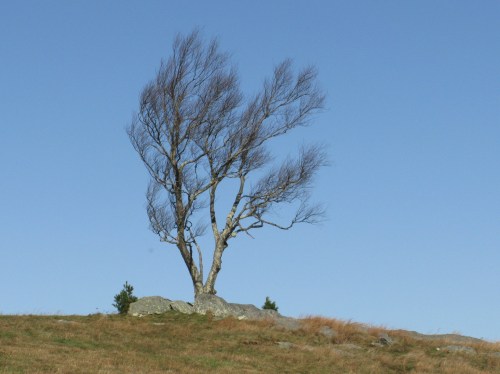
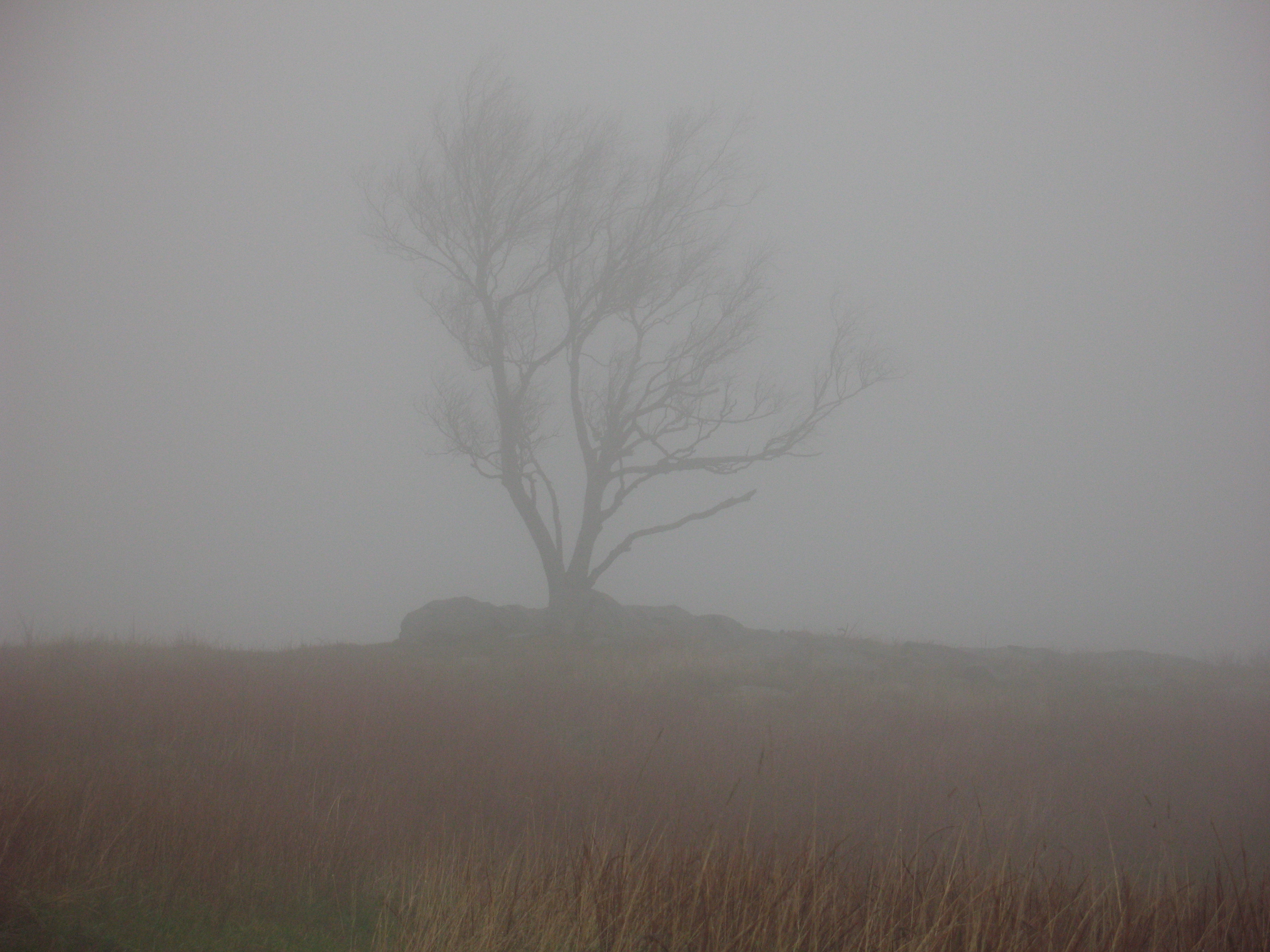
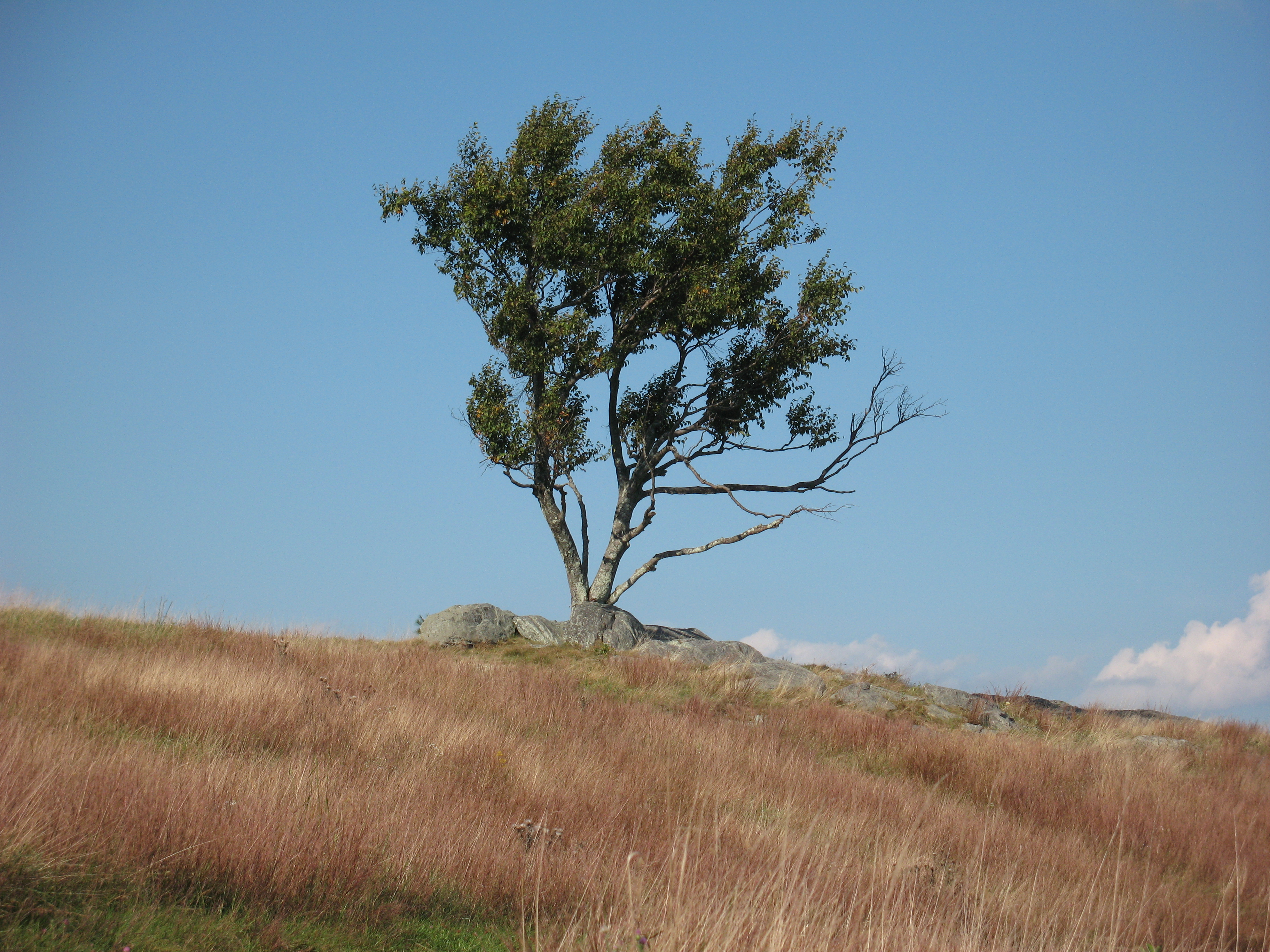
2020-11-03b Doughton Park Tree

Read Full Post »

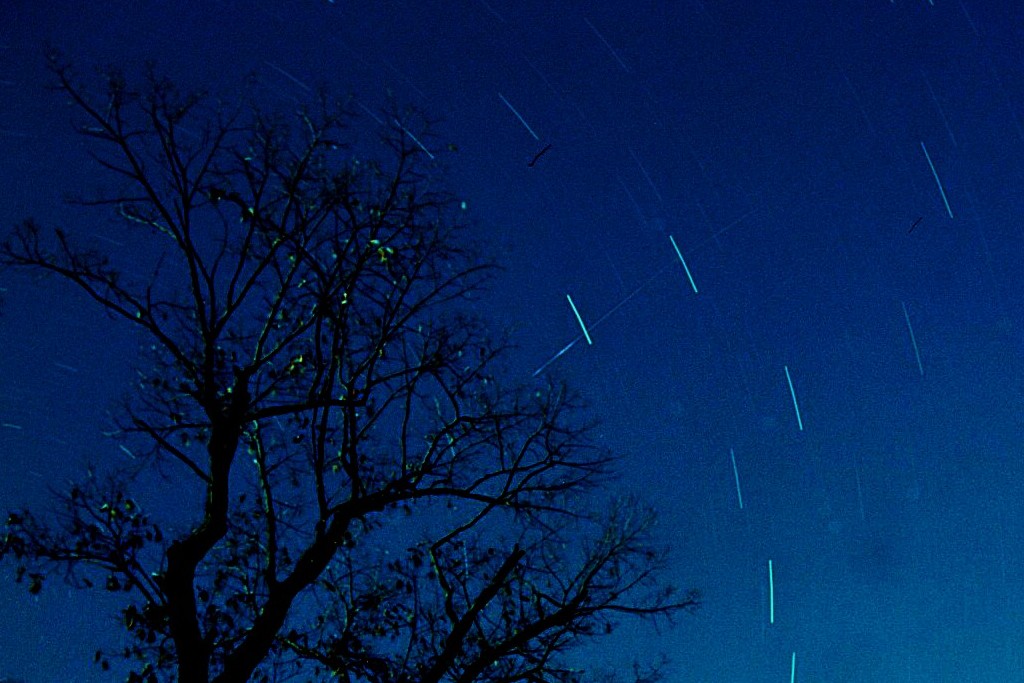
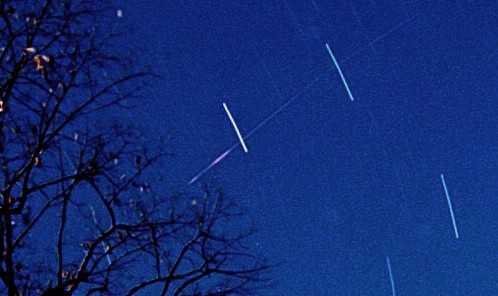
Crab follows the Twins, then Lion uncurls himself into the midnight sky.  Bill and I uncurl our mummy bags on Bill’s deserted hillside at the edge of Surry County.  The bulky biceps and pectorals of the Blue Ridge have our back.  We are miles from town, close to a mile from the nearest mercury vapor thief of dark adapted vision.  We’ve put on our longjohns and wool hats to recline in November darkness and be amazed by showers of meteors.

The year before I’d spent a moonless night on a grassy knoll in Doughton Park on the Blue Ridge Parkway.  While cold seeped into my backbone and breath frosted my beard, I had watched hundreds of flares and streamers, an utterly silent celestial bombardment without any crash and boom of artillery.  This year, though, Bill and I had an unwelcome guest.  Luna hovered at our shoulders, the sun full gold across her face.  Her glow overpowered all but the brightest meteorite flashes.  We had to trust that the stars were falling, but only at long intervals could we see their spark.

Img14

.     .     .     .     .

My friend Bill Blackley is a moon-bright sky.  His poems are the flash of meteorites.  When you meet Bill you will be warmed at once by his bright charm and quirky wit.  You’ll immediately sense that he never met a stranger.  Within the first minute he’ll have you laughing at one of his stories, or he’ll be listening to your own life story with deep compassion.

That’s the illuminated Bill.  In the darkness, artillery crashes.  I first met Bill in July, 1978.  He was Senior Resident, I was a green intern.  In all the years since then, though, I don’t think I would have ever really known him if not for his poems.  Oh, the charm and wit are there; so many of his poems reach out their hands and just welcome you in.  But read on — the crash and conflagration show through on nights when the moon has failed to rise.

Img06_copy_crop

.     .     .     .     .

These two poems by Bill sneak up on you and bite.  An Auger Bit may fool you into thinking it’s a simple reminiscence of the good old days, but its key word ends the first line — son.  The speaker is teaching his own son, and the time they share among the tool bins also redeems the speaker, son of an alcoholic who has broken the chains and freed his son.  Freed himself.  The title itself grabs me — what cutting edge and piercing point can we read between the lines?

I love to play with the title of the second poem, too.  Time Piece, it’s a piece about time, not only how we measure time but how we live it, and live through it.  And once again there are hidden teeth here.  The poem counts milestones of regret across the years, the loss of an heirloom, anger over being a victim of theft, feelings we can all identify with, but then there is the soul scorching image of peeling the watch from the arm of the dead soldier. Our measly hours:  this poem struggles, as we all do, to create some meaning from our years and at the end to discover some peace.

.     .     .    .     .

An Auger Bit

Let’s rummage together son
this pawn shop aisle, bins
stacked with monkey
wrenches, pulleys, winches
C-clamps, pliers, bastard files
blue snap-lines and ball-peen
hammers antiquated by electric
drivers and laser levels.  Your granddad

once worked wooden handles, oiled
calipers, turned them on shipyard steel
in Charleston harbor and launched
battle cruisers.  Let’s gather

chisel, plane, hacksaw and slot head
Yankee driver in memory of when
he holstered a yellow folding rule
a blunt pencil in his shirt pocket
before hocking his tools to quench
a thirst for a Four Roses.  Let’s mine
bins until we find a gauge calibrated
to plumb whiskey’s undoing.

.     .     .     .     .

A Time Piece

Two-finger blow a kiss
goodbye to dad’s graduation
watch left for easy
pickings on a beach blanket.   So long
to the self-winding Seiko rolled
in gray sweat pants outside
the handball court where
a thief slipped my treasured piece
into his pocket and beat it
while his lookout grinned.  Bon voyage
to the green-rimmed Swatch
a kid sticky fingered
from my pool locker .  C’est la guerre
to the radium-dotted Bulova I peeled
off a National Guard soldier in Vietnam
and airmailed, along with his scorched
effects, to Altoona.  Adios
to a fourteen-dollar Timex I tossed
to a co-worker when presented a fake Rolex
at my retirement gala.  Gods chuckle
at us mortals caching batteries, winding stems
and punching in our measly hours.

[first appeared in Cave Wall Issue #3, Winter/Spring 2008]

.     .     .     .     .

Bill Blackley is a retired family physician and a full time advocate for the public’s health.  He has saved you and me and a good percentage of our state’s population from cancer and lung disease through his relentless research about and opposition to biomass incinerators.  He has also promoted the literary health of our state’s youth as director since its inception of the Gilbert-Chappell Distinguished Poet Series.  AND . . . ten years ago he made me take over as treasurer of the NC Poetry Society, which has promoted my literary health (although it didn’t quite save me from cancer). Bill, I owe you, old pal!

.     .     .     .    .

IMG_6432

Read Full Post »

Older Posts »