Feeds:
Posts
Comments

Posts Tagged ‘AE Hines’

 . 
[with 3 poems by AE Hines]
 . 
A foot of new snow
 . 
and down the middle
+++++ of our icy street
a dawn congregation
+++++ of ravens, all blue-black
and wing, hunch
+++++ in their strange bureaucracy,
as if arrived to divide
+++++ the daily assignments. Even
at this age, I still see signs. Even
+++++ a gathering of black birds
on a snow-covered road,
+++++ a Rorschach test
that conjures a warning
+++++ in my anxious machinery:
 . 
an assembly of plague doctors –
+++++ with folded feather arms, dark
nodding heads. I wonder what
+++++ they are here to tell me.
None of us is promised green lights
+++++ and straightaways, but sometimes
the bloodwork comes back
+++++ quietly, the tumor
benign. Sometimes, just up the road
+++++ from where you lie in bed,
brakes give way and barrel
+++++ a terrified trucker across four
frozen lanes into your
+++++ could-have-been path.
 . 
AE Hines
from Adam in the Garden, Charlotte Lit Press, Charlotte NC; © 2024
 . 
❦ ❦ ❦
 . 
Imagine you really like to eat. No, I don’t mean you enjoy sitting down at the table, plate in front of you, bite by bite, chew & swallow, push away and say, “That was good!” What I’m talking about is when your eldest son calls and asks, “How’re you doin’?”, the first thing out of your mouth is, “For supper I had . . .”
 . 
It’s a blessing that Dad likes to eat. My experience from forty years of geriatric practice is that once you lose your appetite you’re going to have a tough time ever finding it again. The first thing Dad usually brings up when we talk is what he needs me to pick up at the store. He’s thinking two meals ahead, tonight’s supper, tomorrow’s breakfast. He can’t walk as far as the kitchen any more, he can’t rummage through the cupboards or the fridge, in fact there may not be many things left in life for him to enjoy, but he can think about something good to eat.
 . 
That’s why this morning I’m poking around in the freezer and shifting unidentifiables in the back of the refrigerator, holding a shopping list and a yellow pad. Besides chucking out the old and vaguely greenish, I’m making Dad a list. A “MENU” I’ll leave at his bedside. There’s a column for meals in the fridge, a column for freezer, and at the bottom is that most important header of all: TREATS. I found four kinds of cookies in the pantry. Four flavors of pudding we originally bought for Mom. Chocolate brownies with M&M’s his cousin June brought by. Some zucchini bread a neighbor dropped off (and it is good). Please don’t forget the Trader Joe’s Vanilla Ice Cream.
 . 
From here, then, it’s off to Harris Teeter. I’m sure I’ll see some more things Dad would like as I cruise the aisles. They say the olfactory sense is tightly cross-linked to the hippocampus – a familiar smell instantly evokes vivid memories of old associations. I suspect for Dad the gustatory sense is equally evocative. Maybe he needs a little country ham with red eye gravy. Maybe spoon bread or hushpuppies. Maybe I can find the recipe for Mom’s famous German chocolate cake.
 . 
In our final days, may we all treat ourselves to what brings us joy.
 . 
 . 
❦ ❦ ❦
 . 
Eden
 . 
I recall placing ripe plantain on the lowest
branch of eucalyptus, and the tree
filling with small wings: toucans
and motmots, a flock of miniature finches
dusted with pale blue chalk. There are so few
days I would – if I could – set on repeat
and live over and over:
+++++++++++++++++ Here, the man
I love, sight of him a reviving breath,
carrying plates of chorizo and fried eggs.
Then the two of us reclined in dappled grass,
drinking hot chocolate from a single,
chipped cup beneath prehistoric ferns
that tower and sway just as they must have
with the world still new.
+++++++++++++++++ I like to pretend
then too – didn’t I? – that we were the first
and last of our kind, a multitude
of wings beating the air under a sun
that never set, our queer, middle-aged bodies
never a day older.
 . 
AE Hines
from Adam in the Garden, Charlotte Lit Press, Charlotte NC; © 2024
 . 
❦ ❦ ❦
 . 
Some quiet evenings I go out / to sit with them, all the men / I’ve been . . .
 . 
When has there ever been an evening that quiet? A space filled with invitation and empty of demands? When has my mind ever been that pliant, willing to contemplate such things much less able? Is there a garden somewhere waiting for each of us, waiting for our return?
 . 
Adam in the Garden by AE Hines offers no simple answers but it certainly invites questions. These poems span many years and many situations; even more so they span the many conditions of one human person. Broken and reborn, dead and exalted – you nor I are not one immutable creature, none of us an unvarying beam transiting the years allotted to our individual existence. If we discover a quiet moment and stop to think, we may discover the many persons we have been and are being.
 . 
Where could there be such a quiet space? Turn the page. Again. The poet invites us to join him here. He makes himself vulnerable to our gaze. He makes no other demand on us than to enter the quiet with him, to be with him and with our selves. And truthfully, I confess that I need this! I need the quieting of all those voices, external but really mainly internal, the quieting which is required to read a poem. Not to escape myself but to sit down with myself. Thank you for the invitation and for the welcome. Thank you for the sharing. It is, I assure you, a treat.
 . 
 . 
Adam in the Garden by AE Hines is published by Charlotte Center for the Literary Arts, Inc., through Charlotte Lit Press.
 . 
 . 
❦ ❦ ❦
 . 
Green Satin
 . 
++++++++++++++for Ginny
 . 
Perhaps, it’s not the drugs
when you tell me you plan
to come back as a tree, wearing
 . 
green satin gowns and scarves
made of wind. No more ridiculous,
you say, than dying, or your wig
 . 
teetering from the nightstand.
Last night, a cypress lifted its dark
roots from the earth, and lay down
 . 
Like a great, leafy-maned beast
across your yard, making room
for more morning
 . 
to flood your window, dawn
a spotlight across a hospice bed
where you labor over breathing,
 . 
a potter over clay, spinning
and kneading the mud of yourself
into finer and finer pieces.
 . 
“It must be time,” you tell me,
with summer’s sun shining
and sparrows flinging
 . 
shadows on your walls.
When even the cypress lies down
and points the way home.
 . 
AE Hines
from Adam in the Garden, Charlotte Lit Press, Charlotte NC; © 2024
 . 
❦ ❦ ❦
 . 
 . 
❦ ❦ ❦
Read Full Post »

[with poems by Kim O’Connor, AE Hines, Cheryl Wilder, Yvette Murray]

The North Carolina Poetry Society was organized in 1932 at the Charlotte home of Edna Wilcox Talley. The six members present elected Zoe Kincaid Brockman, well known poet and women’s editor of the Gastonia Gazette, as the organization’s first president. Could those six writers have imagined that ninety years later their idealistic endeavor would be thriving, with a membership of over 500 and sometimes more than a hundred persons from all across the state attending meetings? That through the decades the North Carolina Poetry Society would be the forerunner of additional writers’ organizations such as the Poetry Council of North Carolina, NC Writer’s Network, and NC Writer’s Conference, not to mention numerous local and regional groups in NC towns and counties? That poetry would be happening in schools with Poetry Out Loud, in shop windows and on buses through Poetry in Plain Sight, in countless books and journals published in North Carolina every year?

Zoe Brockman, Edna Talley, and friends knew the truth long before Doris Betts coined the phrase: North Carolina is the “writingest state.” Perhaps they wouldn’t have expressed it so eloquently but they would have agreed with Ed Southern, NC Writers’ Network executive director, that “one cannot spit, piss, or throw a rock in the Old North State without hitting a writer.” I like to believe those women of an earlier time would have been pleased but unsurprised at the many poets inducted into the NC Literary Hall of Fame after its inauguration by Sam Ragan at Weymouth Center in 1996; they especially would have applauded when all the inductees in 2014 were poets – Shelby Stephenson, Betty Adcock, Ron Bayes, Jaki Shelton Green. The Charlotte Six would no doubt have volunteered to serve as mentors in the Gilbert-Chappell Distinguished Poet Series, helped set up tables at the Sam Ragan Poetry Festival, and host open mic on Zoom during the pandemic. We who participate in the North Carolina Poetry Society of 2022 benefit from their high ideals, keen vision, and energy – we uphold a worthy tradition, and we have embraced the creativity, inclusion, and diversity that now make this tradition our own.

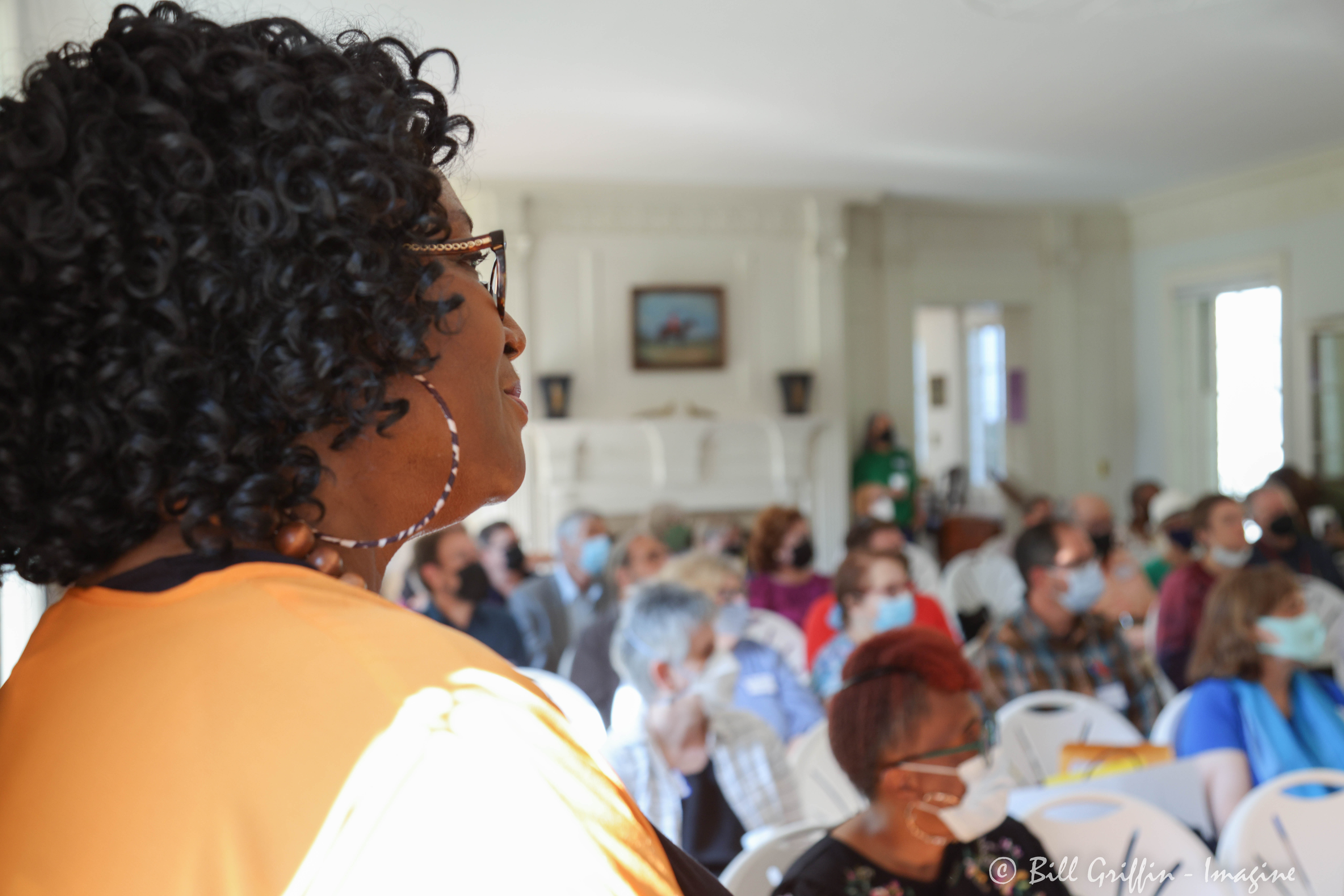
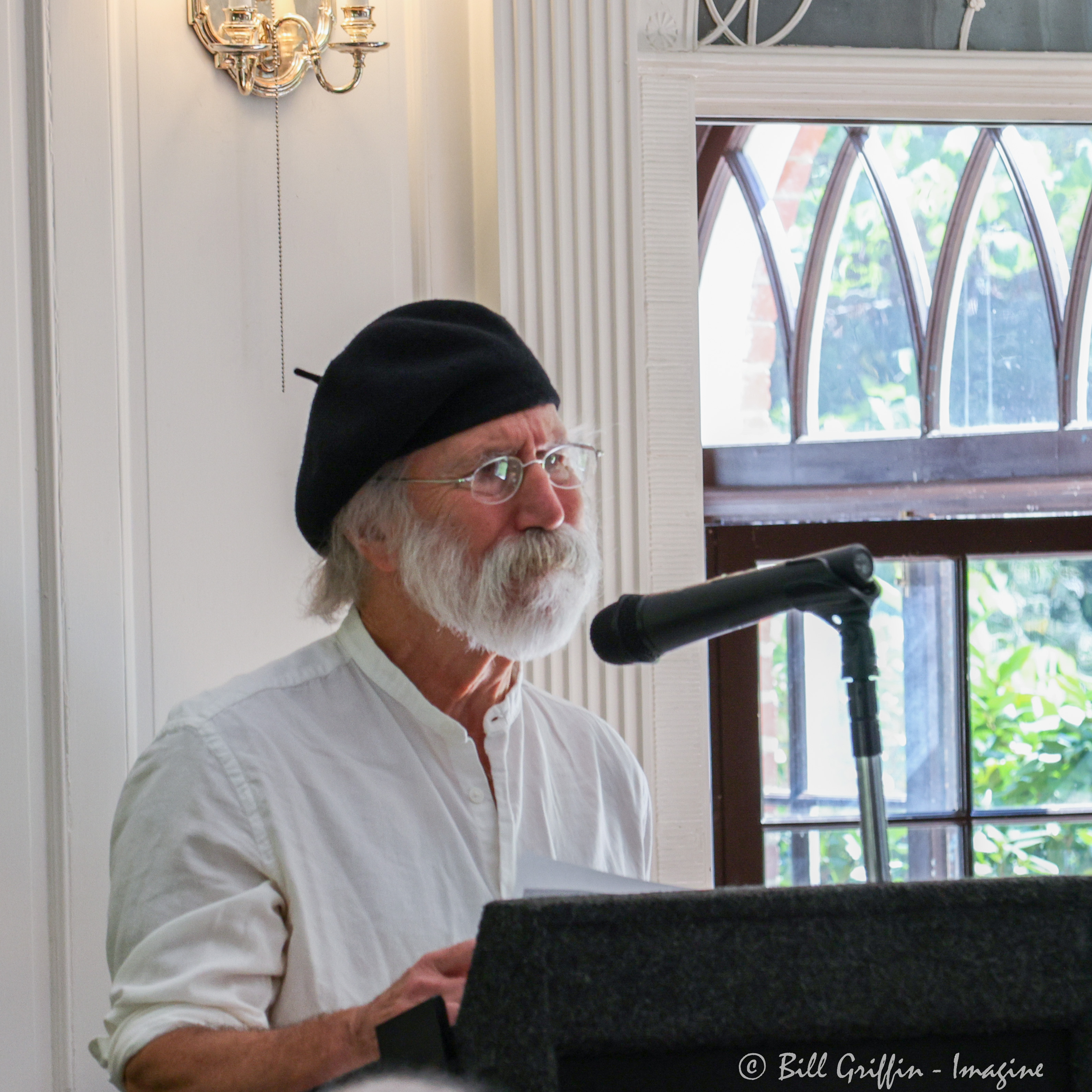
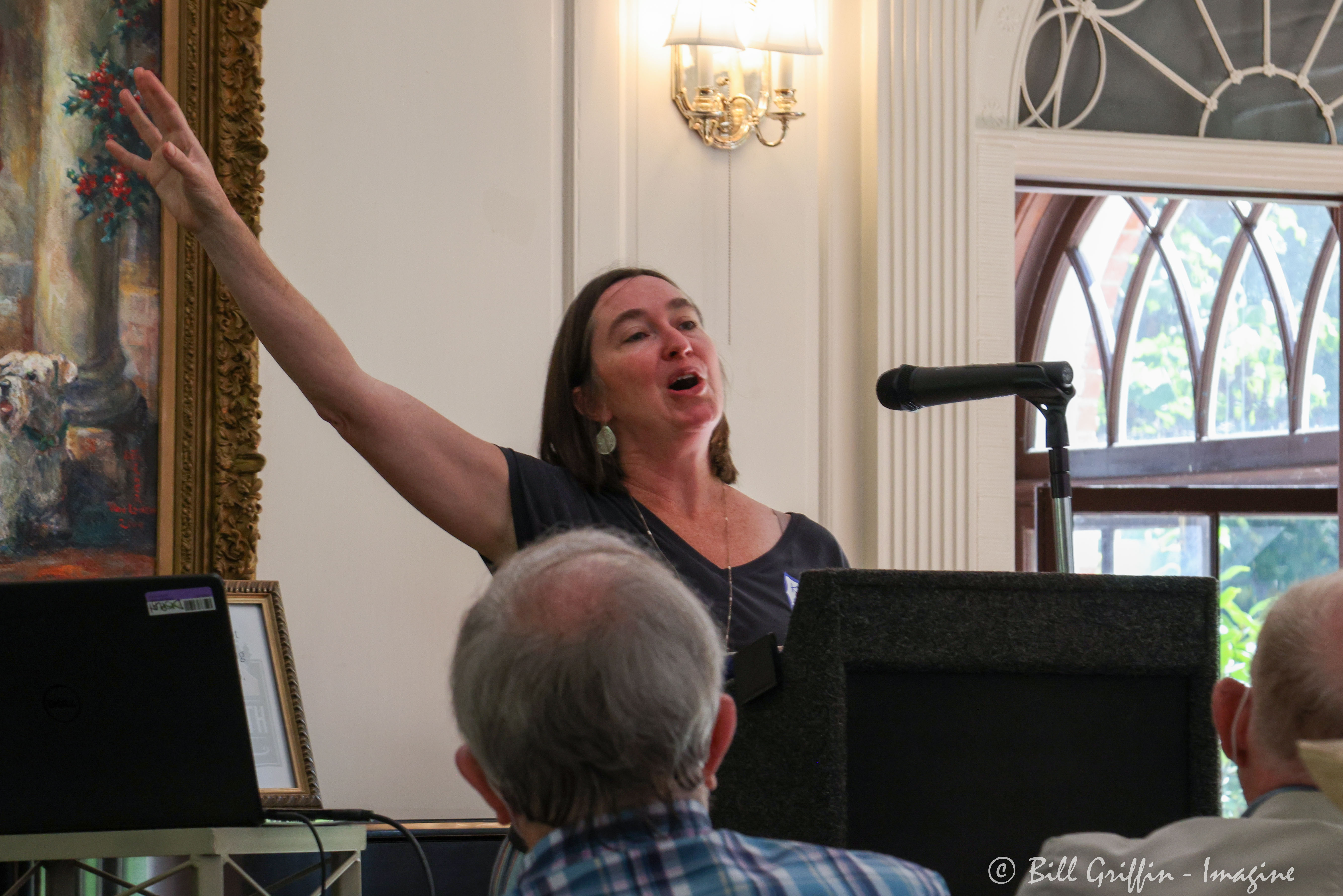
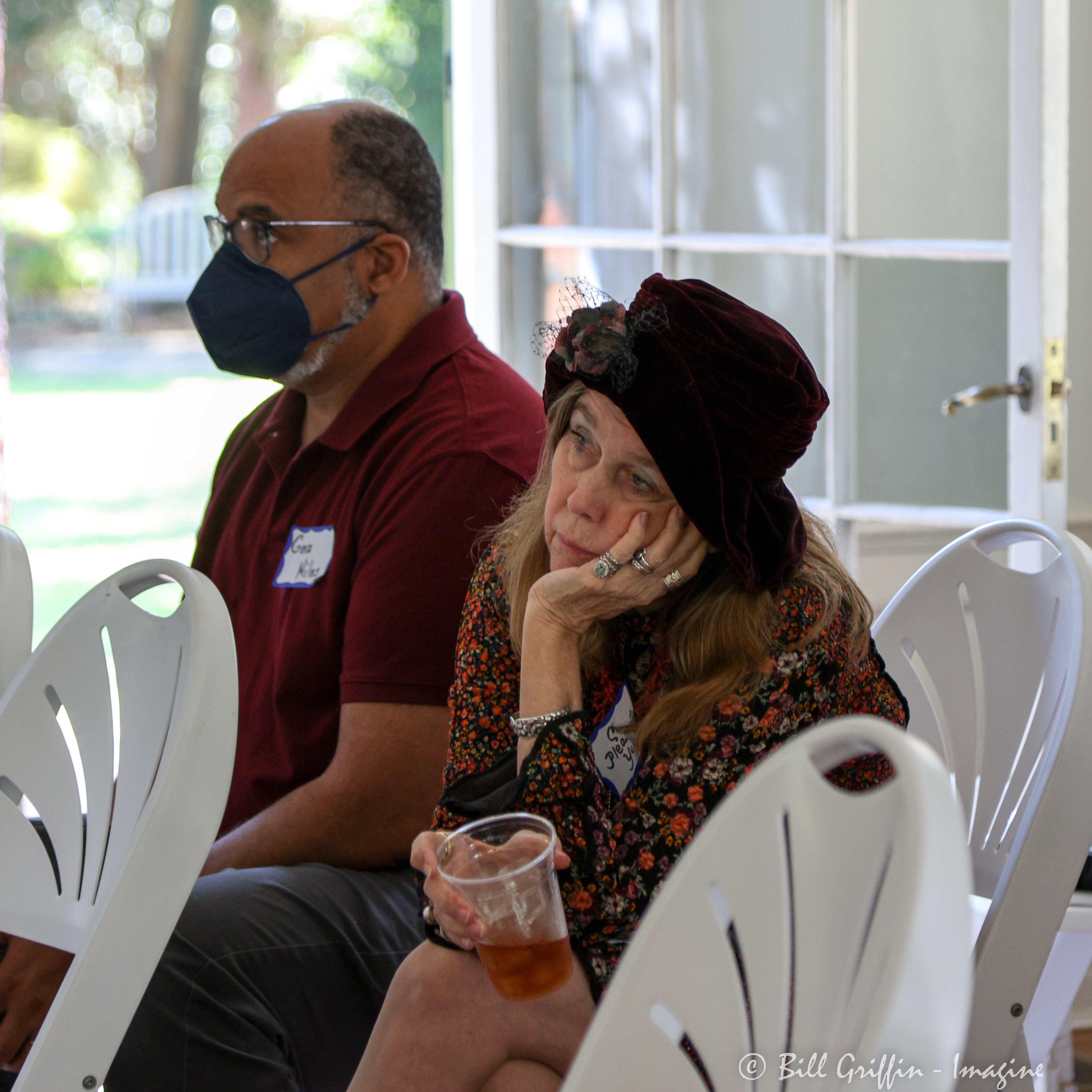
NCPS gathered to celebrate its 90th anniversary on September 17 at Weymouth Center for the Arts & Humanities, Southern Pines, NC – the first meeting in person in two and a half years. We look back and we look forward. We pay tribute to those who have taught and inspired us, and we open ourselves to the newest voices among us. We listen to the words of poets who dedicated their lives to building the power of literature in North and South Carolina: Joseph Bathanti reading Kathryn Stipling Byer, Shelby Stephenson reading Marty Silverthorne, David Radavich reading Susan Laughter Meyers. And we listen to the words of today’s poets reading the poems of now.

The Brockman-Campbell Book Award is the most prestigious honor bestowed by NCPS, awarded annually for the best book of poetry published by a North Carolina poet in the preceding year. Past winners have included Fred Chappell, AR Ammons, Betty Adcock, and Robert Morgan, among many others. The 2022 winner is Kimberly O’Connor for her book White Lung. Finalists are Anything That Happens by Cheryl Wilder and Any Dumb Animal by AE Hines.

❦ ❦ ❦

The History of My Silence
Hendersonville, North Carolina, 1961

white people sit in the front my great-grandmother
says my mother is angry
she wants to sit in the back

my mother is six years old
her first time on a bus
she wants to sit in the back

why? she stamps her foot

my great-grandmother does not answer the rest of the world
the boycotts the marches the fire
hoses let loose on children burning
crosses any of it does not
exist for them

they sit in the front like good white
women I think that

their silence their
compliance
has flowed into me
a river I have to swim
even as the water turns to flame.

Kimberly O’Connor
from White Lung (Saturnalia Books, Ardmore PA, © 2021)

Kim is a North Carolina native who lives in Golden, Colorado. She received an MFA from the University of Maryland and has taught creative writing and literature in middle school, high school, and college classrooms in Colorado, Maryland, West virginia, and North Carolina.

❦ ❦ ❦

Naturalization

We’d been lucky. I’d made it out of Guatemala
alone with the baby, and the baby still alive.
I hadn’t let him crawl out a hotel window.
I hadn’t let him swallow a button from my sleeve.
Managed to feed him and change him
and carry him in taxis and embassies, through
markets and airports, beneath the electric barbwire
of US Immigration. In Houston, I watched
badged women and men berate
brown men in shackles while they sat
tethered to stiff chairs beside us. Most stared
at their shoes. I am embarrassed to admit
I did nothing. Said nothing. Didn’t catch a man’s
tired eye and offer him even a nod, my feeble Spanish.
Instead, I just called my little son’s name over
and over, and bounced him on my lap.
Then we were ushered back into the land
I’d promised him. Bound together by law,
and off to our next gate without a glance back
at the men on their way to whatever place
they no longer called home.

AE Hines
from Any Dumb Animal (Mainstreet Rag Publishing, Charlotte NC, © 2021)

Earl grew up in rural North Carolina and currently resides in Portland, Oregon where he is pursuing his MFA from Pacific University. He is winner of the Red Wheelbarrow Prize and a finalist for the Montreal International Poetry Prize.

❦ ❦ ❦

Bailed Out

The house stirs with my stirring.
I am the elephant, the devil’s minion.
Secure in my arms a woven afghan

blue and darker blue. I run
fingers through holes and open
like a wish bone but cannot pull

them apart. A wish not wished
establishes habit, like sleep-dancing
or tangling the vacuum cord around my wrist

to make love. I am two people now—
the before and the after; one I’ve already forgotten
the other I have not met. I hear voices whisper

what if—a crossroad so difficult to leave
I build a roadside bench. At some point
I will rise from this bed, speak though I only hear

his curdled breath, allow my first taste of bone
in the broth I can smell, but no one will notice
my stained hands, the bloody prints on the wall.

Cheryl Wilder
from Anything That Happens (A Tom Lombardo Poetry Selection, Press 53, Winston-Salem NC, © 2021.)

Cheryl lives near the Haw River in North Carolina, where she gives talks and workshops on art and writing, serves as president of the Burlington Writers Club, and owns a small web development company. She is co-founder and editor of Waterwheel Review.

❦ ❦ ❦

The Susan Laughter Meyers Fellowship in Poetry was established in 2017 in memory of former president of both the North Carolina and South Carolina Poetry Societies, Susan Meyers. The annual merit-based fellowship for one North Carolina or South Carolina poet requires submission of five poems with blind judging by a three-judge panel. It is co-sponsored by NCPS and the Weymouth Center for the Arts and Humanities, and includes a one-week residency at Weymouth Center plus an honorarium. The 2022 Fellowship recipient is Yvette R. Murray.

Poem In Which Words

don’t deserve this.
They have been around a long time; served us well.
Why then do we use them like poisoned blue darts?
Words have been so kind as to adapt.
They want to stay relevant too.
But we spit them into red plastic cups like
‘bacca juice and leave them on the side of the road.
They never harmed us,

Yet we turn them ugly side out,
Pit them against each other,
Use our fangs to inject venom.

The poor words can’t be unheard,
the ring after of their scent,
makes folk mad.

I hope they don’t cry,
I hope they don’t die by suicide,
I hope they don’t vanish within.

Then we will never again find the words.
They might like that though.
Scrubbed clean with different color hair
They can hold hands,
stroll the streets,
carry their shopping bags,
or look for a bistro
in peace.

Yvette R. Murray
from a gathering together literary journal, Spring 2021

Yvette is a Gullah poet from Charleston, SC. She writes because she has to. The words bump around in her head and give her headaches. Just kidding! For Yvette, Poetry is the most beautiful event space on the planet.

THANK YOU to so many who made this North Carolina Poetry Society 90th Anniversary gathering not only possible but truly worthy of the banner, Infusing Ceremony with Celebration: Poetry with Light, Soul, and Sound: Lynda Rush-Myers, for a year of planning and countless hours of preparation and presentation; Celestine Davis, ever-present ever-encouraging ever keeping the wheels on the bus; Regina Garcia, heart and soul and thrilling Tribute introductions, and Romeo Garcia making sure we all got lunch; the entire NCPS Board of Directors, setting up, hanging signs, welcoming and greeting, picking up the trash; and special thanks to the staff of Weymouth Center and Executive Director Katie Wyatt, we/you couldn’t do it without you/us.

NEXT WEEK: NCPS 90th Anniversary celebrations continue with the Lena Shull Manuscript Prize: poems by winner Ana Pugatch, finalists David Poston and Maureen Sherbondy, and workshop presenter Joan Leotta

❦ ❦ ❦

Portions adapted from The North Carolina Poetry Society: Part 5 – 2012-2022, Ninety Years of Creativity, Challenge, and Change; compiled and composed by Bill Griffin with special collaborator David Radavich; © 2022 The North Carolina Poetry Society.

Why We Are “The Writingest State”; Southern, Ed. North Carolina Literary Review; Greenville NC, Nr. 25 (2016): 92-99.


Read Full Post »