Feeds:
Posts
Comments


[including poems about poetry]

Many more people agree they hate poetry
+++++++++++++++++than can agree what poetry is. ++§

Poetry

I, too, dislike it.
+++ Reading it, however, with a perfect contempt for it, one discovers in
+++ it, after all, a place for the genuine.

Marianne Moore
revised version from The Complete Poems of Marianne Moore, 1967, Penguin Classics

❦ ❦ ❦

I started this blog eleven years ago to write about poetry. Wait, no, that isn’t correct. I don’t know anything about poetry. I started this blog plagued with a vague pernicious guilt about that ignorance.

Devoid of understanding notwithstanding, I discovered several poems that kept prodding me, insistent and hungry. I turned away and turned back and there they remained. They invited their friends. I couldn’t bring myself to just toss them back out into the darkness. so I started this blog to give a few poems a little home. To decorate them. Perhaps even to exalt them. Slowly, incautiously, I allowed more and more of them to sneak through the door until they’d taken all the seats and I was the one crouched beneath the table begging.

Then I opened Ben Lerner’s little book – how could one ignore a thing titled, The Hatred of Poetry? At least once a year someone announces the death of poetry; was this book just another swain raising his sword in poetry’s defense? How was I to react to Marianne Moore’s poem smack in the center of page one? Or to understand Ben’s confession that his unbidden mantra whenever he opens a book of verse, is introduced to a poet, attends a reading, stands before his classroom, is, I, too, dislike it?

❦ ❦ ❦

Ars Poetica #100: I Believe

Poetry, I tell my students,
is idiosyncratic. Poetry

is where we are ourselves
(though Sterling Brown said

“Every ‘I’ is a dramatic ‘I’”),
digging in the clam flats

for the shell that snaps,
emptying the proverbial pocketbook.

Poetry is what you find
in the dirt in the corner,

overhear on the bus, God
in the details, the only way

to get from here to there.
Poetry (and now my voice is rising)

is not all love, love, love,
and I’m sorry the dog died.

Poetry (here I hear myself loudest)
is the human voice,

and are we not of interest to each other?

Elizabeth Alexander
from American Sublime, Graywolf Press, © 2005 by Elizabeth Alexander.

❦ ❦ ❦

The poet is a tragic figure, doomed to fail. The poet scrapes together such muck and detritus as we call ‘words’ to try to create a specific and personal and even universal poem, while capital-P Poetry remains lofted out of reach by angels and dreams. The actual poem never becomes all that its maker imagines for it. Bitter logic. Poetry isn’t hard, it’s impossible. Perhaps the heat of our hatred for the poem arising from our biting disappointment can yet burn off a bit of its fog.

I’m condensing all this from Ben Lerner, who writes: Our contempt for any particular poem must be perfect, be total, because only a ruthless reading that allows us to measure the gap between the actual and the virtual will enable us to experience, if not a genuine poem – no such thing – a place for the genuine, whatever that might mean.

So for eleven years I’ve written about earth-smelling gravelly stuff and let a few poems sneak in to hint at the sacred. I’ve written about salamanders, crayfish, herons, asters, lichens; about ecology, taxonomy, biochemistry; about grandchildren, aging parents, being born, dying; about suffering, gratitude, community. The poems have written about what poems write about – I can’t say exactly.

Perhaps you, dear reader, can enlighten me. Perhaps you’ll convince me that none of us understand anything about poetry and thereby absolve me of guilt. Perhaps you’ll reveal to me that the very act of creating is born in transcendent desire – to twine the intensely subjective personal with the authentic encompassing universal – and that the word we use for that desire is “Poetry.”

Perhaps. Perhaps not. At least, though, we can join Ben Lerner in this: All I ask the haters – and I, too, am one – is that they strive to perfect their contempt, bringing it to bear on poems, where it will be deepened, not dispelled, and where, by creating a place for possibility and present absences (like unheard melodies), it might come to resemble love.

§ – quotations are from The Hatred of Poetry, Ben Lerner; Farrar, Straus and Giroux; New York; © 2016 by Ben Lerner

❦ ❦ ❦

Ars Poetica

Thirty miles to the only decent restaurant
was nothing, a blink
in the long dull stare of Wyoming.
Halfway there the unknown but terribly
important essayist yelled Stop!
I wanna be in this; and walked
fifteen yards onto the land
before sky bore down and he came running,
crying Jesus–there’s nothing out there!

I once met an Australian novelist
who told me he never learned to cook
because it robbed creative energy.
What he wanted most was
to be mute; he stacked up pages;
he entered each day with an ax.

What I want is this poem to be small,
a ghost town
on the larger map of wills.
Then you can pencil me in as a hawk:
a traveling x-marks-the-spot.

Rita Dove
from Grace Notes: Poems, W. W. Norton; first appeared in Poetry, October 1987

❦ ❦ ❦

Ars Poetica

A poem should be palpable and mute
As a globed fruit,

Dumb
As old medallions to the thumb,

Silent as the sleeve-worn stone
Of casement ledges where the moss has grown—

A poem should be wordless
As the flight of birds.

*

A poem should be motionless in time
As the moon climbs,

Leaving, as the moon releases
Twig by twig the night-entangled trees,

Leaving, as the moon behind the winter leaves,
Memory by memory the mind—

A poem should be motionless in time
As the moon climbs.

*

A poem should be equal to:
Not true.

For all the history of grief
An empty doorway and a maple leaf.

For love
The leaning grasses and two lights above the sea—

A poem should not mean
But be.

Archibald MacLeish
from Collected Poems 1917-1982, Houghton Mifflin Harcourt, 1952; © 1985 by The Estate of Archibald MacLeish.

❦ ❦ ❦
❦ ❦ ❦

Poetry

I, too, dislike it: there are things that are important beyond all this fiddle.
*****Reading it, however, with a perfect contempt for it, one discovers in
*****it, after all, a place for the genuine.
***********Hands that can grasp, eyes
***********that can dilate, hair that can rise
*****************if it must, these things are important not because a

high-sounding interpretation can be put upon them but because they are
*****useful. When they become so derivative as to become unintelligible
*****the same thing may be said for all of us, that we
***********do not admire what
***********we cannot understand: the bat
*****************holding on upside down or in quest of something to

eat, elephants pushing, a wild horse taking a roll, a tireless wolf under
*****a tree, the immovable critic twitching his skin like a horse that feels a flea
*******************************************************the base-
*****ball fan, the statistician—
***********nor is it valid
*****************to discriminate against “business documents and

school-books”; all these phenomena are important. One must make a *******************************************distinction
*****however: when dragged into prominence by half poets, the result is not
*************************************************poetry,
*****nor till the poets among us can be
***********“literalists of
***********the imagination”—above
*****************insolence and triviality and can present

for inspection, “imaginary gardens with real toads in them,” shall we have
*****it. In the meantime, if you demand on the one hand,
*****the raw material of poetry in
***********all its rawness and
***********that which is on the other hand
*****************genuine, you are interested in poetry.

Marianne Moore
the “original version”

❦ ❦ ❦

RESOURCES:
Ben Lerner
Marianne Moore
Elizabeth Alexander
Rita Dove
Archibald MacLeish
Doughton Park Tree 2020-11-22

Decorations

[with 4 poems by Doug Stuber]

“Look at that one, Mom, a Rainbow Unicorn Skeleton.”

“Oh my, and all the spiders!”

We’re driving through residential Ardmore in Winston-Salem, just the two of us. An outing! On our way to the pharmacy and yes, we’ll pick up a prescription for Dad, but this is one time we made him stay home. Dad’s 96th birthday is Thursday and this is Mom’s chance to pick out a card, maybe a few goodies. And see all the Halloween decorations.

It’s rare that I have Mom all to myself. At her doctor’s appointments Dad tags along, and well he should since Mom’s memory is failing and he needs to tattle on her. The grocery store, the dry cleaners, Trader Joe’s, those are all on Dad’s agenda; usually Mom stays home with the CNA. As Mom ages she’s become more withdrawn, much more passive, but get her one on one and she’ll tell you what she thinks. So here she is riding shotgun, laughing at the yard art, game to grab her cane when we arrive at the store.

While I head to the pharmacist window I leave Mom in the Birthday Card aisle – we have five family birthdays in the next four weeks. When I return, maybe 15 minutes later, she hasn’t picked anything out. I point to a couple that seem likely. She can’t quite decide. That’s OK. I find one with dogs on it that seems right for Dad, get her approval, find some for Allison, Margaret, the Josh’s, subtly nudge her to pick one each. When we finally have our five it’s on to snack selection. I tell her if she’s not sure what Dad would like just get stuff she likes (see how that works?). When we’ve finally paid and returned to the car, I have her put Dad’s chocolates & nuts etc. into the gift bag we bought. Once she’s looked each item over she finally says, “I can’t believe you could pick all that out.” Shoot, Mom, I was wanting you to think YOU picked everything out.

Sadness is just one story we can tell ourselves. I could hold onto Mom’s bewilderment and indecision, nothing like the Mom that raised me. Or I could buckle her in as we laugh, thinking about Dad’s face when he sees his pile of loot. And I could prepare a big build up for the drive home, remind her to look out her window at the Rainbow Unicorn Skeleton, both of us enjoying it again for the first time.

❦ ❦ ❦

Hikaru

One cherry blossom detaches, falls, a single unit
allowing fruit its space, starting its new journey: island
to reflecting pond, orchard to cottage yard, daughter to
love, enhanced by the wind, if even for only six seconds.
Transformed to long-boned genius, long-yearning adult,
considerate friend, purple-green plaid from soft pink,
tan suede boots from five-petalled bloom. Hikaru, as they
say in Japan, hits the town running, arms crossed, cradling
herself like the war-torn victims of Vietnam, but not
worn or torn, she flings enthusiastic youth toward
outstretched limbs. She captures her beginning and future
simultaneously, shedding one form, embracing another,
sweating humid Spring, still awkward in this skin.
Descending unannounced, she moves among mere mortals
spreading joy, quietly demanding obedience, offering all
in exchange for all. Most cannot accept, choose an
easier, less complicated path; but those brave strong souls
born from deep roots, blessed metamorphosed
being who join Miss Cherry soon realize, if for one day,
week, or lifetime, their lives will never be the same

Doug Stuber
from Chronic Observer, Finishing Line Press, Georgetown KY, © 2019

❦ ❦ ❦

Doug Stuber is a crabby pessimistic lyrical idealist. Doug is a sharp-eyed sharp-tongued teary-eyed lover. Humankind, Doug Stuber as chronic observer constantly notices, has royally fucked up and Doug is more than ready to rub our noses in it. Human individuals, Doug reveals over and over in his poetry, are beautiful in their brokenness and he must open his heart. Poetry is silk on the breeze: at first we flinch and claw but with each turn we draw closer together, are drawn, maybe to cocoon or maybe to struggle forth with spread wings and open eyes.

I side with Clark Holtzman in his comment about Doug Stuber’s book: All the poems of Chronic Observer engage the world we are given, natural or political, fair or foul, as the given it is. Buy this book, read it. You’ll see what it means.

❦ ❦ ❦

The Mangrove Blues

The sun sinks.
A pumping heron
Chases dreams into the night,
Resting momentarily
In a life of constant motion.

The wind shakes.
Trees stretch out,
Anticipating winter.
Orange floods
Mangrove and the pines.

The cold turns.
Clouds gather
Over murky surroundings,
Drifting slowly inland
To dump a fresh-new load.

The tears run.
A skipping child
Delivers momentary reprieve.
Gloom infests
The evening of a lonely-hearted man.

Doug Stuber
from Chronic Observer, Finishing Line Press, Georgetown KY, © 2019

❦ ❦ ❦

Rules

It took this long to hide my penchant: Rhymes.
Another reading forces inner looks.
Where is Ed and his heroic Elegy for us?
What happened when we traded love of lines
For time cards, bosses, corporate crooks?

Here’s what happened: life became a chore,
There is not time left to rage creating.
Competitive suburban gardening ins a bust.
What there is left is not elating
Except the love of soul-mates through this door.

The Eagle’s Nest is now a restaurant:
You get a 15-dollar turkey plate up there.
But is a fourth Reich rising from the rust,
Or are we evil, just nonchalant?
Oklahoma City fades like sunset air:

The only lasting image is your own.
One veto and the fascists will shut us down.
One thousand points of veto from the upper crust
Without a batted eyelash from this clown.
What further outrage can we condone?

As long as TV says it is OK
Our lives submit to the worst human rages.
Just when we’ve farmed this place to dust
Some half-assed savior might come our way
Passing manna to those left: food of the ages.

Doug Stuber
from Chronic Observer, Finishing Line Press, Georgetown KY, © 2019

❦ ❦ ❦

❦ ❦ ❦

[Given the approaching season, I just have to include this final poem of Doug’s.]

KC and the Thanksgiving Prayer

I gave a thanksgiving prayer to a new family I met near Asheville. I got twigs and built a triangle (the three goddesses: corn, squash, and beans) and a square (the four directions: North – Winter and cleansing, East: Spring and beginnings, South: Summer and warmth, West: Fall and remembrances). the triangle sits above the square, because it is the goddesses who feed us: corn, squash, and beans.

You start in the square facing West and, while turning right for each new direction, say:

We salute you for your wind and fresh new sky
We salute your wonderful people and cleansing snow
We greet the day with dreams to labor by
We salute your sun and love and fun and go

To green mountains, cold river by the leaves
Of Rhododendron bushes, tall black trees.
A new friend of mine now believes,
Captured by spirits she feels and doesn’t have to see.

Doug Stuber
from Chronic Observer, Finishing Line Press, Georgetown KY, © 2019

❦ ❦ ❦

2016-01-30 Doughton Park Tree

Swamp Monster

[with 3 poems by Alan Michael Parker]

When grandson Bert walks the lakeside trail at Yates Mill in Raleigh with his Dad & Mom, they are ever alert for evidence of the Swamp Monster. Those unexplained bubbles in the pond? Could be Swamp Monster breathing. The sudden galoomp that startles us, abrupt pivot, but all we see are receding ripples? Yep, SM. A patch of pond lily that speckles and ripples the surface? Bert explains to me, instructor to pupil – that’s Swamp Monster’s ridged, scaley back.

At age five Bert teeters on the delicious cusp between credulity and manly savvy. He knows there’s not really a Swamp Monster, but he still craves more of those tingly shivers that rise like dark forms from dark water, birthed by lingering maybe’s. And who’s to say that Swamp Monster is not the wisest of teachers? Step One and Step Two along the Naturalist Way are Pay Attention; Ask Questions. No question is ever too silly; all questions are worthy. Like this one – Does Swamp Monster have pets?

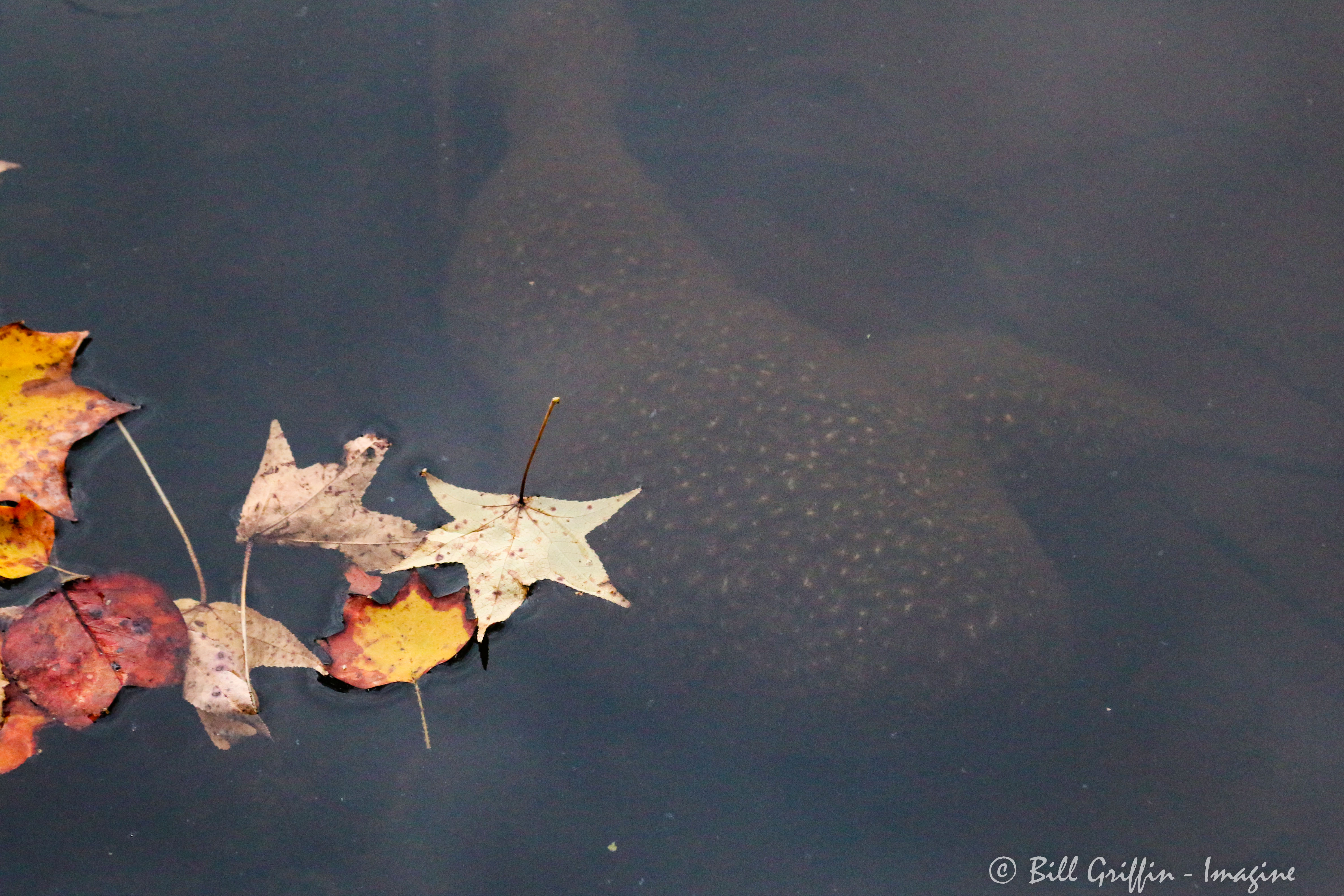
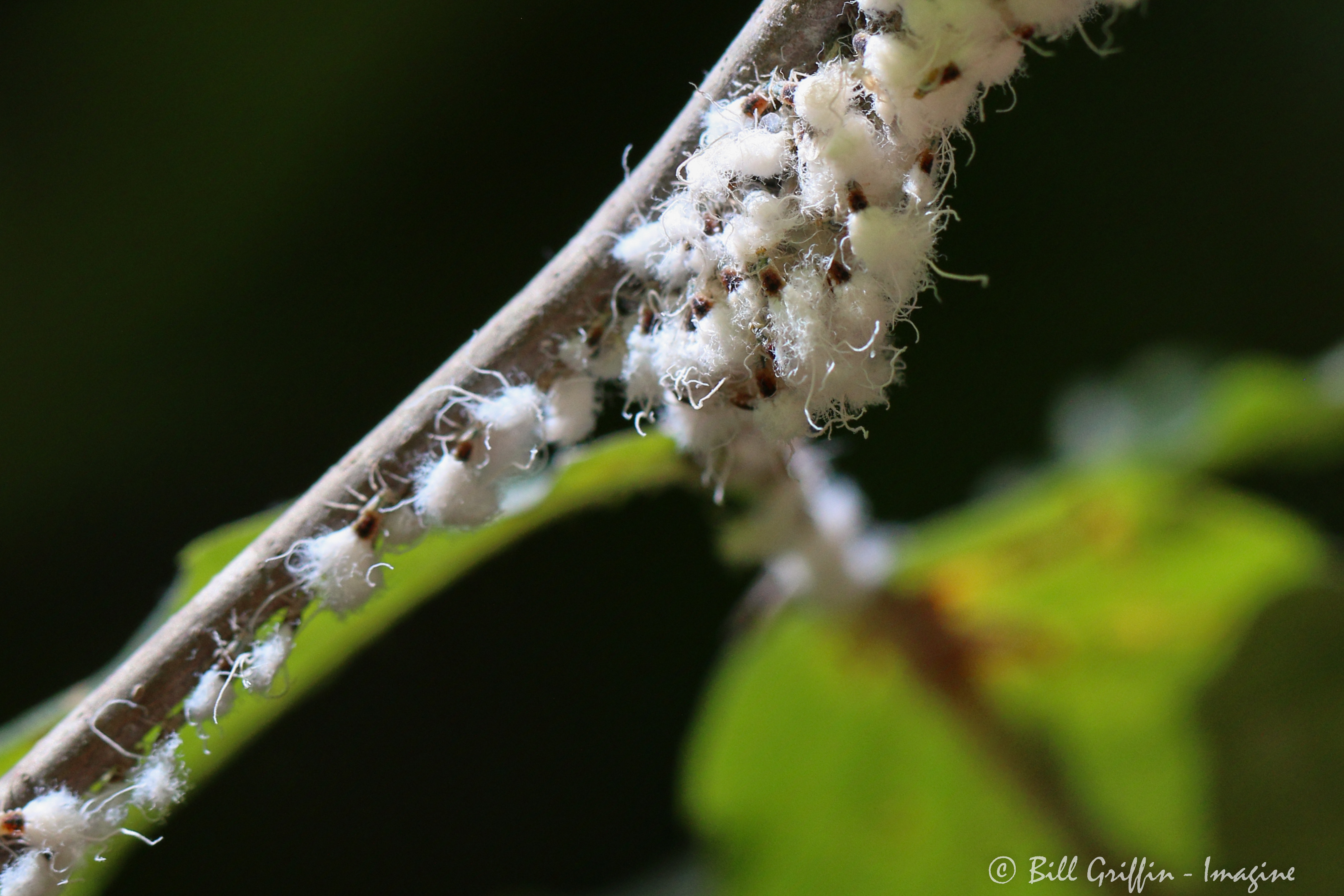
Maybe those two turtles jostling among the pickerel weed. Maybe the northern watersnake camouflaged beside the minnow-filled mill pond. And what in the world is this thing? Glommed around a root in the water, a gelatinous hive, a lurking snotball! And there’s another, and another. Yuck, Swamp Monster!

We have made a discovery, life forms creepy enough to serve as pet to any self-respecting Swamp Monster: fresh water bryozoans. That mucusy ball, almost as big as a Jack-o-Lantern, is a clonal colony of tiny filter-feeding invertebrates. Occupying their own Phylum, for goodness sake! Each tiny individual everts a ring of tiny tentacles with cilia that waft food particles down toward its tiny mouth. If there’s danger, it pulls them back in and down pops the lid. In some colonies there are specialized individuals that can sting. Some species are able to creep around (although at only a couple of centimeters a day, they’re not about to engulf us)! Nice Bryo . . . Sit! . . . Stay!

All of this is just to say – whenever you’re hiking through prime Swamp Monster habitat, it is always important to pay attention.

❦ ❦ ❦

Breakfast
++++ It’s not just sentimental, no, no, no…

Once there was a blueberry
in a bowl of granola.
The bowl was Melamine, the table was pine,
the kitchen was linoleum and metal and oak,
and the house was brick and cedar and aluminum,
and the roofing material in the shingles
was fire-rated Class A, don’t worry.
There were trees: hawthorns and one river birch.
There were azaleas and a Lindlley’s Butterfly Bush.
The sky was 78% nitrogen and 21% oxygen,
with a trace of argon gas, and ice in crystals.
Space was an almost perfect vacuum,
with a few hydrogen atoms per cubic meter.

Maybe the blueberry and one hydrogen atom
were cousins, cosmically and/or metaphysically.
The spoon that held up the blueberry
was aluminum, the shine a little worn,
and the blueberry was violet in a gradient,
a tad puckered, still with a bit of stem.

Today, class, let’s all be astronauts.
We’ll begin with breakfast, and then
we’ll search the universe for tenderness,
which I suspect – so long,
my blueberry, adieu
may be the last perfect thing.

Alan Michael Parker
from The Age of Discovery, Tupelo Press, © 2020.

❦ ❦ ❦

These poems by Alan Michael Parker dance on the knife-edge of joy. Oh yes, my warm Companion, we may slip and often we may bleed, but just for a minute let’s join that puffy red cloud drunk on sunset. Let’s confess our secret angry names (“asshole,” you say?). Let’s discover the microeconomics of love, the birth of the cool, the future of love. Isn’t this, after all, the Age of Discovery?

Who’s to say that the highest life form is not a colony of clonal bryozoans? Can you or I wave our little ciliated arms over our heads and expect sustenance to waft into what might pass for a mouth? On the other hand, you and I are blessed with cheeks able to detect the tender kiss of the cosmos, and hearts with the capacity of affection for tender bryozoans. Let’s join Alan Michael Parker on the journey: Dear Reader, I know you’re dying / That’s sad. Me too. // How about we wait here together?

The epigraph to Breakfast is from “Try a Little Tenderness,” covered by Otis Redding in 1966, backed by Booker T. & the M.G.’s. Psalm is after Yehuda Amichai’s “Jewish Travel: Change is God and Death is His Prophet.”


❦ ❦ ❦

Ornithology

When a bird flew into my window
and made a hard and soft death sound,

I found her in the dirt below
and I fixed a cardboard nest for her
and fed her from an eyedropper
what the Internet suggested,
and I named her Young Self,

and when a bird flew into my living room
and frantically bumped at every corner above,
I named her Old self,

and because height and light are
humankind’s spiritual aspiration,
I wished my hands were birds.

Luckily, it was evening,
the outside version of my sorrow:

the swallows flocked and flew
to sleep somewhere, presumably,
and every swallow was like a minute,

so I watched and tried to count, which is what I do,
despite so much of each day
happening to me,

and I fed my Young Self more sugar water
while my Old Self
beat in a corner to get out.

Alan Michael Parker
from The Age of Discovery, Tupelo Press, © 2020.

❦ ❦ ❦

Psalm

If there are grave stones, may there be
shy stones, kind stone, mad stones,
scared stones, thoughtful stones,
and may we have a choice;

and if there are hummingbirds, may there be
humming walks and humming naps,
humming minutes between
the minutes that hum in anger,
a humming table and chair by the fire,
and a warm and humming towel to wrap us in.

If there are thunder clouds, may there be
whisper clouds and echo clouds,
clouds the rustling of linens,
giggling clouds scampering,
and clouds to call a child home;

if there are heavy sighs, may there be
sighs that float or sink or rise,
and sighs that drift away,
and sighs to take from us our sighs;

and may the weeping willow,
the weeping redbud,
and the weeping cherry
weave of their weeping an evening gown;

and when we come to the end of days,
may we come to a beginning;
and if there is a time keeper,
may there be a time giver,
and if there is a guard house,
may the house be safe unguarded,

and if there is an ocean view, may we see
what the ocean sees,
the little boats of our bodies
nudged into the tide.

Alan Michael Parker
from The Age of Discovery, Tupelo Press, © 2020.

❦ ❦ ❦

❦ ❦ ❦

IMG_1783