Feeds:
Posts
Comments

Life Sucks

 . 
[with 3 poems by Mark Smith-Soto]
 . 
Sunroom Twilight
 . 
Another thunk against the window glass,
another broken wing or neck, as like as not,
another muted spill of feathers on the grass –
I love this space, but it’s been dearly bought.
 . 
Of course, the same might well be said
of the lamb we grilled last night, honoring
its sacrifice with salad and good bread.
The whole-grain loaf, the baby kale, everything
 . 
sundered from daylight for my sake,
floods the mind in unforgiving surge,
sweeps me into the sobering give / take
 . 
that underpins life / death. In the sun’s wake,
birdsong dapples the gold air with its dirge.
Or rather, hymn of wonder; my mistake.
 . 
Mark Smith-Soto
from Daybreak, Unicorn Press, Greensboro, NC; © 2024
 . 
❦ ❦ ❦
 . 
Passenger side floorboard there’s a Mason jar of flowers, black-eyed susan and zinnia, marigold and mint. I cut them from our garden this morning for Mom’s bedside table. On I-77 South just past Jonesville there’s a field of sunflowers blooming, another field near the coverleaf with 421, all looking southeast right now because it is still morning. I’m driving to Winston to visit Mom and Dad in Kate B. Reynold’s Hospice Home. Life surely does suck. Life surely is exalted.
 . 
This is a respite care admission, scheduled so we can upgrade their bathroom and bedroom. Make their home more liveable while dying. Their dates of death are not clearly visible to us over the horizon, certainly not etched in stone, but how distant can they be? Is this what people mean when they say live one day at a time? Mom can still laugh when we joke around, although each day a bit more of her releases into airy nothingness. Dad’s crash has been more sudden, broken neck, delirium, bedfast, but he still seems to add a few more good minutes to each ensuing day. All three of their children will be under the same roof today, now that’s red-letter. We’ll be helping them with lunch, sitting with Mom in the flower garden for a half hour, logrolling Dad in bed to rub ointment on his back. And while the two nap, we three will have a long conversation in another room about next week, and the weeks after.
 . 
Yesterday afternoon my son called after he returned from a few hours visit with his grandparents. Josh took Granddaddy grits and collards and says he spent most of their visit eating. Yeah! Josh has been afraid to see the changes in the two up close and had put been putting this day off for months. I told him I know he still hurts from Jonathan, his best friend all through school, right after graduation the cancer. But then at the end of talking, Josh says to me, “So how are you doing, Dad?”
 . 
Don’t get that question a lot and even less often do I say anything more than, “Fine.” I hear the sincerity when Josh asks. All the drive down today and all the drive back what I’m really thinking about is how to continue the conversation. I’ll stop at his house before I get home to drop off a cooler he left at Granddaddy’s house. I’ll begin by taking him outside and telling him how much I appreciate what he said. I’ll ask how he’s doing. And then I’ll ask another – rehearsed in my head for days, weeks, months: “And how are you doing on your path to quit drinking?” Life can surely do its best to convince you it sucks. But I have a feeling the two of us standing in the driveway for a half hour talking is going to show life it doesn’t have to.
 . 
 . 
❦ ❦ ❦
 . 
Segue
 . 
Now that you mention it: death,
the cherry outside the kitchen
in full bloom, the novel I left
open on my bed, the stitch in
 . 
my side riding a rib, the small
hole at the center of my retina
where nothing registers at all,
the rip in the screen letting in a
 . 
gnat adrift on the whiff of daphne
blooming along the broken driveway,
the sudden abandon of your laugh, me
forgetting what I was going to say,
 . 
closing my eyes, holding my breath,
and now that you mention it, death.
 . 
Mark Smith-Soto
from Daybreak, Unicorn Press, Greensboro, NC; © 2024
 . 
❦ ❦ ❦
 . 
The poet notices a little something, a little nothing, really: breakfast, a chess board, chalk dust; light across a woman’s profile, flowers that shouldn’t be there, a word that carries on its back two meanings. Common things, every day things. The poet notices and his smile as he points out what he has noticed is almost sly; the pointing is all about what he’s not quite saying. Then all at once you notice, too. And you smile.
 . 
In Mark Smith-Soto’s world you might discover wonder in commonplace, joy in commonalities, mystery in what we share and have always shared without noticing that we do. You might join him in memories that make you cry, realizations that lift from within you a deep sigh, possibilities that sober you right down before they exalt you. In Mark’s ultimate collection, Daybreak, every single one of the 56 sonnets has touched me, gently but insistently, until I admit I’m relieved: I am / a human being. I’m pretty sure of that. [Biology Lesson]. After reading these poems, I begin to notice the flowers in the cracks of my walkway with new eyes; they implore me that death [is] a lifetime of hours away [Aria da Capo].
 . 
During the years of this twenty-first century, my orbit and Mark’s intersected only a handful of times, for only a handful of hours. But what gravity and what luminosity! In life I knew Mark only a little; I am glad to know him much more in poetry.
 . 
 . 
Mark Smith-Soto (1948-2023) was born in Washington, DC, and lived in Costa Rica until the age of 10, when his bilingual family returned to Washington, his father’s native city. Mark’s awards include a fellowship in creative writing from the National Endowment for the Arts and the NC Writers Network’s Persephone Competition for his chapbook Green Mango Collage, among many others. Daybreak is his seventh poetry collection and is available from Unicorn Press in Greensboro, NC.
 . 
Thank you, Michael Gaspeny, for sending me Mark’s book as a gift. A treasure.
 . 
❦ ❦ ❦
 . 
There You Are
 . 
I do feel somehow exiled here, outside
the frame – just what is it about a woman
at an open window, seen from the side,
an opalescent half light on her hands
 . 
holding the curtains apart, head tilted,
questioning? Maybe her gaze has stranded
on the naked lady half-hidden by the shed,
a blossom she knows she never planted,
 . 
her wondering, These small, random gifts,
why do they touch one so? But of course,
I can’t begin to guess her mind, it’s
 . 
me trespassing here, I should go before
she sees me, leave her to her thoughts –
“Oh, there you are, amor. Come look at this.”
 . 
Mark Smith-Soto
from Daybreak, Unicorn Press, Greensboro, NC; © 2024
 . 
 . 
❦ ❦ ❦
 . 
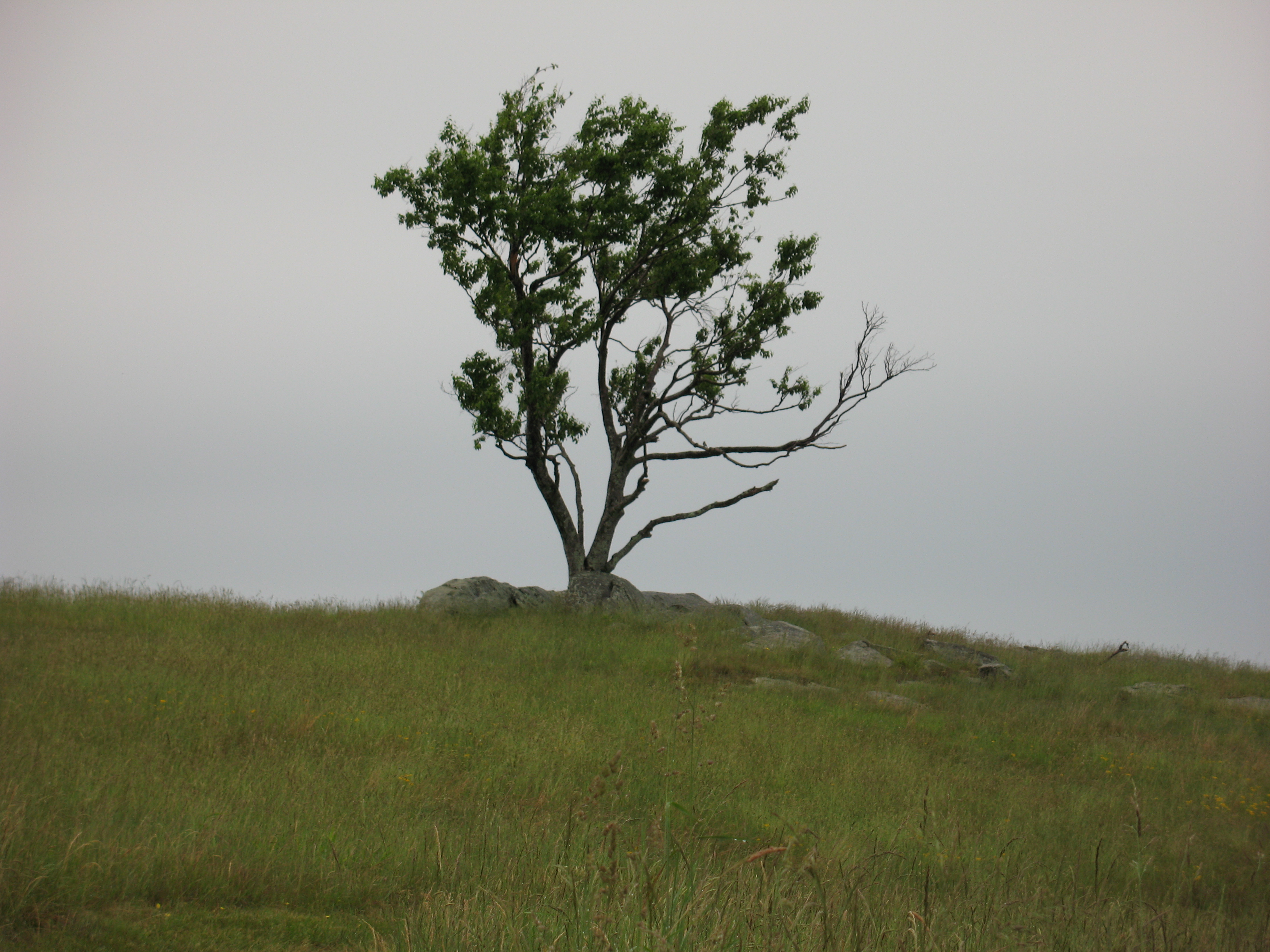
Doughton Park Tree 2016-10-17a
 . 
Poems and photography from Shibori Blue
by Beth Copeland
 . 
Winter passes and one remembers one’s perseverance.   –   Yoko Ono
 . 
 . 
Frost on the mountain.
Creeks freeze under skins of ice.
A broken window.
My neighbor’s chimes are silent.
Even the wind is frozen.
 . 
 . 
Spring passes and one remembers one’s innocence.   –   Yoko Ono
 . 
 . 
Does the mountain mourn
its lost children, bones buried
beneath sediment
and stone? Who gathered near its
peak? What family, what tribe?
 . 
 . 
Summer passes and one remembers one’s exuberance.   –   Yoko Ono
 . 
 . 
Bridal veil mountain
in May, the month of weddings.
Fog, Mist, and white clouds.
Wild daisy fleabane bouquet
fresh in a blue Mason jar.
 . 
 . 
Autumn passes and one remembers one’s reverence.   –   Yoko Ono
 . 
 . 
Tiger-striped sunset
above the ridge in the west.
Trees with leaves and trees
without. What are we losing,
my love, and what will we keep?
 . 
 . 
Poetry and photography by Beth Copeland
from Shibori Blue: Thirty-Six Views of The Peak, Redhawk Publications, The Catawba Valley Community College Press, Hickory NC; © 2024
 . 
❦ ❦ ❦
 . 
Beth Copeland lives in Ashe County, North Carolina, smack in the Blue Ridge Mountains. Each morning from her porch she sees The Peak, the highest mountain in Ashe County. It is solid and eternal – it is always shifting. Beth has recorded the mountain’s moods and contemplations with daily photographs, now pairing them in her new book with thirty-six poems that capture ephemera through the course of a year, moments of change through the changing seasons.
 . 
Thirty-six. A figure of truth and power. Product of two perfect squares. Multiplied by 2 to create the 72-season calendar established in 1685 by Japanese astronomer Shibukawa Shunkai. And again 36 the number of woodblock prints of Mount Fuji published by Katsushika Hokusai from 1830 to 1832. It is no coincidence that Beth chose thirty-six views of The Peak to inform her poems. She was born in Japan, the child of American missionaries, and has long revered the iconic mountain of her birth country, Fuji-san, whose profile The Peak of Ashe County so resembles.
 . 
This book invites me to slow my breathing, pause in the busy race, contemplate each page: five simple lines of verse, the silent mountain drawing my gaze. Redhawk is gathering a family of uniquely creative poets, writers, and artists to stretch our imaginations and open us to new experiences of words and images. I will leave this sentence here at rest and return to another page of Shibori Blue. And another.
 . 
 . 
More information about Shibori Blue: Thirty-Six Views of The Peak and the opportunity to purchase HERE
 . 
❦ ❦ ❦
 . 
Perseverance – Deep in winter do they dream of the music they will make, cicada song? Crescendo arpeggio decrescendo, easy combers across the long sea of summer. And does the creature measure the span of its days, egg to nymph, seasons in darkness, climb into light to mate and to die? Nothing can last, not even our song, yet we do not withhold our voices.
 . 
Innocence – She is most beautiful when she does not know I am watching. She gives her animals life, little fox blanket, cupcake kitten, and they take from her all the fear and heartache that could have been trapped within to fester. Then she begins to sing.
 . 
Exuberance – Utterly alien at once perfectly identifiable, the house wren fills its small kingdom with melody, rocketing in turn to each waypoint to pause, raise its minute cornet, FANFARE!, then swift to the next. I do not understand the words but I recognize the tune.
 . 
Reverence – What we have heard teaches us, reminds, suggests, niggles, promises, invites. What we have yet to hear offers to pull us into its presence. Listen. Be filled.
 . 
 . 
IMG_6432
 . 

Lie Lay Lain

 . 
[with poems from LITMOSPHERE 2024]
 . 
The evening darkens and comes on
+++ for James Wright
 . 
++++++++++ 1
 . 
I have a good friend who doesn’t like birds.
She says it’s the flapping. I say how can you,
a first grade public school teacher, not like birds?
I say it every time we meet at the bar
for a French 75 served in a crystal flute – How
Can You. Not Like. Birds. They’re too loud,
she says. God. I need her to be reasonable.
 . 
++++++++++ 2
 . 
Three cardinals in the hedge have fledged.
They peep in surround sound, one in a flower pot,
one on the low branch of the magnolia, one smack
in the middle of the street, the mother hopping
like mad to nudge it to the safety of boxwoods,
her waxy orange beak a crayon of devotion,
her road baby terrified out of its bird brain.
 . 
++++++++++ 3
 . 
I’m sorry, Mr. Wright, I ever called your poem
worthless, the famous one with the hammock
and the horse shit flaring like gold in the waning
of day. I hear your voice read through the night.
We have not paid attention. Birds slam into glass,
into windows we are not looking out of. Every
new poem, every new life, such a warning.
 . 
Jenny Hubbard
from Litmosphere: Journal of Charlotte Lit, Charlotte NC; © 2024.
 . 
❦ ❦ ❦
 . 
I can picture it lying on the hutch where she laid it not long after they bought the beach house in 1993, and where it has lain ever since. A novelty dinner plate, memento of her years as a teacher, sometimes buried under other plates or the detritus of grandkids visiting and large noisy family groups dining together. There it lies yet, solid and steadfast, secure in its lesson. Every year or two we rediscover it and laugh, so obscure, so obvious, the motto glazed in its simple school marm font: Lie, Lay, Lain. Who but a school teacher actually knows the correct usage, Lie vs. Lay, much less uses it consistently in conversation? Who but a teacher or a teacher’s child?
 . 
Linda jabs me in the ribs when the murder suspect on TV says, “I left the gun laying right there” and I expostulate, “Lying!” The gun, not the suspect. Am I such an ostentatious stickler that I have to correct every grammatical impropriety I encounter? Or am I maybe saying it out loud to re-teach myself? I check its feel on my tongue as the intransitive slides across. An homage to mom and all she taught me. Never forget, never forsake your upbringing. In 100 years the OED will list “Lay, laid, laid: verb, intransitive” as acceptable common usage, but until then I’m not going to lay around waiting.
 . 
 . 
 . 
This evening, behind me, Dad is lying immobile where the nurses have laid him. Wake Forest Baptist Hospital- we’ve finally settled into his tenth floor room after 36 hours in the Emergency Department. He’s asleep, comfortable, the hard collar that is protecting his fractured cervical vertebra no longer agitating him. I’m reading a little poster beside his bed , the Johns Hopkins Mobility Goal Calculator. Level 5 is stand unsupported; Level 10 is walk 250 feet. Oh no, not Level 1: lay in bed! We’ve laid Dad in bed but he will have to do the rest of his lying there on his own with no help from Johns Hopkins. Lie still, Dad. Tomorrow I hope we can say that you lay restfully all night and will have lain free of pain throughout the day. I’ll be sure I say that right when I report to Mom.
 
  .  
 . 
❦ ❦ ❦
 . 
A Universe, in Revolution
 . 
My patient thinks he’s the new messiah.
++++ He’s got the key to the cosmos,
just had to listen to the signals
++++ ++++ ++++ ++++ ++++ ‘til they harmonized.
 . 
He says that I am part of the plan, play a role
++++ in his rise
++++ ++++ ++++ if I will only read the scripture
he sent me off the Internet,
 . 
if I will only hear him out tomorrow. I should believe
++++ he’s delusional, but this night
++++ ++++ ++++ ++++ ++++ makes all thinks possible.
A sound in the sleeping house and my heart races,
 . 
as though the prophecy is already here, rolling
++++ like mist beneath my door.
Who is this, speaking
++++ ++++ ++++ from the wilderness?
 . 
Through the passage, a small boy kneels
++++ on his bed, facing away, fully asleep. Not wanting
to wake him and afraid not to,
++++ ++++ ++++ ++++ ++++ I kneel beside him.
 . 
He holds the corner of the blind, looks out the window
++++ where a new moon blackens the street, the driveway,
the neighbor’s yard.
++++ ++++ ++++ I want that, he says. I see nothing.
 . 
What do you want?
 . 
I want that, he says, resting one finger on the windowsill.
++++ I should believe he’s imagining things,
but this night
++++ ++++ makes all things possible, dreams
 . 
existent on a perceptive continuum and not the ghetto
++++ of reality. I lay my son upon his pillow, aspect slack.
In sleep, we are possibility,
++++ ++++ ++++ ++++ emptied of our devices.
 . 
In the morning, he’ll ask me to play. Nascent diction
++++ blurs diphthong, implores me
++++ ++++ ++++ ++++ ++++ to pray with him instead.
Thank God, this understanding. My patient awaits
 . 
with his urgent need. And what am I, on this brink?
++++ A windowsill. A secret dark. A universe,
++++ ++++ ++++ ++++ ++++ ++++ in revolution.
My son’s cheek. My lips pressed deep.
 . 
Morrow Dowdle
from Litmosphere: Journal of Charlotte Lit, Charlotte NC; © 2024.
 . 
❦ ❦ ❦
 . 
Language. Usage. To get all hot and bothered when someone writes he ‘laid in bed all morning” is maybe as silly as rejecting on principle the dozens, hundreds of new words that enter the lexicon each year. English, world language, is endlessly pleomorphic, evolutional, contortionist, lush. Nourishing and delicious – relish it! And what better way to serve up novelty, invention, and sweet surprise than a healthy helping of poem?
 . 
The poems, fiction, and non-fiction in LITMOSPHERE 2024 have been selected from Charlotte Lit’s final Lit/South contest. As of July 1, 2024 Charlotte Center for the Literary Arts has discontinued the contest but expanded LITMOSPHERE to a twice yearly open submission journal. Submissions are open NOW, July1-31! New horizons and new opportunities are growing from something already strong and rich. Even a newly coined word will show its roots in some sound or utterance, some offshoot from fertile linguistic loam; a new poem also sprouts from the deep soil of music, rhythm, image. It may leave formal gardens to weave and sprawl across the page as a new thing; it may branch and bud into some unexpected inflorescence never before smelled or tasted.
 . 
This current LITMOSPHERE is a meadow, a forest, diverse and fruitful. It is the best of Southern creativity. This verse is not just fresh and new, it is biting and piercing. It makes me think new thoughts. It takes me into new places. Like language, poetry must be ever changing if it hopes to remain necessary and alive. To remain vital – from protoitalic gwīwō, to be alive, through Latin vivo, I live, into vita, a way of life: viable, vitality, revitalizing. This poetry is vital – relating to or characteristic of life . . . absolutely necessary.
 .
 . 
❦ ❦ ❦
 . 
High John (Ipomoea Jalapa,
Bindeweed, Jalop Root)
 . 
Like King Arthur of England, he has served his people. And, like King Arthur, he is not dead. He waits to return when his people shall call him again. . . . High John de Conquer went back to Africa, but he lift his power here, and placed his American dwelling in the root of a certain plant. Only possess that root, and he can be summoned at any time. – Zora Neale Hurston in “High John De Conquer”
 . 
High John manifests
running wild in fields
crouching low in gardens
eve burrowing underground
heeding whispers and chants
for more, for better, ignoring
those who doubt his power
to restore health, to improve
conditions, to bear the fortune, to find courage
He has followed those stolen, those sorrowed,
those steadily holding hope that he will find
them, and his power will transcend their trouble
 . 
Over here, High John
 . 
High John, so high
the Saints still call him
The Orishas cry out, rumble ‘round
to find him, to guide him, to reveal
him, he, unassuming, lowly, powerful and
holy, he moves through, from tall grass to clearing
and arrives holding fortune in one hand and
healing in the other, pours assurance from his
mouth and illuminates love to the seeking
and the scorned from lips dripping in honey and humility
 . 
Oh, High John
 . 
High John come
He could’ve stayed away
but he could not leave his
people, as they entreated, danced
in clearings stump drums thumping in the night
 . 
Yea, High John
 . 
High John arrives
Golden straw crown gleaming
Making ways for his people who
have wailed, wandered, waited watched
fatigued and faltering . . . He still sees the holes to fill
that they might somehow become whole, as whole as he who has scoured
the lands and the seas
 . 
Draw near, High John
 . 
High John finds and fixes
and pulls from robes a
 . 
Conqueror’s Cure
 . 
Regina Garcia
from Litmosphere: Journal of Charlotte Lit, Charlotte NC; © 2024.
 . 
❦ ❦ ❦
 . 
A Long Time Ago This Was a Rich Man’s Backyard 
 . 
Now the trees own their dirt
This morning, a woman and her dog wear silent circles in the pavement
We struggle to make a meager living
In the meadow
I watch a spider thread gossamer between two trees
A collection of crushed paper cups in the brambles
and the spit of the ghosts who gummed them
Anyway, it’s an ant’s world now and always will be
Everyone is pregnant and sharing articles about how to parent through an apocalypse
Of course I want meaning, too
And by that I mean a child of my very own
To walk with through these trees
My child who gathers leaves and never speaks
Maybe at the end there will be no sound
Just gestures of love and violence
The grass shifting slightly to accommodate the breeze
 . 
Rebecca Valley
from Litmosphere: Journal of Charlotte Lit, Charlotte NC; © 2024.
 . 
❦ ❦ ❦
 . 
Jenny Hubbard (Salisbury, NC) manages a used bookshop that raises money for her local public library.
Morrow Dowdle (Hillsborough, NC) hosts “Weave & Spin,” a performance and open mic series featuring marginalized voices.
Regina Garcia (Greenville, NC) has contributed poetic and vocal content to the Sacred 9 Project of Tulane University.
Rebecca Valley (Durham, NC) has written a collection of true crime stories for children which include dognapping, museum heists, and cryptozoology.
 . 
 . 
❦ ❦ ❦
 . 
Doughton Park Tree 2021-03-23
 .