Archive for the ‘Imagery’ Category
Poetry and Earth – Night
Posted in Ecopoetry, Imagery, tagged Clint Bowman, Earth Day 2026, Ecopoetry, Jenny Bates, Mary Oliver, Michael Hettich, nature photography, nature poetry, poetry, Scott Owens, Southern writing on April 20, 2026| Leave a Comment »
.
[ poems by Mary Oliver, Scott Owens, Clint Bowman,
Jenny Bates, Michael Hettich ]
.
from Little Alleluias
.
This is the poem of goodbye.
And this is the poem of don’t know.
…
My hands touch the lilies
then withdraw;
…
my hands touch the blue iris
then withdraw;
…
and I say, not easily but carefully-
the words round in the mouth, crisp on the tongue-
…
dirt, mud, stars, water-
I know you as if you were myself.
How could I be afraid?
.
Mary Oliver
selected by Scott Owens
.
Commenting on anything written by Mary Oliver seems presumptuous and superfluous. How could anything I could imagine saying make what she writes clearer? Here, and in poems like, “Wild Geese,” and “The Summer Day,” Oliver seems to reach beyond my consciousness and grab hold of what resides even deeper and then say it in a way that I could never say as clearly, precisely, exactly. “as if you were myself. / How could I be afraid?”
— Scott
.
❀
.
Night in the Forest
.
You hear every twig snap,
every leaf flutter, every
strange unknowable animal sound.
Looking, your eyes widen,
find bits of light to hold onto,
see shadows grow from shadows
separate in slightest breath of wind.
.
You smell animal musk,
taste it in the air,
feel the hair on your arms,
the back of your neck, rise
as you’re certain something
comes closer. Every sense
is filled to overflowing.
.
And yet, amidst the unease,
the urge to panic,
there is also in moments of stillness
a calm, a sense of peace,
of no obligation, no schedule to attend,
you only ever feel here
in the still, in the quiet, in the dark.
.
Scott Owens
.
I started this poem more than 20 years ago when I went camping a lot, usually alone. I was teaching middle school at the time, and when I left the house Friday mornings I would throw my backpack, camping pad, sleeping bag, lighter, flashlight, sawback knife, and a change of clothes into the back of my car. And when school let out, I headed to the mountains and hiked at least 3 miles into the woods before setting up “camp.” It could be scary out there alone, but it was also the closest thing to serenity I had ever felt. The duality of the experience is what kept me doing it again and again, so of course I tried to write about it. I was never satisfied with the end of the poem until 2 decades later when I used 3 consecutive prepositional phrases as the conclusion of a poem about burial, and intuitively this old, unfinished poem sprang back into my consciousness because I somehow knew that was how I wanted to conclude this one too. Fortunately, I’m very stubborn about throwing attempted poems away, and although it took me a while to find the last failed draft, I eventually did.
— Scott
.
✿
.
Unleashed
.
Lately, it’s like I can feel myself aging.
I arrive home and immediately
look for my slippers, slip on a sweater,
put my feet up, close my eyes.
I remember once in the last year
of his life I took my old dog Huck
for a walk in the park. After rain.
The soccer fields were flooded, glistening
with sunlight in shallow pools of water,
and the robins had gathered in huge flocks
to take advantage of rain worms coming up
everywhere. I let Huck off the leash
and for a moment memories of youth
flashed in his eyes once again and he ran
all over chasing the birds up first
in one spot and then in another.
He carried on for longer
than I had seen him run in years.
I hope somehow I know
when I am close to death
and I, too, can have
a last moment of memory like that.
Maybe climb a tree to the top,
round the bases at a ball field,
walk out with no destination
in mind, no concept of how far
I might go before turning back.
.
Scott Owens
.
Time in nature and time with poetry often achieve the same effects for me: renewal, catharsis, perspective, clarity. I tell my students the most important habit in writing, maybe in life, is paying attention. I teach them how to make it a habit: schedule it 7 days in a row; commit to it; follow through. If at the end of those 7 days you’re not consciously noticing more things. Do it another 7 days. Then I give them a few more pointed assignments to help broaden the habit. I tell them ask yourself every day, What am I doing right now? Write down your answer and everything else it makes you think of. I get a never-ending stream of poems beginning with interesting participial phrases. Lastly, I tell them pay attention to the stories you tell people, especially the ones you tell over and over again. If you want to tell the story, especially if you want to continue telling it, then clearly there is something interesting about it. Why haven’t you written it down yet? I usually try to listen to my own lessons, and one story I’ve told over and over is the story of Huck, at 15, chasing the robins. It always felt like such a poignant moment for me, but I only thought to write it down recently when a co-worker told me a story they had already told me before about how they feel “older,” and at the same time I was putting the finishing touches on a manuscript about aging.
— Scott
.
.
❀ ✿ ✾ ❁
.
Threads
.
Sometimes
I want to go back
.
to where the deer
don’t run in my presence,
.
and the frogs keep singing
as I stomp through the creek.
.
Back to where
closets are full
.
of shotguns-
locked and loaded,
.
and the old gas station
is run by a woman
who calls me baby
and takes the tax
off my bottles.
.
Where farmers
offer me cigarettes,
and even though
I don’t smoke,
I entertain the idea
over ramblings
.
about local roads
that stitch together
our kin —
.
threads so tightly knit,
all the heat stays in.
so those frogs
can’t stop singing,
and the deer have learned —
there’s nowhere to run.
.
Clint Bowman
from If Lost (Loblolly Press, Asheville, NC) 2024
selected by Jenny Bates
.
I have chosen to send the poem “Threads” by Black Mountain poet Clint Bowman not only because he is my friend but because he embodies in his words the simplest of truths as it can be towards the natural world. There is no teasing or fakery in his poetry and he is as honest as a walk in the woods with all its variance and subtle candor.
My own poem “Artifice Thoughts” is more whimsical but true!
— Jenny
.
✾
.
Artifice thoughts as I look out the window
see a Deer casually strolling by and I read
it my favorite childhood book
.
I think we envy animals of the wild
what do you say?
.
living by the dark of night the light
of day
pressing into the earth or winging above
they truly know how it works, my love
distilling every moment of time not by
clock or watch or phone line
but by the sky and trees and hollows
surrounding them, their home
they don’t seize up with rain or snow
an occasional sound is how they drop
in to dreams of warm days, cold nights
when swirling stars come out
you can hear them whispering as they
touch the ground
don’t close the gate, our entry point
only wait till the Moon is full.
.
Jenny Bates
.
Thank you for this opportunity Bill to help celebrate and educate on Earth Day 2026. – J
.
.
❀ ✿ ✾ ❁
.
Something Else
.
Suppose, one spring, the birds decided
not to fly north, and the animals
sleeping in the woods decided this year
they’d rather not wake, and turned over instead
for another dream.
.
Imagine one summer the butterflies decided
to stay in their cocoons, or the caterpillars forgot
to wrap themselves up inside themselves
and simply gorged themselves instead
until their season passed. One day the tide forgot to rise.
This is only one way of speaking for the world.
.
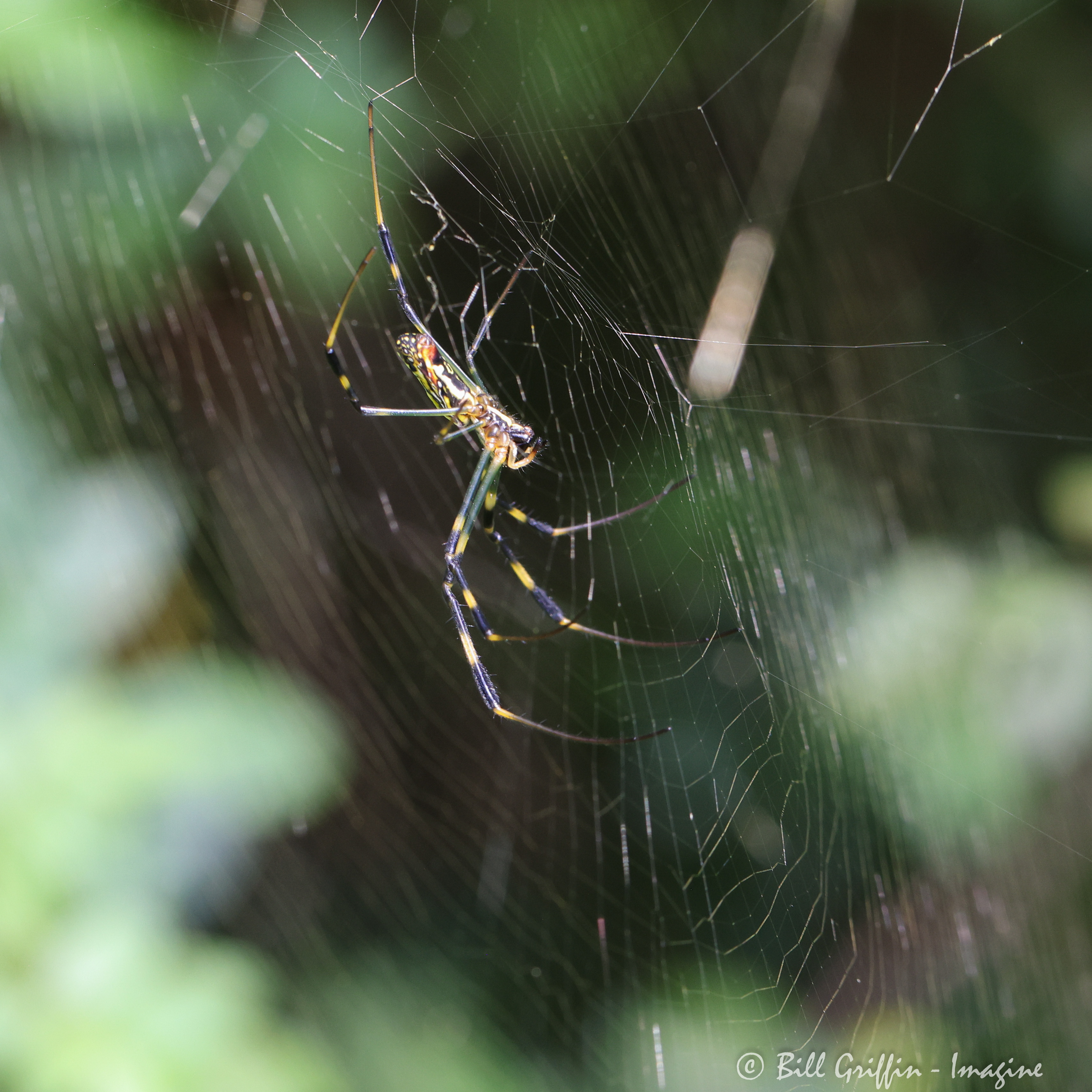
Suppose the spiders stopped weaving, mosquitoes
forgot how to suck our blood, bees
decided not to pollinate flowers.
Suppose the sea turtles never returned
to the beaches that bore them, to lay their moon-drawn eggs.
Or suppose for a moment the rivers held still
and the leaping salmon held still in mid-air.
.
Imagine fire stopped burning things to ash
although it still burned. It was no longer hot.
Of course that couldn’t happen. So think of something else.
.
Michael Hettich
.
from The Halo of Bees: New and Selected Poems, 1990-2022; Press 53, Winston-Salem NC (2023)
.
“Something Else” was first published in my 2010 book titled Like Happiness, and though sixteen years have passed since then, it seems to me, looking at the poem now, that the concerns that brought me to write the piece are, if anything, more urgent now than they were then. In asking us to imagine non-human animals and rhythms of nature deciding not to participate in the eternal rhythms of life—a kind of ultimate end-world scenario precipitated in response to human-wrought degradation—the poem (I hope) challenges our complacency. The two italicized lines attempt to articulate a perhaps extreme version of the kind of thinking we all do to deny our complicity. And I think the final line also intends a double reading: we can “think of something else” as a form of denial, or we can do so as a way of imagining a different sort of future.
— Michael
.
.
❀ ✿ ✾ ❁
.
Let us probe the silent places. Let us seek what luck betides us. There’s a whisper on the night-wind, there’s a star agleam too. And the Wild is calling, calling – let us go.
— Robert Service, Call of the Wild
.
We lose our souls if we lose the experience of the forest, the butterflies, the song of the birds, if we can’t see the stars at night.
— Thomas Berry
.
Thank you for celebrating the month of April with International Earth Day (April 22) and National Poetry Month. And thank you, Readers, who have shared poems that connect us to our planet and each other. We will continue posting EARTH POETRY throughout the month of April – and beyond April as well, of course, since EVERY DAY is EARTH DAY!
.
❁
.
Thank you for visiting Verse and Image: If you would like to receive an email each time a post appears, please SUBSCRIBE to Verse and Image using the button on the Home Page.
.
If you have a hard time finding the SUBSCRIBE button on this WordPress site, you can send me your email address and I will add you to the subscriber list. Send your request to
.
COMMENTS@GRIFFINPOETRY.COM
.
Thanks again for joining the conversation.
.
And thank you again and forever, Mike Barnett, for filling the cool deep well of nature quotations which will never ever run dry.
— Bill
.
❀ ✿ ✾ ❁
.
.
What Would You Leave Out? – Mary Oliver
Posted in Imagery, tagged Ecopoetry, imagery, Little Alleluias, Mary Oliver, nature, nature photography, nature poetry, poetry, Raven on March 13, 2026| 3 Comments »
…
[ 2 poems from Little Alleluias ]
…
❀ ❀ ❀
…
But tell me, if you would praise the world, what is it you would leave out?
Mary Oliver, Black Snake
…
❀ ❀ ❀
…
Crows
…
In Japan, in Seattle, in Indonesia—there they were—
each one loud and hungry,
crossing a field, or sitting
above the traffic, or dropping
…
to the lawn of some temple to sun itself
or walk about on strong legs,
like a landlord. I think
they don’t envy anyone or anything—
…
not the tiger, not the emperor,
not even the philosopher.
Why should they?
The wind is their friend, the least tree is home.
…
Nor is melody, they have discovered, necessary.
Nor have the delicate palates;
without hesitation they will eat
anything you can think of—
…
corn, mice, old hamburgers—
swallowing with such hollering and gusto
no one can tell whether it’s a brag
or a prayer of deepest thanks. At sunrise, when I walk out,
…
I see them in trees, or on ledges of buildings,
as cheerful as saints, or thieves of the small job
who have been, one more night, successful—
and like all successes, it turns my thoughts to myself.
…
Should I have led a more simple life?
Have my ambitions been worthy?
Has the wind, for years, been talking to me as well?
Somewhere, among all my thoughts, there is a narrow path.
…
It’s attractive, but who could follow it?
Slowly the full morning
draws over us its mysterious and lovely equation.
Then, in the branches poling from their dark center,
…
ever more flexible and bright,
sparks from the sun are bursting and melting on the birds’ wings
as, indifferent and comfortable,
they lounge, they squabble in the vast, rose-colored light.
…
Mary Oliver
from Little Alleluias, Grand Central Publishing, New York & Boston; © 2025 by NW Orchard LLC
…
❀ ❀ ❀
…
Gravel
…
6.
…
It is the nature of stone
to be satisfied.
It is the nature of water
to want to be somewhere else.
…
Everywhere we look:
the sweet guttural swill of the water
tumbling.
Everywhere we look:
the stone, basking in the sun,
…
or offering itself
to the golden lichen.
…
It is our nature not only to see
that the world is beautiful
…
but to stand in the dark, under the stars,
or at noon, in the rainfall of light,
…
frenzied,
wringing our hands,
…
half-mad, saying over and over:
…
what does it mean, that the world is beautiful—
what does it mean?
…
the child asks this,
and the determined, laboring adult asks this—
…
both the carpenter and scholar ask this,
and the fisherman and the teacher;
…
both the rich and the poor ask this
(maybe the poor more than the rich)
…
and the old and the very old, not yet having figured it out,
ask this
desperately
…
standing beside the golden-coated field rock,
or the tumbling water,
or under the stars—
…
what does it mean?
what does it mean?
…
8.
…
Listen, I don’t think we’re going to rise
in gauze and halos.
Maybe as grass, and slowly.
Maybe as the long-leaved, beautiful grass
…
I have known, and you have known—
or the pine trees—
or the dark rocks of the zigzag creek
hastening along—
…
or the silver rain—
…
or the hummingbird.
…
10.
…
This is the poem of goodbye.
And this is the poem of don’t know.
…
My hands touch the lilies
then withdraw;
…
my hands touch the blue iris
then withdraw;
…
and I say, not easily but carefully—
the words round in the mouth, crisp on the tongue—
…
dirt, mud, stars, water—
I know you as if you were myself.
How could I be afraid?
…
Mary Oliver
from Little Alleluias, Grand Central Publishing, New York & Boston; © 2025 by NW Orchard LLC
…
…
❀ ❀ ❀ ❀ ❀
…
The deep guttural imperative, that croak of authority – some afternoons we hear Raven down by the Yadkin River, some days lingering in the grove around the abandoned furniture plant. He, or she perhaps for they certainly know but I don’t, always sounds single. Alone. Perhaps a companion is nearby nodding, “Yes! Tell it!” but never is there any boisterous chorus. Life is a very serious thing for Raven.
…
Not so much for Crow. Jostling jokers. Bullies at times, they certainly don’t ever seem willing to share a tree with Owl or Hawk. Or Raven, apparently. This morning I heard Raven’s gravelly baritone right above the porch. I looked up through the screen and watched him raise his powerful beak again and declare. But there on another branch just a meter away perched Crow, matching Raven’s every croak with three tenor caws. Which cawing called in a fellow crow to circle above them both. Intimidating the big guy? For several minutes they battled with their call-and-response fugue, then they all flew off in different directions. A minute later I heard Raven in the cove a quarter mile away.
…
What meditation on my own life might Raven or Crow inspire? I admire both of these intelligent Corvids but which, if either, shall I emulate? This morning, after Raven’s departure, Linda and I are picking apart last night’s exhausting choral rehearsal. Our director, Lance, has selected John Rutter’s Requiem for May’s concert by our little ensemble, and some singers are not particularly overjoyed about the Latin pronunciation or the challenging rhythms, harmonies, and counterpoint of the score. We are struggling to come together. I’ll just confess – we ain’t there yet with this music. But during last night’s repetition and mistakes and measure-by-measure struggle, there also arose a few moments when a beautiful spirit of blessing surrounded our gathering. This morning Linda and I conclude that this is no music that a single voice can carry. In its great complexity, even because of that complexity, the whole tapestry can only come into being when each part, each voice, weaves itself into relationship with every other.
…
❀ ❀ ❀
…
In the introduction to Small Alleluias by Mary Oliver, poet Natalie Diaz writes this: What can any of us make of our momentary intimate lives in such an immense world, with equally immense unknowns, mysteries as great as death or the whale, as deep as love or the ocean, as sad and beautiful as a jellyfish torn and glistening in a small fortress of shore rock? This world in which we are of consequence, shaped as violently and tenderly as we also shape it. Marked by and marking. Though we might not always, or ever, know what it means, we can’t deny: the earth, the earth is beautiful. How lucky to be in it.
…
Little Alleluias, collected poetry and prose, gathers poems and essays from the last years of Mary Oliver’s life into a newly released collection. Mary Oliver was born in Ohio in 1935 and died in 2019. Through her life as poet and teacher she won innumerable awards, including the Pulitzer Prize in 1984 for American Primitive, her fourth book. Little Alleluias is available from Grand Central Publishing.
…
Enjoy poetry by Mary Oliver which has appeared in previous editions of Verse and Image, including just last week:
…
…
❀ ❀ ❀ ❀ ❀
…
Thank you for visiting Verse and Image:
. . . . . every Friday I present one or two poems I’ve read this week that particularly speak to me;
. . . . . every Saturday I present one or two poems submitted by YOU, my readers.
…
If you would like to offer a poem for consideration, either by a favorite author or your own work, please view these GUIDELINES for Saturday Readers Share:
…
…
If you would like to receive an email each time a post appears, please SUBSCRIBE to Verse and Image using the button on the Home Page.
…
If you have a hard time finding the SUBSCRIBE button on this WordPress site, you can send me your email address and I will add you to the subscriber list. Send your request to
…
COMMENTS@GRIFFINPOETRY.COM
…
Thanks again for joining the conversation.
…
– Bill
…
…
The Beauty of Form – Arthur Sze
Posted in Imagery, tagged Arthur Sze, Copper Canyon Press, Glass Constellation, imagery, nature, nature photography, poetry on February 27, 2026| 1 Comment »
.
[ 2 poems by Arthur Sze ]
.
Entanglement
.
5
.
Along the shore, bald eagles nest in the yellow cedars—
.
my clothes reek of cedar smoke—
.
I wrap clothes around glass jars of king salmon in my knapsack—
.
standing on a dock, I board a floatplane—
.
floaters in my eyes, wherever I go—
.
wherever you go, you cannot travel faster than light—
.
synapses firing in my body are a form of light—
.
threads of fugitive dye entangled in neural firings—
.
scent of summer in the blackening leaves—
.
a black bear swipes a screen door and ransacks a kitchen—
.
we ransack the past and discover action at a distance—
.
entangled waves of near and far—
.
a photon fired through a slit behaves like a wave—
.
we inhale, and our lungs oxygenate a cosmos—
.
a fire breaks out of the secret depths of the earth—
.
revel in the beauty of form.
.
Arthur Sze
from White Orchard, new poems in The Glass Constellation, New and Collected Poems; Copper Canyon Press, Port Townsend WA; © 2024
.
❀ ❀ ❀
. .
Transpirations
.
Leaving branches of a backyard plum—
.
branches of water on a dissolving ice sheet—
.
chatter of magpies when you approach—
.
lilacs lean over the road, weighted with purple blossoms—
.
then the noon sun shimmers the grasses—
.
you ride the surge into summer—
.
smell of piñon crackling in the fireplace—
.
blued notes of a saxophone in the air—
.
not by sand running through an hourglass but by our bodies igniting—
.
passing in the form of vapors from a living body—
.
this world of orange sunlight and wildfire haze—
.
world of iron filings pulled toward magnetic south and north—
.
pool of quicksilver when you bend to tie your shoes—
.
standing, you well up with glistening eyes—
.
have you lived with utmost care?—
.
have you articulated emotions like the edges of leaves?—
.
adjust your breath to the seasonal rhythm of grasses—
.
gazing into a lake on a salt flat and drinking, in reflection, the Milky Way—
.
Arthur Sze
from White Orchard, new poems in The Glass Constellation, New and Collected Poems; Copper Canyon Press, Port Townsend WA; © 2024
.
.
❀ ❀ ❀ ❀ ❀
.
. . . . . Last night, gazing
at Orion’s belt and sword sparkling in the sky,
.
I saw how we yearn for connection where
no connection exists: what belt, what sword?
.
from Ravine, Arthur Sze
.
And yet when I try to separate things, pull them apart to understand, they feel like they are all connected. Like the lines in these poems. At first each is its own crystallized moment, its individual monoku of presence. I slow myself to read the lines again, calmer, unhurried, in sequence, and they begin to speak to each other. They entangle and combine. They spark little flashes at the back door of consciousness. Meaning wants to come in from the dark. I can’t necessarily tell you Meaning’s dimensions nor her Latin binomial, but I can say that she seems companionable. She looks and smells and speaks like someone I’d like to have come in and set a spell.
.
Meaning, are you out there waiting patiently to be found, or are you nothing but a fancy my mind creates? I know your cousin Reality is not really comprised of infinitesimal billiard balls in orbit but rather clouds of potentiality. Nevertheless, Reality and mind do interact. Quantum superposition – the wave function collapses to a defined presence when touched by consciousness. This line of poetry is infused with meanings. I bring all my history and my own potentialities to its moment of reading. Who could foresee how all those elements might react? But they do. And Meaning and I leave the event arm in arm.
.
❀ ❀ ❀
.
Arthur Sze is the twenty-fifth Poet Laureate of the United States, appointed in 2025. He was born in New York City in 1950 and lives in Santa Fe, New Mexico, with his wife poet Carol Moldaw. The Glass Constellation collects poems from ten earlier collections spanning fifty years, as well as twenty-six new poems (sampled here). It is the winner of the 2024 National Book Foundation Science and Literature Award.
.
The Glass Constellation is available from Copper Canyon Press, and you can sample two poems from Arthur Sze’s newest book, Into the Hush, at an earlier poste HERE
.
.
❀ ❀ ❀ ❀ ❀
.
Thank you for visiting Verse and Image:
. . . . . every Friday I present one or two poems I’ve read this week that particularly speak to me;
. . . . . every Saturday I present one or two poems submitted by YOU, my readers.
.
If you would like to offer a poem for consideration, either by a favorite author or your own work, please view these GUIDELINES for Saturday Readers Share:
.
.
If you would like to receive an email each time a post appears, please SUBSCRIBE to Verse and Image using the button on the Home Page.
.
If you have a hard time finding the SUBSCRIBE button on this WordPress site, you can send me your email address and I will add you to the subscriber list. Send your request to
.
COMMENTS@GRIFFINPOETRY.COM
.
Thanks again for joining the conversation.
.
– Bill
.
.


[…] About/Submit […]