Feeds:
Posts
Comments

Archive for the ‘Photography’ Category

[featuring two poems by Regina Garcia]

This Fire Tastes Like . . .

This fire won’t taste like the last ones did
Singed souls torn up, crying, wandering,
wondering how to get love back
How to fix life
How to repair
The last fires tasted like . . .
Tasted like loss
Tasted like shame
Tasted like despair
Tasted like mourning
Tasted like no way out
Tasted like no way back
tasted like Tulsa
Tasted like Elaine
Tasted like Watts
Tasted like Wilmington
Tasted like old Eppes High . . .
Tasted like all that it had consumed

This fire tastes different
This fire tastes fed up
This fire has eyes set
Beyond loss
Beyond prison
Beyond death
Beyond the graves
This fire has new eyes
Fixed on that “New New”
Jerusalem
New fire gonna propel these children into
promised land
They won’t need the water fo the oppressor
Because they are children of living waters
And Raging Fires
And earth tht has promised fertility
Yet pushed out weeds to choke and distract

This fire tasted different
It tastes like energy

Tastes like righteous fury
Its fuel is dark kindling root
It will combust from a place to deep
So misunderstood
So, underestimated
That it will not be contained
This fire tastes different
It tastes like resolve

It will reject any attempts to thwart combustion
The internal combustion
It will incinerate attempts at trickery for
It has seen the video and believes
It waw murderous hubris
It saw The Dead that were tried for dying
It saw the solid stance of patronizing defiance of other fires
It saw the lies stifling acrid air
This fire tastes different
It tastes alive
It will not stop until there is nothing left that can stop it
It will then scoop the ashes and build
Jerusalem
Yeah
This fire tastes different
This fire tastes like revelation
This fire tastes like change
This fire tastes like
Hope

Regina YC Garcia
from The Firetalker’s Daughter, Finishing Line Press, © 2023


❦ ❦ ❦

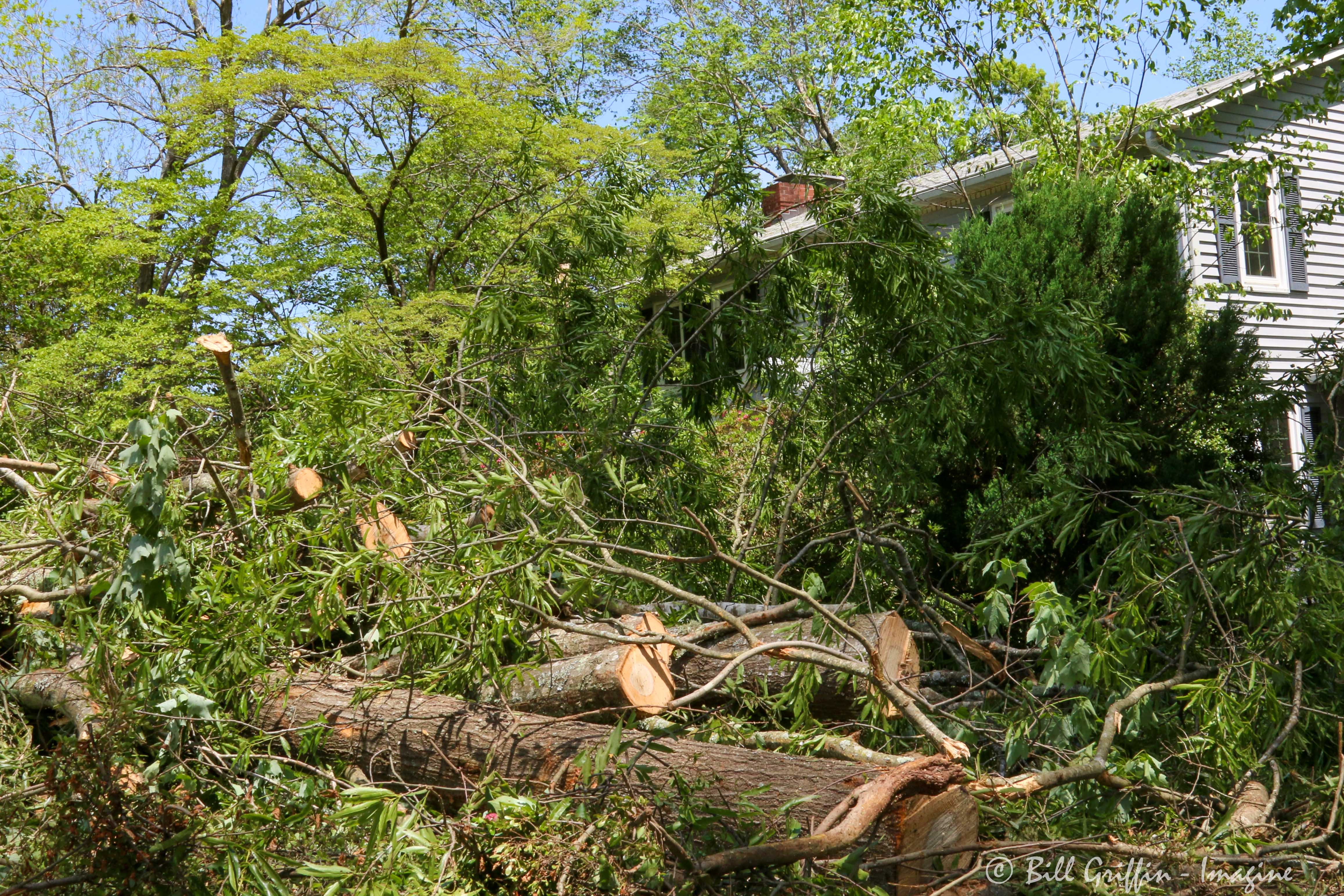
Rainstorm, windstorm, limbs thrashing the house in panic, rain attacking the windows through the screens: we can feel Amelia’s mounting fear each time the sky grows dark and she asks, “Is this a tornado?” No, Honey, just a big storm. We don’t get tornados around here.

Until this afternoon. Severe Thunderstorm pings on the phone while we’re watching a movie with Amelia in the living room. Within minutes the sky is slate and the TV goes black. When hail peppers the porch we lurch for the basement. Amelia makes it into a game, the divine gift of the seven-year old, and while we play with flashlights we hear the drumming of rain but assume those contrabasso reverberations are thunder.

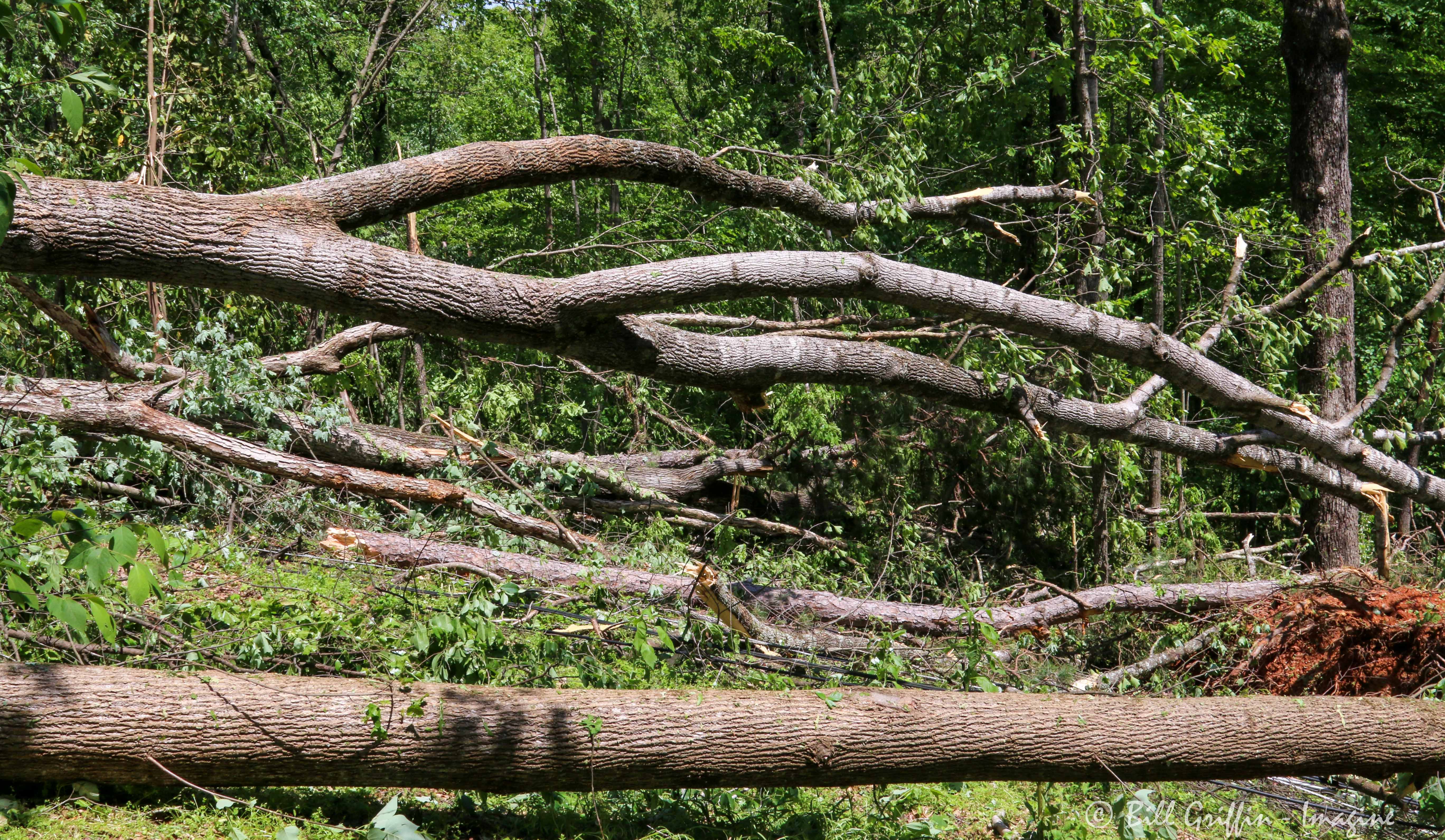
It’s all over in fifteen minutes. We climb the stairs and open the front door – our neighbor’s venerable willow oak, trunk at least two meters in diameter, is angled across the road into our driveway. Not crushing our living room. One sugar maple at the end of our house has had its spine snapped and hurled, but not into our bedroom. As our neighbors emerge, we tally and discover no one is injured (although not true of several roofs).

Everyone’s yard is full of twisted trunks and limbs or huge redclay balls of the uprooted. We notice most of the trees aligned prostrate in the same direction and we mutter, “Downburst.” “Straight-line wind.” Two days later, though, the National Weather Service makes its proclamation: an E0 tornado. We wonder if Amelia will ever want to finish that movie we had started. And if we ever get our power back on, we’re ordering some more flashlights.


Regina Garcia’s new poetry collection, The Firetalker’s Daughter, is elemental – wind, earth, water, fire. She describes her mother and her son as Firetalkers – they can speak to pain and talk it into submission. And isn’t that what these poems do, speak to the pain? If words could remove the pain of the world, the inescapable pain of living, perhaps a new day would dawn when the earth would have no more need of words. We will never see that day.

But strong words, words of compassion and truth, can raise us out of the pain. We can stand on the shoulders of the poetry, the hymns, the stories of the Firetalker and see a way beyond the pain. We can see a road before us where pain can’t wield its power over us. We can live in this world of pain and still proclaim joy, the rise of indomitable spirits from the embers. Oh, Regina Garcia, may your poetry lead us there. You are the Firetalker.

❦ ❦ ❦

The Fire That Consumes: The Burnings of Black Histories

Have you ever seen fire, the kind that consumes . . . ?
a house, a block, a street?
a community?
a town?
a nation?

Have you ever stretched fingers towards fire just because you wanted to feel
the last gusts of breath before the flames melted . . . ?
Mortar from brick?
Wood from steel?
Skin from meat from sinew from bone?
Have you ever jumped at the crack and splinter before the crash?
Hid your face to escape the blowing soot?
Covered your nose to block the smell of escaping gases the incineration of
flesh? Squeezed eyes shut to restrain the release of tears?

Fire destroys completely
Everything
Except memory
Those who have lived through fire never forget that all that was lost cannot
be returned, cannot be restored
Pre-fire life flickering in memory

Have you ever known the indignity of stolen memory?
Of erasure of thought?
A disallowing of necessary history passed on from ind to mind
No collective storage
Trashed as disposable waste
Scores of nations and families of people relegated to one layer of life lived
while other layers burned away
Withdrawn from the light of day
Layers that could have lit
the illumination of minds
the awareness of conditions

the recognition of irreverence and unrighteousness
the tackling of generational traumas
the overcoming of fear
the pride of resilience

Layers of heated memory
Deemed villainous
Tossed into the ashes
By thieves, those who dread
The power that it brings
And the rise of indomitable spirits from the embers

Regina YC Garcia
from The Firetalker’s Daughter, Finishing Line Press, © 2023

❦ ❦ ❦

Read Full Post »

[ with 3 poems by Jane Mead]

In Need of a World

Who wouldn’t want a life
made real by the passage of time
or a world, at least,
made real by the mind. Something
solid and outer, though connected.

Who wouldn’t want to know
for certain how to get there?

I’d like to tell you simply
how I passed this day putting tomatoes up,
or how I tied a stern cicada to a string
so I could feel the gentle tug
its flying in frantic circles made.

I’d like to show you the red
worm-shaped burn on my wrist
and in this way claim myself.

Instead I slip out of my every day –
away into the distant and lulling sound
of “once-upon-a-time-there-was-a-woman.”

Will I ever find that perfect stance
of soul and mind from which sparks
a self uttering itself?
I’m always slipping between rows of corn –
through the field that rises toward this ridge
from which I like the houses for their smallness.

Here I lean against a Honey Locust,
feathery tree with its three-inch thorns,
and watch sagging strands of barbed wire
sway slightly in the wind – the clump
of brown fur hanging there, waving.

I watch the field of drying corn beyond,
and beyond that the soccer field
and rows of clean-lined condos.
I wait for the yellow light to flick on
in the white church across the valley.

Will I ever learn the way to love
the ordinary things I love to look at?

I’m always slipping away
between rows of corn, climbing
toward this ridge to think,
when really what I want is a ridge
or a lonely field on the edge of the world
of the mind. A place from which to speak
honestly to that man on the porch, a way
to greet the children who are swinging
on the edge of duck behind chain-link fences.

But always it’s either I or world.
World or I.

And when it’s I, I’m dreaming
on a quiet ridge that the tomatoes
ripened and, though I was missing,
a woman put an apron on and canned them.
And when it’s world, it pushes me back
toward that madness of the soul
which is not a field, nor a ridge, nor a way.

Jane Mead
from To the Wren, collected & new poems 1991-2019; Alice James Books, Farmington, Maine; © 2019

❦ ❦ ❦

I am sitting at the kitchen table reading these poems by Jane Mead when Linda asks me if I have any trash that needs to go out. I am sitting at the kitchen table because if I sit at my desk I will remember all the things that need to be done but that are not reading poems by Jane Mead. Of the things I will remember sitting at my desk some are a chore, like writing checks, and some are sober, like checking in with Dad to see if he is still having pain, and although reading Jane Mead is not a chore the poems are certainly sober. She makes me wonder: will there be a moment later today or tomorrow to sit and stare into the green chapel of April and ponder who I am?

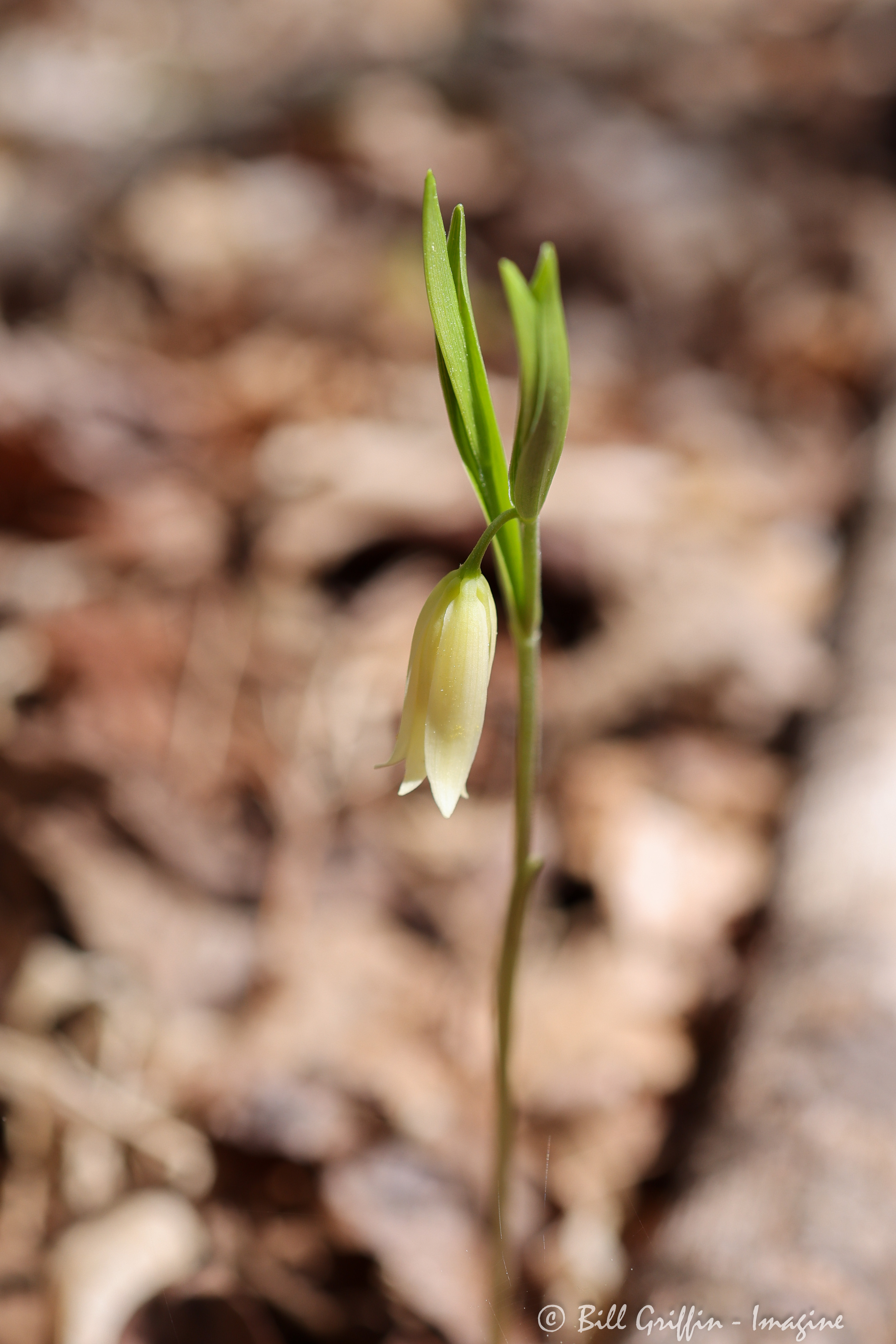
Yesterday walking the Forest Bathing Trail, Linda and I saw three violets that are not the rampant purple violets that fill the rest of the world. One by one during the weeks of April we have learned their three names. They are small, they are just a few, they are precious. Their rampant purple cousins whose flowers are crafty enough to duck beneath the mower blades, who make many, many seeds, and who have perfected the concept of ‘spread’, they, too, are precious. Will there be a moment later today or tomorrow to sit and consider the insignificance of violets and consider whether, perhaps, all things and all moments are precious?

❦ ❦ ❦

Sparrow, My Sparrow

The voice that loves me best when I am dreaming
comes from every corner of the circle of my sleep
speaking in the sound of my own drowning.
She says the body’s just a habit getting old,
a crystal turning on a nerve of ancient longing.
She says I will teach you how to be with yourself
always, she says we do not live in the same world.

All this is just an allegory for the truth.
Truth is, I cannot speak
the voice that I’ve been dreaming.
Truth is, the slate sky darkens,
clouds of sparrows heave in the wind,
the trees are massed with sparrows screaming
and the fields are dotted with them.
The birds are bracing themselves. The birds
are frenzied by something about to happen.

Truth is, I have my feet on the slimy banks.
I look for my face in the murk-green river
and the water’s surface does not change.

But I hear myself in the screech of sparrow
and am panicked by something about to happen.

Slate sky – darkened; sound in wind:
I enter this world like myself as a prayer.
I enter this world as myself.
I cannot help myself.

What is a prayer but a song of longing
turning on the thread of its own history?

I feel myself loved by a voice in the wind –
I cover my ears with my palms.
The whole world rocks and still
the cold green river does not spill.

Jane Mead
from To the Wren, collected & new poems 1991-2019; Alice James Books, Farmington, Maine; © 2019


❦ ❦ ❦

The Man in the Poetry Lounge

at Berkeley is reading English
pastoral poetry with passive
abandon, chewing his thumbnail
aggressively. He wants

to see grass, he wants to
BE grass so badly he can
almost smell it. Outside,
they are cutting the grass—

the man and the mower—they are
dressing and keeping the garden.
They are not far enough away
from my hay fever, but the man

reading pastorals is off—
zeroing in on calmer places.
Have the birds arrived yet?
Have the larks and nightingales

made their appearance? I would like
to ask him to let me know
when he gets to the birds. I would like
to concentrate then and there, and lose

what I have read about Flanders
and Picardy and the trenches of W.W.I:
the larks appearing around the time
of stand-to in the morning,

the nightingales showing up
by stand-to at night. I would like never
to have learned that they were there.
But instead, because my nose is running,

my eyes are getting smaller by the minute,
and I’m edgy, I’ll ask him sweetly
if he’s bothered at home
by bedbugs, rats, or lice,

and justify the question with an explanation:
I myself am bothered by fleas.
This is why I keep scratching—
which act I hope he does not find

distracting because, really,
who am I to ruin his birds.
I who cannot, as you have seen,
follow those trenches to their

logical conclusion. Instead, I too
have searched long, and found
that in the gentle arc
of a pig’s back there really is

a thought to calm the thinker—
if, that is, the pig be tame.
I want to know if this man
loves what he is reading—

and if he loves it enough
in what way it will change him.
Are we onto something real now
or is this all about planting

a false goose in front of the moon?
Do the iambics soothe him? Is he
big on true rhyme and false conclusion,
the sonic hanky—you wipe your eyes

you blow your nose. Which I will
have to leave this room to do.
But not before I’ve resisted
coming right out and asking

if he’s fulfilling the requirements
of heart or mind, and asked instead
what it’s my true right to know
(involving, as it does, the heat

of concentration and the problem
of public safety, as in MY safety):
if his shirt, which I’ll begin
by calling handsome, has passed

the requirements of the Flammable
Fabrics Act. Then I’ll
step out and blow my nose,
at which point I might as well wander

back on down toward Cody’s and try
to receive the world, browsing
and scratching in the poetry section,
after buying a paper poppy for a dollar—

the one you didn’t want to know was coming—
the Flanders—from a veteran of foreign wars
at Telegraph and Durant—not,
of course, looking at his left leg—

because I can’t.
Because it isn’t there.

Jane Mead
from To the Wren, collected & new poems 1991-2019; Alice James Books, Farmington, Maine; © 2019

❦ ❦ ❦

Given the nearly complete destruction of an entire planet, the overpowering by greed of any sense of the basic logic of survival, or valuation of beauty — it would be odd if the urgency of this situation were not reflected in our poetry. But poetry has the potential to move people, which is where the potential for growth and change of a certain kind enters the picture.
+++++++++++++++ Jane, Mead, from a 2014 online interview,
+++++++++++++++ recalled in her obituary in the Los Angeles Times

Jane Mead died in 2019 at the age of 61. She was a Griffin Poetry Prize and Los Angeles Times Book Prize finalist for her 2016 book World of Made and Unmade, about her mother’s death. Her previous book of ecopoetry, Money Money Money Water Water Water, explores the widespread destruction of the natural world.

❦ ❦ ❦


❦ ❦ ❦

IMG_6432

Read Full Post »

[with poems by Jennifer Elise Foerster, Robert Service,
Sam Love, Ada Limón]

One day for Earth Day? One day to honor our kinship with every thing that lives – Animal, Plant, Fungus, Protist, Archaea, Bacteria, all of them? One day to celebrate chlorophyll, the absolute best idea that life has ever had? One day to ponder in reverence this single solitary place in the universe that sustains life?

In Kim Stanley Robinson’s recent novel, The Ministry for the Future, one character, a member of The Ministry, reckons that what the earth needs to save itself is a new religion. Not new economics, not new politics, not even new technologies – a new religion.

Why religion? At its essence, religion is about The Good – how to define it, pursue it, encounter it, how to live encompassed in its expansive presence. Religion is permeative and interpenetrative – for its adherents, it occupies every aspect of life and every moment of consciousness. Religion is transcendent – ego, personal comfort, power, possessions, all fade to irrelevance in the presence of The Good. Religion is immanent, not there & then but here & now.

Here and now. Every day. Reverence and celebration. Stop and listen and you will hear Earth whispering its transcendent message: “More Life!”

Thank you to the readers of these pages
who have responded to my call for poems this Earth Day.
Watch for new posts on April 21, April 22, and April 23.

All photographs were taken April 11-17, 2023,
along the Elkin & Allegheny Nature Trail,
part of the Mountains-to-Sea Trail in North Carolina, USA.

Earth Day 2023 art by Linda French Griffin.

❦ ❦ ❦

Origin of Planets

In this version, the valley
lime green after rain
rolls its tides before us.

A coyote bush shivers with seed.

We hold out our palms as if catching snow—
our villages of circular tracts
overcast with stars.

We have been moving together in sequence
for thousands of years, paralyzed
only by the question of time.

But now it is autumn under bishop pines—
the young blown down by wind feed
their lichens to the understory.

We follow the deer-path
past the ferns, to the flooded
upper reaches of the estuary.

The channel snakes through horsetails
and hemlock as the forest deepens, rises
behind us and the blue heron,
frozen in the shallows.

The shadow of her long neck ripples.

Somewhere in the rustling tulle reeds
spider is casting her threads to the light

and we spot a crimson-hooded fly agaric,
her toadstool’s gills white
as teeth as the sun
++++++++ bleeds into the Pacific.

We will walk the trail
until it turns to sand
and wait at the spit’s edge, listening
to the breakers, the seagulls
as they chatter their twilight preparations.

What we won’t understand
about the sound of the sea is no different
than the origin of planets

or the wind’s crystalline structures
irreversibly changing.

The albatross drags her parachute
over the earth’s gaping mouth.

We turn back only for the instant
the four dimensions fold
into a sandcastle—before its towers
are collapsed by waves.

The face that turns
toward the end of its world
dissolves into space—

despite us, the continuum
remains.

Jennifer Elise Foerster
Selected by Bill Griffin; Originally published in Poem-a-Day on December 20, 2022, by the Academy of American Poets. Copyright © 2022 by Jennifer Elise Foerster.

Jennifer Elise Foerster comments: “This poem emerged from one particular version of a day when I had the gift of walking with a friend on the Point Reyes National Seashore. I say ‘version’ because the path this poem follows is inevitably different from the path we walked, and distinct, too, from the many paths in my memory of that day. What all my versions share is that we walked toward the beach, toward twilight, at which point I wondered what it really meant to ‘turn back.’ At which point I watched the waves, the wind, the endless endings and beginnings, the turnings of gulls and seashells, planets peering through dusk. I love that wonderment doesn’t require understanding. How brief we are, and infinite in our versions of being here on earth.”

. . . wonderment doesn’t require understanding. I love understanding like I love the specifics of this poem, the creatures that occupy it, their occupations, but I also love the door it opens into reverence that requires no understanding. That, in fact, requires nothing of me at all except to take my place as part of the continuum.

– Bill Griffin / Elkin, North Carolina

❦ ❦ ❦

The Call of the Wild

Have you gazed on naked grandeur, where there’s nothing else to gaze on,
Set pieces and drop-curtain scenes galore,
Big mountains heaved to heaven, which the blinding sunsets blazon,
Black canyons where the rapids rip and roar?
Have you swept the visioned valley with the green stream streaking through it,
Searched the Vastness for a something you have lost?
Have you strung your soul to silence? Then for God’s sake go and do it;
Hear the challenge, learn the lesson, pay the cost.

Have you wandered in the wilderness, the sage-brush desolation,
The bunch-grass levels where the cattle graze?
Have you whistled bits of rag-time at the end of all creation,
And learned to know the desert’s little ways?
Have you camped upon the foothills, have you galloped o’er the ranges,
Have you roamed the arid sun-lands through and through?
Have you chummed up with the mesa? Do you know its moods and changes?
Then listen to the wild, — it’s calling you.

Have you known the Great White Silence, not a snow-gemmed twig a-quiver?
(Eternal truths that shame our soothing lies.)
Have you broken trail on snowshoes? Mushed your Huskies up the river,
Dared the unknown, led the way, and clutched the prize?
Have you marked the map’s void spaces, mingled with the mongrel races,
Felt the savage strength of brute in every thew?
And though grim as hell the worst is, can you round it off with curses?
Then harken to the wild, — it’s wanting you.

Have you suffered, starved, and triumphed, groveled down, yet grasped at glory,
Grown bigger in the bigness of the whole?
‘Done things’ just for the doing, letting babblers tell the story,
Seeing through the nice veneer the naked soul?
Have you seen God in His splendours, heard the text that nature renders
(You’ll never hear it in the family pew),
The simple things, the true things, the silent men who do things?
Then listen to the wild, — it’s calling you.

They have cradled you in custom, they have primed you with their preaching,
They have soaked you in convention through and through;
They have put you in a showcase; you’re a credit to their teaching –
But can’t you hear the wild? – It’s calling you.
Let us probe the silent places, let us seek what luck betide us:
Let us journey to a lonely land I know.
There’s a whisper on the night-wind, there’s a star agleam to guide us,
And the wild is calling, calling… let us go.

Robert Service
Selected by Mike Barnett; published in Robert Services’ first book of poetry, Songs of a Sourdough, in 1907.

Robert Service (1874-1958) was a British-Canadian poet, often called “the Bard of the Yukon.” This poem has always had a positive affect on me with its rugged description of wild places similar to the ones I have traveled while camping and backpacking. I have used the last two stanzas as quote material or ‘words of wisdom’ in camps I have directed, and I still use it often with my Family Nature Club.

– Mike Barnett / Eustis, Florida.

❦ ❦ ❦

Forest Bathing

My artificial cocoon
is really cozy as it
guards me from
nature’s wildness

My illuminated habitat
wards off the elements
and creates its own micro climate
oblivious to its carbon footprint.

And yet something is missing
as the artificial light challenges
the setting sun and the stale air
maintains a constant temperature.

In contrast a short distance away
nature beckons me to a forest
where natural bioenergy
can alter my mental state.

Strolling through this verdant space
I enjoy a heightened awareness
of life’s web and become open
to unspoiled wildness.

Feeling restored I thank the trees
and say goodbye to the
rustling leaves, trickling water,
melodic birds, dappling light,
and healing spirits.

Sam Love
Published in Earth Resonance: Poems for a Viable Future (Poetry Box, Portland Oregon)

The Japanese believe time in the forest can be healthy. They practice “forest bathing” or shinrin-yoku. Shinrin means “forest,” and yoku means “bath.” I find the noise in my head begins to quiet when I walk in an area untouched by so called civilization.

– Sam Love / New Bern, North Carolina

❦ ❦ ❦

Give Me This

I thought it was the neighbor’s cat back
to clean the clock of the fledgling robins low
in their nest stuck in the dense hedge by the house
but what came was much stranger, a liquidity
moving all muscle and bristle. A groundhog
slippery and waddle thieving my tomatoes still
green in the morning’s shade. I watched her
munch and stand on her haunches taking such
pleasure in the watery bites. Why am I not allowed
delight? A stranger writes to request my thoughts
on suffering. Barbed wire pulled out of the mouth,
as if demanding that I kneel to the trap of coiled
spikes used in warfare and fencing. Instead,
I watch the groundhog closer and a sound escapes
me, a small spasm of joy I did not imagine
when I woke. She is a funny creature and earnest,
and she is doing what she can to survive.

Ada Limón
Selected by Melinda Thomsen; originally published in Poem-a-Day on September 16, 2020, by the Academy of American Poets. Copyright © 2020 by Ada Limón.

I love this poem because the speaker at first mistakes the groundhog for a cat, something typically tame, but as she watches the animal enjoy its life, somehow this wild thing has sucked away all the speaker’s pain and replaced it with a jolt of unexpected joy. The wild draws us out of ourselves and into a healthier being.

– Melinda Thomsen / Greenville, NC

❦ ❦ ❦


Read Full Post »

« Newer Posts - Older Posts »