Feeds:
Posts
Comments

Archive for the ‘family’ Category

[with poems by Kimberly O’Connor]

We walk out of the pines and hear it, a throaty chuff and grumble from somewhere across the corn field. A plume of dust and chaff is one clue but the clincher is the field’s gnawed border twelve rows wide, a swath of brittle stalks and husks eaten and spat out. And a scatter of yellow kernels in the weeds.

After we cross the road our trail re-enters the woods but still parallels the field. The combine is laboring well out of sight but its growling swells and fades. Linda and I hike this particular bit of Mountains-to-Sea trail every week and we’ve been wondering why these acres have been standing so long unharvested. Great day for an answer, this Wednesday before Thanksgiving – school’s out! – and the grandkids with us. Hardwoods now. In the leafless shadows we can smell corn dust even when we can’t see the field through the undergrowth. Saul hangs back to talk philosophy and politics with Linda while Amelia skips ahead and dares me to jump over every rock and root.

At our turning-back-to-the-car point, the trail branches north to Grassy Creek and south into the corn field. Machinery noise has receded; I want to see the carnage. We all walk up the red clay bank. Most of the stalks are now stubble but a few have been pushed over, unconsumed. I wander a few rows and pick up dry ears to show Saul and Amelia. Moldy toward the silks, but mostly each ear is clean hard kernels clinging to cob. I put a few nuggets in my pocket. Saul keeps two unshucked ears to carry home for evidence.

Back at the road crossing the uproar reaches its crescendo. We see the top of the cab as it approaches, pulling rows of stalks into its jutting incisors, and then it finishes its row and roars past us. A man and his son sit high in the glassed-in booth! They wave back to us and we watch for a few more minutes as more of the field is mown down.

When we turn back into the woods, Amelia says, “I’m sure glad they weren’t mad at us for taking some of their corn.” Small miracles – and another is that on today’s hike we heard nary a complaint from the kids even when I confessed I’d forgotten to bring the snacks.

❦ ❦ ❦

Old Dominion

Remove arteries,
veins, and clotted blood
around heart

was the start of a recipe
for chicken pie in
a 1920’s cookbook

I found and read in the house
of friends we were staying with
in Charlottesville. It was

an heirloom. Their whole house
was antique, old fashioned:
mason jars, strawberries

resting in colanders, milk
in a white porcelain pitcher.
Worn embroidered linen dishcloths.

She canned. He cut wood
for fires in winter but
this was summer. The air

almost tropical, unbreathable.
Azaleas. Wisteria. Roses.
When I breathed in, it hurt.

The house hurt me and
I didn’t know why.
Everything was white.

Clotted blood around heart
I wanted that cookbook.
I almost stole it. I was

a terrible houseguest. I wanted
to go home. I cried beside
the clawfoot bathtub

throughout the afternoon.
I wanted to go home and
I wanted to own that house.

Kimberly O’Connor
from White Lung, Saturnalia Books, Ardmore PA, © 2021


❦ ❦ ❦

Kimberly O’Connor’s poetry is the surgeon’s dispassionate blade. Lie straight and still and watch the blood well up. Yes there will be pain, yes invasion, yes you are vulnerable, but what is cut from you may offer your best chance to live.

Kimberly O’Connor’s poetry is the surgeon’s passion and point of compassion. Yes there is pain in our world, both of us know it, both feel it, both of us have at times caused the pain. But here is our best chance for hope, for a world where we dig out the pain, find its roots, put it in a place where we can all see it for what it is. Maybe it won’t have to hurt us forever.

In White Lung, Kimberly explores every painful vein and clot of her Southern heritage and upbringing. She doesn’t flinch, although she cries and so do we, her readers. Several of her poems share the same title, The History of My Silence, which proclaims one of the major themes of the book and can be extended to the silence of not just one individual but of our society and culture: by extension, the silence of our history. Not only are the individual poems tense with emotion and meaning, but the poems communicate with each other to weave a personal story, and interconnect to bring their painful, hopeful, glorious epiphanies into masterful wholeness.

The North Carolina Poetry Society awards its annual Brockman-Campbell Award to the best volume published by a North Carolina writer in the preceding year. Kimberly O’Connor and White Lung are the winner for 2022. Kimberly is a NC native who lives in Golden, Colorado and has over 20 years of experience teaching and working with writers ages eight to adult. This is her first book.

[More information about the Brockman-Campbell Award, White Lung, and another poem by Kimberly O’Connor, available here: ]

❦ ❦ ❦

Portrait of a Lady

her father an electrician her mother
a hairdresser (it’s not that simple)
(you want her to be nice
and quiet) she’s a girl reading
in her tiny bedroom in the trailer
she does not say a word

you don’t want to read the word
n_____ but there it is her mother
says it her father says it the trailer
echoes with its two-syllable
thud & poison you can read
(here) where she wrote it in her diary a nice

(straight white) girl straight hair straight A’s nice
and quiet (like you want) says not a word
sits in the beauty shop reading
spinning a chair while her mother
cuts hair (she imagines she is special)
they drive the dirt road to the trailer

they move out of the trailer
build a house (big wood nice)
when her father wins a sweepstakes
they look at the letter repeating the words
over and over (it’s true) her mother
gives her the letter to read

there it is in red
(one hundred thousand dollars) the trailer
becomes a memory her mother
moves the shop to the new nice
spare room the ladies get shampoo & styles words
hum white nose white ladies scissors

swish you can see it (it’s simple)
a whit girl grows up in the South its red
& pink mimosas dripping scent the words
they say there taking root trailing
tendrils in even nice
girls’ minds (everyone says them even mothers)

Kimberly O’Connor
from White Lung, Saturnalia Books, Ardmore PA, © 2021


❦ ❦ ❦

Untitled (By the End)

By the end, we won’t remember what
happened when. We’ll remember hardly
any of it. The only thing that makes it

bearable is all the blossoming. The trees
turn white, then green. What unfolds
for me unfolds secondhandedly.

While they’re injecting the midazolam,
I am watching little girls in black
leotards play tag. Or it takes longer

than I think and we are already driving
home for dinner. But let’s go back
to before that. There was a murder.

It was violent. It was not an accident.
A young woman died and a young man
went to prison. Elsewhere, unrelated,

I want to be a poet. I fall in love with
someone. He becomes a lawyer.
We become a mother and a father.

We move to Denver. My husband meets
the young man in prison. He’s no longer
young. He becomes a kind of friend.

Of course this takes years. I learn things
like in supermax, the inmates are required
by law to have access to one hour

of sunlight per day. On death row,
the light though a skylight counts.
The men can’t touch their families

or each other. The day before their
executions, their mothers cannot hug
their sons good-bye. No one cares about this.

Why should they? Their victims’ parents
didn’t get to hug their children before—
yes. That is correct. So what’s wrong

with me? My husband sends his client books.
Should I say his name? He likes
vampire books. Mysteries. Thrillers.

When my husband calls him with the news
that the last appeal has been denied,
Clayton says Have a good weekend

when they hang up the phone. My husband
flies to Oklahoma City. I wait.
Amelia’s dance class is in a church.

I sit in the sanctuary and imagine
I am holding Clayton’s hand.
I am ridiculous. But my hand feels

warm for a minute. My husband calls
and he is weeping. Or he is furious.
He’s not dead yet, he says.

They kicked us out. They closed
the curtain and they made us leave.
It’s the end of April; everything’s in bloom.

It snows, then the sun comes back.
By summer, we should feel better.
By autumn, we might forget.

Our garden grows. We harvest. I walk
through the alley carrying vegetables.
When I get home and dump out the cucumbers,

I’m filled suddenly with joy. I pirouette
around the kitchen and imagine Clayton
is dancing with me, his spirit, anyway.

I think he is. I wish for it. I imagine
his victim’s mother wishing deeply
for my death, and I don’t blame her for it.

Kimberly O’Connor
from White Lung, Saturnalia Books, Ardmore PA, © 2021

❦ ❦ ❦

❦ ❦ ❦

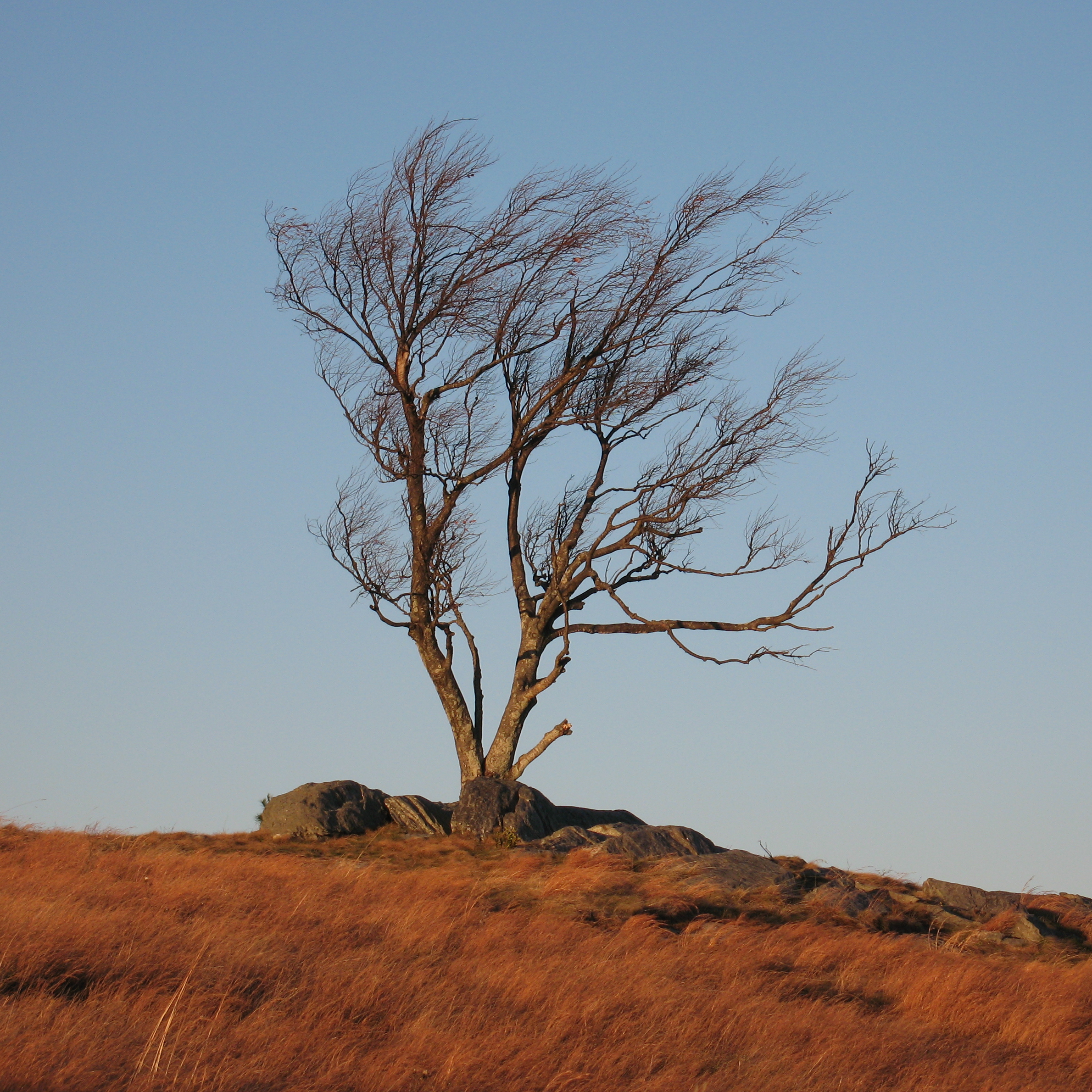
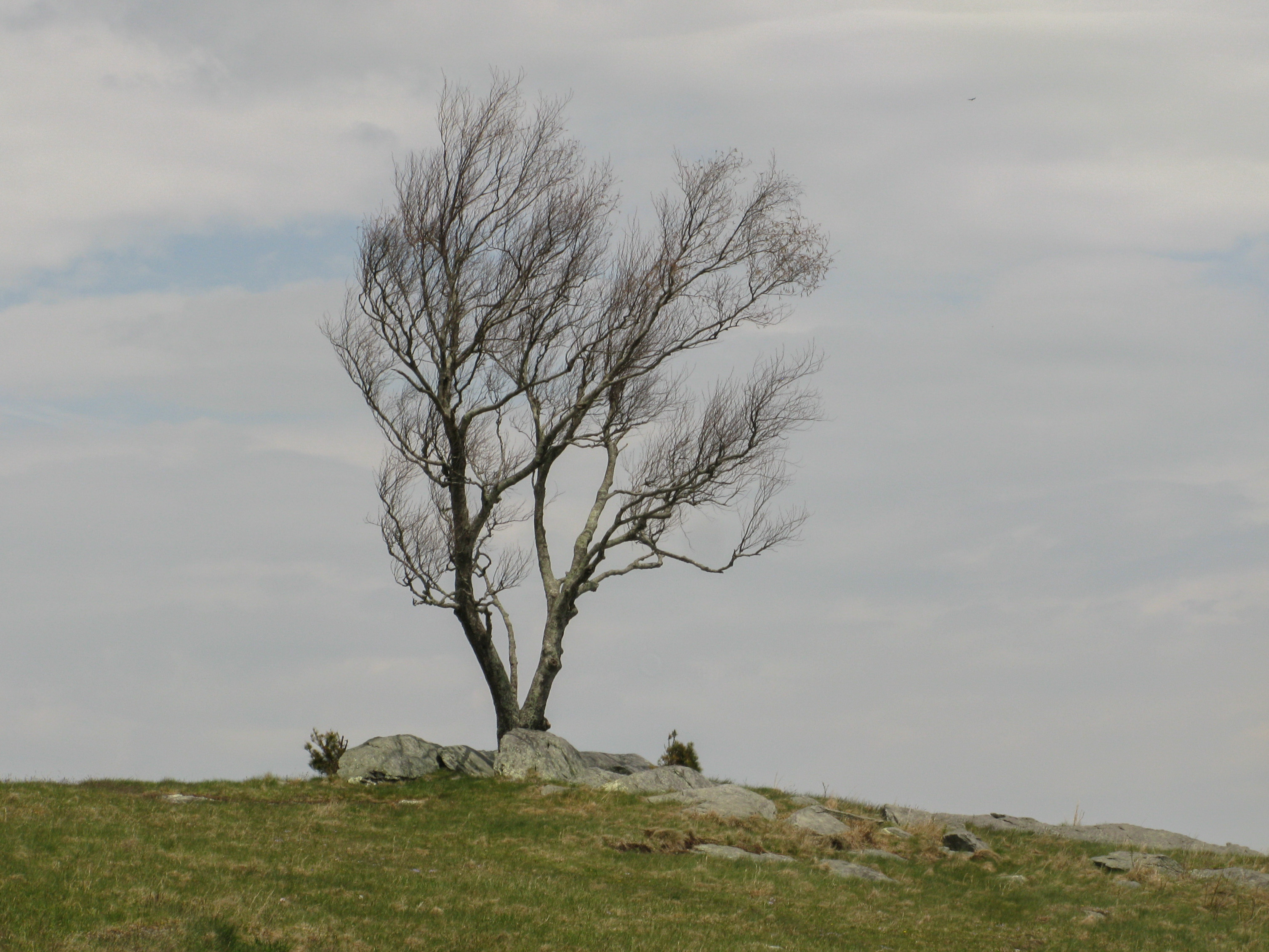
2020-09-08b Doughton Park Tree

Read Full Post »

[with 3 poems by Diana Pinkney]

Oh, I couldn’t possibly eat all that. Thank Heavens I haven’t heard Mom utter those words for quite a while now. For the fifty years prior I believe we heard that phrase with each plate set before her. Some impulse ingrained in the 30’s in the genteel South? A mantra for all the new college girls in the 40’s? How, we would ask ourselves behind her back, could someone forever twig slender so fear gaining a pound?

This week at the doctor’s office I watch the nurse enter Mom’s vitals in the computer to make sure she hasn’t lost a pound. Dad admits he hates to nag her to eat her breakfast – too engaged with the paper or too forgetful to take a bite? Yesterday I cooked them both lunch – calm down, it was just 10 minutes in the skillet from Trader Joe’s – and served the plates. It’s no trick, really, just sit across the table from Mom for long enough and she will finally finish what you’ve given her. Don’t forget the milk! The doctor says you need more fluids.

Grandmother, Dad’s Mom, had her own mantra for us grandkids in the 50’s and 60’s: Children are starving in Europe. Yes, swear to God, she actually said that more than once. Chubby me was more than happy to clean his plate, but one breakfast I recall her disapproval. I had scooped up the last Cheerio but there was still milk in the bowl overlying its substratum of teaspoons of sugar. That evening I washed down my cornbread with a big gulp of sudden sickening sweetness Grandmother had rescued from that bowl.

Now I’m clearing the table while Mom stares at the last of her milk, a layer of ice melt above the 2%. In a few minutes, though, as I stand at the sink rinsing, she walks in carrying the empty. I have to say it. Good job, Mom!

❦ ❦ ❦

Super Cuts, Six Months after My Daughter’s Death

The stylist snips, snips my hair, shorter
and shorter. As she works, we talk.

You have children, she asks. Yes,
I answer. Do you? Oh, I have two girls.

How about you? Three, I say, my voice
tight, clipped as the gray strands covering

the floor. My daughter’s hair was long
and red, until it was blonde. She loved

the sun. A little less on the sides, please.
Why didn’t I say I have two children, sons,

and that would have been that. Except that
will never be that. I will always have three

children. Do they live here, she asks?
The sons do. My daughter lives nowhere

and everywhere. It’s good, she says, you
have a girl, too. Yes, I answer, it is good.

Diana Pinckney
from Hummingbirds & Wine, Main Street Rag Publishing, Charlotte, NC, © 2022

❦ ❦ ❦

How impossible to bear, losing a child to death. How much more impossible to write about it. Diana Pinckney in Hummingbirds and Wine overcomes the paralysis of grief, but not as chronicle or biography or personal therapy. Although she confesses I live / behind a veil, these poems are the bridge that leads her and us beyond the Valei of Teeris. These lines are twisting tracks that connect past and present, parent and child, and that connect poet and reader.

On the tree of suffering there is a twig of joy that grows up from dark earth. The root of happiness is the same / as perhaps, both descendants / / of hap – hazard or chance. Diana’s poetry is not rationalization, not sentimentality, not desperate. These are poems that share one moment, then another and another, along the path she has had to walk and which we can now walk together.

❦ ❦ ❦

Sea Turtles

Loggerhead, Leatherback, Ridley or Green, they all drag
themselves onto a beach. Alone under the same moon
on different shores, in their struggle to lay eggs.
Volunteers like Elizabeth spent hours at dawn

searching for the side, clawed tracks, uncovering
and moving the eggs to sand dunes, staking orange
mesh over the nest. Protection, maybe, she said,
from dogs, crabs, lots of things. Oh, my girl, I couldn’t

protect you, holed up in your house in the company
of bottles. Still, in your best years, you waited weeks
for dozens of thin-shelled eggs to split as the tiny feet
tore an opening, and under nodding sea oats, started

their spill up and out. Each one, no bigger than a silver dollar,
struggling to climb into moonlight, and down to the sea’s white foam.

Diana Pinckney
from Hummingbirds & Wine, Main Street Rag Publishing, Charlotte, NC, © 2022

❦ ❦ ❦

Beach Walker

I can still see her stretching in the hazy sun
each morning, strolling the surf, breathing salt

and the musky scent of creatures curled inside
shells – whelks, clams, conchs – once alive.

She so many miles from y city home.
So many Hey Mom’s when I’d lift the phone.

How is it that a heart so loved could weaken
through the days and weeks, and I never knew.

A heart that beat with the rhythm of the sea
and one bright morning would fail her and me.

Diana Pinckney
from Hummingbirds & Wine, Main Street Rag Publishing, Charlotte, NC, © 2022

❦ ❦ ❦


❦ ❦ ❦


Read Full Post »

[with 4 poems by Doug Stuber]

“Look at that one, Mom, a Rainbow Unicorn Skeleton.”

“Oh my, and all the spiders!”

We’re driving through residential Ardmore in Winston-Salem, just the two of us. An outing! On our way to the pharmacy and yes, we’ll pick up a prescription for Dad, but this is one time we made him stay home. Dad’s 96th birthday is Thursday and this is Mom’s chance to pick out a card, maybe a few goodies. And see all the Halloween decorations.

It’s rare that I have Mom all to myself. At her doctor’s appointments Dad tags along, and well he should since Mom’s memory is failing and he needs to tattle on her. The grocery store, the dry cleaners, Trader Joe’s, those are all on Dad’s agenda; usually Mom stays home with the CNA. As Mom ages she’s become more withdrawn, much more passive, but get her one on one and she’ll tell you what she thinks. So here she is riding shotgun, laughing at the yard art, game to grab her cane when we arrive at the store.

While I head to the pharmacist window I leave Mom in the Birthday Card aisle – we have five family birthdays in the next four weeks. When I return, maybe 15 minutes later, she hasn’t picked anything out. I point to a couple that seem likely. She can’t quite decide. That’s OK. I find one with dogs on it that seems right for Dad, get her approval, find some for Allison, Margaret, the Josh’s, subtly nudge her to pick one each. When we finally have our five it’s on to snack selection. I tell her if she’s not sure what Dad would like just get stuff she likes (see how that works?). When we’ve finally paid and returned to the car, I have her put Dad’s chocolates & nuts etc. into the gift bag we bought. Once she’s looked each item over she finally says, “I can’t believe you could pick all that out.” Shoot, Mom, I was wanting you to think YOU picked everything out.

Sadness is just one story we can tell ourselves. I could hold onto Mom’s bewilderment and indecision, nothing like the Mom that raised me. Or I could buckle her in as we laugh, thinking about Dad’s face when he sees his pile of loot. And I could prepare a big build up for the drive home, remind her to look out her window at the Rainbow Unicorn Skeleton, both of us enjoying it again for the first time.

❦ ❦ ❦

Hikaru

One cherry blossom detaches, falls, a single unit
allowing fruit its space, starting its new journey: island
to reflecting pond, orchard to cottage yard, daughter to
love, enhanced by the wind, if even for only six seconds.
Transformed to long-boned genius, long-yearning adult,
considerate friend, purple-green plaid from soft pink,
tan suede boots from five-petalled bloom. Hikaru, as they
say in Japan, hits the town running, arms crossed, cradling
herself like the war-torn victims of Vietnam, but not
worn or torn, she flings enthusiastic youth toward
outstretched limbs. She captures her beginning and future
simultaneously, shedding one form, embracing another,
sweating humid Spring, still awkward in this skin.
Descending unannounced, she moves among mere mortals
spreading joy, quietly demanding obedience, offering all
in exchange for all. Most cannot accept, choose an
easier, less complicated path; but those brave strong souls
born from deep roots, blessed metamorphosed
being who join Miss Cherry soon realize, if for one day,
week, or lifetime, their lives will never be the same

Doug Stuber
from Chronic Observer, Finishing Line Press, Georgetown KY, © 2019

❦ ❦ ❦

Doug Stuber is a crabby pessimistic lyrical idealist. Doug is a sharp-eyed sharp-tongued teary-eyed lover. Humankind, Doug Stuber as chronic observer constantly notices, has royally fucked up and Doug is more than ready to rub our noses in it. Human individuals, Doug reveals over and over in his poetry, are beautiful in their brokenness and he must open his heart. Poetry is silk on the breeze: at first we flinch and claw but with each turn we draw closer together, are drawn, maybe to cocoon or maybe to struggle forth with spread wings and open eyes.

I side with Clark Holtzman in his comment about Doug Stuber’s book: All the poems of Chronic Observer engage the world we are given, natural or political, fair or foul, as the given it is. Buy this book, read it. You’ll see what it means.

❦ ❦ ❦

The Mangrove Blues

The sun sinks.
A pumping heron
Chases dreams into the night,
Resting momentarily
In a life of constant motion.

The wind shakes.
Trees stretch out,
Anticipating winter.
Orange floods
Mangrove and the pines.

The cold turns.
Clouds gather
Over murky surroundings,
Drifting slowly inland
To dump a fresh-new load.

The tears run.
A skipping child
Delivers momentary reprieve.
Gloom infests
The evening of a lonely-hearted man.

Doug Stuber
from Chronic Observer, Finishing Line Press, Georgetown KY, © 2019

❦ ❦ ❦

Rules

It took this long to hide my penchant: Rhymes.
Another reading forces inner looks.
Where is Ed and his heroic Elegy for us?
What happened when we traded love of lines
For time cards, bosses, corporate crooks?

Here’s what happened: life became a chore,
There is not time left to rage creating.
Competitive suburban gardening ins a bust.
What there is left is not elating
Except the love of soul-mates through this door.

The Eagle’s Nest is now a restaurant:
You get a 15-dollar turkey plate up there.
But is a fourth Reich rising from the rust,
Or are we evil, just nonchalant?
Oklahoma City fades like sunset air:

The only lasting image is your own.
One veto and the fascists will shut us down.
One thousand points of veto from the upper crust
Without a batted eyelash from this clown.
What further outrage can we condone?

As long as TV says it is OK
Our lives submit to the worst human rages.
Just when we’ve farmed this place to dust
Some half-assed savior might come our way
Passing manna to those left: food of the ages.

Doug Stuber
from Chronic Observer, Finishing Line Press, Georgetown KY, © 2019

❦ ❦ ❦

❦ ❦ ❦

[Given the approaching season, I just have to include this final poem of Doug’s.]

KC and the Thanksgiving Prayer

I gave a thanksgiving prayer to a new family I met near Asheville. I got twigs and built a triangle (the three goddesses: corn, squash, and beans) and a square (the four directions: North – Winter and cleansing, East: Spring and beginnings, South: Summer and warmth, West: Fall and remembrances). the triangle sits above the square, because it is the goddesses who feed us: corn, squash, and beans.

You start in the square facing West and, while turning right for each new direction, say:

We salute you for your wind and fresh new sky
We salute your wonderful people and cleansing snow
We greet the day with dreams to labor by
We salute your sun and love and fun and go

To green mountains, cold river by the leaves
Of Rhododendron bushes, tall black trees.
A new friend of mine now believes,
Captured by spirits she feels and doesn’t have to see.

Doug Stuber
from Chronic Observer, Finishing Line Press, Georgetown KY, © 2019

❦ ❦ ❦

2016-01-30 Doughton Park Tree

Read Full Post »

« Newer Posts - Older Posts »