.
April 24, 2024
.
Our true home lies outside, deep in the wilderness of forest and mountain, river and desert and sea, the source of our being and the destiny of our great meandering blundering dreaming journey through time. Like Odysseus in his wanderings, we are homeward bound whether we know it or not.
++++++ Edward Abbey
.
Wilderness has drawn humans closer to God throughout history. Why should we, in the twentieth century, believe this is suddenly no longer true? Long after the Exodus, in a time of recurring apostasy, Hosea spoke of God wishing to ‘allure’ the people back into the wilderness yet again — this time to the parched hills beyond Jericho. There, wrote the prophet, God would ‘speak tenderly’ to them.
++++++ David Douglas
.
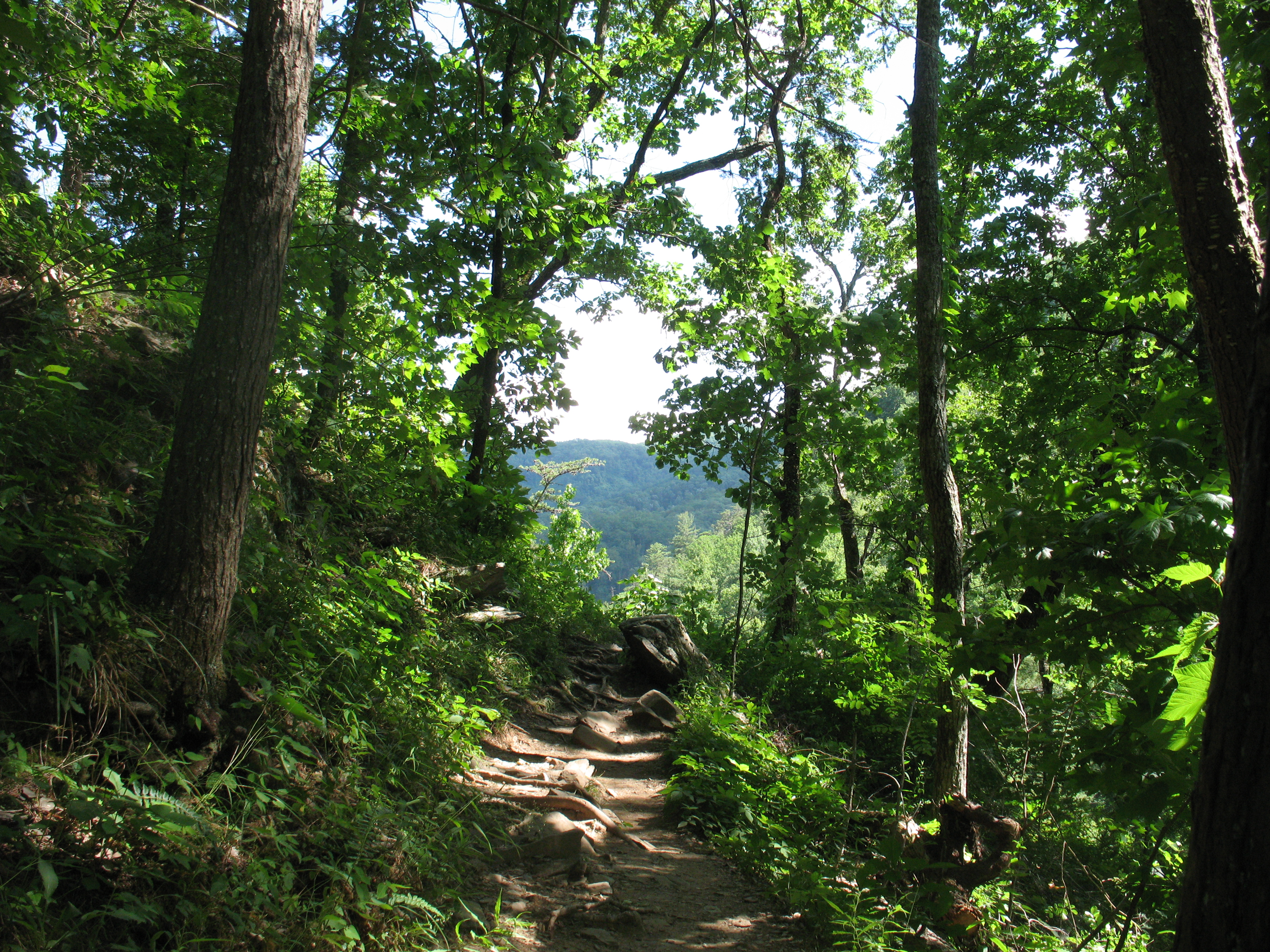
The clearest way into the Universe is through a forest wilderness.
++++++ John Muir
.
❦ ❦ ❦
.
[Come wilderness into our homes]
.
Come wilderness into our homes
break the windows come
with your roots and your worms
spread yourself over our wishes
our waste-sorting systems our prostheses
and outstanding payments
cover us with your rustling greenery
and your spores cover us that we may
become green: green and reverent
green and manifest green and replaceable
come weather with your storms
and sweep the slates off the roofs come
with snow and hail smash
through the collective sleep
we are all enjoying in our beds
our worn rationalizations come ice
and form glaciers over the shadow banks
and our drive for liquidity
come through the cracks under the doors
you desert with your sands fill
our desolation up until it forms into a solid mass
rise up over the search-and-rescue teams
and our growth compulsion trickle into
the control panels of the missiles
and the missile defense systems into
the think tanks and the hearts of internet trolls
just leave the hedgehogs with their
snuffling so that it may calm us
come rising sea levels
up over our shorelines both the developed
and the undeveloped the homey
lowland areas wash
jellyfish into our soup bowls
and ramshorn snails into our hair
as we swim in each other’s direction panicked
with our yearning for one another
because almost nothing is left because it’s all gone
and thoroughly soaked through with regrets
finger-pointing and tranquilizers
come earthquakes shatter the apartments
which we built on the foundations
of how we always did everything
come tremors fill the mine shafts
the end of work and
the literature of redemption bury anger
and affection and all manner of added values
swallow up the memories come tremors
hurry so that the bedrock covers us
so we are covered with water desert weather
and over everything that which covers all the wilderness
.
Daniela Danz
Translated from the German by Monika Cassel
[Komm Wildnis in unsere Häuser] from the journal POETRY,December 2023
.
Shared by Bill Griffin, Elkin NC, who writes:
.
To the ancient mind, wilderness was dangerous, something to be feared and held at bay even while mysterious and fascinating. In recent times, as we’ve come to consider ourselves ‘modern’, wilderness has been conquered – we control it, we rule it, we exploit and use wilderness. Indigenous voices tell us we are one with the wild and can only be fully ourselves when we know and respect wildness. Romantic voices long to return to Eden and live in harmony with wilderness. The voices of mystics and spiritual seekers remind us that wildness is in us and part of us, that all things are one and that we have cut off a vital part of ourselves when we separate ourselves from the wild.
.
This poem by Daniela Danz brings us full circle to our 21st century shuddering realization – wild nature is back and beyond our control. For a few centuries we’ve kept wilderness at arm’s length, just outside the widening circle of our campfires, but now the seas rise and the storms mount. All of our consumption economies and gods of growth and development will not keep us safe. In the literal sense, wilderness comes into our homes, welcome or not. In the metaphorical sense, perhaps it is not too late indeed to invite it in, ‘come’. Perhaps we are on the threshold of a new age in which we admit our part in wild nature and its part in us. Or perhaps we shall be covered.
.
++++++ Bill
.
.
❦
.
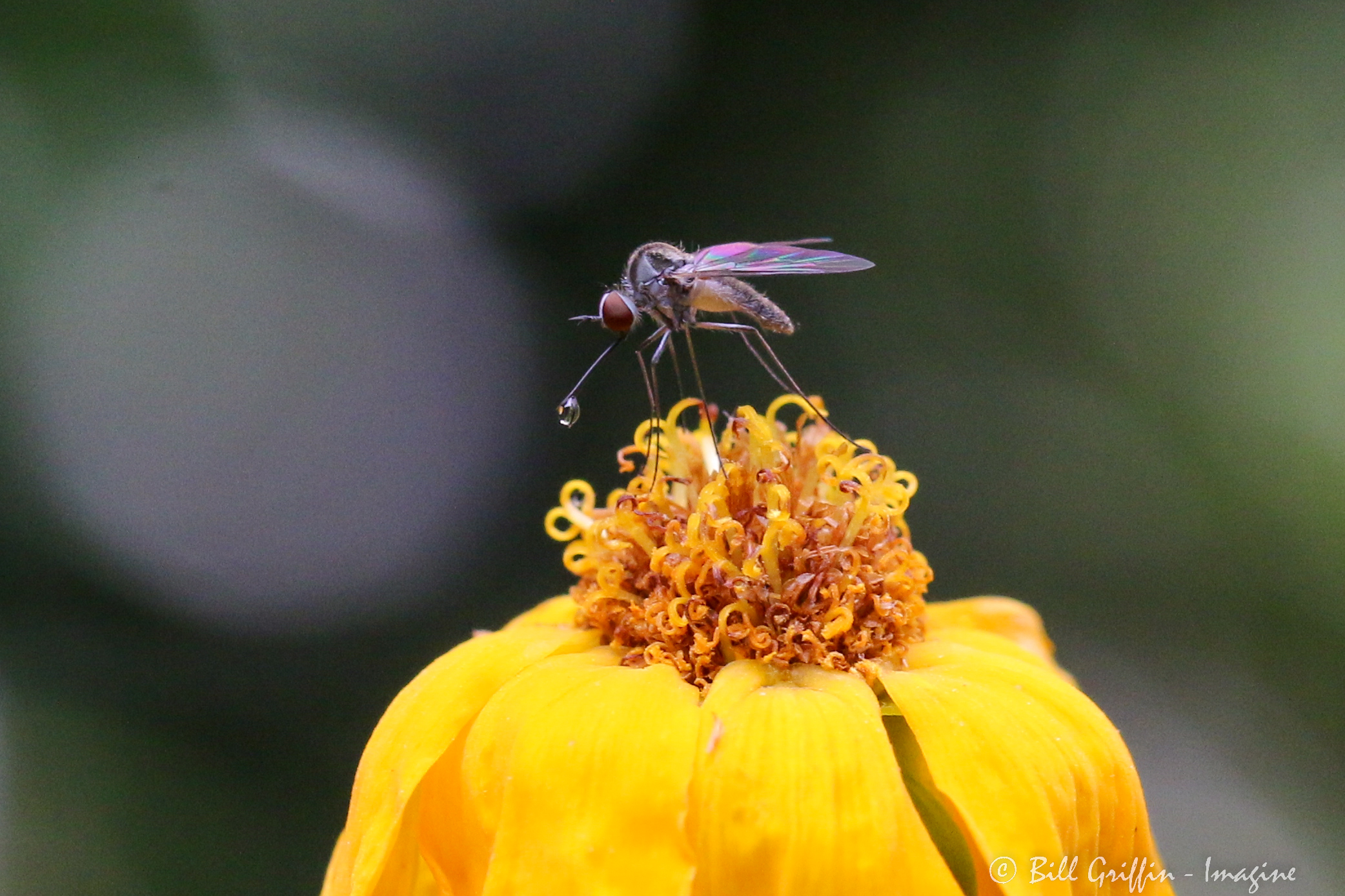
My own poem, Spent, begins with fatalism and regret but discovers, I hope, some communion with wild nature to end on a note of connection. – Bill
.
Spent
.
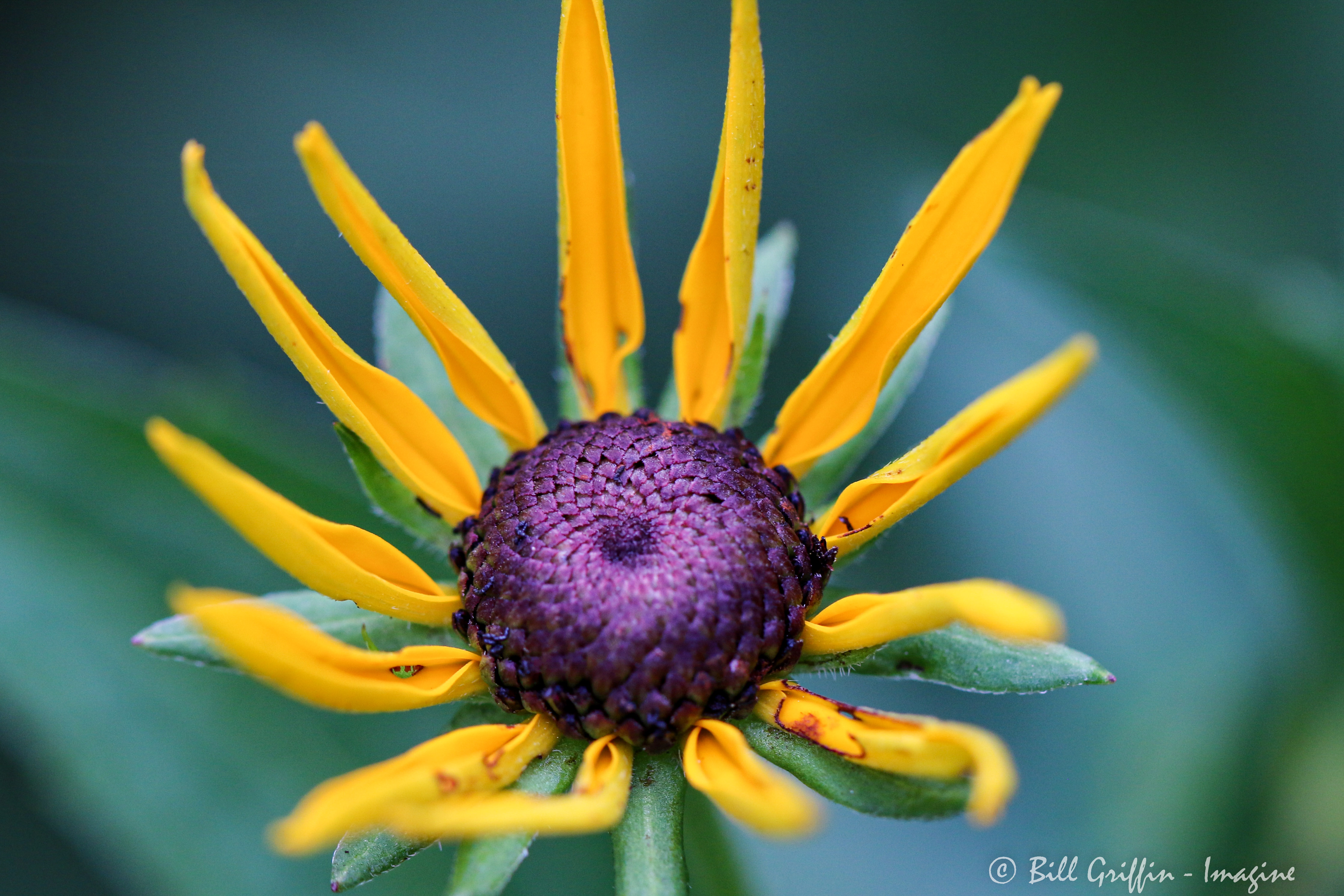
Coreopsis spent, limp rays curling,
curdled disk and one lone fly like aster’s
dry winged seed perched on delusion
that the head still holds some promise:
I turn away from everything sere
and brown – where else would I turn
this sullen afternoon? until
.
she calls me to join her, leaf strewn trail
beside Grassy Creek where it sings
to itself oblivious, two soft pairs
of footfalls among fern and shadow,
partridge berry makes its own warm light
and ground cedar runs rings around us:
.
I crouch before a cranefly orchid, determined
buds dainty as dewclaws still unopened
mid-July (and absent basal winter leaves
pocked olive but upturn them for satin
underleaf maroon), yet while she reminds me
.
about co-evolution, blossoms that couple
with their pollinators, I can’t stop seeing
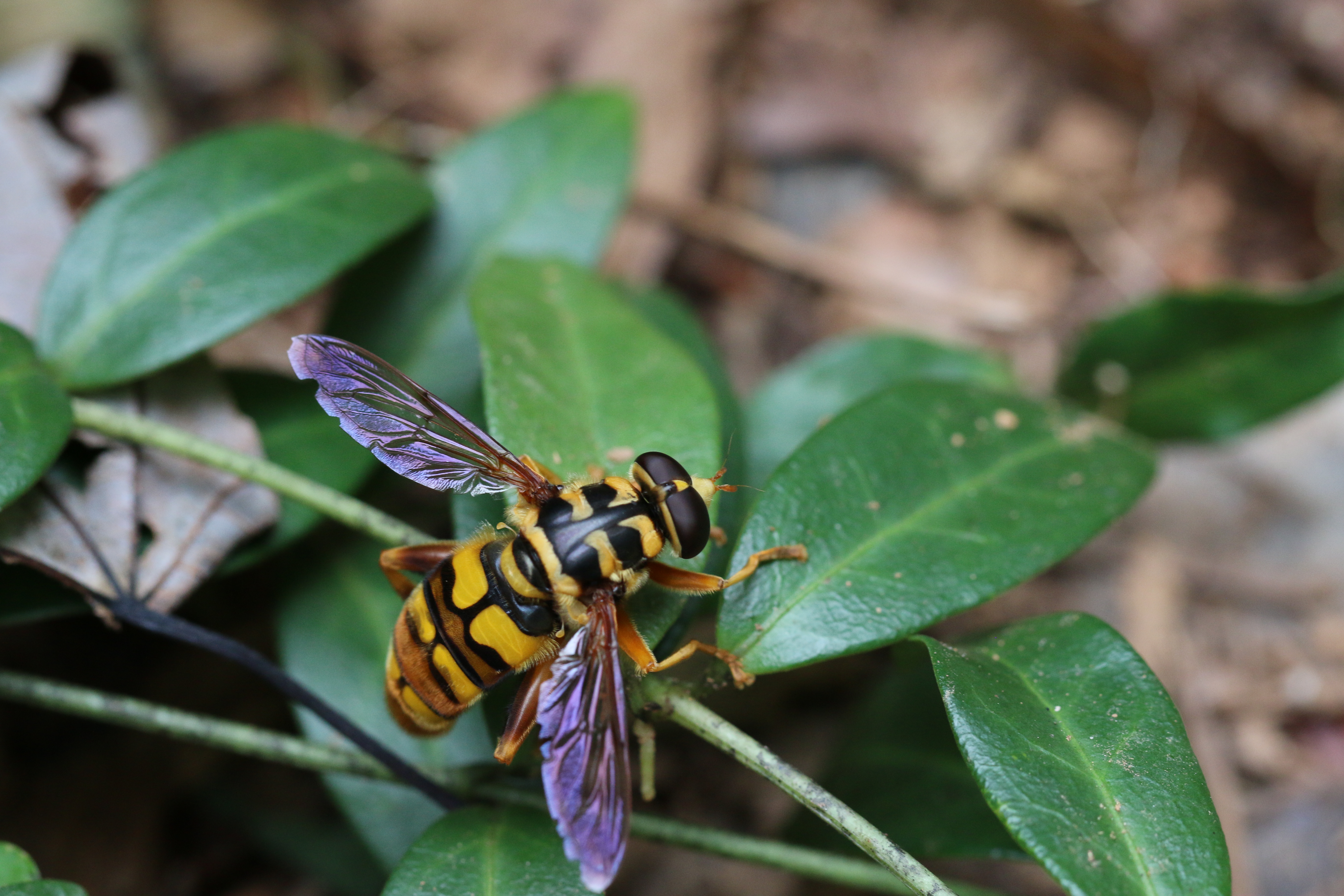
that useless fly, bulging maroon ommatidia,
wings’ blush iridescence, proboscis needle
dripping one sour jewel spent, until
.
for just this moment the world opens itself
around us and I open to its secrets, kingfisher
rattle from another planet, fecund dank
of moss and fungus, every vireo our familiar,
swelling benediction breeze that gossips
among beech and laurel and promises
.
always, always something new.
.
Bill Griffin
finalist for the James Applewhite Poetry Prize of North Carolina Literary Review, 2023
.
❦ ❦ ❦
.
Nature is trying very hard to make us succeed, but nature does not depend on us. We are not the only experiment.
++++++ R. Buckminster Fuller
.
We cannot be truly ourselves in any adequate manner without all our companion beings throughout the earth.
++++++ Thomas Berry
.
.
❦ ❦ ❦
.
The Tyger
.
Tyger! Tyger! burning bright
In the forests of the night,
What immortal hand or eye
Could frame thy fearful symmetry?
.
In what distant deeps or skies
Burnt the fire of thine eyes?
On what wings dare he aspire?
What the hand, dare sieze the fire?
.
And what shoulder, & what art,
Could twist the sinews of thy heart?
And when thy heart began to beat,
What dread hand? & what dread feet?
.
What the hammer? what the chain?
In what furnace was thy brain?
What the anvil? what dread grasp
Dare its deadly terrors clasp?
.
When the stars threw down their spears,
And water’d heaven with their tears,
Did he smile his work to see?
Did he who made the Lamb make thee?
.
Tyger! Tyger! burning bright
In the forests of the night,
What immortal hand or eye
Dare frame thy fearful symmetry?
.
William Blake (1757-1827)
https://poets.org/poem/tyger ; this poem is in the public domain
.
Shared by Les Brown, Troutman NC, who writes:
.
I love Blake’s Tyger not only because of its incredible poetic craft and rhythm, but for its recognition of the beauty and duality of the tiger as a creature of strength and beauty but also an instrument involved in the balance of nature.
.
++++++ Les
.
. 
❦ ❦ ❦
.
The brawling of a sparrow in the eaves,
The brilliant moon and all the milky sky,
And all that famous harmony of leaves,
Has blotted out man’s image and his cry.
++++++ William Butler Yeats
.
It seems clear, as I’ve argued, that the humanities can be broadened enough to make the connection [with science] in three ways. First, escape the bubble in which the unaided human sensory world remains unnecessarily trapped. Second, sink roots by connecting the deep history of genetic evolution to the history of cultural evolution. And third, diminish the extreme anthropocentrism that hobbles the bulk of humanistic endeavors.
++++++ Edward O. Wilson, The Origins of Creativity (2017)
.
❦ ❦ ❦
.
Bread and Roses
.
When the big sea has stopped rising
and the maps we’re through revising
and I can think of storms as friends,
I’ll go down to the beach again.
.
I’ll stand still there in that bright surf
and sing a song to this dear Earth.
I’ll sing for climate change to end.
I’ll sing tears for where we have been.
.
I’ll sing to things that we have learned –
the fossils we should not have burned
releasing the power of former suns,
bringing losses that cannot be undone.
.
Sad losses the children will inherit.
Species gone without much credit,
thanks to the piles of money earned
and all the corners left unturned.
.
I’ll sing to anger rising still.
Our leaders let firms do their will.
The people did assert control
but not before the barons stole.
.
Our job is now to make the best,
finding purpose in what is left.
It is a joy to live to fight
and on that beach to fly two kites.
.
Gus Speth
from Let Your Tears Water the Earth, Watershed Publications © 2023
.
Shared by Sam Love, New Bern NC, who writes:
.
I love the lyrical nature of this poem using the “songs” as a way to tie assaults on our planet’s web together. Also the transition from songs for the abuses to singing “to anger rising still”. A call to action. And here is one of my poems that is more literal with the theme of Earth Day and all things being connected.
.
++++++ Sam
.

.
❦
.
The Web
.
No one is alone
We are all part
of life’s web
.
In each breath we inhale
remnants of star dust
and exhale nourishment
for the Earth’s plants
.
Each action we take
to support our bloated
lifestyle tugs on a strand
of the planet’s web
.
To understand our impact
visualize a spider’s web where
pulling on one strand
alters the whole
.
Sam Love
from Earth Resonance, The Poetry Box © 2022
.
Shared by Gus Speth, South Carolina, who writes:
.
The following poem by Sam Love is lovely but cautionary. It reminds us that we humans are part of an interconnected web of life here on Earth and part also of the journey of the universe. And gently it says we should act like it.
.
++++++ Gus
.
.
❦ ❦ ❦
.
We need the tonic of wilderness… the silence, the cold and solitude… to be refreshed by the sight of inexhaustible vigor… pasturing freely where we never wander.
++++++ Henry David Thoreau
.
Wildness made man but man cannot make wildness. He can only spare it.
++++++ David Brower
.
Wilderness is two things — fact and feeling. It is a fund of knowledge and a spring of influence. It is the ultimate source of health — terrestrial and human.
++++++ Benton MacKaye, the man who planned and conceived the Appalachian Trail
.
Any creative deed at the human level is a continuation of the creativity of the universe.
++++++ Thomas Berry
.
Life is a chemical system able to replicate itself through autocatalysis and to make mistakes that gradually increase the efficiency of autocatalysis.
++++++ National Geographic, Jan. ‘03
.
❦ ❦ ❦
.

.
Special thanks throughout these Earth Day celebrations to my hiking buddy and nature guide Mike Barnett, who has let me into the wilderness and won’t let me leave. Most of the quotations included in these sections are compiled in Mike’s Medicine Bag, which he carries with him into every new adventure
.
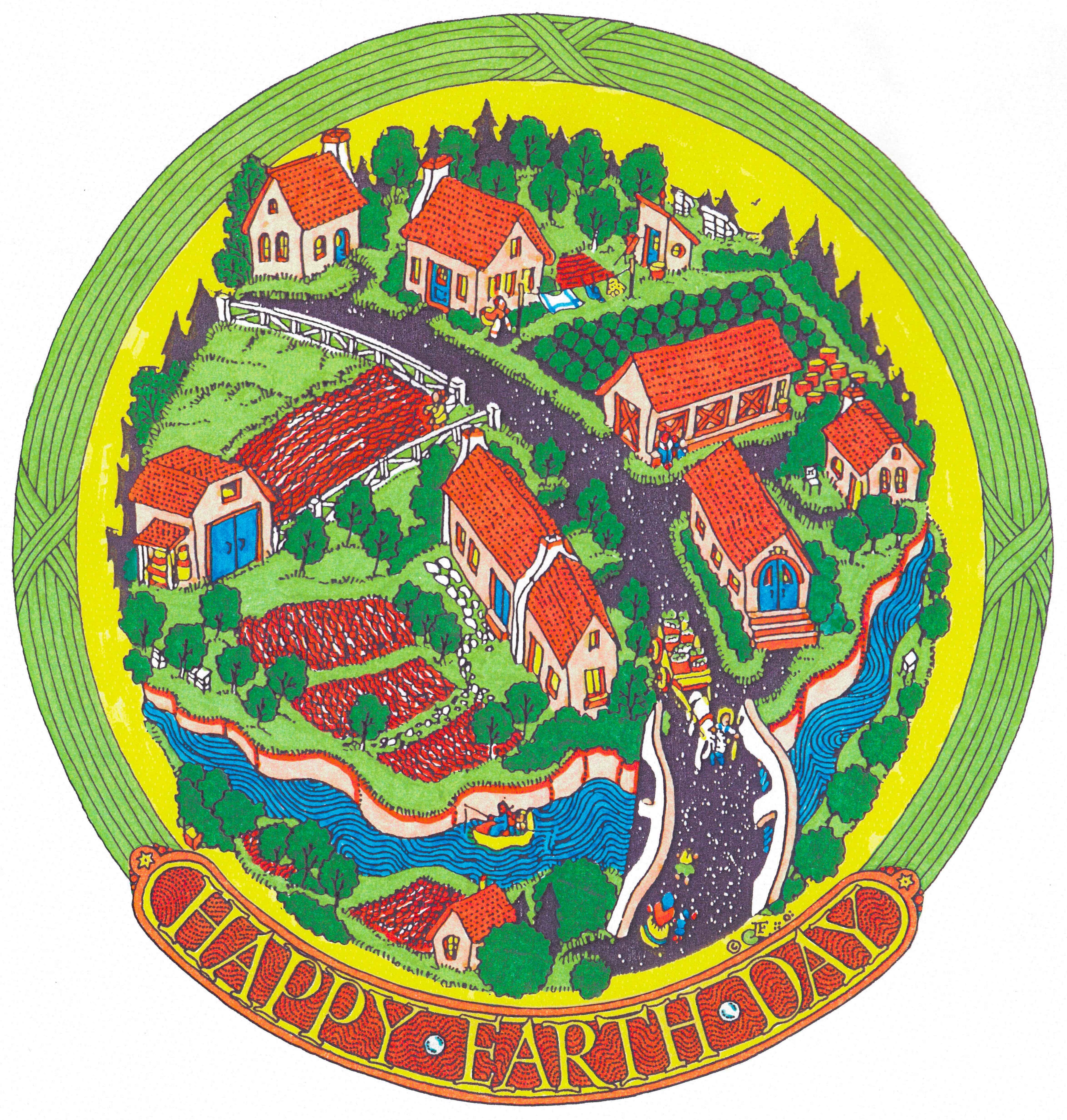
And EXTRA SPECIAL THANKS to my companion in the universe, Linda French Griffin, who allows the cosmos to flow through her pen onto paper. She has given permission for me to use a few of her drawings throughout these Earth Day celebrations.
.
++++++ Bill .
.



 V E R S E and I M A G E
Glad to hear from you Jenny. May life continue to surprise . . . ---B