Feeds:
Posts
Comments

Archive for the ‘ecology’ Category

 . 
[with 3 poems by Rae Spencer]
 . 
Innate
 . 
what does a hummingbird know
in its world of nectar and need
 . 
nightly forced to torpor
by the constant urge to feed
through staggering migration
 . 
are its dreams equally desperate?
 . 
does it wake hungry
ill-tempered with beauty
cramped with desire
 . 
suddenly alert to the nature of sugar
aware that satisfaction can only ever be
 . 
illusory
 . 
and what does the hummingbird sense
as it sips the flower’s allure
 . 
does it know of delicate meanings
pitched fever-tight
into its tiny world of furtive speed
 . 
dare I surmise anything?
 . 
maybe nectar is only a meal
sugar an ache that will pass
beauty an accident of form
 . 
and nothing means more than a wing
clasped into the air and released
 . 
effortless
 . 
Rae Spencer
from Alchemy, Kelsay Books, American Fork, UT; © 2024
 . 
❦ ❦ ❦
 . 
Hovering to sip sugar water, flicking your tongue into the red plastic flower, then dive bombed by a lance-tipped green blur – this is daily life for a hummingbird in the Eastern US. We only have the one species here, ruby-throated, and they do not play well with others. When it comes to a choice feeder there is no sharing, unlike the scene in the Western US where a cloud of a dozen birds, four or five different species, will jointly keep a feeder sincerely humming.
 . 
These last two weeks of September we have been visited hourly by the chunkiest hummingbird I have ever seen. The sleeker slimmer birds will chase her away but then she’s right back. (She-birds only; all the males have left for Central America by the end of August and these more svelte visitors and chasers have likely already burned fat as they’re migrating through from farther north). I realize hummingbirds have to bulk up each autumn, entering a period of hyperphagia before migration similar to black bears before hibernation, but this bird is a real hunk. She is going to have no problem making the 800 km flight from Florida to Yucatan, a natural miracle for such a tiny creature who, even at twice her normal body weight, still weighs only 6 grams – about the weight of a postcard, or of the well-sharpened pencil you’ll use to write a note to Guatemala to let them know to expect this ruby-throat in a couple of weeks.
 . 
Audubon NC suggests continuing to fill hummingbird feeders until the second week in October. Abundant sugar will not deter the birds from setting out on their southward journey; their migration is triggered by light, or actually its absence, the diminishing length of day. All creatures live by their own internal clock. For some the clock’s ticks are soil temperature, snowmelt, the movement of water through earth; for others alarms are set by earth’s rotation and the stretch of sunlight and shadow.
 . 
And no creature lives in isolation. What if come clocks tick out of rhythm with the others? In the Western US, when broad-tailed hummingbirds arrive from their wintering grounds they depend on spring-blooming glacier lilies for nectar to replenish their exhausted energy. By 2012, however, biologists noted that the lilies were beginning to open seventeen days earlier than they had several decades prior. Some would already be withered before the hummingbirds even arrived. By 2050 the birds may completely miss the span of lily bloom.
 . 
Phenological mismatch is the term for this consequence of global climate change. What if migrating flycatchers miss their fly hatch? What if flowers bloom to no pollinators? Some species seem to benefit from early spring – marmots have a longer season to chow down and birth more marmettes. Some species can adapt to new timings but many can’t, especially as climate clocks accelerate their vagaries and variations. We can’t yet know all the consequences, but we know our children and grandchildren are experiencing a different world from the world in which we grew up.
 . 
 . 
❦ ❦ ❦
 . 
Belyaev’s Foxes
 . 
When most only wanted their fur
Belyaev wanted their genes
 . 
He selected those he could touch
The ones who ate from his hand
 . 
Exerting curious pressure
On his wild silver stock
 . 
Closed in outdoor cages
To bear Belyaev’s chosen litters
 . 
Where is the gene for submission
For loyalty and bonding?
 . 
Somewhere, it seems
Connected to curly tails
 . 
White stars on the face
Flopped ears and blunt snouts
 . 
Wags and whines and barks
Which compete for favors
 . 
Other than food
So Belyaev’s foxes tamed the men
 . 
With prolonged puppyhood
And after thirty generations
 . 
Heeled happily across their yard
In through the open front door
 . 
Rae Spencer
from Alchemy, Kelsay Books, American Fork, UT; © 2024
 . 
❦ ❦ ❦
 . 
Embryology, cosmology, evolution . . . double helices, insect wings, quarks . . . mystery, contemplation, enlightenment: the poems of Alchemy wend their way through an expanding universe of discovery. There is scarcely a field of science or philosophy that Rae Spencer does not embrace in this collection, using language both precise and technical as well as elevated and elevating. This slim coverlet of atmosphere that supports us, this beneficent congregation of creatures within such mild extremes of warmth and moisture and light, how can one walking through such a place not be inspired?
 . 
And once inspired, what enters us to feed our hearts, what strikes a tonal chord within our minds What shall we believe in? What shall we hope for? Nothing is beneath our noticing; nothing is unworthy of praise. Perhaps the best way to receive Rae Spencer’s expansive embrace embodied in her universalistic collection is as, in the poet’s own words, a patchwork philosophy of wonder (Agnost).
 . 
 . 
Rae Spencer is a veterinarian and lives in Virginia, USA. Alchemy is available at Kelsay Books.
 . 
 . 
❦ ❦ ❦
 . 
Means of Dispersal
When I view all beings not as special creations, but as the lineal descendants of some few beings which lived long before the first bed of the Silurian system was deposited, they seem to me to become ennobled.
++++++++++++++++++ – Charles Darwin in The Origin of Species
 . 
He spent pages contemplating seeds
How some survived in seawater
Others in the crops of owls
In the feces of locusts
In the stomachs of fish
Frozen in icebergs
Dried in a clump of mud
Between the toes of a partridge
 . 
“In the course of two months,
I picked up in my garden 12 kinds of seeds,
out of the excrement of small birds, and these
seemed perfect…”
 . 
How long in the garden?
Hovering over phials of curiosity
Some rank with the rot of failure
Others yielding green secrets
To the man who struggled to ask
Is there another explanation?
And in the end answered himself
With seed, with barnacles and pigeons
 . 
“…from so simple a beginning
endless forms most beautiful and most
wonderful have been, and are being,
evolved.”
 . 
So Darwin concluded
Without the benefit of Mendel’s peas
Or Watson, Crick, and Franklin’s helices
Without diffusion gels
Sequencers and microchips
Argument is as simple as a garden
Heavy and sweet with fruit
Ripe with answers
 . 
Rae Spencer
from Alchemy, Kelsay Books, American Fork, UT; © 2024
 . 
❦ ❦ ❦
 . 
 . 
 . 

Read Full Post »

“Black Vulture” – Clayton Joe Young – http://www.joeyoungphoto.com

 . 
[poems by Scott Owens, photos by Clayton Joe Young]
 . 
Buzzard
 . 
Always
when you look up
at white clouds, blue sky,
 . 
you see
that hyphen of a bird,
not flying but floating,
 . 
silently
keeping two worlds
you imagine apart, together,
 . 
connecting
earth to sky,
life to death.
 . 
Closer,
we see the hunched neck,
bald head, vulture stoop
 . 
as something that gives us
chills.
 . 
Scott Owens
from An Augury of Birds, forthcoming from Redhawk Publications; poems by Scott Owens, photography by Clayton Joe Young
 . 
❦ ❦ ❦
 . 
The naturalist Robert Lynd is quoted as saying, “In order to see birds it is necessary to become a part of the silence.” How often do we actually pause and participate in silence? Become part of it? Sunday afternoon Linda and I had hiked a couple of miles along the Mountains-to-Sea Trail when we came face to face with friends we hadn’t seen since before COVID. They were hiking in from the opposite direction but our destination was the same: the Forest Bathing trail along Grassy Creek.
 . 
We continued on together. We outpaced noisier hikers; they turned back and left us in solitude. The thrum of voices at the winery and of pickups on Route 21 receded. We stopped – a gentle murmur of water flowing over the new beaver dam. Stopped again – breezes swishing through fresh Joe Pye Weed along the creek. As the trail led us up and away from the water, we left the laurel and holly and entered a glade of slender young tuliptree still recovering from logging. Our friend stopped us once more. She had taken off her sandals to feel the earth. Late afternoon sunlight streamed slant among the saplings and we were part of the silence. A vireo sang. She raised her arms and said, “This is what I came here for.”
 . 
 . 
If we create silence, within us and around us, air and earth will magnify the silence with beauty. Birds will complete the silence with wing whirr and song. Here’s an invitation to silence, offered to us in the poems and photographs of An Augury of Birds. Scott Owens and Clayton Joe Young reward our held breath and contemplative approach with their avian celebration. They make these feathered creatures our companions – individual, distinctive, ripe with purpose. And Augury is such an apt title. Wasn’t Rachel Carson’s prophecy of a silent spring the spark that ignited our current fire of conservation and environmentalism? Noticing birds is a gateway to noticing the universe. Lift the latch, enter these pages, become part of these lives – If you close your eyes / you can hear the cosmos opening.
 . 
❦ ❦ ❦
 . 

“Northern Mockingbird” – Clayton Joe Young – http://www.joeyoungphoto.com

 . 
All There Is to Say
 . 
If it happens that you find yourself
at the front of a room full of people
listening to all you have to say
about what you think you know
and suddenly you hear
from an open window
you hadn’t even noticed was open
the voice of a mockingbird
as clear as the voice of God
singing in every language at once
you owe it to yourself
and all with the possibility of hearing
to stop in the almost silence
and say out loud, Listen
 . 
Scott Owens
from An Augury of Birds, forthcoming from Redhawk Publications; poems by Scott Owens, photography by Clayton Joe Young
 . 
❦ ❦ ❦
 . 
Hiwassee
 . 
Long fingers of catalpa trees,
Green globes of apples
Hang low over Licklog Road.
 . 
White crowns of Queen Anne’s lace,
Orange umbels of butterfly weed
Fill a field where flycatchers
 . 
Dart from limb to grass
and back, consuming
Whatever rises. Swallows
 . 
Carve endless angles across
The tops of weeds let go.
Brown headed cowbirds
 . 
Follow white-faced cows
Near a lake surrounded
By mountains in a place
 . 
Where everyone waves
And everyone remembers
What it means to live.
 . 
Scott Owens
from An Augury of Birds, forthcoming from Redhawk Publications; poems by Scott Owens, photography by Clayton Joe Young
 . 
❦ ❦ ❦
 . 
An Augury of Birds will be published by Redhawk Press in 2024. Check HERE for ordering information.
Scott Owens enlarges the community of creativity. He is professor of Poetry at Lenoir Rhyne University, former editor of Wild Goose Poetry Review and Southern Poetry Review, and he owns and operates Taste Full Beans Coffeehouse and Gallery where he coordinates innumerable readings and open mics, including POETRY HICKORY.
Clayton Joe Young is the Director and Senior Professor for the Photographic Technology Program at Catawba Valley Community College in Hickory, NC. He has won numerous awards for his photography and has published several books, including other collaborations with Scott Owens and with poet Tim Peeler, featuring rural North Carolina, especially Catawba County.
 . 
❦ ❦ ❦
 . 

“Chickadee” – Clayton Joe Young – http://www.joeyoungphoto.com

 . 
All the Meaningful Noise
 . 
How can you be on this earth
and not close your eyes on occasion
and listen to leaves give voice to wind,
hear the laugh of crow,
annunciation of blue jay,
moan of mourning dove,
all the meaningful noise
of another spring day?
 . 
Behind the finishing plant
just off the run-down road
between failing furniture towns,
a field is bursting with purple flowers.
If you close your eyes
you can hear the cosmos opening.
 . 
Scott Owens
from An Augury of Birds, forthcoming from Redhawk Publications; poems by Scott Owens, photography by Clayton Joe Young
 . 
❦ ❦ ❦
 . 
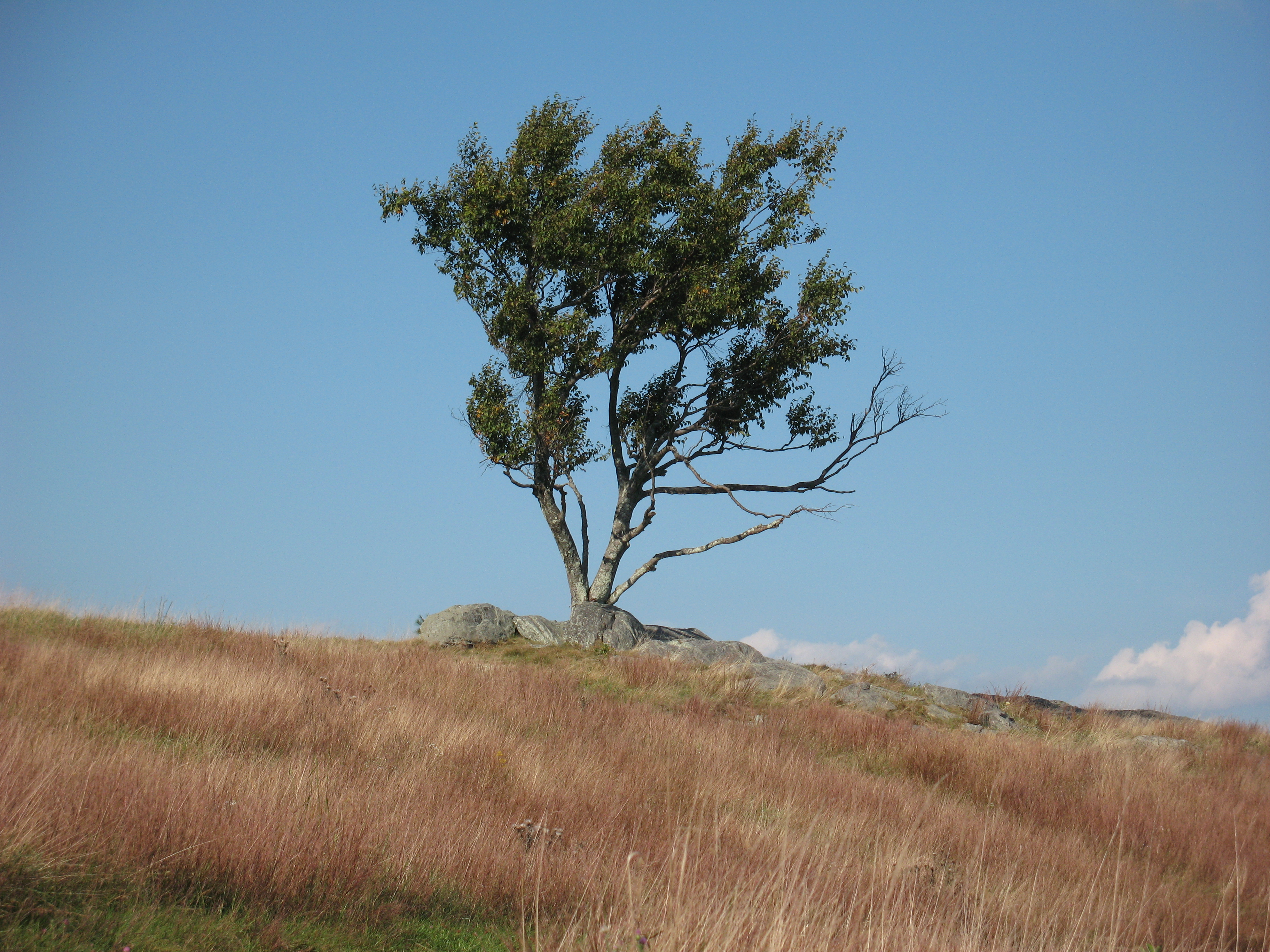
2020-06-11a Doughton Park Tree
 . 

Read Full Post »

 . 
April 26, 2024
 . 
In order to see birds it is necessary to become a part of the silence.
++++++ Robert Lynd (1879-1949) – naturalist
 . 
To see a wren in a bush, call it a wren and go on walking is to have seen nothing. To see a bird and stop, watch, feel, forget yourself for a moment, to be in the bushy shadows, maybe then feel wren – that is to have joined in a larger moment with the world.
++++++ Gary Snyder
 . 
Keep a green tree in your heart and perhaps a song bird will come.
++++++ Chinese proverb
 . 
❦ ❦ ❦
 . 
November
 . 
It is an old drama
this disappearance of the leaves,
this seeming death
of the landscape.
In a later scene,
or earlier,
the trees like gnarled magicians
produce handkerchiefs
of leaves
out of empty branches.
 . 
And we watch.
We are like children
at this spectacle
of leaves,
as if one day we too
will open the wooden doors
of our coffins
and come out smiling
and bowing
all over again.
 . 
Linda Pastan (1932-2023)
from Carnival Evening: New and Selected Poems 1968–1998, W W Norton & Co, © 1999
 . 
Shared by Bradley Samore, Plano TX, who writes:
 . 
This poem by Linda Pastan reminds me of our hushed wonder toward the non-human and our tendency to imagine ourselves in relation to what we see. Perhaps there is no objective way to view something as each species, each person, has their own limitations and reference point. Like Gerard Manley Hopkins’ “Spring and Fall”, Pastan makes the connection between the leaves falling and our own human death but also hints at the possibility/impossibility of our rebirth, another budding.
 . 
++++++ Bradley
 . 
 . 
Revelation
 . 
Nothing compares to exploring the land
++++++ but what of becoming part of it
 . 
to sit so still that lizards
++++++ mate by my sandaled feet
 . 
to kneel at the grave where from shadows
++++++ a fox approaches unafraid
 . 
to lie on the grass as daylight fades
++++++ and birds feather the branches above
 . 
Bradley Samore
first appeared in Hoot
 . 
 . 
❦ ❦ ❦
 . 
The charm which Henry [David Thoreau] uses for bird and frog and mink, is patience. They will not come to him, or show him aright, until he becomes a log among logs, sitting still for hours in the same place; then they come around him and to him, and show themselves at home.
++++++ Ralph Waldo Emerson, from his journal, May 11, 1858.
 . 
I hope you love birds, too.  It is economical.  It saves going to Heaven.
++++++ Emily Dickinson
 . 
❦ ❦ ❦
 . 
Kinship
Rootless and restless and
warmblooded, we
blaze in the flare that
blinds us to that slow,
tall, fraternal fire of life
as strong
now as in the seedling
two centuries ago.
 . 
Ursula K LeGuin
 . 
❦ ❦ ❦
 . 
The cockroach and the birds were both here long before we were. Both could get along very well without us, although it is perhaps significant that of the two the cockroach would miss us more.
++++++ Joseph Wood Krutch, from The Twelve Seasons (1949)
 . 
More than at any other time, we feel the strangeness of birds when we stop and pick up a feather in our path. There is nothing on Earth to compare it to; there is no material like it, no form, nothing that functions quite the same way.
++++++ Bruce Brooks, from On the Wing
 . 
 . 
❦ ❦ ❦
 . 
Landscape with Jeffers and the Connecticut River
 . 
Oat stalks hang their oat-heavy heads.
Panic grass shakes in the wind
off a goldfinch’s wing. Cause,
++++ ++++ ++++ ++++ effect, and cause.
 . 
Drone, like the bee, of goldenrod and aster,
tool of the stick-tight and cockleburr,
I park and wade into high riverside grasses.
 . 
A dog gnaws on a box turtle, a spider rides
a floating log, straining the air of its midges and leafbits.
A fisherman lazy as late summer current,
++++ ++++ ++++ ++++ ++++ casts, reels, and casts.
 . 
It occurs to me I am alive, which is to say
I won’t be soon. Robinson Jeffers
from Carmel Point, in “an unbroken field of poppy and lupin”
 . 
ashamed of us all (of himself ), took solace in time,
in salt, water, and rock, in knowing
all things human “will ebb, and all/
++++ ++++ ++++ ++++ Their works dissolve.”
 . 
Me, too. And I’m not always so patient. I’ve caught myself
wishing our spoiler species gone, just swept away,
returned to rust and compost for more deserving earthly forms.
 . 
Meanwhile, flint arrowheads turn up among the plastic
picnic sporks, the glacial crags and bottom silt.
Hawks roost across the river on the now defunct
++++ ++++ ++++ ++++ ++++ nuclear power plant cooling tower,
 . 
flotsam left at the human high water mark.
Like mussel shells, like driftwood or seedpod,
like the current’s corrugations in the sand.
 . 
Here, on this side, a woodchuck sits up, lustrous,
fat on her chestnut haunches, (she thinks herself
queen of her narrow realm) and munches
++++ ++++ ++++ ++++ the fisherman’s crust.
 . 
Who wouldn’t smile? Who doesn’t pity—and love—
the woodchuck not only despite but for her like-human smugness?
How can I not through her intercession forgive
++++ ++++ ++++ ++++ ++++ for now a few things human.
 . 
Jennifer Atkinson
from The Thinking Eye, Parlor Press, © 2016
 . 
Jennifer Atkinson writes in Poems.com:
 . 
But how do we live with our knowledge and the emotional cloud of fear, guilt, anger, grief, and helplessness, a cloud that surrounds us, each of us alone, and all of us together? That cloud has become intrinsic to my ecopoetical work. Burdened with the beauty and loss and malicious awfulness ahead, weighted with the anxiety that hits whenever a winter day dawns without frost on the ground or another ‘unprecedented’ downpour rings in the gutter, how do I live?
 . 
 . 
❦ ❦ ❦
 . 
The bluebird carries the sky on his back.
++++++ Henry David Thoreau
 . 
We lose our souls if we lose the experience of the forest, the butterflies, the song of the birds, if we can’t see the stars at night.
++++++ Thomas Berry
 . 
It is the ancient wisdom of birds that battles are best fought with song.
++++++Richard Nelson
 . 
❦ ❦ ❦
 . 
Rain Light
 . 
All day the stars watch from long ago
my mother said I am going now
when you are alone you will be all right
whether or not you know you will know
look at the old house in the dawn rain
all the flowers are forms of water
the sun reminds them through a white cloud
touches the patchwork spread on the hill
the washed colors of the afterlife
that lived there long before you were born
see how they wake without a question
even though the whole world is burning.
 . 
W.S. Merwin (1927-2019)
from The Shadow of Sirius, Copper Canyon Press, © 2009
 . 
 . 
❦ ❦ ❦
 . 
My favorite weather is bird-chirping weather.
++++++ Terri Guillemets
 . 
You can observe a lot by just watching.
++++++ Yogi Berra
 . 
Look at everything as though you were seeing it either for the first or last time. Then your time on earth will be filled with glory.
++++++ Betty Smith, from A Tree Grows in Brooklyn
 . 
❦ ❦ ❦
 . 
 . 
Special thanks throughout these Earth Day celebrations to my hiking buddy and nature guide Mike Barnett, who has let me into the wilderness and won’t let me leave. Most of the quotations included in these sections are compiled in Mike’s Medicine Bag, which he carries with him into every new adventure
 . 
And EXTRA SPECIAL THANKS to my companion in the universe, Linda, who allows the cosmos to flow through her pen onto paper. She has given permission for me to use a few of her drawings throughout these Earth Day celebrations.
 . 
++++++  Bill
 . 
 . 

Read Full Post »

« Newer Posts - Older Posts »