Feeds:
Posts
Comments

Posts Tagged ‘Steve Cushman’

 . 
[with 3 poems from Kakalak 2024]
 . 
How to Hold Small Things
 . 
You were this big,
Mom used to say,
cupping her hands
as if to keep a bowl
of holy water
from spilling.
 . 
Is that why I love
to hold small things?
Ladybugs. Twig tips.
Clover petals. Auger shells.
 . 
It’s in the way
we hold small things
that makes them precious,
how we tender moments,
keep them warm
and safe in our clutch –
the newborn kitten,
the wounded bird,
the crab shell that might blow away
if we’re not careful –
as if holding our breath
as we carry them
might keep something
inside of us
from breaking.
 . 
Tonight,
I hold you, baby girl,
cradle you against my chest,
your quick breaths
like scissored whispers,
your tiny fingers
thimble pinches,
and those blue eyes
dreaming with the fury
of newborn stars.
 . 
Michael Beadle – Raleigh, NC
from Kakalak 2024, Moonshine Press Review, Harrisburg NC; © 2024
 . 
❦ ❦ ❦
 . 
God Bless You! Whether I’m at Food Lion, the post office, Dad’s nursing home, even at church, whenever I sneeze some friend or perfect stranger invokes God on my behalf in that benediction. And I sneeze a lot (I even sneeze when I chew peppermint gum). God Bless You! comes a small voice from around the corner in the condiments aisle. Why?
 . 
A medieval superstition is one explanation. When you sneeze your soul is expelled from your body and a quick invocation prevents the devil from snatching it. Even earlier is a tale from the bubonic plague of 590 CE in Rome – a sneeze or cough might be the first manifestation of that fatal affliction, and since Pope Gregory had implored the populus to pray without ceasing for delivery, benedicat Deus was no doubt a universal refrain. When I sneeze, those three words are raised as a warding or talisman to protect me magically from death.
 . 
What about Gesundheit? It simply means health auf Deutsch. Raise a glass of lager in Frankfurt or Bonn and your companion will likely toast, Sei gesund! (Be healthy!, as in To your health!). When I was a student in Berlin, however, the standard invitation was Prost! I never actually knew what Prost meant and just assumed it had origins in some dark Prussian drinking tradition, but surprise!, it’s Latin – a contraction of prosit, may it be beneficial. Another kind of blessing.
 . 
But here’s my problem – I don’t want you commanding God to bless me. It’s not just because I enjoy sneezing. It’s not because when you say those words it feels superstitious and almost pagan – a little pagan is fine with me. I disagree with God Bless You at a fundamental level. God is not a jurist who bestows or withholds blessings depending on whim or quota or petition. God who is universal and who is the universe has already blessed me in the simple fact of my existence. The greatest additional blessing I might seek would be to recognize the goodness of this earth and of every creature, every person, around me.
 . 
I am already blessed. What if the phrase on everyone’s lips were God has blessed us! Or even better, God is blessing us! Could this become an antidote to consumerism, tribalism, the culture of resentment and entitlement? Could I be healed of my feverish striving for more and more blessings and my coveting of yours? Contrary to my nature, I feel pretty pessimistic about the state and the fate of humanity as 2024 approaches oblivion. Is there any good that will survive our human perversity? Instead of wishing a Happy New Year, I might rather wish for you and me both to discover one good thing and hold on tight. The beneficial, the good, is around here somewhere. It always is. As my Prussian friends would proclaim, Prost Neujahr!
 . 
 . 
❦ ❦ ❦
 . 
Upon Hearing U2’s “The Sweetest Thing” at the Harris Teeter in Friendly Center
 . 
I’m rushing through the grocery store on a Friday evening
after a long week, filled with deadlines, with news of another
sick friend. All I want to do is pick up a bottle of chardonnay,
a rotisserie chicken, and disappear into the weekend. I consider
buying some cookies too, and then among the masses pushing
their grocery carts, I hear the first chords of “The Sweetest Thing,”
on of my favorite songs, and stop, lean against the Oreos
and Chips Ahoy, and listen, at first only humming, then Bono’s
voice has me swaying in the aisle, and I start to sing louder
as people step farther away from me. But I don’t care. I need
this song, on this day, in this grocery store, and when I look up,
there’s a woman, about my age, staring at me, lip-syncing
the words. She steps forward and somehow we’re dancing
in the snack food aisle. I can’t tell you what she looks like
because we’re in motion, and The Edge is strumming his guitar,
and the whole damn week washes away as we hear a man
in a striped shirt, whom I assume is the manager, say Okay,
that’s enough now. She grabs my hand, and we run along
the back of the store, where the seafood counter guys smile
at us, and this one guy, who reminds me of my long-gone father
because of his graying beard, starts to clap, and my God,
his clapping, her hands in mine, this trip to Harris Teeter
feels like the sweetest thing in the whole wide world.
 . 
Steve Cushman – Greensboro, NC
from Kakalak 2024, Moonshine Press Review, Harrisburg NC; © 2024
 . 
❦ ❦ ❦
 . 
One good thing that arrives as the New Year approaches is the annual Kakalak anthology. It grows each year and has become a gathering of almost two hundred artists and writers; this year there are dozens of names new to me. I especially appreciate the skill with which the editors curate micro-collections within the greater work, often placing several poems in sequence that share a theme or image, complimented by the art. Thank you to Julie Ann Cook, Angelo Geter, and David E. Poston for Kakalak 2024, and to benevolent deity Anne M. Kaylor who makes it happen and gives it life.
 . 
Purchase Kakalak 2024 HERE:
 . 
 . 
Michael Beadle teaches kids to love poetry, to write poetry, to speak poetry.
Steve Cushman works in IT, which does not inhibit him from finding poetry in everything.
Jessi Waugh is well on the way to having everyone on Bogue Banks engaged in poetry.
 . 
 . 
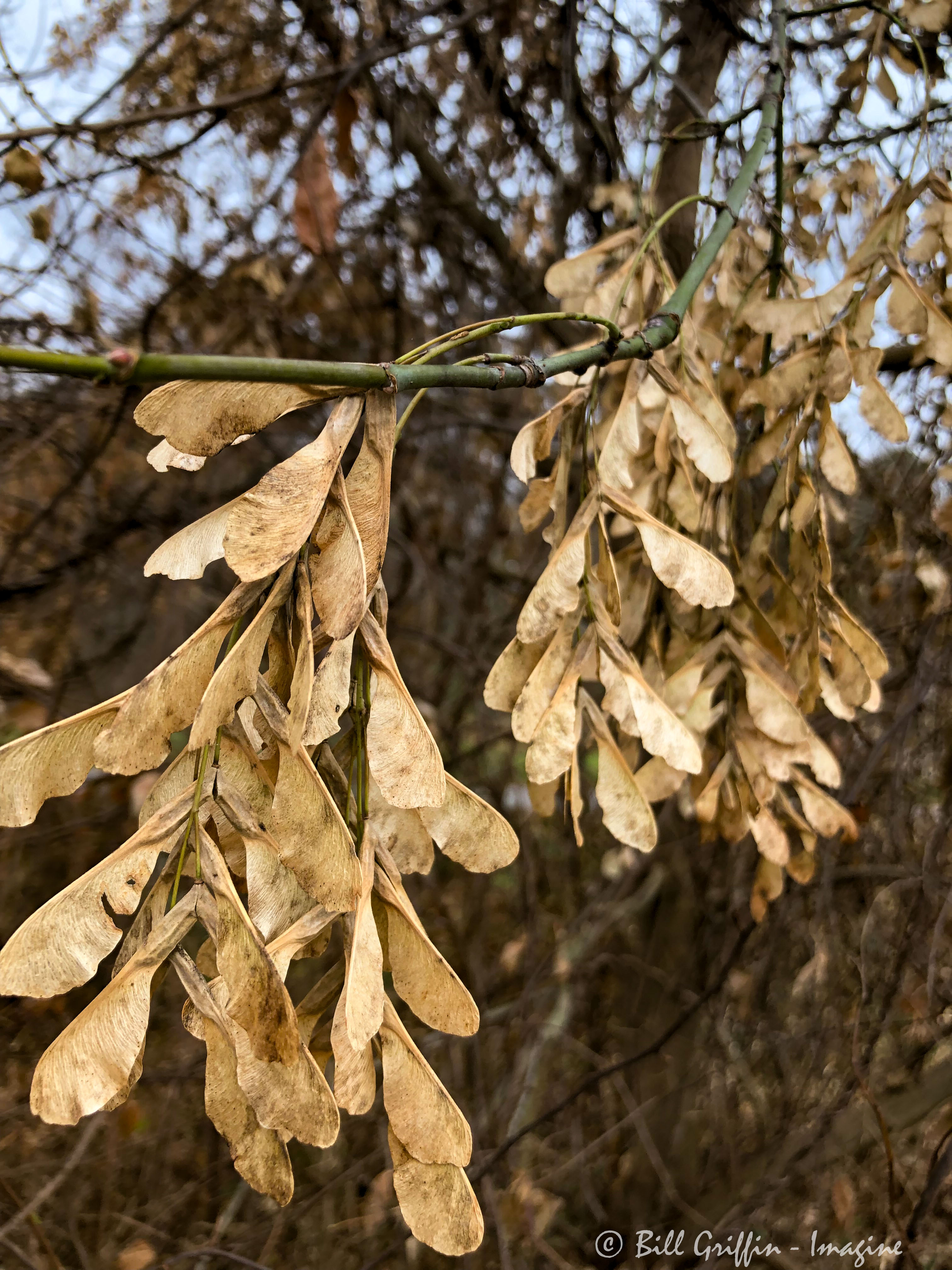
 . 
❦ ❦ ❦
 . 
Canopy Disengagement
 . 
The year is closing and won’t come again
 === this day, the way the sun slants shadows
through the space between leaves that will fall
 . 
and never grow again, the ones next year
 === will be different on a changed tree, you can’t
step into the same river twice
 . 
We look for patterns with our primitive minds
 === searching the space between leaves for meaning
and when there is none, we relax and drift
 . 
let the chaos of a system with a thousand variables
 === wash over us and defy explanation, why try?
O sweet surprise, oh symphony of endless instruments
 . 
My child grows taller by the day and further away
 === The tree watches each lost leaf with a sigh
We’ve done our jobs, these rules aren’t yours or mine
 . 
Only the space between leaves and the moment
 === the sun shines through us and the blaze of blood
orange fire as the wind plays with your hair
 . 
I lose the pattern and accept the asymmetry
 === heart lightened by knowing there’s nothing more
I could do, nothing more would make you stay
 . 
We step into the everchanging river your palm in mine
 === and a red sweetgum hand lands like a swirling gem
Your fingers disengage to catch it, the wind blows
 . 
And the space between leaves shifts slightly above us
 . 
Jessi Waugh – Pine Knoll Shores, NC
from Kakalak 2024, Moonshine Press Review, Harrisburg NC; © 2024
 . 
❦ ❦ ❦
 . 
 . 

Read Full Post »

[with 3 selections from Tar River Poetry]
Letter to the Archaeologists of the Post-Anthropocene
You know already what fools we were,
how like the dog that starts itself awake
we jumped and bared our teeth
and turned to chase our tail, our fury
rising as we spun – and how, unlike the dog,
we did not hold our caught selves
gently, surprised to be at once the captive
and the captor, but chewed our own flesh
bloody, sure we were destroying that
which would destroy us. You already know
we killed our saviors, set fire
to our home, and ate
our bitter hearts. We said
because we owned what we destroyed
it was ours for the destruction,
and we destroyed it
to prove that it was ours.
You know all that.
You may not know, however,
just how much
we loved what we destroyed, how much
we longed to have it love us –
how even the cruelest among us
would stop sometimes to watch
the polluted sky at sunset
turning gold then pink then indigo.
Shane Sheely
from Tar River Poetry, Volume 62, Number 2. Spring 2023. © 2023 TRP
❦ ❦ ❦
Some ten years ago I became a phyto-heterotroph. Many people have asked whether it was a difficult transition and whether I have regrets. Not at all! To borrow a phrase from the general domain of heterotrophs, “Life is good.”
This week I’ve been reintroduced to a community of fellow heterotrophs after a year’s absence. We met in the woods on Grassy Creek’s Forest Bathing trail as they emerged  from the shady gloom, pale as the moon, a little creepy. Their scaly jointed fingers that are not fingers poked up from the leaf mould. They nodded their heads which are not heads. Not human, not fungus. What?
These are plants, flowering plants, but stark white, utterly absent chlorophyll : Ghost Pipes (Heath family, Ericaceae, same family as rhododendron, azalea, huckleberry, but so eerily different). Kneel to inspect the nodding head and you’ll see that it’s a flower, one at the apex of each stem, and indeed shaped like the flowers on my blueberry bushes beside the driveway. I remember the first time I saw these odd creatures in the southern Appalachians, thriving in rich mesic woodland, clustered in deep shade with no need for photons. I was taught that they are white because they’re parasitic, taking nourishment from the roots of trees.
Heterotrophic – fed by others. The opposite of autotrophic, feeding oneself. Most of the Plant Kingdom are autotrophs, industriously creating sugar and cellulose from the nothing of light and CO2. Quite a number in Kingdom Protist are autotrophs (algae, for example), and even a few in the Bacteria Kingdom (cyanobacteria). All the rest of us are unable to feed ourselves. I can make Vitamin D when sunlight strikes my skin, but as an obligate heterotroph I must consume autotrophs to survive.
Personal and Planetary Health—The Connection With Dietary Choices. This is the title of a feature editorial in the Journal of the American Medical Society (June 6, 2023; Volume 329, Number 21). It isn’t difficult to imagine the message the editorialist will promote, but it is novel to emphasize the connection between choices that lead to personal well-being and and choices that promote global health. To quote: Physicians have historically focused on patient health and relegated planetary health to environmentalists and lawmakers. However, dietary choices are the largest driver of chronic diseases. National surveys indicate less than 5% of the US population meets dietary fiber recommendations due to inadequate plant-based food intake. Plant-based diets are also associated with reduced incidence of chronic diseases such as obesity, cardiovascular disease, diabetes, chronic kidney disease, and cancer in multiple studies.
I became a phyto-heterotroph (it’s easier to spell vegetarian) not for personal health but to reduce my ecological footprint. Eating plants instead of eating things that eat plants has a frankly unbelieveable impact on agricultural water consumption, loss of habitat to grazing and animal feedstock production, and methane and nitrous oxide production (25 times and 298 times more potent greenhouse gases than CO2). Even the most diehard omni-heterotroph could probably tolerate a phyto-heterotroph diet one or two days a week.
And those Ghost Pipes (Monotropa uniflora) – I read this week that they are actually myco-heterotrophs. Their roots entangle with and suck sugar from the fungal filaments of the mycorrhizal network that permeates all healthy soil. Alas, all fungi are themselves heterotrophs. They reciprocate with green plants to provide minerals and water in exchange for sugar, some of which they evidently pass on to the Ghost Pipes. Without GREEN, none of us would be here.
❦ ❦ ❦
Because the Demented World Repeats Itself
In Europe again tonight,
a human being is dying
under a bombed-to-rubble house
or in the street – bicycle basket
spilling its loaf of bread.
This particular human is dying
whose dying makes me despair
though I’m no one in particular
and they’re no one in particular
to me. I’m just another human
who will be dying, but not yet,
and who lies warm under my quilt
of many blessings, wondering
what can be done about humans
when I can’t dissuade the sparrow
who attacks our window
slamming and slamming
his reflection – the enemy
he keeps seeing but not
seeing as himself.
Susan Cohen
from Tar River Poetry, Volume 62, Number 2. Spring 2023. © 2023 TRP
❦ ❦ ❦
I don’t subscribe to many literary journals, but I don’t let my Tar River Poetry lapse. Volume 62/Number 2 arrived last week containing a few familiar names but many more names that I now want to remain familiar with. Micro-themes seem to weave through its fifty pages of poetry like a carrier wave that fills the room with music. A few poems juxtaposed are having a conversation, but when the next in line picks up the thread the color and texture have suddenly shifted again. Always something new, always engaging, deeply felt, deeply connecting. Thank you to Luke Whisnant and all the perceptive editors who send me a fresh volume twice a year.
Tar River Poetry is published twice yearly with the support of the Department of English, East Carolina University. http://tarriverpoetry.com. 113 Erwin Hall, Mail Stop 159, ECU, East Fifth Street, Greenville NC 27858-4353.
Shane Sheely has published three books of poetry and directs and teaches in the creative writing MFA program at University of Missouri-St. Louis.
Susan Cohen, author of three full-length poetry collections, is a former journalist living in Berkeley, California.
Steve Cushman’s first poetry collection, How Birds Fly, won the 2018 Lena Shull Book Award of the North Carolina Poetry Society.
❦ ❦ ❦
The Candiru Fish is So Small It Could Swim Up Your Urethra
is what Mrs. Hart, my 9th grade biology teacher, said
thirty-some years ago, so when Julie says let’s go skinny
dipping, instead of being excited I’m transported back to
Mrs. Hart’s class in St. Petersburg where all we had to cool
us off on those Florida afternoons was one lone window unit,
so we sweated through her lectures until the day we sat up
straight and listened as she discussed urethras and penises
and the dangers lurking beneath the surface. Come on, Julie
is saying, naked now, her clothes in a stack at the shore,
her pale shoulders bouncing up and down at the water’s surface.
I strip bare, tell myself we’re nowhere near the Amazon River,
run with everything I have into the water, into Julie’s arms,
and again she’s rescuing me from myself, from my silly fears,
and those murky, dangerous things, seen and unseen.
Steve Cushman
from Tar River Poetry, Volume 62, Number 2. Spring 2023. © 2023 TRP
❦ ❦ ❦
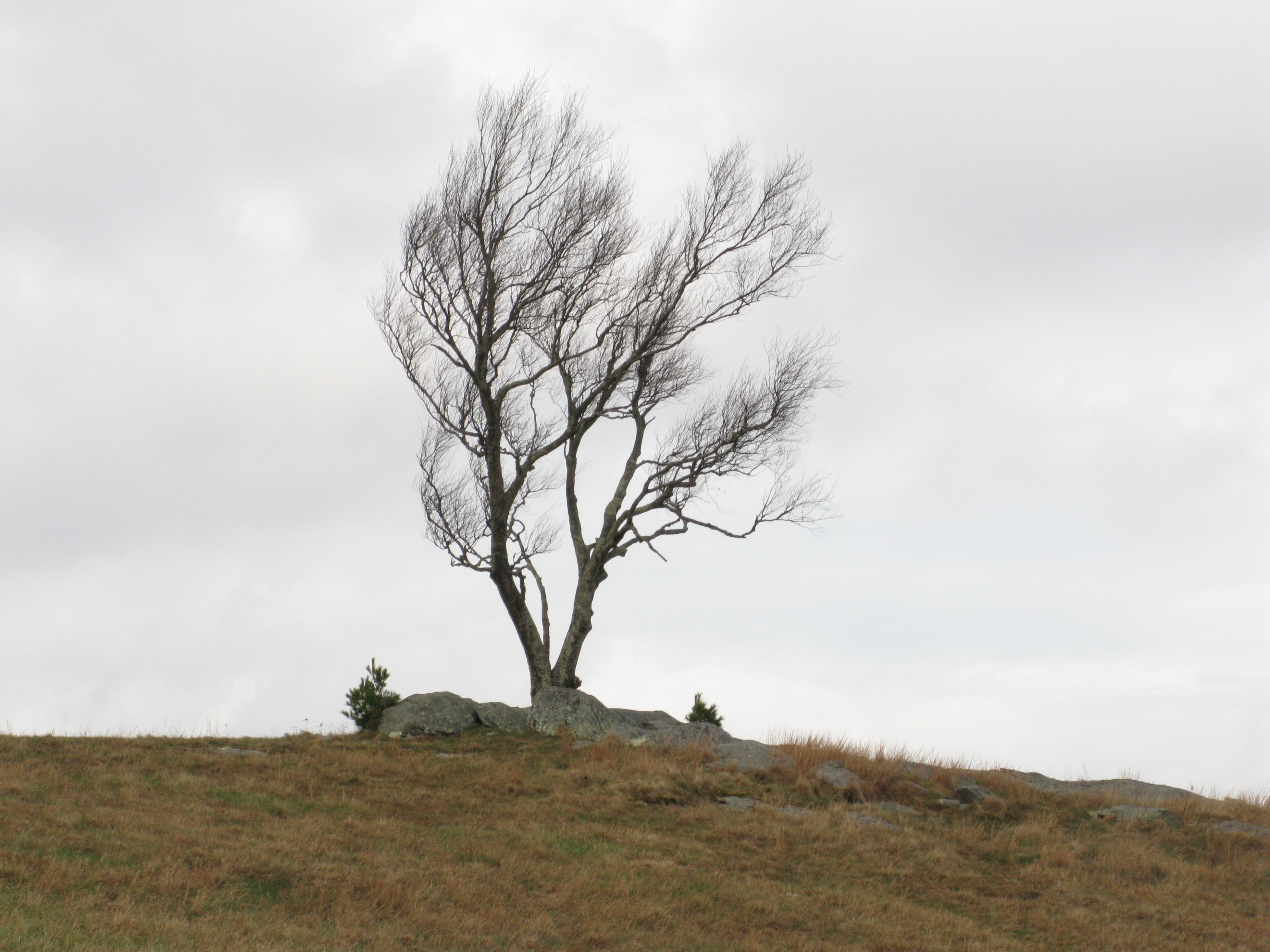
Doughton Park Tree 2020-11-22

Read Full Post »