Feeds:
Posts
Comments

Posts Tagged ‘Stephen Dunn’

 . 
[poems by Stephen Dunn, Robert Bly, Bill Griffin]
 . 
Circular
 . 
Daylight illuminated, but only for those
who had some knowing in their seeing,
and night fell for everyone, but harder
for some. A belief in happiness bred
despair, though despair could be assuaged
by belief, which required faith,
which made those who had it
one-eyed amid the beautiful contraries.
Love at noon that was still love at dusk
meant doubt had been subjugated
for exactly that long, and best to have music
to sweeten a sadness, underscore joy.
Those alone spoke to their dogs,
but also to plants, to the brilliant agreeableness
of air, while those together were left
to address the wall or open door of each other.
Oh for logs in the fireplace and a winter storm,
some said. Oh for Scotch and a sitcom, said others.
Daylight concealed, but only for those
fond of the enormous puzzle, and night rose up
earth to sky, pagan and unknowable.
How we saw it was how it was.
 . 
Stephen Dunn (1939-2021)
Shenandoah, Volume 52, Number 3; Fall 2002
 . 
❦ ❦ ❦
 . 
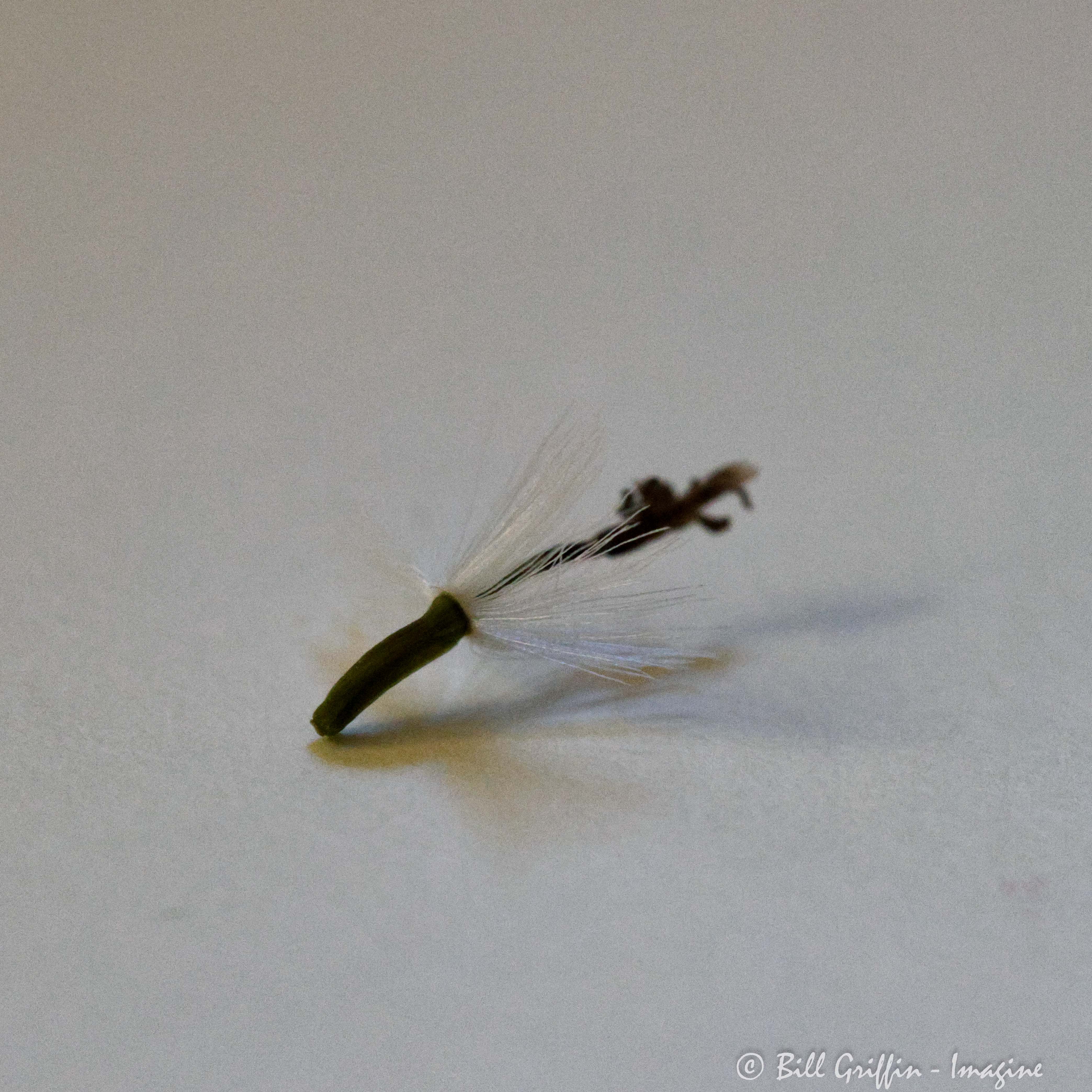
Josh has taught me how to spot a sourwood across the meadow along the treeline. Always crooked. Curved and arched, clutching branches and trunk like an old man’s spine, in medical parlance kyphosis. It must be because the sourwood is grasping at something always out of reach. Always overtaken by shadow but always trying to edge closer into the light.
 . 
When we bought this house in 1983 the steep back lot was choked with hickory and tuliptree; in front, two weighty red oaks flanked the door, centenarian sentries. A dogwood struggled in their shade and at the northern lot line one sourwood straggled out from under. Crooked! That first summer I noticed, of all the trees in leaf, only the sourwood labored with tent caterpillars, messy tangled webbing and bare patches chewed out of its foliage. I though maybe I should try to save old sourwood from its pests, but they were too high for me to spray and I had no spare cash for an arborist. Oxydendrum arboreum, you are on your own.
 . 
After Hurricane Hugo walloped the Appalachians in 1989, we cut down those two oaks that leaned two threatening meters from our walls and roof. At the base they were bigger around than oil drums. A few years after those monsters came down I noticed the sourwood, not standing any straighter but now stretching a new arm pure vertical, due upward, sunward. Another thirty years along and that sourwood is still making flowers in the spring, champion of honeybees, and still sharing its bright summer green with any and all itinerant webworms. The dogwood and redbud look up and pay homage from around its knees. But even with all the newfound light my sourwood remains crooked as hell.
 . 
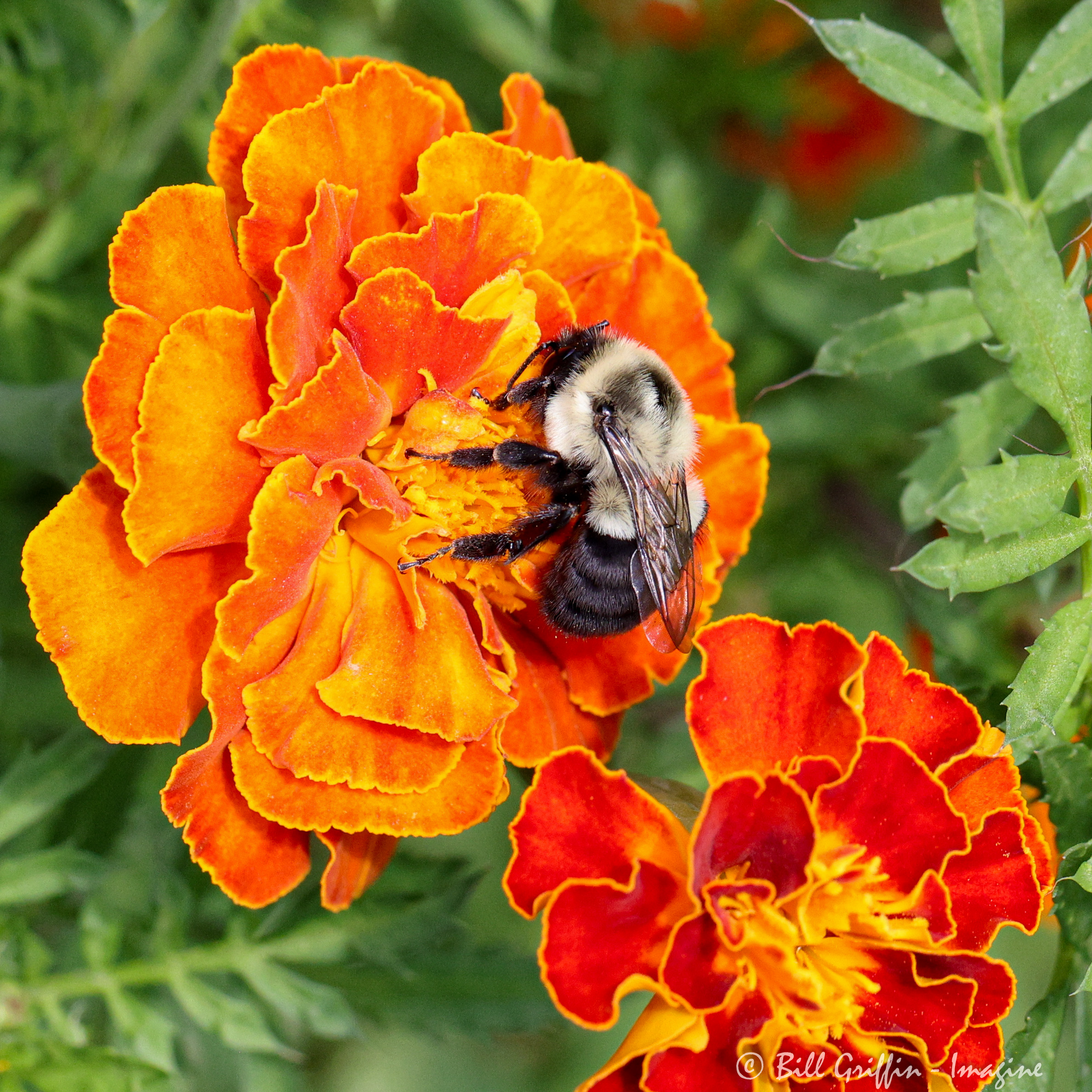
Teach me the same lesson, Josh and Sourwood. Life ain’t ever going to get cobbled together perfect. Most mornings I have to claw through a web of nasty wormsilk before I can struggle up from sleep. Most days I’m noticing the weeds and cankers I haven’t yet yanked from my beds more than I’m noticing the asters’ spiral floret emerging or bumblebees’ shanks stuffed with pollen. Step back. Look again. Forgive the mess of life just making its daily living. Forgive the darkness that less hides the light than shows it brighter. Forgive myself that I can’t fix it all, make it come out straight. Forgive my own crookedness. Isn’t that what makes the sourwood a sourwood?
 . 
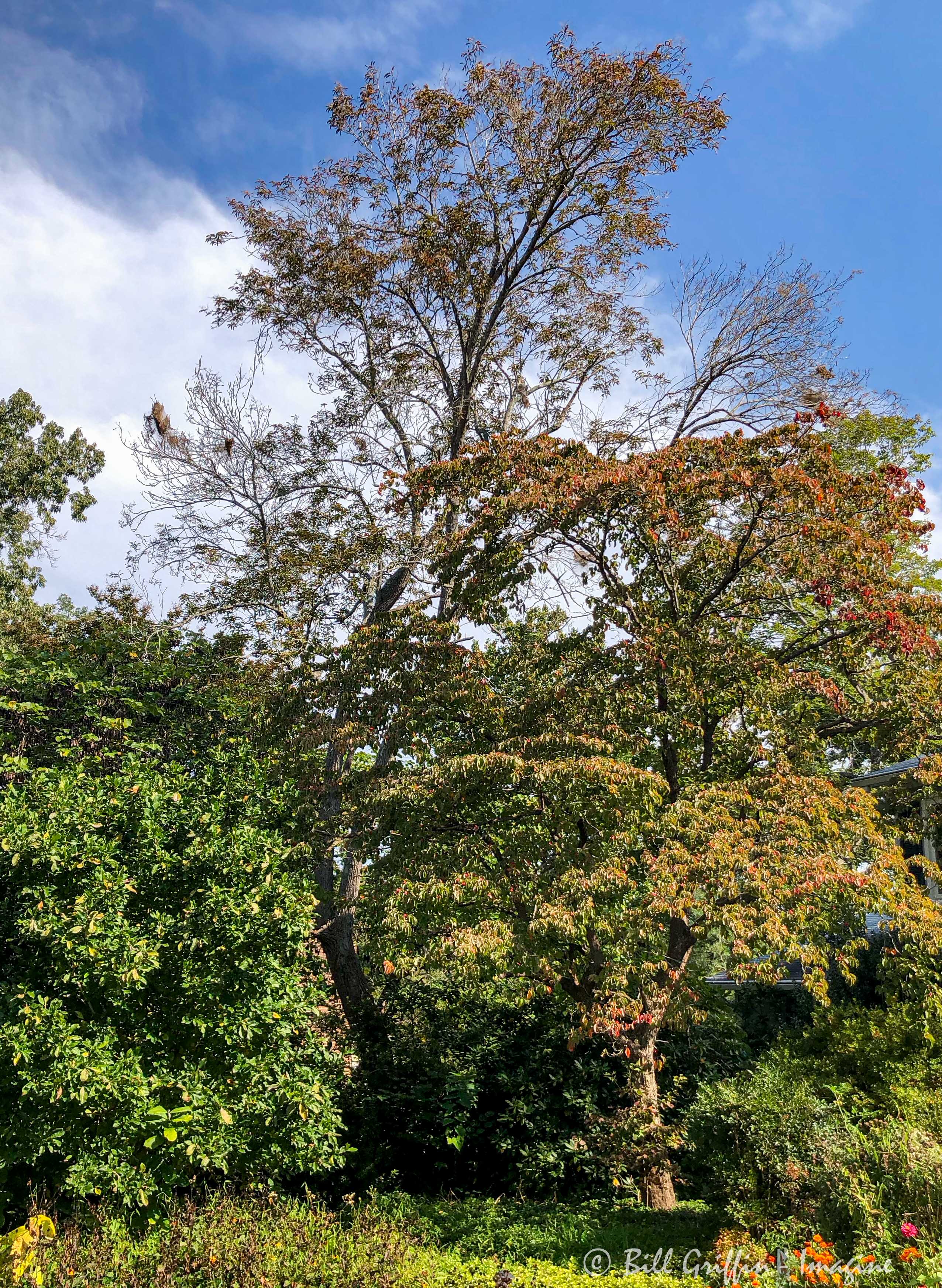
Oxydendrum arboreum

 . 
❦ ❦ ❦
 . 
What Things Want
 . 
You have to let things
Occupy their own space.
This room is small,
But the green settee
 . 
Likes to be here.
The big marsh reeds,
Crowding out the slough,
Find the world good.
 . 
You have to let things
Be as they are.
Who knows which of us
Deserves the world more?
 . 
Robert Bly (1926-2021)
Academy of American Poets, https://poets.org/poem/what-things-want
 . 
 . 
❦ ❦ ❦
 . 
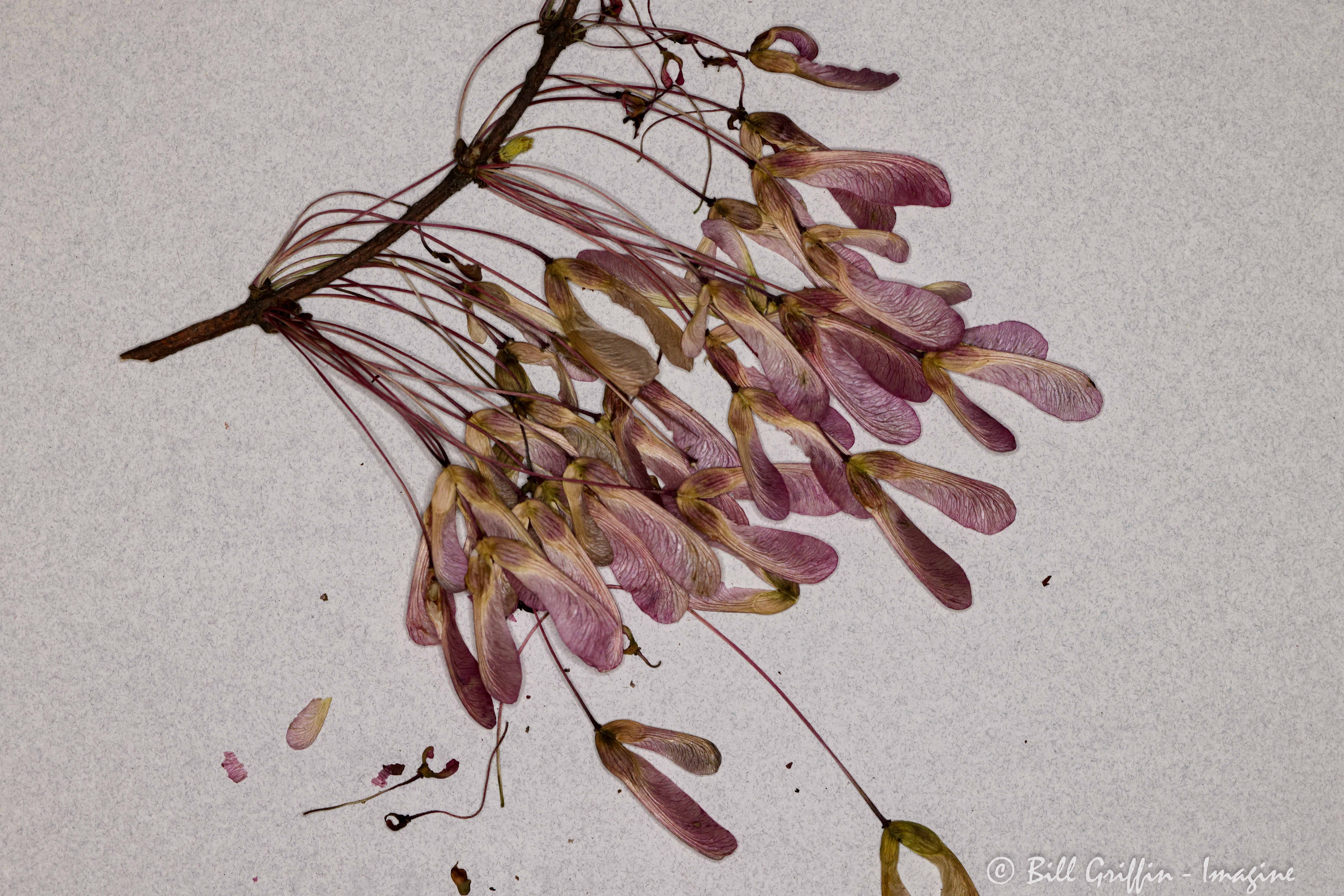
Sourwood
 . 
Bent from overshadowing,
+++++ crippled
by the broad red oak;
tent caterpillars, years
+++++ of limp submission,
robbed of flowers
by heartless shade.
 . 
Rocky soil, no tap root, many winters:
the big red finally kneels, prostrates itself,
 . 
and Spring delivers sun to sourwood.
Straight up tangent to the curve of trunk
+++++ new arms jubilate,
new fingers reach to pull down sky, bees
celebrate creamy clusters
 . 
and there is honey.
 . 
Bill Griffin
featured in Poetry in Plain Sight 2014 by the Winston Salem Writers.
 . 
 . 
❦ ❦ ❦
 . 

Wingstem & Bill

 . 
❦ ❦ ❦
 . 
IMG_0880, tree

Read Full Post »

 . 
[with 3 poems by Stephen Dunn]
 . 
Returning from an Artist’s Studio
 . 
Late at night in my one life
I see fireflies scintillating a field
and a fullish moon up there working
on its reputation, which I thought
was secure. And though I’m not one
to stop my car for beauty
I stop, get out, begin to understand
how the first stories winked
of another world. It’s as if
I’m witness to some quiet carnival
of the gods, or the unrisen dead
speaking in code.
 . 
Insects are eating each other. Stunned
beyond fear, mice are being given
their first and last flights,
talons holding them dear.
The fox has found a warren.
Everything I can’t see
is at least as real as what I can.
If I stand here long enough
I’ll hear a bark and a squeal.
 . 
The artist had an eye for exaggerated sunsets
splashed with rain, odd collisions
of roots, animals, seeds.
I didn’t like a thing I saw,
so much effort to be strange.
The moon is hanging from a leafy branch.
The fireflies are libidinous
and will not be denied.
 . 
Stephen Dunn
from Different Hours, W.W.Norton & Company, New York, NY. © 2000
 . 
❦ ❦ ❦
 . 
Its birthday is three days from now: Monday, December 25. It will be two years old. Call it, perhaps, a mote which from where we stand is invisible. Or better, call it an eye, one that sees into almost everything. Best of all, in this season of visionaries who seek truth and meaning as they follow stars, call this a new-born star. There it glints, locked in thrall of its own near infinitely larger star, to which it turns its back and pays no attention at all.
 . 
The James Webb Space Telescope launched from Kourou, French Guiana, on December 25, 2021. Within a few weeks it maneuvered into its orbit around the Sun, 1.5 million km from Earth, and unfolded its mirror of bright hexagons, gold-plated beryllium, the ommatidia of its compound eye. It sees the light of galaxies emitted 13.1 billion years in the past (13.1 billion light-years distant). It is already shattering theories about the earliest times of our universe’s creation. Primordial black holes, early giant stars, galaxy clusters – is this inconceivable vastness really the Universe of which our own little planet is the center?
 . 
We choose December 25 to celebrate the birthday of a human being who represents God’s tangible presence here on earth. Immanuel, God-with-us. Jesus, in halo orbit around the Lagrange point of God’s gravitational unity – in the phraseology of Process Theology, “perfectly synchronized to God at all moments of life”; “fully and in every way responsive to God’s call.” This is how I yearn to experience my God – fully present in the wild aster seeds I gathered and sowed yesterday, and equally present throughout a universe spanning some 10*30 cubic light years. If the JWST reveals more wonders and marvels than I could ever dream, do I deny the nature of reality or shall I enlarge my notion of God?
 . 
Here’s my mission this Christmas season. First, to shift myself off center. As much as I’m able, to remember that the Universe does not really revolve around me; to open myself to the persuasive power of love pushing me to its Lagrange point. Second, to unfold my compound eye. To look out as far as it takes, and as deep within, to discover God in constant process of moving and becoming. And at the same time to discover what it is that I am called to become.
 . 
 , 
❦ ❦ ❦
 . 
Before the Sky Darkens
 . 
Sunsets, incipient storms, the tableaus
of melancholy – maybe these are
the Saturday night-events
to take your best girl to. At least then
there might be moments of vanishing beauty
before the sky darkens,
and the expectation of happiness
would hardly exist
and therefore might be possible.
 . 
More and more you learn to live
with the unacceptable.
You sense the ever-hidden God
retreating even farther,
terrified or embarrassed.
You might as well be a clown,
big silly clothes, no evidence of desire.
 . 
That’s how you feel, say, on a Tuesday.
Then out of the daily wreckage
comes an invitation
with your name on it. Or more likely,
that best girl of yours offers you,
once again, a small local kindness.
 . 
You open your windows to good air
blowing in from who knows where,
which you gulp and deeply inhale
as if you have a death sentence. You have.
All your life, it seems, you’ve been appealing it.
Night sweats and useless strategem. Reprieves.
 . 
Stephen Dunn
from Different Hours, W.W.Norton & Company, New York, NY. © 2000
 . 
❦ ❦ ❦
 . 
So many bookcases. In this house are many mansions. A few days ago, on one of the less accessible shelves, I noticed a book I hadn’t opened in years. I couldn’t recall the specifics of the poems it contains but just looking at its cover recalled emotions from when I last read it: warmth, questioning, surprise, discovery, assurance that this process of living is valid, valuable, and even in its fearfulness to be cherished. Then I opened Stephen Dunn’s Different Hours and found this:
 . 
 . 
Twenty-three Christmases ago. I wonder how my parents selected this particular book for me? It had just been published but I don’t imagine it greeting folks boisterously as they entered the door at Barnes & Noble. Did Mom and Dad realize the book would win the 2001 Pulitzer Prize for Poetry? As well as I can recall, the only other book of poetry they every bought me was Maya Angelou. And then there’s the inscription, from “Dad and Mom,” although this is certainly my mother’s handwriting, still elegant and strong at the beginning of the century.
 . 
All these questions. In spite of them, I see that it was the perfect book for me then and that this is the perfect week to rediscover it. Stephen Dunn explores love, its foolishness and its bedrock. He explores death, of those people and things we love and our own racing toward us. And within the “different hours” of doubt and questioning, of emptiness and aimlessness, he hints at hope and wonder within this elusive reality we occupy.
 . 
After Christmas, as new books heap themselves on my desk, I’ll return this one to its safe berth. Whenever I next happen to chance upon it, I know it will again be the perfect time.
 . 
❦ ❦ ❦
 . 
The Metaphysicians of South Jersey
 . 
Because in large cities the famous truths
already had been plumbed and debated,
the metaphysicians of South Jersey lowered
their gaze, just tried to be themselves.
They’d gather at coffee shops in Vineland
and deserted shacks deep in the Pine Barrens.
Nothing they came up with mattered
so they were free to be eclectic, and as odd
as getting to the heart of things demanded.
They walked undisguised on the boardwalk.
At the Hamilton Mall they blended
with the bargain-hunters and the feckless.
Almost everything amazed them,
the last hour of a county fair,
blueberry fields covered with mist.
They sought the approximate weight of sadness,
its measure and coloration. But they liked
a good ball game too, well pitched, lots of zeroes
on the scoreboard. At night when they lay down,
exhausted and enthralled, their spouses knew
it was too soon to ask any hard questions.
Come breakfast, as always, the metaphysicians
would begin to list the many small things
they’d observed and thought, unable to stop talking
about this place and what a world it was.
 . 
Stephen Dunn
from Different Hours, W.W.Norton & Company, New York, NY. © 2000
 . 
❦ ❦ ❦
 . 
The James Webb Space Telescope is located near (in a “halo orbit” that keeps it in the vicinity of) the Sun-Earth L2 Lagrange Point. A Lagrange Point is an area of gravitational equilibrium in relationship to two massive bodies: Sun-Earth, Earth-Moon, etc. Positioning JWST in this way requires less energy to maintain and allows a longer functional lifespan.
 . 
More about the James Webb Space Telescope, and some literally awesome photographs, HERE
 . 
More about Process Theology, which states that each instant of Being is ever in the process of Becoming, HERE
 . 
Stephen Dunn (1939-2021) as described by The Poetry Foundation: Dunn’s poetry reflects the social, cultural, psychological, and philosophical territory of the American middle class; his intelligent, lyrical poems narrate the regular episodes of an everyman speaker’s growth, both as an individual and as part of a married—and later divorced—couple. His poetry is concerned with the anxieties, fears, joys, and problems of how to coexist in the world with all those who are part of our daily lives.
 . 
 . 
❦ ❦ ❦
 . 
 . 

Read Full Post »