Feeds:
Posts
Comments

Posts Tagged ‘Southern writing’

[with 3 poems by Maureen Ryan Griffin]

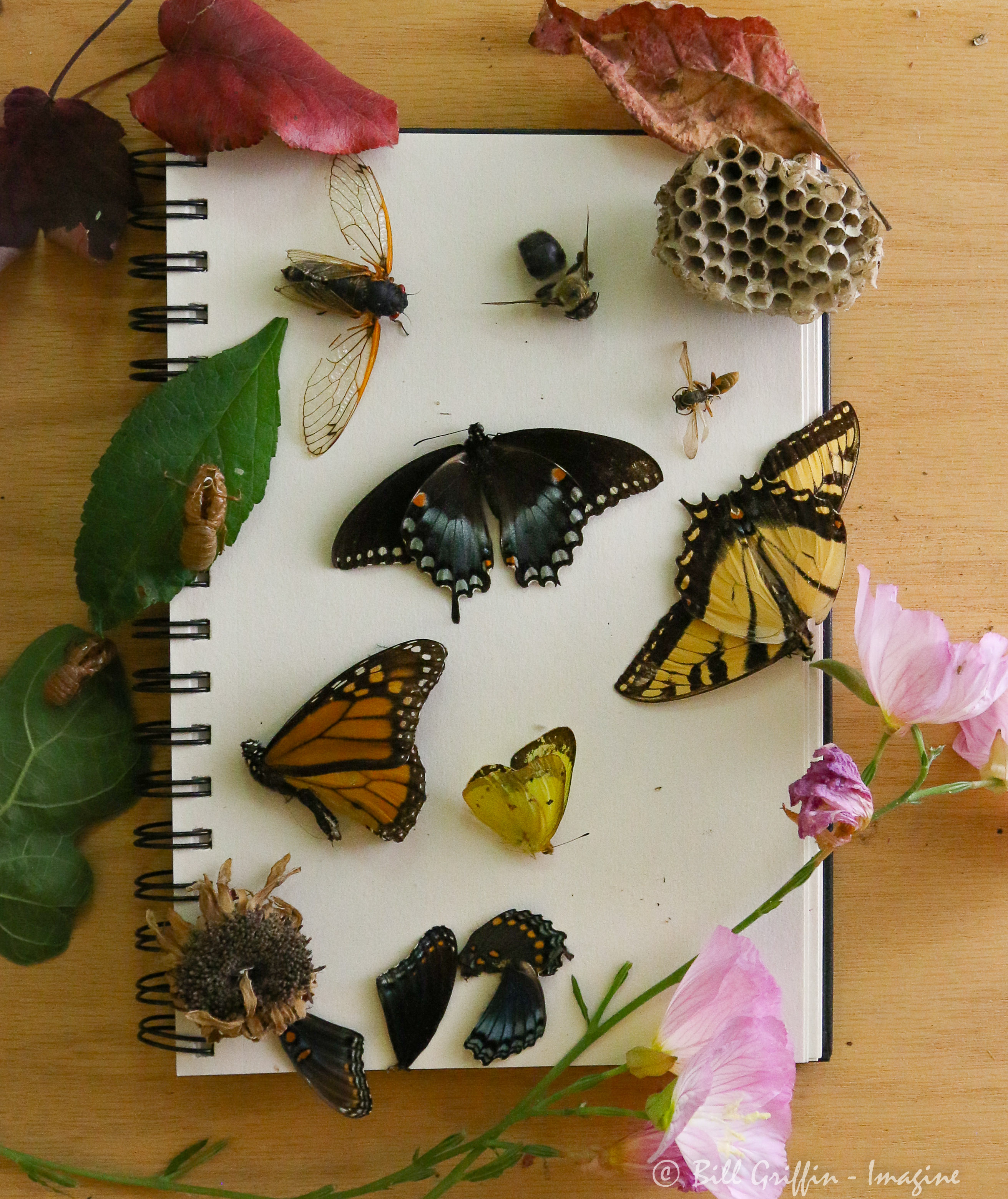
At the National Zoo in DC the Maned Wolves are sniffing them out – crunch; the Red River Hogs have dug up their entire enclosure to welcome them; the Big Cats just couldn’t care less about them; the River Otters bat them like shuttlecocks a few times, then crunch; the Keepers are busy calculating how much less protein to allot each daily feed because of all the crunching of them.

Here in Elkin an army of little workmen fill the trees, each holding in his middle arms and forward arms a tiny leaf blower set on max. Their women can’t resist that sound. Cedar waxwings can’t resist coming down from the heights where they usually hang out to nab nymphs climbing up the oak trees. Yellow-billed cuckoos are planning three broods this summer after checking out the buffet.

In 10th grade Mrs. Schilling made sure we learned the major orders – Lepidoptera, Diptera, Hymenoptera, etc., not least Hemiptera, the True Bugs (you’d better not call a Coleoptera a “bug”). Stink Bugs, you guys are old news after this year’s Hemiptera (suborder Homoptera) emergence — Magicicada septendecim Brood X, The Great Eastern Brood, magical indeed, to you we doff our hats. Second thought I’ll keep mine on.

.     .     .     .     .     .     .

Ten Thousand Cicadas Can’t Be Wrong

Summer sings sweet songs for her supper,
but her golden slippers aren’t for sale – no unless
you happen upon some celestial bargain basement
of goodly delights. There, nearly hidden under
last year’s turquoise silk sky, raspberries ripen, rampant,
as the mourning dove’s plum notes whirr, winged
into basil-drenched dreams. All this, and watermelon, too,
and fireflies, and the daylilies from your mother’s
last garden, double-headed. Just don’t forget
there are chiggers, and mosquitoes, of course, and that heat
everyone speaks of, muggy, tasting of
mildewed shower shoes, sounding for all the world like
kudzu unfurling in Jackson, Mississippi, where Janis Joplin
might have sung supper songs of her own. I don’t know.
I’ve never been there. I do know freedom’s not
just another word for nothin’ left to lose, and that you’ll never
find that bargain basement, no matter how long you look.
Listen, ten thousand cicadas can’t be wrong.
Anybody knows larvae never lie, not as long as
persimmons pucker and peaches procrastinate.
Lollygag in your hammock if you must, whenever
the tomatoes lean, but remember
that the persnickety bookie of guilt and doubt
is keeping score. You can’t hide but you can
run. You can steal the chiggers right out from under
the blackberries. You can rob from the raspberries
in bruised homage to the summer afternoon
the two most beautiful words in the English language,
according to Henry James, whose afternoons
are elsewhere now. Tu connais Uncle Death?
No worries. Aunt Morning will waltz willfully
wanton beyond noon, yea, and onward, well past dusk,
in Sister Summer’s silver slippers, the ones
deep in her closet that she seldom thinks to wear.

Maureen Ryan Griffin

.     .     .     .     .     .     .

.     .     .     .     .     .     .

Could there be a more perfect moment to re-read Maureen Ryan Griffin’s book Ten Thousand Cicadas Can’t Be Wrong? Her poetry is often about the changing seasons, the changes in our lives, the mile markers and wrong turns and new pathways discovered in the process. Nature and human nature interwoven, the book is rich and broad-ranging; I’d add even more selections from the Ten Thousand but when the sun comes out the little leaf-blowers rev up and soon I can’t hear myself think.

[Rather than 10 to the 4th we’re dealing with 10 to the 13th = tens of trillions. But they are nice and crunchy.]

Maureen (no kin to this writer) is best known as “midwife to dreams” for the many writers she has instructed, encouraged, and inspired through the years. Visit her website WORDPLAY and learn more about “spinning words into gold” through her contributions to the award-winning CHARLOTTE READERS PODCAST.

.     .     .     .     .     .     .

I’d like to think it isn’t greed

impelling us
to gather
far beyond need, whatever
our predilection –
++++++ blackberries
++++++ buckeyes
++++++ daylilies
++++++ fireflies
++++++ olive shells
++++++ sand dollars
++++++ stones –
++++++++++++ rather,
the feel of familiar
texture, convexity,
the comfort
of a particular weight
cradled in a palm.
Who knows
what it is that sings
as we fill
+++ baskets to overflowing
with our own peculiar harvests.
We feel the lure
+++ cull just one more
as if it were important to
keep this bit of fruit
from what we think of
as waste, to save
another shell from being
shattered by the sea,
to make ourselves a home among
the things of this world.

Maureen Ryan Griffin

.     .     .     .     .     .     .

When the Leaves Are in the Water

When my brother and I walked
through these woods, he pointed out
subtleties of bark and branches,
read growth rings, spoke of drought
and rainy years. Said I look

like Mother. What I love
about trees: they endure
the seasons. I yearn
to be sweet gum, sugar maple.
My brother named me

ironwood, divined my rusting
heart, too hard to yield
forgiveness. Would we agree on oak,
my gallnuts early griefs
painstakingly transformed?

Arriving at the creek bank,
I let silt run through my fingers,
minute bits of pebble
with unseen roughness.
I wasn’t looking when my hands

turned into hers. I plunge them
into cold creek water.
I once thought
forgiving her was clean,
balsam on a wound

to make it heal. It’s more
like washing hands
before a meal. I have to do it
over and over: forgiveness
to the third power. I feel

it’s time, but loss spirals
deeper each succeeding
season. What will I be without
my holy anger – stripped bare
like the skeleton of a tree,

my stipule scars, my leaf
scars showing. Trees are born
to nakedness – I’m not ready.
My brother told me
the Cherokee believe

it’s a time of great power
when the leaves are in the water.
I fling in handfuls of
hard memories, watch the current
carry them away.

Maureen Ryan Griffin
all selections from Ten Thousand Cicadas Can’t Be Wrong, New and Selected Poems, Main Street Rag Publishing, © 2014 Maureen Ryan Griffin

Magicicada

Brood X

.     .     .     .     .     .     .

.     .     .     .     .     .     .


IMG_6432

Read Full Post »

photo by Saul Griffin

[with 3 poems by Becky Gould Gibson]

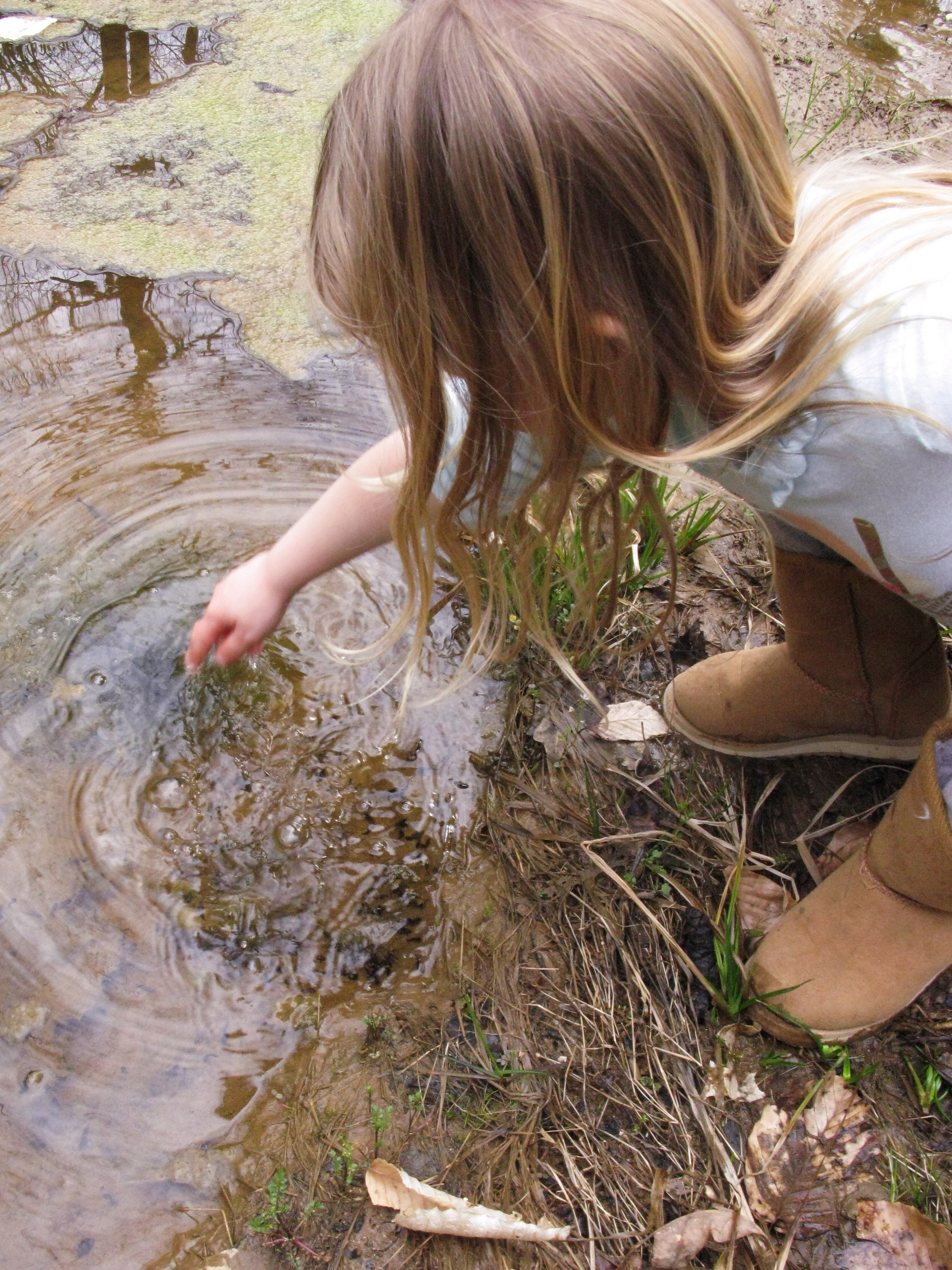
Amelia’s Papa Jimmy brought the bunnies to playschool yesterday. Four of them had fallen from a nest destroyed as he cleared a field two weeks ago. No mother in sight.

When we heard he’d bought bunny milk at Tractor Supply and was feeding them four drops every two hours we first thought, Is he raising them for the dogs? Not to eat, to teach. He trains young beagles to hunt; maybe they need to learn the smell of rabbits?

But no, not at all, it’s just that Jimmy can’t leave helpless young to die. Tractor Supply will mix up formula for any small critter you may have need of. He used a dropper until they learned to suck from a nipple. Two weeks later they’re hopping, eating tasty greens.

Yesterday each four- and five-year old got to hear the bunnies’ story, touch their soft ears and heads. Today Jimmy will release them at the edge of the woods, restored to bunny-ness, preserved for no other purpose than themselves.

.     .     .     .     .     .     .

Stand of Birches

The woods are wet this morning – rain yesterday
or the day before, maybe – such a sense of quiet,
all the damp peace of it, mostly trees to be with,
birches especially, minimalists in chic black and white,
raw silk with horizontal markings like wounds
slashed across white paper, dashes, staples, lines
of ghostly scansion, every beat, every syllable
of wood and glade accented, no scales or hierarchies
scored in their bark, rather universal emphasis,
as if everything mattered – this tiny white-headed
flower, this ant on some errand, even the mosquito
buzzing my ankles, these low-growing grasses,
branch with its bark pulled back, underbelly softening,
chartreuse mosses – though brief, briefly important.

Becky Gould Gibson

photo by Saul Griffin

.     .     .     .     .     .     .

These poems by Becky Gould Gibson are from her book Heading Home, the winner of the inaugural Lena Shull Book Contest in 2013. The poetry is strongly rooted in family and place but also richly steeped in literary tradition and history. I keep coming back to Stand of Birches for its eloquent, even spiritual expression of the deepest premise of Ecology: not utilitarian, not exploitative, not derivative or charismatic or anthropocentric – each living thing in all its interconnectedness is of value in and for itself.

Yes, yes, OK, OK, even mosquitoes.

In 2012 the Poetry Council of North Carolina elected to dissolve its organization and merge its residual funds with the North Carolina Poetry Society. Since 1949 PCNC had promoted the craft of poetry in the state with its annual contests; now in collaboration with NCPS it established an endowment to sponsor the annual Lena Shull Book Contest for an unpublished full length manuscript by a North Carolina writer, named for founder and first president of PCNC. Becky Gould Gibson was the first Lena Shull winner.

.     .     .     .     .     .     .

Scuppernongs
+++ Immortal life will be given . . .
+++ The Lord of harvest gathers us, / Sheaves of the dead –
++++++++++++++++++++++ for Bill

When death lifts its edge a little,
as in the first movement of Mahler’s C minor symphony,
you wonder will you be ready.
We finish a bowl of scuppernongs from the market,
wild bronze from childhood,
delighting in the bite, thick skin between our teeth,
touch tongue-tip to tongue-tip.
You taught my tongue to talk back.
I recall all those summers,
you in another county, nearly a decade before we would meet.

Now, come with me.
We’re together, then. It’s a languid afternoon in late August.
I’m eight. You’re ten.
As for death, I still think I can talk my way out of it.
Follow me across the un-mowed yard,
weeds tickling our legs,
to the scuppernong bush at the edge of Mr. Marcus’s field.
For you, death is no fiction.
At six, made to duck under your desk at school,
wear a dog tag, so someone could identify your body.
No bucket. We stuff ourselves madly.
Know what happens if you swallow a seed? We laugh.

No, love. It is not my own death I worry about, but yours –
will I ever be ready for it?
To be alone as I was that distant August,
memory plucking the fruit of you, scuppernong ripe in my mouth.

Becky Gould Gibson

.     .     .     .     .     .     .

Lines to Yeats on the Anniversary of His Death
++++ January 28, 1939
++++ for Alice

To a soul just fledged, still damp, in a nest
Of paper, flimsy bits of Plato, Paul,
Shelley, Wordsworth, Tennyson, all the rest
Who believed (or even half-believed) soul
Could soar above the earth (earth a mere cast
Of heaven), spirit somehow separable
From flesh, you came, William (my dear Willie)
With your poems of pure song, heart’s own music.

No wonder it entered my veins, my pulse
Learned to tick your rhythms. No matter you
Warned not to pleasure soul at the expense
Of body, who could even listen to
Such warning with such a beat, sound and sense
So perfectly married, as if to show
A manmade thing could become immortal,
Gold bird on a gold limb sing out its soul.

You made me more impatient than ever
To conceive such a poem of my own.
Your artless art merely fed the fever,
Yet every line fell stillborn from my pen.
Blood had become a colorless liquor
Nourished on symbols. Life had to happen,
And it did. Not a woman but a child,
Rather a child’s birth. It was a girl-child

Split me apart. No way to staunch the flood
(Nothing’s sole or whole that has not been rent)
Of blunt necessity. You had your Maud.
I had my Alice. She caught me up, lent
Me her knowledge. She, no man or bird-god,
Made loins shudder, roused me from those years spent
In abstraction, taught me bone, bowel, breath,
Body’s mortal work. She taught me my death.

Becky Gould Gibson

three poems from Heading Home, Winner of the 2013 Lena Shull Book Contest, Main Street Rag Publishing Company, © 2014 Becky Gould Gibson

.     .     .     .     .     .     .

.     .     .     .     .     .     .

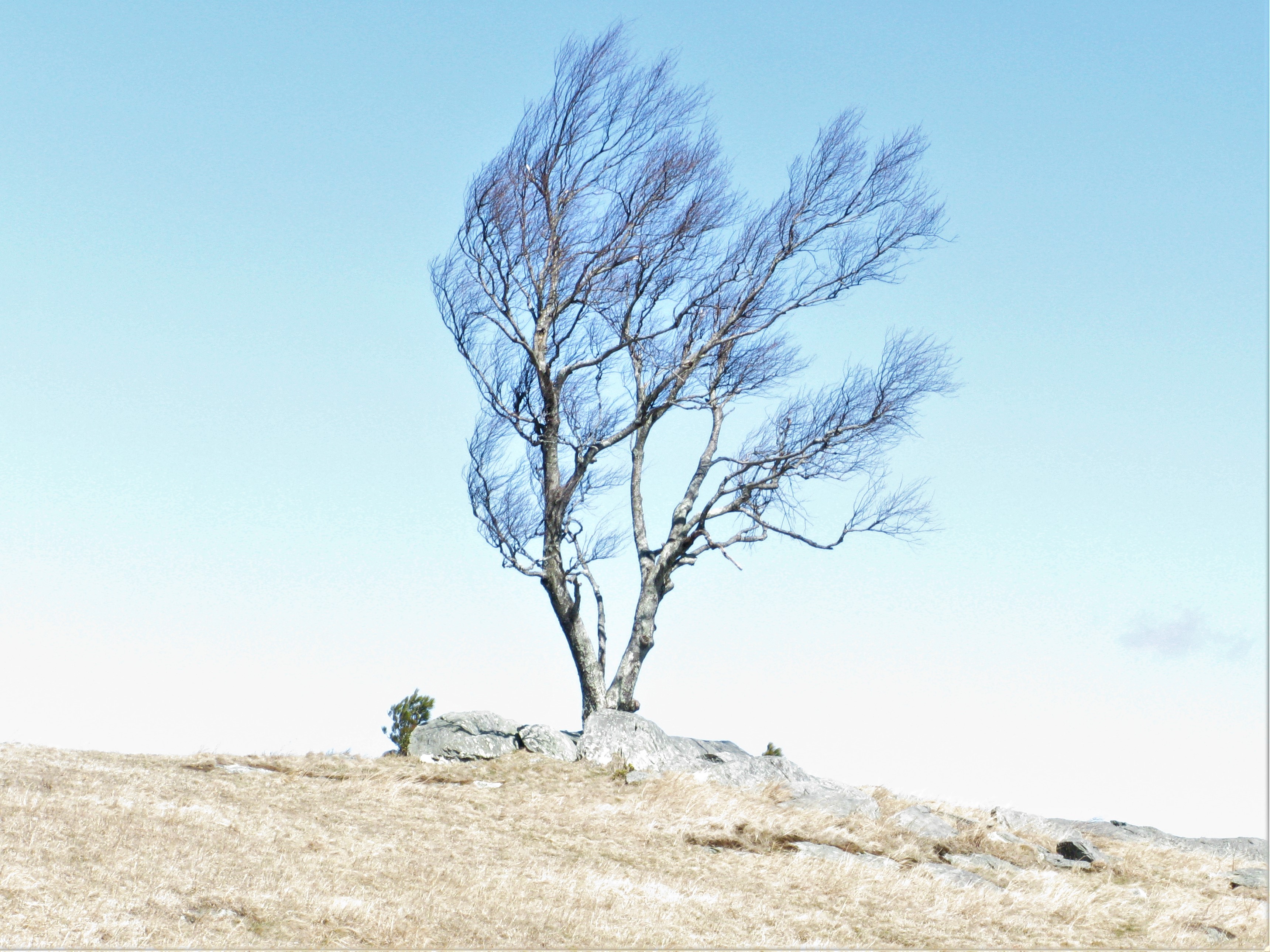
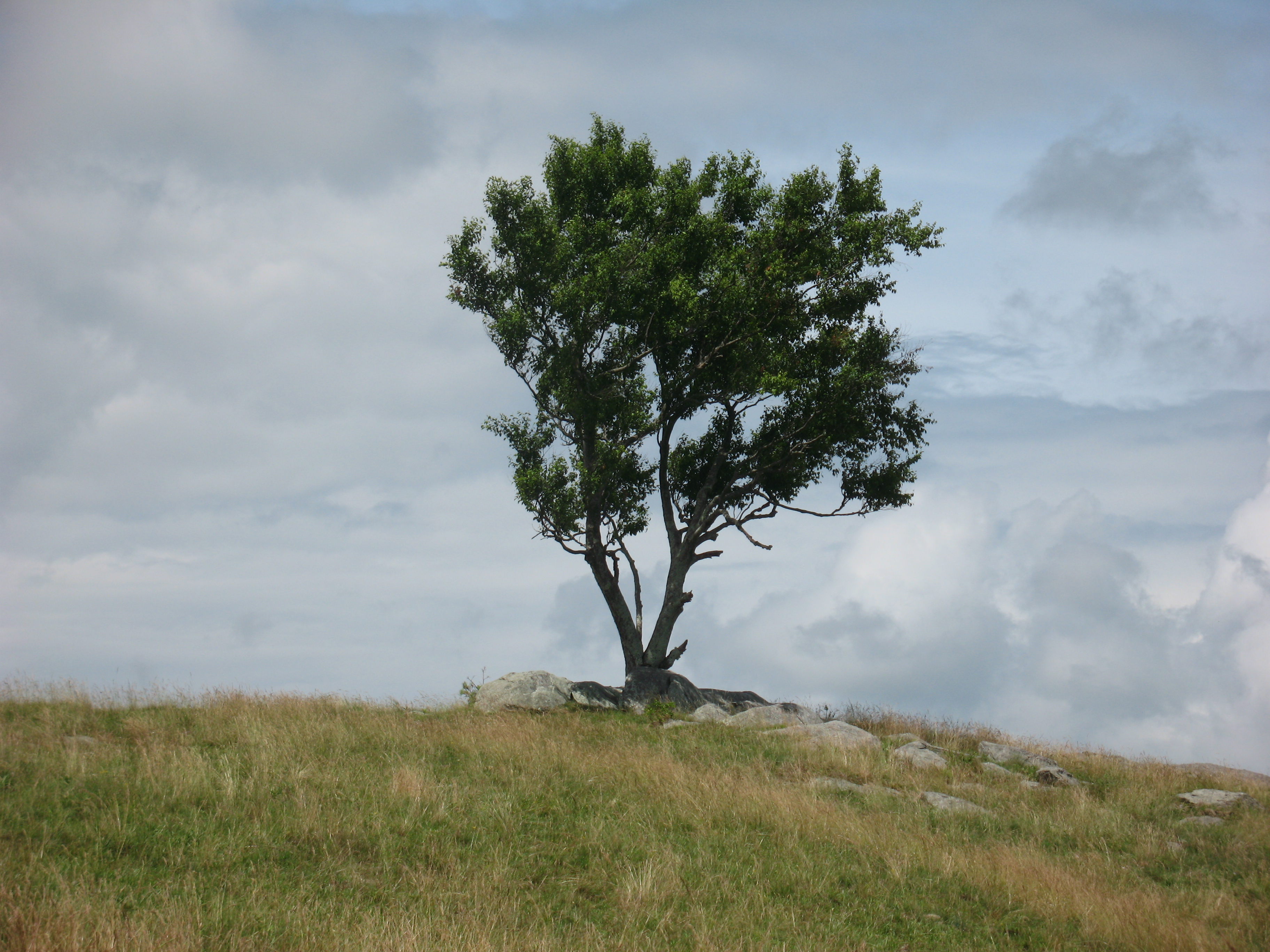
2016-05-08a Doughton Park Tree

Read Full Post »

[poems by Gary Snyder, Wendell Berry, Rose Fyleman, David Radavich]

an offering from Craig Kittner . . .

Piute Creek
– Gary Snyder –

One granite ridge
A tree, would be enough
Or even a rock, a small creek,
A bark shred in a pool.
Hill beyond hill, folded and twisted
Tough trees crammed
In thin stone fractures
A huge moon on it all, is too much.
The mind wanders. A million
Summers, night air still and the rocks
Warm. Sky over endless mountains.
All the junk that goes with being human
Drops away, hard rock wavers
Even the heavy present seems to fail
This bubble of a heart.
Words and books
Like a small creek off a high ledge
Gone in the dry air.

A clear, attentive mind
Has no meaning but that
Which sees is truly seen.
No one loves rock, yet we are here.
Night chills. A flick
In the moonlight
Slips into Juniper shadow:
Back there unseen
Cold proud eyes
Of Cougar or Coyote
Watch me rise and go.

Piute Creek” by Gary Snyder from Riprap and Cold Mountain Poems. Copyright © 2009 by Gary Snyder

.     .     .     .     .     .     .

an offering from Alana Dagenhart . . .

The charming landscape which I saw this morning, is indubitably made up of some twenty or thirty farms. Miller owns this field, Locke that, and Manning the woodland beyond. But none of them owns the landscape. There is a property in the horizon which no man has but he whose eye can integrate all the parts, that is, the poet.

Ralph Waldo Emerson, Nature, 1836

Poet, will you put the parts back together? The seed, the roots, the petals that have been thrashed and trampled? The bits that once meshed and fit now distracted and ignored? The air we can’t taste, the sunlight we can’t breathe, the stone beneath our feet, the water in our hair? Who will put us back together and put us into the places where we belong, all together?

Several friends have offered poems that speak to them about our Earth and which offer to gather us all in together to celebrate Earth Day! I’m posting their offerings April 21, 22, and 23. What do you see? What do you hear? What do you notice? What do you feel?

.     .     .     .     .     .     .

an offering from both Lynda Rush-Myers and Kitsey Burns Harrison . . .

The Peace of Wild Things
– Wendell Berry –

When despair for the world grows in me
and I wake in the night at the least sound
in fear of what my life and my children’s lives may be,
I go and lie down where the wood drake
rests in his beauty on the water, and the great heron feeds.
I come into the peace of wild things
who do not tax their lives with forethought
of grief. I come into the presence of still water.
And I feel above me the day-blind stars
waiting with their light. For a time
I rest in the grace of the world, and am free.

The Peace of Wild Things” by Wendell Berry, from Collected Poems (North Point Press), © 1985

.     .     .     .     .     .     .

an offering from Kitsey Burns Harrison . . .

Mice
– Rose Fyleman –

I think mice
are rather nice;
Their tails are long,
their faces small;
They haven’t any
chins at all.
Their ears are pink,
their teeth are white,
They run about
the house at night;
They nibble things
they shouldn’t touch,
and, no one seems
to like them much,
but, I think mice
are rather nice.

Mice” by Rose Fyleman (1887-1957)

.     .     .     .     .     .     .


Roundleaf Yellow Violet; Viola rotundifolia; Mountains-to-Sea Trail above Brinegar Cabin

an offering from David Radavich, his poem . . .

Enough

Rare is better:
The price soars
when you lack
what you need.

A poem carries
everything
in your pocket
like a mind.

Love can be
stored in a cell
whose DNA
heartens life.

Music is soul
saving, the simplest
math and finding
one solution.

O earth that is
rare and good,
sing to the unclean
with your seas.

“Enough” by David Radavich, originally appeared in Iodine Poetry Journal

.     .     .     .     .     .     .


+     +     +     +     +

[original artwork by Linda French Griffin (c) 2021]

Read Full Post »

« Newer Posts - Older Posts »