Feeds:
Posts
Comments

Posts Tagged ‘Quiet Diamonds’

 . 
[with 3 poems by Jack Kristofco]
 . 
The Walkways at the Marsh
 . 
counterfeit geometry,
as if our straight lines matter,
railing, spindles, planks,
pressure-treated pathways
over bluegill, newt,
below the heron’s pterodactyl flap to
shifting clouds,
across an azure sky;
 . 
sun pays close attention to the boards,
like children lined at school,
the impudence of rooflines
in their misbegotten hope
of order out of chaos,
believing in a dreaming land of precept
in a teeming world
that seethes alive, primeval,
crawling in its mess
beneath our feet
 . 
Jack Kristofco
from After the Harvest, The Orchard Street Press, Gates Mills OH; © 2025
 . 
❦ ❦ ❦
 . 
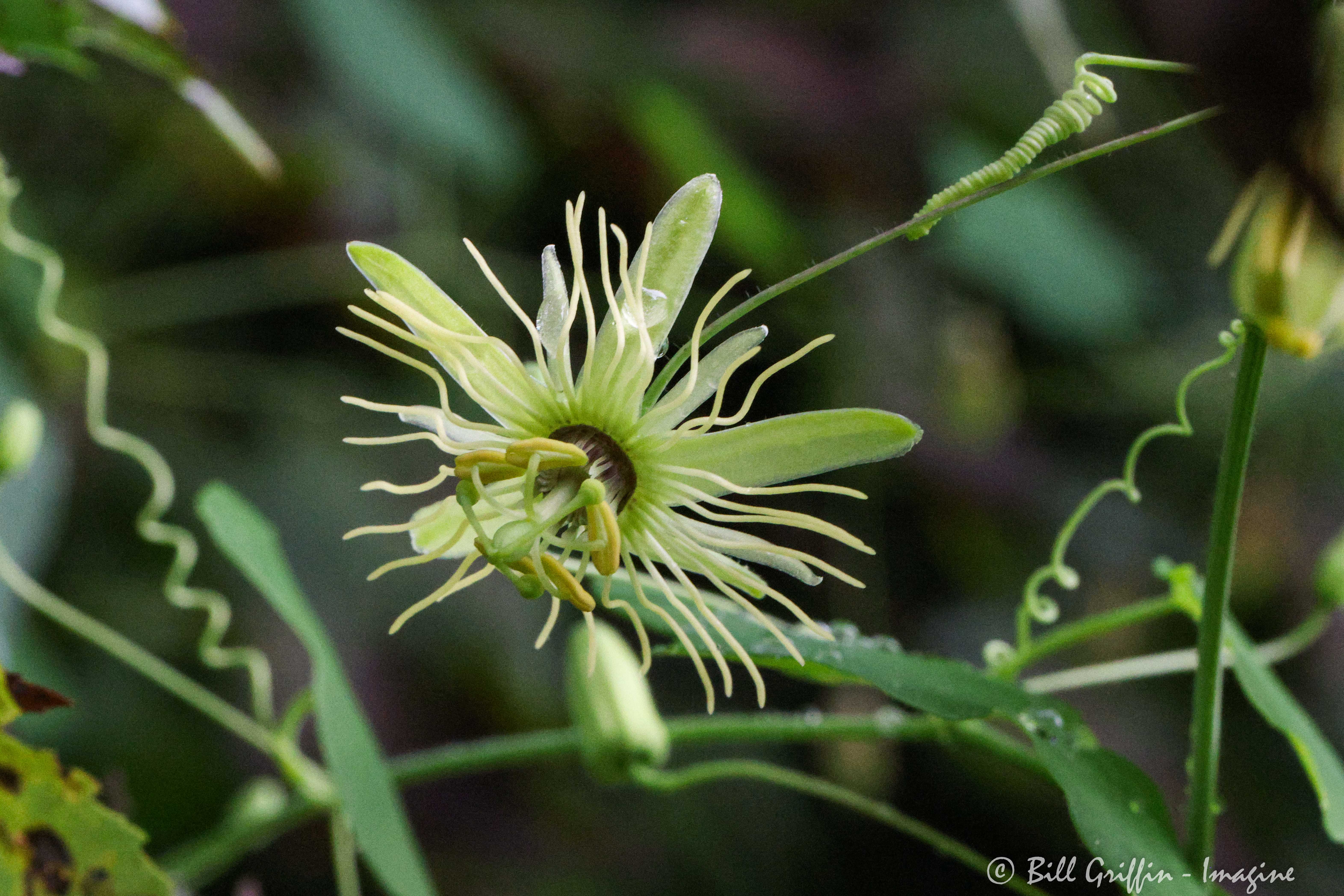
When I wasn’t looking it crept up out of the jungle (below my driveway). Never seen before, unnamed, it has climbed into the reluctant arms of the hemlock and draped itself like a boa for the cotillion. What the ? What stealthy hand sowed these seeds? From what alien universe has it landed here? But when I look closer at the pale frill and awkward angles around each blossom, I realize I know its sister well.
 . 
After the tornado introduced light to our wooded lot, I gathered seeds from autumn pastures and broadcast them on the new bare clay. My friend Joe brought me labeled paper bags from his own Mitchell River meadows. Boneset, ironweed, asters, goldenrod, wild senna – I thought I knew what would sprout to fill my little parcel, but seeds have their own agenda. Two years after the bulldozer finished clearing away downed trunks, I am discovering the unexpected. I (try to) ignore the invasive Japanese stiltgrass, and I’m not at all surprised by Fireweed which rises everywhere at the least sunny opportunity, but how did this spleenwort get here? Which Symphiotrichum aster is this? I don’t recall pulling seeds from boneset six feet tall. And these giant leaves now lifting above my head can only be from the pumpkin I tossed down here after Halloween three years ago.
 . 
Soil seed bank / bud bank – some annuals and perennials will survive, buried in earth, longer than human generations. Can that be possible? Still viable five years from now? Piece of cake. Charles Darwin was the first to systematically consider the soil seed bank in 1859 when he noticed sproutings from muck dug out of the bottom of a lake. University Ag departments publish studies of weed seed persistence; Lambsquarters will still germinate after 40 years and possibly 1600 years. And some seeds are just waiting for a good scorching to spring forth.
 . 
So what about this delicate vine I have never seen in 40 years of living here? Has it been waiting for this unusually wet summer? Or did a blue jay drop its seeds here last fall? Gently lobed leaves, truly unworldly blossom with narrow angled corolla and robot-finger pistil and stamens, it has to be a smaller, paler relative of gaudy Maypops – Passionflower. I will loop its tendrils away from the hemlock and into the sunlight maple and simply say, “Welcome to the Jungle.”
 . 
 . 
❦ ❦ ❦
 . 
Creed
 . 
we watch the comet rifle by,
light our milky pebble in a sky
so vast we only hold it with
some primal clutch of faith:
fidelity of those who know that god has died
or never was
because they’ve never seen the corpse,
aren’t impressed with winding sheets and veils,
though they seek the certitude
embraced by hearts they don’t respect,
+++ bowed heads and cathedrals
+++ where with confidence they pray for resurrection
+++ from this maze;
 . 
even the agnostics all believe,
+++ if only in their unbelief,
the truth of their uncertainty,
lighthouse on the journey
through the saints and sinners sea,
faithful travelers all,
milky-eyed sojourners
every one
 . 
Jack Kristofco
from After the Harvest, The Orchard Street Press, Gates Mills OH; © 2025
 . 
❦ ❦ ❦
 . 
After the harvest the trucks rumble heavy to the silos and disgorge their corn to be elevated, a plenty, certitude for the seasons. The man stands in the middle of the bare field. Perhaps he imagines the tall stalks still reaching above his head, elbow to elbow, their humid breath and the creak of their joints. Perhaps he notices lesser things that have thrived in the corn’s shade, a twisted morning glory, a puffball, moss. The field has opened – he can see to the treeline and hear the buntings singing their territories, he can feel hot September on his back. All the giving in and the taking away, the uncertainty of sowing and bearing fruit, the golden wealth has been removed and is distant. The man feels his feet on earth; here some wealth remains.
 . 
Jack Kristofco’s new collection, After the Harvest, cultivates contradiction and ambiguity. Life, as he demonstrates, is convoluted. He discovers even in the innocent paths of his childhood the latent struggles to come – a quiet ride with his father reminds him that some day he will take the wheel. The world of school kids playing baseball and dreaming of the girl across the street held us but a moment / then rose up all at once / and threw us to the fancy of the wind. We might strive to impose some order on existence, strive all our lives in fact for straight walkways and neat flower beds, but in a moment the stooping hawk of uncertainty will slice it all to bits.
 . 
Maybe I should embrace uncertainty. Maybe there are times when not being able to decide is exactly the right decision. Maybe it’s worth reflecting from time to time that there might be other right paths besides the one I seek so desperately to dig and smooth for myself. Jack describes meditating on his reflection in a pond – when he finally stands he sees himself both rise and sink. Our daily reality can never be quantized, regimented, predictable, no matter how we might desire it. Uncertainty itself is the lighthouse on our journey, and we are milky-eyed sojourners every one.
 . 
 . 
Jack Kristofco is founder of The Orchard Street Press in Ohio and editor of its annual poetry journal, Quiet Diamonds. Explore back issues as well as the Press’s many published poetry collections HERE.
 . 
Check out a list of plants whose seeds can persist in the soil seed bank for ten, twenty, thirty years and even longer HERE.
 . 
 . 
❦ ❦ ❦
 . 
The Hawk and the Man Watch the Yard
 . 
he looks across the slices
of a setting sun
splintering through trees
at peace with all his trim and sweeping,
lines of roses,
green of bright hydrangea leaves,
newly painted house for birds,
spray to keep the deer away
 . 
while on a silver maple in the neighbor’s yard,
its nest behind a school
where children study science and the paradigms
that lead to roses in a flower bed,
a red-tail pivots its sleek head,
jet-black eyes
to scan the sea of green and brown,
the arrogance of rooflines and concrete,
seeking any movement, any twitch,
a shadow, a fateful turn to light,
 . 
and then it falls
with such a sudden strike
it startles every leaf and branch,
the blossoms and the man
 . 
slicing their contentment
like a knife
 . 
Jack Kristofco
from After the Harvest, The Orchard Street Press, Gates Mills OH; © 2025
 . 
❦ ❦ ❦
 . 
 . 
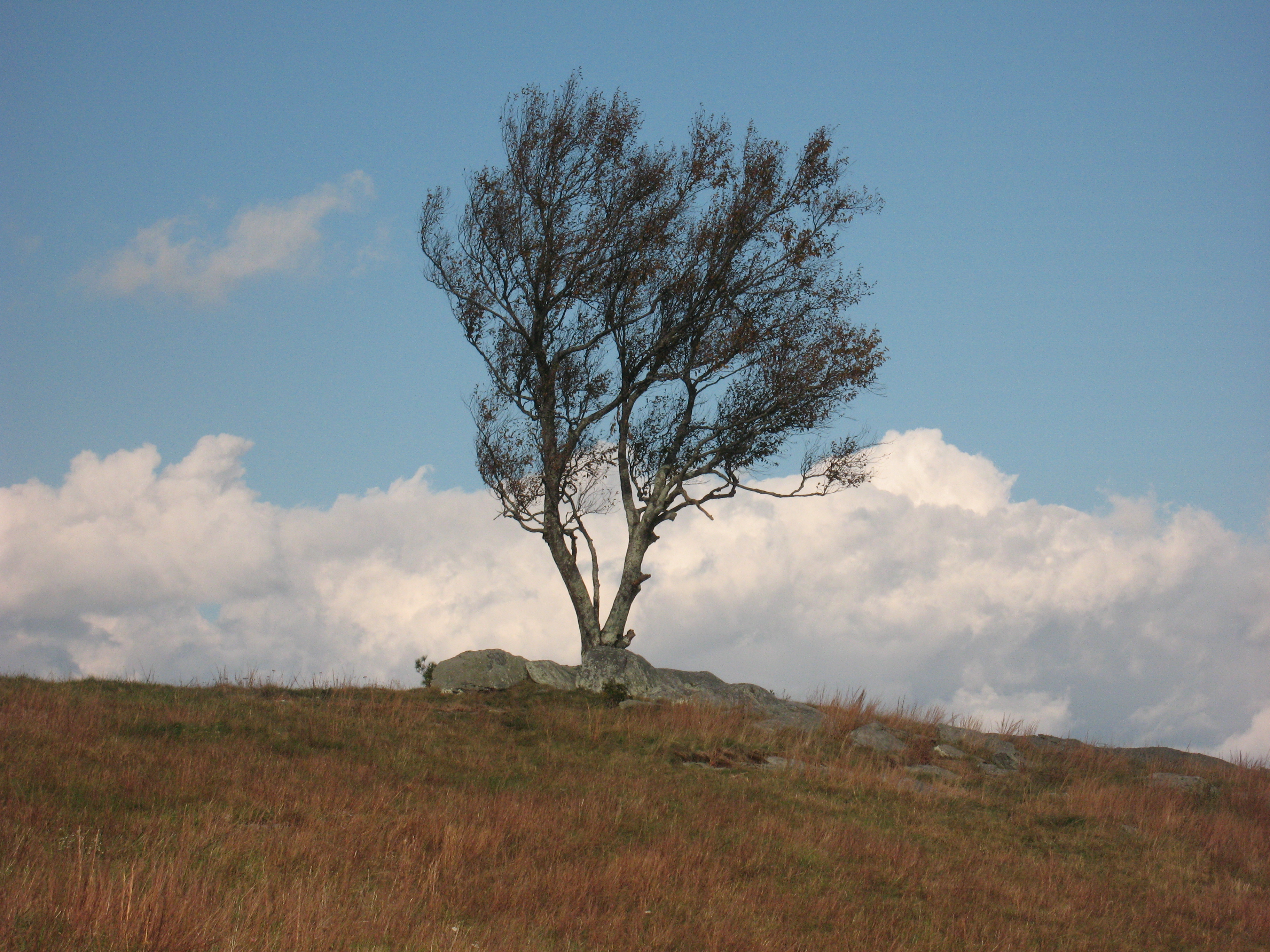
2016-10-17b Doughton Park Tree
 . 

Read Full Post »

[with 3 poems from Quiet Diamonds
Bob Wickless, Susan Craig, Bill Griffin]

O narrow track, how I have missed you! O wee well trodden way, favorite mile, little path through pasture and wood that my right knee has refused to let me walk for all these weeks, I am so glad to see you again. Last visit you had all but shed your autumn yellows, not to mention cardinalflower reds and pastel meadowbeauties. Now here you are blowing snow across my path.

The season has arrived of whites and browns, feathers and fluff, crowns and rounds – seeds! Hello little calico aster whose name I just learned last summer; now your stems are strung with new stars so fine. Hello crownbeard; petals fallen, you lift your regal head. And hello snowy boneset and thoroughwort; one puff of breeze is all it takes to loft your feathered promises across the meadow.

There is a bare patch below my house beneath the powerline. There is an empty bag in my pocket. You won’t mind, prodigal wingstem, goldenrod, ironweed, if I catch a bit of your seedstuff and carry it home to a new bed? You won’t run short of provender when goldfinches and sparrows come to call. You won’t ever hear me, like some others, name you weeds.

❦ ❦ ❦

Prayer in Spring

beginning with a line from Seneca

Not hoping without doubt,
Not doubting without hope,
We enter the slow country
Of change, clad in the garment
Thread through the loom of change,
Woven in green doubt
Though woven in hopes

Greener than any hopes are:
May the clothes of the world
Still fit, in the eye’s mind
And in the mind’s eye, may
Our vision still clear
As the iced eye of the river
Cataracts, loosens, the view

In the breeze of the green flag
That is not failure, in one light
That will melt the white flag
Of surrender – Lord, we had not
Given up though the air had said
Surrender, through the vines, trees
Were all blasted with failure,

Though no light shone
Through the fabric of sky
But one pale and unaccomplished,
Wan, washed out as our vision,
Faded divinity, in the blank
Washed out country called snow,
A world neglected, blue

Now, Lord, even as the sky

Bob Wickless (Reidsville, NC)
from Quiet Diamonds 2022, The Orchard Street Press, Gates Mill OH

❦ ❦ ❦

Today in Elkin this blowing snow is windborne seeds of last summer’s asters, but inches of the cold frozen sort are accumulating in northeastern Ohio around Lake Erie. Snow belt – that’s where Linda and I met, dated, and graduated from the high school we walked to through slush & drifts. Call off school for a “snow day” in Ohio? Bah! The last time we visited Portage County was for Linda’s birthday six years ago. The old Aurora Country Club had been converted to a nature preserve – how many species of goldenrod filled those reclaimed fairways? The Cuyahoga Valley National Recreation Area had since 2000 become a National Park; we still talk about the canal trail, every ten meters another chipmunk to chirp and run across our feet.

Northeastern Ohio lives fondly in our hearts. Just up Chillicothe Road from the Cuyahoga and our old school is the village of Gates Mills and The Orchard Street Press, another font of fondness. OSP editor Jack Kristofco published my chapbook Riverstory : Treestory in 2018, so I most certainly love him, but even more I love the anthology his press produces every year, Quiet Diamonds. This year’s collection is deep and various and moving. The poems can be personal and at the same time universal. I find myself leafing back and forth through the book reading each one several times, in a different sequence, discovering new moods with each passage. So many I would love to feature on this page, wonderfulness from poets all over the US, but here I continue my focus on us Southerners.

Check in with The Orchard Street Press in January for their 2023 contest.

❦ ❦ ❦

Looking for the Banded Sphinx

++++++ I’d seen clutched last night to the railing
its wings of veined mahogany like a master craftsman’s
the way my brother’s finest tables
were inlaid in gold and amber

++++++ yet, only the marsh hawk waits
atop the same wooden rail outside the same glass door
its wing-shoulders brownish-gray
as any familiar relative

++++++ and even its flight, when it senses
the small breeze of my arrival, appears
blasé as a loping dog

++++++++++ Last night, the next-door young couples
played guitar as midnight lapsed into new year
sang Jolene in a lusty chorus
that rose and fell like the distant sea pulled
by a stranger’s violin

++++++ I ask my husband about the banded moth
Gone, he says, at first light
without a hint of nuance
++++++ the same way wonder disappears, the way
dust becomes fugitive

++++++++++ My eyes trace mid-morning’s
pale pentimento of moon
while at the edge of marsh a stalking ibis
is osmosed in plumes of fog
where sun glints cold creek
++++++ and we find no reason to speak
as the hawk melds like another riddle into winter’s
moss-draped bones

Susan Craig (Columbia, SC)
from Quiet Diamonds 2022, The Orchard Street Press, Gates Mill OH

❦ ❦ ❦

We Never Give Up Hoping

Morning frozen hard. Pour
++++boiling water
into the birdbath;
++++ they will come
to drink when I have gone.

++++ God of holy ice, holy
++++++++ steam,
++++ give my children
++++++++ water
++++ that all my hoping
++++++++ can’t.

Sound of wings, splash
++++ diminishing;
find the world again
++++ iced over.
Fill the kettle. Holy water.

Bill Griffin (Elkin, NC)
from Quiet Diamonds 2022, The Orchard Street Press, Gates Mill OH

❦ ❦ ❦

EARLY SNOW: ASTERACEAE

Stare across any random autumn afternoon and soon you’ll notice the jig and curtsey of little airborne tufts. Catch one and see if there isn’t a tiny hard seed hanging from that feathery wisp. The early snowflake you’re holding is a member of family Asteraceae.

Except for Cardinal flower (Bellflower family, Campanulaceae) and Meadowbeauties (Meadow Beauty family, Melastomataceae), all the flowers mentioned in my homage above are members of the Composite family (Asteraceae). This is the largest family of flowering plants in North America and vies for the world title with Orchidaceae. Besides typical species like asters, sunflowers, black-eyed susans, and coneflowers, Asteraceae includes less obvious suspects like Joe-Pye Weed, goldenrod, ragweed.

Study a daisy: you figure you’re seeing one standard flower, right? A ring of petals around the edge (corolla), eye in the center. Basic taxonomy of flowers depends on the configuration of their reproductive apparatus – flowers. But a daisy is a Composite – each “petal” is 3 or more fused petals from a complete individual Ray flower; each spot in the eye is an individual Disc flower with its own minuscule petals, pistil, and stamen, ready to make a seed. (And if that’s not already confusing, some Composites have only Ray flowers, no Disc (Dandelion), and some have only Disc flowers with no Rays (Fireweed).)

So what about this early snow, then? Ah, sepal and pappus . . .

In most flowers, sepals are the layer, just outside the petals, that make up the protective bud cloak. After the bud opens, the ring of sepals is called the calyx. In Composites, each “flower” actually multiple little florets all clumped together with zero elbow room, the calyx is diminished to almost nothing: the pappus, sometimes visible only with a microscope where it’s fixed to the seed. Except . . . those members of Asteraceae whose pappus is a bristle, hair, tendril, feather. For wind dispersal, but also for wonder and delight. When a breeze puffs the boneset or fireweed or lowly dandelion, one might imagine the pasture will soon be knee deep.

❦ ❦ ❦

❦ ❦ ❦

Doughton Park Tree 2021-02-23

Read Full Post »