Feeds:
Posts
Comments

Posts Tagged ‘poetry’

[with 3 poems by Melinda Thomsen]

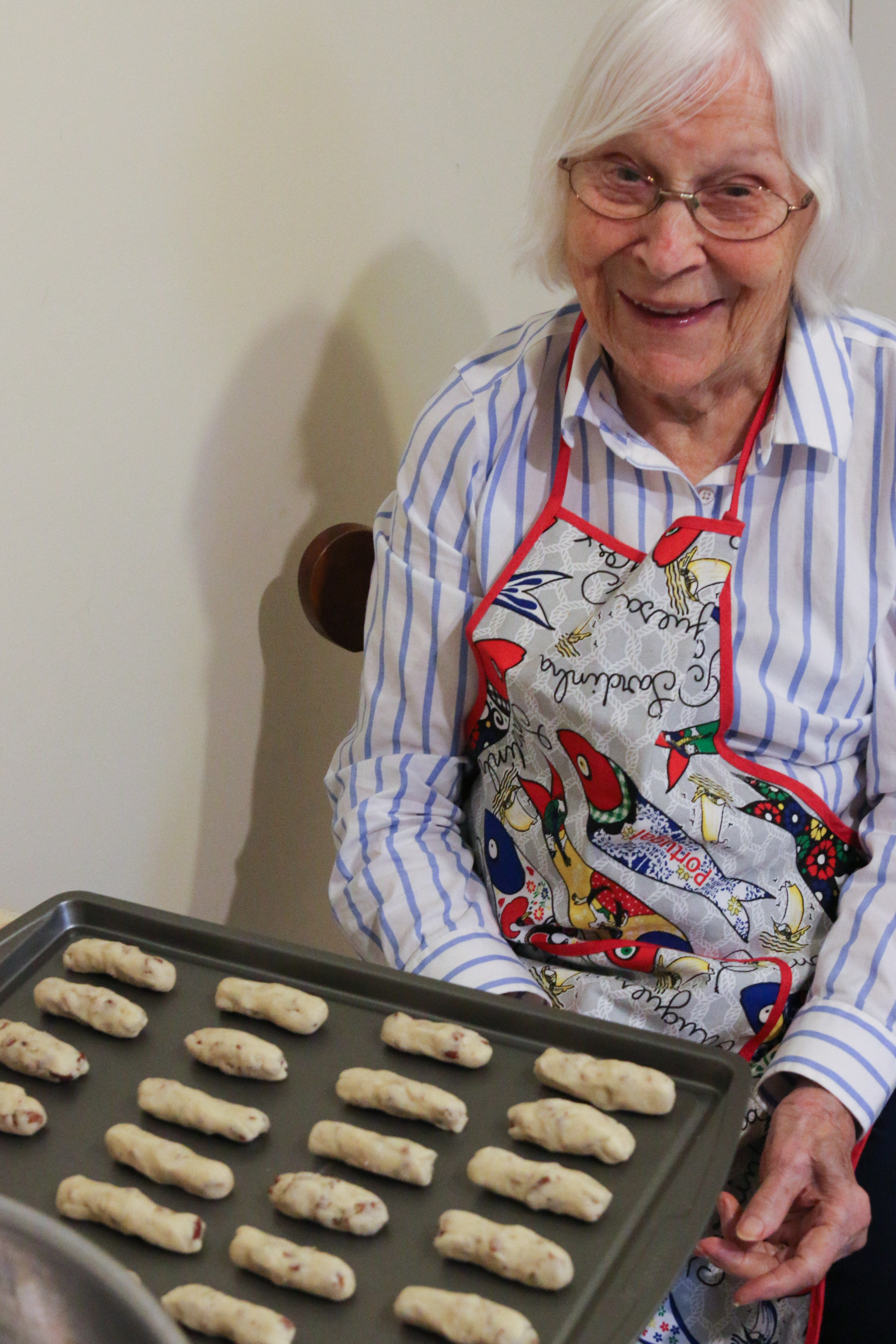
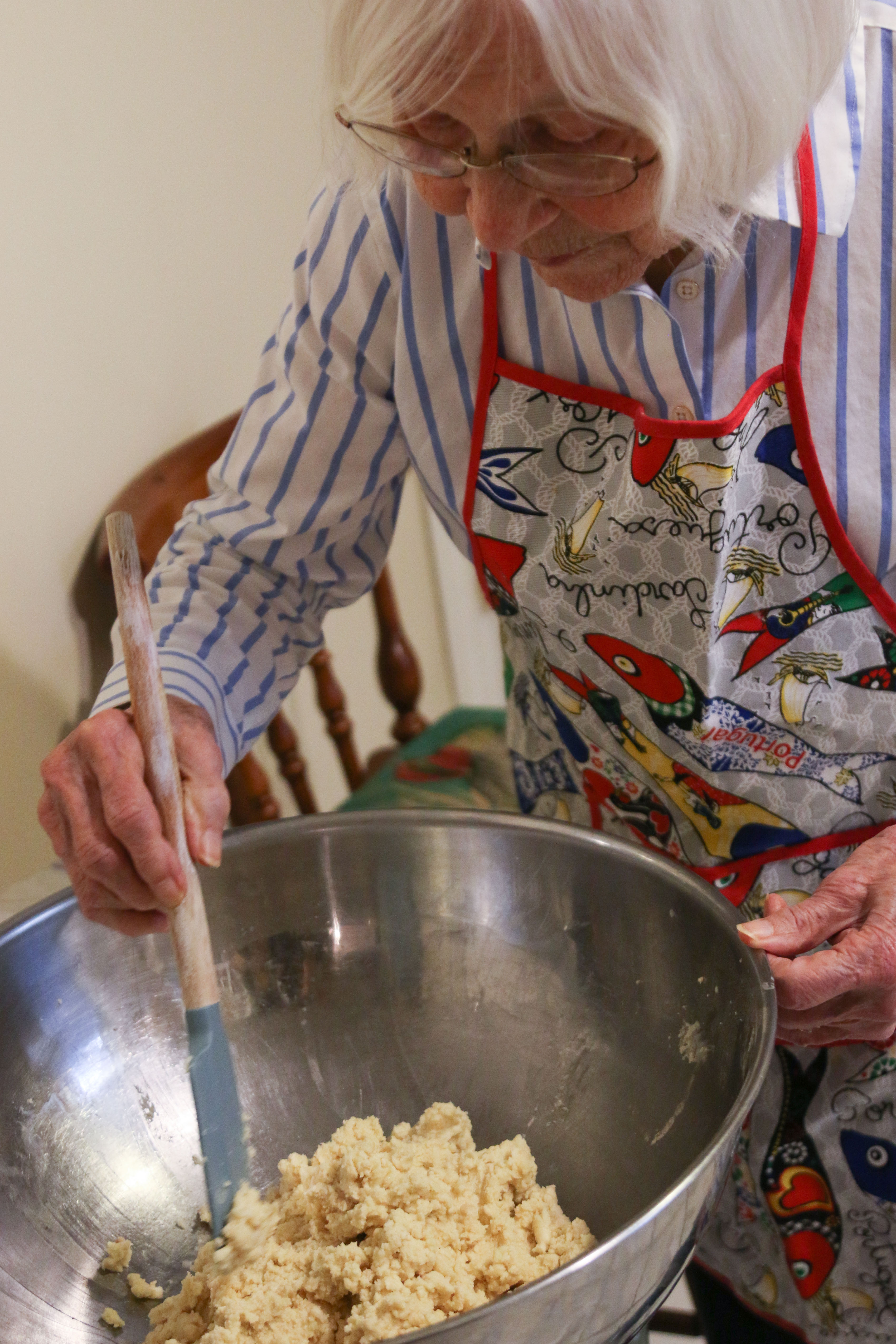
How about you cream the butter and sugar while I chop the pecans? At 93 Mom does not need to be wielding the big chef’s knife. Last week I bought vanilla, nuts, butter, and a couple of new cookie sheets at Harris Teeter while shopping with Dad. This morning I pre-measured the sugar and flour into ziplocks before I left the house. This afternoon Mom woke up early from her nap, so excited to be baking cookies for Thanksgiving.

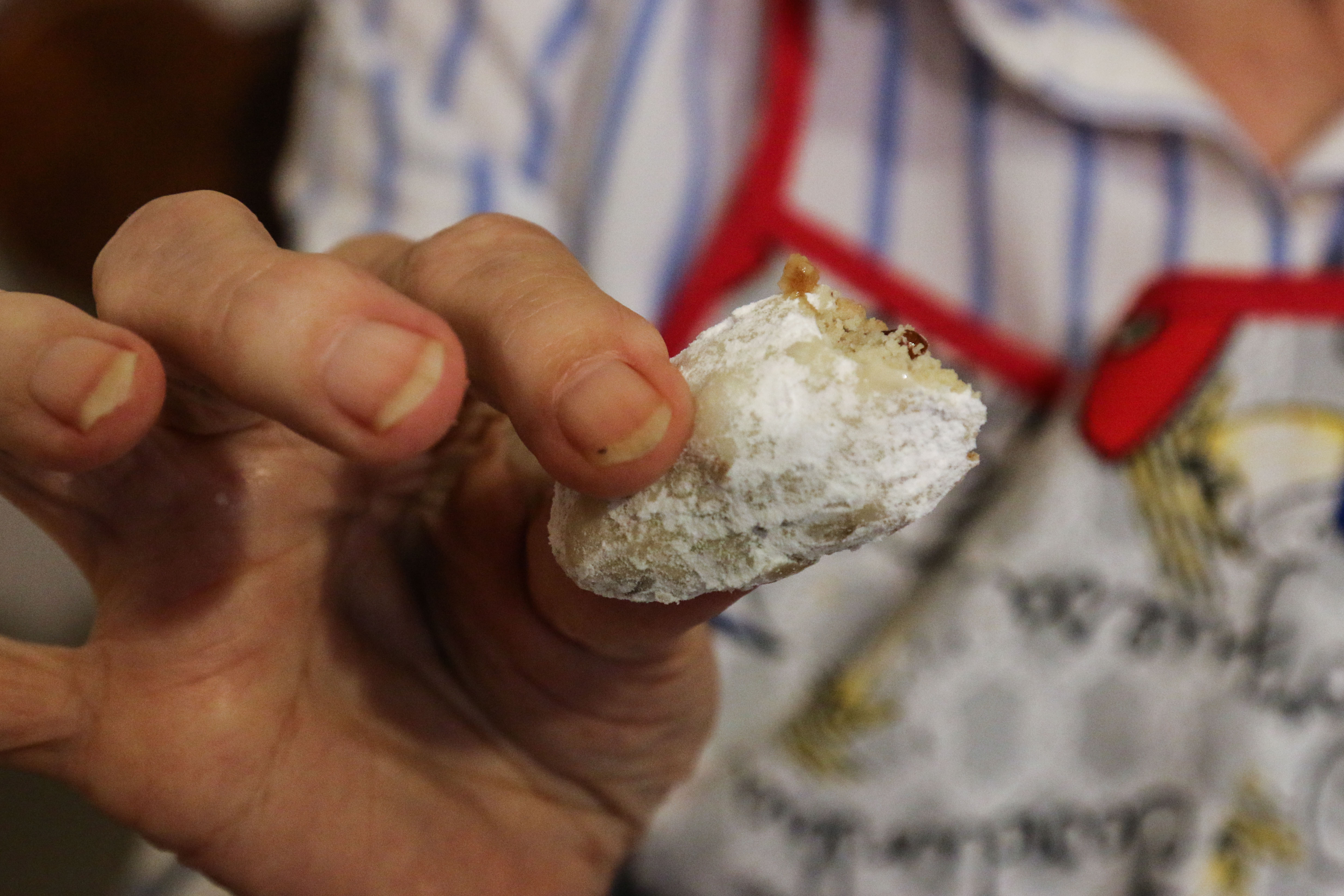
Whenever we visited Nana while I was growing up, we kids (and Dad, too) couldn’t wait to visit the little village of tins that would have sprung up like magic on her kitchen counter. Homemade fudge, humdingers, Moravian Christmas cookies. And there were always, there had to be, nutty fingers. When I got married she bequeathed me the recipe and that’s how I labeled the index card – Nana’s Nutty Fingers.

Nana’s only daughter – my Mom – hasn’t made nutty fingers since any of us can remember. Last night I printed a copy of the recipe and scribbled out my fraction calculations to double it. When I walk into Mom’s kitchen today, though, she already has the recipe laid out on the counter.

The original – centered on page 53 of What’s Cooking?, compiled by the Winston-Salem Woman’s Club in 1948, “Pecan Fingers” contributed by Ellen Cooke, alias Nana. It’s identical to the recipe we’ve used all these years as long as you realize that 4X sugar means granulated.

O Baby, in about an hour their home is smelling good, and all the laughs and stories we share during the making are even more delicious. Good job, Mom, high five. Dad pronounces these the best nutty fingers he’s ever tasted and the powdered sugar down his sweater affirms. When granddaughter Claire arrives from Maine for Thanksgiving, there just might be a couple left for her.

Maybe.

.     .     .     .     .     .     .

Sweet Potato Casserole

One poet says she waits to hear what
the words are trying to say. Meanwhile,

a documentary shows fifty pounds of yams,
gathered in one plastic basket, heaved up

to a migrant from Chihuahua, standing
in a school bus. The bus trudges through

the turned fields of North Carolina, a taxi
with an open top and wooden slats for sides

reaping filled baskets. Another poet hopes
the best wind finds me ready to wrestle it

to the page. As farm workers examine
and measure, sweet potatoes lift skyward.

Thousands of roots piled up in moving crates,
all hand gathered, are waiting for words.

Gently but quickly, these men harvest,
and I keep searching for nouns so small

but will swell in the mind to voice the labor
and sweat of my Thanksgiving dinner.

A friend tells me, if you think one person
can’t make a change, you’ve never been in bed

with a mosquito. Advice swirls like gnats
while I peel yams, whose discarded skins,

the width of fingers, almost rise as hands
to choke my verbs. Still, I dot mashed sweet

potatoes with mini marshmallows before
placing the heavy pan in a 375 degree oven.

Melinda Thomsen

.     .     .     .     .     .     .

Melinda Thomsen’s book Armature lives in the personal moments that create each day of our lives. The title refers to the skeletal framework a sculptor uses to support her clay model. She adds form and matter to shape the work into three dimensions. The book’s framework includes descriptions of four castings of Degas’ Dancer Looking at the Sole of Her Right Foot; the poems throughout add shape and form through their close observation and grounded presence within the many places they dwell.

Armature, © 2021 Melinda Thomsen, Hermit Feathers Press, Clemmons, North Carolina

.     .     .     .     .     .     .

Old Tractor Equipment

Their armature emerges from
a forging of farm equipment:
rasps, chains, gears, and pipes.

Metal tractor parts fashioned
a horse whose neck
and ligaments are strong

enough to face the wind
with a mane of almost twenty
flat files billowing in the breeze.

We all move this way, right?
After years of pulling it
together in cut and paste jobs

of bad or non choices,
even if our hearts resemble
rusted tractor ball bearings,

we construct and forge ourselves
from a hodgepodge of muzzles
and flanks in to running mares,

stalky goats, or bold stallions.
Walk over to us, and see our
sprocket nut nostrils flare.

Look at these haunches
made of 20th century shovels
and lawnmower parts.

A trip of goats and a pigpen
of swine have propane
tank bellies, pulley hooks

for horns, and porcine
snouts are marked
by stainless steel forks.

Nearby, bric-a-brac horses
cast galloping shadows
as we roam and graze.

Melinda Thomsen

[Melinda notes: Jonathan Bowling is a sculptor based in Greenville, NC. His field of sculptures is on the corner of Dickinson and Atlantic Avenues.]


.     .     .     .     .     .     .

Whirligig Park in Wilson, NC

I come from a nearby
town whose herons
sport feathers of golf club

handles and clipper beaks
flash shadows on the walls.
But here, looking up at all

these odd parts forged
into metal marionettes
with no strings or motor,

I see thy leave it to wind.
A cloud-laden morning
moves in and fifty feet

above, a front propeller
turns and two farmers
quickly cut a metal log.

Their saw’s teeth drag across
the tree as if their first stroke,
and behind them, a dog sits

whose tail wags at each cut.
It seems the earth begs us
to twirl, even if our spirits

have been sapped to rust,
even if our most dead
selves dwell in squeaking.

Melinda Thomsen

[Besides Wilson’s Whirligig Park, Vollis Simpson’s kinetic art is also on permanent display at the North Carolina Museum of Art.]

.     .     .     .     .     .     .
.     .     .     .     .     .     .

Postscript: My children and their kids have always called my Mom Grandmommy. My brother’s three girls, however, know their grandmother as Nana. Of course. The nutty finger legacy lives on.

.     .     .     .     .     .     .

2016-10-17b Doughton Park Tree

Read Full Post »

Hepatica

[poems from Kakalak 2021 by Beth Copeland, Danielle Ann Verwers, Don Ball]

How cool would it be if your friends got together and wrote a book for you? Friends you hadn’t seen in a while, like maybe two years. Friends you’ve swapped a few stories with and suddenly here they are sharing new stories. Friends who at this very moment are just now becoming your friends.

How cool? Very cool.

Kakalak 2021 arrived last week and here are my friends! I’ve read the book through and gone back to re-read my favorites over and over again; the Carolinas have suddenly become cozy and personable and at once broad and expansive. Heart-expanding! Among the poets and visual artists in the book I see so many people I’ve met before at a literary gathering, read with at an open mic, served with on a board or committee. And then there are all the people whose books I’ve read or whose names I’ve seen and now the many more names I’ve not heard before but am learning. Names becoming friends. Somehow they’ve all come together to write a book for me. And for you.

.     .     .     .      .     .     .

Fog

Morning fog erases the mountain and trees.
No, not an erasure but unseen.

+++ Not an erasure but unseen.
+++ The mountain, the laurel still green.

Unlike the mountain and laurel still green,
the dearly departed lie beneath white sheets.

+++ The deer depart beneath white sheets
+++ of fog, stepping into a forgotten dream

of fog slipping into a forgotten dream
the ghost mountain dreams.

+++ The ghost mountain dreams.
+++ Crows fly to pines on mascara wings.

Crows fly to pines on mascara wings,
mourning. Fog erases the mountain, the trees.

Beth Copeland


Ptera

.     .     .     .      .     .     .

In between reflecting on the poems and enjoying the art, I flip to the back of the book for the bios. The array of people’s publishing kudos is, of course, impressive, but personal glimpses also shine through (which, true confession, is what I’m really looking for in a bio):
Dean of Arts & Sciences at Isothermal Community College . . . Kathy Ackerman
interior designer . . . Melanie T. Aves
proud member of The Poet Fools . . . Don Ball
retired librarian . . . Richard Band
academic therapist . . . Joan Barasovska
feels a good day mellows blissfully with . . . creating art . . . Christina Baumis
poems featured on a transit bus . . . Michael Beadle
beginning poet . . . Gay Boswell (an awesome beginning here, a devastating poem)
eats dark chocolate daily . . . Cheryl Boyer
loves roots music . . . Joyce Compton Brown
marriage and family therapist . . . Bill Caldwell
sings in several church choirs . . . Joy Colter
masterfully overbooks non-existent free time . . . Julie Ann Cook
creates “convoluted notions” . . . Caren Stuart
passionate about reading aloud to children . . . Jennifer Weiss
collects library cards . . . Danielle Ann Verwers
and more, and more . . . . . . . .

.     .     .     .      .     .     .

Two Sparrows for a Penny

+++ I.
If an airport is anything, it must be purgatory. And positioned
here in this terminal is benevolent holding space to store heavy
baggage as I watch my status, wait for take-off. A hollow metal
locker contains all my small treasures as I perch near walls of
windows. Iron flocks drift into the cumulous blue.

+++ II.
Milton, the bishop not the poet, believed humans would soar
in time. Brethren mocked his vision, convinced all schematics
to be sketched were drafted, nothing new under the sun to be
invented. Still, Milton knew his offspring inherited aviation
faith in their DNA, their eyes fixed on the heavens, their irises
bright with flight. Before fruition, typhoid took him. He missed
it when his sons fulfilled the prophecy, when his boys flew
with sparrows.

+++ III.
No one sings about two sparrows for a penny. Instead, we praise
our own ascent after a shell of flesh is molted. I’ll fly away, Oh Glory!
When I die let them sing the blues. Play a minor key for the birds
who crashed, feathers intact. Sing about birds who caught
tender gaze of God. Yes, let them sing of paradise lost.

+++ IV.
Close your eyes. Imagine you are a cloud drifting in the sky.
Light and free. No—imagine you possess hollow bones, you
are all sparrow. And now you flap your feathered wings but
your sternum is lead heavy. And you are falling towards the
ground at the speed of—no imagine you are light, warm and
bright. Imagine beams emit from your eyes, your chest, your
feathers, your beak. You radiate. No—I take it back. Imagine
you are a vapor, here today and gone tomorrow. Yes, imagine
you are a cloud.

Danielle Ann Verwers


Two

.     .     .     .      .     .     .

Somehow they’ve all come together to write me a book . . .

Well, not somehow come together – they’ve arrived here by intention. This book for me (and for you) was born of diligent labor and evolved quite intentionally. Enabled by the founders, sustained by editors and publishers through the years, the Kakalak vision perseveres and flourishes – a regional anthology created of and for people connected to North & South Carolina. This year’s Editors have sprinkled their selections with an especially effervescent cloud of pixie dust: they have created magical groupings of poems, 2 or 3 or more with complementary theme, style, subject. And the Art Editor has added a swish more magic by partnering the groupings with art that amplifies the verse.

And then . . . and then the real magic. The shiver. The heart to heart. I read these lines and something shifts inside me. I see with another’s eyes. I feel the depth of another’s struggle. God almighty, this is the place and this is the thing I need and this is certainly the time. When have we ever before needed it so much, this connection? Here we find it: connection with each other; connection with our small place on this planet; connection with our self.

Thank you, friends, for writing this book for me.

.     .     .     .      .     .     .

Wish
Park View Hospital, Rocky Mount, NC

I am supposed to kiss my grandfather,
stroke-frozen in his high-racked hospital bed,
but he is angry at us and crying,
half-realizing the difference.
I stand by my brother and close my eyes.

About the same,
my mother says to someone in the hall,
and he’s about the same,
she whispers later on the bedside phone,
nodding to the wall.

But I am changed
by the hospital light, cold-yellow and dry,
by the white carts gliding through plastered corridors,
rattling over steel plates, swallowed by the swinging doors,
and voices that start up and quit—voices
suffocated by the secret-keeping walls.

This is it — I am thinking —
God almighty, this is the place.

Outside we are walking, our breath released.
The summer evening is blade-green and black.
The parking lot is full but quiet.
Crickets call behind looming elms,
and the moon booms out into the open sky.

Look, points my mother, The first star.
Make a wish.

The rows of hospital rooms are burning and hanging;
my brother is bending over the hint of a penny;
Grandfather, I am kissing you goodbye.

Don Ball

Currituck

.     .     .     .      .     .     .

Kakalak 2021
Copyright © Moonshine Review Press, Harrisburg, North Carolina, 2021

Editors & Contest Judges:
+++ Kimberlyn Blum-Hyclak
+++ David E. Poston
+++ Richard Allen Taylor

Executive Editor and Publisher (and Art Editor)
+++ Anne M. Kaylor

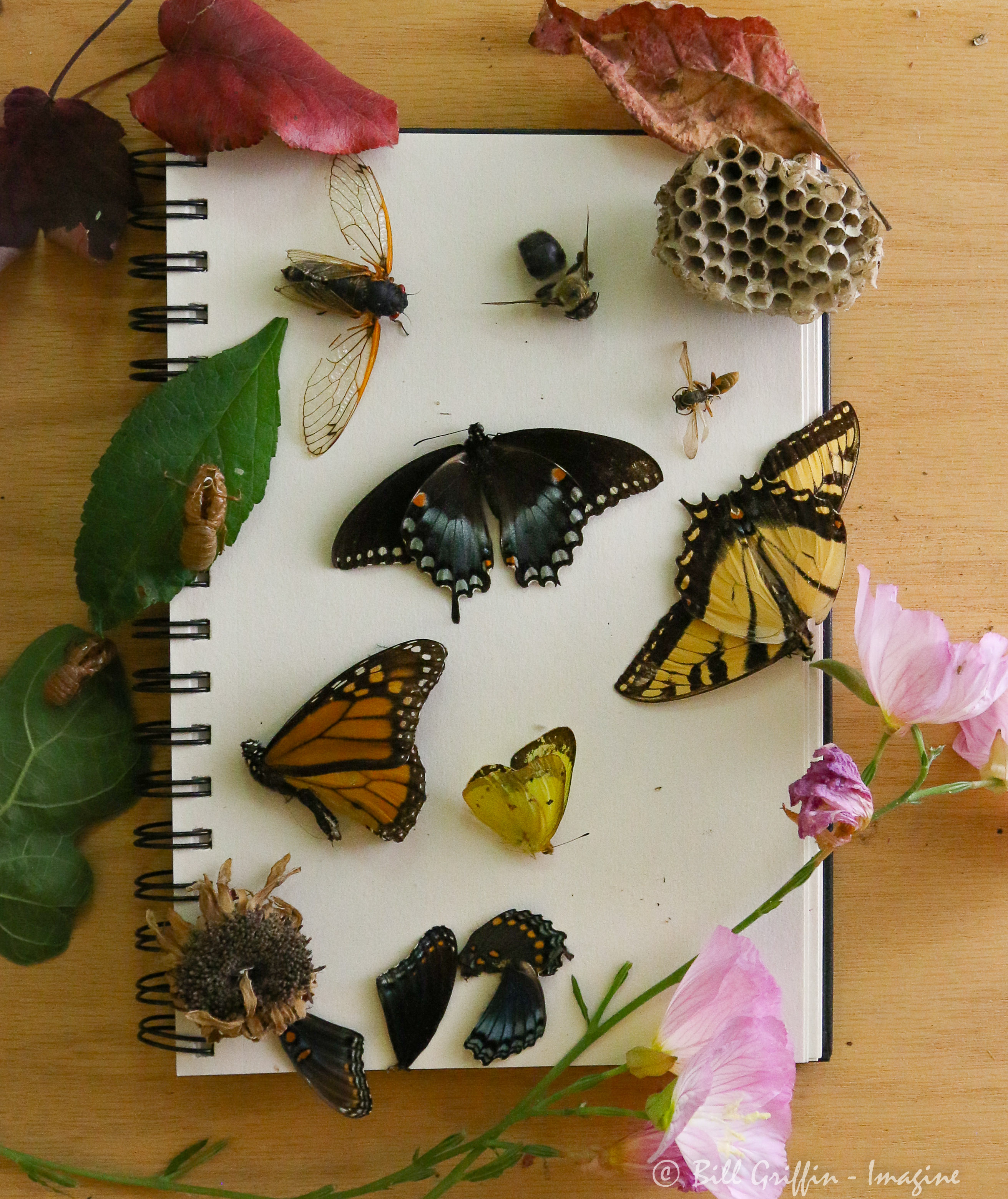
[You might imagine how difficult it was to select just a few poems from many, many new favorites in this book!

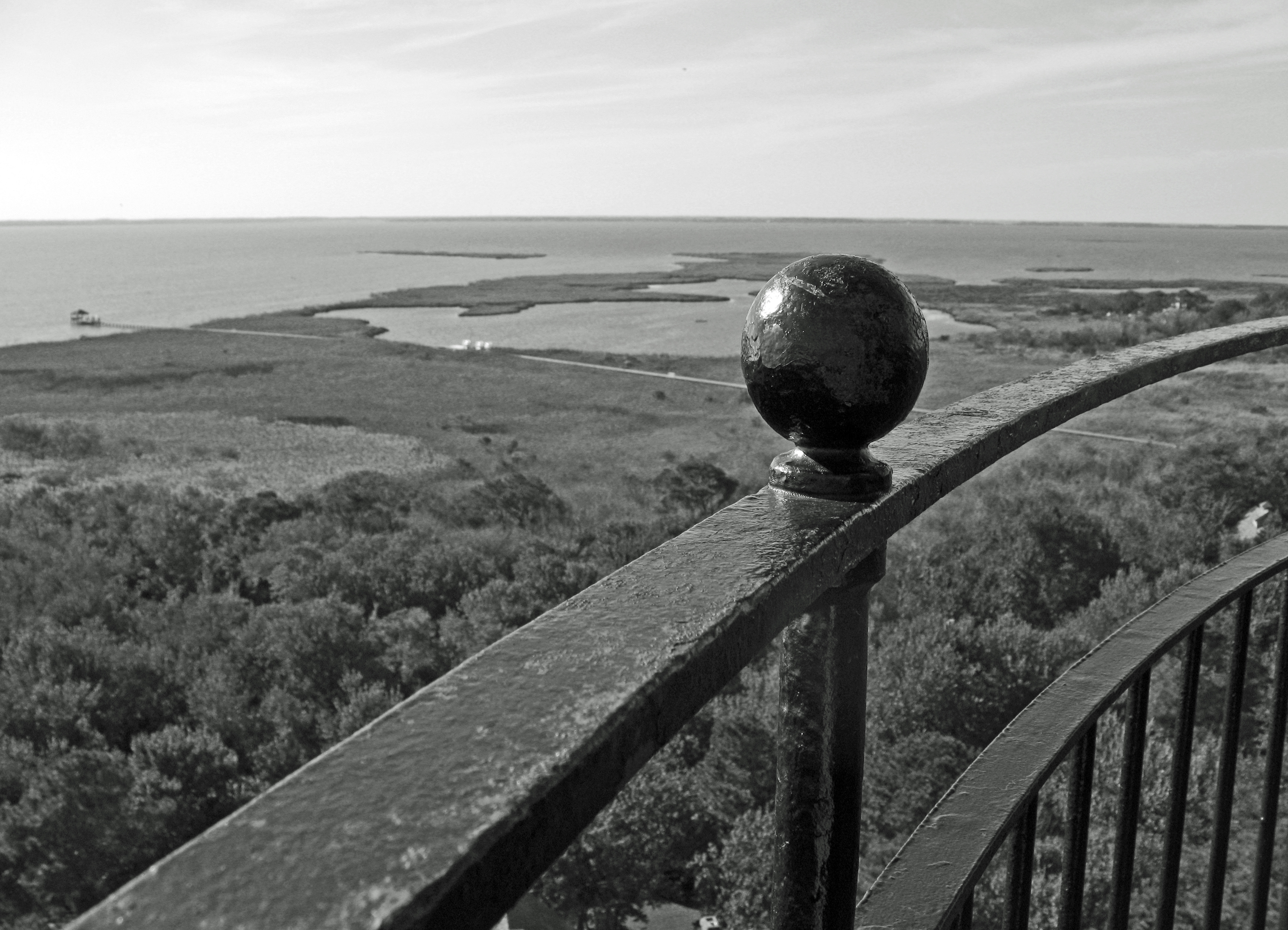
Today’s art were among the entries I submitted but which were not published in Kakalak 2013, 2018, 2020, 2021. You’ll have to buy a copy of your book to see Incisors, selected for this year’s issue! — Bill Griffin.]

Order your copy of Kakalak 2021.

Explore past issues of Kakalak published by Main Street Rag.

.     .     .     .      .     .     .

Delivery

.     .     .     .      .     .     .

2020-03-07 Doughton Park Tree

Read Full Post »


[with 3 poems by Susan M. Lefler]

Forty-four years ago this month, Linda delivered our son Josh after an epic display of Lamaze prowess. We had celebrated Thanksgiving with friends; we suspect the sweet potato pie induced labor. We lived in Durham, NC, and her parents and mine plus all our family lived in Ohio, five hundred miles away. Ooh, how they wanted to get their hands on that baby boy. First grandchild on both sides, Linda and I both the oldest sibs.

I was just weeks away from my last day of med school at Duke. Benevolent powers granted me Christmas off and my Dad, as I recall, bought the tickets with a plane change in Pittsburgh. If you notice that current day lavatories have baby stations it’s probably because so many callers contacted the authorities after being grossed out by us changing poopy diapers on the main concourse.

We finally cinched ourselves in for the last leg. The flight attendant noticed us – curly brown locks, rosy cheeks, has anyone ever been so young? – and remarked, “You must be brother and sister!”

Then she saw the tiny well-blanketed bundle nuzzling Linda’s breast. “Ahhh,” she said, “I guess not.”
. . . . .

Yesterday Linda and I got our COVID boosters at Walgreens. There was a moderate queue (Yay, Surry County, y’all go get them shots, OK?!). Waiting, masked, yawn, plenty long enough for Linda to forge friendship with the white-haired woman ahead of us and share a few chuckles. We were last in line when the pharmacist stuck her head out the door of the procedure room and called, “Griffins!”

I asked if we should come in together. She looked us over – hiking boots, matching gray pony tails, has anyone ever been together so long? – and said, “Yeah, if you really are together and it’s not just a coincidence that you both have the same last name.” The pharmacist never cracked a smile but I think she looked pleased when, after our needle jabs, Linda said she wished she could hug her.

Define long. In 1985 Linda and I figured we’d been “going together” longer than we hadn’t. In 1995 we calculated we’d lived in North Carolina half our lives. Are there any family stories we haven’t already told each other twice? Is it still likely a stranger would think we’re brother and sister?

When I look at Linda I see her father. When she speaks I hear her mother. What does a stranger see when they look at you? Your history is a cipher. Your thoughts inscrutable. Your desires a swirling mist. The most that stranger can know about you is how you respond to the next person in line. How you react to the person that hurts you.


.     .     .     .     .     .     .

Midwinter Garden

While I stir the soup, my husband digs.
He’s building me a garden in the center
of the barren yard. He marks out paths
with careful edges, makes them long
and straight. Already he plans walls, a gate.

Mind you, nothing grows yet.

While he digs and scatters time
like seeds, he dreams the blooms
full as we were at the start
when gardens grew from us, opening
like Fuji mums released from the confines
of their nets. He leaves the center blank
for a fountain, for the pond, a waterfall . . .
he dreams big and works to prove
that we can look at frozen ground and see
the cold tight seed begin to break,
greening toward spring.

In case spring should come late
leaving the garden t its frozen fate,
I stir the soup.

Susan M. Lefler
all selections from Rendering the Bones, Wind Publications, © 2011 by Susan M. Lefler

.     .     .     .     .     .     .

Susan Lefler is a native North Carolinian who lives in Brevard and has authored a photographic history of that area published by Arcadia Press. The three sections of her poetry collection Rendering the Bones delicately weave family heritage into a journey of moods, observations, trials – the longing we all have to find our way home. In the final section she cares for her parents as they decline through their last days. If we are to live in this world, we must all join her struggle through grief to discover meaning. To see, even in frozen ground, the cold tight seed begin to break.

.     .     .     .     .     .     .

Moon Stick

I want a counting stick to count the moon,
one notch at a time to mark, one thousand
and eight moons since my father’s birth,
five wards, depending how you count,
each month rolled into years, each year
into the next until we couldn’t tell
that time had passed, but we could see
his energy sigh out of him, and I leaned in
to ask old Cowboy Death, astride his big-assed
horse with the sag in the middle like a nag
too worn for use: how wide is dying?
Or is it dry and thin? Is it round
like the blood moon that lifts
above the mountain, or narrow as a bone
and hard to penetrate?

I want to ask if he keeps company with those
he’s taken out, or do new prospects
occupy his time? I want to ask
how many moons he plans to let go by
until he takes my father up, slings
him over the back of that old horse,
and heads away, letting the last moon
slide behind the mountain as he goes.

Susan Lefler

.     .     .     .     .     .     .

About Ashes

Ash Wednesday in the church, I listen
to the ancient words of dust and grief
punctuated with the hiss
of oxygen. Words crunch in my mouth
like little bones.

Slow bodies move forward
to the rail, kneel, submit
to ashes marked on skin, remembering
the palm green fronds, the bloom, the fire
that brought them here.

At home, I shovel ashes from the hearth
until I fill a scuttle full, the very one
my grandfather used to load coal
from the towering pile
next to the chickenyard, piece
by piece to keep the grate alive.

I load the remnants of dead trees
into a heap and haul them to the yard.
I’ll feed the lilacs with them.
They like ashes.

When the shovel lifts
for the last time, one spark
smolders still, telling the tale
once more of who we were,
of who we long to be, of what it means
to come awake, and waking
see.

Susan M. Lefler

.     .     .     .     .     .     .

.     .     .     .     .     .     .

2014-06-30a Doughton Park Tree

.     .     .     .     .     .     .

Read Full Post »

« Newer Posts - Older Posts »