Feeds:
Posts
Comments

Posts Tagged ‘poetry’

[featuring two poems by Regina Garcia]

This Fire Tastes Like . . .

This fire won’t taste like the last ones did
Singed souls torn up, crying, wandering,
wondering how to get love back
How to fix life
How to repair
The last fires tasted like . . .
Tasted like loss
Tasted like shame
Tasted like despair
Tasted like mourning
Tasted like no way out
Tasted like no way back
tasted like Tulsa
Tasted like Elaine
Tasted like Watts
Tasted like Wilmington
Tasted like old Eppes High . . .
Tasted like all that it had consumed

This fire tastes different
This fire tastes fed up
This fire has eyes set
Beyond loss
Beyond prison
Beyond death
Beyond the graves
This fire has new eyes
Fixed on that “New New”
Jerusalem
New fire gonna propel these children into
promised land
They won’t need the water fo the oppressor
Because they are children of living waters
And Raging Fires
And earth tht has promised fertility
Yet pushed out weeds to choke and distract

This fire tasted different
It tastes like energy

Tastes like righteous fury
Its fuel is dark kindling root
It will combust from a place to deep
So misunderstood
So, underestimated
That it will not be contained
This fire tastes different
It tastes like resolve

It will reject any attempts to thwart combustion
The internal combustion
It will incinerate attempts at trickery for
It has seen the video and believes
It waw murderous hubris
It saw The Dead that were tried for dying
It saw the solid stance of patronizing defiance of other fires
It saw the lies stifling acrid air
This fire tastes different
It tastes alive
It will not stop until there is nothing left that can stop it
It will then scoop the ashes and build
Jerusalem
Yeah
This fire tastes different
This fire tastes like revelation
This fire tastes like change
This fire tastes like
Hope

Regina YC Garcia
from The Firetalker’s Daughter, Finishing Line Press, © 2023


❦ ❦ ❦

Rainstorm, windstorm, limbs thrashing the house in panic, rain attacking the windows through the screens: we can feel Amelia’s mounting fear each time the sky grows dark and she asks, “Is this a tornado?” No, Honey, just a big storm. We don’t get tornados around here.

Until this afternoon. Severe Thunderstorm pings on the phone while we’re watching a movie with Amelia in the living room. Within minutes the sky is slate and the TV goes black. When hail peppers the porch we lurch for the basement. Amelia makes it into a game, the divine gift of the seven-year old, and while we play with flashlights we hear the drumming of rain but assume those contrabasso reverberations are thunder.

It’s all over in fifteen minutes. We climb the stairs and open the front door – our neighbor’s venerable willow oak, trunk at least two meters in diameter, is angled across the road into our driveway. Not crushing our living room. One sugar maple at the end of our house has had its spine snapped and hurled, but not into our bedroom. As our neighbors emerge, we tally and discover no one is injured (although not true of several roofs).

Everyone’s yard is full of twisted trunks and limbs or huge redclay balls of the uprooted. We notice most of the trees aligned prostrate in the same direction and we mutter, “Downburst.” “Straight-line wind.” Two days later, though, the National Weather Service makes its proclamation: an E0 tornado. We wonder if Amelia will ever want to finish that movie we had started. And if we ever get our power back on, we’re ordering some more flashlights.


Regina Garcia’s new poetry collection, The Firetalker’s Daughter, is elemental – wind, earth, water, fire. She describes her mother and her son as Firetalkers – they can speak to pain and talk it into submission. And isn’t that what these poems do, speak to the pain? If words could remove the pain of the world, the inescapable pain of living, perhaps a new day would dawn when the earth would have no more need of words. We will never see that day.

But strong words, words of compassion and truth, can raise us out of the pain. We can stand on the shoulders of the poetry, the hymns, the stories of the Firetalker and see a way beyond the pain. We can see a road before us where pain can’t wield its power over us. We can live in this world of pain and still proclaim joy, the rise of indomitable spirits from the embers. Oh, Regina Garcia, may your poetry lead us there. You are the Firetalker.

❦ ❦ ❦

The Fire That Consumes: The Burnings of Black Histories

Have you ever seen fire, the kind that consumes . . . ?
a house, a block, a street?
a community?
a town?
a nation?

Have you ever stretched fingers towards fire just because you wanted to feel
the last gusts of breath before the flames melted . . . ?
Mortar from brick?
Wood from steel?
Skin from meat from sinew from bone?
Have you ever jumped at the crack and splinter before the crash?
Hid your face to escape the blowing soot?
Covered your nose to block the smell of escaping gases the incineration of
flesh? Squeezed eyes shut to restrain the release of tears?

Fire destroys completely
Everything
Except memory
Those who have lived through fire never forget that all that was lost cannot
be returned, cannot be restored
Pre-fire life flickering in memory

Have you ever known the indignity of stolen memory?
Of erasure of thought?
A disallowing of necessary history passed on from ind to mind
No collective storage
Trashed as disposable waste
Scores of nations and families of people relegated to one layer of life lived
while other layers burned away
Withdrawn from the light of day
Layers that could have lit
the illumination of minds
the awareness of conditions

the recognition of irreverence and unrighteousness
the tackling of generational traumas
the overcoming of fear
the pride of resilience

Layers of heated memory
Deemed villainous
Tossed into the ashes
By thieves, those who dread
The power that it brings
And the rise of indomitable spirits from the embers

Regina YC Garcia
from The Firetalker’s Daughter, Finishing Line Press, © 2023

❦ ❦ ❦

Read Full Post »

[This is a re-posting of one of my personal favorites, from July 27, 2020. May we each discover what is most perfectly suited to our individual nature; may we discover the perfect curvature and gravity of the universe. And may we continue to re-discover the poetry of the late David Treadway Manning, one of my favorite human beings.

I am re-posting rather than creating an original offering for this date because our neighborhood is still digging out from a tornado that struck us on April 28, 2023. No people injured, many hundreds of trees down, brighter wider horizons absent their green banners, a few nights of darker skies and brighter stars and the company of the waxing moon.    —-   Bill ]

Young Isaac is strolling through the orchard, another undifferentiated non-linear autumn afternoon of this perplexing equation we call life. Some of the fruit has detached itself and translocated several meters closer to the center of the earth. It has begun, with the help of fermenting microorganisms, to succumb to entropy. Isaac steps in it. He slips.

Isaac’s 70 kilograms, density of water, accelerate at 9.8 meters per second per second. Suddenly prone, the gravity of the situation strikes him. There, 10 centimeters from the tip of his nose, lies a perfect red spheroid. Glossy. Fragrant. The tiny lenticels on its taut unblemished skin are arranged with the symmetry of stars distributed across the heavenly sphere. “What an apple!” young Isaac exclaims, “Artios!” (his years of Greek instruction now finally relevant): That which is perfectly suited to its nature. The essence of appleness.

And how will Isaac’s own essence be transformed by this epiphany? How will yours and mine? No longer undifferentiated, will he discover his many gifts and their ideal trajectory? Will we ours? For are we not each of us an essence, our process of formation either distracted and garbled by the noisy physics of our history and our surroundings or alternatively able to grasp that trajectory perfectly suited to our unique nature? Besides mass and density and the ability to struggle upright against gravity, don’t we human animals also possess the agency of choice and change and discovery?

Isaac sits up and regards the apple. You know where this is headed. It will be 218 years before young Albert slips and falls and realizes that what Isaac experienced is actually the curvature of space. Meanwhile why don’t we all, each of us, sit up and regard our nature. Artios! To become that which is the perfect expression of our nature. It’s about time.

.     .     .     .     .     .     .

I have been a DAVID MANNING fan since I first sat up and discovered poetry. Whether he does it with a compassion that draws me deeper into the circle of human family or with a wry and pointed barb that makes me snort, he regards human nature and tells its truths. I will be the first person in line when his NEW AND SELECTED is released from PRESS 53 later this year.

And I have been favored to preview the manuscript. Wandering these wonderful poems spanning decades I enter an inner landscape and pass from reader to personal companion. There is a deep imagination at work; there is joy and no lack of laughter and sometimes a little weirdness; there are bright moments of insight and connection.

Most of all there is WONDER. No aspect of our human situation or our confounding universe goes unnoticed. David’s artistry gathers a desert landscape, a snatch of opera, a funky conversation and weaves from them with perfect sense and sensitivity an affirmation. When I reach the final page I say, “YES, that is the way it is.”

.     .     .     .     .     .     .

Sailing with Anne

Santa Monica, California, 1950

After her sailing class we cast off
into the ruffled Pacific blue, tide
incoming, echoes of great breakers
lapping the dock. She-the sailor,
the tiller, mine.

As we headed west, tacking
into a strong breeze I remember
marveling at who she was
to do these things. I imagined her
at the helm become Anne Bonny,
running a four-master down,
the setting sun turning red lights
in her hair.

I hope we left something there-
if only a boat paint-scrape
or salt spray from her hair.
Maybe something from that day
was never lost, but joined
the Pacific’s history, some trace
still riding the blue circuit
between the poles, with the sea-grape
and tiny life that make the coral.

.     .     .     .     .     .     .

Star Journey

Sometimes at night I return

to the Griffith Park planetarium

where stars from the surrounding hills

come out to music.

North of Los Feliz

I step from city lights into the night

sky of Patagonia with its wind-swept shores

under the warm lights of Fornax,

Fomalhaut, Alpha Crucis, a bright canopy

of southern stars, to music-Gymnopedie,

Satie’s barefoot dance.

Then, under the soft night sky,

I take off my shoes

and find my way into the stars.

.     .     .     .     .     .     .

David Manning’s NEW AND SELECTED POEMS is anticipated later this year from Press 53.

Star Journey first appeared in KaKalaK 2017 – Anthology of Carolina Poets
Sailing with Anne first appeared in Pinesong: The North Carolina Poetry Society

.     .     .     .     .     .     .

.     .     .     .     .     .     .

IMG_0880

Read Full Post »

[ with 3 poems by Jane Mead]

In Need of a World

Who wouldn’t want a life
made real by the passage of time
or a world, at least,
made real by the mind. Something
solid and outer, though connected.

Who wouldn’t want to know
for certain how to get there?

I’d like to tell you simply
how I passed this day putting tomatoes up,
or how I tied a stern cicada to a string
so I could feel the gentle tug
its flying in frantic circles made.

I’d like to show you the red
worm-shaped burn on my wrist
and in this way claim myself.

Instead I slip out of my every day –
away into the distant and lulling sound
of “once-upon-a-time-there-was-a-woman.”

Will I ever find that perfect stance
of soul and mind from which sparks
a self uttering itself?
I’m always slipping between rows of corn –
through the field that rises toward this ridge
from which I like the houses for their smallness.

Here I lean against a Honey Locust,
feathery tree with its three-inch thorns,
and watch sagging strands of barbed wire
sway slightly in the wind – the clump
of brown fur hanging there, waving.

I watch the field of drying corn beyond,
and beyond that the soccer field
and rows of clean-lined condos.
I wait for the yellow light to flick on
in the white church across the valley.

Will I ever learn the way to love
the ordinary things I love to look at?

I’m always slipping away
between rows of corn, climbing
toward this ridge to think,
when really what I want is a ridge
or a lonely field on the edge of the world
of the mind. A place from which to speak
honestly to that man on the porch, a way
to greet the children who are swinging
on the edge of duck behind chain-link fences.

But always it’s either I or world.
World or I.

And when it’s I, I’m dreaming
on a quiet ridge that the tomatoes
ripened and, though I was missing,
a woman put an apron on and canned them.
And when it’s world, it pushes me back
toward that madness of the soul
which is not a field, nor a ridge, nor a way.

Jane Mead
from To the Wren, collected & new poems 1991-2019; Alice James Books, Farmington, Maine; © 2019

❦ ❦ ❦

I am sitting at the kitchen table reading these poems by Jane Mead when Linda asks me if I have any trash that needs to go out. I am sitting at the kitchen table because if I sit at my desk I will remember all the things that need to be done but that are not reading poems by Jane Mead. Of the things I will remember sitting at my desk some are a chore, like writing checks, and some are sober, like checking in with Dad to see if he is still having pain, and although reading Jane Mead is not a chore the poems are certainly sober. She makes me wonder: will there be a moment later today or tomorrow to sit and stare into the green chapel of April and ponder who I am?

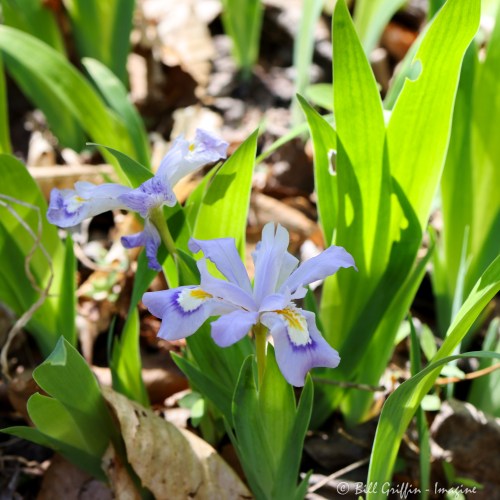
Yesterday walking the Forest Bathing Trail, Linda and I saw three violets that are not the rampant purple violets that fill the rest of the world. One by one during the weeks of April we have learned their three names. They are small, they are just a few, they are precious. Their rampant purple cousins whose flowers are crafty enough to duck beneath the mower blades, who make many, many seeds, and who have perfected the concept of ‘spread’, they, too, are precious. Will there be a moment later today or tomorrow to sit and consider the insignificance of violets and consider whether, perhaps, all things and all moments are precious?

❦ ❦ ❦

Sparrow, My Sparrow

The voice that loves me best when I am dreaming
comes from every corner of the circle of my sleep
speaking in the sound of my own drowning.
She says the body’s just a habit getting old,
a crystal turning on a nerve of ancient longing.
She says I will teach you how to be with yourself
always, she says we do not live in the same world.

All this is just an allegory for the truth.
Truth is, I cannot speak
the voice that I’ve been dreaming.
Truth is, the slate sky darkens,
clouds of sparrows heave in the wind,
the trees are massed with sparrows screaming
and the fields are dotted with them.
The birds are bracing themselves. The birds
are frenzied by something about to happen.

Truth is, I have my feet on the slimy banks.
I look for my face in the murk-green river
and the water’s surface does not change.

But I hear myself in the screech of sparrow
and am panicked by something about to happen.

Slate sky – darkened; sound in wind:
I enter this world like myself as a prayer.
I enter this world as myself.
I cannot help myself.

What is a prayer but a song of longing
turning on the thread of its own history?

I feel myself loved by a voice in the wind –
I cover my ears with my palms.
The whole world rocks and still
the cold green river does not spill.

Jane Mead
from To the Wren, collected & new poems 1991-2019; Alice James Books, Farmington, Maine; © 2019


❦ ❦ ❦

The Man in the Poetry Lounge

at Berkeley is reading English
pastoral poetry with passive
abandon, chewing his thumbnail
aggressively. He wants

to see grass, he wants to
BE grass so badly he can
almost smell it. Outside,
they are cutting the grass—

the man and the mower—they are
dressing and keeping the garden.
They are not far enough away
from my hay fever, but the man

reading pastorals is off—
zeroing in on calmer places.
Have the birds arrived yet?
Have the larks and nightingales

made their appearance? I would like
to ask him to let me know
when he gets to the birds. I would like
to concentrate then and there, and lose

what I have read about Flanders
and Picardy and the trenches of W.W.I:
the larks appearing around the time
of stand-to in the morning,

the nightingales showing up
by stand-to at night. I would like never
to have learned that they were there.
But instead, because my nose is running,

my eyes are getting smaller by the minute,
and I’m edgy, I’ll ask him sweetly
if he’s bothered at home
by bedbugs, rats, or lice,

and justify the question with an explanation:
I myself am bothered by fleas.
This is why I keep scratching—
which act I hope he does not find

distracting because, really,
who am I to ruin his birds.
I who cannot, as you have seen,
follow those trenches to their

logical conclusion. Instead, I too
have searched long, and found
that in the gentle arc
of a pig’s back there really is

a thought to calm the thinker—
if, that is, the pig be tame.
I want to know if this man
loves what he is reading—

and if he loves it enough
in what way it will change him.
Are we onto something real now
or is this all about planting

a false goose in front of the moon?
Do the iambics soothe him? Is he
big on true rhyme and false conclusion,
the sonic hanky—you wipe your eyes

you blow your nose. Which I will
have to leave this room to do.
But not before I’ve resisted
coming right out and asking

if he’s fulfilling the requirements
of heart or mind, and asked instead
what it’s my true right to know
(involving, as it does, the heat

of concentration and the problem
of public safety, as in MY safety):
if his shirt, which I’ll begin
by calling handsome, has passed

the requirements of the Flammable
Fabrics Act. Then I’ll
step out and blow my nose,
at which point I might as well wander

back on down toward Cody’s and try
to receive the world, browsing
and scratching in the poetry section,
after buying a paper poppy for a dollar—

the one you didn’t want to know was coming—
the Flanders—from a veteran of foreign wars
at Telegraph and Durant—not,
of course, looking at his left leg—

because I can’t.
Because it isn’t there.

Jane Mead
from To the Wren, collected & new poems 1991-2019; Alice James Books, Farmington, Maine; © 2019

❦ ❦ ❦

Given the nearly complete destruction of an entire planet, the overpowering by greed of any sense of the basic logic of survival, or valuation of beauty — it would be odd if the urgency of this situation were not reflected in our poetry. But poetry has the potential to move people, which is where the potential for growth and change of a certain kind enters the picture.
+++++++++++++++ Jane, Mead, from a 2014 online interview,
+++++++++++++++ recalled in her obituary in the Los Angeles Times

Jane Mead died in 2019 at the age of 61. She was a Griffin Poetry Prize and Los Angeles Times Book Prize finalist for her 2016 book World of Made and Unmade, about her mother’s death. Her previous book of ecopoetry, Money Money Money Water Water Water, explores the widespread destruction of the natural world.

❦ ❦ ❦


❦ ❦ ❦

IMG_6432

Read Full Post »

« Newer Posts - Older Posts »