Feeds:
Posts
Comments

Posts Tagged ‘poetry’

 . 
[with 3 poems by David Radavich]
 . 
Turtle
 . 
Its stomach brushes ground
as by long acquaintance,
 . 
one foot then another, one leaf,
slow digestion, eyes alert
 . 
like high-beams
in the wind-swept night,
 . 
hard against the air yet telling
stories as a stained-glass
 . 
window, victory
over hastening death,
 . 
comrade of dust and mud
and golden squares like armor
 . 
glinting whenever sun
arcs its sacrifice –
 . 
just so I think of you
unfolding a yellowed piece
 . 
of paper, words
you never meant to say
 . 
crawling their careful
way into my bone-frame,
 . 
softer than
the moon starting
 . 
to curl
into dawn
 . 
David Radavich
from Canonicals – Love’s Hours
 . 
❦ ❦ ❦
 . 
At 17 she had a boyfriend (briefly) whose language she did not speak. The two would sit at the back of the bus through the turns and hesitations of the clamorous diesel-fumed city and communicate with their lips, although words are not what passed between them. When they came up for breath it was no use to tell him about the menacing gothic facade they were passing or comment on the uniformed school children being led across the bridge. He would stare at her and she back at him until they reached her stop. Come inside? What am I saying, and what do you think I mean? Well,  Tschuβ until tomorrow after school.
 . 
Some would say that no boy and girl at 17 ever speak the same language. Some say man and woman never at any age. Cynics. Nevertheless, when the girl’s best friend, who commanded some phrases the boy could grasp, had to call him one evening to convey a final message from the girl – angry? sad? frustrated? – and cancel any further bus rides, she still could never quite understand how it all had gone so wrong. An inter-language dictionary proved no help at all. Decades later she would still wake at 3 AM and feel the fool, although a few latent hippocampal neurons, hers and no doubt his as well, continued to fire, “What if? What if?” One tattered shred of recollection with lint of vocabulary she could have pieced together if she had tried still labored to remind her of this: when they had turned toward each other and he placed his hand at her neck, fingers in her soft short hair, they had seemed to understand each other well enough.
 . 
 . 
Time is both a bewildering tangle and a firm reassurance in these poems by David Radavich from Canonicals – Love’s Hours. It is a book of hours matins to vespers  but also a book of days and years. The images can be elusive, like moonlight through restless leaves, yet remain rich in their enticement. And what message does this subtle, earthbound, exalted language, this language both  precise and intangible, what does it desire to convey? The object, the “you,” is it a focus for affection and gratitude or a saving grace always just beyond reach? Each word lovingly selected, placed, ordered: these poems understand you, the reader, and they invite you with all hopefulness and promise to understand them.
 . 
Canonicals  – Love’s Hours by David Radavich, Finishing Line Press, Georgetown, KY. © 2019 [author biography and book purchase HERE]
 . 
 . 
❦ ❦ ❦
 . 
Argus
 . 
Quietly, quietly
dawn takes its place
 . 
among the world’s
elements –
 . 
There will be rapes today,
and military coups,
 . 
also gay
birthdays, painful
 . 
dyings and forlorn lovers
discovering their first infatuation
 . 
with another body.
 . 
Let me be there for it all,
all seasons, all temperaments
 . 
seeing
the round circus
 . 
black and gold as autumn
spinning into night
 . 
love turning
a corner
 . 
into open doors
that lead to bright air
 . 
blowing
many leaves
 . 
David Radavich
from Canonicals – Love’s Hours
 . 
❦ ❦ ❦
 . 
Cyclical
 . 
To rediscover.
 . 
To find again what
has been lost
for more than thirty years.
 . 
A stolen ring
on someone else’s
hand, gold around a gun
 . 
or maybe you
clutching my heart
like a bandit.
 . 
In any case
 . 
it reappears, this missing
self, this jewel tossed
in some closet,
 . 
the world turns
so that China ends up
 . 
and we are land
at the sphere’s bottom
 . 
rediscovering what
 . 
has been lost by many others
and found again like
 . 
sunrise,
like buds breaking.
 . 
David Radavich
from Canonicals – Love’s Hours
 . 
 . 
❦ ❦ ❦
 . 
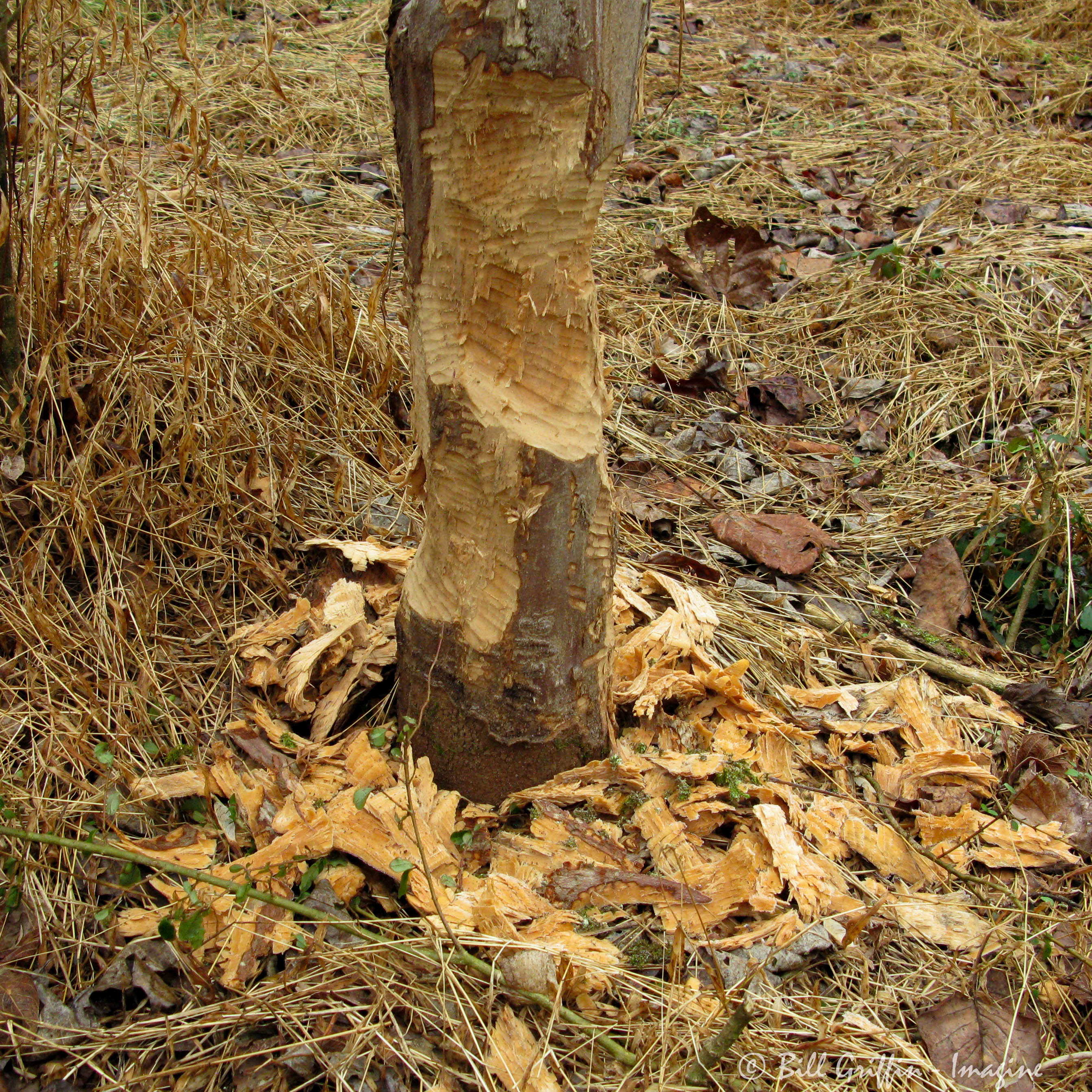
Doughton Park Tree 2020-11-22
 . 

Read Full Post »

 . 
[with 3 poems by Linda Allardt]
 . 
Rx
 . 
Spend more time looking into woods
watching the black squirrel
chasing the sparrows off his branch.
 . 
Get to know the stranger your friends know,
the one you can only see in snapshots,
the profile they know as you.
 . 
Smile in your sleep and wake not knowing why
like a writer trying to remember
that perfect lost line.
 . 
Consider the judgement of trees
branching, dividing to hold up their leaves
to all available sun.
 . 
Linda Allardt
from At the Confluence, FootHills Publishing, Kanona, NY. © 2023
 . 
❦ ❦ ❦
 . 
For now we see as in a dim mirror, but then face to face.
Apostle Paul to the believers at Corinth
 . 
Piedmont prairie restoration – Land Conservancy riparian easements protect the Mitchell River here in Surry County. Might this be how the Blue Ridge foothills appeared before tobacco and soybeans? Mitigation suggests alternate water sources to keep cattle out of creeks and plowing and planting practices that reduce runoff; restoration envisions a renewed and brighter landscape. A few years ago, Linda and I joined a guided hike to see the autumn butterflies attracted to milkweed, thistle, yellow asters in the newly planted prarie. We also discovered a former cow pasture converted to native bunchgrass: redtop, foxtail, bluestem. Startling diversity and color. The brightest of mornings.
 . 
Here we are on an unmarked trail that leads through tall flowers, seedheads, leaping and flying things, then gently on downslope until we reach the South Fork of the Mitchell. The overshaded water is so fresh and clear we imagine we might count every dapple on a brook trout’s flank. We continue downstream in twos and threes past riffles, rainbows of polished riverstones, and sweet bank vegetation toward the meeting of mountain streams. Cool riverbreath, talkative watercourse, whispering hikers – now we reach the confluence.
 . 
What is this magic, this mystery suddenly revealed? As the clear South Fork stream merges with the main channel, we perceive it dull and sluggish compared to the crystalline purity of the Mitchell it now encounters. Even the bright water we’ve followed is overshadowed by the brighter. We have looked through the flow to its bank and bed and been blind to the vestige of silt it still carries. At the confluence one’s eyes are opened to one’s true nature.
 . 
 . 
The poems of Linda Allardt’s At the Confluence are deep and still as a dark glade with its secretive woodland stream. Linda wrote these between her eighty-sixth and ninety-third years, the final decade of a long life as writer and teacher, and her friend and student Kathleen A. Wakefield collected this volume for publication. Linda moves from the poet’s constant question, “Why am I here?” to the even more piercing question, “Why am I still here?”
 . 
How to reply? The poems themselves are their answer. I count the years from the stumps in the yard . . . in the things that are gone. . . . Then I count what still stands. Each of the short poems is an observation and a contemplation. Oh yes, a long life must heft its burden of regrets: How many mea culpas must be said . . . Wasn’t there, once, the right question, / and the right answer to it? But astounding as it may seem, even written in one’s ninth decade, this is not a book of looking back but of looking forward. And even more, a book that in looking outward looks within. May each of us look past the dark swirl we carry to glimpse the bright truth that is our nature.
 . 
 . 
 . 
[Order At the Confluence from FootHills Publishing HERE]
[Kathleen Wakefield would appreciate your reactions to these poems by her friend; you can reach her at COMMENTS@GRIFFINPOETRY.COM]
 . 
❦ ❦ ❦
 . 
Retrieval
 . 
So much is hidden,
what’s past forgotten
or in its slow retrieval rewritten.
What we think we know
is lost in the telling.
 . 
Yet echoes of half forgotten lines
like wind in the wiring
remind us of words once loved
and only half forgotten.
Lines we may have read somewhere,
or written.
 . 
Linda Allardt
from At the Confluence, FootHills Publishing, Kanona, NY. © 2023
 . 
 . 
❦ ❦ ❦
 . 
In Late November
 . 
I said to the trees, Let go
but the wind-lashed leaves hung on.
I asked them why.
The trees said, You let go,
but I hung on at 93,
knowing no more than the leaves
what handclasp holds us here.
 . 
Linda Allardt
from At the Confluence, FootHills Publishing, Kanona, NY. © 2023
 . 
 . 
❦ ❦ ❦
 . 
 . 
 . 
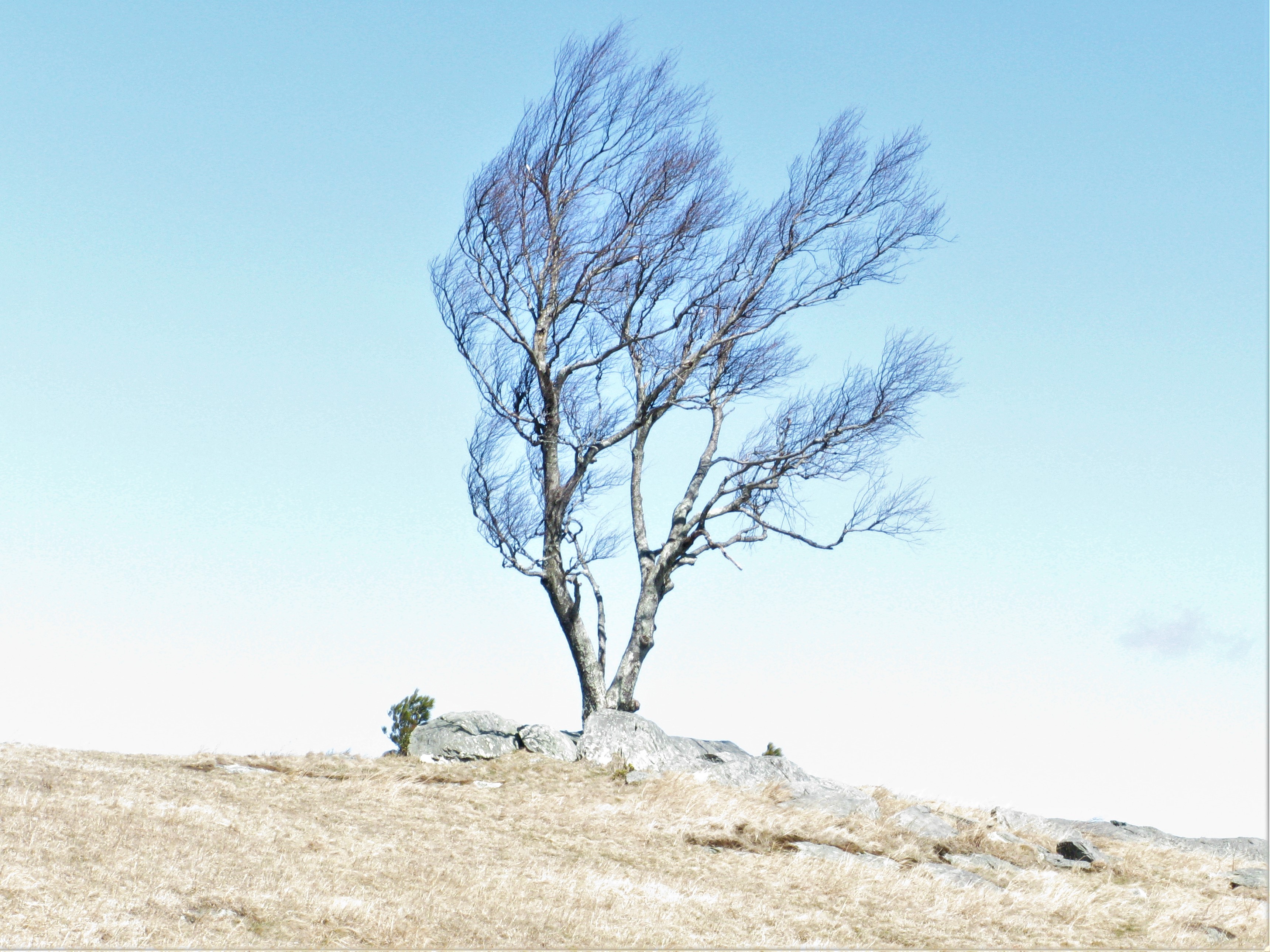
2016-10-17b Doughton Park Tree

Read Full Post »

 . 
[with poems by Jim Zola, Rhett Trull, Celisa Steele, Nancy Martin-Young,
Khalisa Rae, Joanie McLean
and a special feature by Felicia van Bork and ampydoo]
 . 
Learning to Live
 . 
For years I walked out and heard
rustling in the rhododendron
that blooms each spring and paper-mâchés
the patio with white petals.
 . 
Yet I’ve never seen wings or nest
or bolt of bird such as one might reason.
Just the flurried sound, a semaphore
of leaves and branch, that could be finch
 . 
or swallow, but isn’t.
Not coincidence, I’m convinced,
this signal more subtle than lightning
is grammar for my soul,
 . 
an insistence that I must find
a way to live among the small things
with bones like air and hearts
like small sledgehammers.
 . 
Jim Zola, winner of the 2023 Lena Shull Book Award of the NC Poetry Society for his manuscript It’s the Unremarkable that Will Last, which will be published by Redhawk Press. Learning to Live originally appeared in Rat’s Ass Review.
 . 
❦ ❦ ❦
 . 
Night before last Linda opened the final frontier of jigsaws. Galactically difficult, broad swaths of monochromatic nebulae, the merest quantum fluctuation in individual shapes – I fear that to complete this one I may have to boldly go where no one has gone before.
 . 
I almost give up before I even finish the border, its infinite deep unvarying black. Be logical here, Bill! I array the pieces by subtle color variation, columns and rows, and turn on all the lamps in the room. Still only cold inhospitable vacuum. Suddenly from the depth of blank stare I discover my fingers picking up pieces and fitting them together, six, then eight, little cellules of life spontaneously generating until logic again reaches in and shuts me down.
 . 
Is this how creativity works? A little bit Spock – analyzing patterns and calculating probabilities. A bit more Kirk – impulse, hunch, release to the flow of the subliminal. A prompt, a theme, a roadmap, all good – semper paratus – but I know for myself that the most likely moment for a line to leap up and embrace me is when I’m in free fall in love with a poem I’m reading. Creativity perches just at the periphery longing to show me the piece that will fit, the one I’ve been looking all along.
 . 
 . 
Felicia van Bork and Alan Michael Parker offer to tickle that little perching creature until you feel its firebreath in your ear. Draw a portrait without looking at the page or lifting your pen. Write five things you would never do and pick the most interesting. The two multi-creatives led The Best Creativity Workshop Ever at NC Poetry Society’s September 16 meeting at the NC Museum of Art in Raleigh. Felicia describes her life as a love affair with art. AMP describes his next book as a collection of flash fiction and Bingo cards. And when I asked if they would contribute to this feature on NCPS @ NCMA, I should have expected that they would send something unexpected.
 . 
Drawing Exercise No. 30
 . 
We come in peace.
We are the Are
Me.
Do not be a
Fraid.
Draw with us.
Together we take up
charcoal
and
Touch
the wall up high
Hi!
high as we can.
We draw down with force.
Use more force.
We step back we step forward.
We connect the vertical lines by drawing
Strong
horizontal strokes
again
again
Until we have made a fence a wall
To shelter us from the Fraids
Who will not cannot join the Are
Me.
Trace the outline of the person next to you.
Look, that outline is visible through the fence
That is a Fraid.
Now with your eraser erase the Fraid.
It won’t erase yes it smears.
It becomes more present yes the more we erase it.
Now it is inside the fence with us.
All the Fraids are inside with us.
 . 
Felicia van Bork @draw_felicia_draw
 . 
 . Alan Michael Parker @ampydoo
 . 
❦ ❦ ❦
 . 
 . 
 . 
 . 
❦ ❦ ❦
 . 
Each September the North Carolina Poetry Society meets to feature readings by winners of the year’s most competitive contests. This year for the first time NCPS has held this meeting at the North Carolina Museum of Art in Raleigh, with a morning of readings, the afternoon workshop, and an open air “pop-up” mic-less open mic hosted by Regina Garcia and Caren Stuart.
 . 
The 2023 Lena M. Shull Book Award for an unpublished manuscript from a North Carolina poet (coordinator Sherry Thrasher) goes to Jim Zola for his collection It’s the Unremarkable that Will Last; finalists are Nancy Martin-Young and Joanie McLean.      INFO
 . 
The Brockman-Campbell Book Contest is for the best volume of poetry published by a native or resident of NC in the previous year (coordinator Preston Martin); the 2023 winner is Joseph Bathanti for Light at the Seam, with finalists Eric Nelson for Horse Not Zebra and Katherine Soniat for Polishing the Glass Storm.      INFO
 . 
The Susan Laughter Meyers Poetry Fellowship (coordinator Steve Cushman) provides an honorarium and a week’s residency at Weymouth Center for the Arts and Humanities. The 2023 winner is Rhett Iseman Trull of Greensboro, with finalists Khalisa Rae, Celisa Steele, Anne Myles, and RK Fauth.      INFO
 . 
The Randall Jarrell Poetry Competition is sponsored by the North Carolina Writer’s Network coordinated by Terry L. Kennedy. Winning entries are published in storySouth and will be available to read there in the coming months. The 2023 winner is Joshua Martin, with finalists Maria Rouphail and Melinda Thomsen.      INFO
 . 
This is the first year for the Jaki Shelton Green Performance Poetry Prize, co-sponsored by NCPS and North Carolina Literary Review at East Carolina University (coordinator Devra Thomas). Winners’ videos will be posted online; the 2023 winner is Allan Wolf, with finalists Michael Loderstedt, Onyx Bradley, and Janet Ford.      INFO
 . 
 . 
❦ ❦ ❦
 . 
The Stars Align Themselves in Ancient Sisterhoods of Light
 . 
And Jade and I sat on the hood of her car
and didn’t mind the rain, the sun
that ticked on anyway, the sun would not go out.
And Megan held my hair back.
And Molly taught me cigarettes. And Sarah
kept her promise not to tell. And Riley told.
And Coach chased me down—night
we lost the playoffs and I’d planned
to kill myself, out the bus emergency door, took off
for the roof downtown—and she carried me to
Brittney’s and Brittney leant me dry clothes, underwear and all,
and let me sleep beside her, in the morning
bought us donuts, even though
I couldn’t eat, I couldn’t sleep.
And sometimes it was as if there were
a party thrown to save me, devout
committees formed, tasked
with just that job. And
 . 
sometimes there was no one
 . 
but wind off the ocean, the evening
all laid out before me like bedclothes,
and even the gleam in the eye of the wren
and the sunrise all red-dressed and boasting and once
there was this Great Dane, Charlie,
who knew—somehow he knew—
on my lap the full-grown anchor of his body, head
to my shoulder, world I didn’t want
to want to leave.
 . 
And Caleb sewed the captain star
I’d ripped from my letter jacket and
kissed me when I needed to be kissed, Bridge
of Sighs and all of Venice incandescent, inviting me
to drown. And kissing didn’t save me. And anything
might save me. And Karen understood.
And Joy did not. And Lauren grew delphinium,
she said, just for me. And Jenny—when the light spiked
sharp and I forgot the way to breathe—
held me for an hour
outside the party, outside everybody else’s ease
and laughter. And Corey found me in the field.
Her hair like smoke and ribbons. We didn’t need
 . 
to speak or touch, just watched the sky
until the bats delivered twilight. And Eli
deemed my pain divine and let me see
above his bed where he’d drawn a map of his
in a fever of blue ink after watching Fight Club, and did not
take my clothes off, even though he could.
And Brittney brought me everywhere and Brittney
kept me in her Jeep and Brittney did the talking
when I had no words.
 . 
And Nicky gave her lucky coin and Chris
the flannel off his back right after class, right
when I said I loved it. And Janelle at two a.m.,
no hesitation, let me in and shared the Irish whiskey
she’d been saving, lit us candles, until
we were the last, we were sure, awake alive.
And Leah steered us into safety, let me rest
across the back seat, Indigo Girls and yes,
I’m on fire, I’m on fire through the years.
 . 
And Jade couldn’t take it anymore
and turned away. And Heather sent an actual
disinvitation, her stationary tinged the palest pink,
but Lizzie patched me up
in the back of the cathedral and kept
her hand on me all night, even in her sleep.
And Holden stayed past visiting hours
and Vanessa, the night nurse, let him. And
under the oak tree, Stephanie
told me all her secrets.
 . 
And Brittney came each time I called,
even though her date, even though her finals, even though
I take and take and make myself the center
of each story. And Greta wrote me songs
and Katie said crawl in and
Mary did my portrait as a shadow.
And Adrienne pinned me down,
fiercest hug until I promised
not to jump. I didn’t jump. I didn’t
swallow the whole bottle. I threw out
the razor blade, even though I hid it first awhile
and touched it sometimes like a lover.
I’m lucky. And that’s all. I’m lucky
I am loved.
 . 
Rhett Trull, winner of the 2023 Susan Laughter Meyers Poetry Fellowship. Originally published in Litmosphere 2023 of Charlotte Lit.
 . 
 . 
 . 
❦ ❦ ❦
 . 
The Minister of Loneliness
 . 
has no children of her own to entrust
to an aproned au pair, no quick kisses
as she leaves each morning for work. And she
has no spouse who might grow melancholy
like temperamental orchids in the vaulted halls
of the silent house, who might open cupboards, search
neat rows of goods for a jar—just one—graced
with his wife’s precise fingerprints. And she has no
friends waiting for her call, no waggling dog
waiting to be fed. No, she was appointed
to this post because she could give everything
to this Ministry, prepared by the paper
she wrote in college—eons ago—on the geology
of loneliness that proves it doesn’t crumble
like sandstone, isn’t fissile as shale. No,
it’s smooth, she showed, and cold as polished
marble. The kind that won’t be carved into the face
of someone beloved. The kind that remains
blank and empty and clean
as counters in a kitchen where no one ever cooks.
 . 
Celisa Steele, finalist for the 2023 Susan Laughter Meyers Poetry Fellowship. Originally appeared in Southern Poetry Review.
 . 
 . 
 . 
❦ ❦ ❦
 . 
A Suitable Place
Oakwood Cemetery, Raleigh, North Carolina
 . 
I: Pick Up the Wind Phone
First, choose to wander a path with the dead
through the granite gate, past the stone bridge.
There are no signs to point the way.
 . 
Scan the landscape until you notice it, study
how it stands, nearly hidden in a hollow
downhill from the Gothic House of Memory:
a spare wooden booth, its rotary phone
discreetly placed for the disconnected.
 . 
Lift your hand to hold the heavy receiver.
Take a breath and dial the old exchange—
the one made up of words and numbers,
the one you still remember from a time
long before cell phones and contact lists.
 . 
Say hello. Speak their names. Then wait.
Share the news about the house or the baby
or the oak tree that fell in last week’s storm.
Ask forgiveness. Listen for the wind to answer
you, who are left behind, who seek an open line.
 . 
II: Scan the Landscape
Deep shade, open lanes, no traffic,
perfect for power-walking past cool stones
and twisted angels or treading up the hill
of Gettysburg dead, mostly Confederates
come home at last, but six who wore blue
unresting, out of place, as I am.
 . 
Downhill, a doe browses,
tearing faded roses from a funeral wreath.
Twin headstones pop from too-green grass,
names and birthdates freshly carved,
death dates empty, blank and patient.
Most graves are full, but life lingers
on the landscape’s edges.
 . 
While newer graveyards raze markers
to the ground, Oakwood’s monuments tower.
Workers wield weed-whackers daily,
keeping grass at bay. A toy truck,
a mini bottle of Jack—mementos left behind
on plots prove to the living that the dead lived too.
 . 
Today only I
stand in the echoing House of Memory
remembering my father, hacking his last.
His ashes kill time in my sister’s hutch.
Would he rest easy here beneath the oaks?
 . 
I’m a transplanted Yankee
trying to live long,
but in the end
I think I’d like it here
near these protruding stones
that someone has to rake around.
I’d like to have my daughter trace
my name with her finger, leave
a bottle of Malbec and two glasses.
 . 
Nancy Martin-Young, finalist for the 2023 Lena Shull Book Award. This poem first published in Flying South, 2023
 . 
 . 
 . 
 . 
❦ ❦ ❦
 .  . 
Circus Acts: No More Black Girl Magic
 . 
Black woman,
 . 
This world will make you circus,
freak show, tightrope walker,
contort your name from Saartjie
to “Sara Bartman,”
 . 
Hottentot Venus—stage performer.
Look, how they abracadabra the
royal exploitation of your form.
 . 
Watch them dissect your broad
bottom saw you into science experiment.
 . 
Call your mending—magic
your root balm and salve a work
of the devil–sorcery. Go out the trap
door, come back in the body
of Beyoncé—prized possession,
they will spit-shine the stage for you again.
What a spectacular woman—
 . 
two-headed and omnipresent
one foot here, one foot in Houdini-state.
Your magic trick is: “Look at all the wonder
I can do with two hands and twenty-four hours.”
When people say, “That’s Black Girl Magic.”
say, “I have no magic for you. I make meals
 . 
from crumbs, cast demons with just
my tongue, envision possibility
from potential.” That makes me
 . 
scientist, inventor, chemist—
spiritual being. Tell them this is
 . 
not super, this is survival.
When they call you hero,
when they hand you the cape anyway,
ask, “Haven’t I carried enough?”
 . 
When they call your strength otherworldly,
say, it is Venus rising
within me, nothing more.
 . 
Khalisa Rae, finalist for the 2023 Susan Laughter Meyers Poetry Fellowship. This poem is from her debut collection, Ghost in a Black Girl’s Throat (Red Hen Press 2021).
 . 
 .
 . 
 .
❦ ❦ ❦
 . 
Into My Field
 . 
Pete the old bay horse
called to me this morning
 . 
not so that I could hear
but so that I could not look away
 . 
he stood apart from the others
as an old horse will
 . 
his ribs showed a bit
as an old horse’s will
 . 
his russet face
with the white blaze
 . 
held so still– arrested while grazing
held my gaze without effort
 . 
and his black mane so lush
so thoroughly tossed
 . 
gave him a touch of wild
that wild that gathers these days
 . 
these fall days – translucent days
days of transubstantiation
 . 
all those things
in your hands and your lap
 . 
put them away
come into my field
 . 
and stay this time
till you are cold and hungry
 . 
and even then
stay
 . 
Joanie Mclean, finalist for the 2023 Lena Shull Book Award. Her manuscript, Like Wind Into Air, received honorable mention and has been accepted for publication with Redhawk Press.
 . 
 . 
❦ ❦ ❦
 . 
 . 
 . 
 . 
 . 
 . 
❦ ❦ ❦
 . 
 . 

Read Full Post »

« Newer Posts - Older Posts »