Feeds:
Posts
Comments

Posts Tagged ‘nature’

 . 
[with 3 poems by Bob Wickless]
 . 
Not Wind, Not Water
+++++ In Memory of Rod Jellema
 . 
I would study, if I could, not wind
Nor water, but the silence after wind,
The scattering after second motion
 . 
On a darkened shore. Tests, if given,
Would consist of laying pages
End to end, the opening of endless
 . 
Information, movements on the beach
At dawn. Neither light nor darkness overall,
But the space of intersection . . .
 . 
The X between the film and camera
Where easy motion crosses over
One to the world. There I’d sit,
 . 
X’ed out, oblivious, yet hugely intelligent.
Schools of fish would soon dismiss me,
Flotsam would pass, failures survive,
 . 
But I, jetsam, drunk beyond knowledge,
Would float aimless, issuing assignments,
Collecting homework from the stars.
 . 
Bob Wickless
from The Secret Care the World Takes, The Orchard Street Press, Gates Mills, OH, © 2023
 . 
❦ ❦ ❦
 . 
Not much to see here this time of year? But that’s exactly why we’ve come. While Linda and Margaret chase Bert down the wide camellia-lined promenades of the university garden, Josh and I take an inconspicuous side path. Not many folks meandering these narrow trails today. Winter-brown, bloomed-out, leaf-strewn: welcome to Native Plants.
 . 
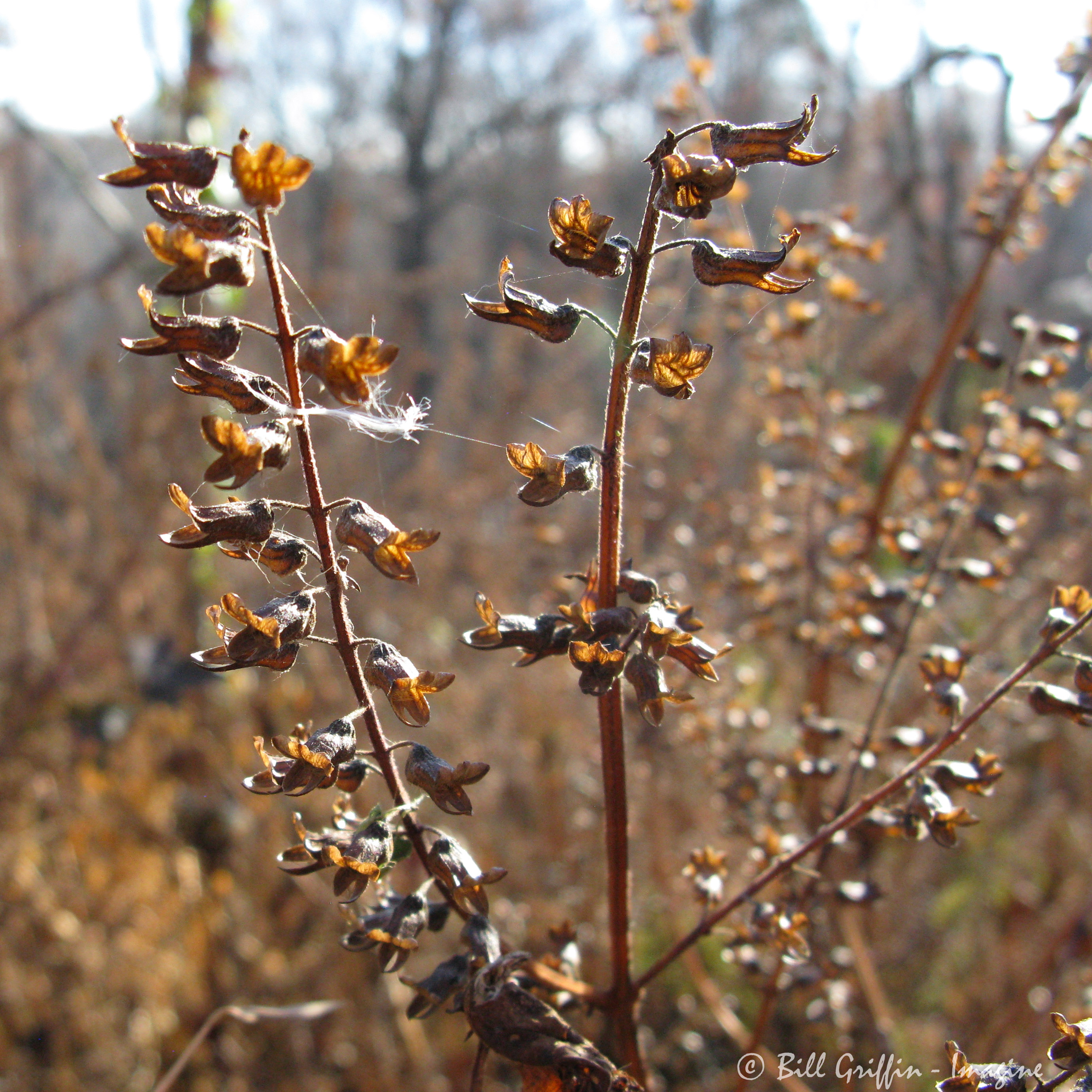
Meadow, borders, understory, they draw us right in. Just a month ago these pale bristles, fuzzballs, and tufts  were brightly hued racemes, cymes, and corymbs. So inviting. Now begging for dispersal. I let my hand cup a stem and run up over the feathery head. I examine my palm – dozens of tiny seedlets, each with its stiff barbule. My, my — Josh just happens to have a sheaf of miniature brown envelopes in his shirt pocket. He hands me one and I dribble my catch into it. How many different species of goldenrod and aster? And we still have an entire little prairie to traverse.
 . 
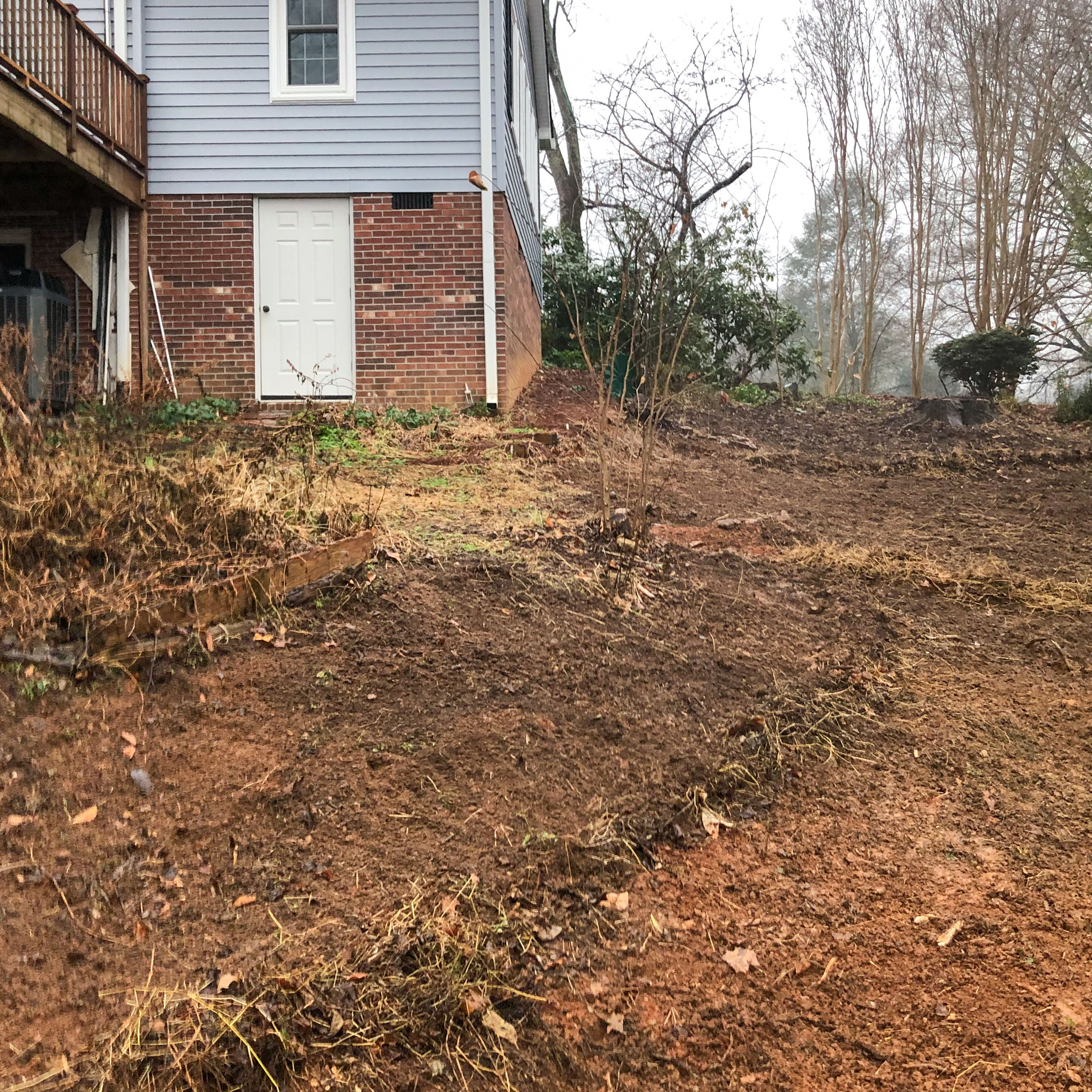
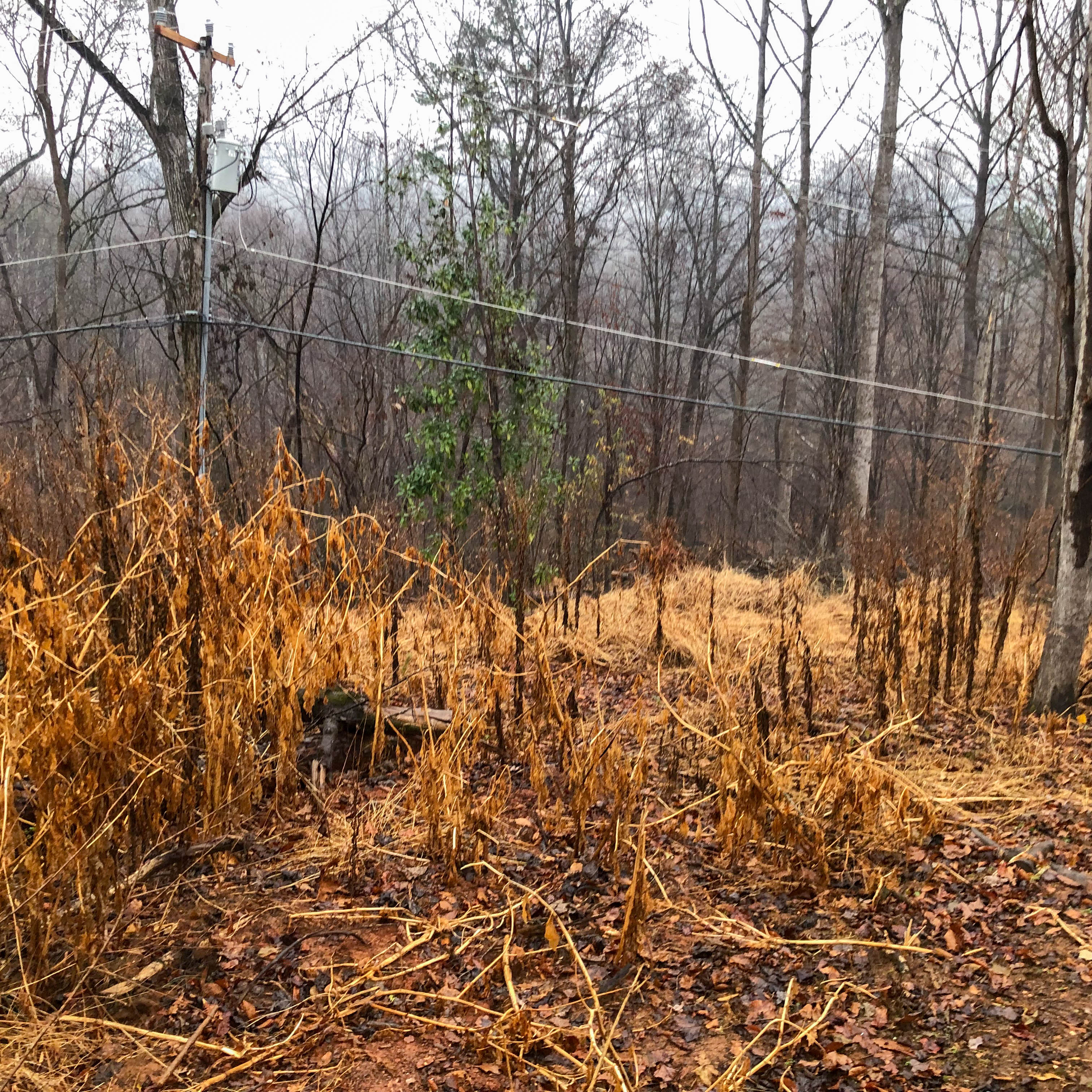
A month after last April’s tornado crossed our neighborhood, after the cherry picker and chainsaws had gone home, after the ‘dozer had pushed two-ton trunks and root balls to the edge of our property past the Duke Energy cut, I imagined that the bare clay and churned up leaf mold would wait for winter, barren, when I could sow the half-acre with something new. But this summer the exposed earth received something it had patiently waited decades for. Sunlight. This fall the slope is a jostling upright congregation of pilewort and poke, and knee deep in damnable invasive stilt grass.
 . 
Best get to it. It’s a lot of square meters, but I have a fire rake and a 5-pound hazelhoe I use for trail workdays. And on the screened porch I have a bag of bags, cold stratifying, waiting for January and a smooth, raked bed: native silver plume grass, big bluestem, Indian grass my friend Joe gathered from his meadow on the Mitchell River; wingstem, crownbeard, ironweed I’ve been pulling during hikes along the MST; store-bought half-kilos of Southeast Wildflowers; and a little miniature brown envelope, stuffed full, and hand-labeled “Duke Mix.”
 . 
 . 
❦ ❦ ❦
 . 
Two Poems From School
1. Drawing Horses
 . 
There was one slow girl from grade two
And three, unable to multiplicate, ill-
At-ease, and long to devise, who tried
But tired of her dull and daily work,
Turned the smudge of your yellow page off
And began to draw horses.
 . 
Riderless, stream of those great manes back,
her horses rode out of no course but gladly off
The end of every page to the end of every class.
 . 
And when that girl died in a white hospital
Kicked by no horse but the one deep inside
Galloping over her frail, fourth grade hide,
I though I would try drawing horses. But I,
I was no good.
 . 
So girl, who never learned much from school
But taught me a daily grace in the movement
Of horses, these are for you.
 . 
Bob Wickless
from The Secret Care the World Takes, The Orchard Street Press, Gates Mills, OH, © 2023
 . 
❦ ❦ ❦
 . 
When Bob Wickless signed my copy of The Secret Care the World Takes, he noted that while we have never met in person we share three things in common: poetry; North Carolina; the editorial generosity of Jack Kristofco at The Orchard Street Press. And a fourth thing – a year ago I featured Bob’s poem Prayer in Spring in another post extolling the wonders of native “weeds.”
 . 
Bob is from Maryland and has “held many jobs” in his lifetime, but he wisely retired to Reidsville NC to reside in “the writingest state.” Secret Care takes seriously the creative task of reminding us of what we all share in common. Bob leads his characters by the hand, introduces them to us, places our hand in theirs and waits quietly while we gaze into each other’s eyes. That tender connection may be wistful, it may be sad, but there is also humor in these poems. Laughter. Joy.
 . 
In the end may we become convinced that the World does care for us. Perhaps we may feel the tug to care also for the World and what it contains, what it nurtures, what it brings forth. Through the magic of poetry, this care is no longer secret.
 . 
 . 
Check out The Orchard Street Press, its annual contest and anthology, Quiet Diamonds, and order Bob Wickless’s book HERE
 . 
 . 
❦ ❦ ❦
 . 
Solstice: The Children’s Ward
 . 
The secret care the world takes
Has pressed closed all the petals
Of tiny summer flowers
As if darkness might infuse
Those dying colors
With some thing they did not mean,
Some statement thy did not possess,
Some dream they could never intend.
 . 
It is in the same way rain,
Or even the thought of rain
Oncoming, turns up a maple’s leaves
Like fragile buckets –
Or a whole forest of maples,
A hundred, thousand, children’s hands
Raised in anticipation
Of the sky’s sweet promise.
 . 
And it is evident, too, the easy way
You breathe, so effortlessly in sleep,
How your small, secret bodies know,
Always, exactly what is required
Of this world and the next
To simply sleep
A sleep simple enough
To trust all your flowers to love.
 . 
Bob Wickless
from The Secret Care the World Takes, The Orchard Street Press, Gates Mills, OH, © 2023
 . 
 , 
❦ ❦ ❦
 . 
 . 

Read Full Post »

 . 
[with 3 poems by John Hoppenthaler]
 . 
The Tiniest Toad in Moore County, NC
 . 
catches my eye, hopping with great care
over the rough flagstone. Don’t spook her,
I think: if a toad springs from your path,
death is sure to follow. Never turn out
a toad at the threshold: the worst luck
will follow for a year. Finding the creature
in your home, remove it to nature
with kindness, for witches posses them
as familiars. If you happen on a toad’s dead body,
place it on an anthill until the flesh is eaten away.
Its bones that don’t bob easy on water,
those you wrap in white linen and hang
in a corner to engender love. On a new moon,
if the bones float in a stream, they’re charmed; slide
them into you pocket or hang them from your neck
ere the devil gets them first. Then you can witch,
it’s said and won’t be witched yourself. She leaps
from stone near the fake frog pond’s edge,
where the real frog eyes her with desire
from his tenuous perch on a lily pad.
She nestles under a leaf to hide her nudity.
Here in the poet’s garden, she promises me
her tiny bones one day, a kiss for my civility.
 . 
John Hoppenthaler
from Night Wing over Metropolitan Area, Carnegie Mellon University Press, Pittsburgh, PA; © 2023
 . 
❦ ❦ ❦
 . 
How many seasons have passed for this tiny six-legged creature? How may growings and swellings before the last stricture, the ultimate fullness? And then the splitting, the release – how many times? The naiad can’t count – 20? 30? – but this one feels much different. Organs reforming within the cuticle, gills discarded, first glimmer of urgency to mate, and now wings! A long pause while invisible forces array; a stillness, a shiver; finally a mighty shrug splits her hard skin down the back and Stonefly crawls forth.
 . 
In minutes her new cuticle darkens and her newborn wings harden, ready for flight. Ready for two more weeks of life and the laying of one thousand eggs in this swift stream where she has crept for three years. Egg to nymph to imago, this is the adult, the perfect likeness of Stonefly.
 . 
Imago is from the ancient root *AIM, to copy; from the Latin for image and also the source of that faculty of mind which creates images: Imagination. I’ve held this word in awe for its creative power to conjure worlds out of dust. I’ve made it my mantra, to imagine, to spin webs of words that may charm from a handful of protoindoeuropean grunts a shimmering image never before . . . imagined.
 . 
But isn’t the act of imagining actually mundane and relentlessly unremarkable? We humans live and breathe imagination, ho hum. We constantly take the dumb flow of reality and make its meaning. You speak and I string the sentences into some semblance of the thing you intend to express (one hopes, for both of our sakes, with more than passing accuracy). I anticipate the next minute, the next hour or day, and walk into the picture I’ve painted in my mind. Last clean socks? Do some laundry. Imagination.
 . 
Let’s also not underestimate imagination’s darker self. Where else does evil arise but in the bleak and hateful poison of our own imaginings? Who creates our own pain and neuroses but we ourselves? How often do I ruminate about something I’ve said or done, imagining how I”ve affected another, how they feel, how they now think about me? How many wakeful nights have I ticked off all the possible futures that could open new boxes of pain, all the things I dread but just might be required someday to shoulder, the hour by hour of everything that could go wrong?
 . 
These questions lead me to this crossroad: why does the dreadful so readily slip itself into my imagining when the beautiful is hovering all around? The Stonefly nymph molts thirty times or more, growing each time a bit larger but still in the same immature likeness, until that final ecdysis into winged adult, the imago. During all those years of formation, does she imagine her final weeks, her brief flash and certain death, effete and fading in the leaf litter or sudden breakfast of a trout?
 . 
Or does she summon up stream froth, sharp air and sky, wings strong enough to lift her free, sweet nectar and beautiful desire beckoning? Possibilities. Even an insect’s fate is not altogether determined. How much more might this human mind, with all the likenesses and signifiers and connections it loves to conjure, create the very future it is able to imagine?
 . 
 . 
❦ ❦ ❦
 . 
Hummingbirds & Eagles
 . 
The whir of hummingbird wings. First here,
then fluttering over the pond, the wall of pine,
 . 
afternoon sun’s mirrored lazy flickering.
And the place where, just last weekend,
 . 
we watched an eagle stand with certainty
on the bank before dipping into a long pull
 . 
of water, before lifting over greenery
and disappearing, as eagles seem destined to do.
 . 
Hummingbirds are cantankerous creatures
at the feeder, taking time only to hover briefly,
 . 
tiny bodies flapping under their riveted heads,
bickering for position, fencing with long beaks,
 . 
then thrusting them into the well. Sometimes
we disappear – or so it seems – into the neuroses
 . 
of hummingbirds. We want the nectar, that’s all
and, when it’s gone, we apologize, my love, and fall
 . 
into making up. We drink deeply of it, approach
even the nobility of eagles. Hummingbirds
 . 
can fly backwards, sideways, hover up and down;
they wear wedding clothes their rest of their lives.
 . 
Fashioned from leftover feathers the gods
used to create other birds, their long tongues
 . 
bypass the bitter protections of flowers.
They bring good luck, so we offer them succor.
 . 
I hold the funnel in place while you pour sugar-
water, blood-red, into the feeder, steady
 . 
me as I stretch from the footstool
to hang it from a small hook under the eave.
 . 
I step down into waiting arms; you sink your talons
nearly to the bone, tell me you’ll never leave.
 . 
John Hoppenthaler
from Night Wing over Metropolitan Area, Carnegie Mellon University Press, Pittsburgh, PA; © 2023
 . 
 . 
❦ ❦ ❦
 . 
John Hoppenthaler’s poems travel an ever-changing landscape of imagination: through town and countryside, pausing to observe or plunging forward, celebrating and mourning. The vignettes are so many and so varied I might ask myself, “How many people are speaking here?” but the poet’s voice penetrates, clear and certain. The themes that wind through Night Wing over Metropolitan Area are not a procession of highway billboards illuminated by megawatts but more like those back-road historical markers you have to pull over and take time to make out. There are glimpses of his mother’s grim decline from dementia, of his father’s death and his own struggle. There is humor, exasperation, tenderness in his journey as parent and spouse. The travels, despite “night wing” in the title, are not supersonic. One meanders from poem to poem at the speed of wonder, reflection, gradual dawning. And the opening image of a metropolitan cityscape from altitude does not prophecy distance or aloofness; these poems  pull and draw into proximity, ever closer, the intimacy of love and inexorable loss.
 . 
It is possible to walk a familiar path lost in thought and completely miss your turning. In John Hoppenthaler’s poems we may think we recognize the waypoints, know where we’ve been and where we’re going, but these lines are always poised and more nimble than we expect. They can pivot in a moment to reveal an unexpected connection or juxtaposition. Or return to a trope from an earlier poem and shine light from an entirely new angle. To pull tight a frayed thread, to knit the disparate threads together, to weave from confusion a whole cloth of meaning – what better use for imagination and its poetry?
 . 
 . 
I knew I was going to enjoy this book when I opened to the dedication page and discovered a Grateful Dead lyric (Uncle John’s Band – I saw them play this live in Cleveland in 1973) preceded by The Gospel of Matthew. John Hoppenthaler is the author of Domestic Garden, Anticipate the Coming Reservoir, and Lives of Water, all also published by Carnegie Mellon University Press. With Kazim Ali, he is co-editor of This-World Company. He teaches at East Carolina University, and you can purchase his book HERE.
 . 
 . 
❦ ❦ ❦
 . 
Night Wing over Metropolitan Area
++ after Yvonne Helene Jacquette
 . 
Wing of a blackbird, wing
of a crow. If I seem a vulture
sometimes, on the wing, adrift
 . 
toward carrion, indistinct architecture
of loss, its ambience . . . . The hydraulic
whine and thud of the landing gear, absence
 . 
of towers, moderate tremor of shear
and turbulence. No, not buildings, only
insistent light that props them up; their
 . 
corporeal bodies dissolved – enormous
emptiness, which itself is full of color, ghosts
of light beyond emptiness, that which defines them,
 . 
that which looms outside the frame, space
between us,, the pregnant darkness of our
city, and a million tiny votives that oppose.
 . 
The night wing hangs, sags toward you with
gravity, weight of a thousand corpses, screech
of a virus, that shrill hawk as I circle
 . 
in a holding pattern, and all I can see is
primary color, pointillism of what’s left
behind or flown toward, fugitive colors,
 . 
especially the blue rims of your eyes. I lift
or descend, and it seems the same: proximity
may as well be absence; arrival means another
 . 
place has been left behind, and I’m taking
off or landing to deliver what support I can.
We are two dark birds, together, keeping
 . 
raptors at bay – there, out over the river.
 . 
John Hoppenthaler
from Night Wing over Metropolitan Area, Carnegie Mellon University Press, Pittsburgh, PA; © 2023
 . 
 . 
❦ ❦ ❦
 . 
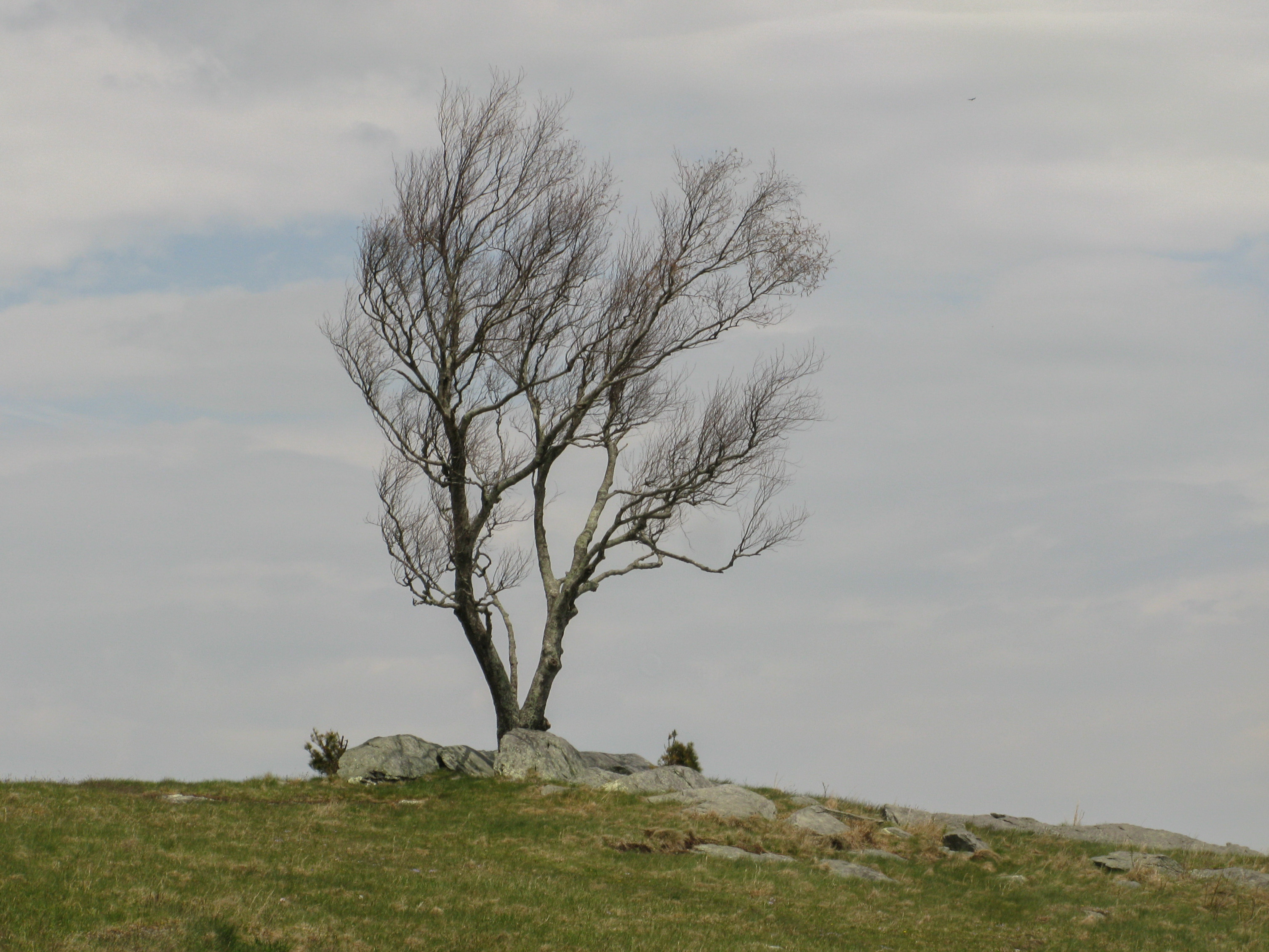
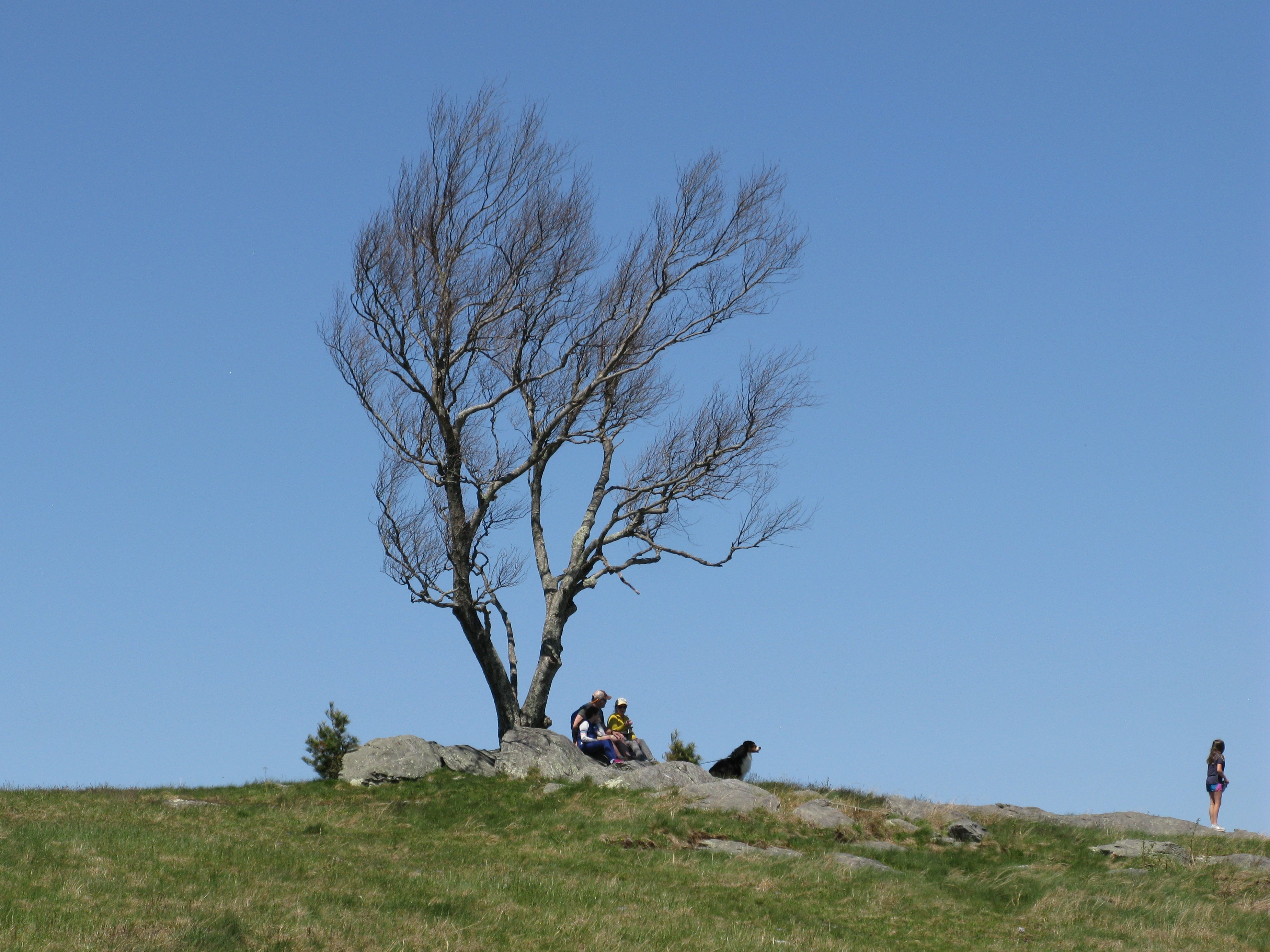
Doughton Park Tree 4/30/2022
 . 

Read Full Post »

 . 
[With poetry by Joy Harjo and Wendell Berry]
 . 
For Calling the Spirit Back from Wandering the Earth in Its Human Feet
 . 
Put down that bag of potato chips, that white bread, that bottle of pop.
 . 
Turn off that cellphone, computer, and remote control.
 . 
Open the door, then close it behind you.
 . 
Take a breath offered by friendly winds. They travel the earth gathering essences of plants to clean.
 . 
Give it back with gratitude.
 . 
If you sing it will give your spirit lift to fly to the stars’ ears and back.
 . 
Acknowledge this earth who has cared for you since you were a dream planting itself precisely within your parents’ desire.
 . 
Let your moccasin feet take you to the encampment of the guardians who have known you before time, who will be there after time. They sit before the fire that has been there without time.
 . 
Let the earth stabilize your postcolonial insecure jitters.
 . 
Be respectful of the small insects, birds and animal people who accompany you.
Ask their forgiveness for the harm we humans have brought down upon them.
 . 
Don’t worry.
The heart knows the way though there may be high-rises, interstates, checkpoints, armed soldiers, massacres, wars, and those who will despise you because they despise themselves.
 . 
The journey might take you a few hours, a day, a year, a few years, a hundred, a thousand or even more.
 . 
Watch your mind. Without training it might run away and leave your heart for the immense human feast set by the thieves of time.
 . 
Do not hold regrets.
 . 
When you find your way to the circle, to the fire kept burning by the keepers of your soul, you will be welcomed.
 . 
You must clean yourself with cedar, sage, or other healing plant.
 . 
Cut the ties you have to failure and shame.
 . 
Let go the pain you are holding in your mind, your shoulders, your heart, all the way to your feet. Let go the pain of your ancestors to make way for those who are heading in our direction.
 . 
Ask for forgiveness.
 . 
Call upon the help of those who love you. These helpers take many forms: animal, element, bird, angel, saint, stone, or ancestor.
 . 
Call your spirit back. It may be caught in corners and creases of shame, judgment, and human abuse.
 . 
You must call in a way that your spirit will want to return.
 . 
Speak to it as you would to a beloved child.
 . 
Welcome your spirit back from its wandering. It may return in pieces, in tatters. Gather them together. They will be happy to be found after being lost for so long.
 . 
Your spirit will need to sleep awhile after it is bathed and given clean clothes.
 . 
Now you can have a party. Invite everyone you know who loves and supports you. Keep room for those who have no place else to go.
 . 
Make a giveaway, and remember, keep the speeches short.
 . 
Then, you must do this: help the next person find their way through the dark.
 . 
Joy Harjo
from Conflict Resolution for Holy Beings by Joy Harjo. Copyright © 2015 by Joy Harjo.
 . 
❦ ❦ ❦
 . 
[Great Smoky Mountains National Park bids Bill farewell during the last moments of the Tremont Writers’ Conference:]
 . 
Goodbye, Love. Thanks for dropping by. This is your last chance to slurp up the prompts you were thinking you might be handed while you’re here. Your last opportunity to be inspired. Which means what, exactly? Inspire, breathe in, be filled with spirit. But did you think I’d tip you up like a funnel and just pour right down? Think back to that little exercise in your application and cull one word – community. This is something I know all about, I the Queen of Connections, I the web of interactions, whether in a gram of soil beneath your feet or spanning the entire watershed of this Middle Prong that flows past you right now – community.
 . 
I’m more than willing to speak. I live to show myself to you. Take a closer look at my image in that postcard and read the fine print: International Biosphere Reserve. But did you notice how small those letters are compared to the beech and oak overtowering? The subtext is, you don’t have to be such a geek about it. Oh sure, learn my names, my histories, my ecologies, but please, for at least one moment, forget about words on paper, Human Person, and just look around you.
 . 
Right around you – seven faces peering back (eight, if you count Jeremy arriving with the coffee delivery). What have you found here, and what will you keep? It’s more than friendship, it’s more than a shared task and a common goal. It’s connection. Don’t drop it. Don’t lose it. And what I’m really saying is . . . See you later!
 . 
 . 
 . 
More than a week has passed and I’m straining hard to hear the Middle Prong. Where has that connection flown? What was the sound of that beckoning? Have I traveled too far beyond its reach, too many highway miles, too many turnings within?
 . 
Here I am surrounded by books and papers, electronics and plastics, literally surrounded: Amelia says, “Your office is a big mess, Pappy.” Surrounded and cumbered by the “should’s” and “got to’s” that no doubt fill your world as well. First phone calls of the day: a change in tomorrow’s doctor appointments for Mom and Dad; on hold and digital assistant waiting for their financial manager; negotiating the week’s schedule. If only the tinnitus I constantly live with sounded more like wind in the pines and rushing water.
 . 
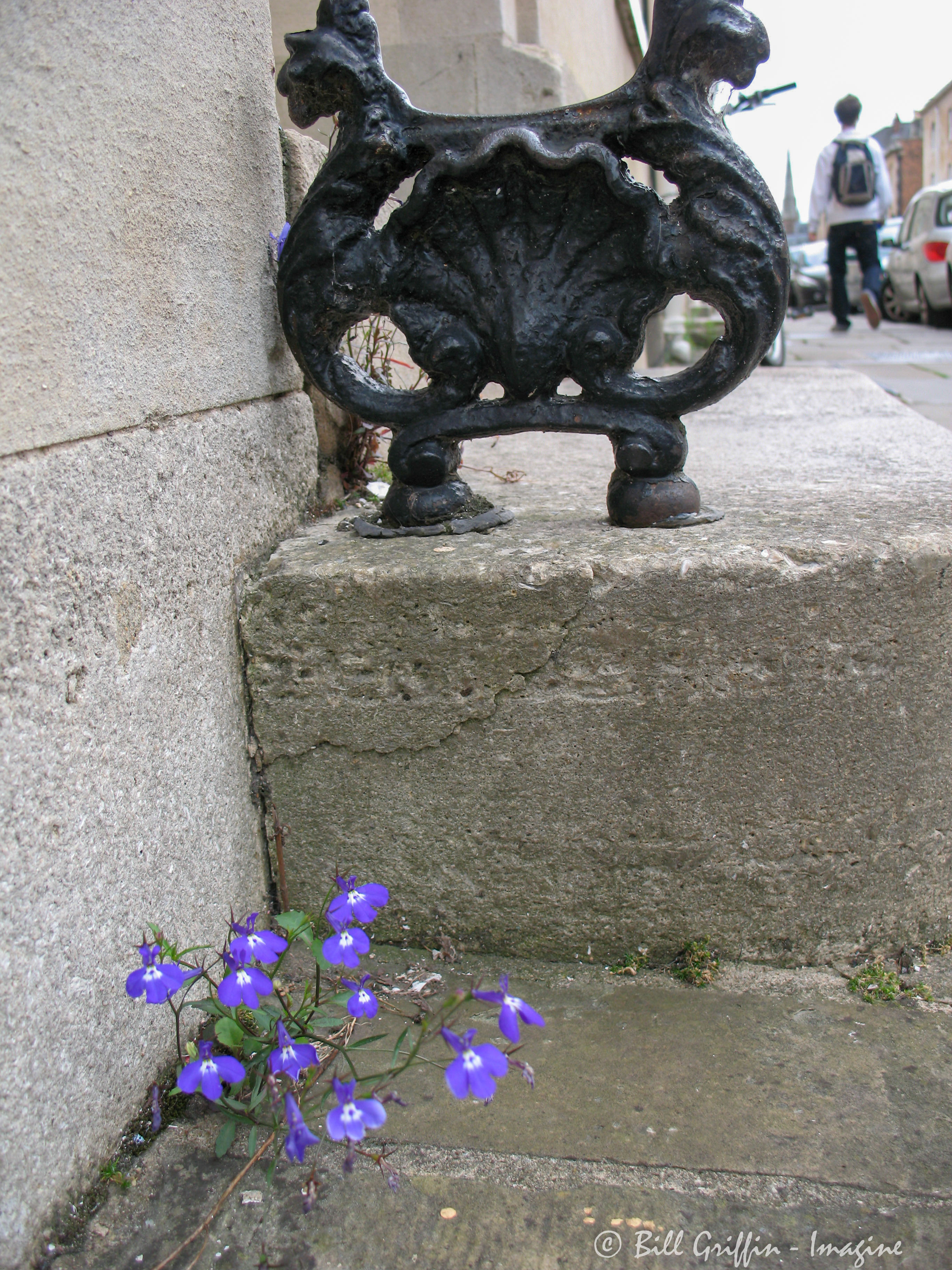
But right now a female cardinal is craning to reach the suet feeder I’ve hidden in the center of the holly outside my window. In an hour, Linda and I will take our first walk together on a new little sprig of MST I helped work on this month. I am rich in these connections and many more. I grieve for those who don’t experience community. Who walk past the little purple flower sprouted through the concrete and never see it. Who feel mostly alienation and suspicion for the human beings around them, much less the non-bipedal creatures. Who cut themselves off from the voice of wind that wants to fill them and let them breathe deep. Philosophers and poets write heavy volumes about the sickness in our human spirits when we separate ourselves from the earth. What is our reply?
 . 
Perhaps this Voice is saying, “C’mon, little Man. You know some folks who need to hear me. Spin a few connections!” See you later. See you now!
 . 
❦ ❦ ❦
 . 
 . 
 . 
❦ ❦ ❦
 . 
Manifesto: The Mad Farmer Liberation Front
 . 
Love the quick profit, the annual raise,
vacation with pay. Want more
of everything ready-made. Be afraid
to know your neighbors and to die.
And you will have a window in your head.
Not even your future will be a mystery
anymore. Your mind will be punched in a card
and shut away in a little drawer.
When they want you to buy something
they will call you. When they want you
to die for profit they will let you know.
So, friends, every day do something
that won’t compute. Love the Lord.
Love the world. Work for nothing.
Take all that you have and be poor.
Love someone who does not deserve it.
Denounce the government and embrace
the flag. Hope to live in that free
republic for which it stands.
Give your approval to all you cannot
understand. Praise ignorance, for what man
has not encountered he has not destroyed.
Ask the questions that have no answers.
Invest in the millennium. Plant sequoias.
Say that your main crop is the forest
that you did not plant,
that you will not live to harvest.
Say that the leaves are harvested
when they have rotted into the mold.
Call that profit. Prophesy such returns.
Put your faith in the two inches of humus
that will build under the trees
every thousand years.
Listen to carrion — put your ear
close, and hear the faint chattering
of the songs that are to come.
Expect the end of the world. Laugh.
Laughter is immeasurable. Be joyful
though you have considered all the facts.
So long as women do not go cheap
for power, please women more than men.
Ask yourself: Will this satisfy
a woman satisfied to bear a child?
Will this disturb the sleep
of a woman near to giving birth?
Go with your love to the fields.
Lie easy in the shade. Rest your head
in her lap. Swear allegiance
to what is nighest your thoughts.
As soon as the generals and the politicos
can predict the motions of your mind,
lose it. Leave it as a sign
to mark the false trail, the way
you didn’t go. Be like the fox
who makes more tracks than necessary,
some in the wrong direction.
Practice resurrection.
 . 
Wendell Berry
Copyright © 1971, 1972, 1973 by Wendell Berry. Excerpted from The Country of Marriage. Reprinted in THE SUN June, 2014
 . 
 . 
❦ ❦ ❦
 . 
Today’s poems were offered as direction for meditation while visiting our “secret spots” during several days at Great Smoky Mountains Institute at Tremont. Any program at Tremont always includes space for quiet reflection while outdoors in nature, whether your secret spot is halfway up the Lumber Ridge Trail or a big smooth rock beside the Little River.
 . 
Joy Harjo (born 1951) was appointed the new United States poet laureate in 2019. Born in Tulsa, Oklahoma, in 1951, Harjo is a member of the Mvskoke/Creek Nation. She is the author of several books of poetry, including An American Sunrise, (W. W. Norton, 2019), and Conflict Resolution for Holy Beings (W. W. Norton, 2015). She is a current Chancellor of the Academy of American Poets and lives in Tulsa, Oklahoma.
 . 
Wendell Berry (born 1934) is an American novelist, poet, essayist, environmental activist, cultural critic, and farmer. He is an elected member of the Fellowship of Southern Writers and a recipient of The National Humanities Medal, along with many other awards and honors. On January 28, 2015, he became the first living writer to be inducted into the Kentucky Writers Hall of Fame.
 . 
❦ ❦ ❦
 . 
 .  . 
❦ ❦ ❦
 . 
Doughton Park Tree -- 5/1/2021

Read Full Post »

« Newer Posts - Older Posts »