Feeds:
Posts
Comments

Posts Tagged ‘nature poetry’

 . 
[with 4 poems by Robert Morgan]
 . 
Foxfire
 . 
Bright lace on the darkness grows
heavy as the meat of lightning bugs
crushed on bark, rotting leaves.
*
Flakes of the moon stuck to spongy logs.
*
Seconds sprinkled from a luminous dial on bearskin.
*
Glow worms crawl all night in stump water
without moving. St. Elmo’s fire.
Foxfire swims like fish of the deepest troughs.
*
City lights seen from a bomber.
*
the eyes of dead wood stare like jack-o-lanterns
burning last year’s sun
after a wet spell.
*
Coals of unlife,
chilly owls.
 . 
Robert Morgan
from Collected Early Poems of Robert Morgan, Press 53, Winston-Salem NC; Carolina Classics Editions; © 2024
originally published in Zirconia Poems, Lillabulero Press; © 1969
 . 
❦ ❦ ❦
 . 
When I was a Junior in High School I was going steady with the daughter of our town’s elementary school librarian. If you think Linda’s house wasn’t filled to the rafters with books, you’ve got another think coming. When we were in college, still dating, I decided for Christmas I would build her bookshelves.
 . 
During Junior High all the seventh grade boys took Home Ec with the girls and all the girls took Wood Shop with the boys. I got an A in sock darning and jello salad; on my woodworking project, a sculpture of a fish in walnut, I got a B+. Seven years later I gathered pine planks and 1×2’s in our basement to devise the Christmas present. Measure twice, cut once? Not so much as I recall, although I do remember wood glue, finishing nails, Minwax stain and varnish. Steel wool between coats. Linda seemed to like her present. Enough to marry me a year later and move the shelves to our 3rd floor apartment on Duke Street in Durham.
 . 
That little book case was not fine cabinetry, but the shelves didn’t sag beneath Linda’s textbooks: history, art, religion, all the heaviest stuff. My design was basic, mostly a ladder, something we and the years might climb together, or maybe an altar where she could cherish and display her first and truest loves. It was good as I could make it, the only thing I knew to build.
 . 
What did I know of all we and the years would build? The propagating books we’d carry home to become our family? Children grow and leave and carry their children back to you for an afternoon, but books are always close at hand to read to grandchildren like we read them to the grandchildren’s parents. A child is here for but a moment but bright spines and colored pages rest and wait for their return.
 . 
My work was not to build a house, or a home, or even rooms, but simply room enough for something she would never finish loving. Every birthday, every holiday, another book; any old occasion is fit time to add to the welcome weight of pages. They fill the hours and our hearts – and I foresee there will never be quite enough shelves for all.
 . 
 . 
❦ ❦ ❦
 . 
Very Old Man
Hounds bay in his breath,
face a wilderness, eyes like frozen fountains.
He speaks from a foreign country, words drunk
with exhaustion, wornout
habits of the tongue.
His shoulders are small as a child’s.
 . 
Sits on the cold peak watching us climb,
or doesn’t bother.
 . 
 . 
Elegy
 . 
Guess I’ll light a rag out of here, he said
and blindness rose in his open eyes.
 . 
Tilted chessmen, tombstones graze on the hill,
drag shadows at the setting moon.
Eighty years go down
 . 
like a ship.
 . 
Robert Morgan
from Collected Early Poems of Robert Morgan, Press 53, Winston-Salem NC; Carolina Classics Editions; © 2024
originally published in Zirconia Poems, Lillabulero Press; © 1969
 . 
❦ ❦ ❦
 . 
Saturday, September 15, 2001: Robert Morgan has managed to travel to Southern Pines to read at Weymouth Center before the North Carolina Poetry Society. So healing, so encouraging to us fellow mortals; I remember his tone and demeanor more than I remember his words, but many of his words have never left me. Actually, his words have grown in me and flourished. Audubon’s Flute – I have to pull that one out and read it every Earth Day.
 . 
Audubon in the summer woods
by the afternoon river sips
his flute, his fingers swimming on
the silver as silver notes pour
 . 
by the afternoon river, sips
and fills the mosquito-note air
 . 
So many notes before and after that morning in Weymouth Woods, so many words. No wonder that when I learn that Press 53 has collected Robert Morgan’s first four books of poetry into a single volume, I hear the silver tones calling me. In the lyrical introduction to Collected Early Poems of Robert Morgan, Robert M. West shares this quotation: Asked, ‘What is the highest praise that could be given to a poet’s work, southern or otherwise?’ Morgan responded, “ ‘You must read this.’ The greatest honor is to be read.”
 . 
And so we shall read and honor Robert Morgan. I am picking up his book every day for the next several weeks, and we will see where the music leads us.
 . 
Collected Early Poems of Robert Morgan, with an introduction by Robert M. West (co-editor of Robert Morgan: Essays on the Life and Work), is a Carolina Classics Edition from Press 53, available HERE.
 . 
 . 
❦ ❦ ❦
 . 
Distances
 . 
Mind wanders down the long slope of trees
like small cat fur
turning blue in the midday sunlight of December
into a short valley
with only a cabin and a juniper
and one horse nibbling the dried grass
around an Indian grave.
 . 
Clear through the distance of memory
into the cabin where my great grandmother, a bride
sits by the fire smoking her clay pipe
and watching through the door the gap in the mountains
where her man may come any moment
with gun on shoulder and quail swinging
and steps so rhythmic
they leave tracks in the mind.
 . 
Robert Morgan
from Collected Early Poems of Robert Morgan, Press 53, Winston-Salem NC; Carolina Classics Editions; © 2024
originally published in Zirconia Poems, Lillabulero Press; © 1969
 . 
❦ ❦ ❦
 . 
 . 
IMG_0768, tree

Read Full Post »

Thunderhead Sandstone outcrop below Ft. Harry Falls, GSMNP

 . 
[with poems about Geology . . . (say what?!)]
 . 
Erosion
 . 
Edges fall first,
silt grains cemented
under thousands of years
sloughed away by wind, rain,
footstep of dog,
sandstone alchemized beneath
weight of mountain
turns sand again
 . 
Subtle rubbing of days shapens us anew,
weathering, the
slowest song of change
 . 
No wonder we wake up some days
wondering at who we used to be.
No wonder we don’t always notice
as our outer edges strip away.
 . 
No wonder the children build castles
made of sand at water’s edge,
even though the castles fall.
 . 
They are practicing for
when they too will feel
what once seemed enduring
slip inside the rising tide.
 . 
Emilie Lygren
from What We Were Born For, Blue Light Press, San Francisco CA. © 2021. Reprinted by permission of the author.
 . 
❦ ❦ ❦
 . 
Geology never intended to trip us up. A mountain’s day is steady and measured, calm as the drip of water, languid as the North Pole’s precession that turns to aim the spinning globe at heaven. All night the mountain’s flow, her stretch, recumbent but restless; at first light she yawns and shudders, her turn and crouch and slow rise; then all morning’s long knotting and gathering to her full height; her relentless stride; a forceful journey, this full day’s labor into evening even as her form, still imposing, diminishes and she reclines.
 . 
Did the mountain even feel the pinprick of water seeping and freezing in minute fissures at her neck? Perhaps a vague itch as lichens scratch to enlarge their circumference, little acid fingernails, a thimbleful of soil. Windborne seeds – would she notice such a light caress when one descends, then its rootlets, its swelling cambium and lignin? One and now another trunk emerges from the crevice, breathing, drinking sunlight, and here comes the day in mammal-time when gravity prevails. A crack, thunder without lightning, slabs and chunks release and roll downslope until they hold at a narrow rib where it crosses below the mountain’s shoulder. Bedrock settled into the new bed it has found.
 . 
Ten thousand human-years pass until you and I puff into view. We slow our pace to climb over and around. Here embedded in the footpath is a softer stratum that has been polished to ebony by a thousand boots. Here alongside the trail we greet the rounder edges and pitted face of earliest falls, sharper clefts and angles  from falls a mountain-day later. Water proving its strength. Lichens still hard at work. Wait a while and this path will open. Geology never intended to trip us up. She simply hopes that we will slow our frantic climbing. Pause here with her for a moment. Look, and simply see.
 . 

USGS map & quartzite vein in Elkmont (?) Sandstone GSMNP

 . 

Common Blue Wood Aster & Thunderhead Sandstone GSMNP

 . 
❦ ❦ ❦
 . 
Anything the River Gives
 . 
Basalt, granite, tourmaline, the male wash
of off-white seed from an elderberry,
the fly’s-eye, pincushion nubbins yellow
balsamroot extrudes from hot spring soil,
confetti of eggshell on a shelf of stone.
Here’s a flotilla of beaver-peeled branches,
a cottonwood mile the shade of your skin.
Every day I bring some small offering
from my morning walk along the river:
something steel, blackened amber with rust,
an odd pin or busing shed by the train
or torqued loose from the track, a mashed penny,
the buddy bulge of snowmelt current.
I lie headlong on a bed of rocks,
dip my cheek in the shallows,
and see the water mid-channel three feet
above my eyes. Overhead the swallows
loop for hornets, stinkbugs, black flies and bees,
gone grass shows a snakeskin shed last summer.
The year’s first flowers are always yellow,
dogtooth violet dangling downcast ans small.
Here is fennel, witches’ broom and bunchgrass,
an ancient horseshoe nailed to a cottonwood
and halfway swallowed in it spunky flesh.
Here is an agate polished over years,
a few bones picked clean and gnawed by mice.
Her is every beautiful rock I’ve seen
in my life, here is my breath still singing
from a reedy flute, here the river
telling my blood your name without end.
Take the sky and wear it, take the moon’s skid
over waves, that monthly jewel.
If there are wounds in this world no love heals,
then the things I haul up – feather and bone,
tonnage of stone and the pale green trumpets
of stump lichens – are ounce by ounce
a weight to counterbalance your doubts.
In another month there won’t be room left
on the windowsills and cluttered shelves,
and still you’ll see me, standing before you,
presenting some husk or rusty souvenir,
anything the river gives, and I believe
you will love.
 . 
Robert Wrigley
from The Ecopoetry Anthology, edited by Ann Fisher-Wirth and Laura-Gray Street, Trinity University Press, San Antonio, TX. © 2020
 . 
❦ ❦ ❦
 . 
“Find yourself a stone, one you can pick up and carry,” our instructor tells us. “Then find me bedrock.” All weekend Elizabeth will be offering us something new every few minutes  – strange vocabulary, stranger stories in deep time, paths upward toward heath balds and downward into the past – but first she offers these two commands. Our substratum. We will build everything upon a stone from the Middle Prong of the Little River, edges knocked round, compressed bits of texture a hundred shades of gray (soon we’ll know to call those bits clasts); and ponderous gray stone rising beside the river, its layers, its planes and fissures (soon we’ll know which is bedding and which foliation). Here we begin our weekend course in the Smokies, 500 million years beneath our feet, asking how it all got here.
 . 
I’m taking my final elective offered by Great Smoky Mountains Institute at Tremont in their Southern Appalachian Naturalist Certification Program – Geology of the Smokies. This is the first time Linda has accompanied me to Tremont, so she’s taking her first course. We know from our readings that these are the most folded, tortured, elevated/eroded/re-elevated/re-eroded square miles in North America. We know that for the next 48 hours we’ll be continuously outdoors except a few hours to eat and sleep. From my previous nine courses, I know Elizabeth Davis as an excellent teacher, patient yet challenging. What we don’t yet fully know is just how truly challenging, physically and intellectually, this weekend is going to be. But here we are on Friday night and we should be getting a clue – Elizabeth is leading us on a hike into pitch darkness, across the shallows on a single-log bridge, and has turned us loose on an island to find our river stones.
 . 
Success. No one falls into the river.
 . 
Tomorrow morning we’ll be picking our way up through a pathless boulder field to a massive outcrop of Thunderhead Sandstone (its compressed sediment, clasts, recycled from the Grenville mountains built almost a billion years ago). We’ll spend the afternoon literally on hands and knees beneath laurel and rhododendron, climbing to a heath bald summit where some really cool rocks are exposed and where we’ll take samples of the low pH soil. Sunday morning we’ll hike a trail so hazardous that the Park won’t even include it on their maps, but along the way we’ll cross major and minor fault lines to discover their rocky transitions, investigate geology’s effect on plant communities, devise some crazy poems and songs about our findings, and end up at beautiful Spruce Flat Falls.
 . 
Late Sunday night, after driving five hours, Linda and I will pull into our driveway and our old bones will creak as we lug our gear back into the house in pitch darkness. At least we don’t have to cross a log bridge to make it to the kitchen door, but when we wake in the morning, stiff and aching, will Linda have a few choice cusswords for me after dragging her along on this adventure? Oh yeah, we’re sore, but only in body. What Linda does have for me is a list of books I need to order. And this proclamation: “You know, after this weekend I really love Geology!”
 . 

Nodding Ladies Tresses growing up through Anakeesta Slate GSMNP

 . 

Elizabeth displays bedding vs cleavage at summit of heath bald near Chimney Tops GSMNP

 . 
❦ ❦ ❦
 . 
The End of the Age
 . 
With wash and ripple and with wave,
Slow moving up the long deserted sand,
The little moon went watching the white tide
Flood in and over, spread above the land,
Flood the low marshes, make a silver cover
Where the green sea-weed in a floating mist
Creeps under branch and over.
The wide water spreads, the night goes up the sky,
The era ends.
 . 
Tomorrow comes warm blood with a new race,
Warm hearts that ache for lovers and for friends,
And the pitiful grace
Of young defeated heads.
Tomorrow comes the sun, color and flush
And anguish. Now let the water wash
OUt of the evening sky the lingering reds,
And spread its coolness higher than the heart
Of every silver bush.
Night circles round the sky. The era ends.
 . 
 . 
Geology
 . 
“Look,” said God;
And with slow fingers
Drew away the mantle rock.
Man followed groping
To touch the flesh of his true mother;
And, standing in great valleys,
He saw the ages passing.
 . 
 . 
Fossil
 . 
I found a little ancient fern
Closed in a reddish shale concretion,
As neatly and ans charmingly shut in
As my grandmother’s face in a daguerreotype,
In a round apricot velvet case.
 . 
Janet Loxley Lewis (1899-1998)
from Poetry Magazine, No. 111, The Poetry Foundation. © June, 1920
 . 
❦ ❦ ❦
 . 
Emilie Lygren has published poems and anthologies and developed dozens of publications focused on outdoor science education. Her first collection of poems, What We Were Born For, was selected by the Young People’s Poet Laureate as the Poetry Foundation’s monthly book pick for February 2022.
 . 
Robert Wrigley has said that “poetry can have a redemptive function. It can look at the chaos you see and make a kind of sense of the smallest part of it.” His poems are concerned with rural Western landscapes and humankind’s place within the natural world.
 . 
Janet Loxley Lewis (1899-1998) wrote novels, stories, and librettos, but she considered poetry the superior form. Theodore Roethke describes her poetry as “marked by an absolute integrity of spirit and often by the finality in phrasing that can accompany such integrity.”
 . 
❦ ❦ ❦
 . 
 . 

Great Smoky Mountains Institute at Tremont GEOLOGY course November, 2024

 .  . 
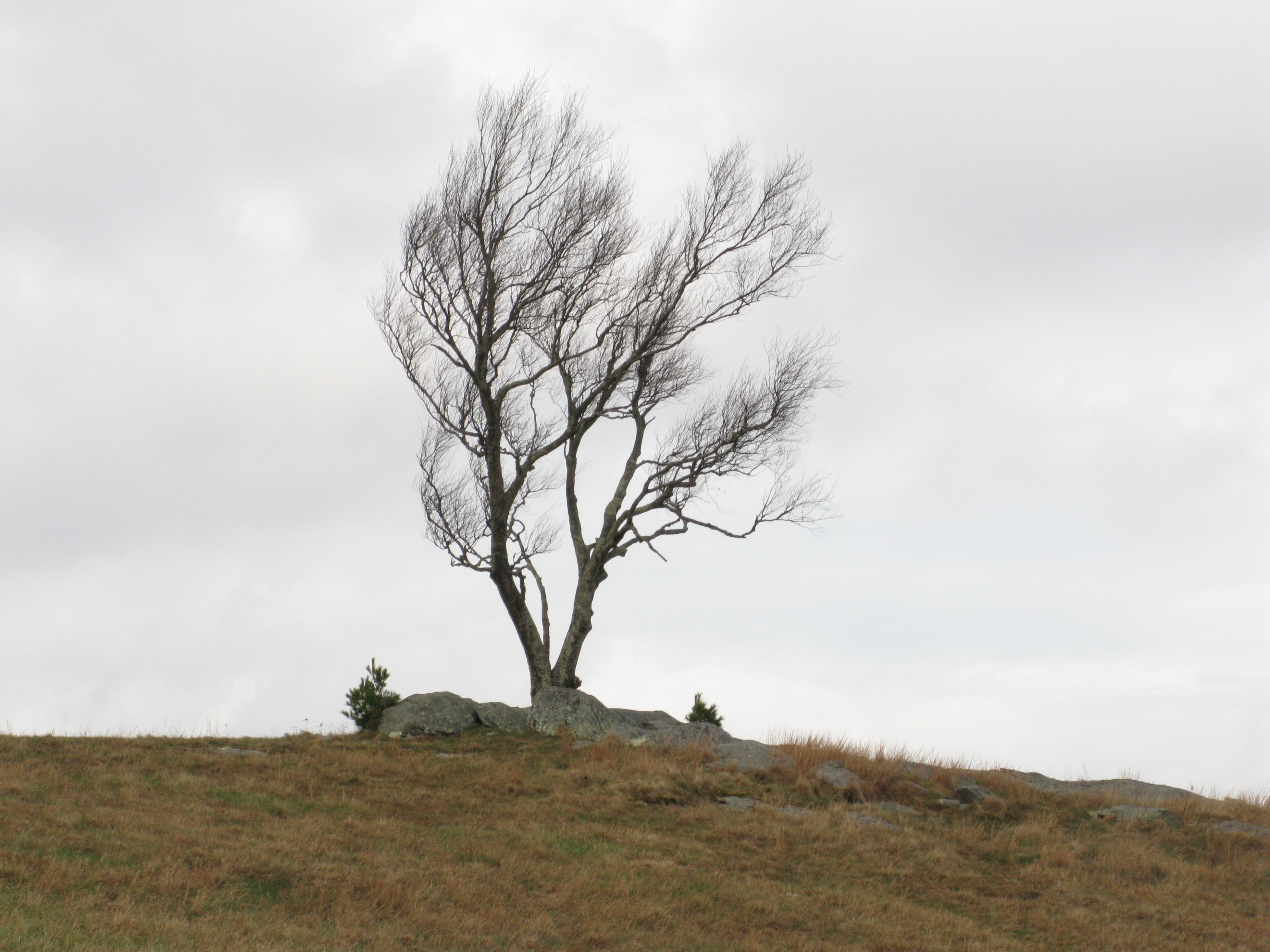
 Doughton Park Tree 2018-02-09

Read Full Post »

 . 
[with 3 poems by Melinda Thomsen]
 . 
11. Colorado Springs
 . 
In a breath, the sun emerges unfurled
behind the hangar, and the sky turns gold.
It burns like an ore, as nearby grasses roll
in a breeze, and rows of sunflowers twirl
 . 
and flex. The Queen Anne’s lace slowly maps
the sun’s route west. A magpie somewhere
near the playing field squawks. Dawn appears
in shades of granite wearing a mica cap.
 . 
Let me put on the sky’s sapphire chains
and earth’s necklace of headlights from the cars
winding to Denver in their jeweled train.
 . 
When headlamps dim, sunshine shoots like stars
off the cargo bays of arriving planes,
and daybreak shows its wealth by reaching far.
 . 
Melinda Thomsen
from Dropping Sunrises in a Jar, Finishing Line Press, Georgetown KY; © 2024
[this poem is one segment of the poet’s sonnet redoublé]
 . 
❦ ❦ ❦
 . 
The sentinel sugar maple stationed above us on the roadway is first. Each day we park at the track and look up to its expansive globe outstretched in meditation. Preceding all other trees, it affirms change. In the swelling conflict of its upper limbus butterscotch and sulfur, sweet and harsh become the beginning of leaving behind the green of summer. Green we might have convinced ourselves to be eternal and foundational. But all things flow. You can never stand twice beneath the same tree.
 . 
 . 
Last night a brief gusty squall; this morning the lone sugar maple has relinquished all but a few scattered flags and tatters. As we enter the woods, however, all the other trees in this progressive congregation are industrious in their competition. Who can display the brightest color? Who the most varied, the most novel? The southern slant of sun penetrates as if through stained glass; streaming light proclaims its gospel of chlorophyll, abscission, anthocyanins, carotenoids. Linda and I drop our worries along the trail like a trail of breadcrumbs – we can at least hope that the birds and chipmunks will devour them all in the hour before we return this way.
 . 
And now we’ve reached the last straight segment before the walking trail offers to climb the ridge and lead back down to the river. We can see the turning where it beckons. Before we reach it we will cross the high bridge over Crooked Creek and look down to see if our fat water snake is sunning herself among the south-facing rocks as usual. Just beyond the bridge we will enter the final high vaulted cathedral. Overleaning trunks and branches, pointed arches familiar in the minds of trees long before Sumeria or Samarra, clad with brass and jade, they invite us now to share this space in reverence.
 . 
 . 
This cathedral of flux. The never-changing God this world worships is the God of Changes. The crimson Michaux lilies that celebrated here in August today merely nod a few dry, creased, tri-partite pods, but what do they hold? A celebration of seeds. And beneath the springy duff the roots gone dormant have not forgotten their desire to rise again next April.
 . 
Linda and I stand here for a moment, in the moment. The memory of red blossoms is not what we worship. The anticipation of future blooming is not what we worship. Right here right now is the only real thing – the only real thing is all things that have come before and all that may yet become. We hold a single thought, we hold all thought. For one brief moment approaching joy we are engulfed, we merge with the flux.
 . 
Panta rhei. All things flow.
 . 
 . 
❦ ❦ ❦
 . 
Dropping Sunrises in a Jar
 . 
When daybreak edged the earth,
++++ I would roll over – unlike the birds.
It was as if we lived in separate jars.
++++ Wrens whistle and chirp about flames
blooming into a ball at sunrise
++++ then hush with the sun’s full burning.
 . 
I used to sleep through the daily burning
++++ for I didn’t care much how the earth
rotated itself into another sunrise.
++++ But years later, I wondered why birds
got so excited about a horizon in flames.
++++ So much time, I’ve spent within a jar.
 . 
The birds, too, live in a sort of jar,
++++ but they focus outward and seem to burn
with a gratitude that fans their inner flame.
++++ See pelicans fly about the earth?
They dip and lift until the idea of bird
++++ becomes a winged embrace at sunrise.
 . 
When I traveled, I watched every sunrise
++++ to see night leave its door to morning ajar,
and in its wake, I heard the calls from birds.
++++ Each place began with its horizon burning,
though, and I worry our Goldilocks earth
++++ is ending. We choose to go in flames,
 . 
or up in smoke like a moth drawn to flame
++++ when just right gets too hot, but each sunrise
still unleashes warbling tenors upon the earth.
++++ For we don’t see birds flying into bell jars
or coal mines, do we? While forests burn
++++ in the west, in the east, squirrels and birds
 . 
gear up for hurricanes. Notice how birds
++++ of a feather fly from floods and flames?
Instead, I wake to the sky’s daily burning
++++ in these – my sunset – years to collect sunrises.
One by one, I drop then in a jar
++++ like candies gathered from my forgiving earth.
 . 
But this burning keeps flushing out the birds,
++++ who welcome the earth as if an old flame
and add their sunrise songs to its tip jar.
 . 
Melinda Thomsen
from Dropping Sunrises in a Jar, Finishing Line Press, Georgetown KY; © 2024
 . 
❦ ❦ ❦
 . 
Melinda Thomsen lets no sunrise escape her. While the eye notices light returning to the world and the ear may welcome the first emphatic burst of wrensong, the soul delves deeper to discover that the light has never left. Some place where I can untangle myself through flashes of beauty – this is Melinda’s journey and her destination. And as we travel with her across the world and through the universe of Dropping Sunrises in a Jar, this might be the promise we hope to fulfill – One day you’ll shape yourself into the bird your soul holds.
 . 
 . 
These poems are woven with recurring images of sunrise and sky, birdsong and sunflowers, but in addition to these enticements Melinda’s use of formality has ensnared me. I am a sucker for a good sestina; this collection’s title poem is a great one. I had pretty much assumed it’s impossible to actually write a Heroic Crown of Sonnets (sonnet redoublé) but here Melinda has mastered it. In just 31 pages, this sequence elevates us and carries us into new worlds.
 . 
Purchase Dropping Sunrises in a Jar at Finishing Line Press.
 . 
 . 
❦ ❦ ❦
 . 
The Zoetrope Sunrise of the Taihang Mountains
 . 
Waking in a sleeper car, bunked
with three strangers, I raise the shade
 . 
to watch the sunrise, a pale peach glow,
among the snoring. Cornfields stretch
 . 
beneath gauzy clouds as our train enters
a tunnel and metal sounds reflect
 . 
off its stone interior. As we exit,
the ochre sky lightens, then another
 . 
tunnel and again a waterfall of noise.
Now, the sun glows behind mountain
 . 
peaks, and mist rests in the Taihang
valley of lush shrubbery when a tunnel
 . 
eclipses that view. The train
travels through tunnel after tunnel,
 . 
but between glimpses, the sun rises
and we emerge into a village
 . 
with streams edging the foothills
framed with cornfields and box houses.
 . 
A man feeds his donkey.
The child in our cabin coughs.
 . 
For the Chinese, the road over
Taihang means the frustrations of life.
 . 
Where the sun rises through slits,
this zoetrope carries me home,
 . 
or some place where I can untangle
myself through flashes of beauty.
 . 
I had to get out through stillness;
until bit by bit, the womb opened.
 . 
Melinda Thomsen
from Dropping Sunrises in a Jar, Finishing Line Press, Georgetown KY; © 2024
 . 
[zoetrope: An optical toy, in which figures made to revolve on the inside of a cylinder, and viewed through slits in its circumference, appear like a single figure passing through a series of natural motions as if animated or mechanically moved. – – – bg]
 . 
❦ ❦ ❦
 . 
Three aphorisms attributed to Heraclitus (Greek, ca. 500 BC) declare change and conflict as the fundamental characteristics of reality:
On those who step into the same rivers, different and different waters flow.
We both step and do not step into the same river, we both are and are not.
It is not possible to step into the same river twice.
The central tenets of Heraclitus’s philosophy are the unity of opposites and the centrality of flux (change) as encapsulated in the phrase Panta rhei, all things flow.
 . 
 . 
❦ ❦ ❦
 . 
 . 
 . 

Read Full Post »

« Newer Posts - Older Posts »