Feeds:
Posts
Comments

Posts Tagged ‘Michael Hettich’

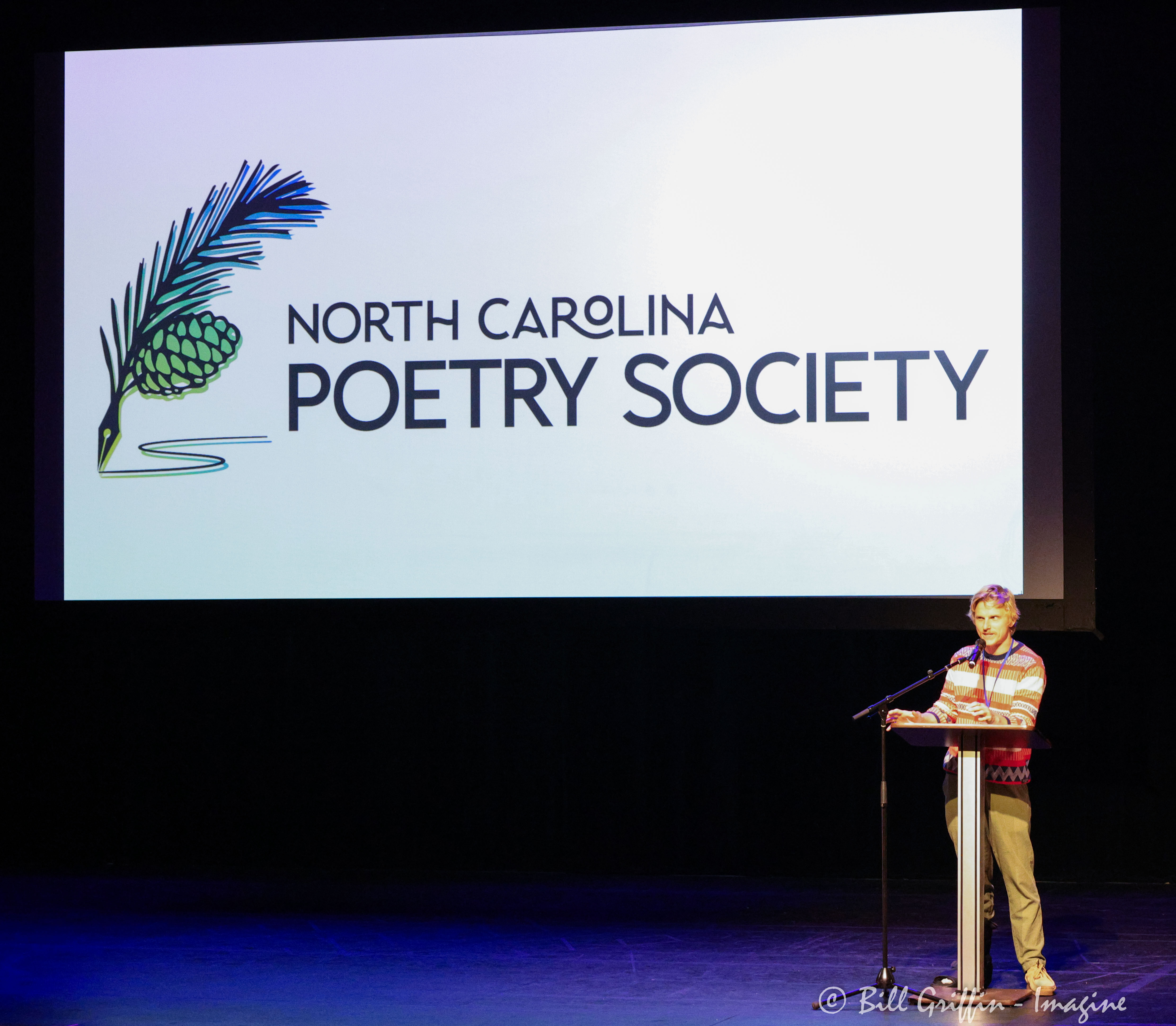
NCPS Program VP Chad Knuth

 . 
NC Poetry Society at the Cary Arts Center
[poetry by award winners Mark Cox, Michael Hettich, and more]
 . 
All Right
 . 
The boy doesn’t know what to do. He’s only twelve. And he’s never seen adults weep, not like this at least, so distraught, disconsolate. He can see his grandmother from the kitchen, through her bedroom doorway. Prisoner of her dementia, the old woman lies fully clothed atop the chenille bedspread, her floral house dress faded, her shoes scuffed and worn, light from one window cutting her in two. Her good dishes have disappeared, the piano is still in the old farmhouse, the cows need to be milked, her young sons are still in France at war. The boy sits at the breakfast table, adrift in a sunlit swirl of dust motes. He understands none of this is true, but how is he to help? What can anyone say? To live is to leave, the boy thinks; we make our way, but lose something always and wherever we go. Our shoe soles wear down, our hair thins, our bodies diminish and so we travel always through galaxies of our own shed lint and skin, the leavings of once known things. Finally, at a loss, he just lies down next to her, his sneakers alongside her purpled ankles. He knows nothing ever is going to be all right, but he says it anyway.
 . 
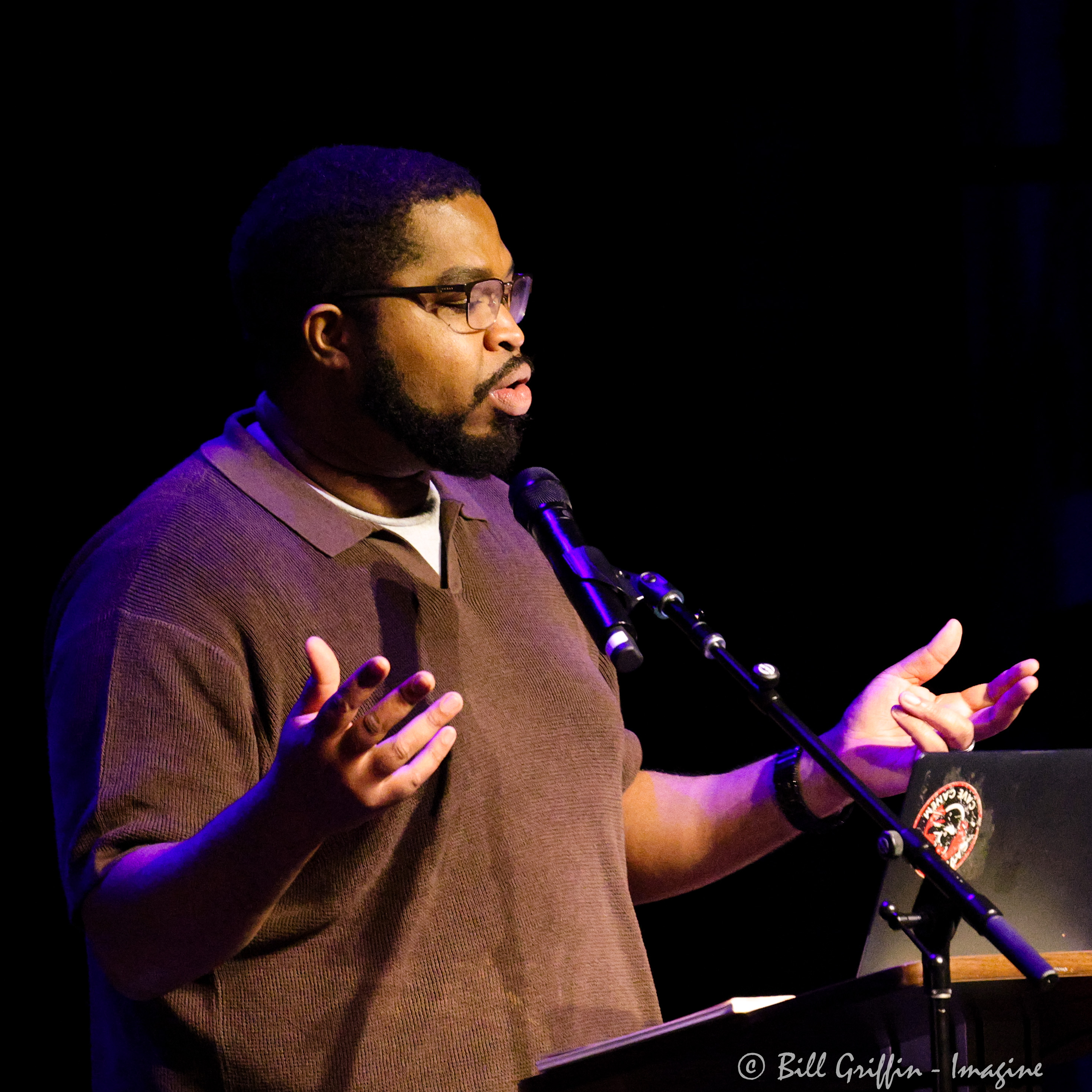
Mark Cox
from Knowing, winner of the 2025 Brockman-Campbell Book Award of the North Carolina Poetry Society
 . 
 . 
Mark Cox is chair of the Department of Creative Writing at University of North Carolina, Wilmington. He also teaches in the Vermont College of Fine Arts MFA Program. His six previous books include Sorrow Bread: Poems 1984-2015 (2017) and Readiness (2018). Read more about Knowing and purchase your copy at Press 53 HERE.
 . 
Claudine Moreau is second place finalist for the 2025 Brockman-Campbell Award, for her book Demise of Pangaea. Visit this site on October 3 for more about her book and a sample poem.
 . 
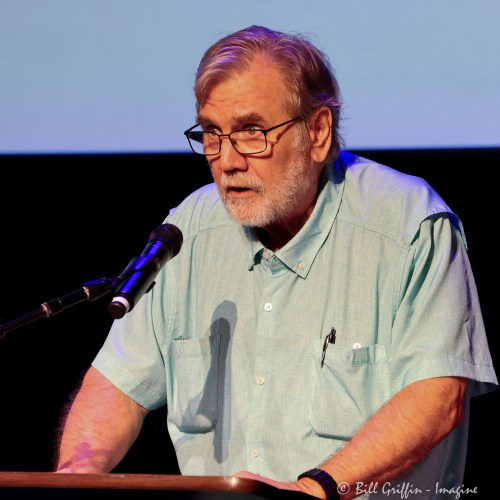
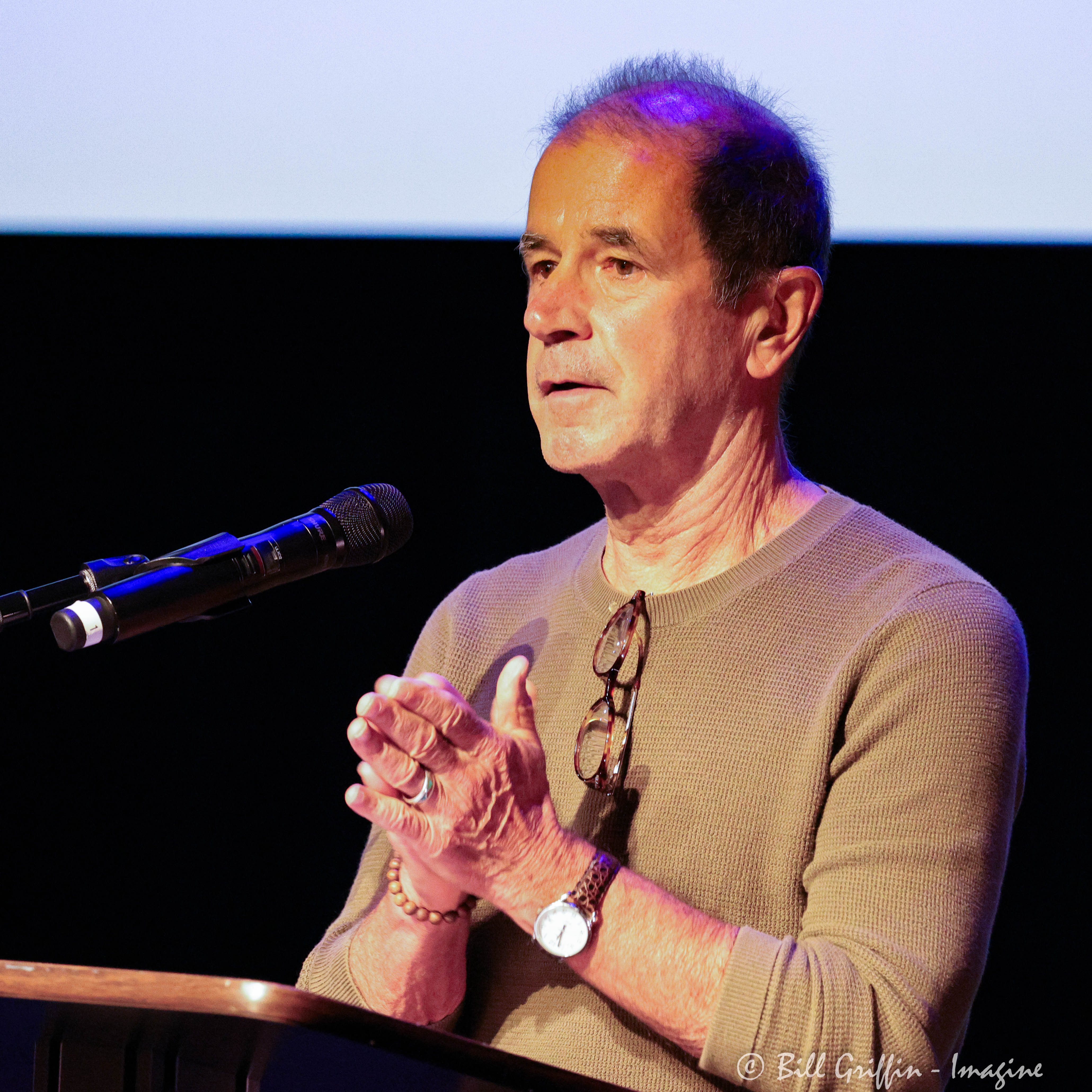
Mark Cox

 . 
❦ ❦ ❦
 . 
Each September at its fall meeting the North Carolina Poetry Society features readings by the winners of the following contests:
 . 
Brockman-Campbell Book Award (NCPS): best book of poetry published by a North Carolina author in the preceding year
Lena Shull Manuscript Award (NCPS): for a manuscript by a North Carolina author; the winning book is published by NCPS
Susan Laughter Meyers Fellowship (NCPS): a one week residential fellowship at Weymouth Center for the Arts and Humanities for one North or South Carolina poet
Randall Jarrell Poetry Prize (sponsored by North Carolina Writers’ Network): for an individual poem by a North Carolina author
Jaki Shelton Green Performance Poetry Award (co-sponsored by North Carolina Literary Review at East Carolina University and NCPS): for an individual poem recited / performed
 . 
For information about North Carolina Poetry Society contests VISIT HERE:
 . 
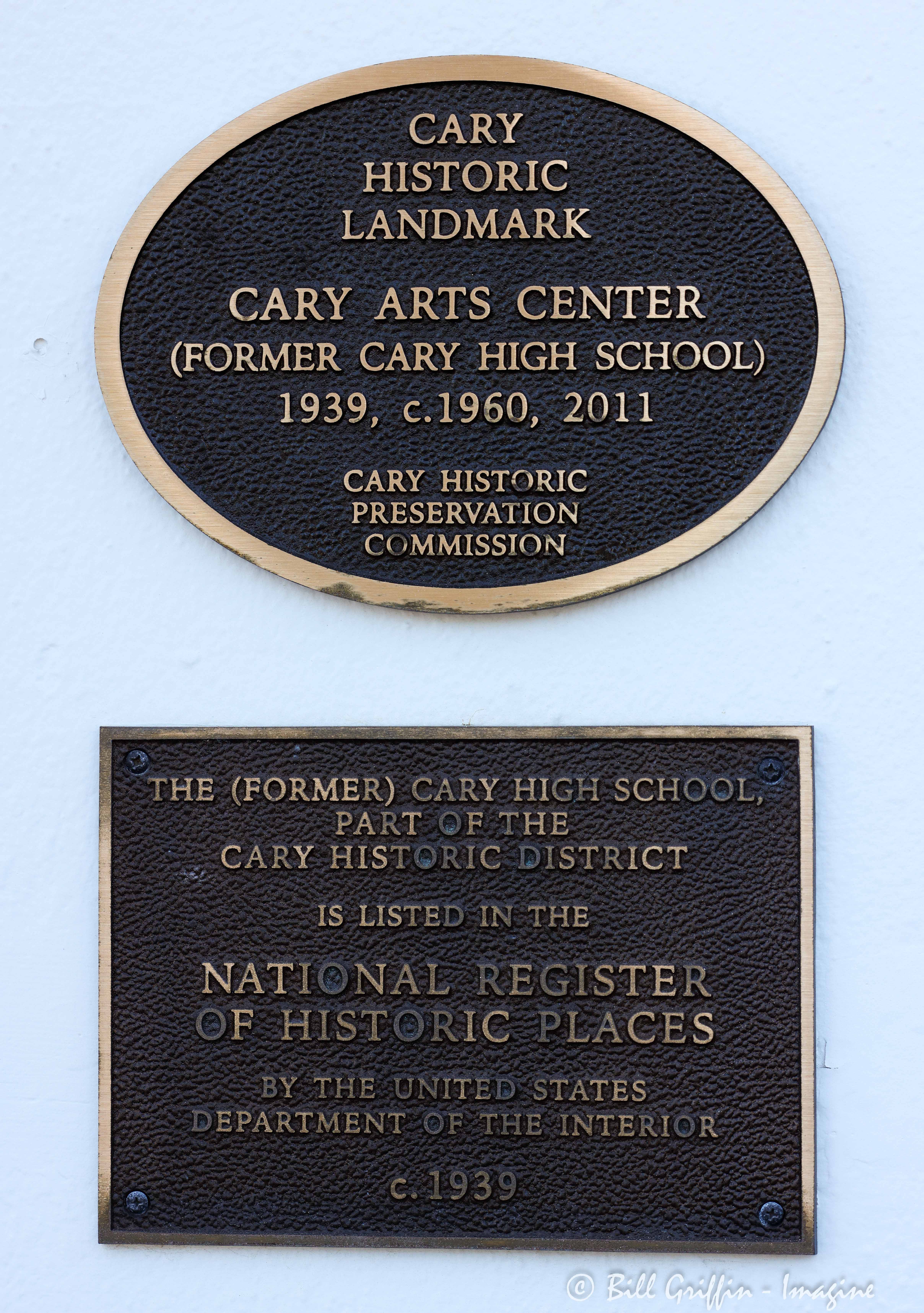
In 2023 the September NCPS meeting was held at the NC Museum of Art in Raleigh, in 2024 at the NC Arboretum in Asheville, and this year’s meeting on September 13 celebrated the Cary Arts Center, formerly the Cary High School (1939), listed on the national registry of historic places. Today’s and next Friday’s posts feature some of the poetry shared at the meeting by the 2025 contest winners; return to this site on October 3 for more offerings!
 . 
 . 
❦ ❦ ❦
 . 
The Meadow
 . 
++++ I woke in a tall-grass field at first light,
and listened to the birds, and hummed with a dream
 . 
++++ ++++ I made up from wisps
++++ that ran through my body
++++ ++++ shivering marrow, making me notice
 . 
++++ the dew that dampened
my face and the spider webs
++++ starting to shimmer the trees.
 . 
Everything was breathing; the long night echoed
++++ in the dawn-light: stars
++++ ++++ and vast migrations
 . 
++++ as the breeze stuttered a moment, then stilled.
++++ Across the field, my companion was singing
++++ ++++ her own perfect song, which was silence. Still
++++ ++++ ++++ I could hear her somehow, so I got up and set off
 . 
++++ ++++ ++++ ++++ to thank her for sharing this beautiful place
++++ ++++ ++++ she’d known all her life, this place where she’d always
++++ ++++ ++++ ++++ felt happy, the place she yearned to stay
 . 
++++ ++++ as long as she breathed. And then, she’d told me,
++++ she’d turn into something more perfect: the vast
sky, so blue it hurt the eyes,
++++ or a meadow like this one, that stretched to the horizon.
 . 
Michael Hettich
from Waking Up Alone, winner of the 2025 Lena Shull Manuscript Award of the North Carolina Poetry Society, to be published later this year by Redhawk Publications.
 . 
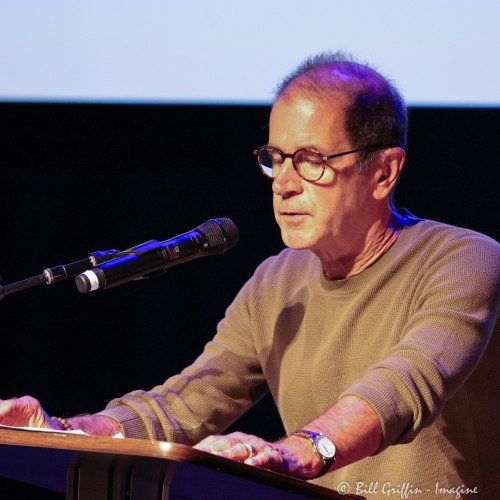
Michael Hettich

 . 
 . 
After years in New York, Colorado, Florida, and Vermont, Michael Hettich now lives in Black Mountain, North Carolina. He holds a Ph.D. from the University of Miami and taught for many years at Miami Dade College where he was awarded an Endowed Teaching Chair. Over five decades he has published more than two dozen books of poetry and received numerous honors, including several Individual Artist Fellowships from the Florida Division of Cultural Affairs, The Tampa Review Prize in Poetry, the David Martinson/Meadowhawk Prize, and a Florida Book Award.
 . 
Additional Finalists for this year’s Lena Shull Award are Becky Nicole James and Charles Wheeler.
 . 
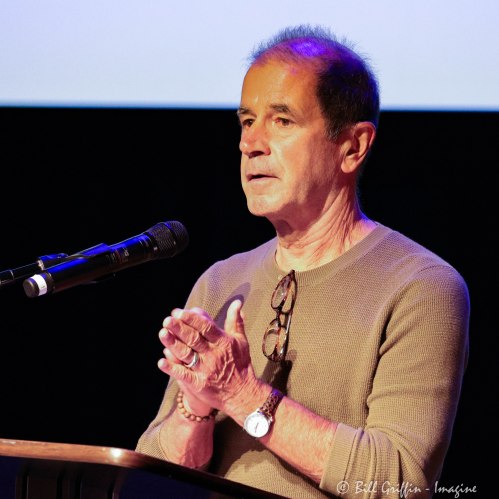
Michael Hettich

 . 
❦ ❦ ❦
 . 
Feathers
 . 
When September slips in the window like a forgotten lover,
Reaching for me from my burrow
+++++++++++++++++++++ With its hands of feathers
 . 
In the early morning croak of crows, and I can smell
That someone has lit a fire,
+++++++++++++++++++++ An utterance of feathers,
 . 
Such that I can’t remember if I’m seven, in a log house my father built,
And he’s kindled the first autumn fire,
+++++++++++++++++++++ Fanned the feathers,
 . 
Or I’m twenty-five in the wooded hollow alone
But for the cats, dogs, and calls of coyotes, having lit the fire myself
+++++++++++++++++++++ That spanned feathers,
 . 
But no, when you roll over
In a twist of sheets,
+++++++++++++++++++++ In a band of feathers,
 . 
And I hear a young tail thump softly on the floor, a brief whine-
When someone else’s woodsmoke slips through the window
+++++++++++++++++++++ Like sanded feathers,
 . 
And I am here with you, and we’ve struck our own match-
When you reach across and slip your arm around my waist,
+++++++++++++++++++++ With the sustenance of feathers-
 . 
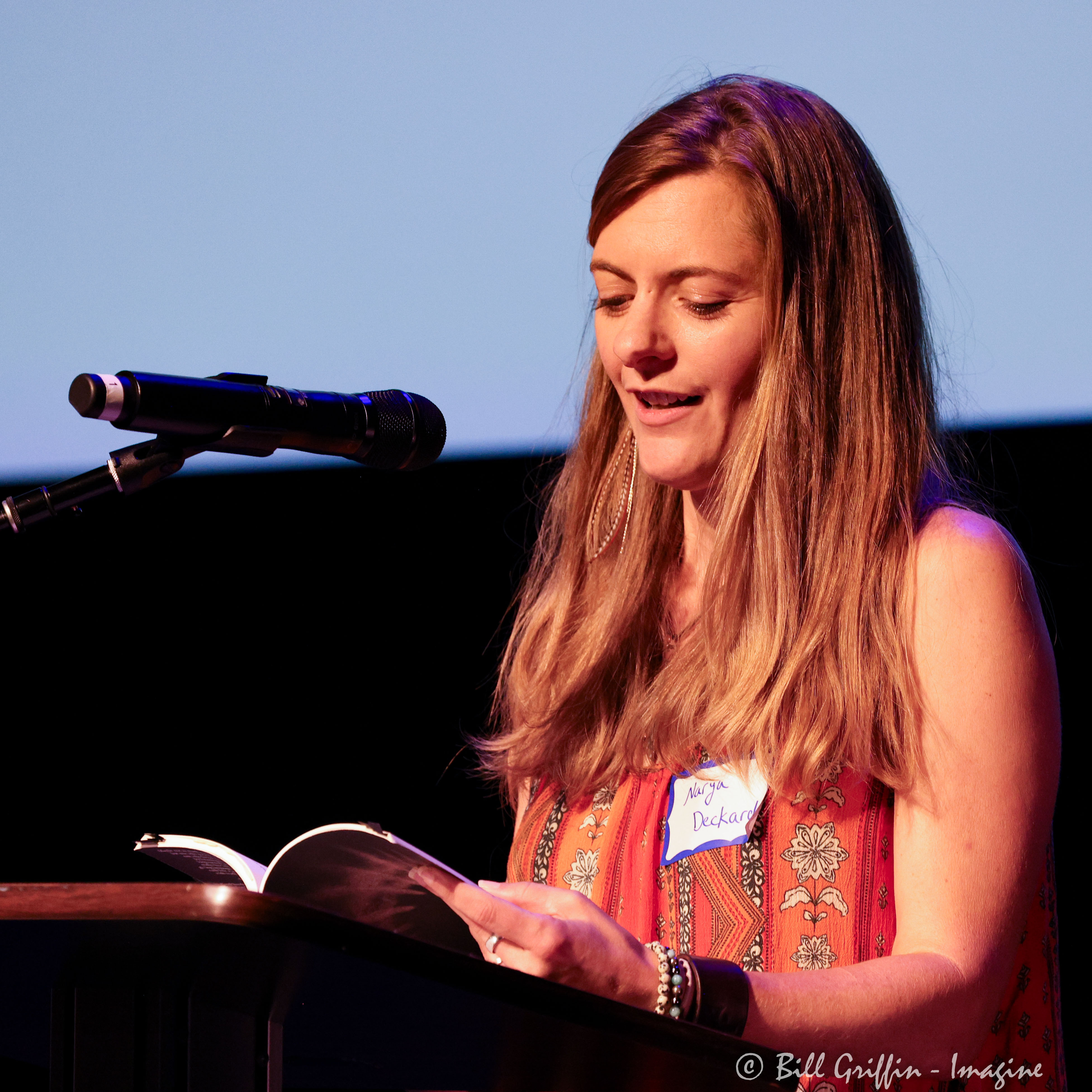
Narya Rose Deckard
from her debut poetry collection Wolfcraft (Broken Tribe, © 2025), available from Bookshop.org
 . 
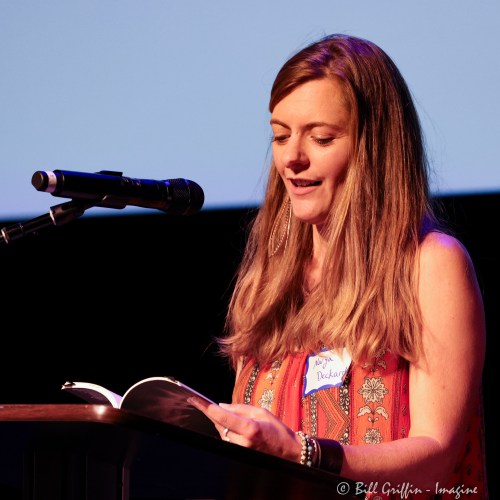
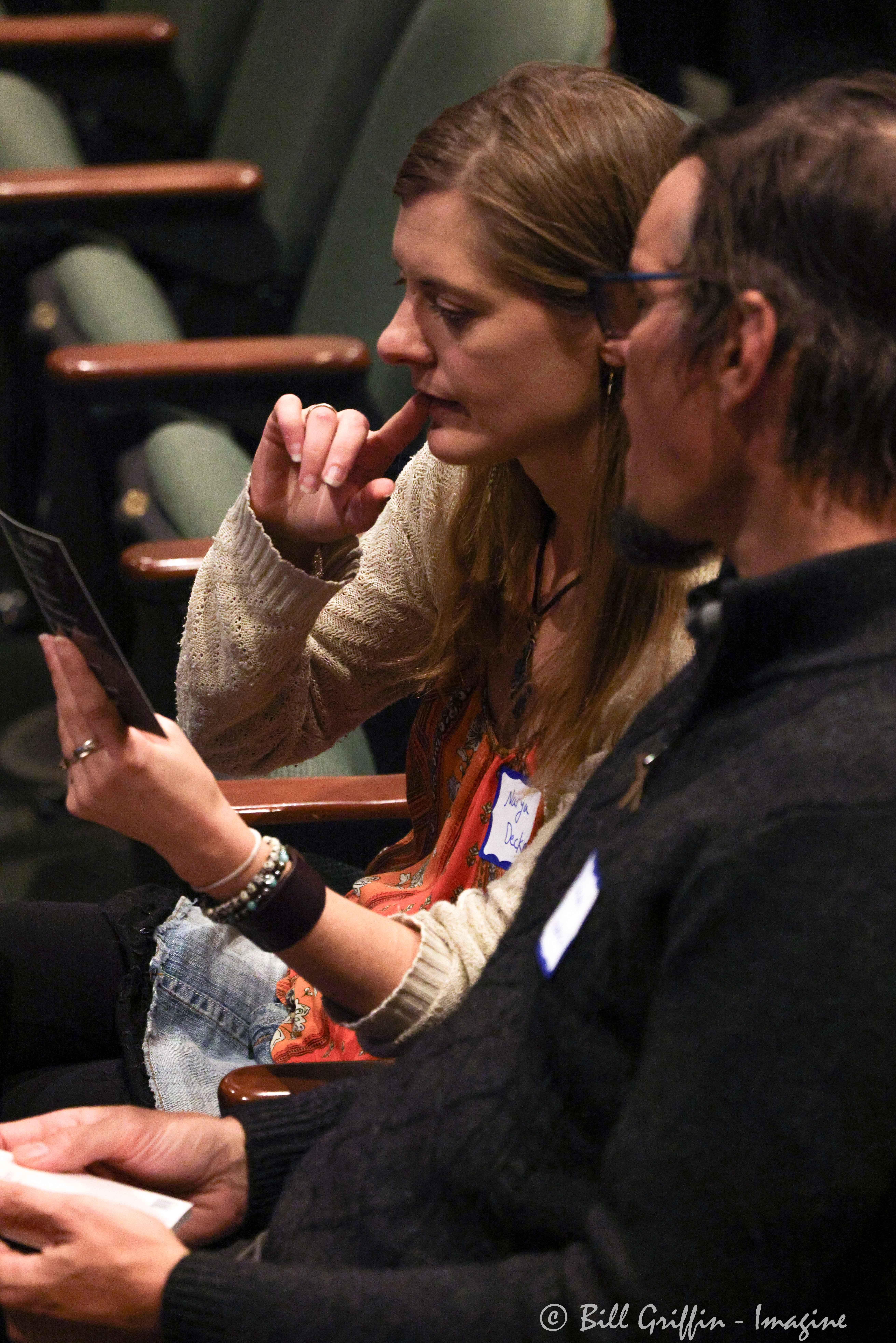
Narya Rose Deckard

 . 
 . 
Narya Rose Deckard teaches writing at Lenoir-Rhyne University, where she earned her MFA in poetry at the Thomas Wolfe Center for Narrative. Originally from the mountains of Maryland, she currently lives in Valdese, NC with her husband, dog, five cats, and a few chickens, but she also spent ten years in Asheville studying literature and philosophy at UNCA. As winner of the 2025 Susan Laugher Meyers Fellowship, she receives an honorarium and one week writing residency in Southern Pines at Weymouth Center for the Arts and Humanities.
 . 
Susan Laughter Meyers was a widely published Carolina poet who mentored many rising poets and promoted literature across the South for decades. She served at different times as president of both the South Carolina and North Carolina Poetry Societies. Her family, friends, students, and other admirers of her life’s work have endowed this Fellowship in her name for the North Carolina Poetry Society. Many thanks to Weymouth Center, as well, for donating space and support for the poet residency.
 . 
 . 
❦ ❦ ❦
 . 
Begin With Me
 . 
I got up
off the ground
near some graves—I share
the last name with.
 . 
I begin,
with what I was handed,
a mama, a daddy I saw a few times,
because he hid
in the hues he knew.
 . 
My little brother full of love
like the corner store in heaven. I knew
his lying like I knew our daddy’s lying,
same song, but a higher key.
My mama taught me to
 . 
ask my dead plenty of questions—
to let the moon touch me on the mouth,
to ring my black bell.
 . 
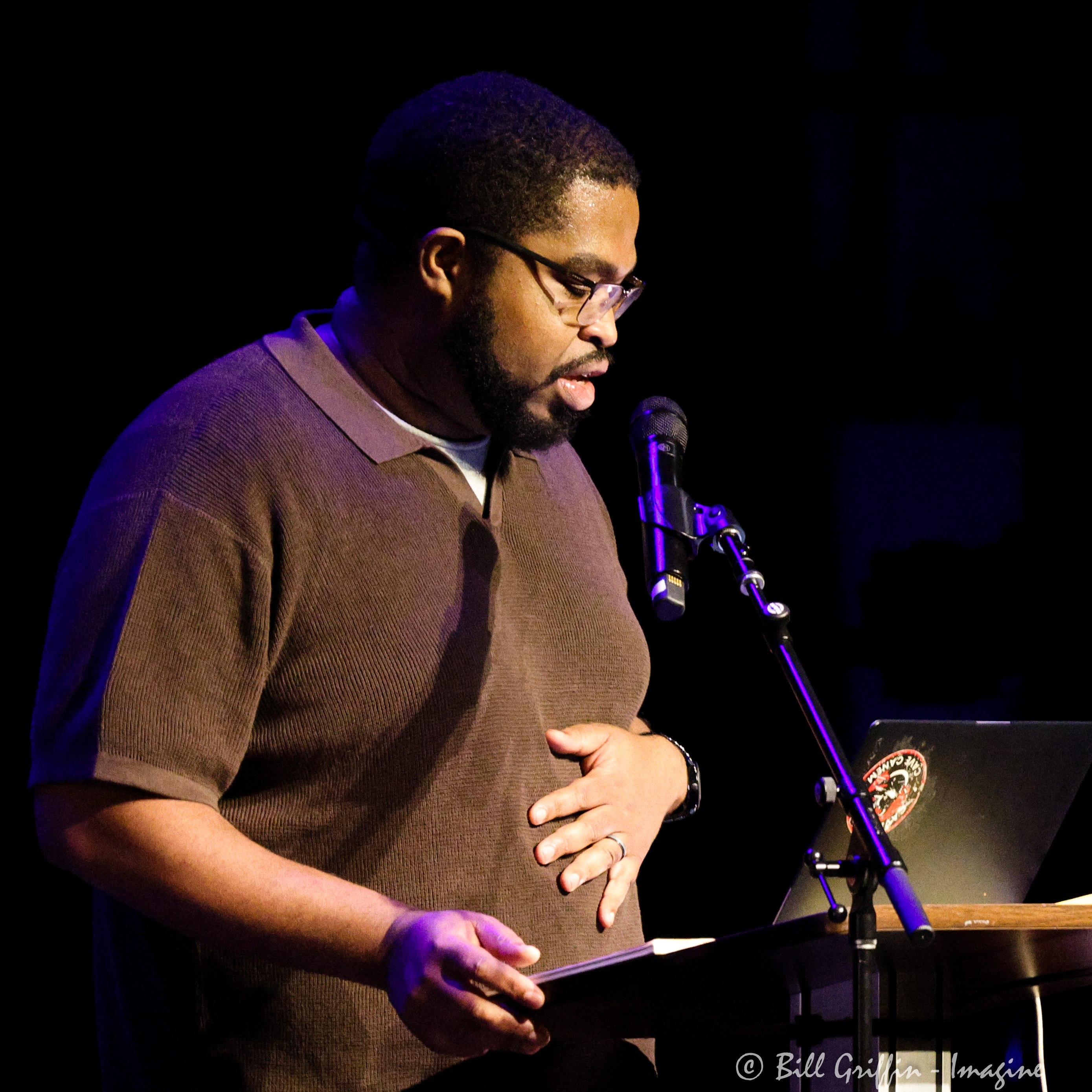
Tyree Daye
from a little bump in the earth, Copper Canyon Press, © 2025
 . 

Tyree Daye

 . 
 . 
Tyree Daye led the writing workshop for the afternoon session of this NCPS meeting, He focused on breath: within and around a poem; what it might reveal and what it might hide. The writer can strive to become more conscious of their own breath as they splice syllables and thump out the poem’s rhythm. The reader can strive to slow down and feel their own breath as they silently speak the words. Breath can hold the meaning and feeling that the poem wants to birth into the world. Hold it, and let it out.
 . 
Tyree Daye grew up in Youngsville, North Carolina. He is the author of three poetry collections, including River Hymns (winner of the APR/Honickman First Book Prize), Cardinal, and most recently a little bump in the earth. He has been a 2017 Ruth Lilly Finalist and Cave Canem fellow. He serves as Assistant Professor at the University of North Carolina, Chapel Hill. Tyree Daye teaches. Not just reading and writing, not just poetry – he teaches what it means to be human, a human with a past and with a future. One reaction to his new book: Poem by poem, Daye is honoring the people of Youngsville and “bringing back the dead.”
 . 
❦ ❦ ❦
 . 
Tune in next week, folks . . . in our October 3 post we will continue to celebrate the riches of this September 13 meeting in Cary with poetry by Claudine Moreau, Becky Nicole James, Charles Wheeler, and more.
 . 

Tyree Daye

 . 
❦ ❦ ❦
 . 
 . 

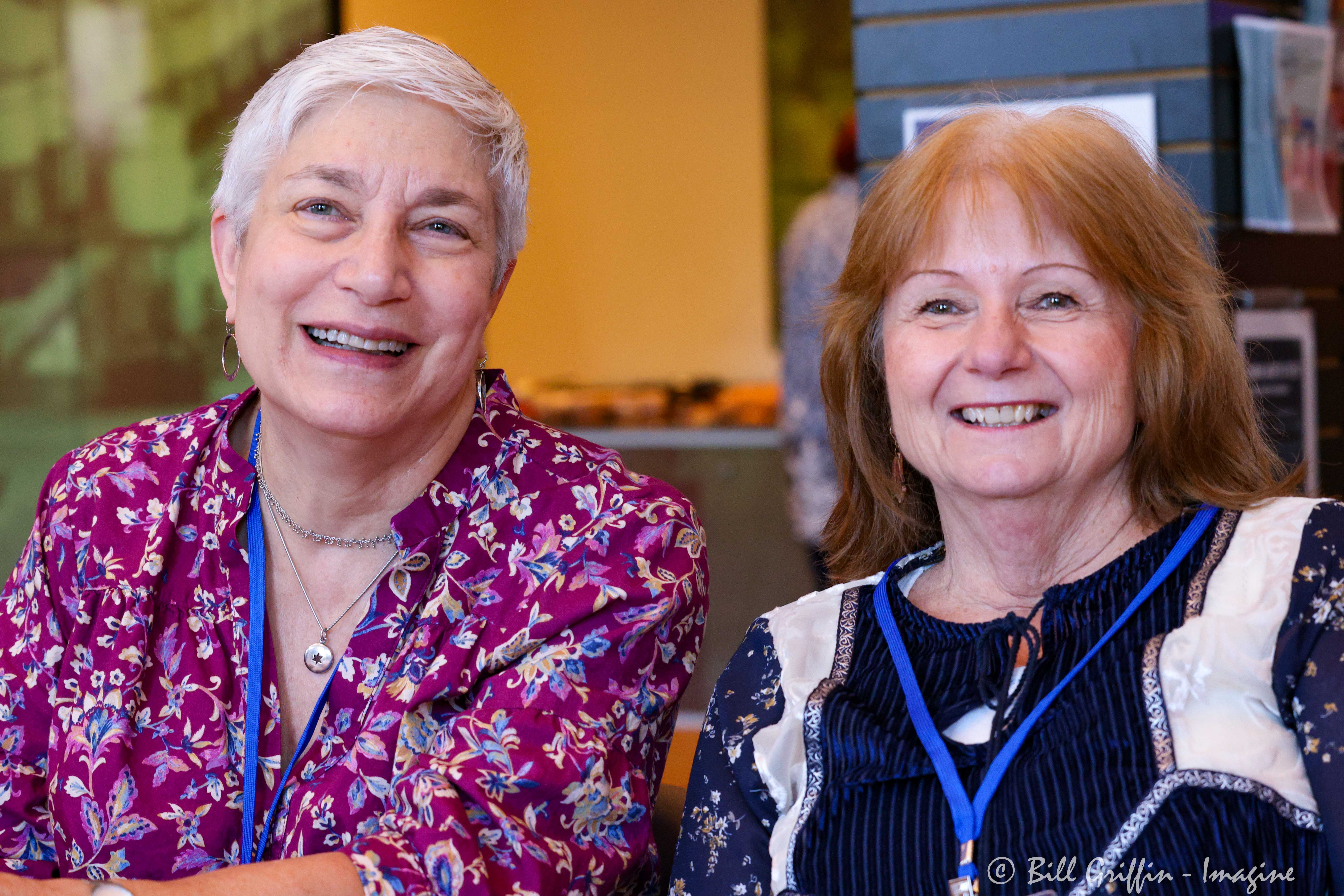
Joan Barasovska and Kathy Ackerman, Membership VP and NCPS Secretary

 . 
 . 
 . 
 . 
 . 

Read Full Post »
 . 
[with poems by Michael Hettich, Kenneth Chamlee, Katherine Soniat]
 . 
First View – Chicago Lakes
 . 
Sleet needles past my fastened collar
as we rise into the house of rain.
Mr. Byers of the Mountain News
has horsed us up this flyspeck path
with avowals of Alpine views but
now is silent. I think he has missed
the spur trail. My blood is gelid,
fingers numb beyond recovery.
Clouds tickle and drip and when we crest
this timbered ridge I will ask that-Oh!
Sublime cirque! The Alps surpassed again!
Stay the mules-I must-I need my paints,
stool. Fifteen minutes, please you; see how
the near lake mirrors the breaking storm
with light fine as milkweed fluff, that one
pearled peak soft as the edge of heaven!
 . 
Kenneth Chamlee
from The Best Material for the Artist in the World; Albert Bierstadt, a Biography in Poems, Stephen F. Austin University Press, Nacogdoches TX; © 2023. Finalist for the 2024 Brockman-Campbell Award for the best book of poetry published by a North Carolina writer.
 . 
❦ ❦ ❦
 . 
First Nature, Once Removed
 . 
Is childhood different from any body of (loose) clothing or rising water? Make
of it what you will. +++ I did. +++ +++ Some are grounded by target practice
 . 
but return with leaks known as homesickness for life. +++ +++ Wobbly
flotilla of cargo I was . . . no water-wings to inflate. Imagine those wings
 . 
I did not have +++ but suspected were present +++ when it was calm enough
to reflect and pull faces into focus. +++ +++ Wishing is like sadness at sea.
 . 
Say, you are on a beach with waves – the circular myth of family collapsing.
I had this part-time job of being a daughter apart – job that paid in tips
 . 
for those with damp inward pauses. +++ +++ Deep water girl
who keeps washing up anywhere. +++ +++ +++ Everywhere.
 . 
I was a surprise to those gathered in bed. +++ How I rose to float in
on a man and woman dancing in bed. +++ +++ Or were they clouds?
 . 
I could not keep them straight +++ +++ (though they were trying
hard to act happy) +++ like knives flying simultaneously as birds
 . 
at twilight.
 . 
Katherine Soniat
from Fates: Starfish Washup, Etruscan Press, Wilkes University, Wilkes-Barre PA; © 2023. Finalist for the 2024 Brockman-Campbell Award for the best book of poetry published by a North Carolina writer.
 . 
 . 
❦ ❦ ❦
 . 
The Parents
 . 
One morning, my wife and I followed our eight-year-old
daughter along a crowded beach
just far enough behind her that she wasn’t aware
we followed, as she walked with her energetic stride,
swinging her arms as though she were singing.
 . 
We marveled at her independence, at her
fearlessness; we compared her to other
children we knew, who would never have ventured
so far with such self-confidence.
 . 
We were congratulating ourselves on our excellent parenting
skills, laughing proudly at her spirit,
wondering where she was going with such
lively determination, when she stopped
 . 
and turned to look back: she was crying, with such
deep heaves she could hardly, breathe, desperately
lost. She’d been frantically looking for us
and the place we’d left our towels–she feared
we’d forgotten her, gone home without her.
 . 
What could we say, kneeling beside her
in the bright sun–we’d been right there
the whole time, behind her, laughing affectionately
at the way she walked, as she walked
 . 
the wrong direction to find us, at the way
she looked from behind as she searched for us,
as she howled in such terror
we thought she was singing?
 . 
Michael Hettich
from The Halo of Bees: New & Selected Poems, 1990-2022, Press 53, Winston-Salem NC; © 2023. Winner of the 2024 Brockman-Campbell Award for the best book of poetry published by a North Carolina writer.
 . 
 . 
❦ ❦ ❦
 . 
Which is better, to expect beauty and encounter exactly that, or to arrive without expectation or anticipation and be surprised by joy? Which is worse, to open the window on a forecast of sun and discover drizzle, or to walk around every day under a cloud with no awareness of a sun above? Which is worse, to tool around for years just one county removed from your anger, or to cross the line and smack into it head on? Which is better, fond memories of the past or even fonder memories of the future?
 . 
Each of today’s three poems appears in books selected by Eric Pankey, this year’s judge of the Brockman-Campbell Award of the North Carolina Poetry Society: winner Michael Hettich for The Halo of Bees and finalists Kenneth Chamlee, The Best Material for the Artist in the World, and Katherine Soniat, Starfish Washup. What if everything we can sense and see turns into something wholly unexpected? Don’t the most beautiful creatures sometime pack the deadliest stings? What if even time itself slips us up, the solid past dissolving into mist and mud, this moment twisting inside out like a Moebius strip? What if a poem doesn’t begin or flow or lead us where we anticipated, and what if it doesn’t end as we hoped?
 . 
 . 
Emerging from COVID’s virtual meetingspaces two years ago, the NC Poetry Society made a studied decision to emerge as well from its long tradition of meeting four times each year in Southern Pines at Weymouth Center for the Arts & Humanities. Last September’s meeting convened at the North Carolina Museum of Art in Raleigh. Each September meeting serves to showcase readings by contest winners: the Brockman-Campbell Book Award (NCPS); the Lena Shull Poetry Manuscript Award (NCPS); the Randall Jarrell Poetry Competition (NC Writers Network); the Susan Laughter Meyers Poetry Fellowship (NCPS and co-sponsor Weymouth Center for the Arts and Humanities); and the Jackie Shelton Green Performance Poetry Prize (NCPS in partnership with NC Literary Review and East Carolina University).
 . 
This September 14 NCPS gathered at the North Carolina Arboretum outside Asheville. As if award winning readings in such a beautiful venue were not enough, the afternoon program connected the gardens, mountains, and wild spaces into a workshop by Kathrine Cays, “Writing the Natural World.” Kathrine offered many prompts and led a guided meditation to coax us to listen to the voices of earth and sky around us, and to the voice within us that reaches to connect with nature. (See last week’s poem by Mary Oliver, Sleeping in the Forest, which Kathrine read to open her workshop.) How can I sense the communities and individuals that create my world? What do flower, tree, bird, beetle want to say to each other, and to me? How can I discover my true place on earth and return gratitude and reverence in a way that sustains me, and sustains the earth?
 . 
 . 
 . 
 . 
 . 
❦ ❦ ❦
 . 
2024 Contest Winners
 . 
Brockman-Campbell Award: given annually to the best book of poetry published by a North Carolina poet during the past year
Winner: Michael Hettich, The Halo of Bees
Finalist: Katherine Soniat, Starfish Washup
 . 
Lena Shull Award: honors the best manuscript of unpublished poetry written by a native or resident of North Carolina
Winner: Doug Sutton-Ramspeck, Smoke Memories
Honorable Mention: Maura High, Field as Auditorium
Honorable Mention: Becky Nichole James, Little Draughts and Hurricanes
 . 
Susan Laughter Meyers Fellowship: in honor of the life and work of Susan Laughter Meyers; co-sponsor Weymouth Center for the Arts and Humanities
Winner: John Amen
Honorable Mention: Maria Martin, Terri McCord, Claudine R. Moreau, Erica Takacs
 . 
Jaki Shelton Green Performance Poetry Prize: honors the best performance poem by a writer who fits the NCLR definition of a North Carolina writer; co-sponsor North Carolina Literary Review / East Carolina University
1st Place: Edward Mabrey
2nd Place: Jess Kennedy
3rd Place: Marcial “CL” Harper
Honorable Mention: Alessandra Nysether-Santos, Regina YC Garcia, Brenda Bailey
 . 
Randall Jarrell Poetry Competition: one poem by any writer who is a legal resident of North Carolina or a member of the North Carolina Writers’ Network; sponsored by NCWN
Winner: Lee Stockdale
Honorable Mention: Jackson Benton, Mary Alice Dixon
More information about all North Carolina Poetry Society contests HERE
 . 
❦ ❦ ❦
 . 
 . 
 . 

Read Full Post »
 . 
[with 3 poems by Michael Hettich]
 . 
Abide with Me (excerpt)
 . 
That first year together, we lived in the shadow
of a fishing line factory, next to a super
highway, under a railroad bridge,
 . 
behind a field of junked cars – mountains
of tires, hub caps, and smashed glass – and we
 . 
prayed fervently for our love to return
this world to the poised grace we could imagine
when we touched each other just right, or when we saw sunlight
glint on the stream full of chemicals and junk
that ran by the factory walls.
 . 
We prayed with our yearning. That year we could float things
in midair on the hymns
we sang in perfect harmony.
 . 
We practiced one hymn – “Abide With Me” –
until we could lift cancered minnows from that stream,
until we could lift stray cats and junkyard dogs,
until we could lift each other as high
as our voices carried. We harmonized versions
 . 
of our families and secrets, until we could float
each other in unison, knowing if we fell silent
for even on moment, we’d fall . . .
 . 
Michael Hettich
from The Halo of Bees
 . 
❦ ❦ ❦
 . 
When did I lose my knack for magic? Oh, I can still work what from a distance appears to be magic. I can wiggle my nose and make a seven-year old girl laugh. I can pull from my tall black hat the Latin binomial for obscure little flowers that most people don’t even consider flowers. I can perform any number of spells that compel my wee ancient mother to say , “You’re such a good boy.”
 . 
I don’t mean I can’t work magic; I mean I’m afraid I’ve lost the knack of magic working me. This morning the home health aide arrived to ride herd on Mom and Dad so I could spend the morning on the beach with grandson Bert and friends. The kid dads had planned some long postponed surf fishing; while Anthony dug for mole crabs, Josh whirled the casting net into the waves and hoped for minnows. On the third throw he brought up two tiny pompano the size of silver dollars and slipped them into a blue plastic bucket of sea water.
 . 
Bert, Wyatt, and Mari were more than rapt. The magic of flipping silvery fishes totally captured them and transported them into a new realm. Who would have thought four- and five-year olds could stare into a bucket for a solid hour? The magic of touching those velvet smooth wriggles, the magical bigness of becoming the ones responsible for bringing fresh water from the waves and moving the bucket with the shifting shade, the shocking magic of closeness, even intimacy, with something up until now just so many pictures in books – the magic worked those children. I witnessed their magic and regret to confess that I until I did I had only seen those little fish as bait.
 . 
That same evening I drove Mom and Dad over to Bogue Sound – Josh and Bert were going to catch a crab. The tide was right; the dead fish on a string was acceptably fragrant; the blue crab crept closer through the reeds. On his second try, Josh scooped up the dangerous decapod with a dip net and untangled his swimmerets and claws until he plopped into the blue bucket of sound water. A feisty one! Every time Bert moved his hand, the crab snapped claws up out of the water with undaunted ferocity. Bert was magic-smacked. “I never thought I would get this close to a real crab!” This from the boy with a hundred plastic sea creatures of every class, order, and family.
 . 
Perhaps I’ve lost the knack to be worked by magic because I read too much about and spend too little time staring into the blue depths of this unrelentingly odd and utterly magical universe. Perhaps the only hope for me is to catch a little magic as it streams off the children who are still so joyously connected to it. Or perhaps there are others also willing to share their magic. Those persons around me who are inching ever nearer to the magic as the long years of their living come ever nearer to their ending. Driving home from Bert and the Sound at dusk, Mom riding shotgun, I mention, “This is a good time of evening to see bunnies, Mom. Keep your eyes peeled.”
 . 
We turn the corner and Mom spots her at once, a fat cottontail smack in the middle of the neighbor’s lawn. And then we see her two smaller companions, the three of them considering us and chewing thoughtfully as we pass. Mom laughs and claps. “Oh Billy, how did you know we’d see bunnies? It’s just like magic!”
 . 
 . 
One magic that poetry works is to occupy a different life. In Michael Hettich’s poems, he often seems to occupy several lives, each one exceedingly strange and each entirely commonplace. Through the thirty some years that the poems in this collection occupy, the writer walks around trying on other people’s lives. The surprise of his body may be rivers, trees, dry grass, a child sprouting wings. Bodies may be seedpods or they may burst into flame, they might be figures that dissolve into night or into water. These strange and wonderful transpositions and transformations are not fearful or repulsive – we as readers simply step into these bodies with Michael and become part of the magic.
 . 
This is the magic of wildness. Repeatedly, the poems remind us and display for us how wildness is at the heart of each of us. And this is the magic of music, not that the poem uses music to achieve its end but that the noise the world makes is music — poem discovers it and it reveals magic. So many of Michael’s characters sing. Or become song. Those not known for music as well as those whose music we have shut out of our busy non-wild lives. Michael sings, his wife sings, his father and family sing, and the songs weave magic that levitates and elevates and brings joy. When the ringing of my ears and of my machines has deafened me to the everything that makes up this universe of ours – the only known residence, after all, of magic – I know I can return to these poems and be restored.
 . 
The Halo of Bees, New & Selected Poems 1990-2022, Michael Hettich. Press 53, Winston-Salem NC, © 2023
Today’s post features “Selected” poems from the collection. Also see last week’s post, Catch Fire, which features “New” poems.
 . 
 . 
❦ ❦ ❦
 . 
The Frogs
 . 
He loved frogs, so he spent his afternoons
wading in the tall grass, or standing in the leafy water
where the stream turned. Charmed by their stories
of woods and muck, he practiced singing with them
at dusk at pond’s edge, while his mother and father
sat talking, with their cocktails, on the porch. As dark fell
his parent called him, most evenings, for dinner,
but sometimes they let him stay down there until the frogs
were hushed by the cicadas, whose conversations
startled him back to himself. He wandered
up to the house through the tall grass, through the dark,
still singing in his own language. Don’t think of him now,
drinking in a city bar, talking to strangers
who ignore him. Don’t think of him walking out into
the empty street, slightly drunk. He’ll be fine.
Think instead of that walk through the dark wet grass,
the sound of a child’s body moving through the grass;
think instead of those frogs falling silent, of that forest,
of mushrooms that push up overnight like elbows
in the moon-drenched mind of the woods.
 . 
Michael Hettich
from The Halo of Bees
 . 
 . 
❦ ❦ ❦
 . 
House of Light
 . 
Someone breaks open like a seedpod or a flower
to spill out across the street, and we all keep walking by
because it is too beautiful to notice, or too frightening,
as the river just moves on, the clothed and dreaming river,
the speaking river feeling just the way it needs to, nothing more.
There are feathers in the sky. Say birds, generic things,
or simply ignore them. But what about those other people
bursting into flame? will the singe you? Step away
from those other fires, as though you weren’t wild yourself
in all the parts that matter: in your blood and vivid thinking, seeing
colors for their secrets: how to move and be and feel
until you burst aflame. Some buildings built of stone are made
to echo now and then, forever – no one can escape –
but others made of wood are filled with window after window,
so many windows you could ever open all of them
in a single lifetime. No one lives that long. But you could open some.
 . 
Michael Hettich
from The Halo of Bees
 . 
 . 
❦ ❦ ❦
 . 
2020-06-11a Doughton Park Tree

Read Full Post »

Older Posts »