Feeds:
Posts
Comments

Posts Tagged ‘Lucinda Trew’

[2 poems by Lucinda Trew]
if you wish to grow a garden, first seed
your soul with sadness
 . 
for it helps to have an ache, a molecule
of sorrow that will swell, release and drench
the patch of earth you claim
 . 
like a weather plane sowing stingy clouds
with silver beads of iodide, lush promise of rain
something withheld – a slip of rue, s spore
of woe to bury – a slender sprig of remembering
your shallow place in all of this
 . 
a cloister of green where secrets are safe
where worm and peat, centipede and muddy
trowel will carry melancholy to the seedling
graves you dig
 . 
for a garden is forgiving – a copse confessional
a place for penance – pulling weeds, snapping
roots, kneeling in dirt
 . 
and tending, gently tending, to fragile shoot
breaching bud, those in need of holding up
and the healing grace of fresh tilled ground.
 . 
 . 
when trees fall
 . 
from natural cause – nor’easter, drought
decrepitude – they lean in, one upon another
++++ a prayer of knotty hands
 . 
we pray, too, in other ways, holding one another
close in crook and crutch of branch, and nests
++++ for those in need of cradling
 . 
we unfist fingers, unwind clocks, hold one another
in a basketweave of leaf and twig and comforting
++++ like trees, we slant
 . 
against wind and time, hearts and boughs that break
from storm and thorn and toppled crowns
++++ we ease one another
 . 
to ground, to the resting place of forest floor
to beds of moss and tender mercies yielding to ash
++++ as we all fall down
 . 
Lucinda Trew
from What Falls to Ground, Charlotte Lit Press, Charlotte, NC; © 2025
++++
IMG_9468
 . 
♦   ♦   ♦   ♦   ♦
 . 
I love these poems for their compassion in the deep sense of that word, “suffering together.” In reading these lines I am able to pause and slant against the wind of my own doubt and daily struggles. Lucinda writes, “a poem is a bone / in the graveyard of remembering.” In memory I visit the bones of loss and pain but also the roots and seeds of what may again grow into joy. In the music of Lucinda’s words and phrases, the myth and earthy origins her poems suggest, the impermanence of all things resting the midst of rising sun and growing plant – in these I rediscover hope. Yes, we all fall to ground. Yes, we may ease each other as we fall.
 . 
 . 
Lucinda Trew lives and writes in the red clay piedmont of North Carolina, USA. What Falls to Ground is her debut collection and is available from Charlotte Center for the Literary Arts.
 . 
Additional poetry by Lucinda Trew at VERSE and IMAGE:
 . 
 . 
IMG_1948
 . 
 . 

Saturday’s Submission – Once a week on Saturday I feature one or two poems sent to me by readers. If you would like to consider having your poem appear, please see the GUIDELINES here:

About


Read Full Post »

Forest Bathing Trail, Grassy Creek off Mountains-to-Sea Trail

[with poems by Lucinda Trew and Jane Craven]

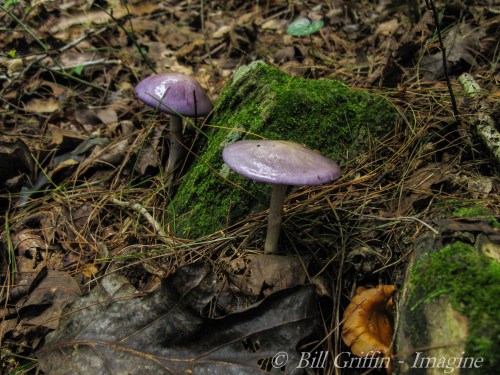
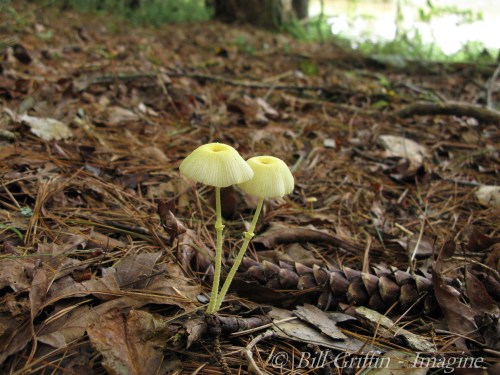
Last week I took a walk in the woods with my oldest friend Bill (distanced by 2-meter dog leash). We were forest bathing (shinrin yoku): phones off, listening to Grassy Creek accompany our rustic trail, smelling leafmold, fungus, pines, going nowhere and getting there; reflecting on the moment, simmering in our conjoined past which stretches all the way back to our grandfathers who worked together on the same railroad 60 years ago.

Every trail, though, has a way of turning. Almost back to our cars, Bill happened to ask, “What are you going to do with your stuff before you die?” Us old guys, especially old poets, think about dying. Good story fodder. Let me tell you the one about . . . . Just not usually as concrete as what will become of our earthly matter when no one wants it any more.

Stoff: German, translates as substance. Two synonyms for Oxygen are Sauerstoff and Atemluft, the first meaning acid substance (early chemists’ misconception that all acids must contain oxygen) and the second meaning air for breathing. We humans can live about 3 minutes without oxygen before our brains lose neurons and our substance begins to degrade, but oxygen is pure poison to many microorganisms and tricky to deal with even for our own mammal cells (or why else would anti-oxidants be such a big deal?).

Stuff is pretty frangible. Are the moment’s mental occupations or the day’s consuming concerns any more tangible? Bill shared with me a photo of his granddad Enoch Blackley in his engineer’s gear from the 30’s, outline of pocket watch visible through the denim of his overalls. I have one very similar of my granddaddy Peewee Griffin. The bit of stuff comprising those old prints, grains of silver on paper, is mere milligrams of matter; the cubic volume of memory those images reveal is larger than many lives.

My Stoff – carbon, nitrogen, phosporus – will feed the trees. May I leave behind the tempo of my walk, the sound of laughter, honest tears of compassion, a couple of good poems. Maybe that’ll do.

.     .     .     .    .     .     .

These two poems are from Kakalak 2020, the annual anthology of Carolina poets, by writers whom I don’t know and hadn’t read before. Lucinda Trew’s Of Stars fills me with wonder, all the universe in a crow-eye seed, somewhere within the secrets of universe wanting to be spilled out. Jane Craven’s Speaking of the World does just that, the image of a small flower expanding to hold the pain and contradictions of the most intimate relationships.

Metaphor is the tool that communicates the mysteries which swirl around us and within us, the inexplicable spark of our synapses, the spin of our electrons. Some things can’t be spoken, only sung.

Forest Bathing Trail, Grassy Creek off Mountains-to-Sea Trail

.     .     .     .    .     .     .

Of Stars
If you wish to make an apple pie from scratch, you must first invent the universe. – Carl Sagan

The conjuring orchard man
holds hemispheres in sturdy hands
cupping chaos and creation
presenting apple halves
for inspection
and the revelation

of stars
a crop circle enigma etched
within sweet flesh
five symmetrical rays cradling
crow-eye seeds
small enough to spit
vast enough to hold eternity –
the very dust and stuff

of stars
carbon, nitrogen, oxygen
phosphorus – the breath and wingbeat
of birds who rise from reeds and nest

the rush and thrum
of boys who scrabble up bark, swagger
wave applewood swords

the sway and silhouette
of branches, girls dancing
longing for the moon

of pulse and surge
of cities, song, engines
prayer

the earthen realm
of roots and worm, turnips
and bones

the axial turn
of tides and shells
molecular chains

and of apples
twisted exquisitely, evenly
in half
spilling stars
and seeds and secrets
of the universe

Lucinda Trew, Kakalak 2020, Main Street Rag Publishing Company

.     .     .     .    .     .     .

Forest Bathing Trail, Grassy Creek off Mountains-to-Sea Trail

.     .     .     .    .     .     .

Speaking of the World

Pinprick faces open in a violet fever behind my house – swathes
of mazus flowering downhill. A cultivar

from the Himalayas, it’s bred to survive scarcity and climate extremes.

In your world, the doctors have gone, left your body

a prescribed burn, lightly
elevated in a rented hospital bed, handfuls of pills labeled for days.

The trees, to a one, freeze beneath a milky lichen – and you who sleep

year round with open windows are speaking of the world –
of the last deer you saw weaving through balsam, of the bear

who bent double the birdfeeder, wild turkeys and their long-
neck chicks, a lone slavering coyote crossing the yard.

Grief, you say
three times,
each a dry leaf
papering
from your lips.

I left you in the boreal world, rushed back to my own life.
And I admit this with unnatural ease, like there’s no shame

in turning toward the sun, in enduring.

Jane Craven, Kakalak 2020, Main Street Rag Publishing Company

.     .     .     .    .     .     .

Lucinda Trew: http://trewwords.com/about/
Jane Craven: https://www.janecraven.com/bio

.     .     .     .    .     .     .

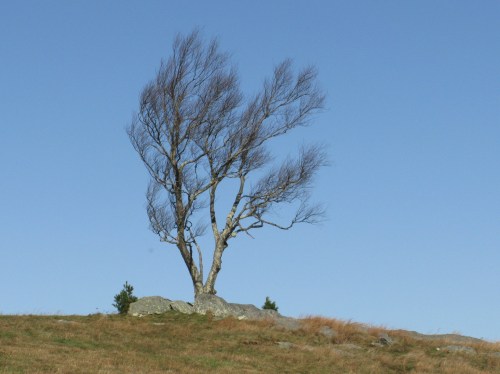
2020-11-03b Doughton Park Tree

Read Full Post »