Feeds:
Posts
Comments

Posts Tagged ‘Kenneth Rexroth’

 . 
Poems for the Earth: Kenneth Rexroth, Denise Levertov, Robert Frost
 . 
Lute Music
 . 
The earth will be going on a long time
Before it finally freezes;
Men will be on it; they will take names,
Give their deeds reasons.
We will be here only
As chemical constituents –
A small franchise indeed.
Right now we have lives,
Corpuscles, ambitions, caresses,
Like everybody had once –
All the bright neige d’antan people,
“Blithe Helen, white Iope, and the rest,”
All the uneasy remembered dead.
 . 
Here at the year’s end, at the feast
Of birth, let us bring to each other
The gifts brought once west through deserts –
The precious metal of our mingled hair,
The frankincense of enraptured arms and legs,
The myrrh of desperate invincible kisses –
Let us celebrate the daily
Recurrent nativity of love,
The endless epiphany of our fluent selves,
While the earth rolls away under us
Into unknown snows and summers,
Into untraveled spaces of the stars.
 . 
Kenneth Rexroth
 . 
❦ ❦ ❦
 . 
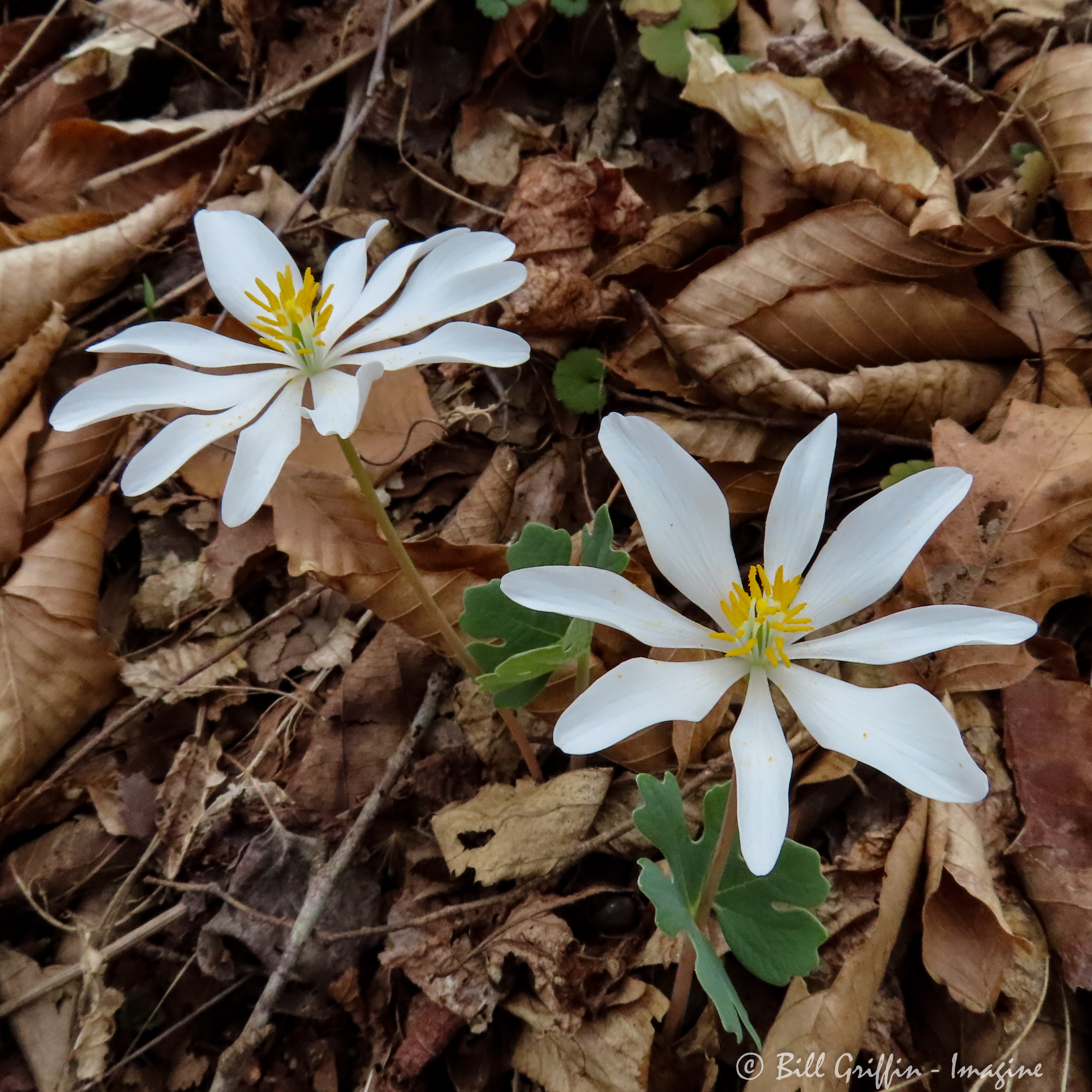
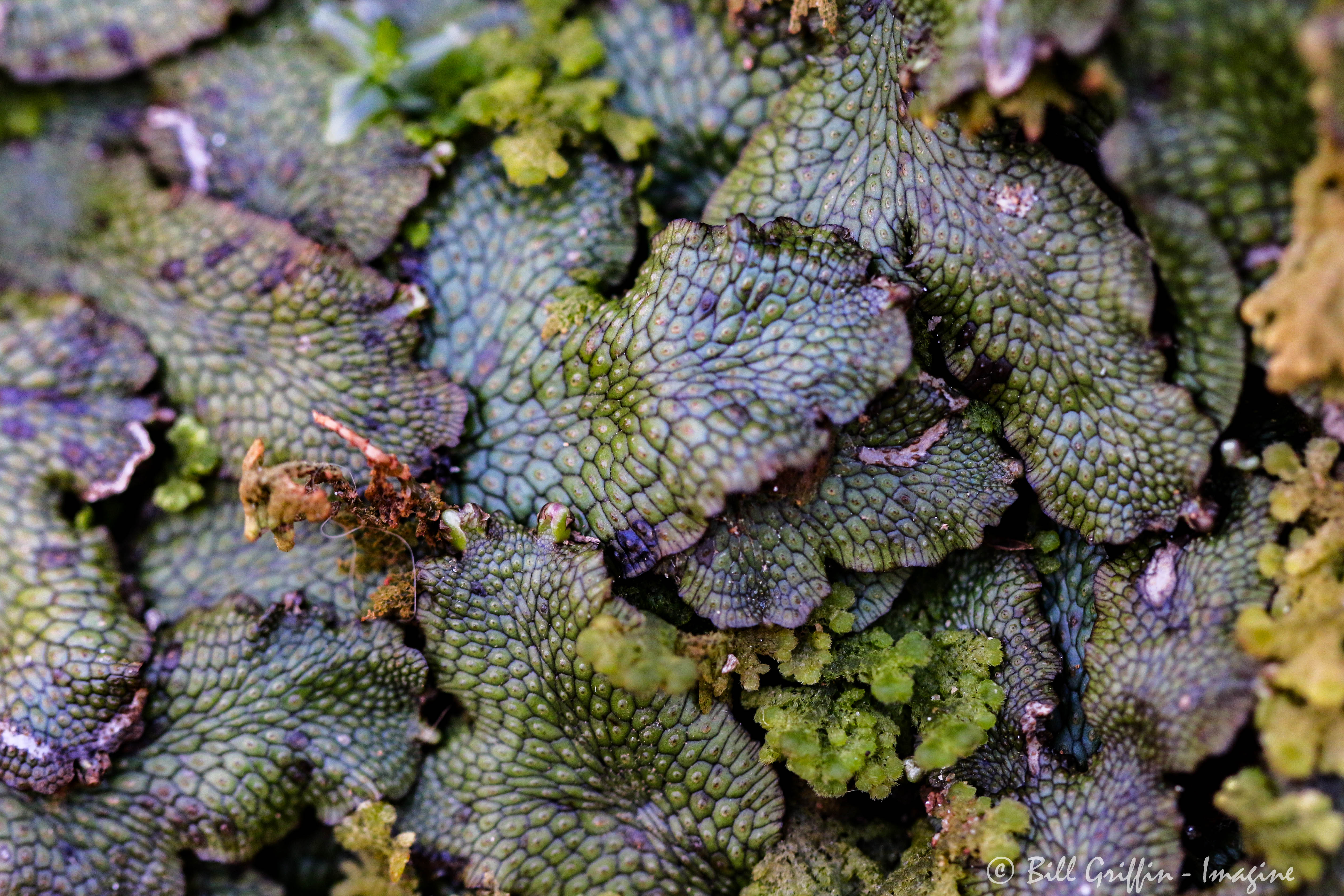
Is it really so strange that the close observation of life, noticing its many particulars and how desperate it is to spread and mingle and weave itself among the web of all other lives no matter how disparate and also individually desperate, strange that the observation and celebration of this planet solely and most fortuitously devoted to conjuring life should also ferment within the observer a noticing and rumination about death? Beside the stream the liverworts unclasp their primitive green. Rockspray nourishes them for a moment then continues its endless work of washing the ashes of earth to the sea. Between right now and when my own ashes will join them is less than a blink for the water, the rock, the bryophytes. Two or three blinks would be more than enough to embrace the span of my entire species on this middle-aged planet. A small franchise indeed.
 . 
In our current society the virtues have lost most of their value to inflation (inflation of ego primarily), and of all virtues humility seems valued least. Another winter is apparently ended but it is hard to shake the chill of despite that has settled and will not permit dispelling. For the few years left of my personal franchise among the living, where is the warmth? Right here, though, is my favorite seat on the back porch. Its cushion retains the signature of my backside. Ten feet away my favorite among all trees remains undiscouraged, staid Beech perhaps a quarter century my elder. Its scars and knots only enhance its beauty. At its crown the long slender leafbuds already unfurl to prepare the deep shade so welcome come May. And that smooth, grey skin – the filamentous liverworts readily accept its unselfish invitation to reside. As a representative of a large-brained apex species, could I humble myself before such an insignificant creature as a liverwort? Could I be half so generous as the Beech? Perhaps it is warm enough after all – life is poised to spread and mingle. Let’s go out front into the sun and plant some seeds.
 . 
 . 
❦ ❦ ❦
 . 
The Past III
 . 
You try to keep the present
 ==== uppermost in your mind, counting its blessings
 ====  ==== (which today are many) because
although you are not without hope for the world, crazy
 ==== as that seems to your gloomier friends and often
 ====  ==== to yourself, yet your own hopes
have shrunk, options are less abundant. Ages ago
 ==== you enjoyed thinking of names
 ====  ==== for a daughter; later you still entertained,
at least as hypothesis, the notion
 ==== of a not impossible love, requited passion;
 ====  ==== or resolved modestly to learn
some craft, various languages.
 ==== And all those sparks of future
 ====  ==== winked out behind you, forgettable. So –
the present. It’s blessings
 ==== many today:
 ====  ==== the fresh, ornate
blossoms of the simplest trees a sudden
 ==== irregular pattern everywhere, audacious white,
 ====  ==== flamingo pink in a haze of early warmth.
But perversely it’s not
 ==== what you crave. You want
 ====  ==== the past. Oh, not your own,
no reliving of anything – no, what you hanker after
 ==== is a compost,
 ====  ==== a forest floor, thick, saturate,
fathoms deep, palimpsestuous, its surface a mosaic
 ==== of infinitely fragile, lacy, tenacious
 ====  ==== skeleton leaves. When you put your ear
to that odorous ground you can catch the unmusical, undefeated
 ==== belling note, as of a wounded stag escaped triumphant,
 ====  ==== of lives long gone.
 . 
Denise Levertov
 . 
 . 
❦ ❦ ❦
 . 
POETRY FOR EARTH DAY 2025
 . 
Our ability to perceive quality in nature begins, as in art, with the pretty. 
It expands through successive stages of the beautiful to values 
as yet uncaptured by language.
Aldo Leopold
 . 
Is it only serendipity that Earth Day and National Poetry Month are celebrated together each year in April? Our need for the Earth, our love for the Earth, are beyond language, yet poetry must continue to yearn to express that love.
 . 
Do you have a favorite poem that enlarges the boundaries of community? That notices the often overlooked? That celebrates all life on earth as one family together? We invite you to share! The deadline is April 10. See full guidelines at this link:
 . 
 . 
 . 
These poems by Kenneth Rexroth, Denise Levertov, and Robert Frost are collected in The Ecopoetry Anthology, edited by Ann Fisher-Wirth and Laura-Gray Street; © Trinity University Press, San Antonio TX, 2020
 . 
 . 
Liverworts are ancient non-vascular plants, some 9,000 different species inhabiting every continent except Antarctica and almost every habitat and niche. They have been grouped with mosses and hornworts in the division Bryophyta, although some taxonomists split them into their own division, Marchantiophyta. One particular species, Frullania eboracensis, the New York Scalewort, is particularly noticeable on smooth barked trees such as beech, maple, and holly.
 . 
 . 
❦ ❦ ❦
 . 
The Most of It
 . 
He thought he kept the universe alone;
For all the voice in answer he could wake
Was but the mocking echo of his own
From some tree-hidden cliff across the lake.
Some morning from the boulder-broken beach
He would cry out on life, that what it wants
Is not its own love back in copy speech,
But counter-love, original response.
And nothing ever came of what he cried
Unless it was the embodiment that crashed
In the cliff’s talus on the other side,
And then in that far-distant water splashed,
But after a time allowed for it to swim,
Instead of proving human when it neared
And someone else additional to him,
As a great buck it powerfully appeared,
Pushing the crumpled water up ahead,
And landed pouring like a waterfall,
And stumbled through the rocks with horny tread,
And forced the underbrush – and that was all.
 . 
Robert Frost
 . 
❦ ❦ ❦
 . 
Doughton Park Tree 2019-02-09
 . 

Read Full Post »

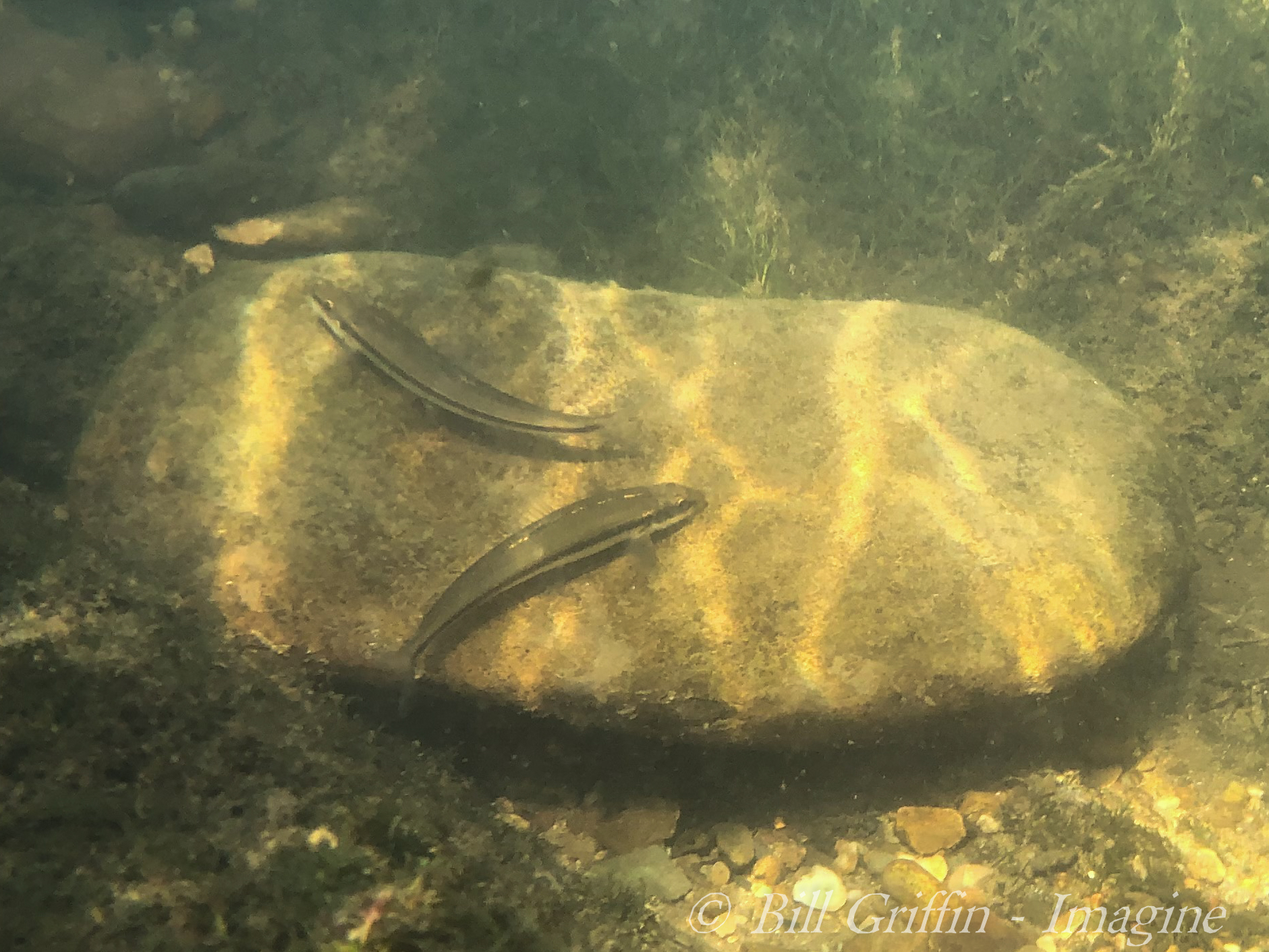
Warpaint Shiner – Luxilus coccogenis

[with poems by Robert Wrigley and Kenneth Rexroth]

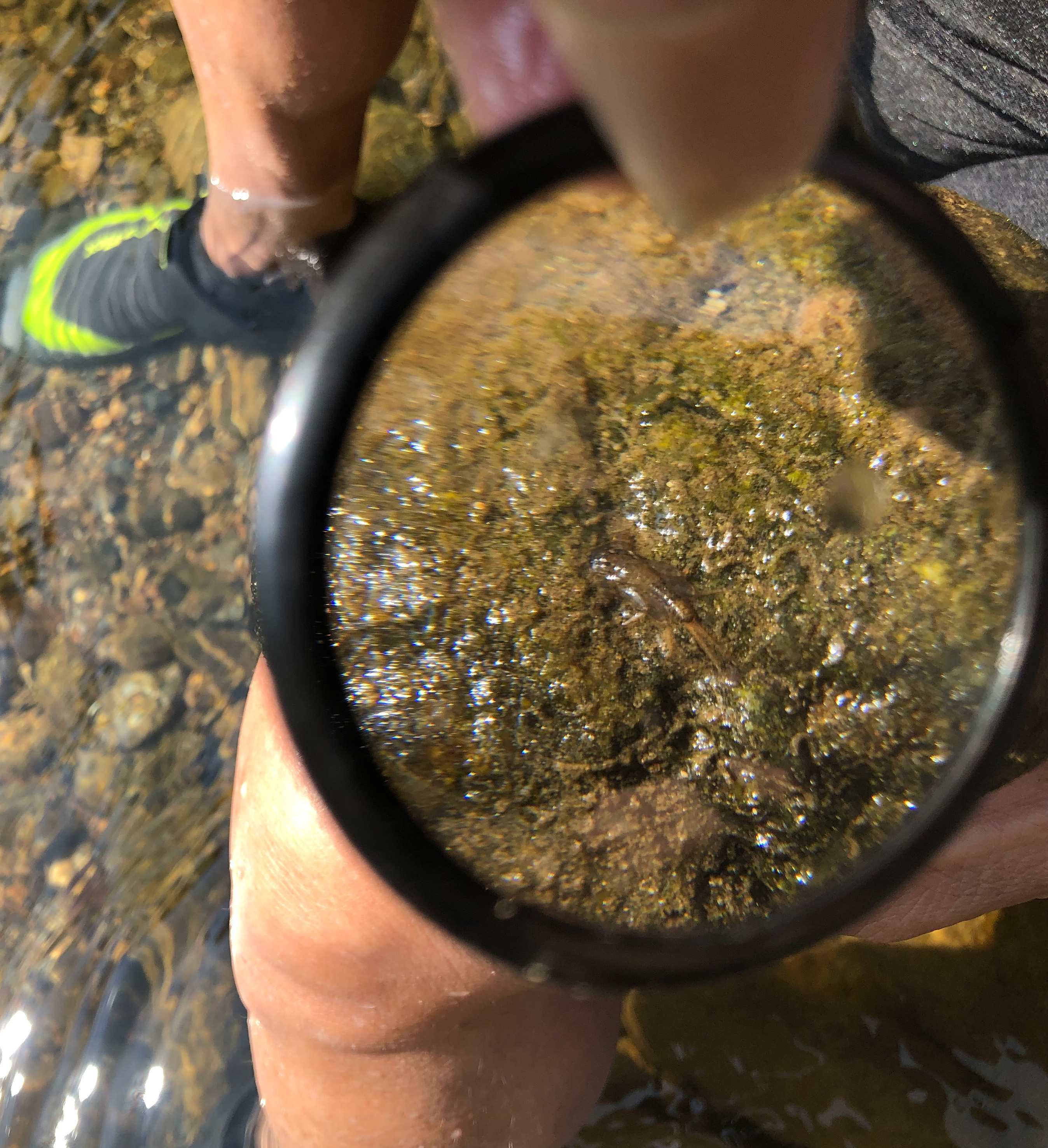
Rheophilic. Current loving. The shiners and darters face upstream while the swift clear river fetches them good things to eat. Nymphs of dragonfly, stonefly, alderfly have hooks on their feet to creep after prey across the slick stones. Salamander larvae protected in the cobbles breathe oxygen washed over their gills by the flow.

And the most unexpected, the strangest, the most fully adapted to current: the water penny – one with the rock, clinger and creeper, beetle larva, flexible carapace completely shielding it from the torrent. One among multitudes in the punch and spray, swirl and eddy, immersed in the flash and grasp of water from which all make their living.

All things flow. The first ancestors of all mayflies clung or crept or climbed or burrowed and now there are 600 species of mayfly. Symbols and images spin an unbroken thread which if I think about it I call thinking. Words whirl into new meanings. Today we dunk our faces in the Middle Prong to share its life. Tonight the current will fetch us good things to dream. Tomorrow will be a whole new river.

[* 600 species of Mayfly in the United States, 3,000 species worldwide.]

.     .     .     .     .     .     .

Anything the River Gives
++++Robert Wrigley

Basalt, granite, tourmaline, the male wash
of off-white seed from an elderberry,
the fly’s-eye, pincushion nubbins yellow
balsamroot extrudes from hot spring soil,
confetti of eggshell on a shelf of stone.
Here’s a flotilla of beaver-peeled branches,
a cottonwood mile the shade of your skin.
Every day I bring some small offering
from my morning walk along the river:
something steel, blackened amber with rust,
an odd pin or bushing shed by the train
or torqued loose from the track, a mashed penny,
the muddy bulge of snowmelt current.
I lie headlong on a bed of rocks,
dip my cheek in the shallows,
and see the water mid-channel three feet
above my eyes. Overhead the swallows
loop for hornets, stinkbugs, black flies and bees,
gone grass shows a snakeskin shed last summer.
The year’s first flowers are always yellow,
dogtooth violet dangling downcast and small.
Here is fennel, witches’ broom, and bunchgrass,
an ancient horseshoe nailed to a cottonwood
and halfway swallowed in its punky flesh.
Here is an agate polished over years,
a few bones picked clean and gnawed by mice.
Here is every beautiful rock I’ve seen
in my life, here is my breath still singing
from a reedy flute, here the river
telling my blood your name without end.
Take the sky and wear it, take the moon’s skid
over waves, that monthly jewel.
If there are wounds in this world no love heals,
then the tings I haul up – feather and bone,
tonnage of stone and pale green trumpets
of stump lichens – are ounce by ounce
a weight to counterbalance your doubts.
In another month there won’t be room left
on the windowsills and cluttered shelves,
and still you’ll see me, standing before you,
presenting some husk or rusty souvenir,
anything the river gives, and I believe
you will love.

from Earthly Meditations: New and Selected Poems by Robert Wrigley, © 2006, Penguin. Reprinted in The Ecopoetry Anthology, edited by Ann Fisher-Wirth and Laura-Gray Street, © 2013, Trinity University Press, San Antonio, Texas.

.     .     .     .     .     .     .

Common Snapping Turtle – Chelydra serpentina

.     .     .     .     .     .     .

Lyell’s Hypothesis Again
++++ Kenneth Rexroth (1905-1982)

An Attempt to Explain the Former
Changes of the Earth’s Surface by
Causes Now in Operation — subtitle of Lyell: Principles of Geology

The mountain road ends here,
Broken away in the chasm where
The bridge washed out years ago.
The first scarlet larkspur glitters
In the first patch of April
Morning sunlight. The engorged creek
Roars and rustles like a military
Ball. Here by the waterfall,
Insuperable life, flushed
With the equinox, sentient
And sentimental, falls away
To the sea and death. The tissue
Of sympathy and agony
That binds the flesh in its Nessus’ shirt;
The clotted cobweb of unself
And self; sheds itself and flecks
The sun’s bed with darts of blossom
Like flagellant blood above
The water bursting in the vibrant
Air. This ego, bound by personal
Tragedy and the vast
Impersonal vindictiveness
Of the ruined and ruining world,
Pauses in this immortality,
As passionate, as apathetic,
As the lava flow that burned here once;
And stopped here; and said, ‘This far
And no further.’ And spoke thereafter
In the simple diction of stone.

Naked in the warm April air,
We lie under the redwoods,
In the sunny lee of a cliff.
As you kneel above me I see
Tiny red marks on your flanks
Like bites, where the redwood cones
Have pressed into your flesh.
You can find just the same marks
In the lignite in the cliff
Over our heads. Sequoia
Langsdorfii before the ice,
And sempervirens afterwards,
There is little difference,
Except for all those years.

Here in the sweet, moribund
Fetor of spring flowers, washed,
Flotsam and jetsam together,
Cool and naked together,
Under this tree for a moment,
We have escaped the bitterness
Of love, and love lost, and love
Betrayed. And what might have been,
And what might be, fall equally
Away with what is, and leave
Only these ideograms
Printed on the immortal
Hydrocarbons of flesh and stone.

from The Collected Shorter Poems. Copyright © 1966 by Kenneth Rexroth. New Directions Publishing Corporation, http://www.wwnorton.com/nd/welcome.htm. Reprinted in The Ecopoetry Anthology, edited by Ann Fisher-Wirth and Laura-Gray Street, © 2013, Trinity University Press, San Antonio, Texas.

.     .     .     .     .     .     .

Stargazing Minnows grazing — Phenacobius uranops

Greenside Darter – Etheostoma blennioides

.     .     .     .     .     .     .

.     .     .     .     .     .     .

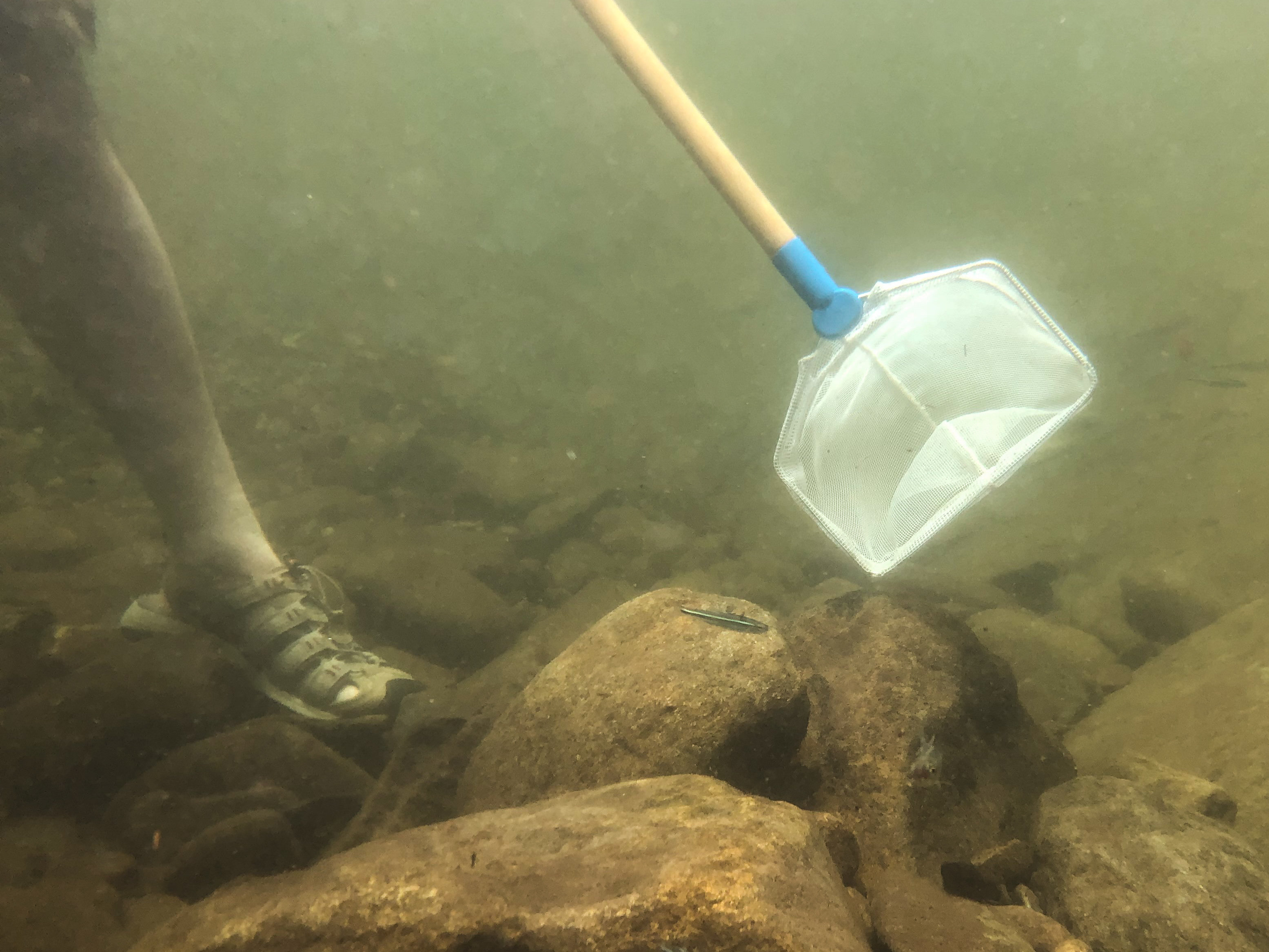
The Southern Appalachian Naturalist Certification Program is an adult education opportunity created and administered by Great Smoky Mountains Institute at Tremont and the University of Tennessee, Knoxville. Their mission – connecting people with nature. SANCP certification requires completing eight weekend-long courses; I took my first course, Birds of the Smokies, in May, 2017, and finished my final course, Aquatic Ecology, on July 25, 2021.

Many thanks to the ecology superpowers of Erin Canter, Manager of Science Literacy and Research and master of making connections; to John DiDiego, GSMIT Education Director; to Jeremy Lloyd, Manager of Field and College Programs; and to all the educators and staff at Tremont.

Psephenidae field sketch by Bill Griffin. All photographs by Bill Griffin.

.     .     .     .     .     .     .

Mayfly nymph – Order Ephemeroptera

Water Penny – family Psephenidae


.     .     .     .     .     .     .

2020-11-03a Doughton Park Tree

Read Full Post »