Feeds:
Posts
Comments

Posts Tagged ‘imagery’

April 27, 2012 – first scarlet tanager of spring, Elkin, NC.

If I had an hour and good binoculars I could spot him, but I know he’s there.  There’s no other song like his, just exactly like a robin with a 40 pack-year smoking history.  He always arrives about a week after the big oaks in our neighborhood have fully leaved, and then he hangs out way up in the canopy.  I’ll come back tomorrow when the sun is high, follow my ears, and when he lunges from the greenery for a moth or a beetle, I’ll have him.  A red like no other red.

Last week Linda was drawing at her desk when Saul ran in from the next room.  “Granny, I seed a red-headed woodpecker on the bird feeder!”  He pulls her into the den and there is indeed a woodpecker on the feeder, a male downy, patch of red at his nape.  “Good, Saul!  That is a woodpecker.  But a red-headed woodpecker has a head that is red all over.”  About fifteen minutes later Saul is back.  “Granny, see this red-headed woodpecker!”  And it’s head is red all over.  A bright fiery cardinal.

Red birds.  So startling!  So noticeable, so eye-catching!  Is the northern cardinal, Cardinalis cardinalis, the state bird of seven out of fifty because it’s so familiar and recognizable or because it is exotic, unbelievable that something so bright would allow itself to be seen by mortals?  I remember the first time I actually saw Piranga olivacea, the scarlet tanager.  I’d heard plenty calling and singing but never spotted one.  June 17, 1994, I was visiting my brother-in-law Skip for a weekend at his place in southern Ohio (off the beaten path doesn’t half do it justice).  Mid-morning with the binocs, about to quit because of warbler-neck (cricked back searching the tops of trees for spots of color), and there he was.  Perched high in brightness, not even attempting to conceal his flame.

Just to share a moment of that creature’s living breath, to see something in clarity and commonplace that up until that moment has been so elusive and so desired, it is to feel the earth, nature, creation expanding around me and I am a single cell in the body of God.  And if the sun is shining tomorrow, I think I’ll walk around the block and try to see another.
IMG_2128

.     .     .     .     .

It’s been almost a year since I last saw a scarlet tanager.  It’s been about a year since I last read Mary Oliver’s book, Red Bird.  I need to return to both.  Scarlet tanagers aren’t rare, although one has to go where they are to see one.  And look up.  Mary Oliver’s poems don’t seem rare.  So conversational, so commonplace.  Being alive is not particularly rare.  Six-plus billion of us Homo sapiens are engaged in it today. Out of the one-thousand four-hundred and forty minutes in each day, I don’t pause to consider many of them rare.

Shouldn’t I?  Read this poem with me.  Read and let us, you and I, share a moment of each other’s living breath.

.     .     .     .     .

Red Bird Explains Himself

“Yes, I was the brilliance floating over the snow
and I was the song in the summer leaves, but this was
only the first trick
I had hold of among my other mythologies,
for I also knew obedience: bringing sticks to the nest,
food to the young, kisses to my bride.

But don’t stop there, stay with me: listen.

If I was the song that entered your heart
then I was the music of your heart, that you wanted and needed,
and thus wilderness bloomed there, with all its
followers: gardeners, lovers, people who weep
for the death of rivers.

And this was my true task, to be the
music of the body.  Do you understand?  for truly the body needs
a song, a spirit, a soul.  And no less, to make this work,
the soul has need of a body,
and I am both of the earth and I am of the inexplicable
beauty of heaven
where I fly so easily, so welcome, yes,
and this is why I have been sent, to teach this to your heart.”

from Red Bird, Mary Oliver, Beacon Press, © 2008 by Mary Oliver

.     .     .     .     .
Read Full Post »

I don’t know anything.  I’ve got a lot of people fooled into thinking I do, but no, I don’t know anything.

Sometimes Linda accuses me of thinking I know everything.  Well, OK, maybe I do tend to blurt out answers.  I hope I’m not as obnoxious as Bill Murray watching Jeopardy in Groundhog Day, but I do suffer from a mild case of expository blatheromania.  “What is a stereoisomer?”  “How about a four letter word for ‘wing-like’?”  Linda won’t let me within fifteen feet of her when she’s working a crossword. But all this fact stuff is just trivial.  I has nothing to do with knowing.  I say things out loud to test myself, to see if I finally do know anything.

Nope, still don’t.

All of which is making me very nervous about being the featured reader (along with Debra Kaufman) at Walking into April this Saturday. [April 14, Barton College, 9:00 a.m., Sam and Marjorie Ragan Writing Center – be there and place your bets as to whether I know anything.] It’s not the reading part.  I love to read and recite – my poetry, classic poems, a Sam Ragan or two – I’m a big ham.  No, it’s the little entry on the day’s schedule at 11:00 that says “Roundtable Discussion with Griffin and Kaufman, who will present their tips on writing and reading poetry.”

Right now the anything I don’t know the most about is poetry.  As in a total mistrust of whatever I possess that passes for taste, opinion, judgement, skill.  I worry that at the very moment I begin to like a certain poem that proves that it’s inferior.  “Man, you don’t know anything about GOOD poetry.”  And those poems that appear to me as if they were compiled by a random phrase generator?  “What is the matter with you, man?  Where’s your head?”  Maybe it’s just lack of self-confidence.  Maybe it would help to beg an audience with the Wizard of Oz, who would tell me, “Nonsense, lad!  You imagine you have no poetic soul, but all you need is this . . . [fill in the blank:  MFA; Fellowship; Pushcart; One thousandth ‘like’ on WordPress].”

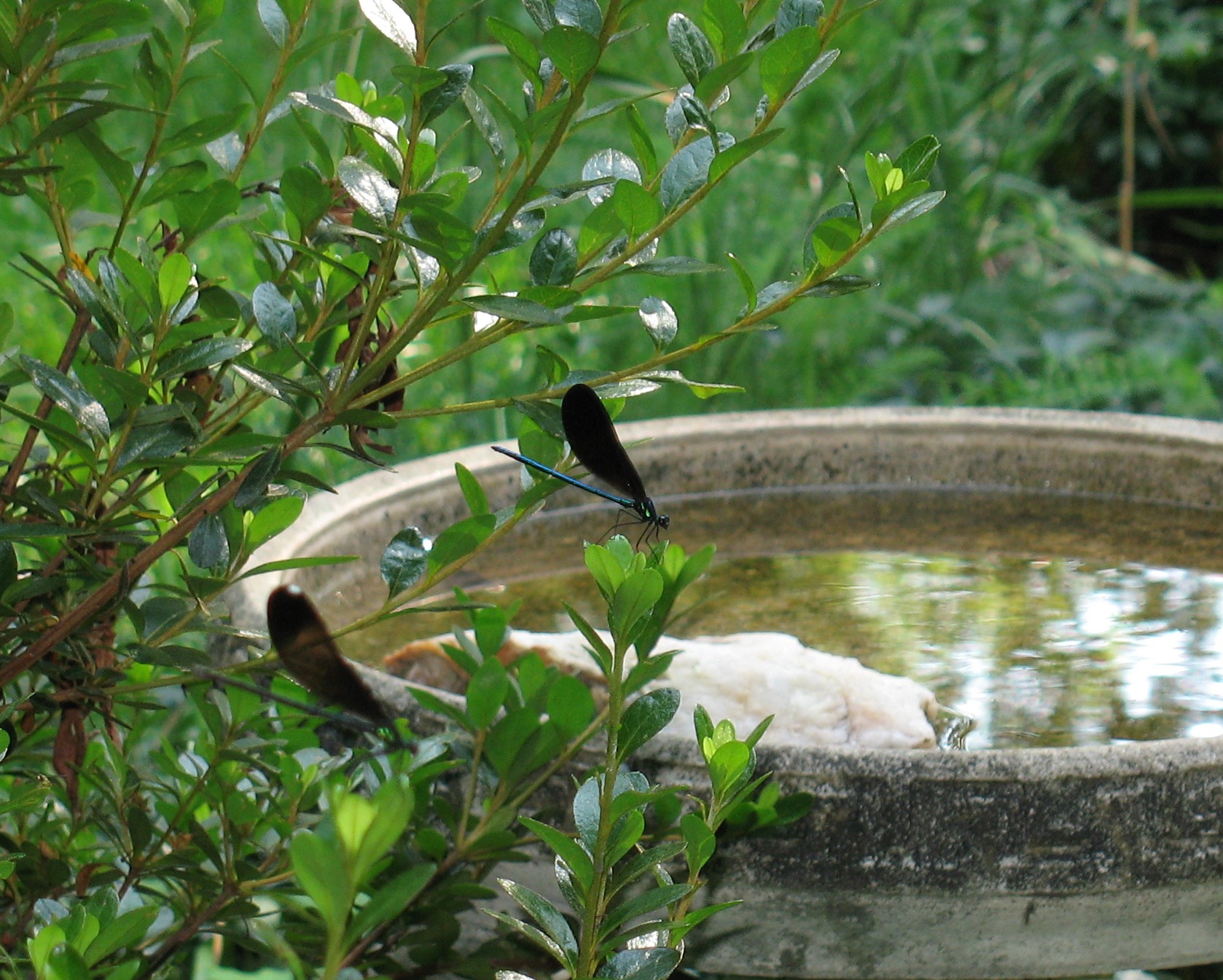
There’s only one cure.  Read some more poems.  Let myself get caught up in images that seem to float effortlessly from line to line like dragonflies laying eggs on the mirror of a pond.  Words never before juxtaposed that now seem as if they were meant to be married since the genesis of language.  A narrative so exotic and at once so universal that I suddenly realize it’s my own story this strophe has captured.

Maybe I’ll discover I don’t need to know anything.

IMG_0061_crop01

.     .     .    .     .

Now Debra Kaufman knows something.  I have sat in her presence.  As she shares, the lines wind and flow like silk ribbon that seems so casual but soon binds you with no escape.  Her poems may hint at a personal history at the same time they are invoking an entirely new and fantastic landscape.  I walk into that landscape, look around, and find myself at home.

I am counting on you, Debra.  Knowing you’ll be there on Saturday, I will stand up straight, put off all this sidling nonsense, and walk upright into April.

.     .     .     .     .

Autumnal Equinox

Sugar maples blaze at sunset;
leaves swoop and skirt
the chilling wind like chimney swifts.

A boy leaps into leaves,
calls to a neighbor’s Irish red,
as light falls, a cat’s white shadow,

on his grandmother’s lap.
Her hands rest there,
her grandmother’s hands,

the same boniness of wrist and knuckle,
dry fingers nearly flammable in the smoky air.
She smells ripe pears

and feels her body drawn
toward the darkness that rolls in
earlier each day.

Heat and light retreat,
and evening covers everything
except the boy, whose hair shines

silky silver light
as he tosses armfuls of color
upward, like sparks.

from The Next Moment (Jacar Press)

.     .     .     .     .

Debra Kaufman is a North Carolina poet, playwright, and educator.  The Next Moment is her most recent poetry collection.  Her short and full-length plays have been performed throughout North Carolina and elsewhere. Debra is the recipient of a North Carolina Arts Council playwriting scholarship and of a grant from the Central Piedmont Regional Artists Hub Program.

Sample her work at:

Debra Kaufman homepage

Kathryn Stripling Byer — Here Where I Am (blog)

Scott Owen’s Musings

Moon-Mirror-Whiskey-Wind

.     .     .     .     .

IMG_1948

Read Full Post »

“As needed?”

When I left the hospital last Saturday night a fat Vidalia moon was just peering through the trees that circle the campus.  There were two cars and a pickup in the visitors’ lot.  Lined up on the front bumper of a dented black Civic were three of those deer blasters, chrome-plastic gizmos four inches long that look like little jet engines.  When you’re driving sixty they’re supposed to emit an ultrasonic whistle that spooks the deer so they don’t jump in front of your car.  Gives you an idea of the kind of traffic concerns we contend with out here in Surry County.

As I crossed to the lower lot (there was only one car at the far end – mine) I glimpsed movement.  I stopped and turned.  A grey fox trotted across the pavement.  Ignoring me.  It sauntered into the bushes at the perimeter of the landscaping and never made a sound or quickened its step.  Time to spring forward.

The big trees are still bare but this week the cherries blossomed.  Canada geese in the hospital pond have paired off.  Sunday morning I saw a pair of hooded mergansers and a wood duck eyeing each other near the nesting boxes I donated a couple of years ago.  How long until fuzzy chicks leap unafraid from the nesting cavity and plop into the water like tennis balls?  Everything is precisely as it should be.

What is needed?

Some day soon – five years?  ten? – I’ll make evening rounds for the last time.  There are plenty of things I’ll miss.  The Monday mornings after a long weekend on call.  Clowning around with the nurses – walk the halls with a big mug that says “DUKE” if you want to start a civil war.  My partners: sitting down to puzzle out a confusing patient; cracking each other up with the deadly black humor that makes you shut the door of the conference room.  And of course my patients.  Figuring out what they need and being right a lot of the time.  Figuring out who they are.  Figuring out who we are together.

And I wouldn’t even mention that there are plenty of things I won’t miss, except that they fall into the category of things-that-piss-me-off and are mostly the same for everyone who has survived into the twenty-first century: mindless productivity-sapping bureaucracy; people that manipulate and take advantage of you; being unappreciated, or underappreciated.

But there’s one more thing I really won’t miss.  Although it makes me irritable (ask Brenda and Carolyn at the office), it isn’t having to think about ten things at once – adrenalin just primes the pump, after all. It isn’t even the 3 a.m. calls from worried mothers – hell, that’s what I signed on for.  And it isn’t fear, although there have been plenty of crisis situations when I’ve been scared, and I don’t like that.  That thing I will be most glad to put behind me is something I might name “malignant uncertainty.”  I don’t know what comes next, I’m not sure what to do, but if I don’t make a decision in the next thirty seconds something real bad is going to happen.  Close corollary – I’ve given the order, the die is cast, and now I will sit and watch the outcome for minutes, hours.  Will this baby’s breathing slow to normal?  Will this old woman’s blood pressure come back up?  Will somebody hold my hand?

What do I need?

Besides another weekend off?  A couple of hours to write these lines?  An insight bright enough to make sense of it all?  A moon that pours through the branches while the fox and I pause to listen to spring peepers?

Will I figure it out before I’ve missed it?

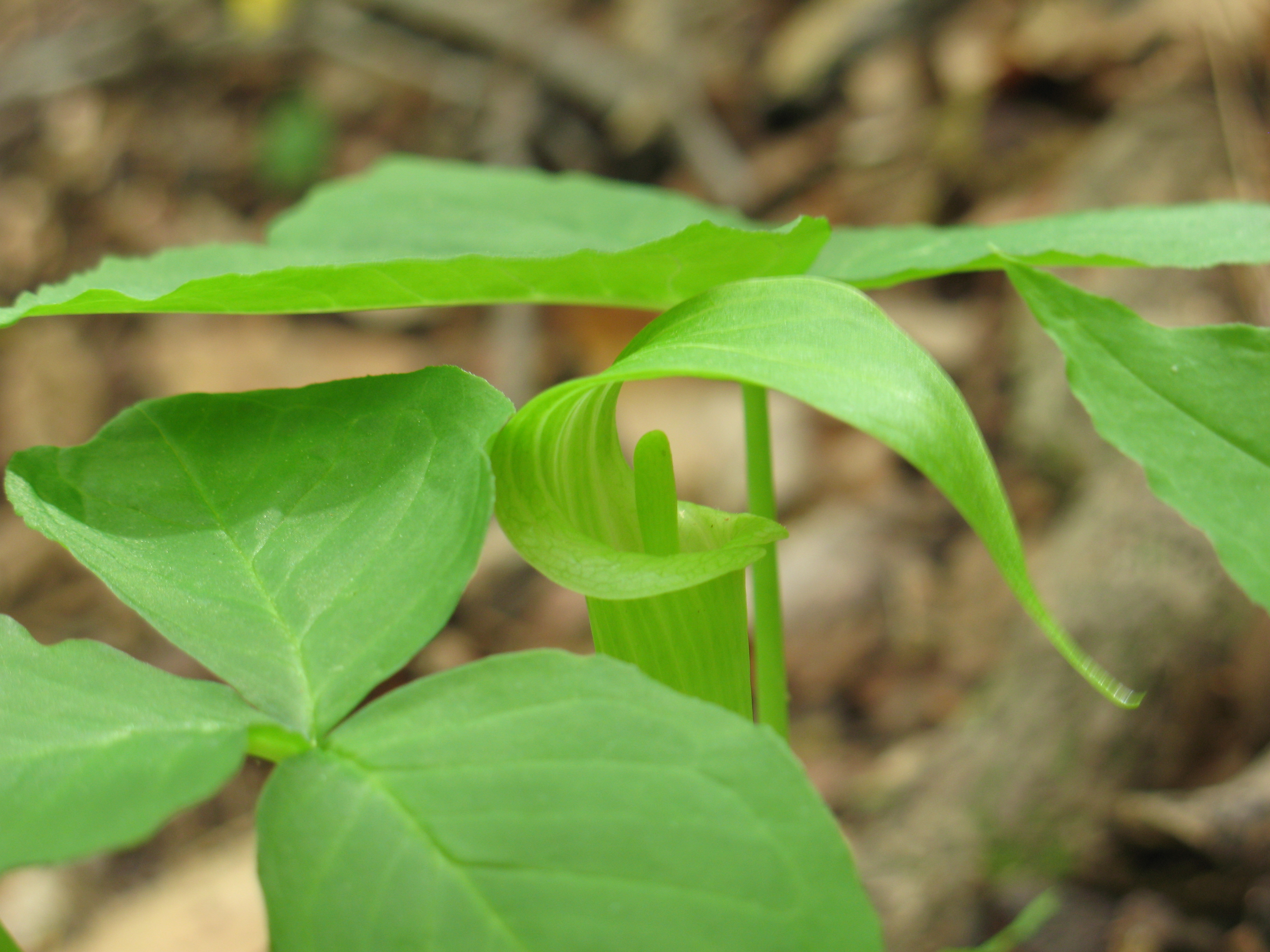
DSCN4937

Painted Trillium

.     .     .     .     .

The Geriatrician Ages

They don’t fly up at him, all these names,
n
o confusion of pigeons’ wings
in the parking lot; they don’t lock arms
            to block him entering
the next exam room;
maybe they awaken him near dawn
but not by shaking. More like
            the powdery flutter
of a moth disturbed in daylight,
the mute gray snowfall
of ash from burning newsprint.

Many he can’t recall, but all of them
he recognizes when their dry lips
whisper their presence
            from the other side –
not accusations (their ease of passing
one more benediction
of his calling), not really thanks
            though most are grateful,
mostly just an airy I . . . I
in his cluttered bag of memories.

So many, so often now, more and more.
Each murmur a spirit body bowed
into a wheelchair, curled mantis-like
            in bed, pushing against a walker,
each of them pushing, pushing
against what held them here
and what let them go.
            Some days he can’t remember
if he last saw them on evening rounds
or in a dream, and any moment
he expects the office door to open:
            one will enter, speak
his name, one he had thought
was gone.

.     .     .     .     .

first published in the Journal of the American Medical Association, Vol. 304, No. 16, p.1754,  October 27, 2010

IMG_1783

Read Full Post »

« Newer Posts - Older Posts »