Feeds:
Posts
Comments

Posts Tagged ‘imagery’

 . 
[with 3 poems by Pat Riviere-Seel]
 . 
Wander Until You Find the Trail Back
 . 
How insistent the world wakes you,
Daylight pushes through dense blinds.
A one-note bird insists on an answer.
Always the same pulsing – waking – wanting
to know what next? How to parse a life
caught in mid-flight, the light a web woven
in the night. All the things we never talk about.
We let the stories we tell ourselves define us.
What would we be without the myths?
Desire contains ire. De- as in deconstruct,
dismantle the dire. Desire nothing. Construct
your own lifeline. Getting lost may be the last
best thing that ever happens.
 . 
Pat Riviere-Seel
from Because I Did Not Drown, Main Street Rag Enterprises, Edinboro, PA; © 2025
 . 
❦ ❦ ❦
 . 
I think I know where I’ve been and I imagine I know where I’m going. But do I really know anything? I certainly don’t know where this narrative is going. Josh and I are sitting beside a rutted gravel track eating lunch. It’s the last meal of our last day on the trail. Sometime this afternoon a banged up old van will arrive to carry us all back to base camp. While the boys joke around and my co-leaders snooze, I gather some of the trash left by previous loungers and eaters. I lift a sandwich wrapper and discover a pocket knife.
 . 
The summer of 1969 Linda and I started going together. About a week after we held hands for the first ime – had we even kissed yet? – I got on a bus in Akron at 5 AM with three fellow Boy Scouts to spend two weeks at Philmont Scout Ranch in Cimarron, New Mexico. Now it’s the summer of 1983 and our own two kids are teenagers. Josh, our eldest, and I have just finished ten days of hiking Philmont together with his troop – desert plateau and Ponderosa pine forests, rushing gorges and a 12,000 foot peak. Our big adventure is ending. I stuff refuse into my sandwich bag and discover that pocket knife.
 . 
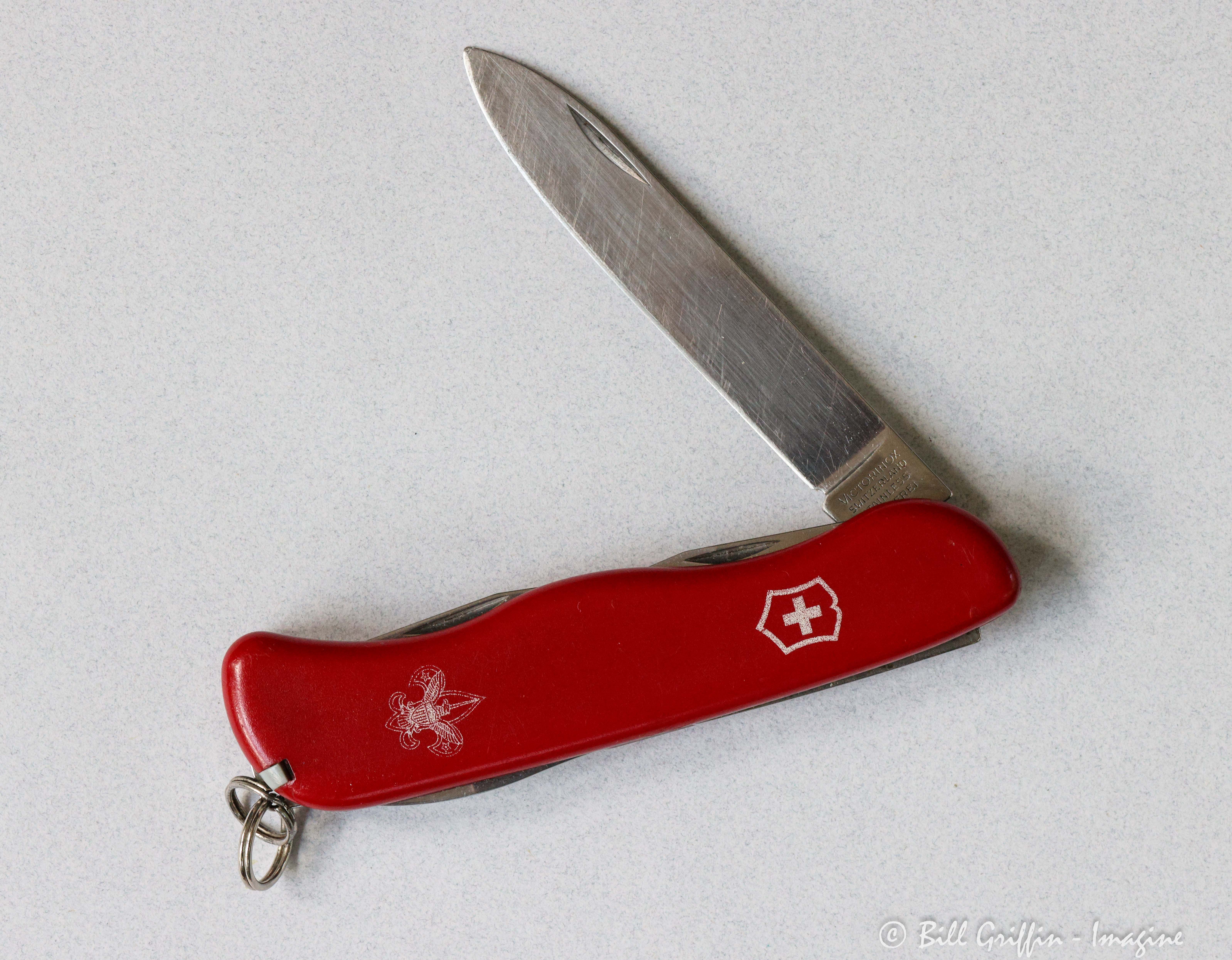
In the summer of 2025 I rummage my desk to return that knife to my pocket. I can’t find it. Turn out the pockets of all my pants, upend my day pack, creep beneath the desk and out to the car under all the seats – not there. I have often pictured the Boy Scout who lost that fine, top-of-the-line Swiss Army Scout’s knife. He had sat there on the ground eating lunch the day before I did. The knife stealthily squeezed its way out of his pocket. He littered his garbage on the knife and never missed it until that night. Too late. Karma. He violated the ethic of Leave No Trace and relinquished his knife to me, diligent trash picker. And such a knife – lock-blade, screw driver & awl, little tweezers and trademark Victorinox toothpick. I will carry it for over forty years, sharpen it and oil it, admire it every time I pull it out and wonder at my worthiness.
 . 
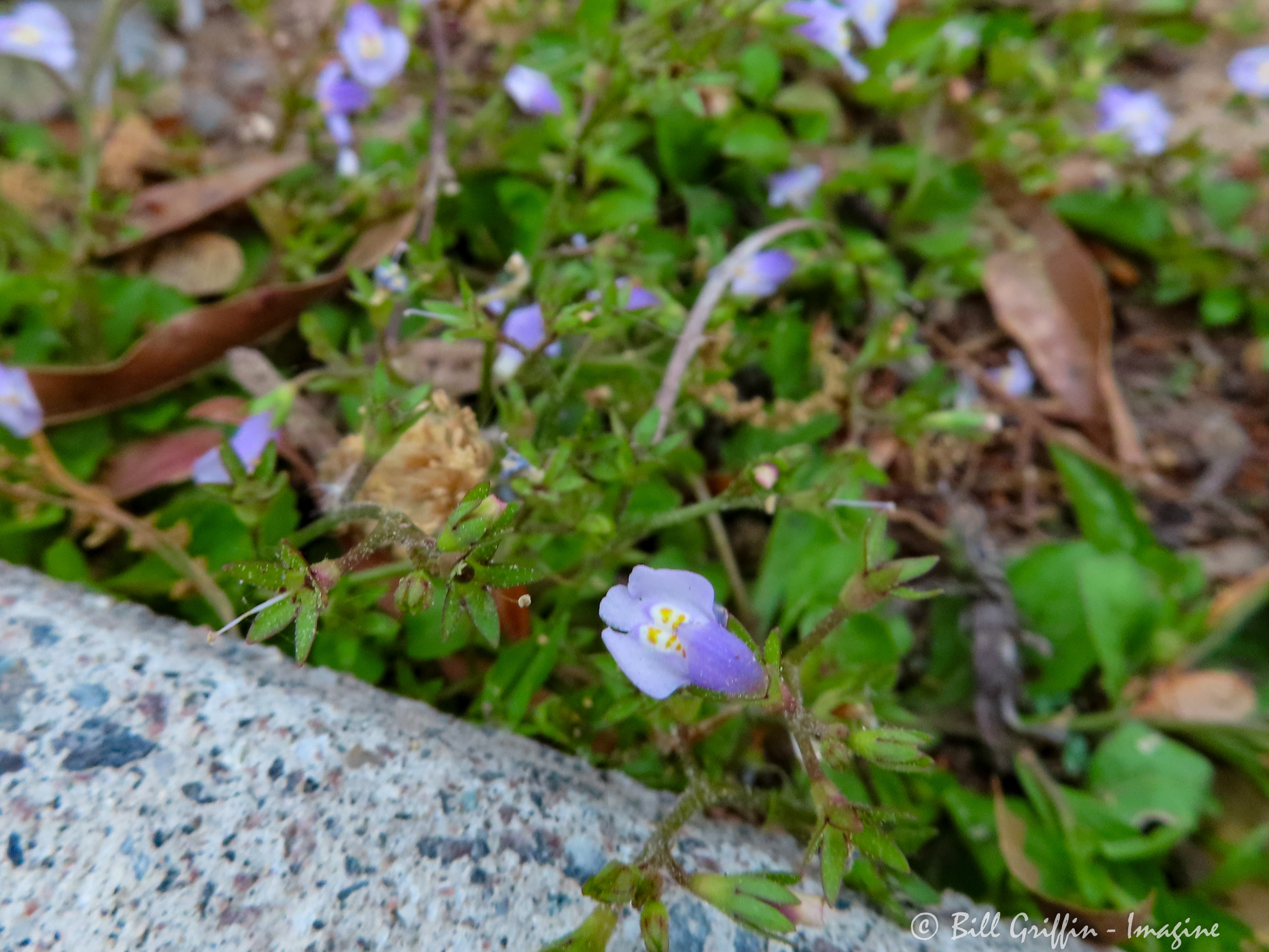
Now I’m imagining someone else finding my knife, excuse me, our knife. Beside a hiking trail where I had squatted to identify a flower? In a parking lot stuck to tar? Appreciate it. Or don’t. I held it for a good long time. This is letting go.
 . 
 . 
❦ ❦ ❦
 . 
How to Rebuild Community
 . 
Coming out of the pandemic
+++ I’m having trouble
knowing how to act.
+++ This new landscape
more hardscrabble than highway,
+++ a tightrope walk
not a garden promenade.
 . 
When I offer my outstretched hand
+++ to a woman
I’ve just met, she fixes me
+++ with a chilly stare, says,
I don’t shake hands anymore.
+++ And suddenly I’m ashamed
of my bacteria-filled palm, its brazen
+++ need for connection.
Is it also infected with The Virus? I’m tempted
+++ to rush away, down the hall
and lather that offending hand
+++ with hot sudsy water, the way
we scrubbed our vegetables not so long ago.
 . 
How do I move from cautious
+++ to community?
The knitters know. When they notice
+++ the chaos in the coffee shop,
the customers shouting out orders,
+++ the din around them rising like bread,
impossible to ignore,
+++ Jane stitches herself
to the cash register,
+++ Linda begins bagging cookies
Cathy slices strawberry cake. Their hands
+++ smooth the angry air
grown thick with impatience
+++ and want.
The knitters’ hands fly like needles –
+++ knit one, purl two,
opening, closing, shaping. Each palm
+++ holds a single need to serve.
 . 
Pat Riviere-Seel
from Because I Did Not Drown, Main Street Rag Enterprises, Edinboro, PA; © 2025
 . 
❦ ❦ ❦
 . 
Pat Riviere-Seel writes and writes and writes. Has written, is writing, will write. A solid lifetime of essays, poetry, technical pieces, editing, teaching – her life has been creating with words. Because I Did Not Drown is a portmanteau of Pat’s life, her writing life, her life in writing. A memoir fits pieces into a whole – dates and sequences, family and relationships, loves and desires. A good memoir colors them all with the deeper hues of the soul – fear and disappointment, aspirations and joy. This memoir achieves all that plus one more thing: the crystalline beauty awakened by poetry. Each memory in prose is accompanied by one or two poems. Poems touch and reveal the soul of these moments in Pat’s life.
 . 
I discover myself in these poems, not as outward subject but inward seeker. I often find that I more fully inhabit and participate in the lines of a poem that in a paragraph of prose. The distilled essence of poetry is like volatile spirit that shoots straight from tongue to consciousness. Wonderfully intoxicating. A draught that frees and connects. Next time we meet, Pat and I, we shall surely dance.
 . 
❦
 . 
I can still see that knife. I thought to replace it but the model is no longer manufactured and someone wants eighty bucks on Ebay for one like it. Plus it wouldn’t be the object found, the discovery, the reward. Nevertheless, I can still see that knife because this week I found it shoved in the back of a drawer. Where is this narrative going? Is nothing ever truly lost that once occupied a space in one’s heart? Bosh! Or perhaps the finding is the thing rather than the thing that’s found. Tomorrow I will sit to eat a sandwich with my son and I won’t be able to keep myself from peaking beneath the napkin.
 . 
❦
 . 
Because I Did Not Drown by Pat Riviere-Seel, a memoir in prose and verse, is available from Main Street Rag Enterprises.
 . 
Selected poems from previous books by Pat Riviere-Seel:
 . 
 . 
❦ ❦ ❦
 . 
Astonished
+++ for SLM
 . 
how since your death
the natural world keeps itself,
kaleidoscopic, the brilliant shimmer,
sunlight silvering bay leaves, the veins
of water oak, the dogwood’s sad commentary –
now a winsome glow,
as if every molecule of you
infuses this Earth you loved.
 . 
I expected otherwise – had your death been
anything I considered – that the birds and trees,
the swamps and all that still lives would mourn
as we do. The landscape would lose itself,
fade into shades of gray. The rain that all summer
refused to fall would flood the highest ground.
But now you’ve turned to glimmer. Each glance
into the world I thought I knew brings
a new configuration. You remain everywhere.
 . 
Pat Riviere-Seel
from Because I Did Not Drown, Main Street Rag Enterprises, Edinboro, PA; © 2025
 . 
❦ ❦ ❦
 . 
 . 
Doughton Park Tree 2015-06-15

Read Full Post »

 . 
[with 3 poems by Kathryn Kirkpatrick]
 . 
Turbulence
 . 
Of the stomach lifting. Of the weightless
where I was and am again variety.
 . 
Sway and crack, our craft. Slalom
the wind. So much carbon in the currents.
 . 
Of the climate kind. Of the jerk and twack.
Of the hurtling toward. Shake right out
 . 
of our human. As if we might not
settle back into these bodies,
 . 
but land instead in someone else.
Yet the hare far below isn’t empty
 . 
to receive us. Neither is the horse.
They have their own embodied plans.
 . 
We will have to settle beside ourselves
Blurred boundaries and all. Bump,
 . 
rattle, and creak. Our enlightened selves
grasp cokes, play solitaire, read, sleep,
 . 
going on as if what’s happening isn’t.
With more than prayers
 . 
holding us up, we are nonetheless
tossed in the vastness.
 . 
Kathryn Kirkpatrick
from Creature, Jacar Press, Durham NC; © 2025.
 . 
❦ ❦ ❦
 . 
ah spring spring 
how great is spring! 
and so on 
Bashō (1644-1694)
 . 
Basho has perfectly snared my mood this morning. I am reading Spring haiku at SeasonWords.com: Ah, Winter vanquished!, Ah, new life!, blah, blah, blah. I am not feeling newly lively these days, especially not as the sun so gaily rises. By day I seem to be the rock between two storms, my father and my son, but by 4 AM I have eroded to sand and the bed is far too gritty for sleep. Now this haiku blog offers a prompt for the season and encourages sharing? Here are my Spring lines:
 . 
what to say
when everyone’s “spring, spring” –
toads trilling
 . 
In her book Haiku and Senryu: A Simple Guide for All, Charlotte Digregorio states, Wherever one lives, one experiences changing seasons. The haiku’s brief flash illuminates one specific moment. We read the terse lines and might recognize where we are, but certainly, and more critically, we do know precisely when we are. Perhaps we have never shared the haiku’s circumscribed space, but we do share the time of pollen, the humidity, crisp crackling leaves, the shivers. A moment’s experience broadens into a communal truth.
 . 
In that sense, haiku becomes less an instruction in encountering nature and more an invitation to shared humanity. Besides the experience of changing seasons, the thing we all share is the experience of suffering. A moment’s observation may stand in as a piercing metaphor: Spring’s anticipation, Summer’s lassitude, Autumn’s anxiety, Winter’s dread. And perhaps pricked by that dart of connection upon reading a haiku, we might also share one more thing – joy.
 . 
Just to be fair, I imagine my Spring haiku is not really an indictment of inane people chattering around me. On a dark night after rain, the lonesome trill of an American toad rising from down in the woods is a peace offering. My son and I stood on the deck last night and heard it together. Yes, it was very dark. This morning, light has returned. Again. Oh my. The season rolls on.
 . 
❦
 . 
In 1685, the Japanese astronomer Shibukawa Shunkai adapted the 24 Solar Terms of the Chinese calendar for Japan and created 72 seasons. As we learn at SeasonWords.com, these 72 seasons “offer a poetic journey through the Japanese year in which the land awakens and blooms with life and activity before returning to slumber.” Mark, the site’s curator and naturalist, shares lessons from nature corresponding to the seasons; haiku both ancient and modern that complement the lesson; and craft tips / kigo with a prompt and an invitation. Readers share their haiku and receive commentary.
 . 
Visit https://seasonwords.com/ and subscribe to receive periodic postings in your mailbox!
 . 
 . 
❦ ❦ ❦
 . 
The Ridge
 . 
1.
One day I found the outline of a deer
in the snow. She’d slept on the old logging road
above our home, curled against the cold.
 . 
Her imprint on a trail I’d walked for
twenty years was intricate and vulnerable
as I now feel since strangers bought this land.
 . 
their cameras
nailed to the trunks of trees
Christ
 . 
2.
At first I waved. New to the neighborhood,
the seemed shy. Hovering at the side
of the road with their harnessed dogs, they walked
 . 
harnessed too, shoulders hunched, eyes averted.
About their money I didn’t then know, or
Appalachian families letting go of land.
 . 
orange flags
festoon the property lines
orioles in snow
 . 
3.
What we had of commons among
hill people here is gone, our hollow hollowed
out, our waves, our lifted heads, our calls across
 . 
casual borders fretted now by registered
mail. “Not authorized.” “Legal action.” They’ve
no bonds to sunder because they’ve no bonds made.
 . 
camera 1
my shetland sheepdog framed
first day of spring
 . 
4.
Surveyed for surveillance, the ridge. But I
can love what I don’t own. I miss the oaks,
their wide-girthed stillness. I miss the mountain’s
 . 
spine. Across family lands and state lines,
through Cherokee and Appalachian time,
the mountains stay. The mountains stay. They stay.
 . 
a taloned sun sets
the red-tailed hawk
needs no human hand
 . 
Kathryn Kirkpatrick
from Creature, Jacar Press, Durham NC; © 2025.
 . 
❦ ❦ ❦
 . 
Creatures – so we are. We seek what all creatures seek, but especially we seek the closeness of other creatures. Kathryn Kirkpatrick is visited by crows and grieves for house wrens dying and for cows separated from their calves. She reveals her creature’s struggle and confusion as she loses her mother. She is not afraid to say that she hesitates to speak of death because every creature must face death but fears to do so. She reveals moments and connections and we readers look about us to discover her light is casting our own shadow. And in the closing section of Creature, Kathryn Kirkpatrick has written the finest collection of dog poems I’ve read in twenty years.
 . 
Creature by Kathryn Kirkpatrick at Jacar Press: HERE.
 . 
 . 
❦ ❦ ❦
 . 
On Finding Monarch Caterpillars in September
 . 
And whatever love a parent
feels stealing bread for a starving
child, I have it as I dig by
the flimsy light of my bargain
headlamp, having driven miles for the last
of the chain-store milkweed, which will
feed these ravenous young in their striped
skins, who are no metaphor, who stand for
themselves only, though in my ecological
worry, my long-range fright, I am surely
standing for something as I shovel in the dark.
 . 
Kathryn Kirkpatrick
from Creature, Jacar Press, Durham NC; © 2025.
 . 
In their multi-generational migration pattern, the endangered monarch butterfly bears its fourth generation in September and October. Rather than dying after two to six weeks as the earlier generations do, this generation migrates to warmer climates like California and Mexico, living six to eight months before starting the process again. – K.K.
 . 
 . 
❦ ❦ ❦
 . 
 . 

Read Full Post »

 . 
[with poems from Tar River Poetry by Michael Gaspeny,
Grey Brown, and Sydney Lea]
 . 
Burying the Runt
 . 
Rain so long
the dusty pink bucket
outside the basement brims
and a puny squirrel floats
++++ ++++ ++++ ++++ face down.
 . 
I dig a hole in the azalea bed
near the stair well. The ground splits
++++ into a glove
++++ ++++ with root threads for fingers.
++++ ++++ ++++ I trickle
++++ ++++ ++++ the bucket into its palm.
++++ ++++ The runt’s round stare catches the sun.
 . 
I cover the fuzzy ribs. Close the glove. Smooth
++++ the hole. ++++ Bless the soul
++++ ++++ in case
++++ there’s somewhere else.
 . 
Michael Gaspeny
from Tar River Poetry, Volume 64 Number 2, Spring 2025
 . 
❦ ❦ ❦
 . 
Perhaps bedtime reading infiltrates one’s dreams. I selected this particular book imagining it might hold the secret, and then hold that secret out to me in revelation: Where is God? Was I wrong to expect to find God in a book, when pretty much everything else I’ve ever wanted to find was in books? Or if the thing itself is not in a book at least the book is able to make the thing comprehensible, graspable, whole. Oh my, how that word creeps in, whole. I had read this author’s contemplations about becoming one’s complete and perfect self, wholly connected and part of the universe which is God, and now here I am halfway through her book, whose theme is “relational holism.”
 . 
But where am I really? These woods are dark and close. I can’t quite see what is screeching high up amidst the branches, but it sounds like quantum entanglement and Jungian archetypes. Assuming I do wake in the morning, I will recall snatches of dreams about trying to put things together that refuse to fit. Long halls and which of these closed doors is the one I’m meant to open? Being surrounded by people I could swear I should know but who don’t know me.
 . 
The title of this microessay is Manipulative Intelligence, subtitle The Paradox of a Trillion Synapses. Consider me a wholly average representative of my genus and species. I can read without glasses as long as the light is bright, but I can’t see remotely as well at distance as a hawk or as an owl at midnight. I can smell bread baking but the remainder of the world’s vast olfactory tapestry of edibles which is plain as the nose on a bear’s face is inscrutable to me. I can hear a C minor chord sung by a competent quartet but the deer can hear me coming a concert hall away. And I can’t imagine that those huge cetaceans with their massive cerebral cortices are thinking whalethoughts any less profound than my humanthoughts. What does that leave, then, to account for the relentless invasive proliferation of persons, for 9 billion homo sapiens infesting the earth?
 . 
Manipulative intelligence is the inborn gift of fiddling with things. Manual fiddling progresses to building machines capable of even bigger and faster fiddling. If there is one trait that makes humans unique, it is that we have fiddled with, changed, and are continuing to alter our surroundings. Not just for protection or dwelling, bowerbirds and beeswax, but we have manipulated our entire biosphere. The venture capitalists say, “Way to go!” while the rest of us who live on Planet Earth, including the hawks and owls and bears and deer and whales and bowerbirds and bees, say “What the fuck!” But here’s the paradox: besides imagining that our big heads are a fiddling gift, we also contend that our trillion+ synapses have made us the only creatures capable of encountering the Giver. And something about the way our limbic systems interconnect with our frontal lobes has also convinced us that we are God’s favorite.
 . 
Back to my book and my dreams. A hundred more pages of Ilia Delio to go. I promise I’ll make it to the finish line. To God. I will lie back and let Carl Jung sort out my dreams. Meanwhile this morning has presented a rare couple of hours with absolutely no prescribed fiddlings. Sitting on the porch while the house wren lets everyone in earshot know he has a nest and a mate here, while the beech and maple deepen the shade across the deck slats minute by minute, while I hold my notebook on my lap but don’t get another line written beyond Trillion Synapses, I’m thinking. Empty thoughts with no script or outline and no polysyllabic labels. Non-fiddling thoughts. I think Ilia is right. God is not out there. God is in here.
 . 
❦
 . 
The Not-Yet God: Carl Jung, Teilhard de Chardin, and the Relational Whole by Ilia Delio, O.S.F. Orbis Books, Maryknoll NY. © 2023
 . 
 . 
❦ ❦ ❦
 . 
Family Plot
 . 
Once on a cruise,
my mother spent the week
not letting my father find her.
 . 
Behind a book,
hunkered in a deck chair,
she would see him coming
 . 
and dash starboard
then dash again if need be.
She thought him ridiculous
 . 
disco dancing at 70,
his shorts and tube socks.
Why couldn’t he just read?
 . 
His second wife
insisted on his cremation
and I imagined my father
 . 
dancing into flames.
Now my mother
rolls alone under
 . 
the grass and plastic flowers
of a double plot, bought
too soon.
 . 
She draws the soil
up under her chin
but still does not miss him.
 . 
She wonders what will happen
to the space beside her.
She would not mind
 . 
if someone else moved in,
perhaps someone sensible,
someone who reads.
 . 
Grey Brown
from Tar River Poetry, Volume 64 Number 2, Spring 2025
 . 
❦ ❦ ❦
 . 
I treasure my memories of Tar River Poetry founding editor Peter Makuck. I met him first and formally through rejection letters, as kind as any, and later an occasional acceptance, O Frabjous Day! Later yet we met in person a few times at statewide poetry meetings. Bit by bit we discovered many more things in common – Ohio and Kent State, Bogue Banks, birding – and also shared more poetry with each other. I featured a poem by Peter during my tenure as Poet in Residence at the NC Zoo. Several times a year he would send me a poem he’d discovered that he thought I’d appreciate. And of course I was reading everything Peter published.
 . 
Peter Makuck was a truly generous and warm person. And creative, and insightful, and true. I am thankful to Advisory Editor Luke Whisnant for furthering the work Peter began at Tar River Poetry, and I am very grateful to the newest Editors, Charmaine Cadeau and Helena Feder, for Volume 64 Number 2. And here’s a shout out to everyone else whose name appears inside the front cover:
Advisory Board: Chris Abani, Alice Allan, Stephanie Bolster, Jane Hirshfield, Brandon Krieg, Dorianne Laux, Amit Majmudar, Matthew Buckley Smith
Interns: Onyx Bradley, Rebecca Donaldson, Paige Osché (hey Onyx, I’m the one who took that photo of you presenting at the NC Museum of Art in 2023 and sent to John Hoppenthaler)
 . 
Peter Makuck, Distinguished Professor Emeritus at East Carolina University, died in 2023 at the age of 83.
 . 
 . 
❦ ❦ ❦
 . 
Jeremiad
 . 
I should say it aloud, Don’t listen to me, one more old man
++ rebuking the younger
as old people will, a man half ashamed to be partway
++ launched into unspoken rant
just now by the sound – of all things on earth – of a nearby
++ pileated woodpecker
in awakening hardwoods behind the house, a sound that
++ occasions my own yen to squawk
at some innocent I see only in mind, Take out those Air Pods
++ or whatever they’re called
and hear this beat, pure percussion, granted, no music
++ beyond its simple tock
but somehow entailing a tune because, as Keats, though
++ himself no more than a stripling,
so rightly noted, Heard melodies are sweet but those unheard /
++ Are sweeter,
and true enough, that red-crowned bird offers up its song
++ without singing,
song of those hardwoods soon to burst into their million
++ shades of green,
of the ducklike calls from the pondside wood frogs, of
++ actual ducks, and so on and on.
Listen! I shout in silence, that tock contriving for us the
++ springtime dream
we’ll wake from, sadly, and into which so many have never
++ fallen, really,
and can’t, what with shells and mortars raking the world and
++ lethal airplanes aloft –
not like the two fabulous peregrine falcons racing this morning
++ majestically
across our lawn: no, not like bombers and drones that mob
++ the sky like bees –
no, not like bees that wills warm here soon, as the
++ woodpecker’s unheard strains declare
while I rebuke some unknown someone, and the soundless,
++ song may in fact scold me,
a man, judgmental, self-centered, who dares, in the midst of
++ all this abundance, to suffer
his thirst for more and looks around for even more, on the
++ verge of tears,
thrusting up his springtime lust as some old-fashioned
++ cartoon beggar
might hold up his cup – which may mean the man has
++ simply been wrong in this censure here
of the one or ones he’s conjured and cursed, and might have
++ done better with fingers in ears.
 . 
Sydney Lea
from Tar River Poetry, Volume 64 Number 2, Spring 2025
 . 
❦ ❦ ❦
 . 
IMG_0768, tree
 . 

Read Full Post »

« Newer Posts - Older Posts »