Feeds:
Posts
Comments

Posts Tagged ‘Ecopoetry’

 . 
[ with 3 poems by Jack Coulehan]
 . 
Darwin’s Prayer
++++ He saw Darwin on his knees, and there
++++ was no difference between prayer and
++++ pulling a worm from the grass.
++++++++ Roger McDonald, Mr. Darwin’s Shooter
 . 
Bright bunches
of gardenias
bloom in November,
 . 
the loam at their feet
moistened by dew
and spongy with debris.
 . 
As I fill my container
with handfuls of earth
alive with these
 . 
marvelous worms,
perfected in being
by the wisdom
 . 
of randomness,
I’m astonished
by gratitude.
 . 
from The Talking Cure: New and Selected Poems. Plain View Press, Austin TX, © 2020
 . 
❦ ❦ ❦
 . 
Last night the storm whispered its secrets into my dreams. A long dryness, a vain hoping. This morning the drought has ended and flood warnings will as well in an hour or so. Linda and I head to the E&A rail trail beside Elkin Creek to laugh and point at the heights reached by frothy current. To breathe in the hot seethe and funk of saturated forest. To celebrate.
 . 
The sadness of the creek slams us, stops us, stills us. Its churning water is the color of pumpkin soup; Spike the Heron does not stalk here; the rattle of Kingfisher is silent, fled. Oh yes, we generally get muddy after a downpour, but never this bad. Miles from here, north of Carter Falls, the dry weeks have parched and cracked 500 acres of tobacco field. No riparian buffer, no catchment pond, not one single fuck does the tobacco farmer give for all of us downstream: when rain eventually returns it can’t slow itself, can’t soak the earth. It has no choice but to sluice foaming into the creek carrying inch-acres of red clay with it.
 . 
 . 
The poems in Jack Coulehan’s The Talking Cure are expansive; they span the human experience and human influence. Many of his poems have arisen from his decades as teacher, physician, healer; the lines are populated by his patients and their struggles. So often these lines also reflect his own struggle, both to heal and be healed. Other poems explore his family through the generations. Others reflect his deep relationship with literary figures that formed him and with teachers who informed him.
 . 
In all of these poems I sense a web of connection. As humans we must all struggle to discover our purpose in being. In this struggle each of us is touched by the people we allow to approach us, to close in, to climb over the wall. And each of us touches others and touches the earth: the human experience and the human influence.
 . 
I selected these three poems in particular for their focused peering into that influence, and also for their universality. Jack Coulehan is a humanist, a person who believes that human beings have it within their power to improve the lives of other people whom they are willing to touch. So often, so easily and thoughtlessly, so many of us focus only on our power to dominate, to harm. We easily destroy the earth itself without even noticing. Let us stop and think. Let us feel. Let us touch and allow ourselves to be touched. Perhaps each of our individual lives can enlarge its span. The power of many begins with the power of one.
 . 
We are all downstream from someone, and all upstream.
 . 
 . 
❦ ❦ ❦
 . 
The Cherry Orchard
++++ If a great many remedies
++++ are suggested for some disease,
++++ it means the disease is incurable.
++++++++ Chekhov, The Cherry Orchard
 . 
The end of the century
has come upon us
without a sign of release
or the beginning of justice.
We’re selling the orchard
to pay our debts
and reminiscing about
love’s excitements,
life’s mistakes. I suspect
a century ago the hearts
of the people sitting here
were just as generous,
intense, and cruel as ours.
 . 
A miniature flower
thrives in the moisture
and dust of a broken
pavement – this is the gist
of the matter. We want
so strongly to believe
the flower will spread
everywhere. How quickly
it dies! If the disease
had a cure, we would not need
so many remedies.
 . 
Jack Coulehan
from The Talking Cure: New and Selected Poems. Plain View Press, Austin TX, © 2020
 . 
❦ ❦ ❦
 . 
Garden of Endurance
++++ Cassia grandis, Costa Rica
 . 
Cassia fruit covers the forest floor,
a blanket of black sausage stinking
in the heat as it decomposes,
a mote in the eye of permanence.
 . 
Built for grinding by gigantic teeth,
Cassia’s fibrous case condemns its seeds
to suffering, with neither mastodon
nor megatherium alive to free them
 . 
and distribute their undigested life
in mounds of shit. Its glory left behind
by climate, tooth, and claw, Cassia
endures by the grace of rodents
 . 
that gnaw its weakest fibers
and let a few fertile seeds escape
before they rot. Anachronistic
fruit, your survival – sweet tickle
 . 
of a breeze, illusion of peace,
diminishment that overcomes
extinction – is an inheritance
for my kind, too. A hopeful omen.
 . 
Jack Coulehan
from The Talking Cure: New and Selected Poems. Plain View Press, Austin TX, © 2020
 . 
For additional poems by Jack Coulehan, see last week’s post, Plow Straight, from August 25, 2023.
 . 
 . 
❦ ❦ ❦
 . 
Join me in celebrating the release of my newest poetry collection, How We All Fly, from The Orchard Street Press.
 . 
Poet Patricia Hooper comments: “Through close observations of the physical world, these clear, direct poems yield insights into the corresponding life of the spirit.” And Rebecca Baggett says this: “Throughout these poems, but particularly toward the collection’s end, How We All Fly leads the reader up and onward, infusing even inevitable losses with tenderness, trust, and hope.”
You may sample the opening poem from the collection here:
Thank you for your support, both of the writing you discover here and of the literary arts!
 . 
You may purchase a copy of How We All Fly directly from me by mailing a check for $15 (postage included) to this address:
++++++ 131 Bon Aire Rd.
++++++ Elkin, NC 28621
Please make your check payable to Bill Griffin.
 . 
If you would prefer to pay via PayPal, please contact me for transaction details at:
++++++ comments@griffinpoetry.com
 . 
 . 
[Patricia Hooper is author of Wild Persistence, University of Tampa Press. Rebecca Baggett’s most recent book is The Woman Who Lives Without Money, Regal House Publishing.]
 . 
❦ ❦ ❦
 . 
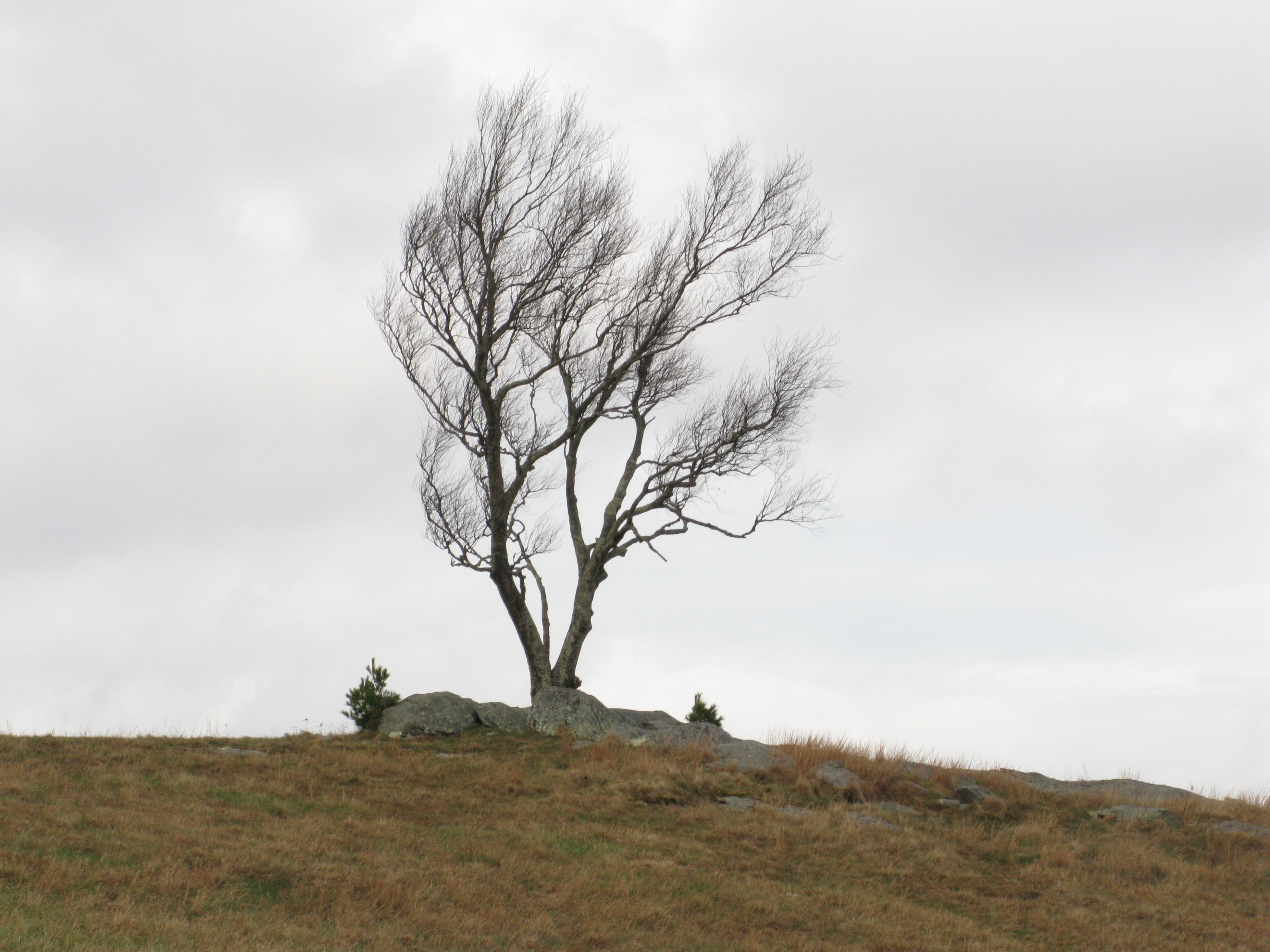
IMG_0880, tree
 . 

Read Full Post »

 . 
[3 poems from The ECOPOETRY Anthology]
 . 
from Song of Myself
 . 
6
A child said What is the grass? fetching it to me with full hands;
How could I answer the child? I do not know what it is any more than he.
 . 
I guess it must be the flag of my disposition, out of hopeful green stuff woven.
 . 
Or I guess it is the handkerchief of the Lord,
A scented gift and remembrancer designedly dropt,
Bearing the owner’s name someway in the corners, that we may see and remark, and say Whose?
 . 
Or I guess the grass is itself a child, the produced babe of the vegetation.
 . 
Or I guess it is a uniform hieroglyphic,
And it means, Sprouting alike in broad zones and narrow zones,
Growing among black folks as among white,
Kanuck, Tuckahoe, Congressman, Cuff, I give them the same, I receive them the same.
 .  . 
And now it seems to me the beautiful uncut hair of graves.
Tenderly will I use you curling grass,
It may be you transpire from the breasts of young men,
It may be if I had known them I would have loved them,
It may be you are from old people, or from offspring taken soon out of their mothers’ laps,
And here you are the mothers’ laps.
 . 
This grass is very dark to be from the white heads of old mothers,
Darker than the colorless beards of old men,
Dark to come from under the faint red roofs of mouths.
 . 
O I perceive after all so many uttering tongues,
And I perceive they do not come from the roofs of mouths for nothing.
 . 
I wish I could translate the hints about the dead young men and women,
And the hints about old men and mothers, and the offspring taken soon out of their laps.
 . 
What do you think has become of the young and old men?
And what do you think has become of the women and children?
 . 
They are alive and well somewhere,
The smallest sprout shows there is really no death,
And if ever there was it led forward life, and does not wait at the end to arrest it,
And ceas’d the moment life appear’d.
 . 
All goes onward and outward, nothing collapses,
And to die is different from what any one supposed, and luckier.
 . 
Walt Whitman (1819-1892)
collected in The Ecopoetry Anthology, Ann Fisher-Wirth & Laura-Gray Street (Trinity University Press, San Antonio, Texas, © 2020)
 . 
❦ ❦ ❦
 . 
They are alive and well somewhere . . . there is really no death
 . 
June 21 is cold and rainy. Perhaps that is why the slug feels confident to patrol the deck rail fully exposed. They (one slug being both male and female) retract their delicate ommatophora when we approach, perhaps because we are large and our movement is easily sensed. After a minute they once again extend those beautiful slender eyestalks, perhaps because we are large and easily overlooked. In a moment their glide and wander will discover a dense patch of algae shaded by a finial. Their many-toothed radula will work hard and satisfy.
 . 
Amelia and I watch until the rain drives us indoors. In a quarter hour it lessens and we return, but the slug has motored out of sight. Who knew it was so speedy? We peer under and around – no slug. She desires more slugs, so we hunt each post and rail of the deck, the green-hazed porch screens, the planters. We reach the far corner and look down into the mud and mangled trunks and branches left by this spring’s severe storm. Amelia asks why there is a layer of straw strewn across a patch of ground there.
 . 
 . 
Seeing the forecast for a week of rain, on Monday morning I had finally taken up my fire rake and attacked the old sandbox site. When April’s tornado uprooted a big maple and white oak next to it (along with a dozen other trees behind our house), it exposed the bones of half-eaten 6×6’s I’d used to build the sandbox for Josh and Margaret in 1983. I dug them up and hacked out chickweed, smartweed, much despised stiltgrass. What had once been white sand was now filled with worms and 40 years of accumulating humus. Delicious.
 . 
June 19-24 was Naturalist Challenge Week, sponsored by Great Smoky Mountain Institute at Tremont. Participate from anywhere on earth; earn points and you can win a prize – 10 points for planting pollinators. I mixed all my leftover native seeds from last fall: a tablespoon of Bluecurl my son-in-law Josh collected for me, four kinds of milkweed, some monarda and coreopsis and who knows what. I sowed them across 200 square feet now newly introduced to sunlight. I  sprinkled with straw as Amelia noticed. And around the edges I planted pumpkin seeds preserved from soup last Christmas, seeds Josh begged from his 100 year-old grandmother, perpetually propagated.
 . 
Yes, it’s late in the season for planting. Then again, who knows if we’ll even have frost this winter? Foothills NC, the new tropics. Every week Amelia and I can pause from our slug hunt, peer over the deck rail, and watch a patch of earth turning newly green. More life. I’ll save you a photo.
 . 
 . 
❦ ❦ ❦
 . 
November Cotton Flower
 . 
Boll-weevil’s coming, and the winter’s cold,
Made cotton-stalks look rusty, seasons old,
And cotton, scarce as any southern snow,
Was vanishing; the branch, so pinched and slow,
Failed in its function as the autumn rake;
Drouth fighting soil had caused the soil to take
All water from the streams; dead birds were found
In wells a hundred feet below the ground—
Such was the season when the flower bloomed.
Old folks were startled, and it soon assumed
Significance. Superstition saw
Something it had never seen before:
Brown eyes that loved without a trace of fear,
Beauty so sudden for that time of year.
 . 
Jean Toomer (1894-1967)
collected in The Ecopoetry Anthology, Ann Fisher-Wirth & Laura-Gray Street (Trinity University Press, San Antonio, Texas, © 2020)
 . 
❦ ❦ ❦
 . 
Today’s poems are from The Ecopoetry Anthology, edited by Ann Fisher-Wirth and Laura-Gray Street, with a rousing introduction by Robert Hass (Trinity University Press, San Antonio, Texas, © 2020). It is a comprehensive volume, with over a hundred twentieth- and twenty-first century poets, and the book’s opening Historic section includes, among many others, the three poets in today’s selection:
Walt WhitmanLeaves of Grass was first published in 1855 and by the second edition had doubled in length. Today’s small excerpt from Song of Myself highlights the manifold metaphor of the most common of green living things.
Jean Toomer – moved to the South in 1921 and was inspired to write Cane in 1923, a hybrid work intertwining narrative and poetry, then continued on to pursue a literary career. He became an important figure in the Harlem Renaissance.
Wallace Stevens – the vice president of an insurance company, Stevens wrote poetry late into the night and on vacations. He also wrote treatises which suggested poetry’s ability to supplant religion; his Collected Poems in 1955 won the Pulitzer Prize.
 . 
 . 
❦ ❦ ❦
 . 
from Sunday Morning
 . 
VI
Is there no change of death in paradise?
Does ripe fruit never fall? Or do the boughs
Hang always heavy in that perfect sky,
Unchanging, yet so like our perishing earth,
With rivers like our own that seek for seas
They never find, the same receding shores
That never touch with inarticulate pang?
Why set the pear upon those river-banks
Or spice the shores with odors of the plum?
Alas, that they should wear our colors there,
The silken weavings of our afternoons,
And pick the strings of our insipid lutes!
Death is the mother of beauty, mystical,
Within whose burning bosom we devise
Our earthly mothers waiting, sleeplessly.
 . 
VII
Supple and turbulent, a ring of men
Shall chant in orgy on a summer morn
Their boisterous devotion to the sun,
Not as a god, but as a god might be,
Naked among them, like a savage source.
Their chant shall be a chant of paradise,
Out of their blood, returning to the sky;
And in their chant shall enter, voice by voice,
The windy lake wherein their lord delights,
The trees, like serafin, and echoing hills,
That choir among themselves long afterward.
They shall know well the heavenly fellowship
Of men that perish and of summer morn.
And whence they came and whither they shall go
The dew upon their feet shall manifest.
 . 
Wallace Stevens (1879-1955)
collected in The Ecopoetry Anthology, Ann Fisher-Wirth & Laura-Gray Street (Trinity University Press, San Antonio, Texas, © 2020)
 . 
❦ ❦ ❦
 . 
 . 
2016-05-08a Doughton Park Tree

Read Full Post »

[with 3 selections from Tar River Poetry]
Letter to the Archaeologists of the Post-Anthropocene
You know already what fools we were,
how like the dog that starts itself awake
we jumped and bared our teeth
and turned to chase our tail, our fury
rising as we spun – and how, unlike the dog,
we did not hold our caught selves
gently, surprised to be at once the captive
and the captor, but chewed our own flesh
bloody, sure we were destroying that
which would destroy us. You already know
we killed our saviors, set fire
to our home, and ate
our bitter hearts. We said
because we owned what we destroyed
it was ours for the destruction,
and we destroyed it
to prove that it was ours.
You know all that.
You may not know, however,
just how much
we loved what we destroyed, how much
we longed to have it love us –
how even the cruelest among us
would stop sometimes to watch
the polluted sky at sunset
turning gold then pink then indigo.
Shane Sheely
from Tar River Poetry, Volume 62, Number 2. Spring 2023. © 2023 TRP
❦ ❦ ❦
Some ten years ago I became a phyto-heterotroph. Many people have asked whether it was a difficult transition and whether I have regrets. Not at all! To borrow a phrase from the general domain of heterotrophs, “Life is good.”
This week I’ve been reintroduced to a community of fellow heterotrophs after a year’s absence. We met in the woods on Grassy Creek’s Forest Bathing trail as they emerged  from the shady gloom, pale as the moon, a little creepy. Their scaly jointed fingers that are not fingers poked up from the leaf mould. They nodded their heads which are not heads. Not human, not fungus. What?
These are plants, flowering plants, but stark white, utterly absent chlorophyll : Ghost Pipes (Heath family, Ericaceae, same family as rhododendron, azalea, huckleberry, but so eerily different). Kneel to inspect the nodding head and you’ll see that it’s a flower, one at the apex of each stem, and indeed shaped like the flowers on my blueberry bushes beside the driveway. I remember the first time I saw these odd creatures in the southern Appalachians, thriving in rich mesic woodland, clustered in deep shade with no need for photons. I was taught that they are white because they’re parasitic, taking nourishment from the roots of trees.
Heterotrophic – fed by others. The opposite of autotrophic, feeding oneself. Most of the Plant Kingdom are autotrophs, industriously creating sugar and cellulose from the nothing of light and CO2. Quite a number in Kingdom Protist are autotrophs (algae, for example), and even a few in the Bacteria Kingdom (cyanobacteria). All the rest of us are unable to feed ourselves. I can make Vitamin D when sunlight strikes my skin, but as an obligate heterotroph I must consume autotrophs to survive.
Personal and Planetary Health—The Connection With Dietary Choices. This is the title of a feature editorial in the Journal of the American Medical Society (June 6, 2023; Volume 329, Number 21). It isn’t difficult to imagine the message the editorialist will promote, but it is novel to emphasize the connection between choices that lead to personal well-being and and choices that promote global health. To quote: Physicians have historically focused on patient health and relegated planetary health to environmentalists and lawmakers. However, dietary choices are the largest driver of chronic diseases. National surveys indicate less than 5% of the US population meets dietary fiber recommendations due to inadequate plant-based food intake. Plant-based diets are also associated with reduced incidence of chronic diseases such as obesity, cardiovascular disease, diabetes, chronic kidney disease, and cancer in multiple studies.
I became a phyto-heterotroph (it’s easier to spell vegetarian) not for personal health but to reduce my ecological footprint. Eating plants instead of eating things that eat plants has a frankly unbelieveable impact on agricultural water consumption, loss of habitat to grazing and animal feedstock production, and methane and nitrous oxide production (25 times and 298 times more potent greenhouse gases than CO2). Even the most diehard omni-heterotroph could probably tolerate a phyto-heterotroph diet one or two days a week.
And those Ghost Pipes (Monotropa uniflora) – I read this week that they are actually myco-heterotrophs. Their roots entangle with and suck sugar from the fungal filaments of the mycorrhizal network that permeates all healthy soil. Alas, all fungi are themselves heterotrophs. They reciprocate with green plants to provide minerals and water in exchange for sugar, some of which they evidently pass on to the Ghost Pipes. Without GREEN, none of us would be here.
❦ ❦ ❦
Because the Demented World Repeats Itself
In Europe again tonight,
a human being is dying
under a bombed-to-rubble house
or in the street – bicycle basket
spilling its loaf of bread.
This particular human is dying
whose dying makes me despair
though I’m no one in particular
and they’re no one in particular
to me. I’m just another human
who will be dying, but not yet,
and who lies warm under my quilt
of many blessings, wondering
what can be done about humans
when I can’t dissuade the sparrow
who attacks our window
slamming and slamming
his reflection – the enemy
he keeps seeing but not
seeing as himself.
Susan Cohen
from Tar River Poetry, Volume 62, Number 2. Spring 2023. © 2023 TRP
❦ ❦ ❦
I don’t subscribe to many literary journals, but I don’t let my Tar River Poetry lapse. Volume 62/Number 2 arrived last week containing a few familiar names but many more names that I now want to remain familiar with. Micro-themes seem to weave through its fifty pages of poetry like a carrier wave that fills the room with music. A few poems juxtaposed are having a conversation, but when the next in line picks up the thread the color and texture have suddenly shifted again. Always something new, always engaging, deeply felt, deeply connecting. Thank you to Luke Whisnant and all the perceptive editors who send me a fresh volume twice a year.
Tar River Poetry is published twice yearly with the support of the Department of English, East Carolina University. http://tarriverpoetry.com. 113 Erwin Hall, Mail Stop 159, ECU, East Fifth Street, Greenville NC 27858-4353.
Shane Sheely has published three books of poetry and directs and teaches in the creative writing MFA program at University of Missouri-St. Louis.
Susan Cohen, author of three full-length poetry collections, is a former journalist living in Berkeley, California.
Steve Cushman’s first poetry collection, How Birds Fly, won the 2018 Lena Shull Book Award of the North Carolina Poetry Society.
❦ ❦ ❦
The Candiru Fish is So Small It Could Swim Up Your Urethra
is what Mrs. Hart, my 9th grade biology teacher, said
thirty-some years ago, so when Julie says let’s go skinny
dipping, instead of being excited I’m transported back to
Mrs. Hart’s class in St. Petersburg where all we had to cool
us off on those Florida afternoons was one lone window unit,
so we sweated through her lectures until the day we sat up
straight and listened as she discussed urethras and penises
and the dangers lurking beneath the surface. Come on, Julie
is saying, naked now, her clothes in a stack at the shore,
her pale shoulders bouncing up and down at the water’s surface.
I strip bare, tell myself we’re nowhere near the Amazon River,
run with everything I have into the water, into Julie’s arms,
and again she’s rescuing me from myself, from my silly fears,
and those murky, dangerous things, seen and unseen.
Steve Cushman
from Tar River Poetry, Volume 62, Number 2. Spring 2023. © 2023 TRP
❦ ❦ ❦
Doughton Park Tree 2020-11-22

Read Full Post »

« Newer Posts - Older Posts »