Feeds:
Posts
Comments

Posts Tagged ‘Bob Wickless’

 . 
[with 3 poems by Bob Wickless]
 . 
Not Wind, Not Water
+++++ In Memory of Rod Jellema
 . 
I would study, if I could, not wind
Nor water, but the silence after wind,
The scattering after second motion
 . 
On a darkened shore. Tests, if given,
Would consist of laying pages
End to end, the opening of endless
 . 
Information, movements on the beach
At dawn. Neither light nor darkness overall,
But the space of intersection . . .
 . 
The X between the film and camera
Where easy motion crosses over
One to the world. There I’d sit,
 . 
X’ed out, oblivious, yet hugely intelligent.
Schools of fish would soon dismiss me,
Flotsam would pass, failures survive,
 . 
But I, jetsam, drunk beyond knowledge,
Would float aimless, issuing assignments,
Collecting homework from the stars.
 . 
Bob Wickless
from The Secret Care the World Takes, The Orchard Street Press, Gates Mills, OH, © 2023
 . 
❦ ❦ ❦
 . 
Not much to see here this time of year? But that’s exactly why we’ve come. While Linda and Margaret chase Bert down the wide camellia-lined promenades of the university garden, Josh and I take an inconspicuous side path. Not many folks meandering these narrow trails today. Winter-brown, bloomed-out, leaf-strewn: welcome to Native Plants.
 . 
Meadow, borders, understory, they draw us right in. Just a month ago these pale bristles, fuzzballs, and tufts  were brightly hued racemes, cymes, and corymbs. So inviting. Now begging for dispersal. I let my hand cup a stem and run up over the feathery head. I examine my palm – dozens of tiny seedlets, each with its stiff barbule. My, my — Josh just happens to have a sheaf of miniature brown envelopes in his shirt pocket. He hands me one and I dribble my catch into it. How many different species of goldenrod and aster? And we still have an entire little prairie to traverse.
 . 
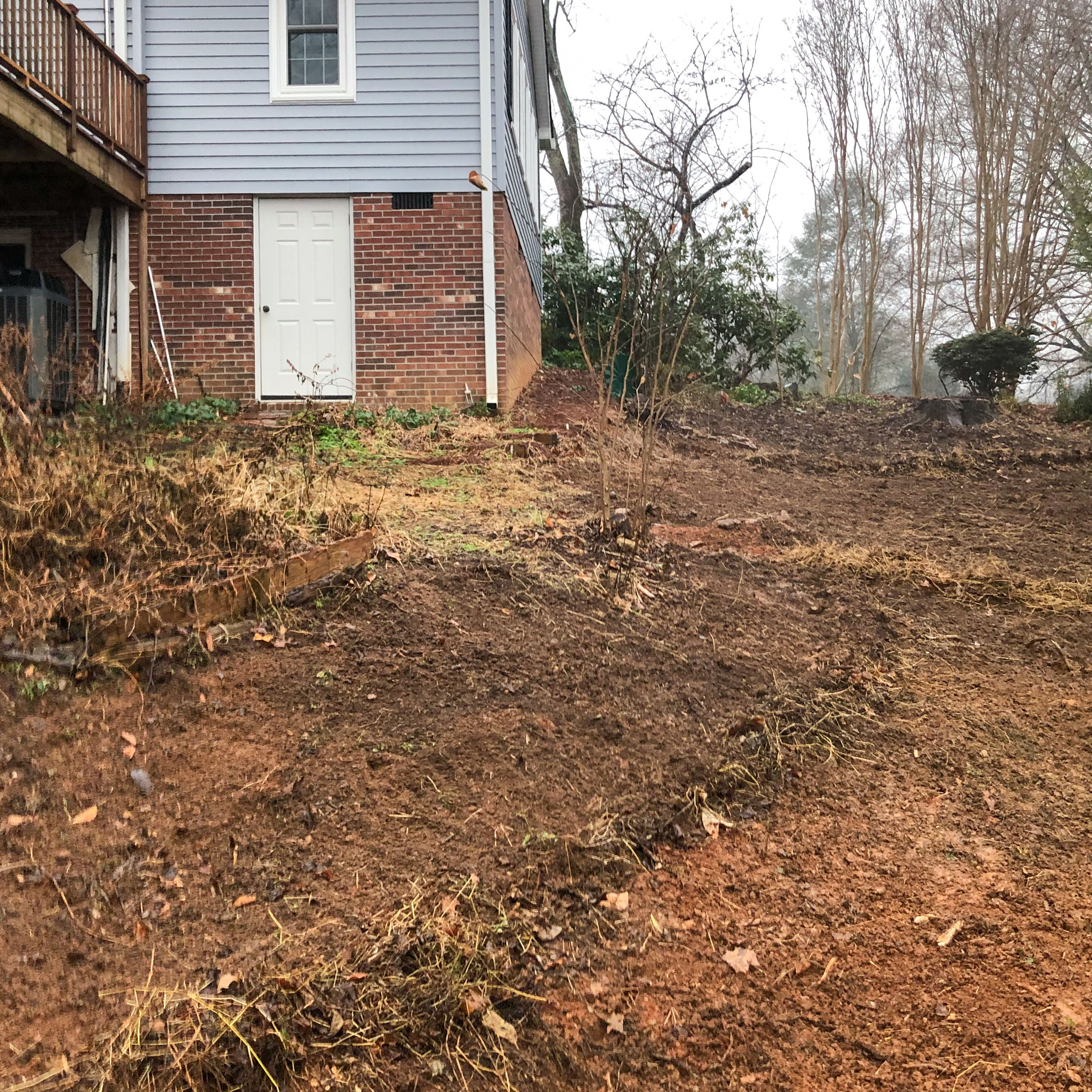
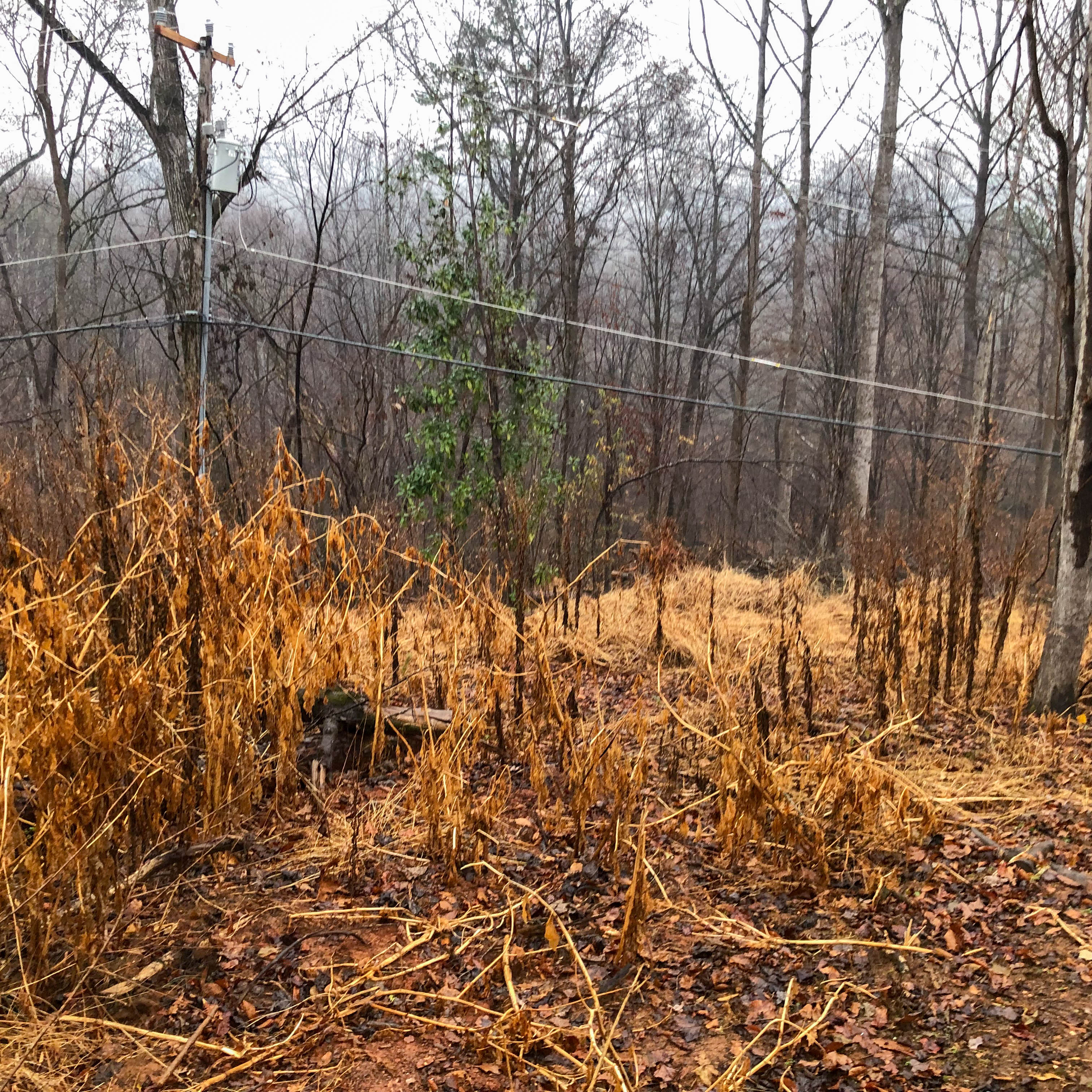
A month after last April’s tornado crossed our neighborhood, after the cherry picker and chainsaws had gone home, after the ‘dozer had pushed two-ton trunks and root balls to the edge of our property past the Duke Energy cut, I imagined that the bare clay and churned up leaf mold would wait for winter, barren, when I could sow the half-acre with something new. But this summer the exposed earth received something it had patiently waited decades for. Sunlight. This fall the slope is a jostling upright congregation of pilewort and poke, and knee deep in damnable invasive stilt grass.
 . 
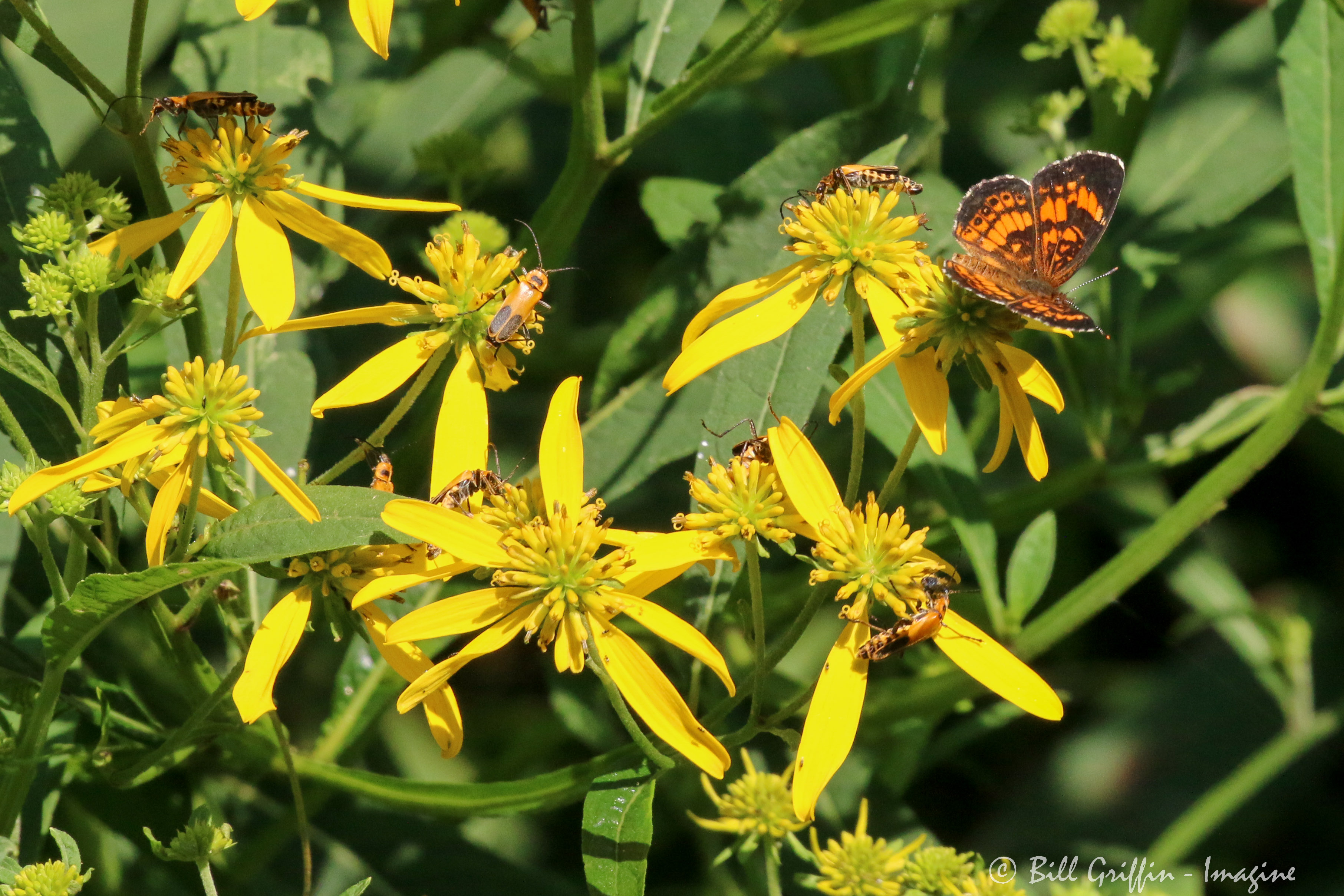
Best get to it. It’s a lot of square meters, but I have a fire rake and a 5-pound hazelhoe I use for trail workdays. And on the screened porch I have a bag of bags, cold stratifying, waiting for January and a smooth, raked bed: native silver plume grass, big bluestem, Indian grass my friend Joe gathered from his meadow on the Mitchell River; wingstem, crownbeard, ironweed I’ve been pulling during hikes along the MST; store-bought half-kilos of Southeast Wildflowers; and a little miniature brown envelope, stuffed full, and hand-labeled “Duke Mix.”
 . 
 . 
❦ ❦ ❦
 . 
Two Poems From School
1. Drawing Horses
 . 
There was one slow girl from grade two
And three, unable to multiplicate, ill-
At-ease, and long to devise, who tried
But tired of her dull and daily work,
Turned the smudge of your yellow page off
And began to draw horses.
 . 
Riderless, stream of those great manes back,
her horses rode out of no course but gladly off
The end of every page to the end of every class.
 . 
And when that girl died in a white hospital
Kicked by no horse but the one deep inside
Galloping over her frail, fourth grade hide,
I though I would try drawing horses. But I,
I was no good.
 . 
So girl, who never learned much from school
But taught me a daily grace in the movement
Of horses, these are for you.
 . 
Bob Wickless
from The Secret Care the World Takes, The Orchard Street Press, Gates Mills, OH, © 2023
 . 
❦ ❦ ❦
 . 
When Bob Wickless signed my copy of The Secret Care the World Takes, he noted that while we have never met in person we share three things in common: poetry; North Carolina; the editorial generosity of Jack Kristofco at The Orchard Street Press. And a fourth thing – a year ago I featured Bob’s poem Prayer in Spring in another post extolling the wonders of native “weeds.”
 . 
Bob is from Maryland and has “held many jobs” in his lifetime, but he wisely retired to Reidsville NC to reside in “the writingest state.” Secret Care takes seriously the creative task of reminding us of what we all share in common. Bob leads his characters by the hand, introduces them to us, places our hand in theirs and waits quietly while we gaze into each other’s eyes. That tender connection may be wistful, it may be sad, but there is also humor in these poems. Laughter. Joy.
 . 
In the end may we become convinced that the World does care for us. Perhaps we may feel the tug to care also for the World and what it contains, what it nurtures, what it brings forth. Through the magic of poetry, this care is no longer secret.
 . 
 . 
Check out The Orchard Street Press, its annual contest and anthology, Quiet Diamonds, and order Bob Wickless’s book HERE
 . 
 . 
❦ ❦ ❦
 . 
Solstice: The Children’s Ward
 . 
The secret care the world takes
Has pressed closed all the petals
Of tiny summer flowers
As if darkness might infuse
Those dying colors
With some thing they did not mean,
Some statement thy did not possess,
Some dream they could never intend.
 . 
It is in the same way rain,
Or even the thought of rain
Oncoming, turns up a maple’s leaves
Like fragile buckets –
Or a whole forest of maples,
A hundred, thousand, children’s hands
Raised in anticipation
Of the sky’s sweet promise.
 . 
And it is evident, too, the easy way
You breathe, so effortlessly in sleep,
How your small, secret bodies know,
Always, exactly what is required
Of this world and the next
To simply sleep
A sleep simple enough
To trust all your flowers to love.
 . 
Bob Wickless
from The Secret Care the World Takes, The Orchard Street Press, Gates Mills, OH, © 2023
 . 
 , 
❦ ❦ ❦
 . 
 . 

Read Full Post »

[with 3 poems from Quiet Diamonds
Bob Wickless, Susan Craig, Bill Griffin]

O narrow track, how I have missed you! O wee well trodden way, favorite mile, little path through pasture and wood that my right knee has refused to let me walk for all these weeks, I am so glad to see you again. Last visit you had all but shed your autumn yellows, not to mention cardinalflower reds and pastel meadowbeauties. Now here you are blowing snow across my path.

The season has arrived of whites and browns, feathers and fluff, crowns and rounds – seeds! Hello little calico aster whose name I just learned last summer; now your stems are strung with new stars so fine. Hello crownbeard; petals fallen, you lift your regal head. And hello snowy boneset and thoroughwort; one puff of breeze is all it takes to loft your feathered promises across the meadow.

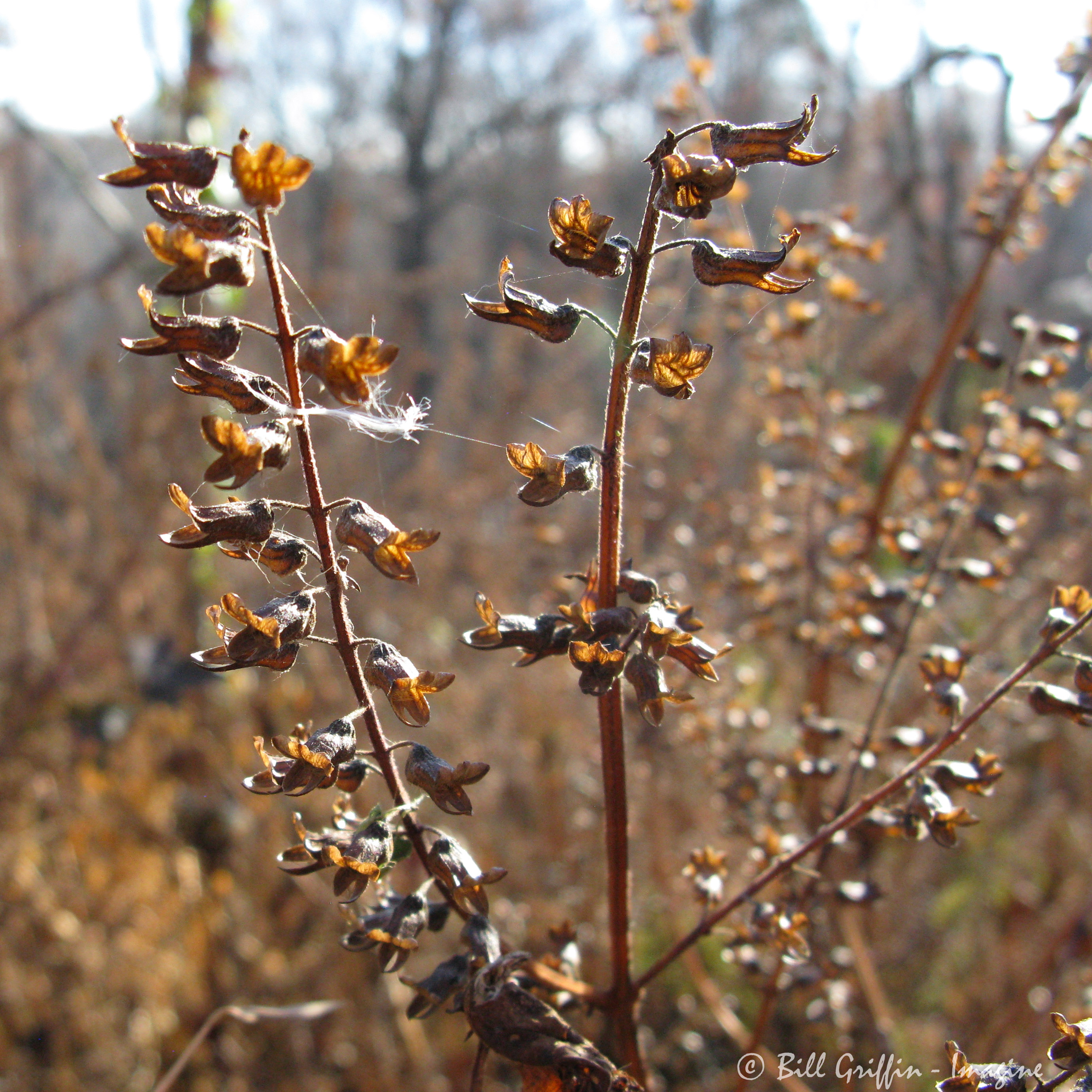
There is a bare patch below my house beneath the powerline. There is an empty bag in my pocket. You won’t mind, prodigal wingstem, goldenrod, ironweed, if I catch a bit of your seedstuff and carry it home to a new bed? You won’t run short of provender when goldfinches and sparrows come to call. You won’t ever hear me, like some others, name you weeds.

❦ ❦ ❦

Prayer in Spring

beginning with a line from Seneca

Not hoping without doubt,
Not doubting without hope,
We enter the slow country
Of change, clad in the garment
Thread through the loom of change,
Woven in green doubt
Though woven in hopes

Greener than any hopes are:
May the clothes of the world
Still fit, in the eye’s mind
And in the mind’s eye, may
Our vision still clear
As the iced eye of the river
Cataracts, loosens, the view

In the breeze of the green flag
That is not failure, in one light
That will melt the white flag
Of surrender – Lord, we had not
Given up though the air had said
Surrender, through the vines, trees
Were all blasted with failure,

Though no light shone
Through the fabric of sky
But one pale and unaccomplished,
Wan, washed out as our vision,
Faded divinity, in the blank
Washed out country called snow,
A world neglected, blue

Now, Lord, even as the sky

Bob Wickless (Reidsville, NC)
from Quiet Diamonds 2022, The Orchard Street Press, Gates Mill OH

❦ ❦ ❦

Today in Elkin this blowing snow is windborne seeds of last summer’s asters, but inches of the cold frozen sort are accumulating in northeastern Ohio around Lake Erie. Snow belt – that’s where Linda and I met, dated, and graduated from the high school we walked to through slush & drifts. Call off school for a “snow day” in Ohio? Bah! The last time we visited Portage County was for Linda’s birthday six years ago. The old Aurora Country Club had been converted to a nature preserve – how many species of goldenrod filled those reclaimed fairways? The Cuyahoga Valley National Recreation Area had since 2000 become a National Park; we still talk about the canal trail, every ten meters another chipmunk to chirp and run across our feet.

Northeastern Ohio lives fondly in our hearts. Just up Chillicothe Road from the Cuyahoga and our old school is the village of Gates Mills and The Orchard Street Press, another font of fondness. OSP editor Jack Kristofco published my chapbook Riverstory : Treestory in 2018, so I most certainly love him, but even more I love the anthology his press produces every year, Quiet Diamonds. This year’s collection is deep and various and moving. The poems can be personal and at the same time universal. I find myself leafing back and forth through the book reading each one several times, in a different sequence, discovering new moods with each passage. So many I would love to feature on this page, wonderfulness from poets all over the US, but here I continue my focus on us Southerners.

Check in with The Orchard Street Press in January for their 2023 contest.

❦ ❦ ❦

Looking for the Banded Sphinx

++++++ I’d seen clutched last night to the railing
its wings of veined mahogany like a master craftsman’s
the way my brother’s finest tables
were inlaid in gold and amber

++++++ yet, only the marsh hawk waits
atop the same wooden rail outside the same glass door
its wing-shoulders brownish-gray
as any familiar relative

++++++ and even its flight, when it senses
the small breeze of my arrival, appears
blasé as a loping dog

++++++++++ Last night, the next-door young couples
played guitar as midnight lapsed into new year
sang Jolene in a lusty chorus
that rose and fell like the distant sea pulled
by a stranger’s violin

++++++ I ask my husband about the banded moth
Gone, he says, at first light
without a hint of nuance
++++++ the same way wonder disappears, the way
dust becomes fugitive

++++++++++ My eyes trace mid-morning’s
pale pentimento of moon
while at the edge of marsh a stalking ibis
is osmosed in plumes of fog
where sun glints cold creek
++++++ and we find no reason to speak
as the hawk melds like another riddle into winter’s
moss-draped bones

Susan Craig (Columbia, SC)
from Quiet Diamonds 2022, The Orchard Street Press, Gates Mill OH

❦ ❦ ❦

We Never Give Up Hoping

Morning frozen hard. Pour
++++boiling water
into the birdbath;
++++ they will come
to drink when I have gone.

++++ God of holy ice, holy
++++++++ steam,
++++ give my children
++++++++ water
++++ that all my hoping
++++++++ can’t.

Sound of wings, splash
++++ diminishing;
find the world again
++++ iced over.
Fill the kettle. Holy water.

Bill Griffin (Elkin, NC)
from Quiet Diamonds 2022, The Orchard Street Press, Gates Mill OH

❦ ❦ ❦

EARLY SNOW: ASTERACEAE

Stare across any random autumn afternoon and soon you’ll notice the jig and curtsey of little airborne tufts. Catch one and see if there isn’t a tiny hard seed hanging from that feathery wisp. The early snowflake you’re holding is a member of family Asteraceae.

Except for Cardinal flower (Bellflower family, Campanulaceae) and Meadowbeauties (Meadow Beauty family, Melastomataceae), all the flowers mentioned in my homage above are members of the Composite family (Asteraceae). This is the largest family of flowering plants in North America and vies for the world title with Orchidaceae. Besides typical species like asters, sunflowers, black-eyed susans, and coneflowers, Asteraceae includes less obvious suspects like Joe-Pye Weed, goldenrod, ragweed.

Study a daisy: you figure you’re seeing one standard flower, right? A ring of petals around the edge (corolla), eye in the center. Basic taxonomy of flowers depends on the configuration of their reproductive apparatus – flowers. But a daisy is a Composite – each “petal” is 3 or more fused petals from a complete individual Ray flower; each spot in the eye is an individual Disc flower with its own minuscule petals, pistil, and stamen, ready to make a seed. (And if that’s not already confusing, some Composites have only Ray flowers, no Disc (Dandelion), and some have only Disc flowers with no Rays (Fireweed).)

So what about this early snow, then? Ah, sepal and pappus . . .

In most flowers, sepals are the layer, just outside the petals, that make up the protective bud cloak. After the bud opens, the ring of sepals is called the calyx. In Composites, each “flower” actually multiple little florets all clumped together with zero elbow room, the calyx is diminished to almost nothing: the pappus, sometimes visible only with a microscope where it’s fixed to the seed. Except . . . those members of Asteraceae whose pappus is a bristle, hair, tendril, feather. For wind dispersal, but also for wonder and delight. When a breeze puffs the boneset or fireweed or lowly dandelion, one might imagine the pasture will soon be knee deep.

❦ ❦ ❦

❦ ❦ ❦

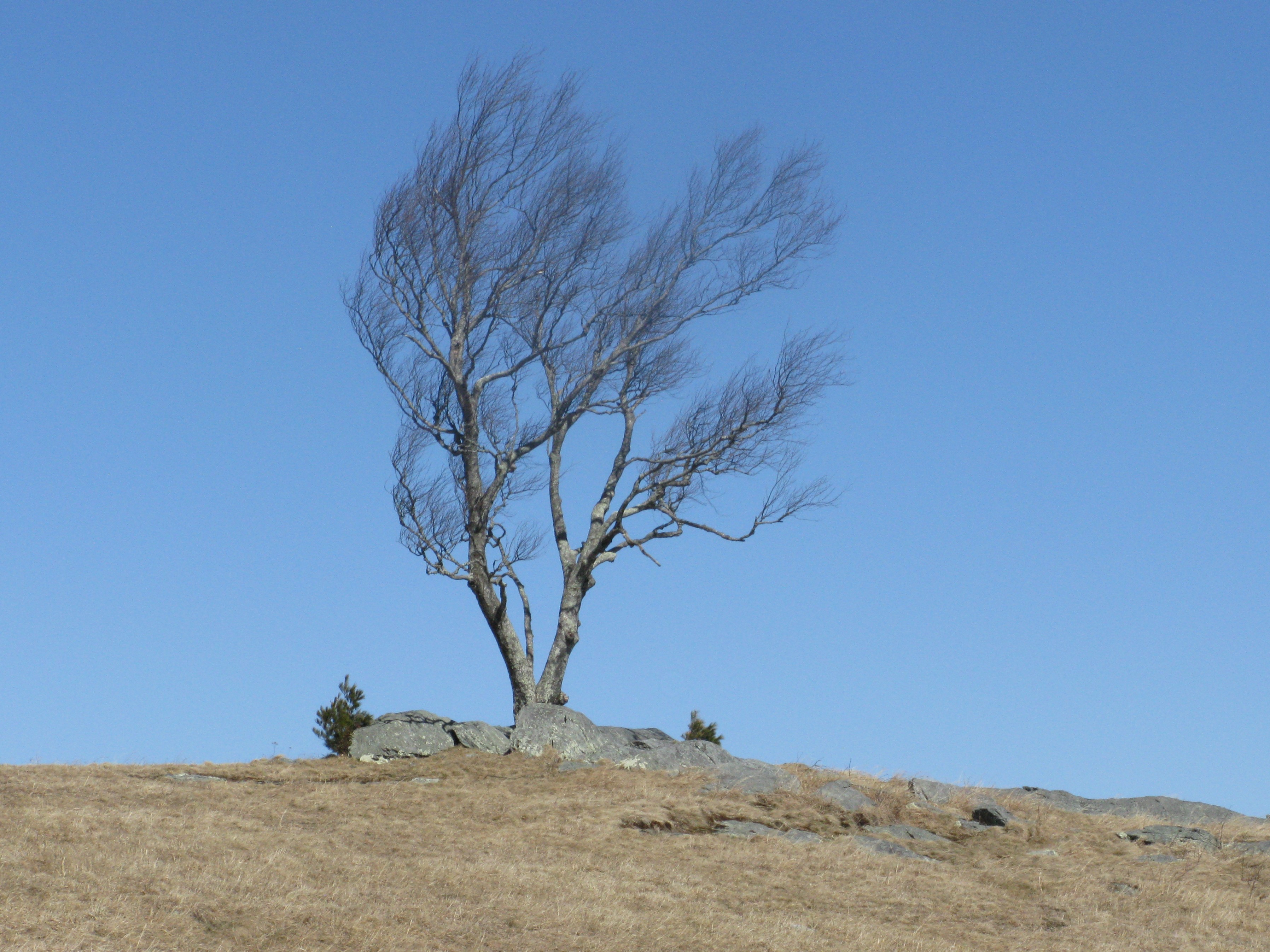
Doughton Park Tree 2021-02-23

Read Full Post »