Feeds:
Posts
Comments

Archive for the ‘Imagery’ Category


[with poems by Jennifer Atkinson, David Radavich,
Barbara Bloom, Diane Seuss]

Today is Earth Day, April 22. Yesterday, today, and tomorrow we are publishing posts for Earth Day featuring poems submitted by our readers that touch the theme, Wild & Rewild.

Rewilding is a conservation effort aimed at restoring habitat, revitalizing ecosystems, and reintroducing animals and plants that historically occupied these wild spaces.
Rewilding may be as small as converting cow pasture to a bit of riparian Piedmont Prairie along the Mitchell River in Surry County, NC.
It may be as large as creating wildlife corridors down the chain of the Rockies for migrating pronghorns.
It may be as simple as replacing introduced invasives in your yard with native species; as complex as legislation to set aside vast tracts as wilderness.

How does the poet encounter and respond to wildness? A native wildflower struggling in an urban park? A remote mountaintop far from human presence? A wild voice speaking to the heart; wild urges propelling the soul into the unknown?

A wild call from the past, the present, into the future?
For Earth Day 2023, touch the wild. Rewild yourself.

Thank you to the readers of these pages
who have responded to my call for poems this Earth Day.
Watch for new posts on April 21, April 22, and April 23.

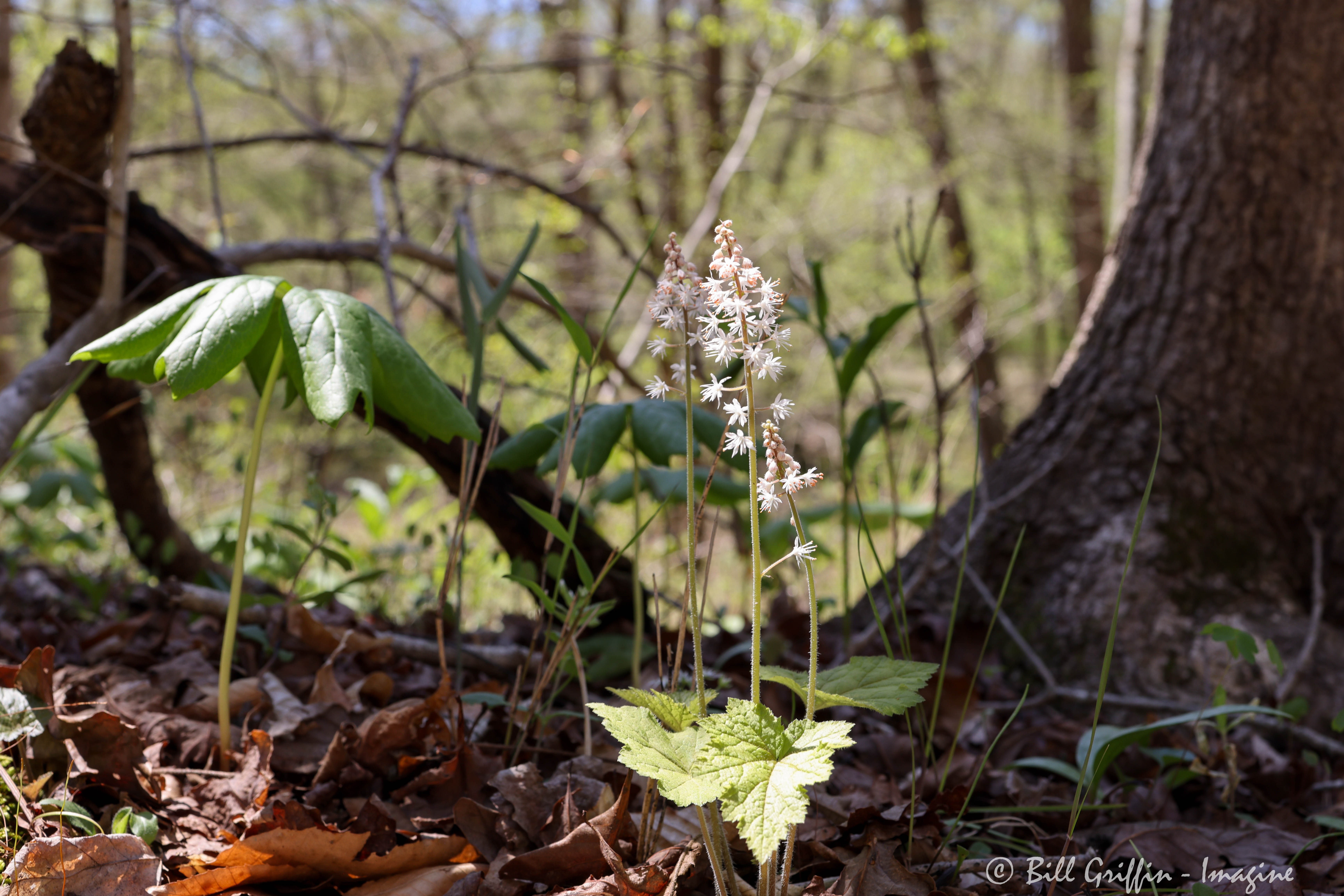
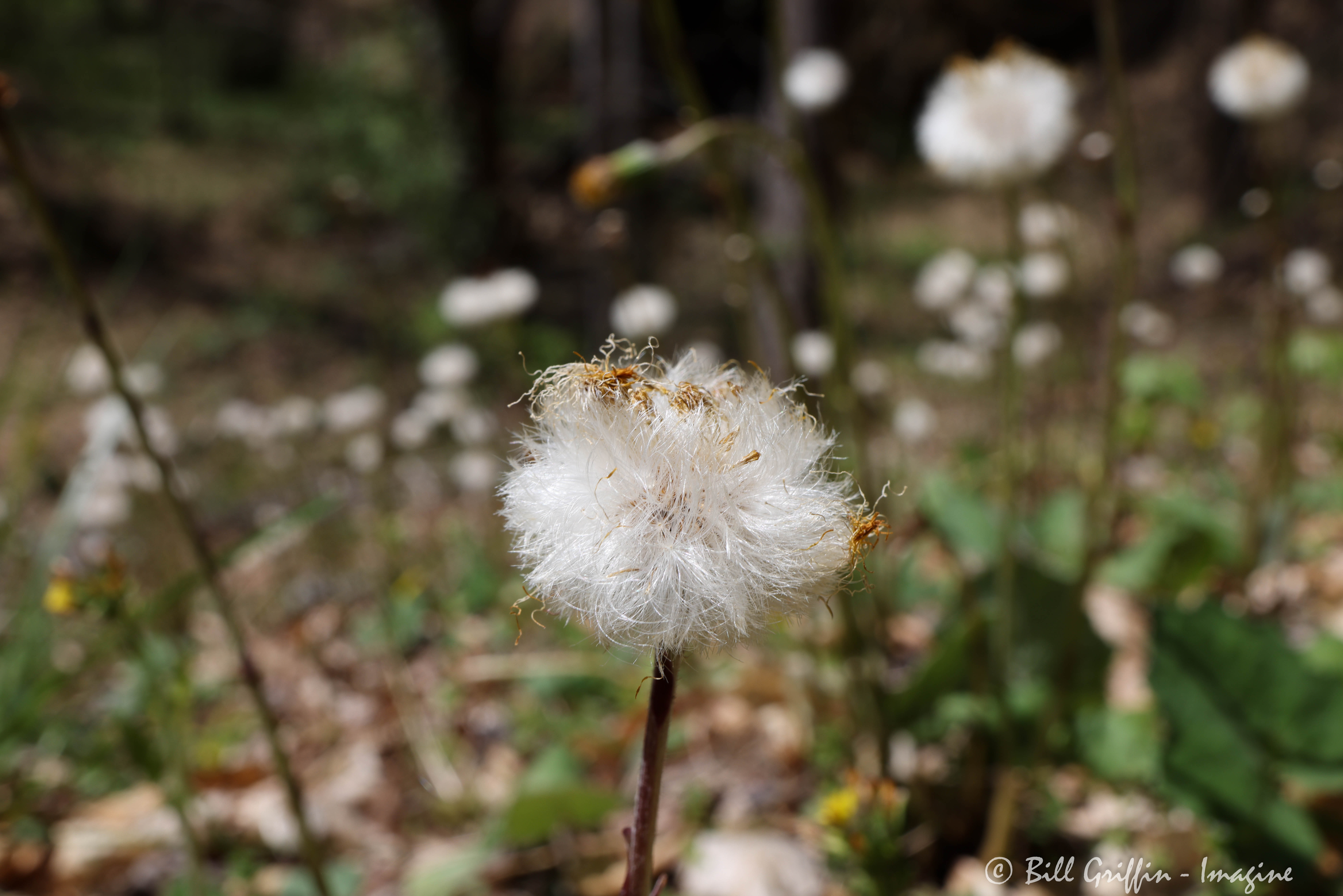
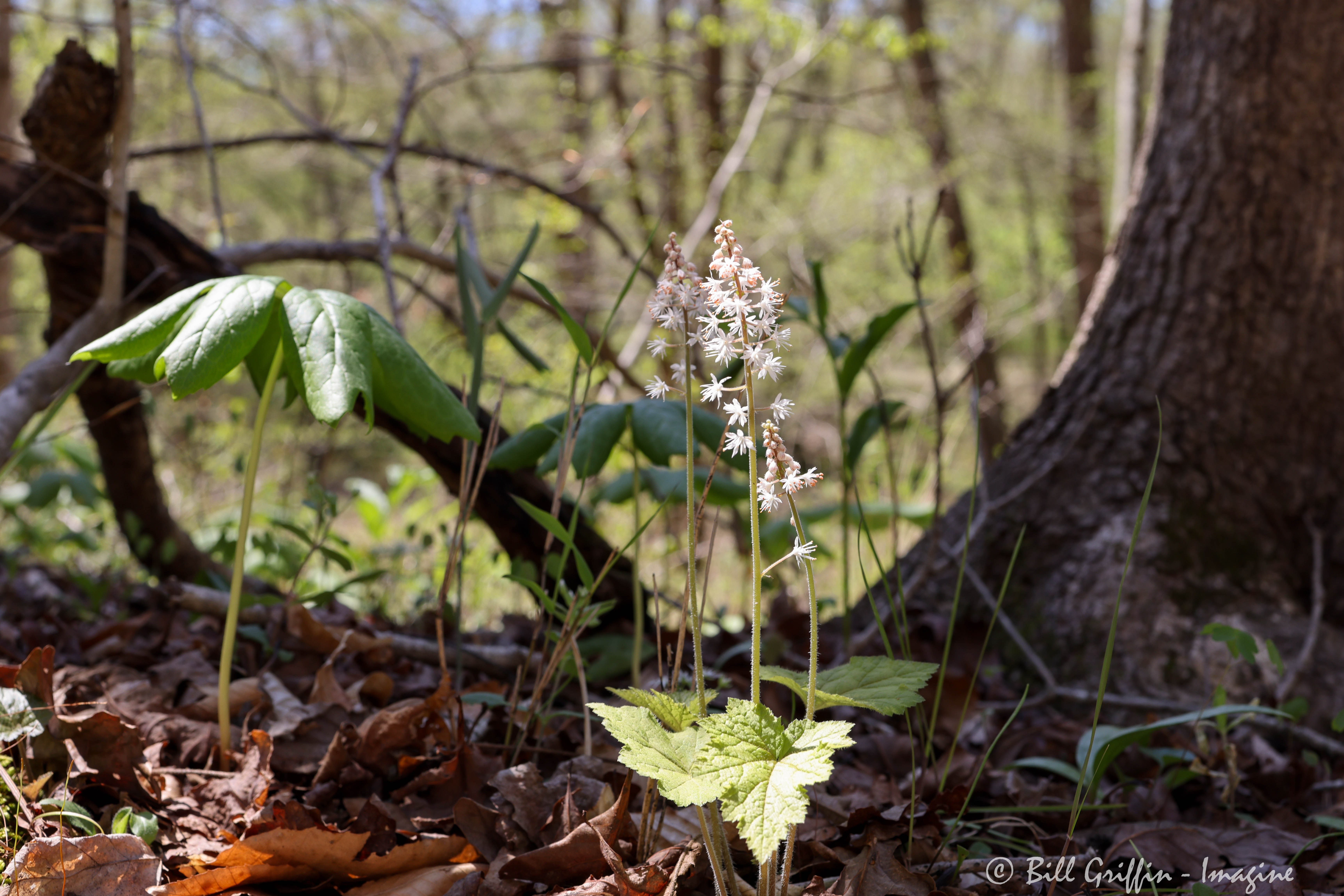
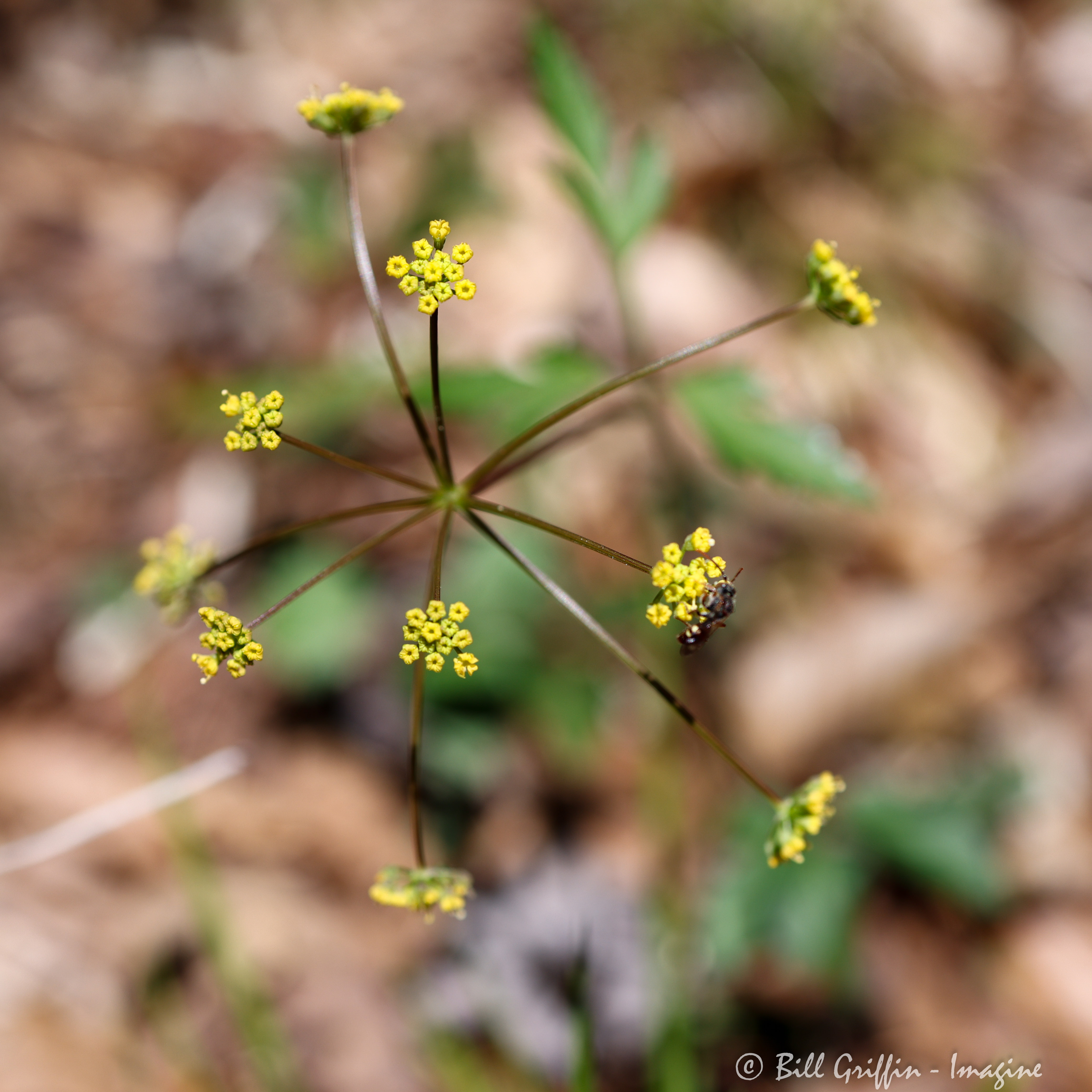
All photographs were taken April 11-17, 2023,
along the Elkin & Allegheny Nature Trail,
part of the Mountains-to-Sea Trail in North Carolina, USA.

Earth Day 2023 art by Linda French Griffin.

❦ ❦ ❦

Landscape with Jeffers and the Connecticut River

Oat stalks hang their oat-heavy heads.
Panic grass shakes in the wind
off a goldfinch’s wing. Cause,
++++ ++++ ++++ ++++ ++++ effect, and cause.

Drone, like the bee, of goldenrod and aster,
tool of the stick-tight and cockleburr,
I park and wade into high riverside grasses.

A dog gnaws on a box turtle, a spider rides
a floating log, straining the air of its midges and leafbits.
A fisherman lazy as late summer current,
++++ ++++ ++++ ++++ casts, reels, and casts.

It occurs to me I am alive, which is to say
I won’t be soon. Robinson Jeffers
from Carmel Point, in “an unbroken field of poppy and lupin”

ashamed of us all (of himself ), took solace in time,
in salt, water, and rock, in knowing
all things human “will ebb, and all/
++++ ++++ ++++ ++++ Their works dissolve.”

Me, too. And I’m not always so patient. I’ve caught myself
wishing our spoiler species gone, just swept away,
returned to rust and compost for more deserving earthly forms.

Meanwhile, flint arrowheads turn up among the plastic
picnic sporks, the glacial crags and bottom silt.
Hawks roost across the river on the now defunct
++++ ++++ ++++ ++++ ++++ nuclear power plant cooling tower,

flotsam left at the human high water mark.
Like mussel shells, like driftwood or seedpod,
like the current’s corrugations in the sand.

Here, on this side, a woodchuck sits up, lustrous,
fat on her chestnut haunches, (she thinks herself
queen of her narrow realm) and munches
++++ ++++ ++++ ++++ the fisherman’s crust.

Who wouldn’t smile? Who doesn’t pity—and love—
the woodchuck not only despite but for her like-human smugness?
How can I not through her intercession forgive
++++ ++++ ++++ ++++ ++++ for now a few things human.

Jennifer Atkinson
Selected by Bill Griffin; from the book THE THINKING EYE, Parlor Press
Appeared online at Poem-a-Day, Poems.com, on March 13, 2023

Jennifer Atkinson’s comments: “But how do we live with our knowledge and the emotional cloud of fear, guilt, anger, grief, and helplessness, a cloud that surrounds us, each of us alone, and all of us together? That cloud has become intrinsic to my ecopoetical work. Burdened with the beauty and loss and malicious awfulness ahead, weighted with the anxiety that hits whenever a winter day dawns without frost on the ground or another ‘unprecedented’ downpour rings in the gutter, how do I live?”

Who wouldn’t despair? Who wouldn’t smile? The daily slog through politics and pollution is too heavy to be borne. The daily green that lights my kitchen window while I make coffee is too beautiful to bear. This poem drives me into the inescapable reality of damaged Earth but also offers a leafy twig of hope.

– Bill Griffin / Elkin, North Carolina

[and I couldn’t resist that title after all the Robinson Jeffers I’ve been reading this past year.]
❦ ❦ ❦

Back Woods

Only in the hills behind
comes solace,

winter white against
the brown verticality of reaching

bare as need,
a few lingering green

hold-outs
crying for mercy,

leaves curled
atop themselves quiet

as abandoned
lovers.

I have already
sided with the deep creviced

ravine and its snow
cheeks incised

with cares in shadow

under a sun that
promises

open sky
open hearts.

David Radavich
first published in Blueline in 2008

This poem is marked by jagged line lengths and abrupt stanza breaks that emphasize the rawness and otherness of the natural world. The speaker feels attracted to the sharp contrasts in color and juxtaposition of “creviced ravine” with the softer “snow cheeks,” but s/he is nonetheless distant from it and can only admire the scene from afar with a kind of wishful, empathetic watching.

– David Radavich / Charlotte, North Carolina

❦ ❦ ❦

Night Swim: Phosphorescence

We’d run down the path to the dock,
our feet knowing the rocks, never stumbling,
never falling, and we’d jump right in,
the ocean calm under the summer stars,
and swim out a little ways,
lifting our hands out of the water
to watch the drops linger and fall from our fingers,
like pearls, like diamonds, and kick our legs hard
for the trail of bright silver we’d leave behind-
and finally climb out, trembling with the chill,
sorry to wipe those jewels from our bodies.

Barbara Bloom
originally published in Pulling Down the Heavens (Hummingbird Press, 2017).

I grew up on a remote coastal homestead in British Columbia, Canada. Living in such a wild and demanding place has shaped the way I see the world. The poem demonstrates how as children we were amazed by the natural world around us, but saw no separation: it was ours to be experienced. I now live in Bellingham, Washington, not too far from where I lived as a child, and surrounded by much of the same beauty and wildness. I count myself lucky for that!

– Barbara Bloom / Bellingham, Washington

❦ ❦ ❦

Young Hare

Oh my love, Albrecht Dürer, your hare
is not a spectacle, it is not an exploding hare,
it is not a projection of the young hare
within you, the gentleness in you, or a disassembled hare,
nor a subliminal or concealed hare,
nor is it the imagination as hare

nor the soul as a long-eared, soft-eared hare,
Dürer, you painted this hare,
some say you killed a field hare
and brought it into your studio, or bagged a live hare
and caged it so you could look hard at a wild hare
without it running off into thorn bushes as hares

will do, and you sketched the hare
and laid down a watercolor wash over the hare
and then meticulously painted in all the browns of hare,
toast brown, tawny, dim, pipe-tobacco brown of hare,
olive, fawn, topaz, bone brown until the hare
became dimensional under your hand, the thick hare

fur, the mottled shag, the nobility of the nose, the hare
toenails, black and sharp and curved, and the dense hare
ears, pod-shaped, articulated, substantial, erect, hare
whiskers and eyebrows, their wiry grace, the ruff of hare
neck fur, the multi-directional fur over the thick hare
haunches, and did I say the dark inside the hare

ears, how I want to follow the darkness of the hare
and stroke the dark within its ears, to feel the hare
ears with my fingers, and the white tuft, the hare
anomaly you painted on its side, and the fleshy hare
cheeks, how I want to squeeze them, and the hare
reticence, how I want to explore it, and the downturned hare

eye, it will not acknowledge or appease, the black-brown hare
eye in which you painted the reflection of a window in the hare
pupil, maybe your studio window, in the hare’s
eye, why does that window feel so intimate in the hare’s
unreadable eye, why do I press my face to the window to see the hare
as you see it, raising your chin to look and then back to the hare

on the page, the thin hair of your brush and your own hair
waving gold down your back, hair I see as you see the hare.
In the hare’s eye you see me there, my swaying black hair.

Diane Seuss
Selected by Joan Barasovska; appears in Still Life with Two Dead Peacocks and a Girl (Graywolf Press, 2018). Albrecht Dürer’s painting is titled “Young Hare.”

I’ve selected this ekphrastic poem because it reflects the artist’s fascination with capturing an exact likeness of nature, his extravagant love of the animal so clearly displayed, and the paradox of killing or caging the hare in order to worship it. Diane Seuss’s masterful craft—see the line endings—and genius for description are on display here.

– Joan Barasovska / Chapel Hill, North Carolina
❦ ❦ ❦
Read Full Post »

[with poems from The Ecopoetry Anthology]

Ethnobotanists recognize that the difference between a poison, a medicine, and a narcotic is often just a matter of dosage. This pungent observation is found in my favorite wildflower guide under the entry for Golden Alexanders (Zizia aurea), which is in the wild carrot or parsley family, Apiaceae. Members of the family include vegetables – carrot, celery, parsnip – and ubiquitous seasonings – cumin, coriander, fennel, dill, and many more. They also include the most toxic plant in North America, Water Hemlock; a small nibble of the root will be fatal. Deliciousness and poison, nurture and death, they surround us.

My father was recently released from inpatient rehab after suffering a series of strokes at age 96. My sister and I took turns living at their home for two weeks, first to watch over Mom and drive her to visit Dad, then to get him resettled. Now it’s down to me to carry him to his various appointments, field questions from home health, pay the bills. All that stuff. Meanwhile, Dad’s neighbors call him the bionic man. His speech has fully returned, his appetite’s robust, he can creep around the block upheld by his Lexus of all walkers. He is surrounded by a glow of resilience.

Dad’s glow is enhanced by one apparent deficit left by the stroke – any awareness of his mortality. Perhaps it’s simply the great good fortune of being upright and breathing, but he seems to have discarded many of his former worries, including not even seeming to worry that he’ll have another stroke. Be happy, Dad – I’ll take over the worrying. It’s my job to worry, and to remind you that it’s not safe to stand up without your walker. I’ll be the one who checks your pill cartons and makes sure you’re taking everything correctly. I’m keeping the refrigerator full; you just decide what to tell the caregiver to fix for your supper. Simply let this moment surround you and Mom. Enjoy.

Last year I gave my backpacking buddy Mike a t-shirt I see him wearing often: What Doesn’t Kill You Makes You Stronger . . . Except Bears, Bears Will Kill You. What really cracks us up is that on all those hikes we took, we wanted to see a bear! From a responsible distance, of course, not licking our face in the middle of the night. I can honestly say that this stroke which didn’t kill Dad has not made him physically stronger (until you compare him to the median 96-year old). Or mentally stronger – he’s pretty fuzzy some days and wouldn’t be able to put into words this transformation. He can’t express verbally just where he resides on the plane of mindful acceptance, but he is looking forward to the next good dinner.

May there yet be dinners aplenty. Within the flickering shadows of destruction, my Father, may you be surrounded by joy.

❦ ❦ ❦

Eagle Poem

To pray you open your whole self
To sky, to earth, to sun, to moon
To one whole voice that is you.
And know there is more
That you can’t see, can’t hear;
Can’t know except in moments
Steadily growing, and in languages
That aren’t always sound but other
Circles of motion.
Like eagle that Sunday morning
Over Salt River. Circled in blue sky
In wind, swept our hearts clean
With sacred wings.
We see you, see ourselves and know
That we must take the utmost care
And kindness in all things.
Breathe in, knowing we are made of
All this, and Breathe, knowing
We are truly blessed because we
Were born, and die soon within a
True circle of motion,
Like eagle rounding out the morning
Inside us.
We pray that it will be done
In beauty.
In beauty.

Joy Harjo
from The Ecopoetry Anthology (Trinity University Press, San Antonio, Texas, © 2020)

❦ ❦ ❦

Leading us into Earth Day on April 22, these poems are from The Ecopoetry Anthology, edited by Ann Fisher-Wirth and Laura-Gray Street, with an excellent introduction by Robert Hass (Trinity University Press, San Antonio, Texas, © 2020).
Joy Harjo is an internationally renowned performer and writer of the Muscogee (Creek) Nation. She served three terms as the 23rd Poet Laureate of the United States from 2019-2022 and is winner of Yale’s 2023 Bollingen Prize for American Poetry.
Donald Hall has served as Poet Laureate of the United States and Poet Laureate of New Hampshire. His many honors include the Robert Frost Silver medal and the Ruth Lilly Poetry Prize.
Lola Haskins serves on the Board of Florida Defenders of the Environment and has won the Florida Book Awards Silver Medal for Poetry.

❦ ❦ ❦

Digging

One midnight, after a day when lilies
lift themselves out of the ground while you watch them,
and you come into the house at dark
your fingers grubby with digging, your eyes
vague with the pleasure of digging,

let a wind raised from the South
climb through your bedroom window, lift you in its arms
– you have become as small as a seed –
and carry you out of the house, over the black garden,
spinning and fluttering,

and drop you in cracked ground.
The dirt will be cool, rough to your clasped skin
like a man you have never known.
You will die into the ground
in a dead sleep, surrendered to water.

You will wake suffering
a widening pain in your side, a breach
gapped in your tight ribs
where a green shoot struggles to lift itself upwards
through the tomb of your dead flesh

to the sun, to the air of your garden
where you will blossom
in the shape of your own self, thoughtless
with flowers, speaking
to bees, in the language of green and yellow, white and red.

Donald Hall
from The Ecopoetry Anthology (Trinity University Press, San Antonio, Texas, © 2020)

❦ ❦ ❦

Prayer for the Everglades

A gumbo-limbo swoons in the arms of an oak.
A royal palm, smooth as sunless skin, rises
against blue. In this whole untouched world
there seems only wind, the grass, and us.
Now silent lines of wood storks appear,
their white wings edged black. Here is
a mathematical question for your evening.
How many moments like this make a life?

But if it were not true? What if the glades
were a dream, ancient, written on the walls
of caves, so anthropologists peering into
the darkness could say only, it must have
been lovely then, when grass flowed under
the sun like a young woman’s falling hair.
What if none of it were true? What if
you and I walked all our afternoons under
smoke, and never saw beyond? What if
the tiny lichens that velvet the water, the
gators that pile like lizard on the banks,
the ibis with her sweet curved bill? What
if the turtles that plop off their logs like little
jokes? What if the sheltering mangroves?
O what if? Look up, friend, and take my
hand. What if the wood storks were gone?

Lola Haskins
from The Ecopoetry Anthology (Trinity University Press, San Antonio, Texas, © 2020)

❦ ❦ ❦

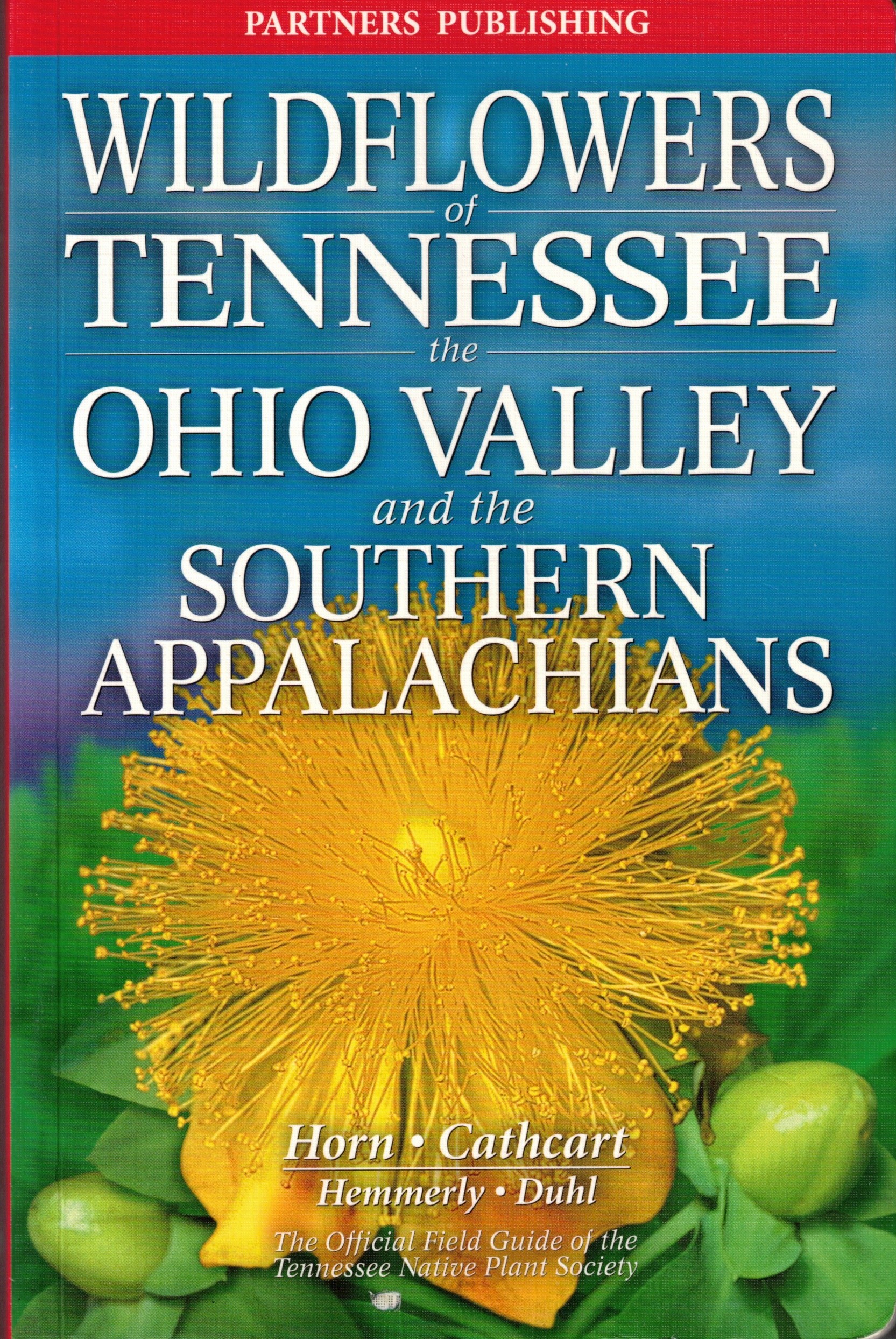
Wildflowers of Tennessee, the Ohio Valley and the Southern Appalachians – August 1, 2018; by Dennis Horn, Tavia Cathcart. Sponsored by the Tennessee Native Plant Society

This book focuses on Tennessee, but the Ohio Valley and Southern Appalachians are covered, encompassing all or parts of Alabama, Arkansas, Georgia, Illinois, Indiana, Kentucky, Maryland, Mississippi, Missouri, North and South Carolina, Ohio, Pennsylvania, Virginia, and West Virginia. Within these pages I’ve discovered just about every wild flower I encounter here in the North Carolina foothills, or at least a close relative. The book overall is arranged by plant family with taxonomic commentary; it includes a quick thumbnail guide by color in the front; every entry has rich commentary about history and ethnobotany; my favorite section is the excellent illustrated glossary – everything the wild plant nerd could possibly want!

❦ ❦ ❦

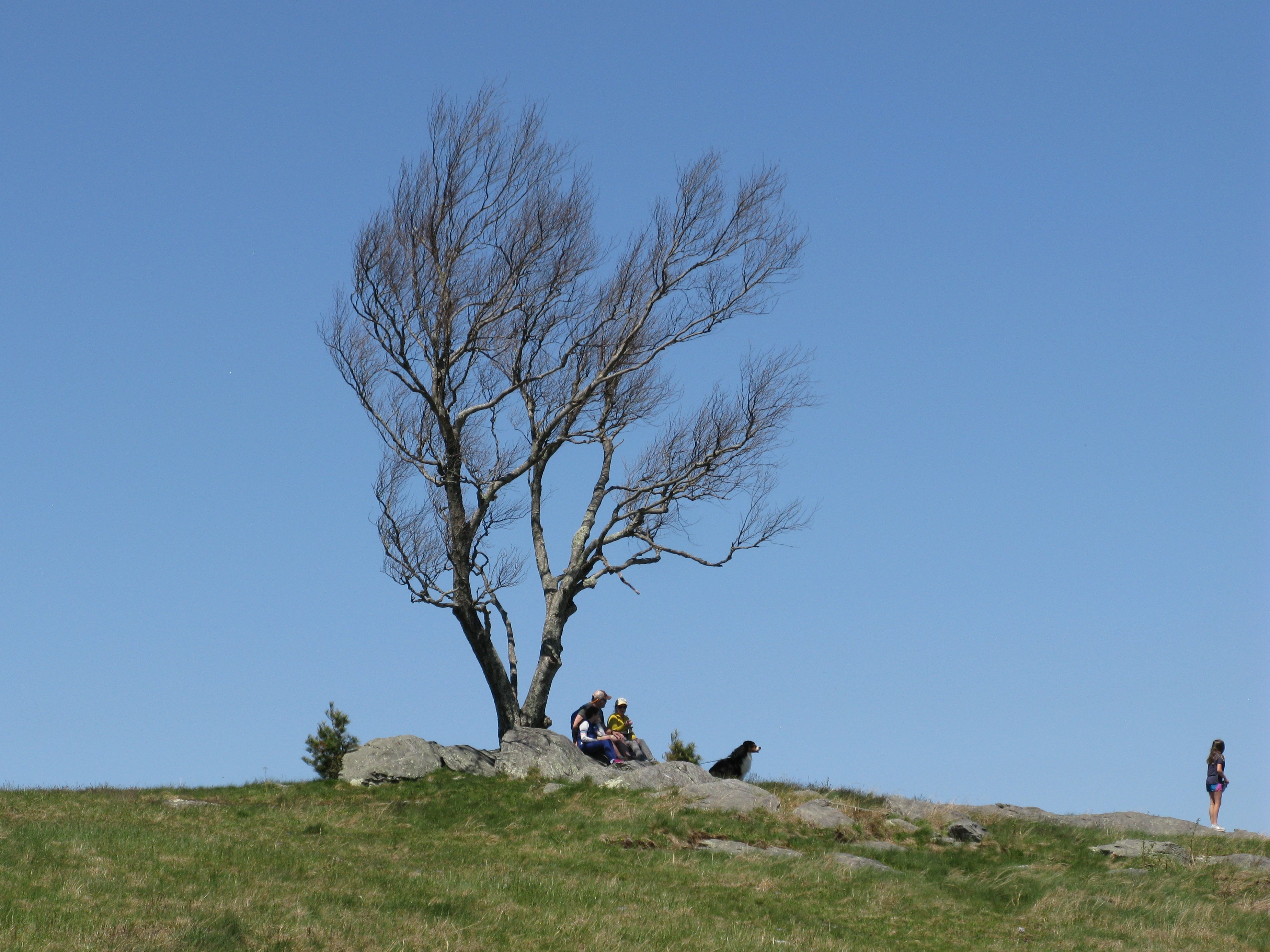
Doughton Park Tree -- 5/1/2021

Read Full Post »

[with poems from ecotone]

“Oh, look at the Redbuds, how pretty!” Riding in the back seat, I couldn’t figure out what my parents were gushing about. Where was this tree with red (not lilac or magenta or purple) buds (not jillions of little peaflowers jutting from every twig)? Maybe, I thought, they meant “maple.”

I did know what they meant when they said, “Oh, Dogwoods!” In a cross, four white petals (actually bracts, modified leaves), small trees lining the roadway and scattering themselves down into the woods – I certainly understood that white flowers in spring equals Dogwood.

Except when it doesn’t. One April after we had moved to Elkin and bought a house perched on a steep incline above Dutchman Creek, I decided to pick my way down amongst the briars and poison ivy and explore. I just assumed those flowering trees punctuating the woods were Dogwood, such a firm assumption that I didn’t even give them a look. Then I noticed, watching ever so carefully where I was placing my feet, dozens of little white cup-shaped blooms that had fallen from overhead. I looked up and learned.

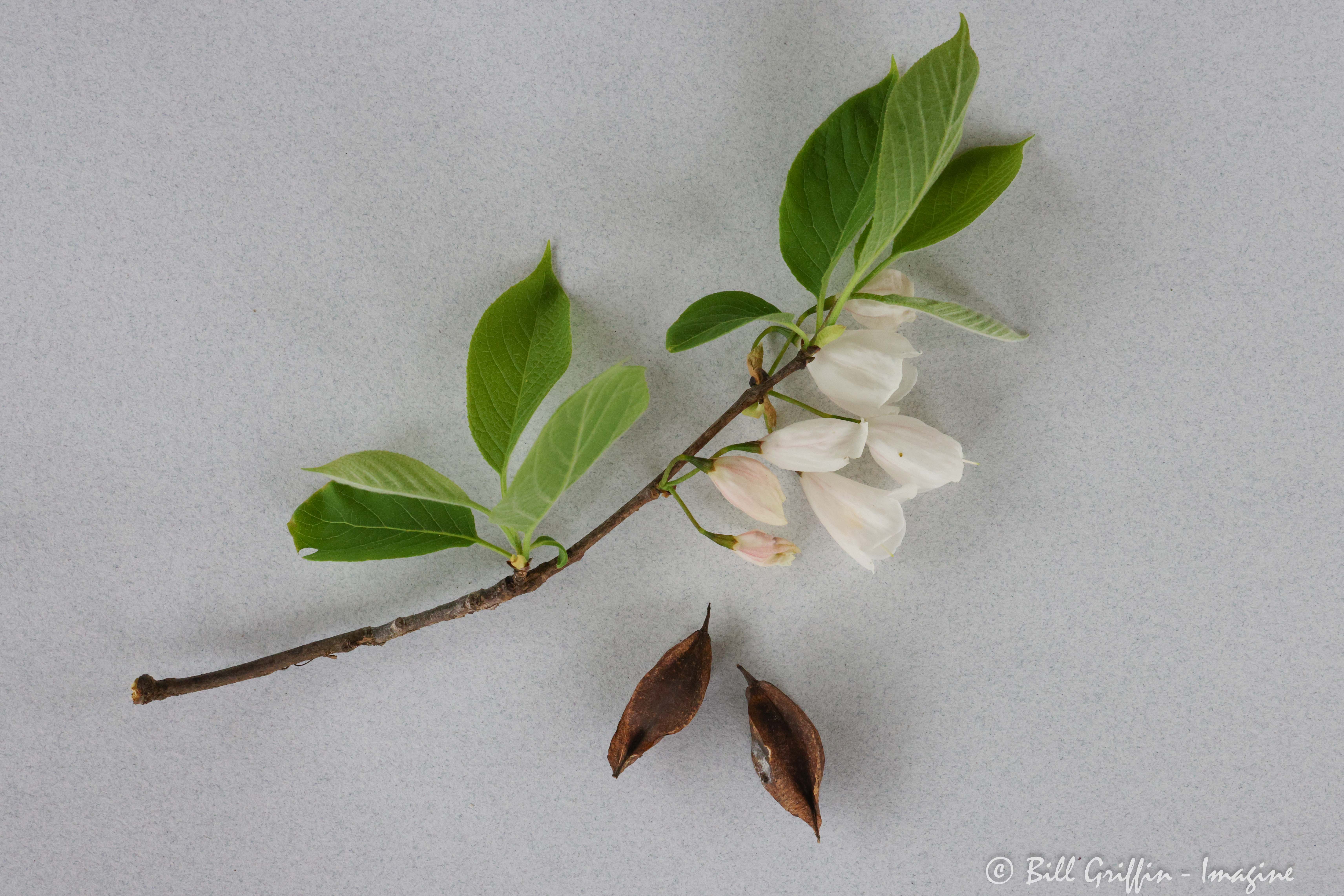
Carolina Silverbell is a small tree native to the Eastern US, in the Snowbell or “Storax” family, Styracaceae. Genus Halesia is named for Stephen Hales, an early 18th century Englishman who made a number of contributions to plant and animal science (he’s credited as the first person to measure blood pressure!). Around the time Dogwoods are blooming, and before leaves appear, Silverbell opens its small four-lobed flowers that hang from their stems indeed like little bells. It thrives in shade and partial sun; many of those white-flowered trees I’d been seeing in the woods through the years were probably Silverbell rather than Dogwood.

In the fall, Carolina Silverbell reveals the source of its species name. I remember the first time I plucked a few of its brown seed pods (a dry drupe), which it retains all winter. Each has four longitudinal wings – Tetraptera.

❦ ❦ ❦

The River in Pieces

The river in pieces – pool, riffle, run –
holds thousands inside itself, still undone,
motion captured. Strange critters swirl within
The churn-water breaks, a misted engine.

A bitten hot wish, remade, swallowed deep,
flows into shadowed shape coherent, weeps
into a waterfall, crashes sideways,
surfaces spinning, darts into bright day.

Lines mend: boundaries cut to maps and saws,
and gravity, a dark fish, dives and draws
swift-cold streams into rolling channeled force
inevitable. Widening, the course

opens warmer, swells in yellow ambling.
Lakes interrupt – boats buzz – but the bending
resumes eventually; hairy swamps emerge,
remoteness expands to eternal surge

where brackish waters wander, sweep full wide,
fan estuarine, pull life along the tide
more gently. Sharpness turns to silence
meandering, builds, and then relents

into mouth: sound fixed fast to a squall.
Seagulls soar; the wet wind drives, enthralls
the highest sky – at last the river sails,
presses vastness: a watershed exhales.

Shana Campbell Jones
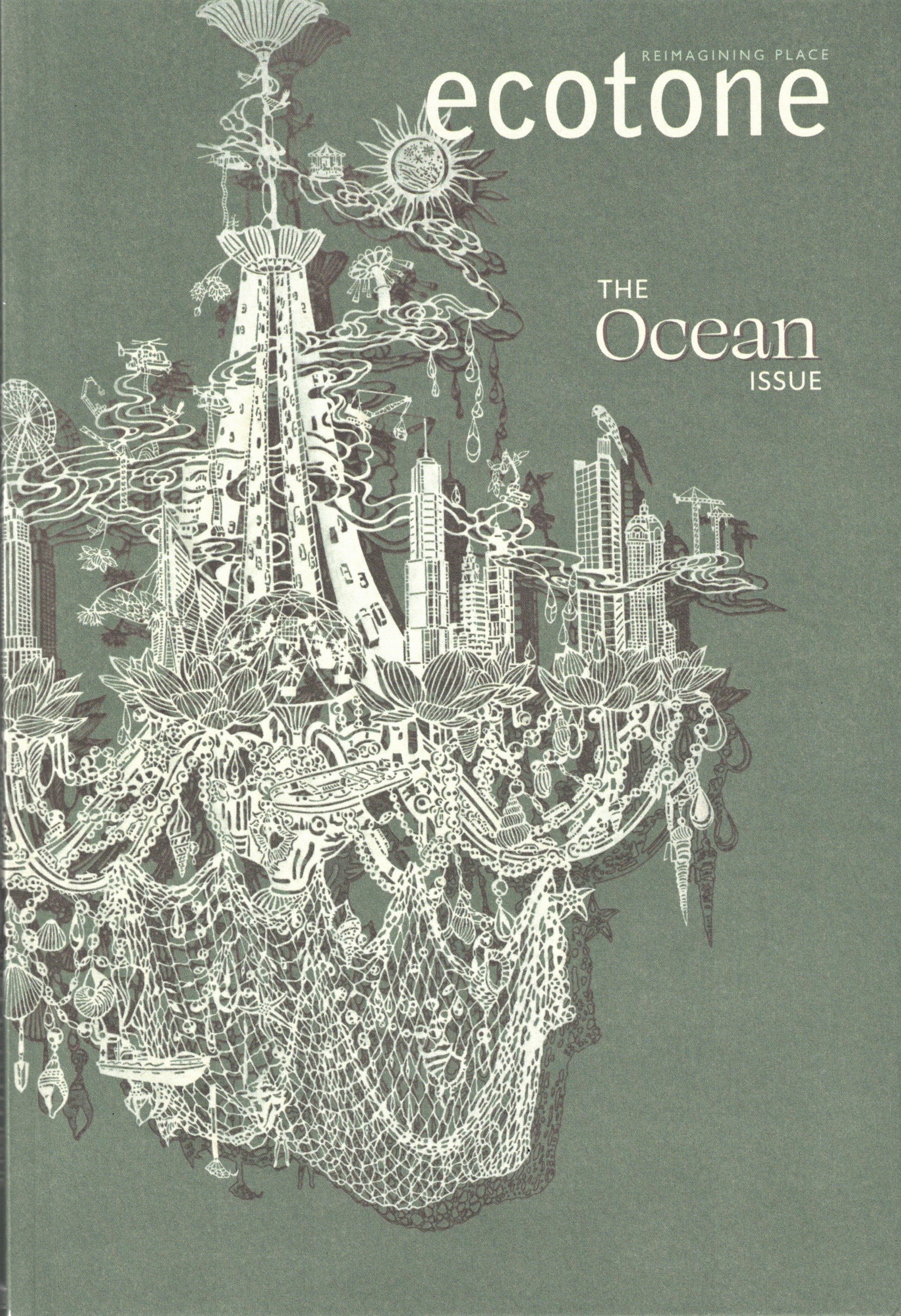
from ecotone #33, fall/winter 2022

❦ ❦ ❦

ecotone: a transition zone between two communities, containing the characteristic species of each; a place of danger or opportunity; a testing ground

ecotone is published twice yearly by the Department of Creative Writing and The Publishing Laboratory at the University of North Carolina Wilmington, editor Anna Lena Phillips Bell, editor-in-chief David Gessner. #33 is “The Ocean Issue.” Shana Campbell Jones is an environmental lawyer at the University of Georgia. Sophie Klahr is the author of Two Open Doors in a Field from Backwaters Press, March 2023. Gretchen Steele Pratt is the author of One Island, Anhinga Press, and teaches at UNC Charlotte.

❦ ❦ ❦

Downstream
after Enric Sala

Water is a symbol of God’s MERCY on the earth. My lecture notes are full of capitalized words: Acidification is melting the BONES of the ocean; GRAIN is the currency by which we trade water; conservation is not a LUXURY; we once THOUGHT the ocean was too BIG to FAIL. The marine ecologist at the lectern holds himself like a tired Janus – “We have killed and/or eaten ninety percent of the large animals in the ocean,” he says; he says, “This is a population that will not recover.” murmur murmur goes the listening choir. A massive screen hovering onstage shows a shot of some large school. The ecologist tells another of his dozen jokes about fish – he has learned to weave these into the truth. EVERYTHING GOES DOWNSTREAM AT SOME POINT, say my notes. THE OCEAN IS DOWNSTREAM OF EVERYTHING.

Sophie Klahr
from ecotone #33, fall/winter 2022

❦ ❦ ❦

Silence in the Garden, Silence in the Halls

At the lowest of tides
++ we go walking
through the low tide
++ mansions, surfaced,
stairways roughed with
++ salt, barnacles,

the banisters salt-cured
++ white. We roam
barefoot in muslin dresses
++ and do not
speak, relieved a few hours
++ from our names,

from children waking, from
++ closets bowed
with color, from the drone
++ of machines
that do our bidding. Our eyes
++ close beneath

the sun-drenched pergola,
++ twisted thick
with petrified vines of wisteria.
++ We turn in slow
circles through the grand ballroom,
++ baked clean

of gold and varnish, a wreck
++ of rusted
cello stands washed in
++ the corner.
Crystal chandeliers, clouded
++ to sea glass

become stone. Wallpaper dissolved,
++ walls encrusted
with the raw white lace
++ of the sea.
Dry opal fish scales eddy
++ in our wake.

We always reconvene
++ on the widow’s walk,
littered with lost anchors.
++ From there,
we witness the low tide
++ deepening,

another mansion appearing,
++ alive, like
white coral, farther down
++ the long drift
of strand. We will make
++ our way there,

across the burning noon sand,
++ to each mansion,
where we own nothing, and
++ love no one,
cloistered by the tides
++ in these convents

of the desert
++ and of the deep.

Gretchen Steele Pratt
from ecotone #33, fall/winter 2022

❦ ❦ ❦

❦ ❦ ❦

Carolina Silverbell may be a multi-stem shrub or smallish tree in the NC Piedmont, up to 10 meters tall, but in the Great Smoky Mountains there are individuals over a hundred years old reaching heights of 39 meters or greater. Some taxonomists consider these to represent two distinct species, Halesia carolina and Halesia monticola (Mountain Silverbell). Even more confusing, the Asian Halesia species may not be monophyletic (not all from a common ancestor, not in the same clade). Some taxonomists propose a separate genus, Perkinsiodendron.


2016-05-08a Doughton Park Tree

Read Full Post »

« Newer Posts - Older Posts »