Feeds:
Posts
Comments

Archive for the ‘family’ Category

BRANDYWINE CREEK — C. Griffin, ’91

 . 
[with 3 poems by Gail Peck]
 . 
Still Life with Birds’ Nests
++ after van Gogh, 1885
 . 
the possibility
++ of life, those eggs
blue and cream – one
 . 
so dark it’s almost invisible,
++ two nests close together,
another propped
 . 
on a branch –
++ no wings, nothing
fluttering in or out
 . 
with straw
++ in beak
determined to make
 . 
what will hold –
++ see how
the light is braided
 . 
in straw, debris –
++ to pluck a strand
from the whole
 . 
seemingly easy
++ at least from
the outer edge, but
 . 
not the center
++ where eggs lie
until
 . 
the first
++ fissure, then
the struggle,
 . 
who will survive,
++ breaking silence
into refrain
 . 
Gail Peck
from The Braided Light, Main Street Rag Publishing Company, Charlotte NC; © 2015. Winner of the 2014 Lena Shull Book Contest of the North Carolina Poetry Society
 . 
❦ ❦ ❦
 . 
I find it in the back bedroom against the back wall of the closet, other cartons piled against it. The cardboard of two boxes has been sliced apart and refolded to fit, about 26 inches by 32 inches by 4, still taped solidly together from their final move, Delaware back to Winston-Salem in 2012. Across the narrow top in black marker, “Brandywine Creek.” My mother’s printing.
 . 
In 1949, Clara Jean “Cookie” Cooke carried her bachelor’s degree in art from Women’s College of the University of North Carolina back home to Winston-Salem to take a job in medical illustration at Bowman Gray Hospital. A year later she married Wilson, alias Dad, and moved to Atlanta, to live in student housing at Georgia Tech. About three years after that my parents moved to Niagara Falls, New York, just in time for me to be born. In the decades that followed Mom never entirely laid aside the brush – the oil she painted of my little brother at age two is a great likeness. But how often does art get stacked in a back closet behind being housekeeper, Mom, chauffeur, even later Kindergarten teacher?
 . 
When we three kids were fully fledged and Dad finally retired, Mom re-committed herself to linseed oil and pigment. Her home and then ours as well gradually filled with landscapes and still lifes from her workshops and classes. Then began her magnum opus: portraits. She painted from life (I posed as Jesus) and she’d sort through to pick out her favorite photos to transform into paintings. Year by year the five grandkids were memorialized at all ages and activities. In her 80’s, Mom pivoted again. Now she was capturing on canvas every dog and cat of every friend and neighbor and giving them all away. Hoping for ice cream when we visited, we would more likely open the freezer to discover a palette wrapped in wax paper awaiting her next project.
 . 
The last year of her life, Mom required more nudging to pick up a pen or pastels. If I placed a photo in front of her of something she loved, dogs especially, along with paper and a few colored pencils, she would make art. For what would be Mom’s last birthday, my sister arranged a family afternoon with an art instructor who had us all paint the same scene, two of the great-granddogs. We never laughed or enjoyed ourselves so much.
 . 
Six month’s after Mom’s memorial service, I’m cleaning out the townhouse when I unearth the carton. I peel off the old tape, tearing some of the packing paper as I lift out its contents. The large framed canvas is not one I remember seeing before, but I remember Mom’s brainstorm when we visited them in Delaware that we should all go tubing together down the Brandywine. There’s no water in this painting, though, only rolling hills of wind-blown grass in every color and tall lithe trees whose branches catch the breeze. Brandywine Creek chuckles and rills outside my line of sight.
 . 
So much has passed, now, beyond my vision. I wonder if I am losing, have lost, those many images I took for granted all those years. Her teasing and laughter, her quickness at crosswords and puzzles, her patient smile. Her gratitude. Especially her hand, poised, its skill, the slender fingers that wafted the magic of color so lightly across this surface I am now holding to the light. Look, just look at those brush strokes.
 . 
 . 
❦ ❦ ❦
 . 
Bowl with Potatoes
++ after Van Gogh, 1888
 . 
A yellow bowl filled
with potatoes, hues
of pink and blue making
them not so ordinary.
Waiting to be sautéed
to accompany the fricassee
of rabbit simmering with white
wine, herbs, pearl onions.
I peel potatoes, cut around
each eye with a sharp knife.
Olive oil, first pressing, and local
wine to drink. A task to make
us happy, to cheer
from the lingering fog,
where we can’t even see the deck.
I seem to be braiding worries,
and have carried this day
like a heavy stone. The best
cloth and napkins, and a centerpiece
of yellow roses, smell that bring some memory
from childhood, but what? Running
near the house, getting snagged
by thorns. I try to push sadness away,
yet the candle flickers
each loss, and I worry that
one day my husband won’t
recognize my face, mistake
the pattern on the china for food,
the way his father did, fork
scrapping against the plate,
and only my chair with a view.
 . 
Gail Peck
from The Braided Light, Main Street Rag Publishing Company, Charlotte NC; © 2015. Winner of the 2014 Lena Shull Book Contest of the North Carolina Poetry Society
 . 
❦ ❦ ❦
 . 
Art conjures its mysteries and we don’t spy the hand moving in shadow. A piano chord major to minor and the sun passes behind a cloud. Tangles of color on canvas blend into a fond memory of childhood. Our senses know more than we do. The smell of old perfume upon opening a closet. There we are, transported.
 . 
And what about the art of words? Isn’t each meaning distinct, circumscribed, listed for us in the lexicon? And yet the words’ unspoken histories conjure mystery when we read in them a new tangle, a new melody, a new canvas. Nevertheless, the poet has set herself a difficult and arcane magic when she undertakes to recreate the vision of color on canvas in print. Gail Peck accomplishes this in The Braided Light, an entire volume that captures, line upon line and page upon page, the impressionistic imagery of Van Gogh and Monet.
 . 
Perhaps the impressionist painters imagined they would not make us see but allow us to see. The light is ever changing; the colors in our minds arise from emotion and perception, not lines on a spectrograph. In the same way Gail’s poetry shows rather than tells. Her heart is tangled in the brush strokes and colors, but she opens space for my heart fall into the imagery as well. One might think there are only a finite number of meanings for a word and only a finite number of words for a color. Our senses, however, know more than we do. Look, just look at those brush strokes.
 . 
 . 
The Braided Light by Gail Peck was the winner of the 2014 Lena Shull Poetry Manuscript Contest of the North Carolina Poetry Society, and is available online from Main Street Rag Bookstore.
 . 
NEXT WEEK: Gail Peck’s new book from Finishing Line Press, In the Shadow of Beauty
 . 
 . 
❦ ❦ ❦
 . 
Weeping Willow
++ after Monet, 1918-1919
 . 
Whatever your sorrow is
++ is yours alone.
++ ++ Tall lithe figure
 . 
swaying darkness, what
++ have the years
++ ++ brought except
 . 
silver among green leaves
++ trailing the bank.
++ ++ You can’t turn away.
 . 
You stand rooted
++ in faith that rain
++ ++ will come, wash
 . 
away debris, that the sun
++ will glint through
++ ++ what wind hasn’t
 . 
severed. Part of me
++ longs to enter
++ ++ your canopy,
 . 
lie beneath your shade,
++ but the ground
++ ++ is damp and grass
 . 
won’t grow there.
++ View from my window –
++ ++ my black-shuttered house.
 . 
Gail Peck
from The Braided Light, Main Street Rag Publishing Company, Charlotte NC; © 2015. Winner of the 2014 Lena Shull Book Contest of the North Carolina Poetry Society
 . 
❦ ❦ ❦
 . 
 . 
 . 
 . 
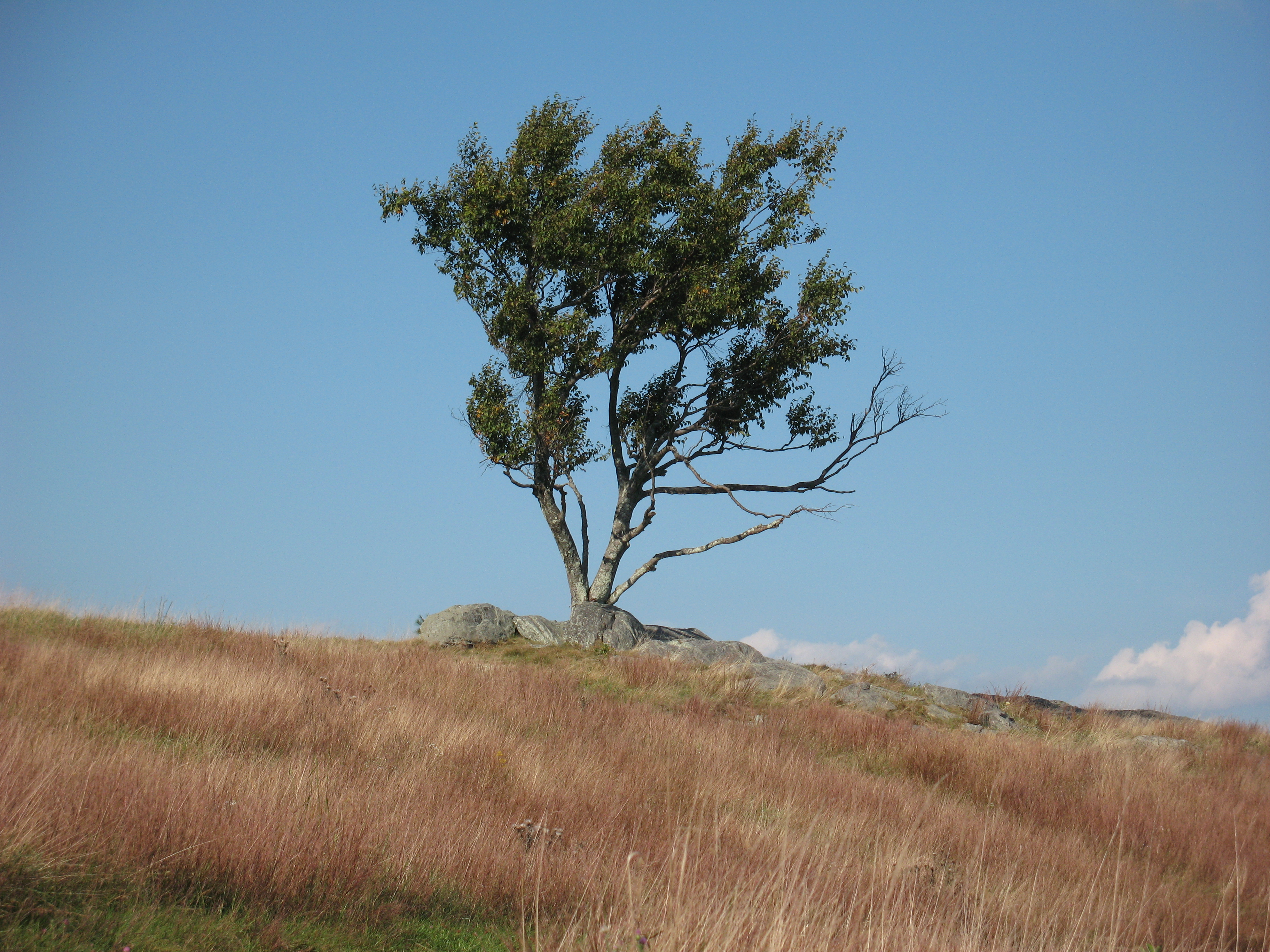
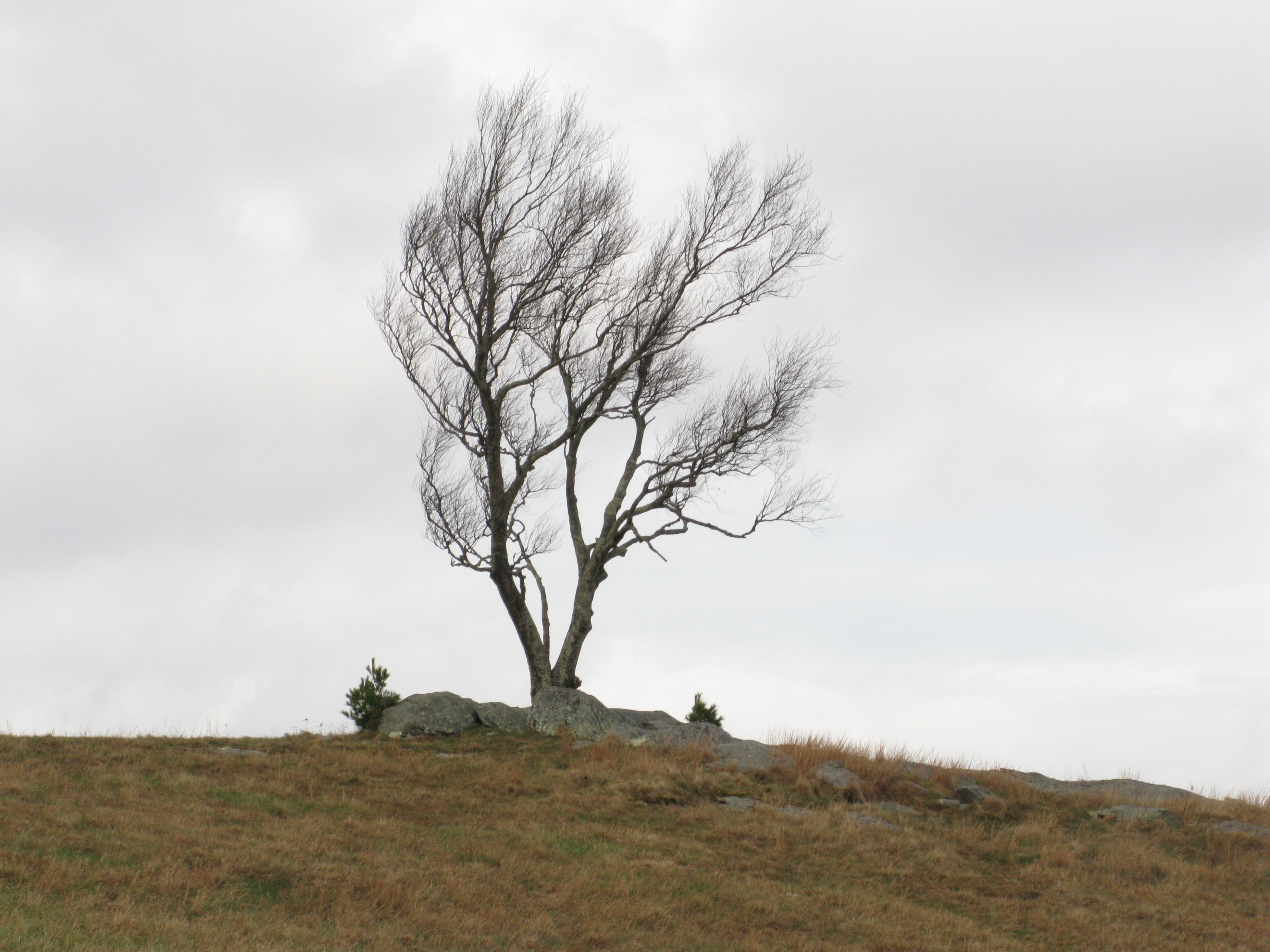
Doughton Park Tree 4/30/2022
 . 

Read Full Post »

 . 
[with 3 poems by Ralph Earle]
 . 
The Body’s Small Purposes
 . 
His lungs like exhausted fishermen
drew in their glittering catch
of oxygen and his heart
called to the receding tides of the blood.
His bony fingers curled around mine.
I read from Mary Oliver
 . 
how the soul may be hard, necessary,
yet almost nothing, how we all know
the sand is golden under the cold waves
though our hands can never touch it.
 . 
The hearing goes last, the doctor said.
 . 
There are not words for this communion,
this hope that his eyes, turned from
the sunny branches outside, could summon
a vision of loved ones long gone,
wife of fifty years, sister dead in childbirth,
souls knowing already this passage
and awaiting him in whatever form of glory
the living can conjure: my brothers, me,
our children, all the others
still casting the nets of our breath,
still sifting the golden sands.
 . 
Once in his search for love after my mother died
he told me it never ends. But it does.
On a broken day the breath stops
and the cells gently fall asleep
and the soul, perhaps puzzled
by this coming to rest
of all the body’s small purposes
rises and looks on the silence.
 . 
Ralph Earle
from Everything You Love is New, Redhawk Publications, The Catawba Valley Community College Press, Hickory NC; © 2024
 . 
❦ ❦ ❦
 . 
After I sit through lunch in the nursing home dining room with him and his friend, Dad and I roll back to his room to hang out for an hour or two. Maybe he tells me about the birds that have discovered the feeders I set up outside his window – he can name most of them. He always offers me something from his overflowing snack drawer – it began as his sock drawer but over three months the socks have all had to find new digs. If I prompt him he’ll recall talking to his sister on the phone last Sunday, or he’ll show me a card someone sent. This is his home now.
 . 
When Dad returned to his townhouse from the hospital after his fall in July, we called Hospice. For a week he barely ate, barely knew us. We set up dual hospital beds so he and Mom could continue to share a bedroom like they had for just shy of 74 years. She would sit and hold his hand for hours, couldn’t bear to have him out of sight, but once told us, “There’s a man in a coma in my bedroom.” He was home only three weeks before she died, but during their last days together he certainly knew her. They ate a few bites together. Watched the news. When she was gone, although the house was never empty it was completely empty.
 . 
“Good as new,” just what does that mean? Six months after Dad’s fall he can get himself out of bed by himself, putter himself down the hall in his wheelchair using his feet like Fred Flintstone, polish off his lunch. He wins quarters at bingo. Today he and I play our weekly Rummikub, exercise for the little gray cells. Last week he beat me for the first time. Right now we’re each down to just two tiles remaining until I draw the winning combo – for a second I consider feigning a bad draw to give him a couple more chances for victory, but nah, I win.
 . 
And at this very moment the activities coordinator sticks her head around the door to remind Dad – a local church has arrived to share a worship service this weekday afternoon. Dad, I’ll pack up the game if you want to attend. We hug, he rolls himself away. I dump the tiles into their case, stash it on his dresser, put on my jacket, and by the time I walk down the hall Dad is out of sight.
 . 
 . 
❦ ❦ ❦
 . 
The Cormorants Arrive
 . 
Like a gang of legislators
+++ dressed in grey
+++ +++ from somewhere
 . 
outside of town,
+++ the cormorants loiter
+++ +++ on the lake’s little float
 . 
strutting a step or two,
+++ dropping
+++ +++ into the water
 . 
for a fish.
+++ The represent
+++ +++ some constituency
 . 
I don’t recognize,
+++ shuffling around
+++ +++ their little island.
 . 
They disturb me,
+++ they embody my fear
+++ +++ of narrow minds,
 . 
of self-assured
+++ self-inflated strangers,
+++ +++ fear of my own silence.
 . 
Still, when I approach
+++ they dwindle
+++ +++ into a smattering
 . 
of awkward fishing birds,
+++ all angle and tackle, waiting
+++ +++ their moment of excitement,
 . 
the shadow of small prey
+++ out of reach
+++ +++ in the darkening water.
 . 
Ralph Earle
from Everything You Love is New, Redhawk Publications, The Catawba Valley Community College Press, Hickory NC; © 2024
 . 
❦ ❦ ❦
 . 
They are here. They are gone. Does Ralph Earle mean the birds, flock of black specks flapping, or does he mean the curses his wife calls to herself? Is nothing permanent, not grief, not joy? Everything You Love is New – perhaps it is your love that makes something new, or seem new in that moment of loving, that wonderful fleeting moment when you know you can’t hold something forever and yet you are able to rest in not having to.
 . 
So delicate — Ralph Earle’s poems touch ever lightly all the heavy things we encounter as human creatures. How we do all hurt each other after all, sometimes careless but sometimes intentional. How the things we imagine will bring us joy fall to dust. How apt we are sometimes to turn away rather than reach out. Yes . . . but. These are not poems of despair but of awareness, of acceptance, and sometimes of bright heart-swelling discovery and joy. Reading a poem requires a pause, a brief silence. The mind as it embraces that silence creates an opportunity to fill it with love.
 . 
A damselfly, so delicate, hovers above the mirror of pond. Her abdomen curls to touch the water’s surface so lightly there is no ripple, yet she leaves behind an egg that may become a new damselfly. Perhaps everything you love makes you new.
 . 
 . 
Ralph Earle’s new full-length collection Everything You Love is New is available from Redhawk Publications.
 . 
Read an additional poem by Ralph Earle at last week’s post, Tenacity.
 . 
 . 
❦ ❦ ❦
 . 
Birthday Ending in Zero
 . 
No rain for days, and on the pollen-dusted porch
a vase of flowers arrived from nowhere:
 . 
yellow roses, lilies, carnations, tulips with orange tips
and stems of electric-blue buds like paper lanterns.
 . 
We were happy in that second Covid spring, gathering
our loved ones on Zoom, cooking fish with asparagus,
 . 
ate our apple pie and still it didn’t rain. In the pollen
on the back deck, small animals left yellow footprints.
 . 
That week, after so long alone, you let go
into the space we had begun to share.
 . 
You stood the flowers on the kitchen table
surrounded with gifts and letters from my friends.
 . 
Our hearts opened like small animals looking around.
We slept skin to skin, your presence rippling like a lake.
 . 
That week the huge heads of the roses unfolded
in radiance even as the water started to cloud,
 . 
even as carnations drooped and tulip petals dropped.
When the rain began I found a ravine where no one goes
 . 
and under the trees, scatted the globes of the roses,
tulips with their falling petals, lilies and lanterns.
 . 
Ralph Earle
from Everything You Love is New, Redhawk Publications, The Catawba Valley Community College Press, Hickory NC; © 2024
 . 
❦ ❦ ❦
 . 
Doughton Park Tree 2019-02-09
 . 

Read Full Post »

 . 
He, the oldest, was / the last to leave and / took our childhood with him.
 . 
[with 3 poems by Irene Blair Honeycutt]
 . 
When the Last Page Turns
 . 
When the last page turns
 . 
will I step into a star
 . 
on a moonless night
 . 
 . 
or drift deep into the dark
 . 
maybe alight on your door screen
 . 
a firefly – a single green lantern?
 . 
 . 
Wherever I was when last
 . 
you read me
 . 
let the empty space
 . 
remember
 . 
Irene Blair Honeycutt
from Mountains of the Moon, Charlotte Lit Press, Charlotte NC; © 2024
 . 
❦ ❦ ❦
 . 
My mother has died. I am no longer a child.
 . 
What has she taken with her? I remember her fingers like butterflies across the keys, the baby grand in the tiny house on Marion Road. She played Mozart’s Rondo alla Turca at warp speed while Bob and I, three and five, whirled and flailed and leaped until we collapsed in convulsions of laughter. She gave us music, yes, and art and games and stories, but what I remember is the laughing.
 . 
Such a childhood she gave us. An old wig, staring eyes painted on her cheekbones, she became a wooly booger to take me trick-or-treating next door. The neighbors startled, then laughed, dubious, not entirely certain it was really her. She was sixty-five, I was forty, such children.
 . 
All the quiet moments before and between, quieter and quieter as her days slowed and faded – thank God I slowed enough with her to share a few. She had been the wizard of noticing, of pattern recognition, spotting a prothonotary warbler, racing the last few pieces into another puzzle at the beach or in her townhouse living room. These past years I named for her the house finch on the feeder, pushed pieces on the table to be closer to where they would fit. Helped with the morning crossword she used to whipsaw in ink. Held a napkin to catch drips from her popsicle on the front porch.
 . 
Who foresees becoming a parent to their parent? Who wants that job? My mother has passed into that kingdom where all she has left to bestow are memories. Her last power, her final gift. Has she taken everything else with her? Innocence? Joy? My childhood?
 . 
No. Not at all. In the nursing home, I lean my bald head to thunk against my equally bald father’s. We laugh. Such children.
 . 
 . 
❦ ❦ ❦
 . 
Joy
++++++++++ after Mary Szybist
 . 
I had the happy idea I could be eating breakfast at my
++ friend’s table in California and become bees pollinating
++ her roses.
 . 
Over oatmeal and blueberries, I saw the Lafayette hills mixed
++ with shadow and light reflected in the patio window.
 . 
I had the happy idea I could enter the reflection and begin
++ hiking the path to the eucalyptus trees.
 . 
Sitting in the gravity chair on the deck, I imagined myself
++ a passenger on a jet, flying East of Eden on a Long Day’s
++ Journey into Night.
 . 
I had the happy idea I could be both the seashell sunning in
++ a Peruvian basket and hot-pink geraniums soaking up
++ water in terra-cotta pots.
 . 
I had the happy idea I could become Jarrell’s bat-poet, hitch
++ a ride on a red-shouldered hawk, write a poem while
++ hovering above the witch’s house after Gretel pushes her
++ into the oven.
 . 
I had the happy idea apples and walnuts and pomegranates
++ could mingle. A host of flavors and fragrances never
++ before tasted or smelled would be born.
 . 
My happiest wish was that the ocean would wash over my
++ skin and purify the life within my body. The marrow
++ of my bones, the tissue beneath my skull, would all be
++ renewed.
 . 
And if I truly imagined myself as happy, the pines with
++ candle-like candelabras would light up each night. No
++ one would even try to explain the mystery.
 . 
Irene Blair Honeycutt
from Mountains of the Moon, Charlotte Lit Press, Charlotte NC; © 2024
 . 
❦ ❦ ❦
 . 
In A Song for the Hours, Irene Blair Honeycutt eulogizes the commonplace and the exalted: railroad spikes and a dead possum, John Donne and Typhoid Mary, a fragment of memory and a burst of birdsong. The message of the poem and the power of every poem in the collection resides in Song’s closing line: I am here. Irene fully inhabits the hours, the moments, and breathes them into poetry.
 . 
To notice: superpower of poets, gift of the muse, or hard-won skill requiring grueling apprenticeship? Read Mountains of the Moon and you may discover clues. Irene gathers places she has known deeply, music and art that have touched her, friendships and griefs, and awakens them – she gives them new life. Perhaps the “noticing” is equal parts paying attention to what is happening around you as well as to the warp and weft within that weave the fabric of your soul. Because Irene’s poems are taken from her true experience and inner truth, then freely, openly given to us, we readers may also be drawn into the noticing.
 . 
A confession: I often tell myself I have nothing left to write. Then I spend an hour with a book like Mountains of the Moon and discover threads within myself that have been calling to untangle themselves into words. Reading poetry has power to jiggle the notice! synapses. And, as usual, the most profound thing one notices is that we humans share in common a wealth of pain and joy. A gift indeed.
 . 
 . 
The opening line of today’s selection is from Irene Blair Honeycutt’s Why, among my brothers.
 . 
Mountains of the Moon, by Irene Blair Honeycutt, is available from Charlotte Lit Press.
 . 
 . 
❦ ❦ ❦
 . 
Milkweed, Jonas Ridge, NC
 . 
That spring she planted milkweed across the road from
Cozie Cottage on Bald Mountain. It was 2008. Thought
she was doing it for the butterflies.
 . 
By 2010 the milkweed had spread across the field, reaching
the apple trees. During the Great Migration, waves of
Monarchs followed invisible scents
 . 
to her place. Spent several splendid nights. Imagine ecstasy.
Plentiful drumming, feeding, laying of eggs.
 . 
Before they left, Susan drove her mother through
the wonder of it all –
 . 
Grandfather Mountain watching in the distance.
In 2014 her mother, at 96, took flight.
 . 
Though the milkweed has thinned and moved down
the slope, it remains a plant of hope. 2024.
 . 
For the Monarch. The earth.
And for the memories it sows.
 . 
Irene Blair Honeycutt
from Mountains of the Moon, Charlotte Lit Press, Charlotte NC; © 2024
 . 
❦ ❦ ❦
 . 
 . 

Read Full Post »

« Newer Posts - Older Posts »