Feeds:
Posts
Comments

Archive for the ‘family’ Category

 . 
[3 poems from The ECOPOETRY Anthology]
 . 
from Song of Myself
 . 
6
A child said What is the grass? fetching it to me with full hands;
How could I answer the child? I do not know what it is any more than he.
 . 
I guess it must be the flag of my disposition, out of hopeful green stuff woven.
 . 
Or I guess it is the handkerchief of the Lord,
A scented gift and remembrancer designedly dropt,
Bearing the owner’s name someway in the corners, that we may see and remark, and say Whose?
 . 
Or I guess the grass is itself a child, the produced babe of the vegetation.
 . 
Or I guess it is a uniform hieroglyphic,
And it means, Sprouting alike in broad zones and narrow zones,
Growing among black folks as among white,
Kanuck, Tuckahoe, Congressman, Cuff, I give them the same, I receive them the same.
 .  . 
And now it seems to me the beautiful uncut hair of graves.
Tenderly will I use you curling grass,
It may be you transpire from the breasts of young men,
It may be if I had known them I would have loved them,
It may be you are from old people, or from offspring taken soon out of their mothers’ laps,
And here you are the mothers’ laps.
 . 
This grass is very dark to be from the white heads of old mothers,
Darker than the colorless beards of old men,
Dark to come from under the faint red roofs of mouths.
 . 
O I perceive after all so many uttering tongues,
And I perceive they do not come from the roofs of mouths for nothing.
 . 
I wish I could translate the hints about the dead young men and women,
And the hints about old men and mothers, and the offspring taken soon out of their laps.
 . 
What do you think has become of the young and old men?
And what do you think has become of the women and children?
 . 
They are alive and well somewhere,
The smallest sprout shows there is really no death,
And if ever there was it led forward life, and does not wait at the end to arrest it,
And ceas’d the moment life appear’d.
 . 
All goes onward and outward, nothing collapses,
And to die is different from what any one supposed, and luckier.
 . 
Walt Whitman (1819-1892)
collected in The Ecopoetry Anthology, Ann Fisher-Wirth & Laura-Gray Street (Trinity University Press, San Antonio, Texas, © 2020)
 . 
❦ ❦ ❦
 . 
They are alive and well somewhere . . . there is really no death
 . 
June 21 is cold and rainy. Perhaps that is why the slug feels confident to patrol the deck rail fully exposed. They (one slug being both male and female) retract their delicate ommatophora when we approach, perhaps because we are large and our movement is easily sensed. After a minute they once again extend those beautiful slender eyestalks, perhaps because we are large and easily overlooked. In a moment their glide and wander will discover a dense patch of algae shaded by a finial. Their many-toothed radula will work hard and satisfy.
 . 
Amelia and I watch until the rain drives us indoors. In a quarter hour it lessens and we return, but the slug has motored out of sight. Who knew it was so speedy? We peer under and around – no slug. She desires more slugs, so we hunt each post and rail of the deck, the green-hazed porch screens, the planters. We reach the far corner and look down into the mud and mangled trunks and branches left by this spring’s severe storm. Amelia asks why there is a layer of straw strewn across a patch of ground there.
 . 
 . 
Seeing the forecast for a week of rain, on Monday morning I had finally taken up my fire rake and attacked the old sandbox site. When April’s tornado uprooted a big maple and white oak next to it (along with a dozen other trees behind our house), it exposed the bones of half-eaten 6×6’s I’d used to build the sandbox for Josh and Margaret in 1983. I dug them up and hacked out chickweed, smartweed, much despised stiltgrass. What had once been white sand was now filled with worms and 40 years of accumulating humus. Delicious.
 . 
June 19-24 was Naturalist Challenge Week, sponsored by Great Smoky Mountain Institute at Tremont. Participate from anywhere on earth; earn points and you can win a prize – 10 points for planting pollinators. I mixed all my leftover native seeds from last fall: a tablespoon of Bluecurl my son-in-law Josh collected for me, four kinds of milkweed, some monarda and coreopsis and who knows what. I sowed them across 200 square feet now newly introduced to sunlight. I  sprinkled with straw as Amelia noticed. And around the edges I planted pumpkin seeds preserved from soup last Christmas, seeds Josh begged from his 100 year-old grandmother, perpetually propagated.
 . 
Yes, it’s late in the season for planting. Then again, who knows if we’ll even have frost this winter? Foothills NC, the new tropics. Every week Amelia and I can pause from our slug hunt, peer over the deck rail, and watch a patch of earth turning newly green. More life. I’ll save you a photo.
 . 
 . 
❦ ❦ ❦
 . 
November Cotton Flower
 . 
Boll-weevil’s coming, and the winter’s cold,
Made cotton-stalks look rusty, seasons old,
And cotton, scarce as any southern snow,
Was vanishing; the branch, so pinched and slow,
Failed in its function as the autumn rake;
Drouth fighting soil had caused the soil to take
All water from the streams; dead birds were found
In wells a hundred feet below the ground—
Such was the season when the flower bloomed.
Old folks were startled, and it soon assumed
Significance. Superstition saw
Something it had never seen before:
Brown eyes that loved without a trace of fear,
Beauty so sudden for that time of year.
 . 
Jean Toomer (1894-1967)
collected in The Ecopoetry Anthology, Ann Fisher-Wirth & Laura-Gray Street (Trinity University Press, San Antonio, Texas, © 2020)
 . 
❦ ❦ ❦
 . 
Today’s poems are from The Ecopoetry Anthology, edited by Ann Fisher-Wirth and Laura-Gray Street, with a rousing introduction by Robert Hass (Trinity University Press, San Antonio, Texas, © 2020). It is a comprehensive volume, with over a hundred twentieth- and twenty-first century poets, and the book’s opening Historic section includes, among many others, the three poets in today’s selection:
Walt WhitmanLeaves of Grass was first published in 1855 and by the second edition had doubled in length. Today’s small excerpt from Song of Myself highlights the manifold metaphor of the most common of green living things.
Jean Toomer – moved to the South in 1921 and was inspired to write Cane in 1923, a hybrid work intertwining narrative and poetry, then continued on to pursue a literary career. He became an important figure in the Harlem Renaissance.
Wallace Stevens – the vice president of an insurance company, Stevens wrote poetry late into the night and on vacations. He also wrote treatises which suggested poetry’s ability to supplant religion; his Collected Poems in 1955 won the Pulitzer Prize.
 . 
 . 
❦ ❦ ❦
 . 
from Sunday Morning
 . 
VI
Is there no change of death in paradise?
Does ripe fruit never fall? Or do the boughs
Hang always heavy in that perfect sky,
Unchanging, yet so like our perishing earth,
With rivers like our own that seek for seas
They never find, the same receding shores
That never touch with inarticulate pang?
Why set the pear upon those river-banks
Or spice the shores with odors of the plum?
Alas, that they should wear our colors there,
The silken weavings of our afternoons,
And pick the strings of our insipid lutes!
Death is the mother of beauty, mystical,
Within whose burning bosom we devise
Our earthly mothers waiting, sleeplessly.
 . 
VII
Supple and turbulent, a ring of men
Shall chant in orgy on a summer morn
Their boisterous devotion to the sun,
Not as a god, but as a god might be,
Naked among them, like a savage source.
Their chant shall be a chant of paradise,
Out of their blood, returning to the sky;
And in their chant shall enter, voice by voice,
The windy lake wherein their lord delights,
The trees, like serafin, and echoing hills,
That choir among themselves long afterward.
They shall know well the heavenly fellowship
Of men that perish and of summer morn.
And whence they came and whither they shall go
The dew upon their feet shall manifest.
 . 
Wallace Stevens (1879-1955)
collected in The Ecopoetry Anthology, Ann Fisher-Wirth & Laura-Gray Street (Trinity University Press, San Antonio, Texas, © 2020)
 . 
❦ ❦ ❦
 . 
 . 
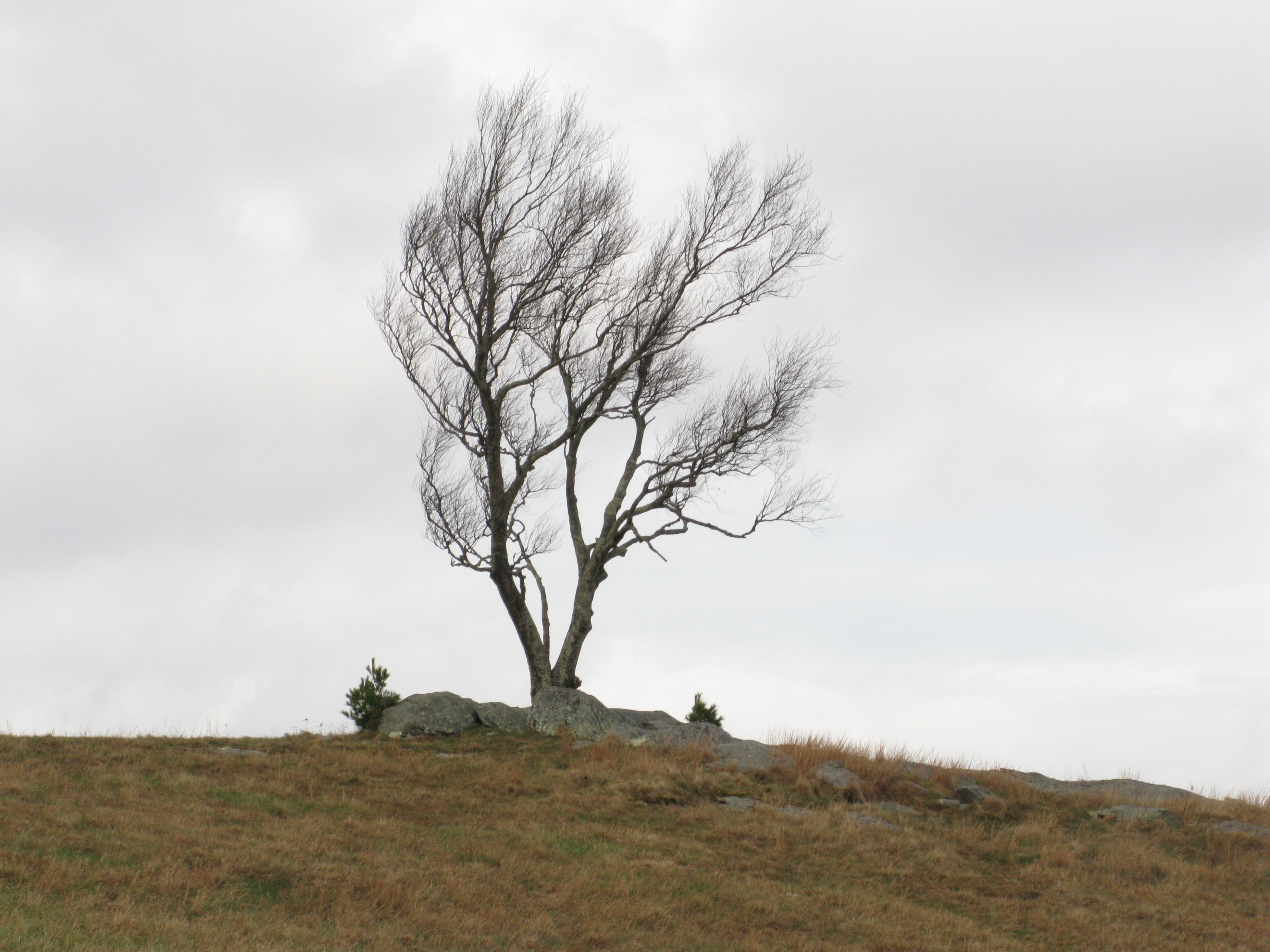
2016-05-08a Doughton Park Tree

Read Full Post »

Remember

[featuring three poems by Valerie Neiman]
What you see, that is what survives.
What you remember is all there is.

Don’t you want to save the world?
+++++++++++ from Catechism by Valerie Neiman

Yesterday I walked and tried to remember. Here beside my foot, what is the name of this so familiar leaf? Distinctive, like no other leaf, for that reason alone I should remember it. Surely I have seen it before and known it. Surely the other things I’ve seen and learned for the first time today have not pushed from my memory an equal number of things I learned yesterday, cargo jettisoned?

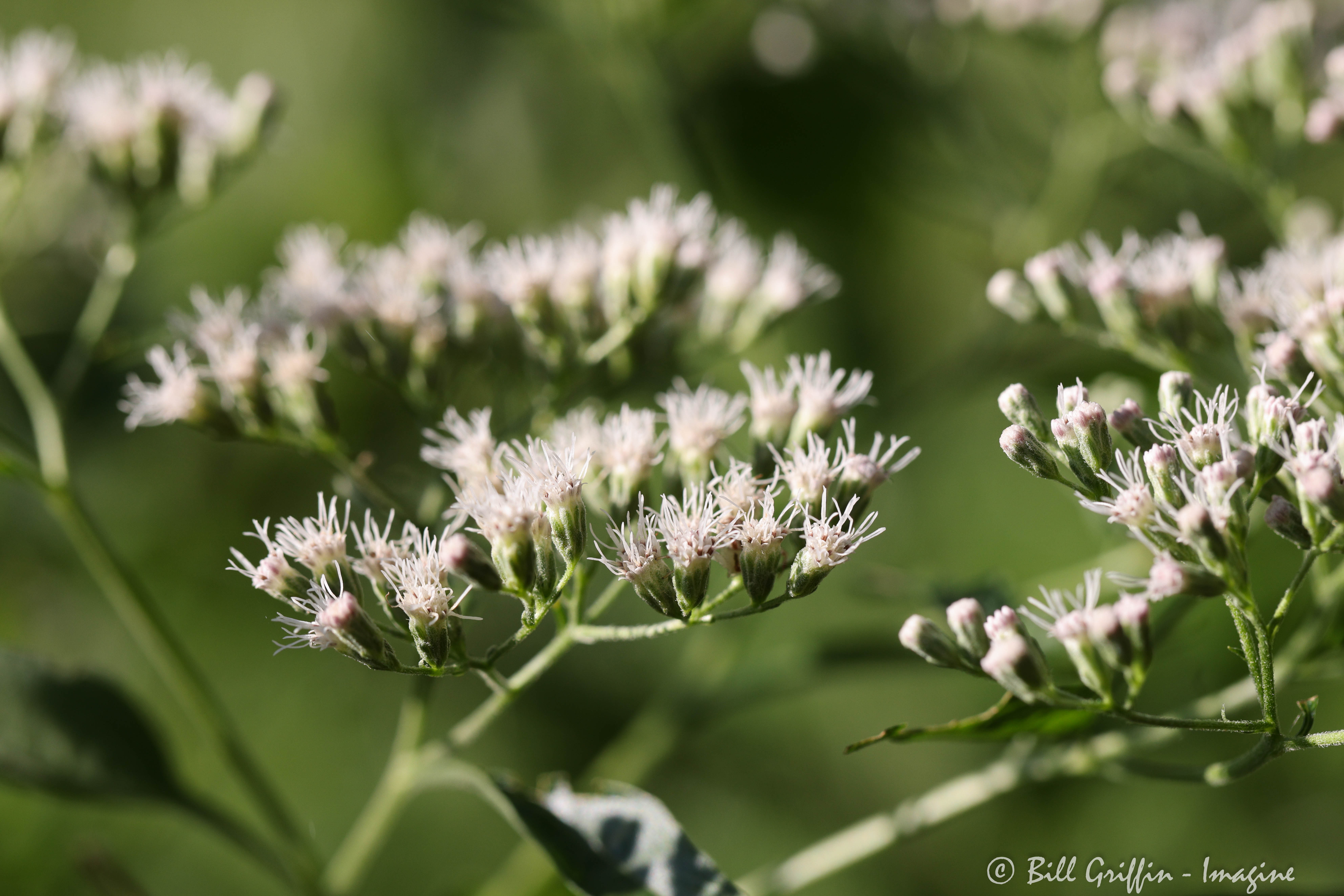
Later I found a photo of the leaf and immediately knew it and where and when I’d first learned it, Jumpseed or Virginia Knotweed, Isaac’s Trail (MST), August 2022. It was in bloom then and I recall a definite small joy in learning it – the leaf, after all, is distinctive. Old friend, it is good to see you in your Spring garb.

Lately I’ve been chiding myself for always walking the same trails every week, sometimes every day. Branch out, see something new! But these woods are never quite the same today as they were yesterday. I notice the same things in different light or at a new stage of growth; I see and hear things I’ve never noticed at all in years of passing this way. I suppose I’ll keep walking these trails until I’ve noticed everything. Or perhaps even longer, until memory no longer retains a thing and each day is indeed entirely new.

Except that’s not quite how it ends. There are all the people who’ve walked beside me on these trails, who’ve shared with me and with whom I’ve shared, if only the shapes of leaves. It’s not quite true that what you remember is all there is. What you share is all there is.

❦ ❦ ❦

Out of the Ordinary
## 
My friend mourns the missing thrushes,
ee-o-lay that used to rise
like fireflies at the verge of oak woods.
## 
Her memory saves a space for their song;
others, later, won’t notice the lack,
satisfied by the insistent mockingbird
## 
(his repertoire a hundred songs or more,
including cell phone and cricket chirp),
reweaving a looser web of dawn chorus:
## 
So one bird replaces a canopy of absent
warblers, as a synthesizer sets ghosts
in the chairs of an emptied orchestra.

+++++++++

Like scissored silhouette
of a child’s shadow, this becomes the is
of that isn’t. What is no longer,

like those ballads that bridged generations.
We no longer lift our quotidian voices
to pace work or ease the idle hours,

now that professionals provide
tunes at the ready, electronically
clipped and smoothed,

like purebred stock at the fair,
not one hair out of place,
not one note quavered.

Valerie Nieman
from Hotel Worthy, Press 53, Winston-Salem NC, © 2015
❦ ❦ ❦

Last week I was helping my wee mother take a little walk – tie her shoes, re-button the pink sweater, find her cane – and as I held her elbow to steady her across the threshold, she looked up and said, “You’re a good boy.” If you are also an oldest child, perhaps you, too, have spent a good chunk of your life doing whatever it took to hear those words (and no, I haven’t had to wait 70 years to hear them for the first time). But doesn’t every child, primogenitor or not, long to gain their parents’ favor? More than to be loved – to be worthy?

Valerie Nieman writes there on the left is the Hotel Worthy and I realize I’ve been trying to check in for years. Many of the poems in Hotel Worthy struggle with conflict – how to be worthy? Or how to be true to yourself? Is there some hallowed doorway that leads to both? Or is it true that The purpose of life is not to be happy. It is / to know every name of every part of the sailboat from gudgeon to headstay and . . .

The purpose of life is a shadow ducking behind a tree in a dark wood. Pursue, pursue! After spending several hours reading Val’s book straight through, I find myself returning to poems that especially entice me on, this one, that one, re-reading and discovering new connections, doorways opening into new places. The archaeologist’s surface stratum is scratched away to reveal a metaphor for human relationships and generations. So many metaphors, each one more true than the last. Valerie’s collection creates a lifeline and a world of knowing that emerges not as a tree, spreading from root to bole to branch, but as a web, nodes across time and place. I scribble a collection of her lines I want to hold on to and learn from. I smile when an awareness dawning in the poet dawns in me as well. I’m glad I accepted the invitation to check into this Hotel – you come, too!

Valerie Nieman is a graduate of West Virginia University and Queens University of Charlotte, and teaches writing at North Carolina A&T State University and at other venues including John C. Campbell Folk School. Hotel Worthy is the second of her three poetry collections which Press 53 in Winston-Salem NC has published; the first is Wake Wake Wake and the third The Leopard Lady. Her Press 53 novel, Blood Clay, received the Eric Hoffer Award, and her fourth novel, To the Bones, was published in 2019 by West Virginia University Press.

❦ ❦ ❦

Stratigraphy
++ In archaeological sites, natural and human-generated material occur together
++ in layers. These layers, called strata, form a record of past events . . .

++++++++++++ – Research Laboratories of Archaeology, UNC

Prehistory
is what has been cut apart
and swallowed,
bite by terrible bite,
and laid down in the body’s lattice.
Small sharp things:
that glance across the table,
those unfinished gestures.
## 
History waits in the antechamber
for the arrival of words:
no documents, no history.
But what’s down inside
the long galleries of the bones
all the while, without any light,
painting aurochs on the walls?
## 
Now if you only want to pry
artifacts out of the generations
of mud, what can be salvaged
for love or for money,
hurry, then, with pick and shovel –
difficult to tell what it all
amounted to, once,
except that sometimes
in the upended clay the light
finds a carved head, a bit of gold,
or flaked edge of obsidian
that might (or not) have been employed
in a clenched fist.
## 
The careful investigator,
with dental pick and bone brush,
would find the same shattered femurs,
the same engraved figures
(vulva and tectiform shelter),
but frame them
in time and meaning:
how high the icy water rose
that spring,
how the deer fled,
how we starved.
## 
Valerie Nieman

from Hotel Worthy, Press 53, Winston-Salem NC, © 2015

❦ ❦ ❦

Dark Matter


Seaweed, scoured from the deep, scatters
its beads upon the beach. Everything broken.
I gather twists and bits, small lives blasted
##
and holed, shoved aside by the waves, a slattern’s
house(un)keeping, fires heaped with trash,
any salutary offerings to one goddess or another
##
scrabbled up by dirty hands, a smidge and a smatter
to feed a momentary appetite. So I kick along the tide
line and analogize, my disappearing domestic
##
bliss no match for weighty issues of war-shatter
everywhere east to west, eruptions staggering the world;
but still, but still, I accumulate little bomblets
##
of disaster and embrace them, the spatter
of heartsblood ready to fly when the least jounce
lets it all come apart, and so the personal
##
etc. holds little hands with the larger all the way up, dark matter
flinging this fine universe outward from one hot bang,
farther, colder, the space-between we imagine.
## 

Valerie Nieman

from Hotel Worthy, Press 53, Winston-Salem NC, © 2015

❦ ❦ ❦

2020-06-11a Doughton Park Tree

Read Full Post »

[featuring two poems by Regina Garcia]

This Fire Tastes Like . . .

This fire won’t taste like the last ones did
Singed souls torn up, crying, wandering,
wondering how to get love back
How to fix life
How to repair
The last fires tasted like . . .
Tasted like loss
Tasted like shame
Tasted like despair
Tasted like mourning
Tasted like no way out
Tasted like no way back
tasted like Tulsa
Tasted like Elaine
Tasted like Watts
Tasted like Wilmington
Tasted like old Eppes High . . .
Tasted like all that it had consumed

This fire tastes different
This fire tastes fed up
This fire has eyes set
Beyond loss
Beyond prison
Beyond death
Beyond the graves
This fire has new eyes
Fixed on that “New New”
Jerusalem
New fire gonna propel these children into
promised land
They won’t need the water fo the oppressor
Because they are children of living waters
And Raging Fires
And earth tht has promised fertility
Yet pushed out weeds to choke and distract

This fire tasted different
It tastes like energy

Tastes like righteous fury
Its fuel is dark kindling root
It will combust from a place to deep
So misunderstood
So, underestimated
That it will not be contained
This fire tastes different
It tastes like resolve

It will reject any attempts to thwart combustion
The internal combustion
It will incinerate attempts at trickery for
It has seen the video and believes
It waw murderous hubris
It saw The Dead that were tried for dying
It saw the solid stance of patronizing defiance of other fires
It saw the lies stifling acrid air
This fire tastes different
It tastes alive
It will not stop until there is nothing left that can stop it
It will then scoop the ashes and build
Jerusalem
Yeah
This fire tastes different
This fire tastes like revelation
This fire tastes like change
This fire tastes like
Hope

Regina YC Garcia
from The Firetalker’s Daughter, Finishing Line Press, © 2023


❦ ❦ ❦

Rainstorm, windstorm, limbs thrashing the house in panic, rain attacking the windows through the screens: we can feel Amelia’s mounting fear each time the sky grows dark and she asks, “Is this a tornado?” No, Honey, just a big storm. We don’t get tornados around here.

Until this afternoon. Severe Thunderstorm pings on the phone while we’re watching a movie with Amelia in the living room. Within minutes the sky is slate and the TV goes black. When hail peppers the porch we lurch for the basement. Amelia makes it into a game, the divine gift of the seven-year old, and while we play with flashlights we hear the drumming of rain but assume those contrabasso reverberations are thunder.

It’s all over in fifteen minutes. We climb the stairs and open the front door – our neighbor’s venerable willow oak, trunk at least two meters in diameter, is angled across the road into our driveway. Not crushing our living room. One sugar maple at the end of our house has had its spine snapped and hurled, but not into our bedroom. As our neighbors emerge, we tally and discover no one is injured (although not true of several roofs).

Everyone’s yard is full of twisted trunks and limbs or huge redclay balls of the uprooted. We notice most of the trees aligned prostrate in the same direction and we mutter, “Downburst.” “Straight-line wind.” Two days later, though, the National Weather Service makes its proclamation: an E0 tornado. We wonder if Amelia will ever want to finish that movie we had started. And if we ever get our power back on, we’re ordering some more flashlights.


Regina Garcia’s new poetry collection, The Firetalker’s Daughter, is elemental – wind, earth, water, fire. She describes her mother and her son as Firetalkers – they can speak to pain and talk it into submission. And isn’t that what these poems do, speak to the pain? If words could remove the pain of the world, the inescapable pain of living, perhaps a new day would dawn when the earth would have no more need of words. We will never see that day.

But strong words, words of compassion and truth, can raise us out of the pain. We can stand on the shoulders of the poetry, the hymns, the stories of the Firetalker and see a way beyond the pain. We can see a road before us where pain can’t wield its power over us. We can live in this world of pain and still proclaim joy, the rise of indomitable spirits from the embers. Oh, Regina Garcia, may your poetry lead us there. You are the Firetalker.

❦ ❦ ❦

The Fire That Consumes: The Burnings of Black Histories

Have you ever seen fire, the kind that consumes . . . ?
a house, a block, a street?
a community?
a town?
a nation?

Have you ever stretched fingers towards fire just because you wanted to feel
the last gusts of breath before the flames melted . . . ?
Mortar from brick?
Wood from steel?
Skin from meat from sinew from bone?
Have you ever jumped at the crack and splinter before the crash?
Hid your face to escape the blowing soot?
Covered your nose to block the smell of escaping gases the incineration of
flesh? Squeezed eyes shut to restrain the release of tears?

Fire destroys completely
Everything
Except memory
Those who have lived through fire never forget that all that was lost cannot
be returned, cannot be restored
Pre-fire life flickering in memory

Have you ever known the indignity of stolen memory?
Of erasure of thought?
A disallowing of necessary history passed on from ind to mind
No collective storage
Trashed as disposable waste
Scores of nations and families of people relegated to one layer of life lived
while other layers burned away
Withdrawn from the light of day
Layers that could have lit
the illumination of minds
the awareness of conditions

the recognition of irreverence and unrighteousness
the tackling of generational traumas
the overcoming of fear
the pride of resilience

Layers of heated memory
Deemed villainous
Tossed into the ashes
By thieves, those who dread
The power that it brings
And the rise of indomitable spirits from the embers

Regina YC Garcia
from The Firetalker’s Daughter, Finishing Line Press, © 2023

❦ ❦ ❦

Read Full Post »

« Newer Posts - Older Posts »