Feeds:
Posts
Comments

Archive for the ‘Ecopoetry’ Category

[with 4 poems by Jane Mead]

What is Leafy yet has no Leaves?

On our way home Mike and I pull over at Newfound Gap but not for the Appalachian vistas: it’s our last stop to hunt lichens before we leave the Smokies. And maybe an opportunity to spread some lichen joy.

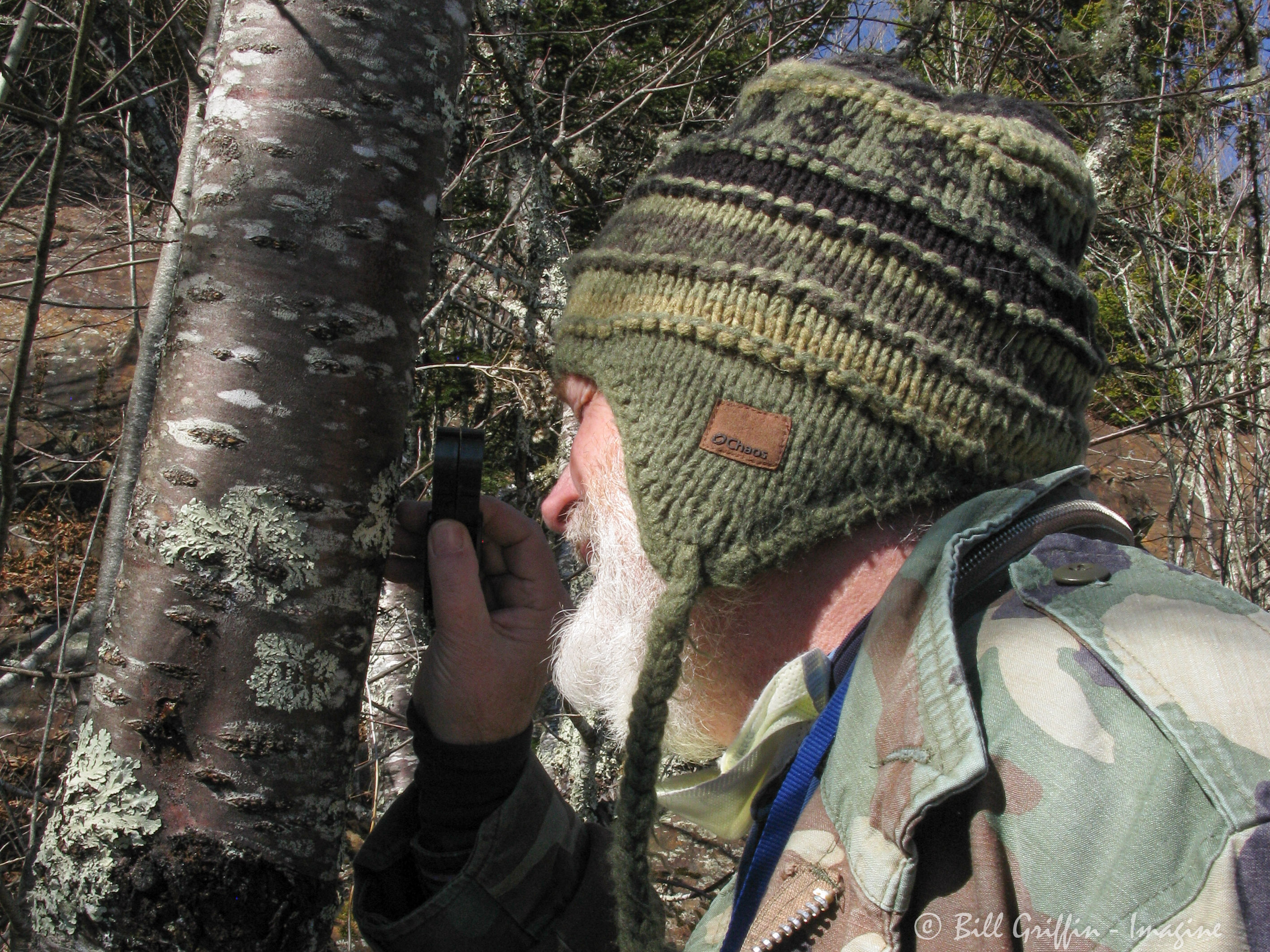
No need to hunt – stop moving long enough and a lichen will find you. Two old guys squinting through magnifying glasses at rocks and bark, though, and it also isn’t long before a passing family asks, “What gives?” “Looking at all the lichens,” Mike answers. “What’s a lichen?” Jackpot! Mike begins to tell their story . . . “a whole little world of fungus and algae” . . . while I wander on.

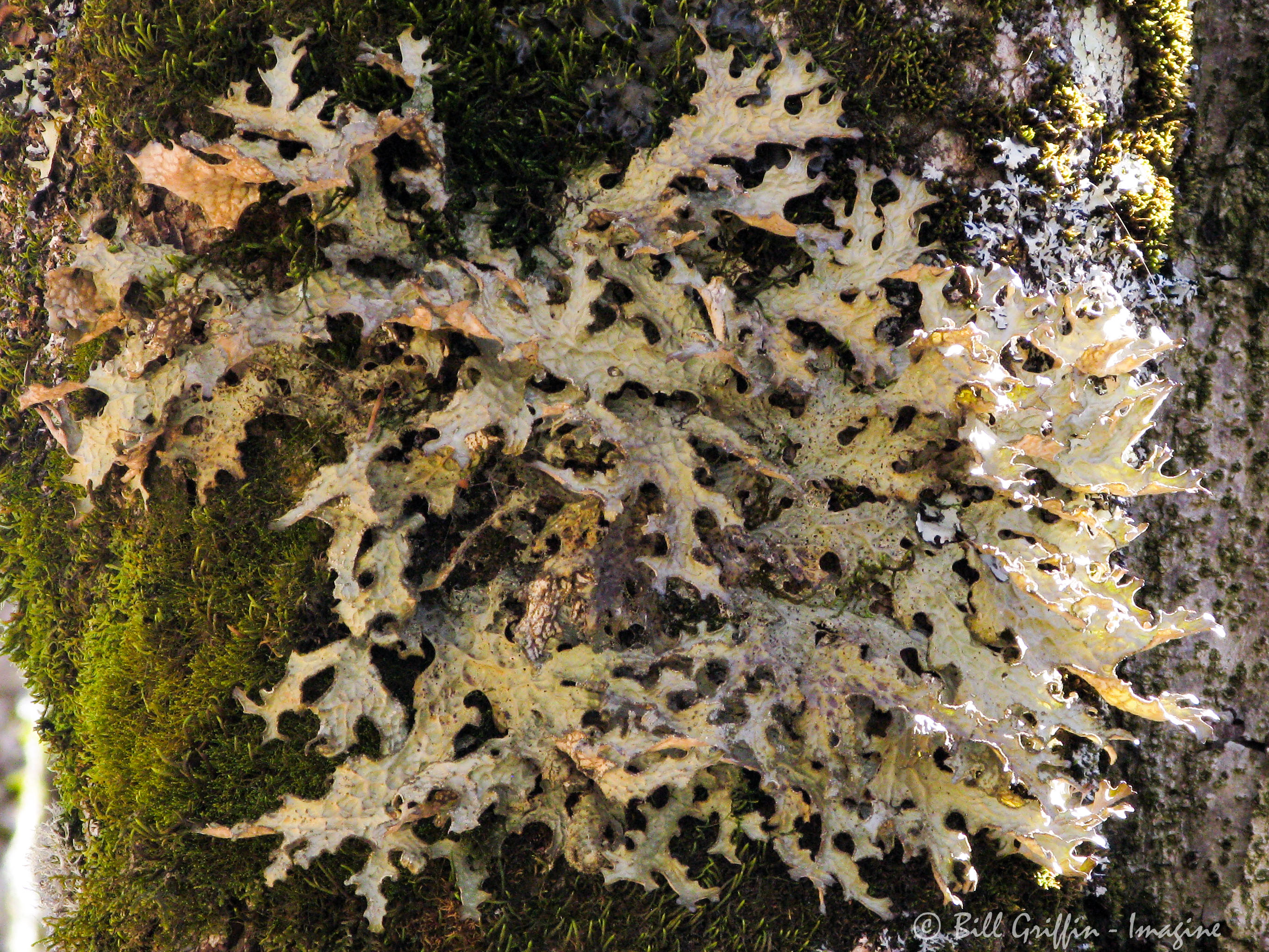
Now a couple asks me why I’ve raised my camera toward this one tree among the millions. Spreading from its bark are crooked fingers, hands of crones, veined, flattened, beseeching. “That’s lichen?” says the woman when I tell her. “I thought it looked like wind had plastered leaves against the trunk.” Exactly, that’s just how it looks. But it has no leaves!

Lobaria pulmonaria: Lungwort, you need a new name. Not even remotely kin to spiderworts, toothworts, liverworts, you are no wort at all – though your presence is atmosphere’s benediction. Draw deeply, my lungs! Exhale wonder! What shall we call you, Leafy without Leaves? Troll’s Greeting? Across the Aisle? Or maybe simply Lichen Welcome.

.     .     .     .     .     .     .
.     .     .     .     .     .     .

Three Candles
And a Bowerbird

I do not know why
the three candles must sit
before this oval mirror,

but they must. –
I do not know much
about beauty, though

its consequences
are clearly great – even
to the animals:

to the bowerbird
who steals what is blue,
decorates, paints

his house; to the peacock
who loves the otherwise
useless tail of the peacock –

the tail we love.
The feathers we steal.
Perhaps even to the sunflowers

turning in their Fibonacci
spirals the consequences
are great, or to the mathematical

dunes with ripples
in the equation of all things
windswept. Perhaps

mostly, then, to the wind.
Perhaps mostly to the bowerbird.
I cannot say.

But I light the candles: there is
joy in it. And in the mirror
also, there is joy.

Jane Mead (1958-2019)

.     .     .     .     .     .     .

These poems by Jane Mead appear in To the Wren: Collected & New Poems (Alice James Books, Farmington ME, © 2019). The book spans three decades of Mead’s life: running her family’s vineyards in Napa Valley; the death of her mother; her own cancer which ultimately took her life. All through her poetry there is a fierce seeking for identity – But always it’s either I or world. / World or I.  Relentlessly she seeks justice for the earth, for creatures, for the self. Poet Gerald Stern writes, “Jane Mead’s mission is to rescue—to search and rescue; and the mind, above all, does the work…. Her poems are a beautiful search for liberation and rebirth.” Nature is not something we write about; nature is what we are.

[Above poem excerpt by Jane Mead is from In Need of a World.
Three bright yellow lichens of the Smokies found at Newfound Gap:
= Xanthomendoza weberi
= Caloplaca falvovirescens, “Colonel Mustard”
= Caloplaca flavocitrina, “Continental Firecrackers”
++++  – – Species identification revised 2/28/2022 after review by Dr. Lendemer]

.     .     .     .     .     .     .

The Argument Against Us

The line of a man’s neck, bent
over welding, torchlight breaking
shadows on his face, hands cracked
into a parched map of fields he has woken –
the gods wanted us.

Think of their patient preparation:
the creature who left the rocking waves behind,
crawling up on some beach, the sun
suddenly becoming clear. Small thing
abandoning water for air, crooked body
not quite fit for either world, but the one
that finally made it. Think of all the others.

Much later, spine uncurls, jaw pulls back, brow-bone
recedes, and as day breaks over the dry plain
a rebellious boy takes an upright step
where primitive birds are shrieking above him.

He did it for nothing. He did it
against all odds. Bone of wrist, twist
of tooth, angel of atoms – an infinity
of courage sorted into fact
against the shining backdrop of the world.

The line of one man’s neck, bent –
torchlight breaking shadows on his face.

There was a creature who left the waves behind
and a naked child on a windy plain:
when the atom rips out into our only world
and we’re carried away on a wave of hot wind
I will love them no less: they are just how much
the gods wanted us.

Jane Mead (1958-2019)

.     .     .     .     .     .     .

The Geese

slicing this frozen sky know
where they are going –
and want to get there.

Their call, both strange
and familiar, calls
to the strange and familiar

heart, and the landscape
become the landscape
of being, which becomes

the bright silos and snowy
fields over which the nuanced
and muscular geese are calling.

Jane Mead (1958-2019)

.     .     .     .     .     .     .

To the Wren, No Difference
No Difference to the Jay

I came a long
way to believe
in the blue jay

and I did not cheat
anyone. I
came a long way –

through complexities
of bird-sound and calendar
to believe in nothing

before I believed
in the jay.

Jane Mead (1958-2019)

.     .     .     .     .     .     .
.     .     .     .     .     .     .

When Mike Barnett and I stopped at Newfound Gap (on US 441 smack in the middle of Great Smoky Mountains National Park) we were returning from the weekend lichens course at Tremont, part of the Southern Appalachian Naturalist Certification Program. We bow down in gratitude to John DiDiego, Education Director at Great Smoky Mountains Institute at Tremont, for convincing Dr. James Lendemer to teach this course. Dr. Lendemer is chief lichenologist at New York Botanical Gardens and literally wrote the book: Field Guide to the Lichens of Great Smoky Mountains National Park (which weighs 1.48 kg, not so much a “field guide” as an entire encyclopedia!).

Dr. Lendemer in his book names L. pulmonaria “Crown Jewel of America” – it is the biggest baddest lichen of them all. Thank you, James – we love lichens! Thank you GSMIT and SANCP and GSMNP. And thanks to all you little fungal hyphae, algal photobionts, cyanobacteria – you look mah-velous.

Resources:

More by and about Jane Mead at Poetry Foundation.

Field Guide to the Lichens of Great Smoky Mountains National Park, Erin A. Tripp and James C. Lendemer, University of Tennessee Press, Knoxville, © 2020.

Great Smoky Mountains Institute at Tremont, Southern Appalachian Naturalist Certification Program.

.     .     .     .     .     .     .

2019-02-09 Doughton Park Tree

Read Full Post »


[with 3 poems by Robinson Jeffers]

Linda is preparing to read Thy Friend, Obadiah to Amelia, age 6. A young Quaker lad in colonial Nantucket is befriended by a seagull, which is not entirely to his liking. Linda shows Amelia the cover and explains that the story happened a long, long time ago.

“Even before cell phones?” Amelia asks.

“Oh yes, and look at the picture. See the horse and cart? This was even before cars.”

Amelia grows grave and pensive. “Did they have candy?”

–    –    –

A six-year old lives within essentials. Even though candy is not a daily treat it must exist. Get into the car after kindergarten and immediately pull Tammy from the bottom of the bookbag, indispensable diminutive fox companion from infancy. And laughing. A joke, a gift, a tickle, a sudden surprise are all occasions for the essential vitamin of laughter.

Sometimes I’m not sure I remember what are essentials (except cheese, yes, must have cheese). It doesn’t help when Siri informs me my screentime increased 59% last week, nor is it helpful to argue with Siri that the preceding week was artificially low because his battery had funked out on me. Step away from the electronics, Sir. When Linda and I have taken a break from worldly worries and return from a long walk in the woods, we usually hear ourselves saying, “Hoo boy, we needed that.” Something essential about such an interlude.

Essential things. Clues abound. For Christmas I gave my sister and her partner a book of poetry I often return to myself. I had mentioned my recurring anxiety dreams and last week Mary Ellen asked how I was coping (nice to have a sister who’s a psychologist). I blurted, “When I read my copy of that book I gave you it helps.”

Essential? Poetry? When I can’t be walking in the woods I can be in the wild with Robinson Jeffers.

.     .     .     .     .     .     .

Return

A little too abstract, a little too wise,
It is time for us to kiss the earth again,
It is time to let the leaves rain from the skies,
Let the rich life run to the roots again.
I will go to the lovely Sur Rivers
And dip my arms in them up to the shoulders.
I will find my accounting where the alder leaf quivers
In the ocean wind over the river boulders.
I will touch things and things and no more thoughts,
That breed like mouthless May-flies darkening the sky,
The insect clouds that blind our passionate hawks
So that they cannot strike, hardly can fly.
Things are the hawk’s food and noble is the mountain, Oh noble
Pico Blanco, steep sea-wave of marble.

Robinson Jeffers (1887-1961)

things and things and no more thoughts . . .

.     .     .     .     .     .     .

Rock and Hawk

Here is a symbol in which
Many high tragic thoughts
Watch their own eyes.

This gray rock, standing tall
On the headland, where the seawind
Lets no tree grow,

Earthquake-proved, and signatured
By ages of storms: on its peak
A falcon has perched.

I think, here is your emblem
To hang in the future sky;
Not the cross, not the hive,

But this; bright power, dark peace;
Fierce consciousness joined with final
Disinterestedness;

Life with calm death; the falcon’s
Realist eyes and act
Married to the massive

Mysticism of stone,
Which failure cannot cast down
Nor success make proud.

Robinson Jeffers (1887-1961)

.     .     .     .     .     .     .

Credo

My friend from Asia has powers and magic, he plucks a blue leaf from
+++ the young blue-gum
And gazing upon it, gathering and quieting
The God in his mind, creates an ocean more real than the ocean, the salt,
+++ the actual
Appalling presence, the power of the waters.
He believes that nothing is real except as we make it. I humbler have found
+++ in my blood
Bred west of Caucasus a harder mysticism.
Multitude stands in my mind but I think that the ocean in the bone vault is
+++ only
The bone vault’s ocean: out there is the ocean’s;
The water is the water, the cliff is the rock, come shocks and flashes of
+++ reality. The mind
Passes, the eye closes, the spirit is a passage;
The beauty of things was born before eyes and sufficient to itself; the
+++ heartbreaking beauty
Will remain when there is no heart to break for it.

Robinson Jeffers (1887-1961)

.     .     .     .     .     .     .

These three poems are collected in The Wild God of the World, An Anthology of Robinson Jeffers, Selected, with an introduction, by Albert Gelpi, Stanford University Press, 2003

Thy Friend, Obadiah,written and illustrated by Brinton Turkle, Puffin Books; a Caldecott Honor Book in 1970

And the Christmas present I gave Mary Ellen and Wendy is The Poetry of Impermanence, Mindfulness, and Joy, edited by John Brehm, Wisdom Publications, 2017

Additional references: Return; Rock and Hawk; Robinson Jeffers at The Poetry Foundation.

.     .     .     .     .     .     .

2016-10-17a Doughton Park Tree

Read Full Post »

I believe this globed earth not all by chance and fortune brings forth her broods, but feels and chooses

[with a longer poem by Robinson Jeffers]

The winter-gray trunks reveal their true nature. Stick-straight tuliptree, angled encroaching oak, perfected symmetry of beech, funky slipped-disc hickory – now in the rarified morning after frost, all mysticism stripped from the breath rising up Dutchman Creek, the trees allow us to know their inmost inclinations, their gestures and attitudes freeze-tag obvious: Fill this space. Drink the light. Every drop.

Summer is the mystery, all bluster and concealment. Signature leafshapes swallowed in jostling overflow of green – in winter we discover how they do it. Branches ramified ever finer, each species has invented its own geometry, each distinct inscrutable math of its evolving. Here they crouch and rise and stand and lean behind our house, here they create this little patch of forest just like all other patches and utterly unlike any but itself.

These trees aren’t old. Maybe seventy years since last the loggers passed. Perhaps that white oak is a hundred. One big silverbell beside the water has had time to cast her progeny up the ridge, seven generations. The early prodigies succumb to shade – dogwood, hornbeam. Not many pines remain, mostly a few holy snags favored by woodpeckers.

This winter we first realized a respectable Liriodendron had fallen last summer, twenty-inch diameter and a hundred feet from the house but we never heard the crash, parallel to power lines so we never lost light. She rests beside a sister that lay down before we bought this place forty years ago. The old tree is almost returned to earth; the newly fallen still clings to a few black leaves. Up the hill, in full sun, another sister is at least double their size, heaving our driveway, flaunting her strange orange-yellow flowers a hundred feet high, prodigal with her seedlings.

I am old. Seventy soon. God speaks that tuliptree’s name in the space it fills, in jadegreen leaves and roots that smell of musk and camphor. How difficult is it for me to imagine my name also on God’s lips, imagine some webline of my self will extend its existence onward when the frame that supports it collapses, when the blood, the electricity cease to flow? Dutchman Creek will still complain after heavy rain. The twigs will twist to find their places. Light will fill a new day and expect to be drunk. Every drop.

.     .     .     .     .     .     .

now all’s empty, a bone bubble, a blown-out eggshell


De Rerum Virtute
[The Virtue of Things]
++++ Robinson Jeffers (1887-1962)

++++ I
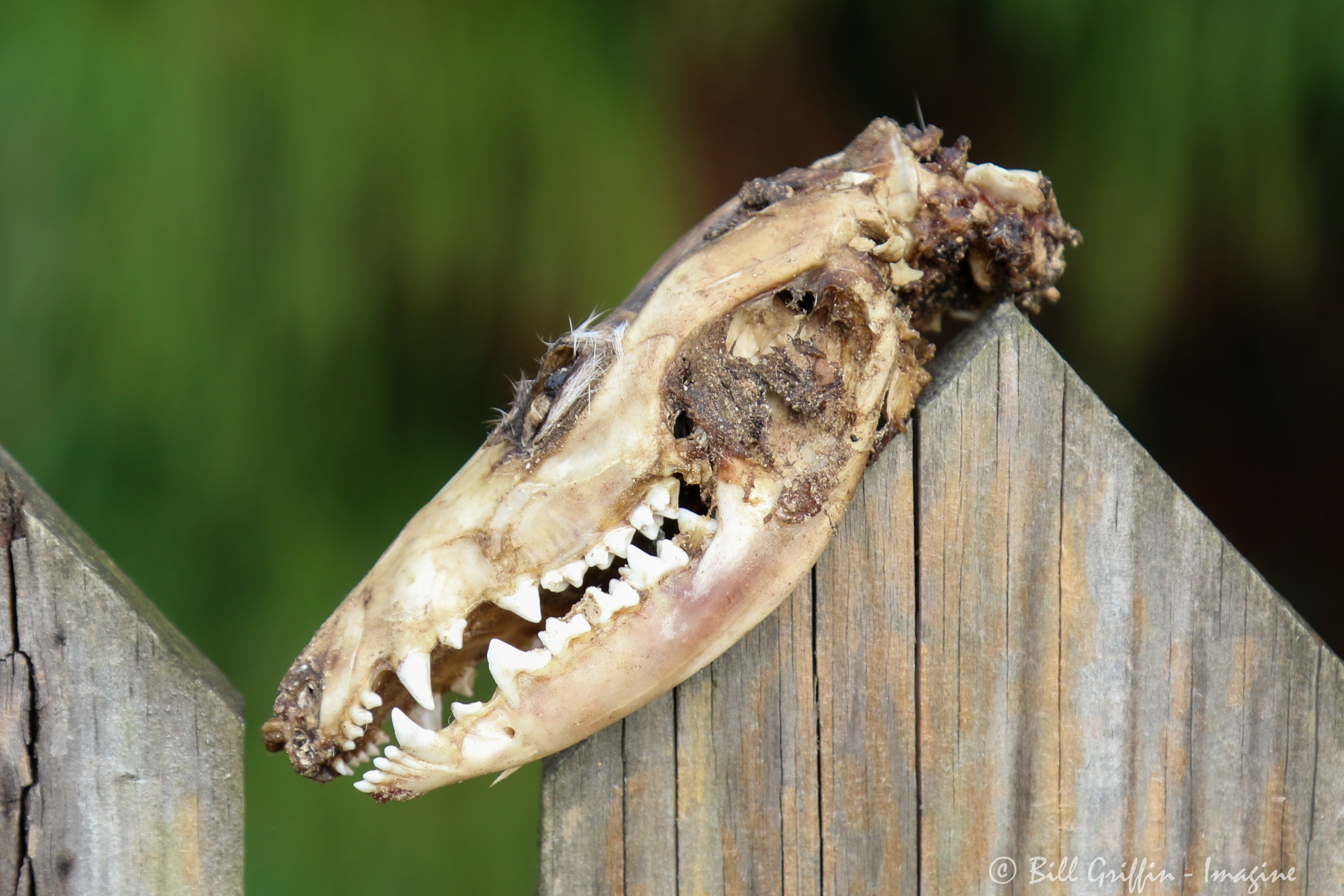
Here is the skull of a man: a man’s thoughts and emotions
Have moved under the thin bone vault like clouds
Under the blue one: love and desire and pain,
Thunderclouds of wrath and white gales of fear
Have hung inside here: and sometimes the curious desire of knowing
Values and purpose and the causes of things
Has coasted like a little observer air-plane over the images
That filled this mind: it never discovered much,
And now all’s empty, a bone bubble, a blown-out eggshell.

I believe the first living cell had echoes of the future in it

++++ II
That’s what it’s like: for the egg too has a mind,
Doing what our able chemists will never do,
Building the body of a hatchling, choosing among the proteins:
These for the young wing-muscles, these for the great
Crystalline eyes, these for the flighty nerves and brain:
Choosing and forming: a limited but superhuman intelligence,
Prophetic of the future and aware of the past:
The hawk’s egg will make a hawk, and the serpent’s
A gliding serpent: but each with a little difference
From its ancestors—and slowly, if it works, the race
Forms a new race: that also is a part of the plan
Within the egg. I believe the first living cell
Had echoes of the future in it, and felt
Direction and the great animals, the deep green forest
And whale’s-track sea; I believe this globed earth
Not all by chance and fortune brings forth her broods,
But feels and chooses. And the Galaxy, the firewheel
On which we are pinned, the whirlwind of stars in which our sun is one dust-grain, one electron, this giant atom of the universe
Is not blind force, but fulfils its life and intends its courses. “All things are full of God.
Winter and summer, day and night, war and peace are God.”

the sun will be strangled among his dead satellites, remembering magnificence

++++ III
Thus the thing stands; the labor and the games go on—
What for? What for? —Am I a God that I should know?
Men live in peace and happiness; men live in horror
And die howling. Do you think the blithe sun
Is ignorant that black waste and beggarly blindness trail him like hounds,
And will have him at last? He will be strangled
Among his dead satellites, remembering magnificence.

I believe that man too is beautiful

++++ IV
I stand on the cliff at Sovranes creek-mouth.
Westward beyond the raging water and the bent shoulder of the world
The bitter futile war in Korea proceeds, like an idiot
Prophesying. It is too hot in mind
For anyone, except God perhaps, to see beauty in it. Indeed it is hard to see beauty
In any of the acts of man: but that means the acts of a sick microbe
On a satellite of a dust-grain twirled in a whirlwind
In the world of stars ….
Something perhaps may come of him; in any event
He can’t last long. —Well: I am short of patience
Since my wife died … and this era of spite and hate-filled half-worlds
Gets to the bone. I believe that man too is beautiful,
But it is hard to see, and wrapped up in falsehoods. Michael Angelo and the Greek sculptors—
How they flattered the race! Homer and Shakespeare—
How they flattered the race!

the beauty of things means virtue and value in them

++++ V
One light is left us: the beauty of things, not men;
The immense beauty of the world, not the human world.
Look—and without imagination, desire nor dream—directly
At the mountains and sea. Are they not beautiful?
These plunging promontories and flame-shaped peaks
Stopping the sombre stupendous glory, the storm-fed ocean? Look at the Lobos Rocks off the shore,
With foam flying at their flanks, and the long sea-lions
Couching on them. Look at the gulls on the cliff wind,
And the soaring hawk under the cloud-stream—
But in the sage-brush desert, all one sun-stricken
Color of dust, or in the reeking tropical rain-forest,
Or in the intolerant north and high thrones of ice—is the earth not beautiful?
Nor the great skies over the earth?
The beauty of things means virtue and value in them.
It is in the beholder’s eye, not the world? Certainly.
It is the human mind’s translation of the transhuman
Intrinsic glory. It means that the world is sound,
Whatever the sick microbe does. But he too is part of it.

De Rerum Virtute
by Robinson Jeffers (1887-1962)

collected in The Wild God of the World, An Anthology of Robinson Jeffers, Selected, with an introduction, by Albert Gelpi, Stanford University Press, 2003

.     .     .     .     .     .     .

it means that the world is sound

.     .     .     .     .     .     .

I
now all’s empty, a bone bubble, a blown-out eggshell

II
I believe this globed earth not all by chance and fortune brings forth her broods, but feels and chooses

I believe the first living cell had echoes of the future in it

III
the sun will be strangled among his dead satellites, remembering magnificence

IV
I believe that man too is beautiful

V
the beauty of things means virtue and value in them

Robinson Jeffers, the Poetry Foundation

.     .     .     .     .     .     .

IMG_6432

Read Full Post »

« Newer Posts - Older Posts »