Feeds:
Posts
Comments

Archive for the ‘Christian themes’ Category

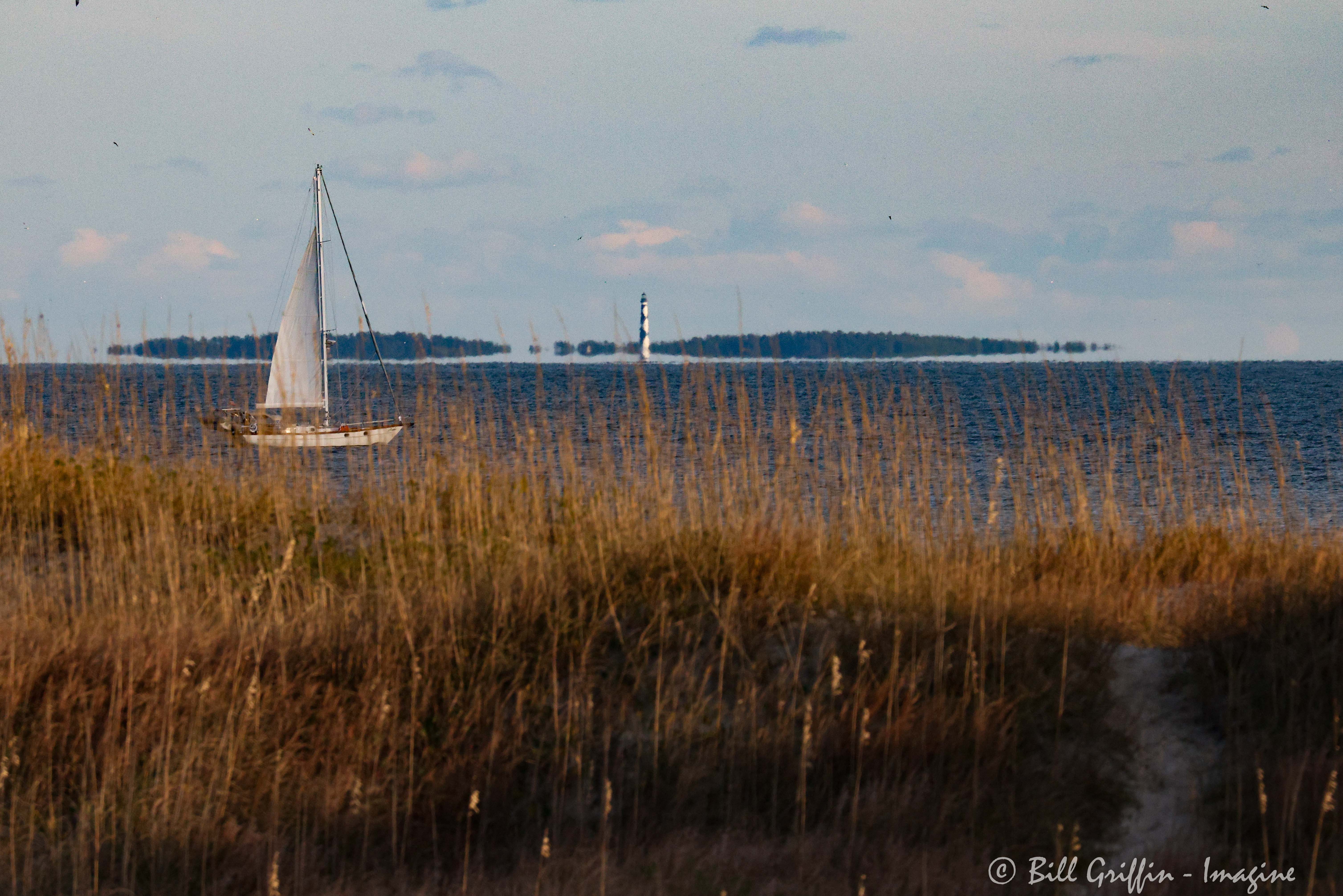
I thought I saw a Merlin. Facing into the stiff onshore breeze, harrying above the dunes: fierce raptor profile, fleet spitfire, wings cocked at the wrist – falcon.

I wanted to think it was a Merlin I saw, last week at Bogue Banks for Thanksgiving, as it veered away from me, slipped sideways and rolled, master of current and draft. I still wanted it to be a Merlin when it arced back overhead, whirled into a perfect stall, snatched a perch at the tip of the spar where the surf warning flag flies.

It drank some water trapped in a crease of the wood. Tawny waistcoat, single-barred tail, face tattoos – this hunter was not a Merlin. Just its much more common little cousin.

Why did my heart skip when I first spotted it? Why did I want so much for it to be a Merlin? I haven’t seen one in years; I’ve only ever seen a very few. The last time I saw a Merlin, Linda and I were alone together on a rare vacation, January in Nags Head, doing what we love: hiking the dunes and maritime forest and half-freezing ourselves in the salt rime. Driving to Hatteras next day we spotted a Merlin perched above the salt marsh, watchful in regal disdain. Merlin – rare visitor from the mysterious north. Merlin, power and magic. Merlin mythic. Merlin romantic.

Is it just its name that makes it so? Falco columbarius per Linnaeus, Esmerejón in Spain and Mexico, Dværgfalk in Denmark and Norway, 55 names listed in Cornell Ornithology. Learning its name accompanies learning its field marks, habitat, range. But what do I really know about Merlin? How to read shifting wind while stalking the wood rat a hundred yards below? Folded wings, little rocket, full velocity strike , blood and hair? What name, Dream Hunter, do you give yourself?

We see the Merlin’s little cousins all the time here in the NC foothills, especially in winter perched on wires above the mouse-gleaned fields. I saw one driving home from the beach. Actually, four. And last week my brain knew what I was seeing above the strand even before my eye would admit it, even before it swooped in for me to take closer look . . .

. . . and turned upon the current of air. Watchful for movement in the sand, ultraviolet signature of mouse urine, it raised its wings, their sharp fast flutter, fixed, motionless on high. Only one little falcon can do that. And I know its name.

.     .     .     .     .     .     .

The Windhover
Gerard Manley Hopkins – 1844-1889

I caught this morning morning’s minion, king-
++ dom of daylight’s dauphin, dapple-dawn-drawn Falcon, in his riding
++ Of the rolling level underneath him steady air, and striding
High there, how he rung upon the rein of a wimpling wing
In his ecstasy! then off, off forth on swing,
++ As a skate’s heel sweeps smooth on a bow-bend: the hurl and gliding
++ Rebuffed the big wind. My heart in hiding
Stirred for a bird,—the achieve of; the mastery of the thing!

Brute beauty and valour and act, oh, air, pride, plume, here
++ Buckle! AND the fire that breaks from thee then, a billion
Times told lovelier, more dangerous, O my chevalier!

++ No wonder of it: shéer plód makes plough down sillion
Shine, and blue-bleak embers, ah my dear,
++ Fall, gall themselves, and gash gold-vermillion.

[This poem is in the public domain.]

.     .     .     .     .     .     .
.     .     .     .     .     .     .


Windhover is a British name for the European Kestrel, Falco tinnunculus, a dead ringer for its close relative the American Kestrel, Falco sparverius. They are the smallest of the falcons and one of the very few birds that can hover motionless in still air, in this case watching for its usual prey, the field mouse.

The Windhover has long been one of my favorite poems. Oh my, where does this magical and mysterious language come from?! What hidden realm is revealed in these lines? Read it aloud to hear Hopkins’s incantatory music. How does he do it?

One of my most striking memories is the Saturday morning Tony Abbott recited The Windhover at Weymouth Center for the Arts and Humanities to call to order a meeting of the North Carolina Poetry Society. As he approached its last line Tony slowed , each word deliberate, and upon gash gold-vermilion there was one unified sharp intake of breath among the entire congregation before we erupted in applause.

Gerard Manley Hopkins was a Jesuit priest; he dedicated The Windhover To Christ our Lord. The poem, like the fierce undaunted Kestrel, breaks open the blue-bleak embers of our dull, unreflective spirits to reveal the fire, the power, and the glorious mystery of creation which surrounds us.

[more Gerard Manley Hopkins at The Poetry Foundation]


.     .     .     .     .     .     .

.     .     .     .     .     .     .

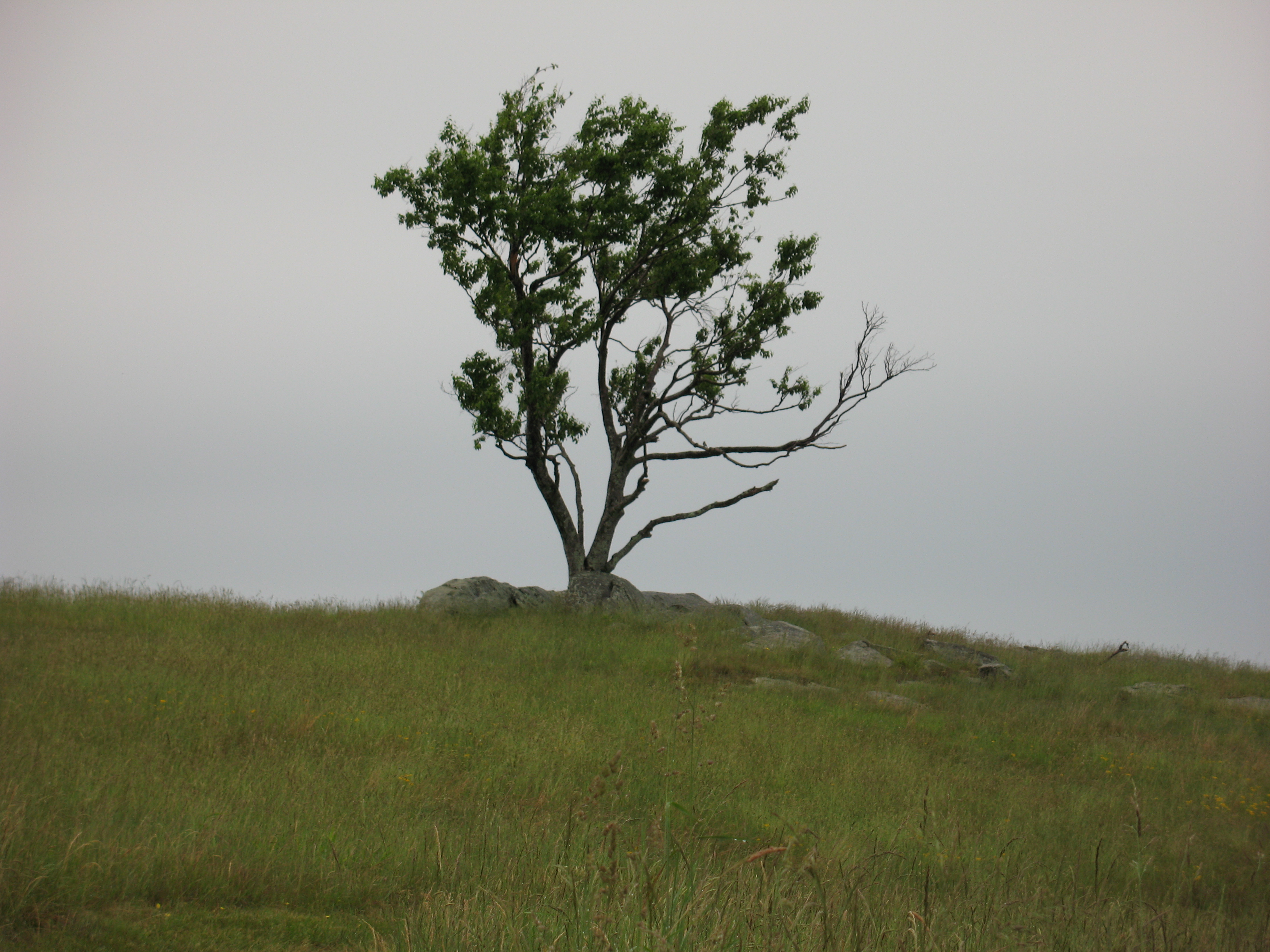
2019-02-09 Doughton Park Tree

Read Full Post »

[with 4 poems by Richard Allen Taylor]

I need one of those little fountains that floats in your birdbath. I need more gravel for the driveway. I need a sharper macro lens. I need to check my investment strategy.

I need to clean the hummingbird feeders. I need to sit down with my life insurance agent. I need to pull the crabgrass between the lilies. I need to empty the dehumidifier. I need an empty inbox.

I need to listen to my sister. I need to reassure Linda. I need to tell Amelia a story. I need to thank Jill and Sue and Josh and Allison . . . I need to thank a whole lot of people. I need a cool morning on the porch with birdsong and poems by my friend Richard. I need the forgiveness I didn’t know I needed.

.     .     .     .     .     .     .

The Train to Redemption

I almost miss it, but catch the last car,
find a window seat next to a woman
who opens her bag of sewing –
needles, pins, fabric spilling over
her knees – and what she’s sewing,
I don’t know. She says nothing
as I lean my head against the sad
window, and watch the land scroll,
trees waving like sword-grass
in a rush of green infantry, charging
the horizon until the sun sinks
and pulls the sky down with it.

After an hour of darkness, the lights
of Redemption appear and the woman
hems while she hums, a tune I won’t name
because it’s one of those that sticks
in your head and drives you crazy for hours
once you hear it. As the train approaches
the station, the air in the car smells
like apples and rain, and this woman
who has not spoken to me, but has
the gift of threading her eyes
with whatever the moment requires,
stitches me with a look of forgiveness
I didn’t know I needed.

Richard Allen Taylor

.     .     .     .     .     .     .

Maybe 2014? A good while back Richard Allen Taylor set himself the challenge of writing poems about angels; they make a marvelous collection. A marvelous concatenation. Conceptualization. Conciliation. Oh sure, Gabriel has a cameo, but these are Richard’s angels, your and my angels: the Angel of Bureaucracy; Angel of Minor Disputes; Angel of Pain. And the Angels of Hope.

What do I really need? How about you? Redemption, can that actually mean anything more than cashing in the winning lottery ticket? Richard in Armed and Luminous offers poems with humor, imagination, and gentle compassion that have redeemed my morning. Yes, there are angels here, more than you may have expected, but I wasn’t hoping for any glowing personage with wings. What I have discovered instead is a spirit that wells up in two persons’ hearts and allows them to truly touch.

.     .     .     .     .     .     .

Angel of Hope

As she grows invisible, her confidence blooms,
a moonflower in darkness, buoyed by terrestrial air
that gives lightness to her presence.

To the man drowning in despair, the garden feels heavy.
Nothing grows as planned. Renegade vines pull down
the rusted trellis, fruit fallen and rotted.

She watches his waning moon fade somber
in the box-like night of a four-walled sky.
In one corner, a shadow thickens, crosses

from stone to path and pulses against
light promised but not yet come.
The man, still unaware of the angel

who waits at the edge of his surrender,
senses a ripple in the darkness and draws closer
to speak, but seeing nothing, keeps his peace

and bows his head – in prayer or resignation
who can say? The angel’s cloak, opaque,
wide-winged and flutter-flapped – hides her completely.

He has shuttered himself, but she sees what he needs
is hers to give. She unwraps, offers her spirit light
like a lover’s body, but only for a heartbeat.

She closes her cloak, knowing hope is a drug
best administered in small doses. She gives him enough
to swim, rise to the surface, breathe again.

Richard Allen Taylor

.     .     .     .     .     .     .

Blue Ridge Mountains

The possibilities were infinite.
When God made this place

He could have made it flat
or barren or covered with ice

or submerged in a hot soup
of gases, but he chose this

contemporary design, mountains
sprigged with tallest pine,

oak, maple, and poplar,
cloud-catching peaks and spines

that radiate into folds. He
let there be light, and the bright

afternoon reflected green
from the nearest slopes,

now blue-gray from a distant arc,
Mt. Mitchell under siege

from a flotilla of clouds,
gray-hulled, white-sailed.

It was quiet here when God created
the vacuum, before He created air

and water to carry sound.
He threw stones and ice,

enough to squeeze the earth
into a ball. Before this windy

breath in the trees, before
the voices in the meadow

or the click of heels
against flagstone walks,

before dry leaves scratched
across the porch, God

did his best work in silence.
He assigned Mother Nature

to manage construction.
She pushed to get the work done,

pitting one continent against another,
subcontracting certain details

to volcanism and erosion, giving the piece
a mixed-media look. I stand on rock

born deep in the earth, spewed
to the surface, sparkled with mica.

the dinosaurs have left, and our turn
at the controls has just begun, our time

a thin sheet in the layers of time,
but already, we have begun the undoing.

Richard Allen Taylor

.     .     .     .     .     .     .

Cello in Moonlight

The strings pull me
to a darkened house,
through a door left open
to a room, empty
except for a wicker chair,
where a woman
in a shawl of moonlight
sits weeping, a private ritual,
her voice the cello,
the cello her voice.

An intruder, I turn to leave.
She asks me to stay.

Richard Allen Taylor

.     .     .     .     .     .     .


all poems from Armed and Luminous, Richard Allen Taylor, Main Street Rag Publishing, © 2016

Header art by Linda French Griffin

.     .     .     .     .     .     .

Read Full Post »

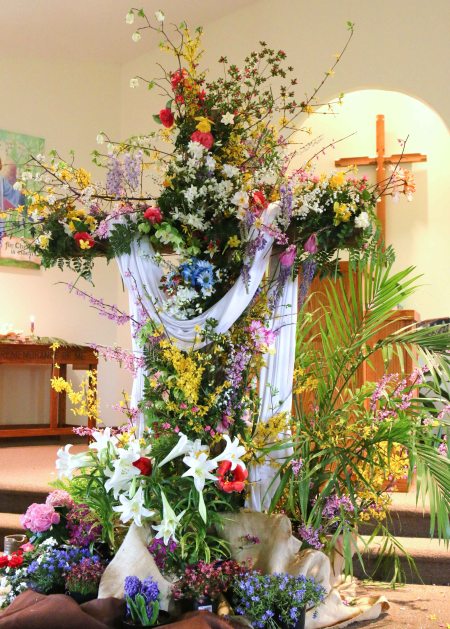
For Easter, remembering Easters past and those we shared them with . . .

Homeless Jesus

He lies there, on a metal bench, feet bare,
the nail holes boring into the very marrow
of our souls. This is not the angry prophet
who threw the money changers from the icy
temple. Oh no, this is Jesus, after what we
did to him. Yes, not they, but we. He is not
sleeping there because some sculptor thought
it smart for his art. God no! He is sleeping there
because we put him there, every day, every
hour, every second.

Look at the size of the holes. A child
was frightened by those holes, someone tells me.
Good. Let the child go home. Let the parents
tell the child what we did to him, what
we still do to him.
++++++++++++++++ And you, who read
these words, stop your cars, get out, go sit
with him and talk. Bend down and look
into that sleeping face beneath the hood.
Pour water through his parched lips, bandage
his naked feet. Cover the holes we have made.
Do it now, do it now, do it now, and perhaps
on Easter morning early you’ll drive by and see
the bench is bare, the empty cloak crumpled
on the ground.

Meanwhile, in a different town on a back street
in a cardboard box, another homeless Jesus waits.


Anthony S. Abbott
from Dark Side of North, Press 53, Winston-Salem, NC © 2021 the Estate of Anthony S. Abbott

.     .     .     .     .     .     .


“A new command I give you: Love one another. As I have loved you, so you must love one another.”

John 13:34 (NIV)


Remembering . . .

Rick Flanery    (1945-2019)
Edwin “Skip” Ball    (1944-2020
Cora Burley    (1923-2020)
Charles McKenzie    (1931-2020)
Charlotte Case    (1923-2020)
Charles Hair    (1934-2021)

.     .     .     .     .     .     .


.     .     .     .     .     .     .

Read Full Post »

« Newer Posts - Older Posts »