Archive for October, 2023
Rocking the Moment
Posted in Imagery, Photography, poetry, tagged Bill Griffin, haiku, imagery, nature, nature photography, poetry, Southern writing, William Winslow on October 20, 2023| 7 Comments »
.
[with haiku by William Winslow]
.
azalea in bloom
seems early this year –
what else have I missed?
.
❦
.
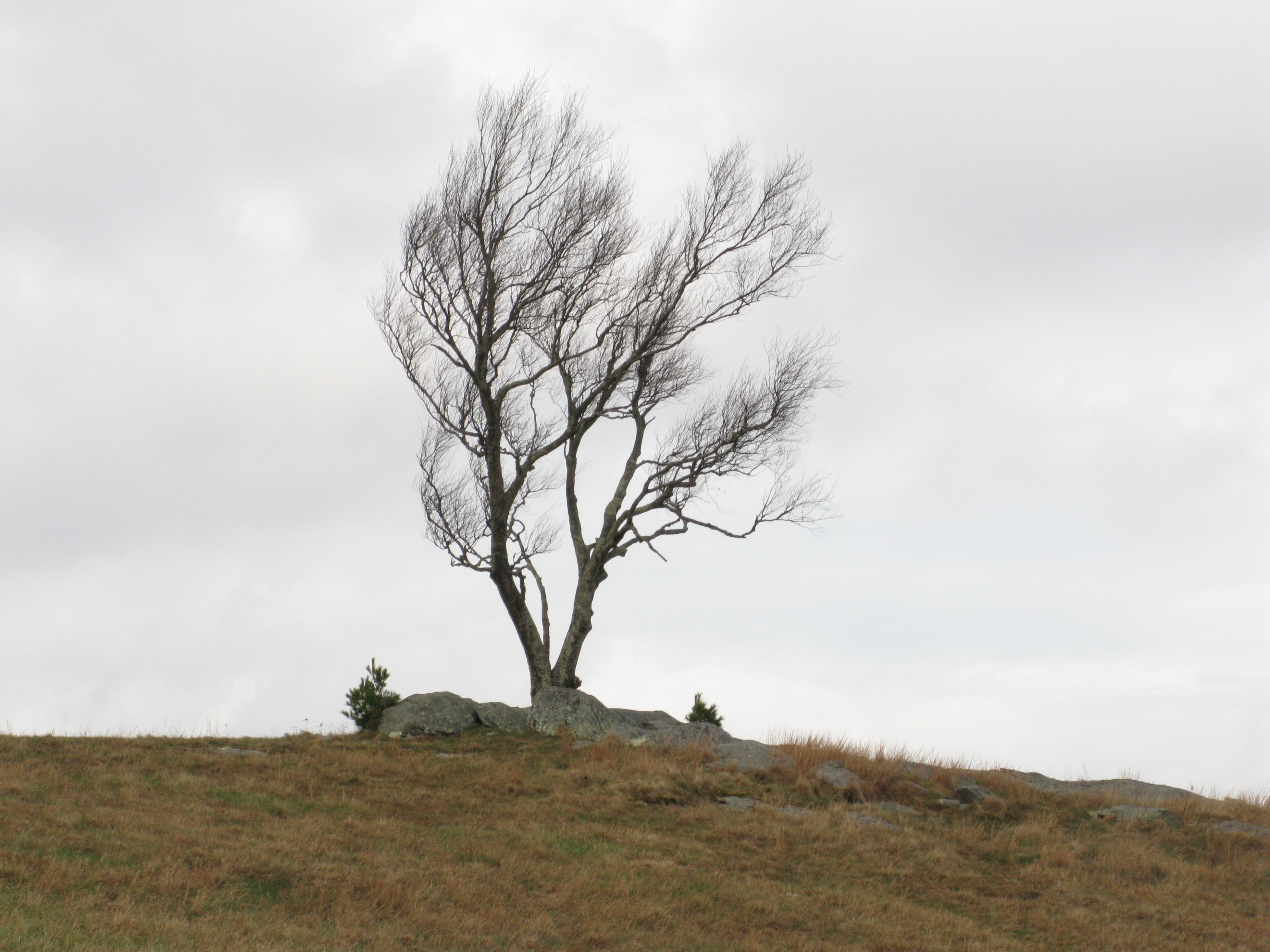
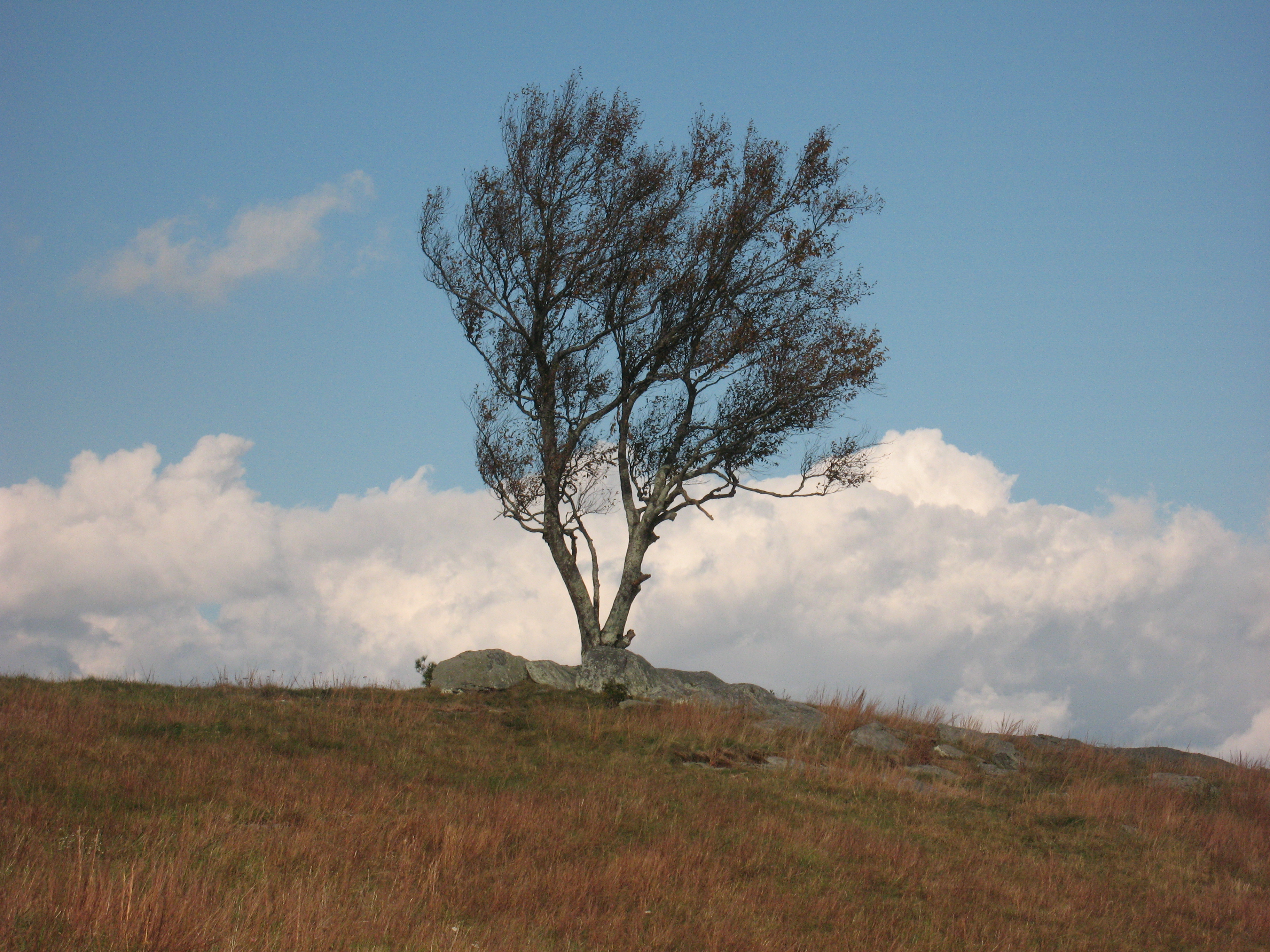
bent over and lean –
I have become the tree I
climbed in my childhood!
.
❦
.
Yesterday after church I carried the rocking chair out to the car. Scratches and scars from a thousand children in Mom French’s school library, this chair was just one of her oh so irresistible enticements to read – and she the most enticing of all as Mother Goose, Good Witch, Hobbit, Elementary Librarian. The rocker first retired to our church nursery and now is finally retiring home.
.
As I fumbled for keys, Darlene called from across the lot, “Now Bill, you better do some rocking!”
.
“Are you kidding?” I hollered as I popped the hatch. “I’ve been retired three years and I haven’t had a chance to rock yet!”
.
❦
.
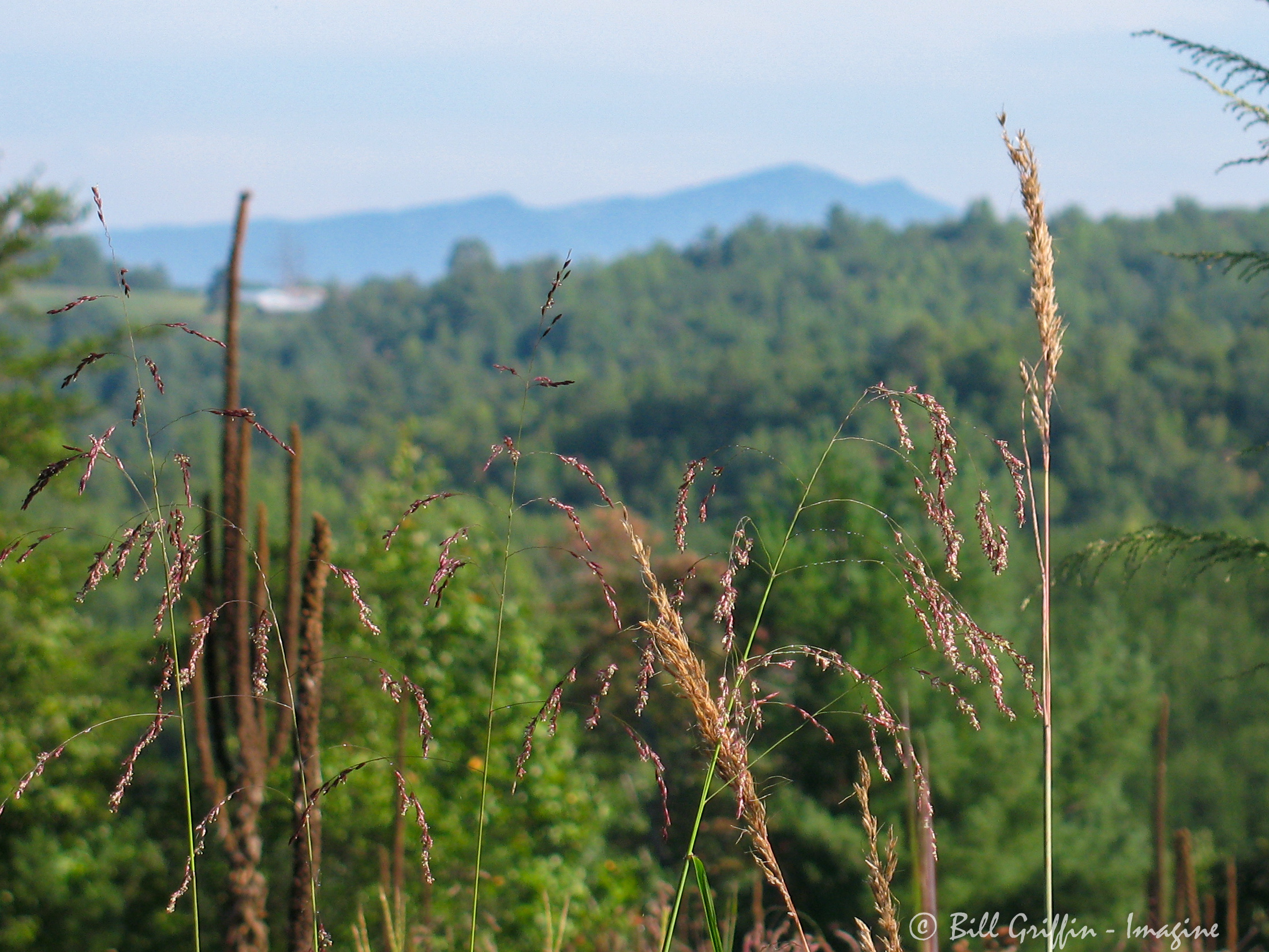
an early morning
baptism: bluestem grasses
brush against my legs
.
❦
.
I’ve been here before
but these flowers are not like
those of my childhood
.
❦
.
I’m not rocking this morning but the feeder rocks after the chickadee scolds, then grabs a seed and pushes off. My rock-equivalent here on the porch is this: coffee and notebook at hand, a book of verse, feet up, fleece jacket and cap for 50 degrees & autumn. Two young guys down the street are hacking out busted flooring from the house that has squatted empty since last spring’s tornado. The yard crew just pulled their big trailer up next door and here come the weed-eaters & blowers & zero-turn-radius terrafirmanator. Around the corner someone is hammering. For a few minutes the breeze settles and the trees around me and all down the ridge just listen.
.
❦
.
music for the soul:
dog tags dancing on the rim
of a metal bowl
.
❦
.
forgotten clothesline
linens pop in the wind – a
restless night ahead!
.
❦
.
This morning the season rocks and tilts and won’t return to summer. It makes itself known even if I close eyes and plug ears – the keen edge of that scent, crisping leaves and browning forbs. When I open my eyes again I notice the beech tarnished copper, I discover an ornamentation of Virginia creeper indistinguishable green last week now stepping forward into red, and look there’s the one unfractured maple branch dressing up in its indescribable orange while new growth from the trunk still clings to some jade hope. I shove my pale fingers into my armpits between these phrases. The chickadees resume their scolding but the freshening breeze pays me no mind at all.
.
❦
.
not yellow brick but
wingstem and aster lead me
through this hillside field
.
❦
look, a child spattered
mustard along the roadside –
oh, yellow ironweed!
.
❦
.
Rocking at the tempo of breath, surrendering to the heartpulse rhythm – bustle can’t touch this. I turn another page in William Winslow’s haiku collection. Resistance is futile. My subconscious tries to push back – I don’t want to merge into your momentariness, Mr. Poet, I’ll make my own revelations, thank you! But reading haiku is like breathing. You can only hold out for so long before the pressure to inhale, before the desire to step into that cool shaded invitation. As William reminds us in his afterword, a haiku is written to be spoken in a single breath. As I stroll further down the page, pausing after each poem, often retracing my steps, my anxious breath slows and I enter the moment. Look, Darlene, I’m rocking!
.
❦
.
look, the centerpiece
of my garden is that tall
weed I did not plant!
.
❦
.
dead limb your tree no
longer needs you – it seems that
we could be brothers
.
❦
.
hiking stick my hands
have carved you but my legs may
send you on alone
.
.
❦ ❦ ❦
.
All selections are from 112 HAIKU by William Winslow, Palmetto Publishing, Charleston SC, © 2023. William lives in Mount Pleasant, South Carolina but spends many days in the Southern Appalachians in western North Carolina, as evident from the flavor and setting of his writing. He lived in Japan for two years and immersed himself in the culture. Of the art of haiku, he says, “Set aside some time, take a deep breath, and write yours!”
.
Visit Palmetto Publishing HERE
.
.
❦
.
Next week I will attend the Tremont Writers’ Conference in Great Smoky Mountains National Park, led by poet Frank X Walker. Most likely you won’t find a post here on October 27, but take a moment that morning to silently wish my father, Wilson, a happy day on his 97th birthday. I’ll see you back here on November 3. — B
.
❦
.
Language?
Posted in Imagery, Photography, poetry, tagged Bill Griffin, Canonicals, David Radavich, Finishing Line Press, imagery, nature photography, NC Poets, poetry, Southern writing on October 13, 2023| 9 Comments »
.
[with 3 poems by David Radavich]
.
Turtle
.
Its stomach brushes ground
as by long acquaintance,
.
one foot then another, one leaf,
slow digestion, eyes alert
.
like high-beams
in the wind-swept night,
.
hard against the air yet telling
stories as a stained-glass
.
window, victory
over hastening death,
.
comrade of dust and mud
and golden squares like armor
.
glinting whenever sun
arcs its sacrifice –
.
just so I think of you
unfolding a yellowed piece
.
of paper, words
you never meant to say
.
crawling their careful
way into my bone-frame,
.
softer than
the moon starting
.
to curl
into dawn
.
David Radavich
from Canonicals – Love’s Hours
.
❦ ❦ ❦
.
At 17 she had a boyfriend (briefly) whose language she did not speak. The two would sit at the back of the bus through the turns and hesitations of the clamorous diesel-fumed city and communicate with their lips, although words are not what passed between them. When they came up for breath it was no use to tell him about the menacing gothic facade they were passing or comment on the uniformed school children being led across the bridge. He would stare at her and she back at him until they reached her stop. Come inside? What am I saying, and what do you think I mean? Well, Tschuβ until tomorrow after school.
.
Some would say that no boy and girl at 17 ever speak the same language. Some say man and woman never at any age. Cynics. Nevertheless, when the girl’s best friend, who commanded some phrases the boy could grasp, had to call him one evening to convey a final message from the girl – angry? sad? frustrated? – and cancel any further bus rides, she still could never quite understand how it all had gone so wrong. An inter-language dictionary proved no help at all. Decades later she would still wake at 3 AM and feel the fool, although a few latent hippocampal neurons, hers and no doubt his as well, continued to fire, “What if? What if?” One tattered shred of recollection with lint of vocabulary she could have pieced together if she had tried still labored to remind her of this: when they had turned toward each other and he placed his hand at her neck, fingers in her soft short hair, they had seemed to understand each other well enough.
.
❦
.
Time is both a bewildering tangle and a firm reassurance in these poems by David Radavich from Canonicals – Love’s Hours. It is a book of hours – matins to vespers – but also a book of days and years. The images can be elusive, like moonlight through restless leaves, yet remain rich in their enticement. And what message does this subtle, earthbound, exalted language, this language both precise and intangible, what does it desire to convey? The object, the “you,” is it a focus for affection and gratitude or a saving grace always just beyond reach? Each word lovingly selected, placed, ordered: these poems understand you, the reader, and they invite you with all hopefulness and promise to understand them.
.
Canonicals – Love’s Hours by David Radavich, Finishing Line Press, Georgetown, KY. © 2019 [author biography and book purchase HERE]
.
.
❦ ❦ ❦
.
Argus
.
Quietly, quietly
dawn takes its place
.
among the world’s
elements –
.
There will be rapes today,
and military coups,
.
also gay
birthdays, painful
.
dyings and forlorn lovers
discovering their first infatuation
.
with another body.
.
Let me be there for it all,
all seasons, all temperaments
.
seeing
the round circus
.
black and gold as autumn
spinning into night
.
love turning
a corner
.
into open doors
that lead to bright air
.
blowing
many leaves
.
David Radavich
from Canonicals – Love’s Hours
.
❦ ❦ ❦
.
Cyclical
.
To rediscover.
.
To find again what
has been lost
for more than thirty years.
.
A stolen ring
on someone else’s
hand, gold around a gun
.
or maybe you
clutching my heart
like a bandit.
.
In any case
.
it reappears, this missing
self, this jewel tossed
in some closet,
.
the world turns
so that China ends up
.
and we are land
at the sphere’s bottom
.
rediscovering what
.
has been lost by many others
and found again like
.
sunrise,
like buds breaking.
.
David Radavich
from Canonicals – Love’s Hours
.
.
❦ ❦ ❦
.
.
Bright and Brighter
Posted in Imagery, tagged Bill Griffin, imagery, Linda Allardt, nature photography, nature poetry, poetry on October 6, 2023| 9 Comments »
.
[with 3 poems by Linda Allardt]
.
Rx
.
Spend more time looking into woods
watching the black squirrel
chasing the sparrows off his branch.
.
Get to know the stranger your friends know,
the one you can only see in snapshots,
the profile they know as you.
.
Smile in your sleep and wake not knowing why
like a writer trying to remember
that perfect lost line.
.
Consider the judgement of trees
branching, dividing to hold up their leaves
to all available sun.
.
Linda Allardt
from At the Confluence, FootHills Publishing, Kanona, NY. © 2023
.
❦ ❦ ❦
.
For now we see as in a dim mirror, but then face to face.
Apostle Paul to the believers at Corinth
.
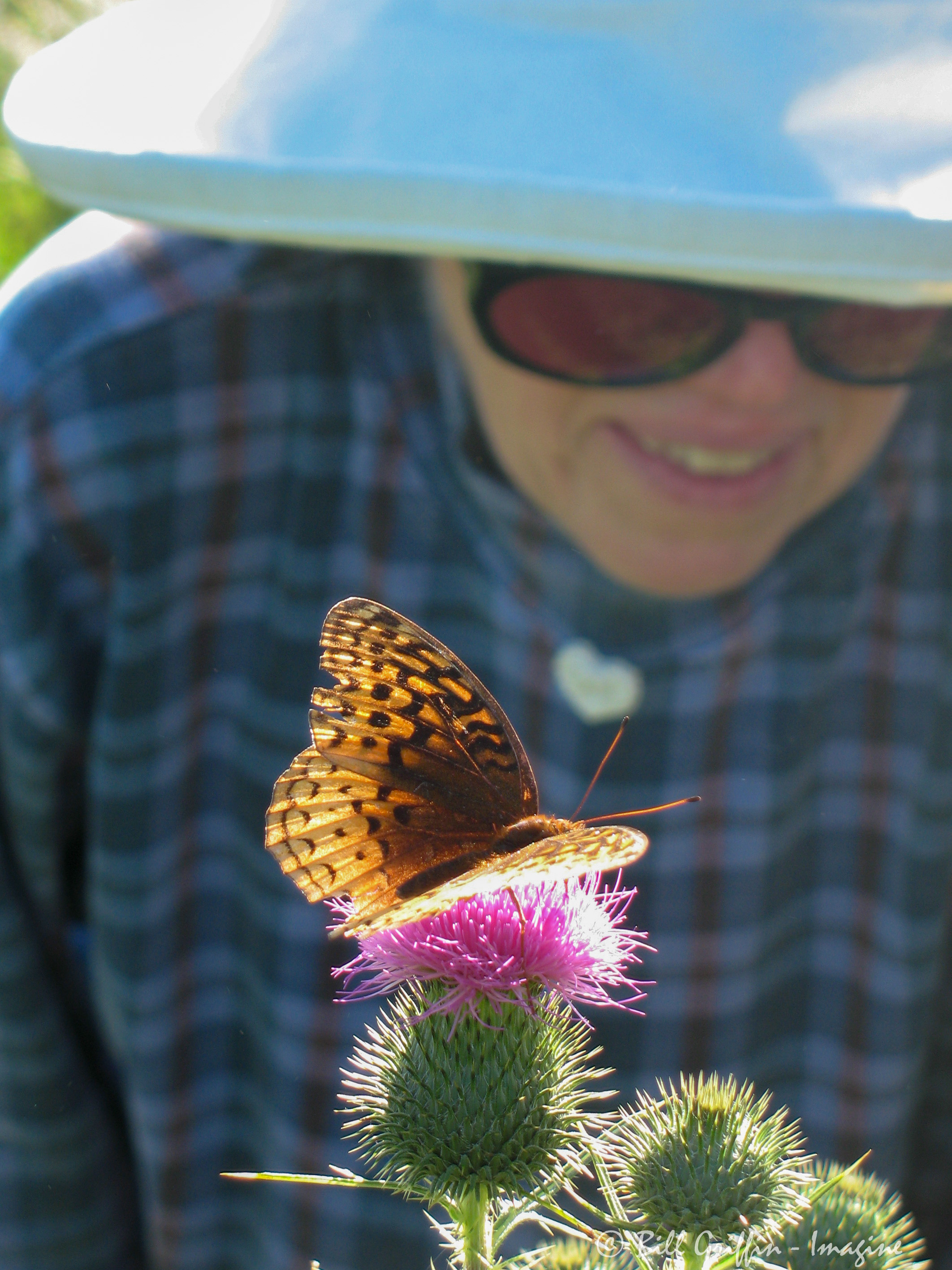
Piedmont prairie restoration – Land Conservancy riparian easements protect the Mitchell River here in Surry County. Might this be how the Blue Ridge foothills appeared before tobacco and soybeans? Mitigation suggests alternate water sources to keep cattle out of creeks and plowing and planting practices that reduce runoff; restoration envisions a renewed and brighter landscape. A few years ago, Linda and I joined a guided hike to see the autumn butterflies attracted to milkweed, thistle, yellow asters in the newly planted prarie. We also discovered a former cow pasture converted to native bunchgrass: redtop, foxtail, bluestem. Startling diversity and color. The brightest of mornings.
.
Here we are on an unmarked trail that leads through tall flowers, seedheads, leaping and flying things, then gently on downslope until we reach the South Fork of the Mitchell. The overshaded water is so fresh and clear we imagine we might count every dapple on a brook trout’s flank. We continue downstream in twos and threes past riffles, rainbows of polished riverstones, and sweet bank vegetation toward the meeting of mountain streams. Cool riverbreath, talkative watercourse, whispering hikers – now we reach the confluence.
.
What is this magic, this mystery suddenly revealed? As the clear South Fork stream merges with the main channel, we perceive it dull and sluggish compared to the crystalline purity of the Mitchell it now encounters. Even the bright water we’ve followed is overshadowed by the brighter. We have looked through the flow to its bank and bed and been blind to the vestige of silt it still carries. At the confluence one’s eyes are opened to one’s true nature.
.
❦
.
The poems of Linda Allardt’s At the Confluence are deep and still as a dark glade with its secretive woodland stream. Linda wrote these between her eighty-sixth and ninety-third years, the final decade of a long life as writer and teacher, and her friend and student Kathleen A. Wakefield collected this volume for publication. Linda moves from the poet’s constant question, “Why am I here?” to the even more piercing question, “Why am I still here?”
.
How to reply? The poems themselves are their answer. I count the years from the stumps in the yard . . . in the things that are gone. . . . Then I count what still stands. Each of the short poems is an observation and a contemplation. Oh yes, a long life must heft its burden of regrets: How many mea culpas must be said . . . Wasn’t there, once, the right question, / and the right answer to it? But astounding as it may seem, even written in one’s ninth decade, this is not a book of looking back but of looking forward. And even more, a book that in looking outward looks within. May each of us look past the dark swirl we carry to glimpse the bright truth that is our nature.
.
❦
.
.
[Order At the Confluence from FootHills Publishing HERE]
[Kathleen Wakefield would appreciate your reactions to these poems by her friend; you can reach her at COMMENTS@GRIFFINPOETRY.COM]
.
❦ ❦ ❦
.
Retrieval
.
So much is hidden,
what’s past forgotten
or in its slow retrieval rewritten.
What we think we know
is lost in the telling.
.
Yet echoes of half forgotten lines
like wind in the wiring
remind us of words once loved
and only half forgotten.
Lines we may have read somewhere,
or written.
.
Linda Allardt
from At the Confluence, FootHills Publishing, Kanona, NY. © 2023
.
.
❦ ❦ ❦
.
In Late November
.
I said to the trees, Let go
but the wind-lashed leaves hung on.
I asked them why.
The trees said, You let go,
but I hung on at 93,
knowing no more than the leaves
what handclasp holds us here.
.
Linda Allardt
from At the Confluence, FootHills Publishing, Kanona, NY. © 2023
.
.
❦ ❦ ❦
.
.
.


[…] About […]