.
[with two poems by Katherine Soniat]
.
The Right Frequency
.
allows the next stillness to occur. Welcome each space
as it appears but confirm slowly –
++++ ++++ ++++ ++++ ++++ ++++ as if an adage drifting
down through centuries of smoke.
.
Try a later roll in summer grass with its sundial fingers
holding you on top the seven-veiled mysteries
of green.
.
Above that, motionless clouds predict it’s never lickety-split
to the apparent state that counts.
++++ ++++ ++++ ++++ ++++ Urn, goat, and crimson altar-cloth
are flighty suggestions, hard to pin down despite humans
and their sharpened articles of faith.
.
Tie a select few to the calf-bell of dogma, then with due respect
leave the dotted lines.
.
Maybe even get off your mount (the high one) and walk beside
those roped or chained, and stumbling.
.
Each time you are kind, feel how your breath changes,
the frequency of birds at dusk settling in.
.
Be aware. ++++ ++++ ++++ One pivotal moment
++++ does not foreshadow a calmer forever on earth.
.
Katherine Soniat
from Starfish Wash-Up
.
❦ ❦ ❦
.
The fence will squander its energy through juicy longstem grasses, nutsedges, greeny ferns, the unimpeded conduction of their potassium solute intracellular conduit. Grounded, not shocking. And so the cattle farmer may be forgiven for having applied his two-foot swath of herbicide all down the half mile of the fence’s length. Nevertheless, even months later we measure this still brown compacted earth and imagine what’s been lost. We do not expect to find the blossoms of September a year ago.
.
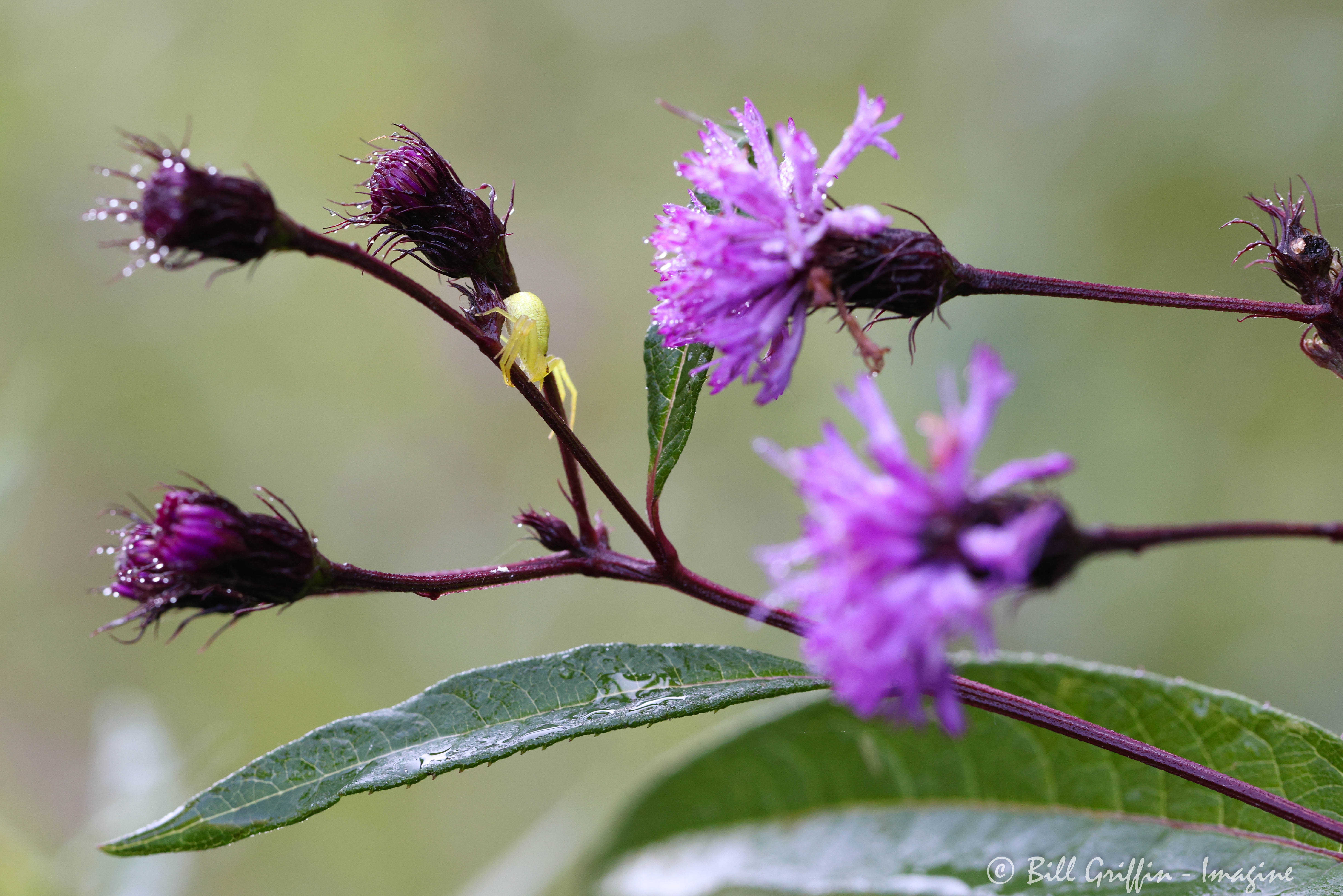
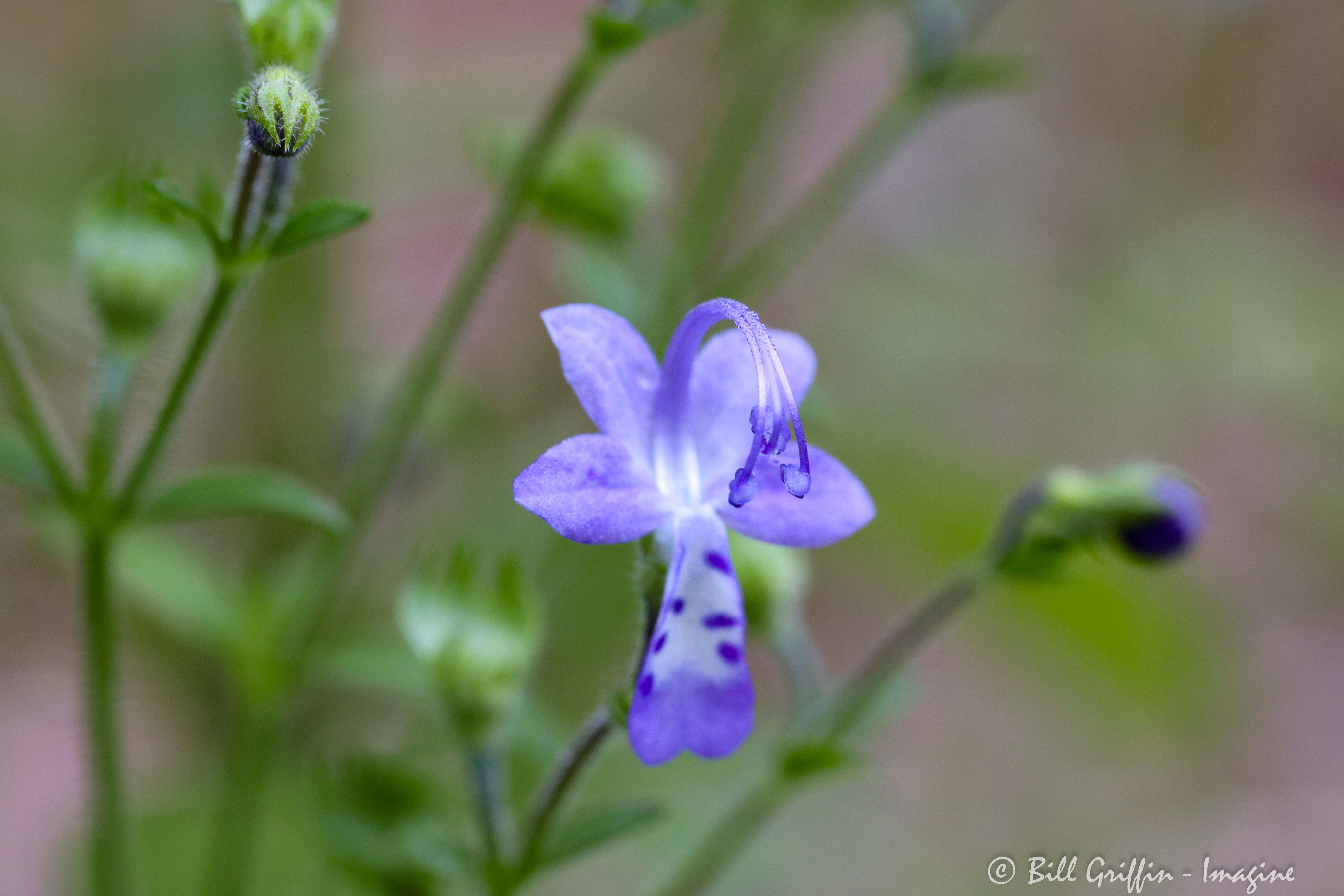
Nevertheless, here they are. Oh yes, beyond the fence’s reach where moisture seeps down from the upslope we find exactly what we expected: Ironweed, Cardinal Flower, Crownbeard. And within the fence’s boundary, where grazers have not been re-introduced this summer, we are not at all surprised to discover swath upon swath of Meadow Beauties. But here before us we suddenly come upon precisely what we had not expected to discover: two low herbs with blue thumbnail flowers.
.
The hikers walking up behind me are a little rattled when I shout, “Look at this!” I point out the swoop of curving stamens and the spotted lower petals and they say, “How nice,” then move along down the trail possibly hoping I won’t be following them too closely, but as of this moment I am having a very good day.
.
❦
.
Katherine Soniat’s poems do not enter at the front door and take a companionable seat at the kitchen table. They shift, they transform, they bury their meaning then suddenly burst forth. To read Starfish Wash-Up, I find I must lay my expectations aside. If I stare at the lines too hard they elude me, but then pages later the unexpected connection emerges and allows itself to be recognized. Soniat describes this as “a dissolving context in which time and space blur – only to reassemble in as part of the vaguely familiar.” The themes I sense, across time and generations, are father / daughter, separation / blame, searching / belonging. The two poems I’ve chosen here display these in their own right without requiring the context of the entire collection to fully convey meaning. To read most of the poems, though, one must read all the poems.
.
This is an unusual and unique book, disturbing at times. The entire volume is titled FATES and it actually includes full-length works by three poets: The Medea Notebooks by Ann Pedone, Starfish Wash-Up by Katherine Soniat, and overflow of an unknown self by D. M. Spitzer. The three collections are completely different in style but their themes and tropes intertwine and challenge. I am repeatedly wrenched from my comfortable perch and yanked into these narratives. As Ann Pedone writes in Jason Confronts Medea, We soak our bodies in the oil of words / all our lives and yet now / after the thousands we have / spoken to each other / you are as strange to me / as the dark-eared goats / feeding on the grasses / beneath your feet.
.
FATES: The Medea Notebooks / Starfish Wash-Up / overflow of an unknown self. Ann Pedone, Katherine Soniat, D. M. Spitzer. Etruscan Press, Wilkes-Barre, PA, © 2021.
.
.
.
❦ ❦ ❦
.
Kingdom
.
There could have been time for another life before the strong March wind
swept us from us from all-fours, and dropped us near water.
Mirrors waiting.
.
No denying that the Nth degree of the unknown is upon us, and there’s no hint
of direction for our wasted planet. Our run at flamboyantly hot lifestyles shrunk
the ice (and more) to pieces. Huff ant strut, and we’ve about destroyed
the globe.
.
We mark time, belch, and remain on the lookout for chatter, though truth is
we are most awkward within the family circle where the food tastes good
bu the term lineage shows ugly signs of meltdown.
++++ ++++ ++++ ++++ ++++ ++++ ++++ ++++ Who sits where
at the last family feast (?) when any mention of disagreement is met
with angular glares of Thou shalt not repeat tales of personal or climate crisis.
And thou shalt instead sip all thy wine then nod at the endlessly grinning?
.
My determined place at that annual folly? I doze with my clutch of poems
in the family broom-closet – me, yet another calculated risk to the authenticity
of family history.
++++ ++++ ++++ Cursing in couplets, tweeting of human drift measured in masses:
poor continental wanderers – lost infants, men and women. The elders choking on
water, while in my pine-oiled burrow I grow heavy and sniff broom straw – one
way back to the lost animal kingdom.
.
Katherine Soniat
from Starfish Wash-Up
.
❦ ❦ ❦
.

.
❦ ❦ ❦
.
Join me in celebrating the release of my newest poetry collection, How We All Fly, from The Orchard Street Press.
.
Poet Patricia Hooper comments: “Through close observations of the physical world, these clear, direct poems yield insights into the corresponding life of the spirit.” And Rebecca Baggett says this: “Throughout these poems, but particularly toward the collection’s end, How We All Fly leads the reader up and onward, infusing even inevitable losses with tenderness, trust, and hope.”
.
Thank you for your support, both of the writing you discover here in my weekly posts and of the literary arts!
.
You may purchase a copy of How We All Fly directly from me by mailing a check for $15 (postage included) to this address:
++++++ 131 Bon Aire Rd.
++++++ Elkin, NC 28621
Please make your check payable to Bill Griffin.
.
If you would prefer to pay via PayPal or Zelle, please contact me for transaction details at:
++++++ comments@griffinpoetry.com
.
.
[Patricia Hooper is author of Wild Persistence, University of Tampa Press. Rebecca Baggett’s most recent book is The Woman Who Lives Without Money, Regal House Publishing.]
.
❦ ❦ ❦
.


 V E R S E and I M A G E
Very true. And not that she ignores the grief and woe of living but somehow makes all of life a…