Feeds:
Posts
Comments

Archive for August, 2021

[with 3 poems from ecotone]

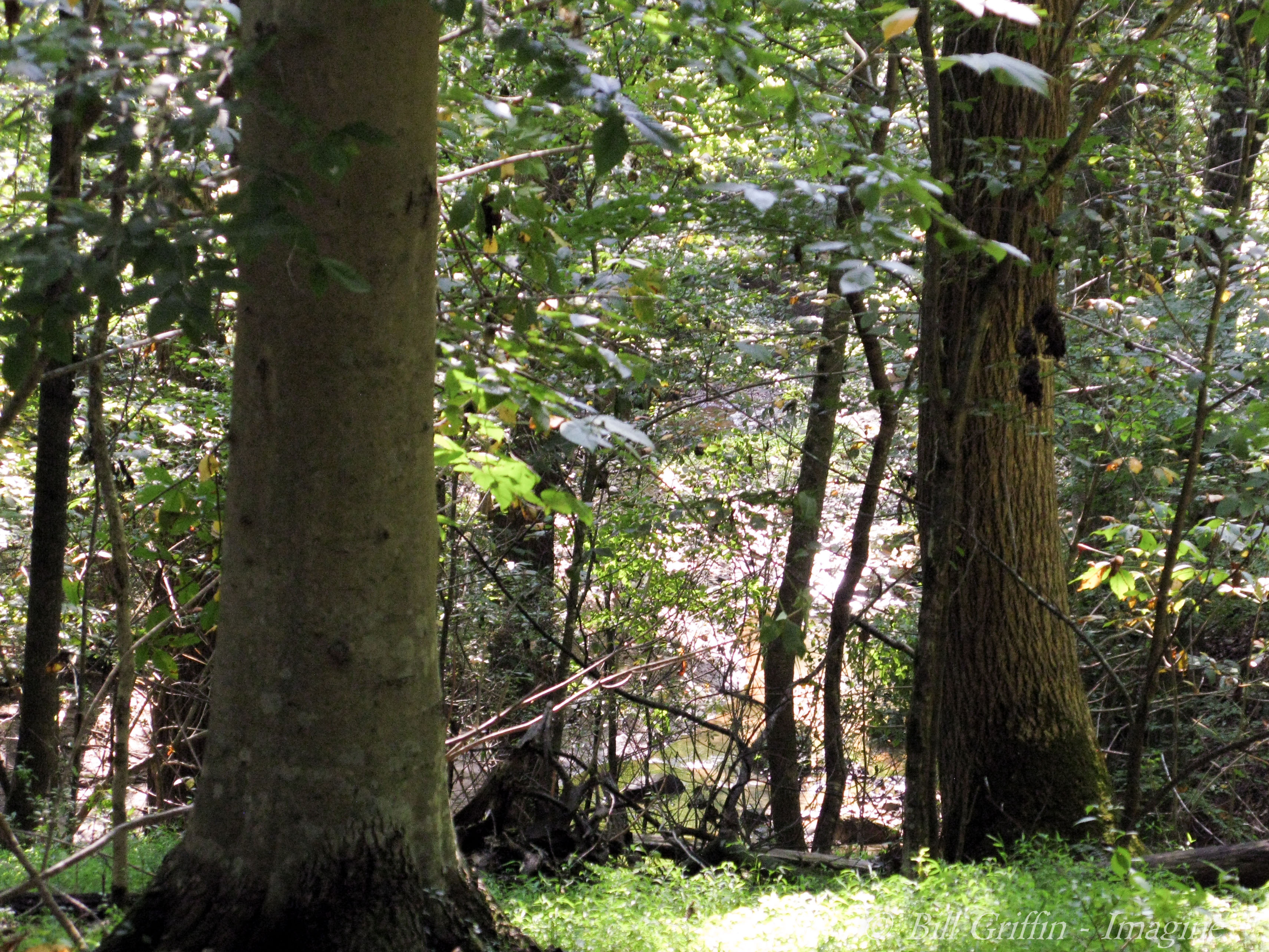
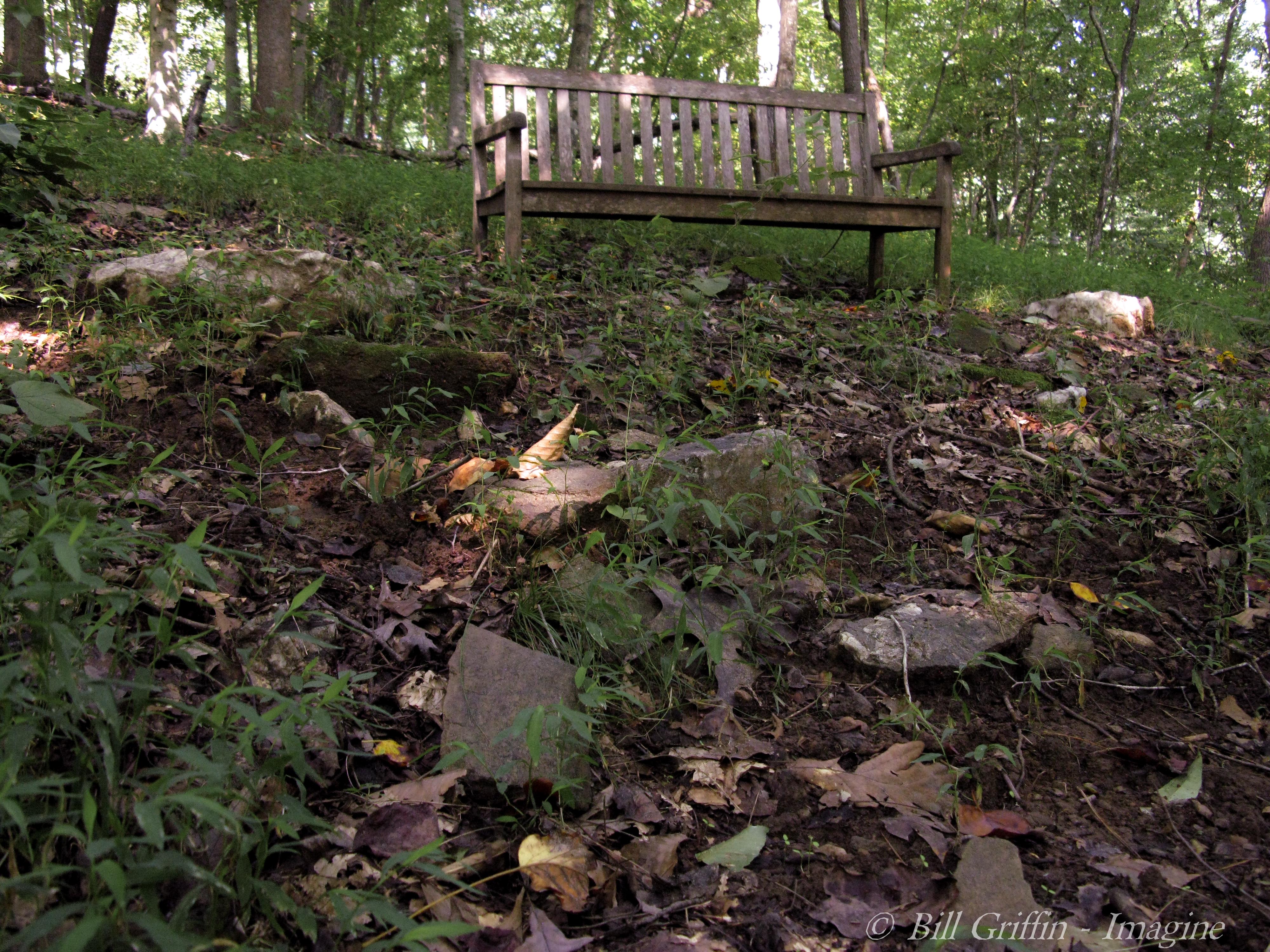
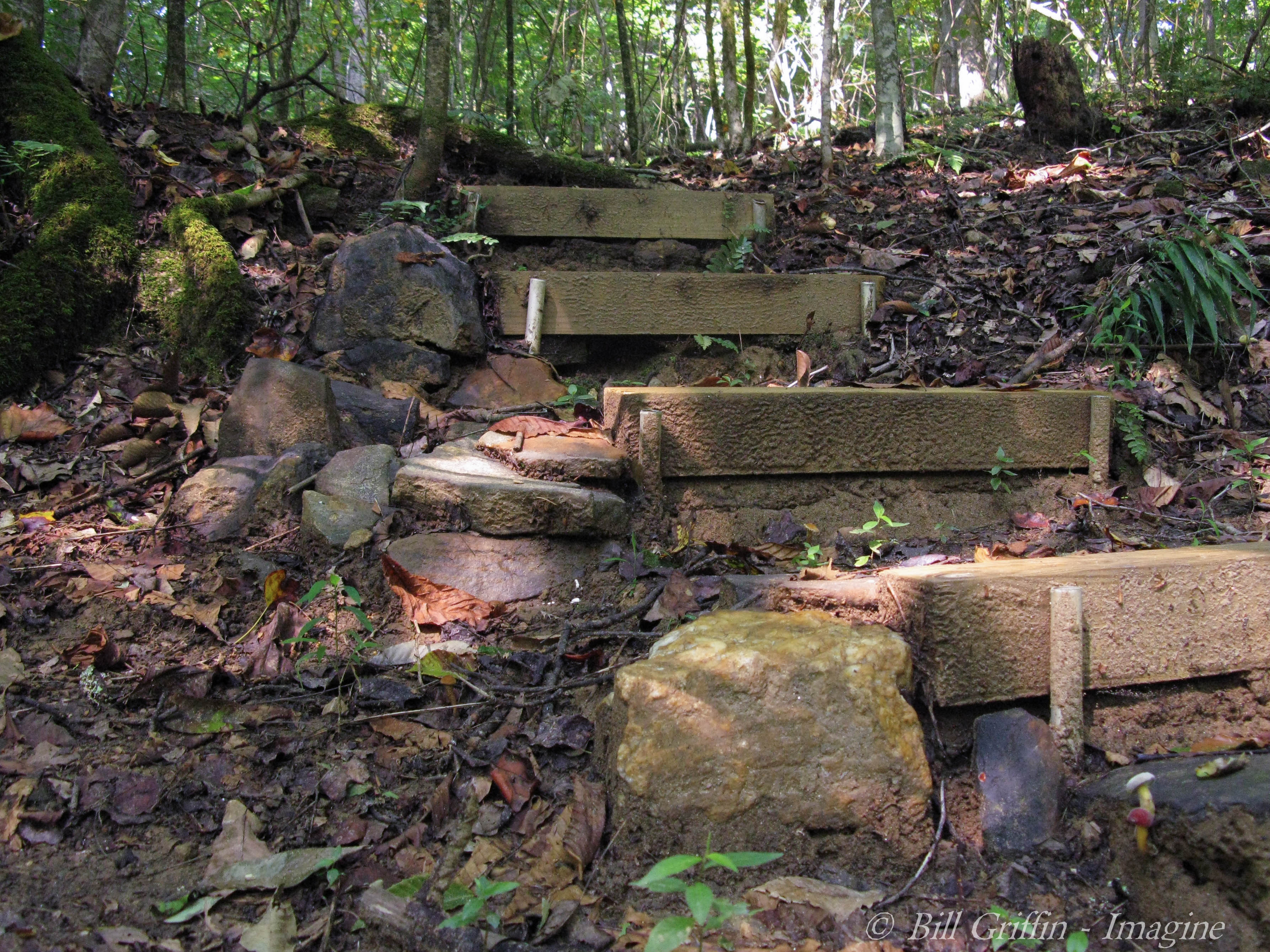
Several winters ago I built a trail behind our house down the steep wooded slope to Dutchman Creek at the edge of our property. In the forty years we’ve lived on these four acres the trees have grown to spread interlocking arms into a canopy of deep shade; the impenetrable blackberry thickets have marched along elsewhere; deer have eaten all the poison ivy. Now to reach the creek there is only the steepness to contend with.

There was no obvious tread for me to follow except a deer trail I adopted for one leg of one switchback. It took a month or two of Saturdays to rake, hack, hoe, and level about an eighth of a mile of narrow footpath. Even on cold days I shed layers. Sweat and sore shoulders – gifts for Saul, Amelia, and Bert. They will climb back up the hill from throwing rocks in the creek without the scratches and itches their Dad and Mom endured.

As that winter began to fade I returned to the trail to pace its length and decide where to widen, where to stack more native stone for steps. Just into the woods beyond the powerline right-of-way, just before the first switchback, the litter of last autumn’s leaves was dappled white. I knelt to see. Tiny delicate petals, notched fingertip leaves – rue anemone; about a dozen plants blooming to border my trail and nowhere else down the slope. No, wrong, let me restate that. Not my trail – the grandchildren’s trail. The earth’s trail.


.     .     .     .     .     .     .

Anemonella thalictroides — Rue Anemone

.     .     .     .     .     .     .


ecotone is published by the Department of Creative Writing and The Publishing Laboratory at the University of North Carolina Wilmington. The ecology of the featured poetry, essays, and fiction is described in the journal’s apt defining statement: ecotone (n) – a transition zone between two communities, containing the characteristic species of each; a place of danger or opportunity; a testing ground.

These selections are from ecotone number 29, fall/winter 2020, “The Garden Issue.”

.     .     .     .     .     .     .

Invasives

The love we walk around with is a dull
tool – though it hangs from our belts with a rusty grace,
like planets expertly wired in a model of space
that slowly turns when whoever built it pulls

some secret string. The other love, the cold,
sharp one, the one that keeps a quiet place
behind our lungs, is harder to see, its face
(some tools, of course, have faces) unreadable.

But I know it, in my life, from the way it makes
me see the lovely world as lovely. Rain,
bull thistle, rabbit tracks, a friends’ face, even,

might be its face. Or does it have your face? a lake’s
face? a galaxy’s? Or phlox? the profane
honeysuckle or maybe tree-of-heaven?

Nathaniel Perry

.     .     .     .     .     .     .

Pavement

Arlington, Virginia

Asphalt, bituminous, concrete, cement –
the whole place is case-hardened, carapaced.
The air shimmers with heat; tree roots can’t breathe;
no poured libation seeps down to the dead.

When we were children, this was open ground,
farm field once, where we scraped and scrounged, intent
on grubbing up that other world, the past.
Old wounds – the Minié ball, the arrowhead –

spat blood here. Now the grimy runoff seethes
into the storm drain from the parking lot.
This is the way we cloak our own unease,
muzzling what the cracked clay might have said.

The pavement lies tight-lipped, impenitent.
The scabrous memory writhes here, underneath.

Maryann Corbett

.     .     .     .     .     .     .

Nectar

Here, late in August, when even the bean fields
are heavy with pods, it is blossoms that I want,
not the fruit of the season, not the acorns

and buckeyes that the squirrels are carrying off.
I want nectar, the death-defying food of the gods,
honeydew, or the distilled winelike sap of apples

and pears, anything intoxicating enough to make
an insect eat in spite of summer storms, three days
of wind and cold, enough to blow us all off course.

Trapped indoors, twelve, fourteen, now sixteen
monarchs cling to the mesh in the far corner
of the cage where the sun last appeared.

I’ve exhausted my garden, already raided
the parks, brought home coneflowers and
daisies, clover and black-eyed Susans.

Pulling on muck boots, I drive to the ditches
looking for goldenrod, and blue-eyed grass –
all the stuff the makes my family sneeze.

I want the best that the earth has to offer,
not the produce, but the promise of immortality,
that these butterflies, through their children

and grandchildren, will live forever, will fly away
and rise again among the Texas bluebells, will mate
and return to us each spring. I crush an orange,

garnish it with flowers, set a butterfly on the sticky
rim of the saucer. I roll out her proboscis
until it touches the sweetness, and she drinks.

Cathryn Essinger

.     .     .     .     .     .     .

Photographs by Bill Griffin. Header Art by Linda French Griffin.


.     .     .     .     .     .     .


2020-09-08b Doughton Park Tree

Read Full Post »

Poetry Submissions Calendar – UPDATE 08/23/2021

Placing yourself at the mercy of the editors, are you?! In 2015 I originally posted a table I use to keep track of when and where to submit poems for publication. Here’s the original post with description:

https://griffinpoetry.com/2015/08/31/editors-mercy-part-2/

.     .     .     .     .     .     .

And here is the most recent update:

……….. Poetry Submissions Table – PDF file ……….

There are currently more than 160 journals and contests listed.

.     .     .     .     .     .     .

Here’s how I use the calendar:

It’s arrayed by month – look down the column to see what journals and sources are open for submissions right now!

Subscription Calendar Screen Shot: August, 2021 —-CLICK TO ENLARGE

Each row includes the web address – be sure to check before you submit, because requirements may have changed since I last updated!

The row also includes other information such as:

Is this an online publication only?
Should your submission be a single document?
What format files do they accept?

There are more instructions on the table itself. Feel free to print it out. And I would really appreciate it if you notify me of any errors or suggested changes!

In particular, if you have journals you’d like me to add to the table please do send me the details, especially the web address!

I will try to post an updated table several times a year and whenever I have made significant additions and corrections to the table.

Enjoy!

And if you find this useful or discover errors please reach me at comments@griffinpoetry.com

BILL GRIFFIN

Read Full Post »


[with 2 poems by Robert Pack]

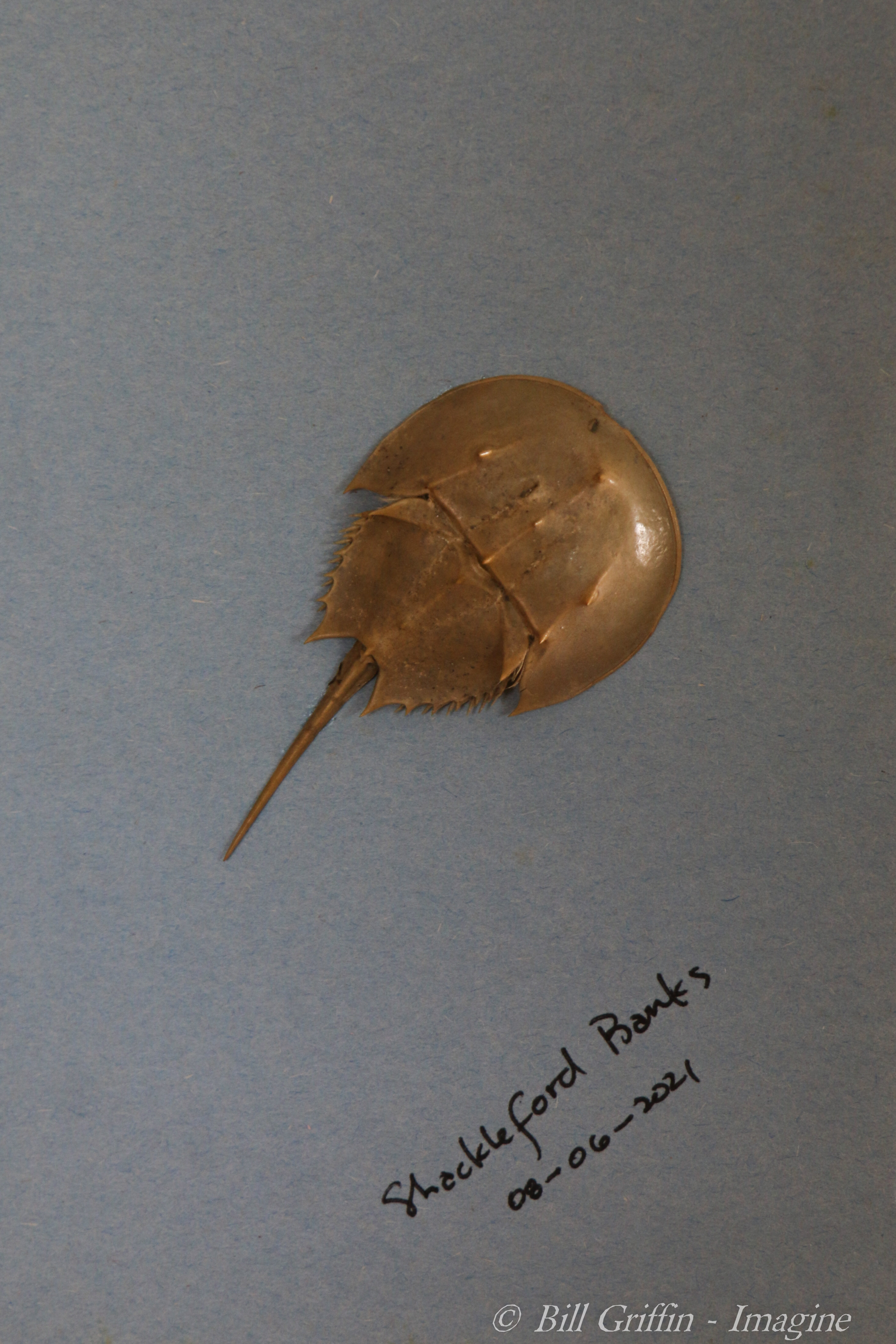
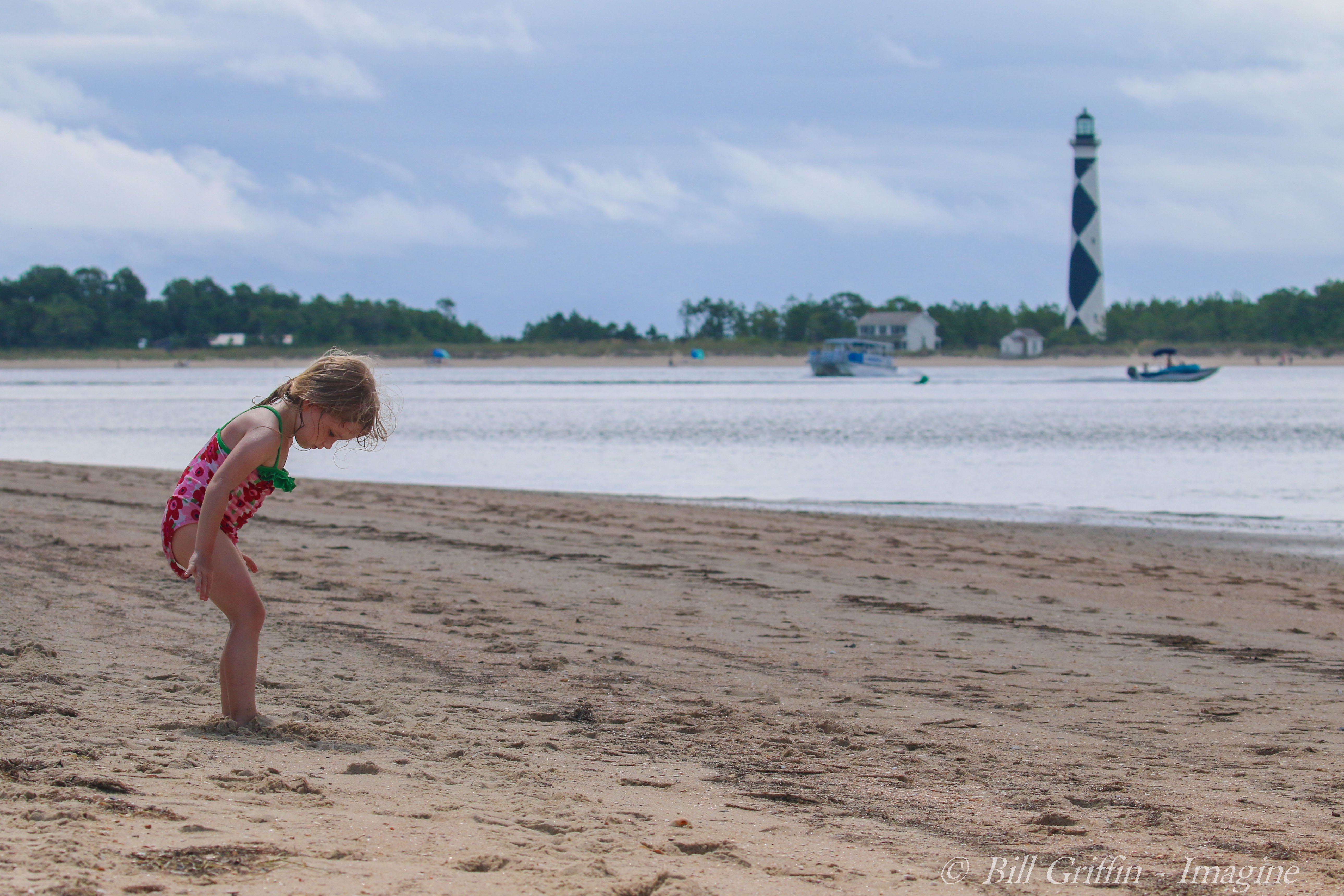
If we keep it we’ll have to kill it. My Daughter-in-law is holding the whelk she’s discovered in the shallows near Lookout Bight off Shackleford Banks. Knobbed whorl, indigo interior of striped nacre, bigger than a baby’s fist – she suddenly drops it back into the water. The shell’s inhabitant has shifted its operculum and startled her as it crawls across her palm.

She picks the shell back up and we lean close as she turns it over and over. Perfect. Beautiful. We can’t keep it or kill it, elegant gastropod, primal sea snail. I remember Nana boiling the big shells she gathered from the sound below her house but I don’t recall ever eating conch chowder, only the procession of pink and tangerine lining her sun porch, mother-of-pearl inside but intensity steadily fading through the years.

What can we keep? What can we take with us? Not life. Maybe just the things life has touched. Sixty years later I still hold Nana’s conch shells in memory. I still see my Mother bending to capture a lettered olive rolling in the surf (while all I spot are shards). Tomorrow I will still hear my Granddaughter’s laughter as she splashes across the sandbar to see what her mother has found, and I will watch them together lower the magical creature back into the brine.

.     .     .     .     .     .     .

These two selections are from Robert Pack’s All One Breath (Green Writers Press, Brattleboro, Vermont, © 2019). Many of the poems live intimately with nature, whether wild Montana where Pack lives now or the New England of his memories. Some of the poems are stories peppered with wit, unexpected turns and outcomes, subtle puns. I laugh at loud at some of his poems, tear up at others. The entire book, seems to me, weaves the thread of connection from place to place, from life to life – nearing the end of life, Bob Pack teaches us what we carry, what we can keep, what we might leave for others.

.     .     .     .     .     .     .

Bear Grass Interval

++++ At roughly ten year intervals
this globe of minuscule white flowers
clustered on a dense green stalk
appears profusely in the vernal woods
of mountain-range Montana,
so the entranced observer stares
at what appears to be
a galaxy of stars that has now drifted down
and settled softly on the earth.
++++ Ask anybody who has witnessed
this phantasmagorical display,
and they will swear
that they have never seen
a spectacle so tranquil
and serenely beautiful.
++++ Yet I imagine beauty
here on earth does not
originate in the beholder’s eye,
but dwells out there inherent
in the humming universe
as one of Plato’s fundamental forms
beyond the realm of time and space
that still can harmonize discordant thought
and woo the tides of the recumbent air.
++++ You ask how this far-out belief
affects my life; am I
less self-absorbed and less defined
by personal diminishing
to primal and concluding nothingness?
++++ Perhaps if everyone would pause
to gaze upon the Bear Grass flowers
glowing on the mountainside,
and view them as if willfully designed,
a combination of sweet symmetries
and startling randomness,
then they would feel less separate,
less lonely, less irrelevant, content
to play the quiet role of witnesses.
++++ But now, right now, the galaxy
of Bear Grass flowers is not visible
and will not reappear
for an uncertain interval,
assuming earthly time
still measures disappearances,
the emptiness lost love and friendship leave
forever achingly behind.
++++ I do not know if I’ll endure
another interval – a wandering
beholder of the momentary woods –
until Bear Grass returns to grace my sight
and holds there, astounded
and suspended in delight

Robert Pack, from All One Breath, Green Writers Press, Brattleboro, Vermont, © 2019.

.     .     .     .     .     .     .

.     .     .     .     .     .     .

Sandhill Cranes Dancing
++++ ++++ ++++ for Patty

++++ At dawn the Sandhill cranes, their heads
splashed vivid red, initiate
their mating dance, circling each other
on long, narrow legs tanning their huge, gray wings
in slow, dreamlike deliberation.
++++ They throw sticks from their pointed beaks
into the air to flaunt their mating skills.
Their whooping echoes out across
the same dew-sparkled field
where they’ve returned each spring
for twenty years since we, my wife and I,
initially began to keep our watch.
++++ A forest ranger we’d not met before
stops by our house to ask if we have seen
the grizzly bear tracks in the mud
beside our border stream. He tells us that
the constellation Ursa Major will
appear tonight effulgent
right above us in the northen sky
and that he likes to stay awake at night,
with just his telescope for company,
to calculate how long it takes
red-shifted light to reach the earth.
“My favorite is melancholy Saturn,”
he declares and its attendant moons,
each one with its own orbit, hue, and size.
“My hope is that I’ll find a hidden moon
that no one has observed before;
it would preserve my name.”
++++ He says that stars right now are being born
and burning out, collapsing on themselves,
that due to universal entropy
in maybe fifty-billion years
all matter will thin out and dissipate,
so that no memory and no
intelligence – none would survive.
++++ And even I, who own no telescope,
can comprehend terminal emptiness;
it’s no less thinkable than is
next May without our being here to watch
the cranes perform their dance as if
their tossing sticks into the dawn
and catching them might signify
that everything returns again
to re-enact past happiness.
++++ Yet in our bones we know that soon
our bearing witness must conclude,
just as the green field must turn brown,
which it, alas, has been designed to do.
So let us pause again in misty light
to watch those red crests blur and disappear
above the waving trees, and listen hard
as medleyed crane calls float away
and fade into a murmur in the air.

Robert Pack, from All One Breath, Green Writers Press, Brattleboro, Vermont, © 2019.

.     .     .     .     .     .     .

[Note: When I was growing up my family used the word conch to refer to every big spiral gastropod on the North Carolina shores and sounds. What we were actually finding, usually just pieces of their shell in the ocean surf but the living, crawling creatures in Bogue Sound, were whelks. The big ones, true whelks, are in the family Buccinidae, but whelk is also a common name applied to various unrelated varieties of sea snail. The true conch, family Strombidae, lives in Florida and farther south; again, many unrelated species of sea snail in different families are also colloquially referred to as conch. Whatever you call them, discovering a complete unbroken abandoned shell on the beach is worth a big whoop and holler.]

Photos by Bill Griffin. Header art by Linda French Griffin.

.     .     .     .     .     .     .

2020-11-03a Doughton Park Tree

Read Full Post »

Older Posts »