Feeds:
Posts
Comments

Archive for April, 2012

April 27, 2012 – first scarlet tanager of spring, Elkin, NC.

If I had an hour and good binoculars I could spot him, but I know he’s there.  There’s no other song like his, just exactly like a robin with a 40 pack-year smoking history.  He always arrives about a week after the big oaks in our neighborhood have fully leaved, and then he hangs out way up in the canopy.  I’ll come back tomorrow when the sun is high, follow my ears, and when he lunges from the greenery for a moth or a beetle, I’ll have him.  A red like no other red.

Last week Linda was drawing at her desk when Saul ran in from the next room.  “Granny, I seed a red-headed woodpecker on the bird feeder!”  He pulls her into the den and there is indeed a woodpecker on the feeder, a male downy, patch of red at his nape.  “Good, Saul!  That is a woodpecker.  But a red-headed woodpecker has a head that is red all over.”  About fifteen minutes later Saul is back.  “Granny, see this red-headed woodpecker!”  And it’s head is red all over.  A bright fiery cardinal.

Red birds.  So startling!  So noticeable, so eye-catching!  Is the northern cardinal, Cardinalis cardinalis, the state bird of seven out of fifty because it’s so familiar and recognizable or because it is exotic, unbelievable that something so bright would allow itself to be seen by mortals?  I remember the first time I actually saw Piranga olivacea, the scarlet tanager.  I’d heard plenty calling and singing but never spotted one.  June 17, 1994, I was visiting my brother-in-law Skip for a weekend at his place in southern Ohio (off the beaten path doesn’t half do it justice).  Mid-morning with the binocs, about to quit because of warbler-neck (cricked back searching the tops of trees for spots of color), and there he was.  Perched high in brightness, not even attempting to conceal his flame.

Just to share a moment of that creature’s living breath, to see something in clarity and commonplace that up until that moment has been so elusive and so desired, it is to feel the earth, nature, creation expanding around me and I am a single cell in the body of God.  And if the sun is shining tomorrow, I think I’ll walk around the block and try to see another.
IMG_2128

.     .     .     .     .

It’s been almost a year since I last saw a scarlet tanager.  It’s been about a year since I last read Mary Oliver’s book, Red Bird.  I need to return to both.  Scarlet tanagers aren’t rare, although one has to go where they are to see one.  And look up.  Mary Oliver’s poems don’t seem rare.  So conversational, so commonplace.  Being alive is not particularly rare.  Six-plus billion of us Homo sapiens are engaged in it today. Out of the one-thousand four-hundred and forty minutes in each day, I don’t pause to consider many of them rare.

Shouldn’t I?  Read this poem with me.  Read and let us, you and I, share a moment of each other’s living breath.

.     .     .     .     .

Red Bird Explains Himself

“Yes, I was the brilliance floating over the snow
and I was the song in the summer leaves, but this was
only the first trick
I had hold of among my other mythologies,
for I also knew obedience: bringing sticks to the nest,
food to the young, kisses to my bride.

But don’t stop there, stay with me: listen.

If I was the song that entered your heart
then I was the music of your heart, that you wanted and needed,
and thus wilderness bloomed there, with all its
followers: gardeners, lovers, people who weep
for the death of rivers.

And this was my true task, to be the
music of the body.  Do you understand?  for truly the body needs
a song, a spirit, a soul.  And no less, to make this work,
the soul has need of a body,
and I am both of the earth and I am of the inexplicable
beauty of heaven
where I fly so easily, so welcome, yes,
and this is why I have been sent, to teach this to your heart.”

from Red Bird, Mary Oliver, Beacon Press, © 2008 by Mary Oliver

.     .     .     .     .
Read Full Post »

There were more eyes looking into the pot than looking out.

This metaphor has stuck with me for forty years.  Telling the story is my German host father Dieter, a ruddy, lusty little man much more prone after a few glasses of Rheinwein to grab his tall wife around the waist and waltz her about the living room than to recite poetry.  But the eyes are the punch line of the story.  After we’ve finished the second bottle, or perhaps the third, he launches into stories about the war years.  Not so much for me, the American exchange student who would live with his family in West Berlin for a year, but more for his own son.  To remind him again how easy his life is.  To remind him again how lucky he is that his father has provided him with this bungalow in Spandau; the education; the fat goose and full pot.

Dieter was a Prussian conscript on the Eastern front, eighteen years old in 1945, the same age as I was in 1971 when he opened his home to me.  He survived, returned to the farm, and spent the following years slowly starving.  Tempted they were, so tempted every winter to boil the seed potatoes.  And finish dying.  He would dig the bare fields over again and find a couple of shriveled tubers for his mother to make into a thin soup.  There was no meat, no eye of grease floating on top of the grey water to peer back at the hungry eyes looking in.

When he told these stories Dieter would grin as if daring me to believe his tales, but he never lost a defined hardness around his eyes.  Klaus, also my age, would just roll his eyes.  He never used the word, but he acted as if he considered his father an unreconstructed fascist.  Klaus had to invite his leftist friends to the house when his father was working (which Dieter did about all the time).  To have the slouching longhairs show up in the father’s presence invariably ended in a shouting match.  When I had lived as his guest-brother for nine months, Klaus took me to Ernst Reuter Platz for the huge May Day march (I think I even carried a red flag), just blocks from the concrete, razor wire, mines, attack dogs that during those years still separated Dieter from his cousins in the East.

Too many German political parties for a teenager who couldn’t at that time clearly state the difference between a Republican and a Democrat: I just watched, took it in, tried to feel less confused.  What exactly is it that we’re protesting here?  Nowadays I can get on my soapbox about the gap between the haves and have-nots in our great prosperous oppressive nation, about how badly we need a national health program and how impossible it is to conceive of our self-serving politicians even taking one step toward consensus.  But all politics must evaporate before that stark image: the desperate eyes looking into the pot, and no eye answering their supplication.

Storbeck01

.     .     .     .     .

In Counting the Lost, Gail Peck unveils image after grave image.  These ekphrastic poems are inspired by drawings and photographs of World War II: refugees, displaced Jews, concentration camp victims.  Each poem is the story of a person, a human soul caught in high relief and presented to us, the readers, that we may share their life.  Their death.  Faces and hands, mostly, mothers and children.  You might read my description here and say, “How utterly depressing,” and the poems are indeed sobering, but taken together they are a memorial that has lifted me to a higher place.  I feel the shared humanity of us all.  Just as the Jew is healed by his ritual of the mourner’s Kaddish and the Roman Catholic by the sweeping Latin of the Requiem, so may we be healed by remembering those that have suffered.  By remembering, as Gail states in her dedication, all those who have perished in war, especially the children.  Faces turning face-to-face, eyes seeing eye-to-eye.

.     .     .     .     .

Seed for the Planting Must Not Be Ground
after Käthe Lollwitz, drawing

Her arms are shelter, her body.
Every birth was a wake of pain
until they were lifted from her, washed
and placed on her breast to nurse.
She touched fingers and toes.

Older now, they are playing with
a wooden wagon, a ball, while she ladles
soup into bowls, trying to scoop
a bit of potato in each.

Hans spills his, and she wants to cry –
instead, takes spoonfuls from the other portions
She will never let these boys go to war.
Look at Berlin, windows with nothing behind.

Come see the hunger of six eyes,
hear the begging of stomachs.
Once there was an apple she cut
into threes, telling the boys to chew slowly.

The war goes on – who can rest?
Peter, Herman, Hans, almost numb
to the constant sirens, and explosions,
want to stay in their beds and sleep.
Count them and count them, the numberless sheep.

from Counting the Lost, Gail Peck, © 2011, Main Street Rag Publishing

.     .     .     .     .

Read more poems by Gail.

Also by Gail Peck:   Thirst

.     .     .     .     .

Landeshauptstadt_300

That’s me, seated lower right-hand corner.

IMG_0768

Read Full Post »

My middle name, just like my father and his father, is Wilson.  The county just east of Wake and just south of Nash is Wilson.  Its county seat and the home of Barton College is Wilson.  Is that why, when I drive past the magnolias and stately homes onto the pastoral campus and walk beneath the loblollies and grand willow oaks to the Sam and Marjorie Ragan Writing Center, is that why I feel so connected?

This second Saturday in April is the tenth annual (OK, Marty Silverthorne says it’s the ninth) celebration of National Poetry Month by Walking into April, a collaboration of the NC Poetry Society, Barton College, and the Gilbert-Chappell Distinguished Poet Series.

.     .     .     .     .

DSCN4950

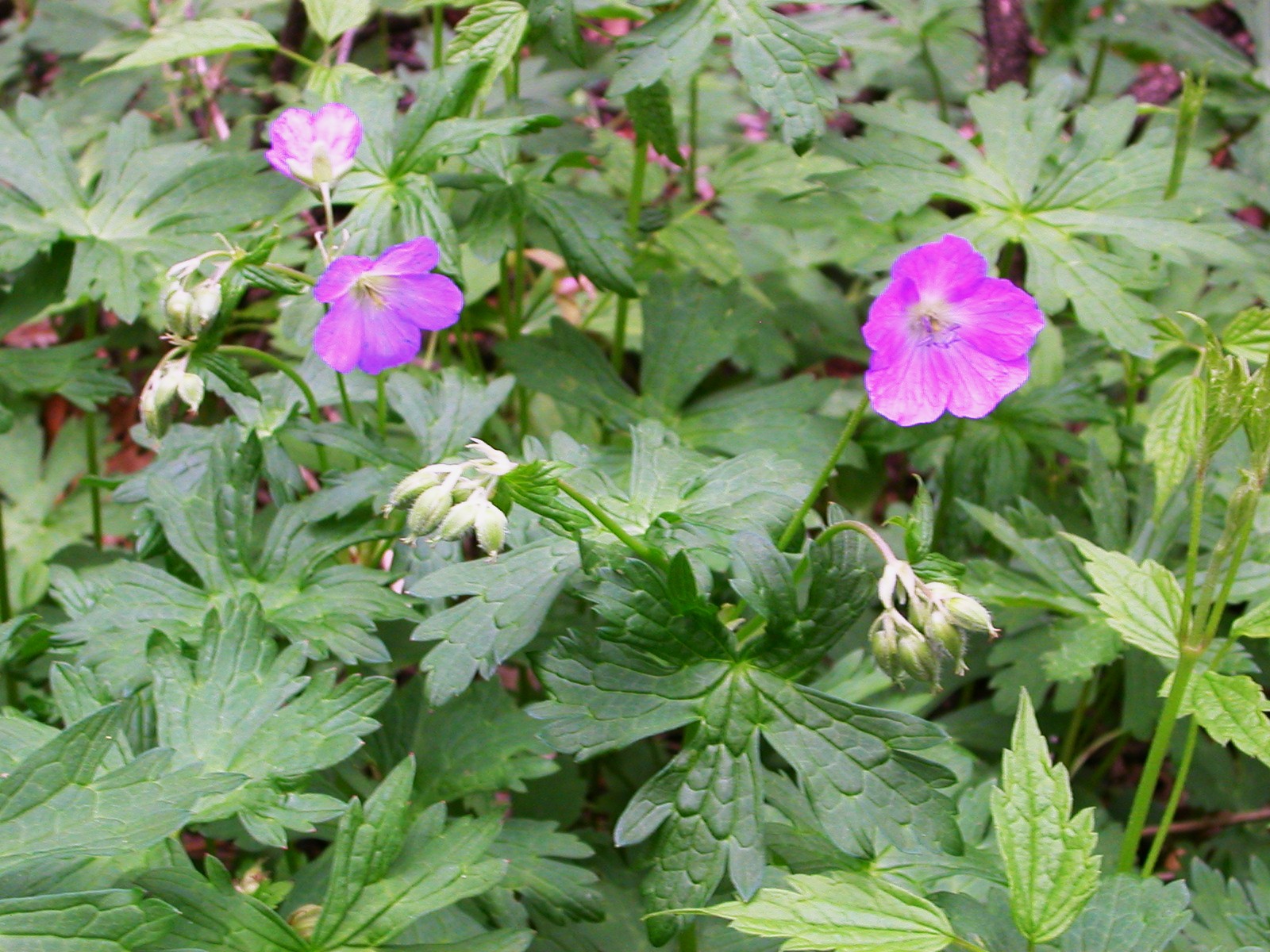
Wild Geranium

Let Us Walk Into April

It was a pear tree in bloom
That lit up your eyes.
You came at blossom time –
Dogwoods and lilacs,
The camellia and azalea,
And the glow of the redbud tree –
Thousands of wildflowers run before your feet,
And a faint green hovers in the woods.
Here we are just before the coming of April,
When the whole world is new
And each day is a beginning,
A time of sunlight and splendor –
Come, let us walk into April.

Sam Ragan, NC Poet Laureate 1982-1996

.     .     .     .     .

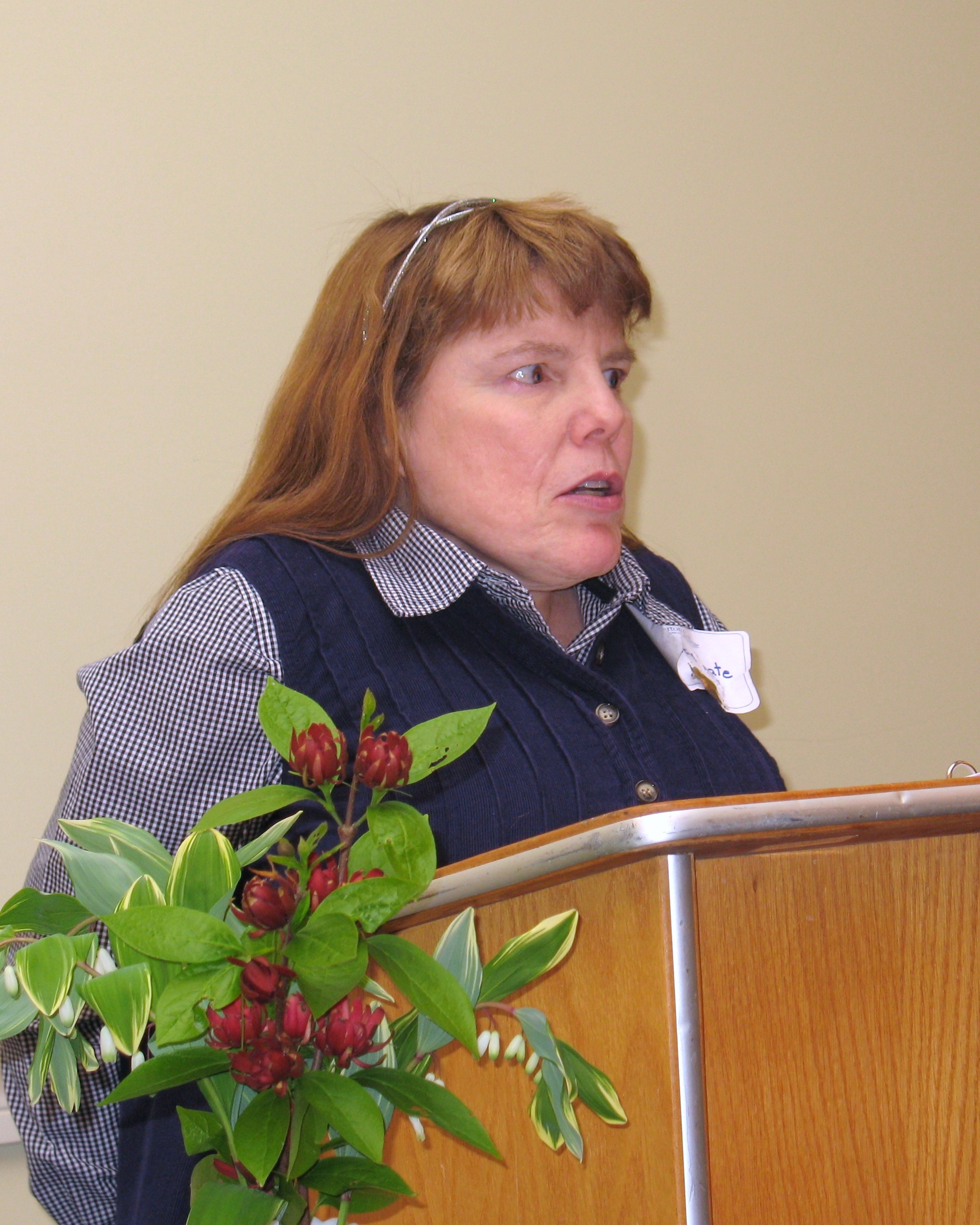
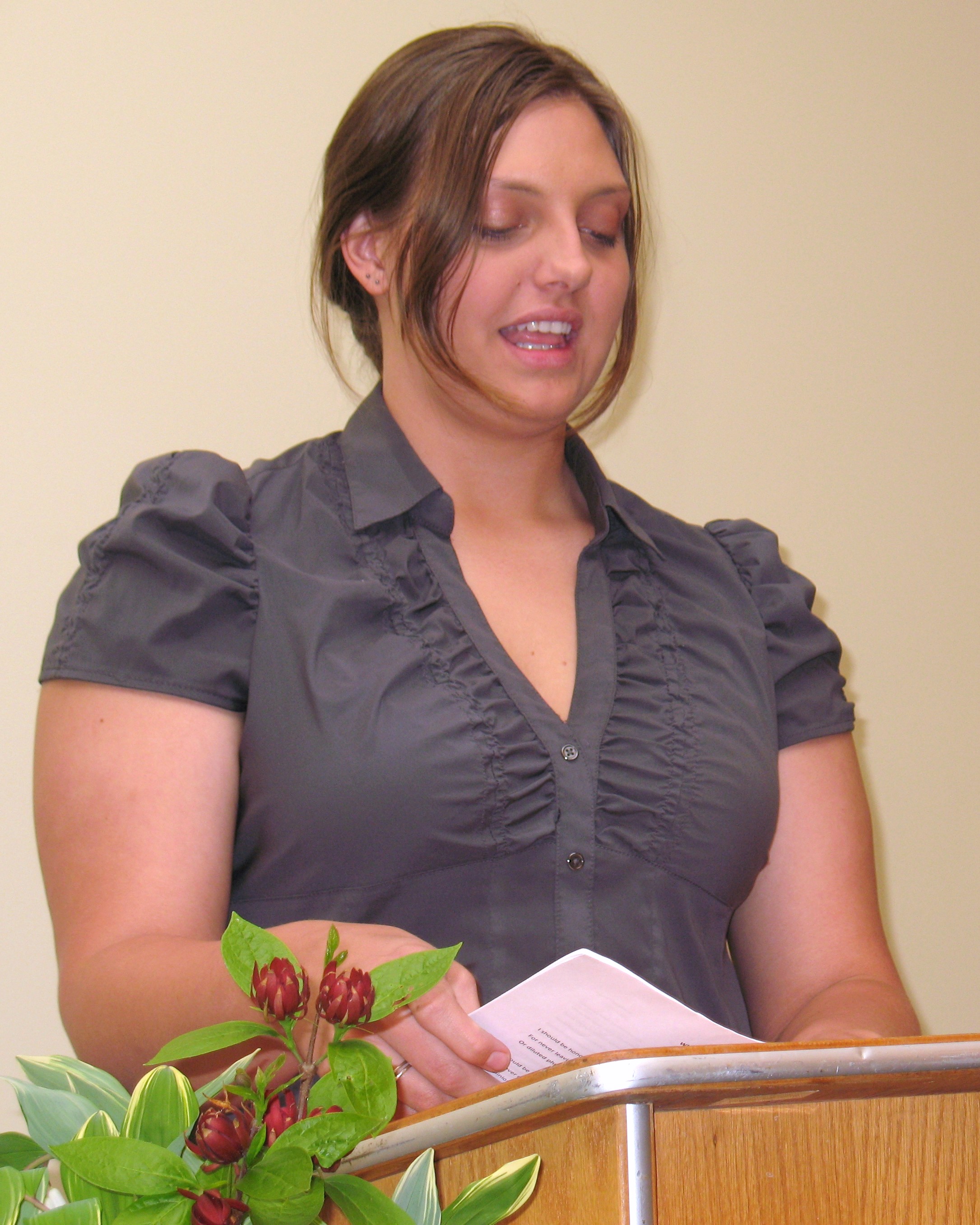
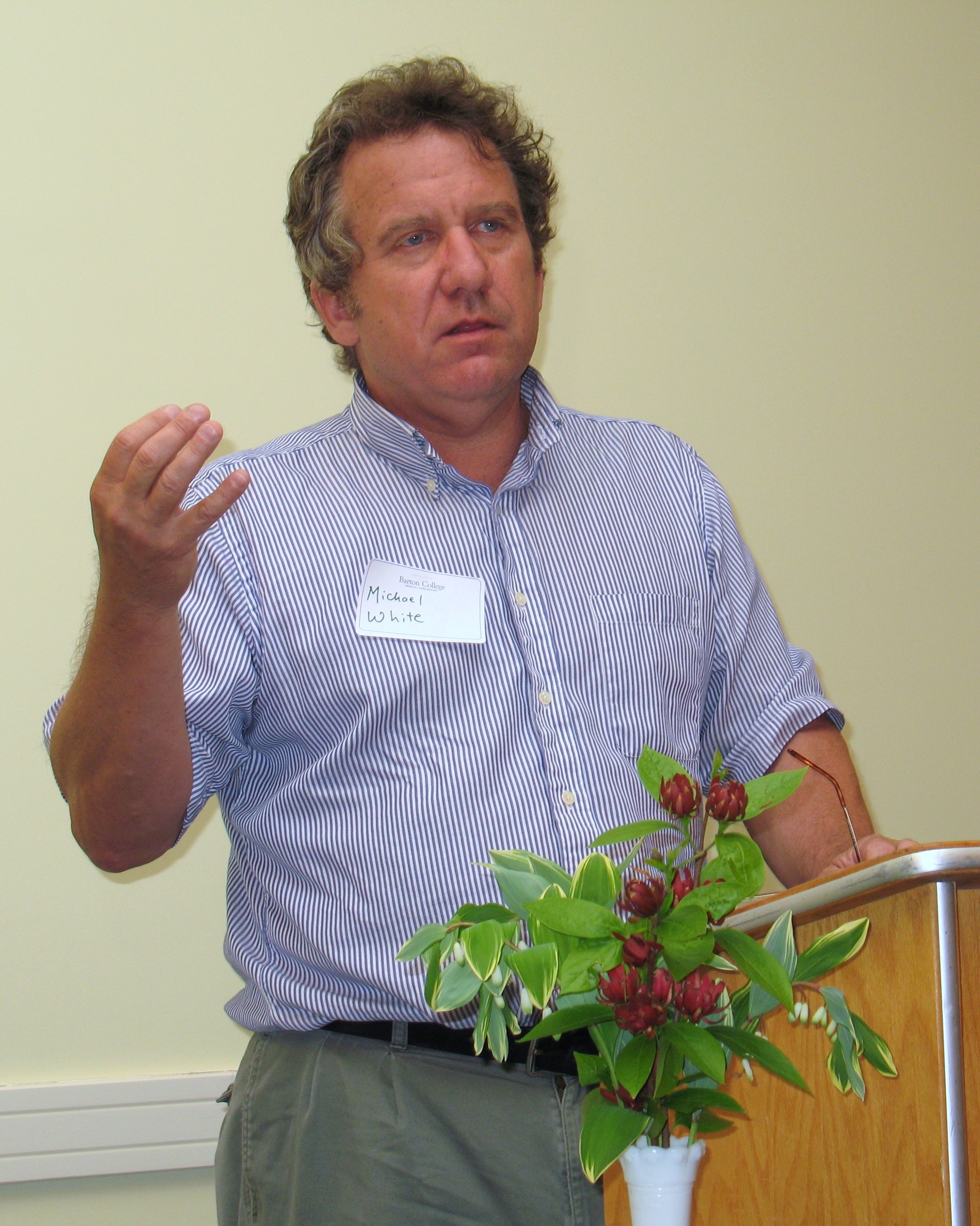
In the morning: readings by two featured poets (this year Debra Kaufman and me), a round-table discussion.  In the afternoon: readings by each of the Eastern region’s Gilbert-Chappell students, a reading by their Distinguished Poet mentor (this year Michael White from UNC Wilmington), and of course open mic.

My impression, after attending Walking last year and again this year, is that this is a time and a place to become connected.  The young Gilbert-Chappell poets (Elizabeth is still in Middle School) connect to their mentor for months via prompts, suggestions, critiques — literary bonding.  This day of reading is the culmination, the pinnacle of all the poetry they’ve worked on together.  A few faces are present at the meeting year after year: Becky Godwin, our Barton College sponsor; Marty Silverthorne, without whom no open mic could be complete; Bill Blackley, to remind us of the legacy of Marie Gilbert and Fred Chappell in creating this program. And of course Sam Ragan is ever present.  His vision and creative spirit, keeping bright the connections between the literature of our past and the hottest verse of today, are a major reason North Carolina has become such a state of poetry.

Well, I just had a wonderful day and once again I feel connected to a big encouraging family, all of us blood kin because of the poetry in our genes.

.     .     .     .     .

Elizabeth: Spring “. . . eventually something will grow from the ashes of a fire!”

Rachel: I Am Spring “I am the recovered youth in all life.”

Nancy: Spring Poem “I felt perfect . . . like the butterfly poised on the coral azaleas.”

Lauren: To Be Celebrated “speechless . . . grasping for verbs of uninvented languages.”

.     .     .     .     .

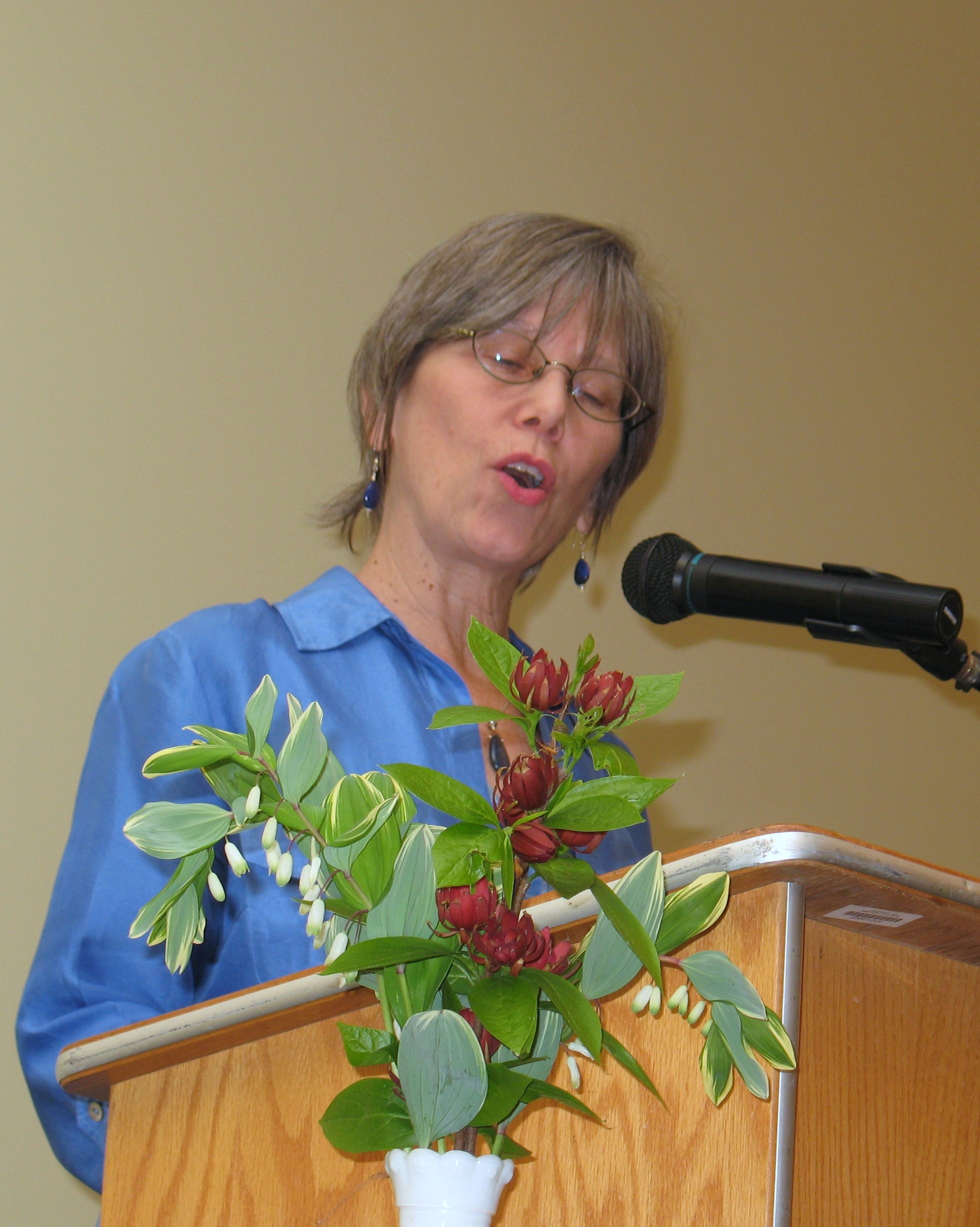
During the morning reading, Debra Kaufman shared poems from several of her earlier book and then focused on her new collection, The Next Moment (2010 Jacar Press).  The poems cover an entire life’s span with sensitive maturity and a light touch that brings me, the reader, into the poem’s very moment.  The petals of star magnolia and tulip are falling; the breeze already hints of July; I will re-read these poems and traverse the seasons and the years.

.     .     .     .     .

Shimmer

After the rain, heat
rises in mirage-like waves
on their hike to the river –
father, son, pregnant mom.
They sit midstream on boulders
and dip their feet in.

Above the river’s burble,
a high-pitched, ear-tickling thrill –
language of the infinitesimal –
and a horde of tiny angels
fills the hazy sky,
translucent wings glinting.

They’re going on into infinity,
the boy says, proud
to use the new word he learned,
along with optical illusion,
from a traveling magic show.
They watch, not talking,

until the cloud thins, disappears.
The woman wants
to say miraculous, but know
her husband would scoff.
the boy spies the first
split husk on a twig.

They find hundreds of shells
of the creatures
that ascended in a holy cloud,
then dispersed to light in trees,
beings that will sing lullabyes –
a choir of breathing – all summer long.

© Debra Kaufman, 2010

IMG_2055

IMG_2049

IMG_2052

IMG_2073 .     .     .     .     .

Read Full Post »

Older Posts »