Feeds:
Posts
Comments

Archive for June, 2011

I’m fourteen and I need a new pair of pants (the Aurora High dress code states “no blue jeans”). My dad drives me to Solon to the men’s store. I am not feeling at all like a man when I consider walking up to the clerk in his jacket and tie and asking for help finding what I need. I don’t even know how to describe what I need, much less do I have the intestinal fortitude to ask for it. My mouth is dry. Everyone in the place (all two of them) is staring at me. What a dork! Then my dad walks in and says three words to the clerk who points to a rack. Dad pulls down a couple of pairs, holds them up to my scrawny frame, sends me into the fitting room. They’re OK. He pays and we drive home. DAMN, my Dad can do anything!
When I was thirty-eight and shopping with my fourteen-year old son, I walked up to the clerk and asked how to find the pants. And I was convinced everyone in the place thought I was a dork. But then I suddenly realized my son couldn’t tell I felt like a dork. He must have thought I knew what I was doing. And then I thought maybe my Dad always felt like a dork and was never really filled with the confidence I always sensed exuding from him. And now I’m fifty-eight and still feel like a dork, but I’ve at least reached the point where I don’t always care whether people think I’m one or not. [OK, OK, until later, when the retrospectoscope clicks on and I think, “Why the hell did I say that? What a dork!”]
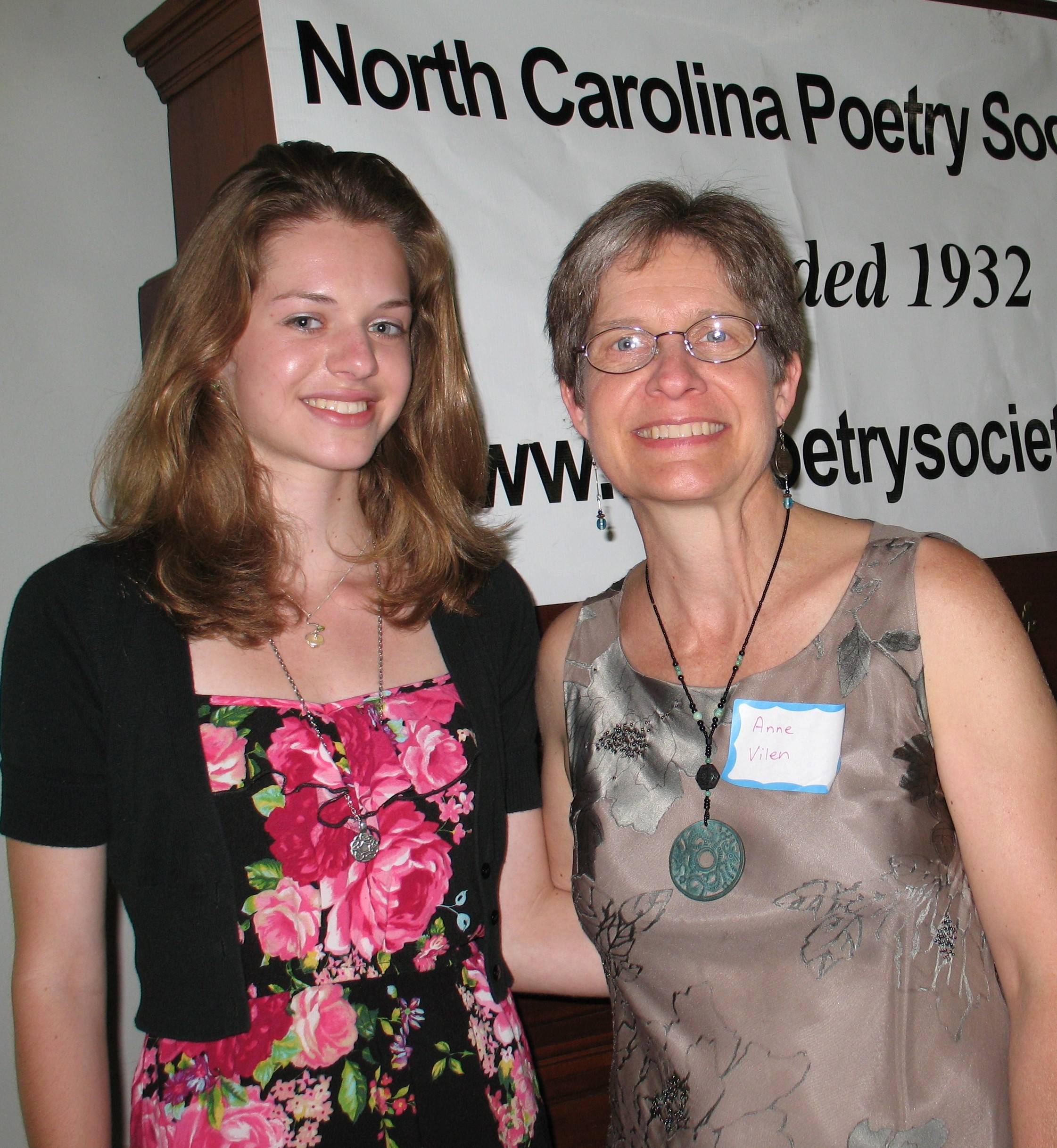
Which doesn’t have a thing to do with this poem by Annalee Kwochka. Or maybe it does. In her premier book, Seventeen, Annalee includes endnotes that explain the moment in 8th grade when she suddenly realized her parents didn’t have themselves figured out any better than she did. When your idols are suddenly discovered to be human and fallible, do you hate them for it? Or is that the moment when you really first begin to love them?
And now I’m recalling Annalee reading from her book at Weymouth Center for the Arts & Humanities last month. Poised, beautiful, expressive, honest. Her piercing skill with words, her entangling extended metaphors, how she reveals a depth to the teenage psyche I didn’t know we former-teenagers ever possessed. Totally non-dorky. But still I wonder – did she go home that night and think, “Why the hell did I say that?!” I hope not. I hope there’s one person on the planet that feels completely at home in who they are and who they’re becoming.
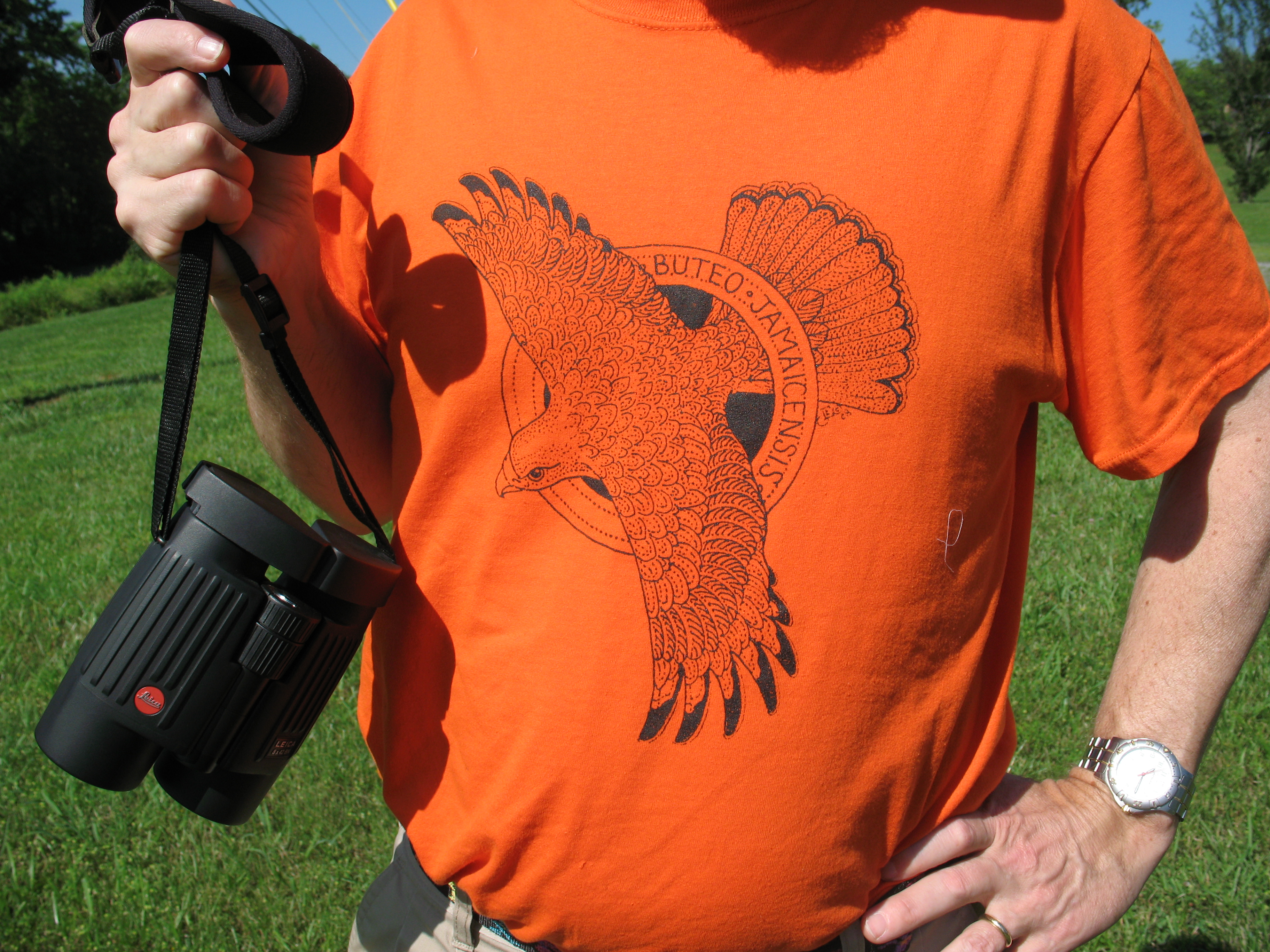
Oh, and postscript to my son: does it help to know that your old man who carries a stethoscope and writes poems and knows the Latin names of things is really still, at heart, a dork?

IMG_9862_crop01
.      .      .      .      .

 Storms
for my mother
You, with your
Mouth drawn tight and your fingers
Fast on the keyboard, you seem
So lost in your own private storm.
You can’t feel the winds that rip
From your mouth, scarcely notice the
Words they carry.

Do you dance
In your own rain?
Once while spinning
On the warm summer sidewalk, I
Watched the chalk-pictures drain their rainbow
Through my pink-painted toes,
And thought I might have glimpsed
A little happiness.

Do you sing louder
Than your own thunder?
When I was swinging in a spring
Thunderstorm, I let my voice seek the
Bluebirds and their bright feathers, the ground
Falling from under my mud-stained feet as song
Lifted me through that crack in the storm
Where the sun seeps through.
And I found
A silver lining
In the angry, tight-pulled words
That brought me out into a summer storm,
Wishing you were here with me.

from SEVENTEEN by Annalee Kwochka, (c) 2010
For information, contact Running Poet Press
RunningPoet17@gmail.com
IMG_9865_crop01

.      .      .      .      .

Annalee Kwochka won first prize in the 2005 NC Poetry Society student contest for lyrical poety (grades 3-8) for her poem Window Seat at the City Bakery, and she has been accumulating kudos ever since.  This fall she’ll matriculate in Davidson College’s creative writing program.

SEVENTEEN reviewed by Scott Owens 

Mona Lisa Muse by Annalee Kwochka, won first prize in the 2008 NCPS student contest

.     .     .     .     .
IMG_1827

Read Full Post »

Linda’s sister Jodi is a National Park Service ranger in the New River Gorge.  In addition to some of her jobs like cultural and historical interpretation, wildflower walks, and storytelling, she’s also a graduate of the National Outdoor Leadership School: she teaches people visiting the backcountry to Leave No Trace.

Is it really possible to leave no trace of your passing?  Whether it’s an afternoon in the Greensboro Arboretum or ten days on the AT, can you really return from a place with no evidence you were ever there?  In years past the NPS and other outdoor organizations had less ambitious slogans:  Only You Can Prevent Forest Fires; Give a Hoot, Don’t Pollute; Take Only Pictures, Leave Only Footprints; Pack It In, Pack It Out.  But no trace at all?!  Even if all six billion of us recycled, composted, and travelled everywhere we went via shank’s mare, just the act of breathing in and out sends billows of carbon dioxide like a blanket into the atmosphere.  Leave No Trace — are you kidding me?

I wrote this poem, little mouse (trace), with my son and daughter in mind.  At different times one or the other of them has taken extended wilderness treks with me, and we’ve struggled to practice the best stewardship over wild places that we can.  (Margaret’s famous quotation upon reaching a road crossing with a refuse bin and over a pound of garbage in her pack:  “Trash cans rock my world!”)  But the world I want to leave them is not one with a few nice paths through the woods free of candy wrappers.  It’s not just the expectation that a few hikers will know how to erase the marks of their stay when they break camp.  It’s more like some crazy hope that all of us, every one, will retain an acute awareness of our traces right in the very places where we live.  That we’ll regret the unavoidable scars we leave on the earth.  That we’ll celebrate together when we can heal one.

.     .     .     .     .

IMG_7974
.     .     .     .     .

little mouse
(trace)

I want to leave the earth and climb
the snowbank cumulus, kick
my boots into the billow, lean
against my sassafras stick and rise.
Rain licks the slickrock clean

of my prints, greenbriar weaves
wild drapery up the wall, hickory sprouts
through the sidewalk.  I want to leave
no trace of my passing, no more trail
than the cursive of a slender tail

in dew.  Morning sun drinks that cup
and learns a word I never spoke,
someone’s new word for love.  I
want to be no more I but we – creature
loam bud feather; let roots translate

the phosphorus of my dust to fruit.
If you look for me a wren calls.
If you listen the poplar turns to honey
in the sky.  Drink deep this cup.  I want
to leave the earth to you.

.

[from little mouse, Main Street Rag Publishing, 2011]

.

IMG_8005

Read Full Post »

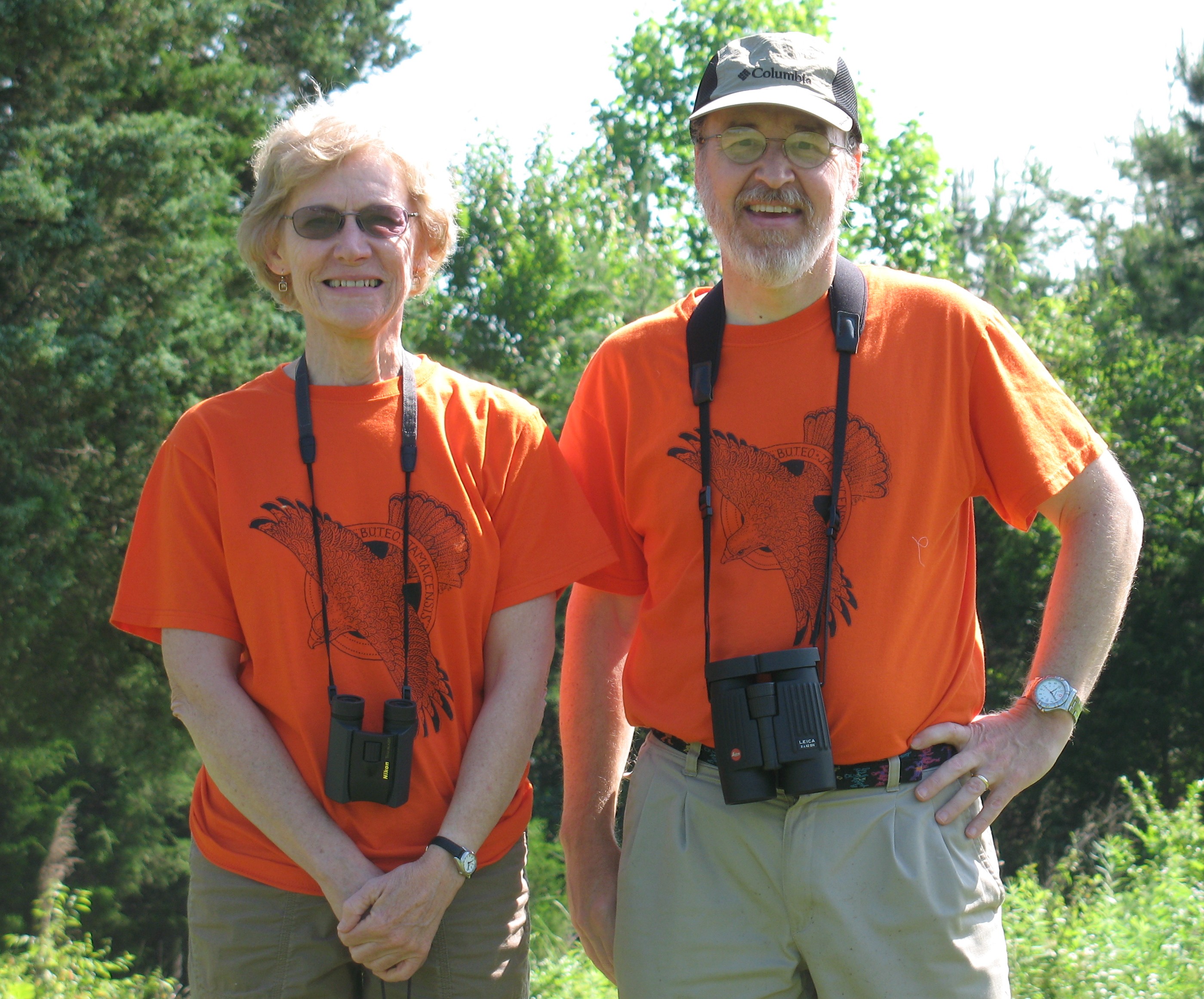
It’s just shy of 5 a.m., and I’m standing in the far corner of the Wal-Mart parking lot.  The leaves are still dripping from an all-night shower.  In exactly two minutes Nancy and Jean will pull in to meet me, we’ll check our gear and get into my car, then drive half an hour to our first designated stop.  For the next five or six hours we will be official volunteer employees of the US Geologic Service (Patuxent Wildlife Research Facility), joining about 3,000 others in US and Canada to complete the annual North American Breeding Bird Survey.

This is my seventeenth consecutive year counting Route 63027, “Copeland.”  There are fifty stops a half-mile apart, starting in Yadkin County on Old Rockford Road and ending all they way into Wilkes County.  At each stop I identify every bird I can hear or see within three minutes – Nancy is my timer and scribe, Jean counts cars and records “excess noise,” but only one person is permitted to count.  Nancy and Jean aren’t even allowed to point. From late May to the end of June, individuals and teams in all fifty states and Canada are counting along similar pre-mapped routes.  This “citizen scientist” data has allowed groups like the Cornell Lab of Ornithology to identify continent-wide trends in wild bird populations, such as the major crash in the House Finch population about fifteen years ago (eventually discovered to be due to an epizootic of chlamydia).

.

IMG_3950_crop01

.

Our first stop is a gravel drive just past Double Creek.  It’s misty, still dark, and the frogs are way louder than the birds this morning.  (I’m no expert on frog calls, but I hear tree frogs, leopard frogs (I think), a bullfrog, and an American Toad.)  A Northern Cardinal across the road is so persistent it’s hard to concentrate, but there’s an Eastern Phoebe near the creek, a Pine Warbler, and now, yes, across the field, the first one starts singing – Indigo Bunting.

Every year, as I transmit the data to the USGS, I keep my own personal tally of the number of species and number of individuals.  On a sunny day on any stretch of North Carolina piedmont roadside, an Indigo will be singing.  Constantly.  They like to perch on a wire or dead limb where they can be seen, and they are tirelessly vocal – so easy to count.  Every year Indigo Bunting is the number one most numerous individual, even when there are flocks of twenty Cedar Waxwings or thirty European Starlings.  This year, though, it is overcast right up to our forty-fifth stop, and I just don’t feel like I’m hearing many Indigos. Oh, we’ve seen quite a few, and some are singing, but I’m afraid this will be the first year they don’t “win.”

Why do I love these tiny dark cavaliers?  I remember the first one I ever saw, on Fodderstack Trail off the Blue Ridge Parkway, singing, of course, in the tip top of a dead tree.  And when the sun struck him OW! the iridescence and electricity of that little body.  When I drive down any country road in the summer with my windows down, I find myself muttering every minute or so: “Indigo . . . Indigo . . . Indigo.”  They thrive at forest’s edge, and since we’ve sliced up so much woodland into scattered chunks it just leaves more prime bunting habitat.  So how about this cool counting day when birds that usually steal away in the heat are active right up until our finish?  Will they overtake my Indigos?  Total up the hash marks on the tally sheet.  Here it comes: Chipping Sparrows – 35; American Robins – 46; and (the envelope, please) . . . Indigo Buntings – 57.

IMG_3952

.     .     .     .     .

Bird Watching
John Ciardi

Every time we put crumbs out and sunflower
seeds something comes.  Most often sparrows.
Frequently a jay.  Now and then a junco or
a cardinal.  And once – immediately and never
again, but as commonly as any miracle while it
is happening, and then instantly incredible for-
ever – the tiniest (was it?) yellow warbler
as nearly as I could thumb through the bird
book for it, or was it an escaped canary? or
simply the one impossible bright bird that is
always there during a miracle, and then never?

I, certainly, do not know all that comes to us
at times.  A bird is a bird as long as it is
there.  Then it is a miracle our crumbs and
sunflower seeds caught and let go.  Is there
a book to look through for the identity
of a miracle?  No bird that is there is
miracle enough.  Every bird that has been is
entirely one.  And if some miracles are rarer
than others, every incredible bird has crumbs
and seeds in common with every other.  Let there
be bread and seed in time: all else will follow.

.     .     .     .     .

[John Ciardi, 1916-1986, was the long-time poetry editor of Saturday Review and directed the Bread Loaf Writers’ Conference in Vermont.  His book How Does a Poem Mean? was the first instruction I ever read on how to write and appreciate poetry, and for many years was a standard.  He was also a renowned etymologist; I remember him from his NPR program on word histories.  This poem is collected in Bright Wings, 2010 Columbia University Press, edited by Billy Collins.]

.     .     .     .     .

IMG_3955

USGS Breeding Bird Survey, Route 63027
May 28, 2011

Canada Goose   –   19
Green Heron   –   1
Black Vulture   –   2
Turkey Vulture   –   1
Red-shouldered Hawk   –   2
Red-tailed Hawk   –   1
Killdeer   –   3
Mourning Dove   –   37
Chimney Swift   –   29
Red-bellied Woodpecker   –   6
Downy Woodpecker   –   2
Yellow-shafted Flicker   –   1
Pileated Woodpecker   –   2
Eastern Wood Pewee   –   2
Eastern Phoebe   –   6
Great Crested Flycatcher   –   3
Eastern Kingbird   –   2
Red-eyed Vireo   –   8
Blue Jay   –   10
American Crow   –   35
Northern Rough-winged Swallow   –   2
Barn Swallow   –   15
Carolina Chickadee   –   5
Tufted Titmouse   –   17
White-breasted Nuthatch   –   2
Carolina Wren   –   24
House Wren   –   1
Eastern Bluebird   –   24
Wood Thrush   –   4
American Robin   –   46
Gray Catbird   –   6
Northern Mockingbird   –   21
Brown Thrasher   –   7
European Starling   –   29
Cedar Waxwing   –   13
Pine Warbler   –   6
Common Yellowthroat   –   10
Scarlet Tanager   –   1
Eastern Towhee   –   16
Chipping Sparrow   –   35
Field Sparrow   –   11
Song Sparrow   –   10
Northern Cardinal   –   33
Blue Grosbeak   –   2
Indigo Bunting   –   57
Red-winged Blackbird   –   2
Eastern Meadowlark   –   5
Common Grackle   –   39
Brown-headed Cowbird   –   7
House Finch   –   5
American Goldfinch   –   8
House Sparrow   –   7
White-throated Sparrow   –   2 (non-breeding)
53 species

IMG_7491

Read Full Post »

« Newer Posts