
.
[with 3 poems by John Hoppenthaler]
.
The Tiniest Toad in Moore County, NC
.
catches my eye, hopping with great care
over the rough flagstone. Don’t spook her,
I think: if a toad springs from your path,
death is sure to follow. Never turn out
a toad at the threshold: the worst luck
will follow for a year. Finding the creature
in your home, remove it to nature
with kindness, for witches posses them
as familiars. If you happen on a toad’s dead body,
place it on an anthill until the flesh is eaten away.
Its bones that don’t bob easy on water,
those you wrap in white linen and hang
in a corner to engender love. On a new moon,
if the bones float in a stream, they’re charmed; slide
them into you pocket or hang them from your neck
ere the devil gets them first. Then you can witch,
it’s said and won’t be witched yourself. She leaps
from stone near the fake frog pond’s edge,
where the real frog eyes her with desire
from his tenuous perch on a lily pad.
She nestles under a leaf to hide her nudity.
Here in the poet’s garden, she promises me
her tiny bones one day, a kiss for my civility.
.
John Hoppenthaler
from Night Wing over Metropolitan Area, Carnegie Mellon University Press, Pittsburgh, PA; © 2023
.
❦ ❦ ❦
.
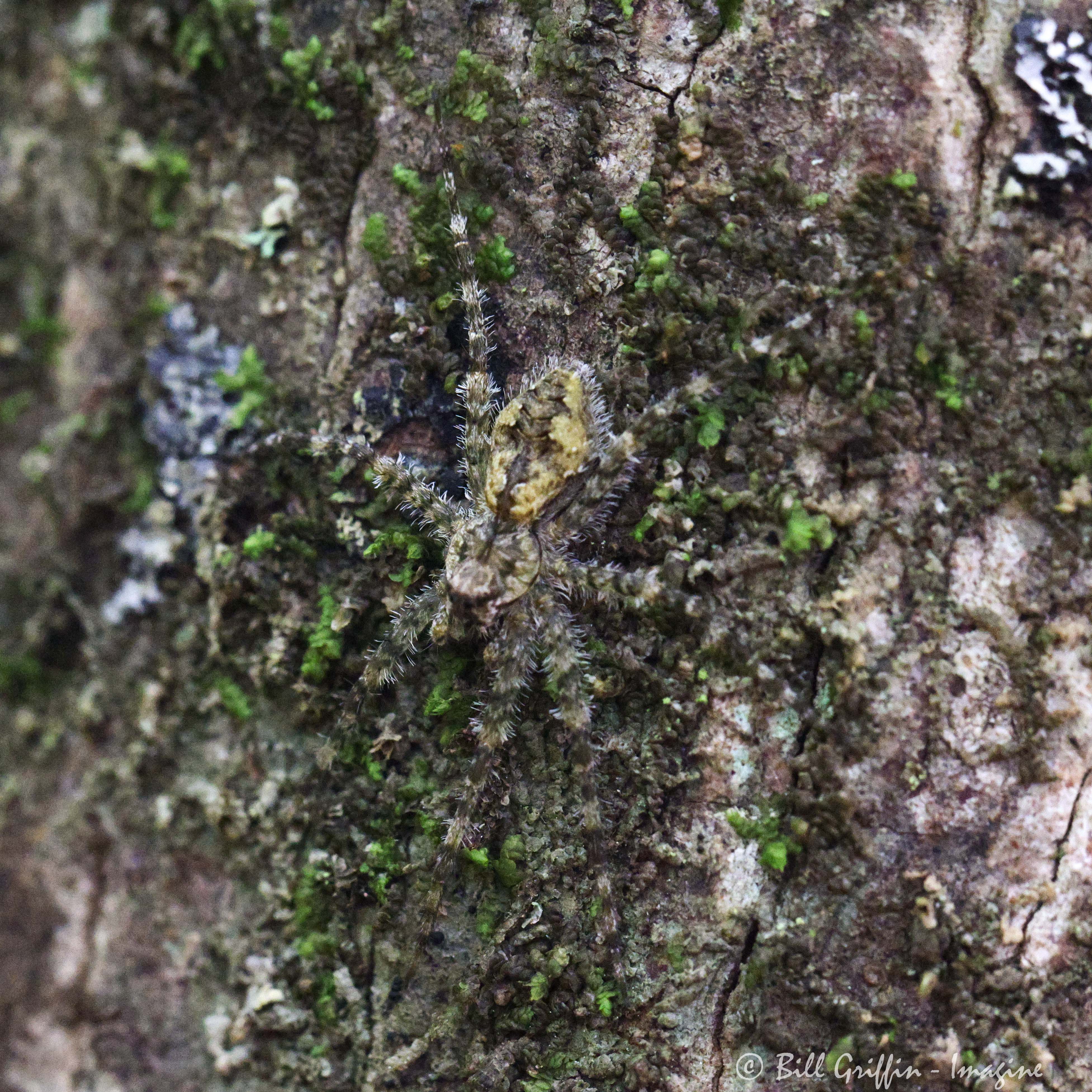
How many seasons have passed for this tiny six-legged creature? How may growings and swellings before the last stricture, the ultimate fullness? And then the splitting, the release – how many times? The naiad can’t count – 20? 30? – but this one feels much different. Organs reforming within the cuticle, gills discarded, first glimmer of urgency to mate, and now wings! A long pause while invisible forces array; a stillness, a shiver; finally a mighty shrug splits her hard skin down the back and Stonefly crawls forth.
.
In minutes her new cuticle darkens and her newborn wings harden, ready for flight. Ready for two more weeks of life and the laying of one thousand eggs in this swift stream where she has crept for three years. Egg to nymph to imago, this is the adult, the perfect likeness of Stonefly.
.
Imago is from the ancient root *AIM, to copy; from the Latin for image and also the source of that faculty of mind which creates images: Imagination. I’ve held this word in awe for its creative power to conjure worlds out of dust. I’ve made it my mantra, to imagine, to spin webs of words that may charm from a handful of protoindoeuropean grunts a shimmering image never before . . . imagined.
.
But isn’t the act of imagining actually mundane and relentlessly unremarkable? We humans live and breathe imagination, ho hum. We constantly take the dumb flow of reality and make its meaning. You speak and I string the sentences into some semblance of the thing you intend to express (one hopes, for both of our sakes, with more than passing accuracy). I anticipate the next minute, the next hour or day, and walk into the picture I’ve painted in my mind. Last clean socks? Do some laundry. Imagination.
.
Let’s also not underestimate imagination’s darker self. Where else does evil arise but in the bleak and hateful poison of our own imaginings? Who creates our own pain and neuroses but we ourselves? How often do I ruminate about something I’ve said or done, imagining how I”ve affected another, how they feel, how they now think about me? How many wakeful nights have I ticked off all the possible futures that could open new boxes of pain, all the things I dread but just might be required someday to shoulder, the hour by hour of everything that could go wrong?
.
These questions lead me to this crossroad: why does the dreadful so readily slip itself into my imagining when the beautiful is hovering all around? The Stonefly nymph molts thirty times or more, growing each time a bit larger but still in the same immature likeness, until that final ecdysis into winged adult, the imago. During all those years of formation, does she imagine her final weeks, her brief flash and certain death, effete and fading in the leaf litter or sudden breakfast of a trout?
.
Or does she summon up stream froth, sharp air and sky, wings strong enough to lift her free, sweet nectar and beautiful desire beckoning? Possibilities. Even an insect’s fate is not altogether determined. How much more might this human mind, with all the likenesses and signifiers and connections it loves to conjure, create the very future it is able to imagine?
.
.

❦ ❦ ❦
.
Hummingbirds & Eagles
.
The whir of hummingbird wings. First here,
then fluttering over the pond, the wall of pine,
.
afternoon sun’s mirrored lazy flickering.
And the place where, just last weekend,
.
we watched an eagle stand with certainty
on the bank before dipping into a long pull
.
of water, before lifting over greenery
and disappearing, as eagles seem destined to do.
.
Hummingbirds are cantankerous creatures
at the feeder, taking time only to hover briefly,
.
tiny bodies flapping under their riveted heads,
bickering for position, fencing with long beaks,
.
then thrusting them into the well. Sometimes
we disappear – or so it seems – into the neuroses
.
of hummingbirds. We want the nectar, that’s all
and, when it’s gone, we apologize, my love, and fall
.
into making up. We drink deeply of it, approach
even the nobility of eagles. Hummingbirds
.
can fly backwards, sideways, hover up and down;
they wear wedding clothes their rest of their lives.
.
Fashioned from leftover feathers the gods
used to create other birds, their long tongues
.
bypass the bitter protections of flowers.
They bring good luck, so we offer them succor.
.
I hold the funnel in place while you pour sugar-
water, blood-red, into the feeder, steady
.
me as I stretch from the footstool
to hang it from a small hook under the eave.
.
I step down into waiting arms; you sink your talons
nearly to the bone, tell me you’ll never leave.
.
John Hoppenthaler
from Night Wing over Metropolitan Area, Carnegie Mellon University Press, Pittsburgh, PA; © 2023
.

.
❦ ❦ ❦
.
John Hoppenthaler’s poems travel an ever-changing landscape of imagination: through town and countryside, pausing to observe or plunging forward, celebrating and mourning. The vignettes are so many and so varied I might ask myself, “How many people are speaking here?” but the poet’s voice penetrates, clear and certain. The themes that wind through Night Wing over Metropolitan Area are not a procession of highway billboards illuminated by megawatts but more like those back-road historical markers you have to pull over and take time to make out. There are glimpses of his mother’s grim decline from dementia, of his father’s death and his own struggle. There is humor, exasperation, tenderness in his journey as parent and spouse. The travels, despite “night wing” in the title, are not supersonic. One meanders from poem to poem at the speed of wonder, reflection, gradual dawning. And the opening image of a metropolitan cityscape from altitude does not prophecy distance or aloofness; these poems pull and draw into proximity, ever closer, the intimacy of love and inexorable loss.
.
It is possible to walk a familiar path lost in thought and completely miss your turning. In John Hoppenthaler’s poems we may think we recognize the waypoints, know where we’ve been and where we’re going, but these lines are always poised and more nimble than we expect. They can pivot in a moment to reveal an unexpected connection or juxtaposition. Or return to a trope from an earlier poem and shine light from an entirely new angle. To pull tight a frayed thread, to knit the disparate threads together, to weave from confusion a whole cloth of meaning – what better use for imagination and its poetry?
.
❦
.
I knew I was going to enjoy this book when I opened to the dedication page and discovered a Grateful Dead lyric (Uncle John’s Band – I saw them play this live in Cleveland in 1973) preceded by The Gospel of Matthew. John Hoppenthaler is the author of Domestic Garden, Anticipate the Coming Reservoir, and Lives of Water, all also published by Carnegie Mellon University Press. With Kazim Ali, he is co-editor of This-World Company. He teaches at East Carolina University, and you can purchase his book HERE.
.

.
❦ ❦ ❦
.
Night Wing over Metropolitan Area
++ after Yvonne Helene Jacquette
.
Wing of a blackbird, wing
of a crow. If I seem a vulture
sometimes, on the wing, adrift
.
toward carrion, indistinct architecture
of loss, its ambience . . . . The hydraulic
whine and thud of the landing gear, absence
.
of towers, moderate tremor of shear
and turbulence. No, not buildings, only
insistent light that props them up; their
.
corporeal bodies dissolved – enormous
emptiness, which itself is full of color, ghosts
of light beyond emptiness, that which defines them,
.
that which looms outside the frame, space
between us,, the pregnant darkness of our
city, and a million tiny votives that oppose.
.
The night wing hangs, sags toward you with
gravity, weight of a thousand corpses, screech
of a virus, that shrill hawk as I circle
.
in a holding pattern, and all I can see is
primary color, pointillism of what’s left
behind or flown toward, fugitive colors,
.
especially the blue rims of your eyes. I lift
or descend, and it seems the same: proximity
may as well be absence; arrival means another
.
place has been left behind, and I’m taking
off or landing to deliver what support I can.
We are two dark birds, together, keeping
.
raptors at bay – there, out over the river.
.
John Hoppenthaler
from Night Wing over Metropolitan Area, Carnegie Mellon University Press, Pittsburgh, PA; © 2023
.

.
❦ ❦ ❦
.
.





 V E R S E and I M A G E
Glad to hear from you Jenny. May life continue to surprise . . . ---B