Feeds:
Posts
Comments

Posts Tagged ‘NC Zoo’

Saturday I was talking to a friend who lives in the woods.  I mean really in the woods.  From his kitchen window he can watch the pristine little creek twenty yards down the hill. Every so often a blue heron wades past.  Where an old tree has blown down a gray fox crosses the creek.  Pretty wild.  And yet as we were talking he noted his regret that he never sees whippoorwills any more.  Hasn’t heard one in ten or fifteen years.

Yesterday morning I left Elkin at 6:30 to get to the Zoo plenty early.  They’ve just finished a year-long project widening a stretch of 421 through Winston-Salem, and you know how a fresh roadway cut looks: planed-off angle of clay sown with chemicals and sprouting grass monoculture.  Just before the new exit ramp, at 7:15 in the morning as the city revved up, a female wild turkey strolled blithely along finding the odd beetle or something worth bending over for.

Pretty wild.

IMG_2895

.     .     .     .     .

Today I was privileged to meet with Dr. David Jones, Director of the NC Zoological Park.  Before assuming the post here in Asheboro he was director of the London Zoo.  He has worked with animals in more countries than I know the names of.  His photographs of Africa appear in many of the interpretive displays around the Park.  And the curators and staff he has assembled are equally impressive.

This evening Dr. Jones presided over the dedication of a new outdoor sculpture (installed along the trail up to Sonora Desert).  Piedmont Totem is a pottery tower created by students and instructors at Montgomery Community College, a series of nineteen cylinders stacked into a column.  Each piece intertwines native piedmont creatures and plants, beginning at the bottom with tadpole, fish, roots and culminating at the top with eagle and owl.  As Dr. Jones pointed out, when viewed as a whole the work embodies the interconnected web of life.  And as he emphasized, the primary mission of the Zoological Park is to have visitors discover those interconnections, and to feel themselves connected as a part of the web as well.

IMG_2919

.     .     .     .     .

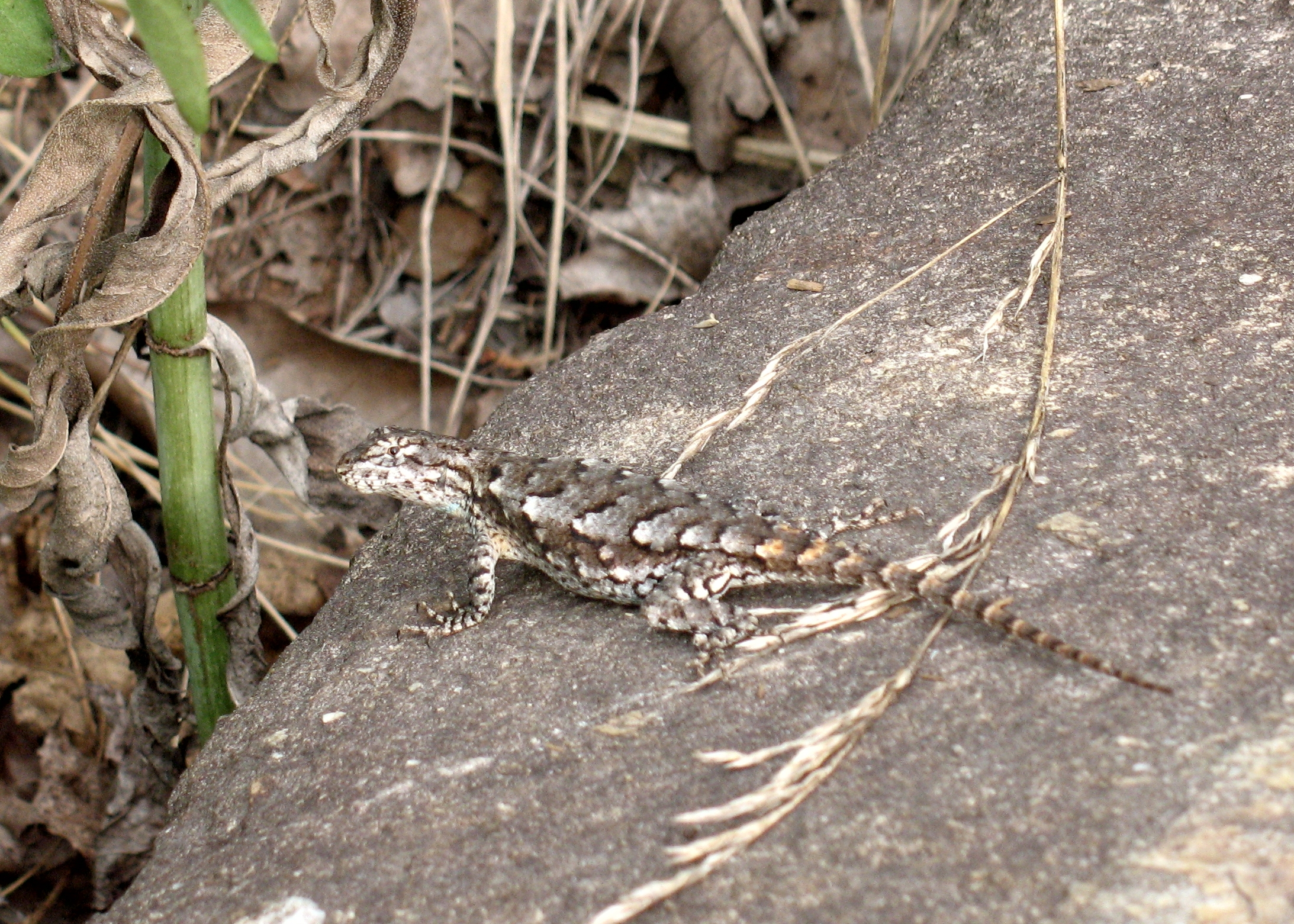
I blame people’s cats for the loss of whippoorwills, ground-nesters who depend entirely on camouflage for survival.  Then again, maybe the raccoons are eating the whippoorwills’ eggs because the raccoons’ predators have been extirpated as varmints (may we hope that the coyotes that have moved into the countryside will eat the raccoons?!).  Or maybe it’s all the skunks’ fault, since  the only thing that will eat a skunk is a great horned owl, and I haven’t been hearing nearly as many owls lately, either.

Or maybe this whole interwoven web is so complex that every thread we disturb leads to three more unravelings.  Who’s to say we can do without any of them?

But I still wish you’d keep your cats indoors, damn it.
IMG_2928

.     .     .     .     .

The Clouded Leopards of Cambodia and Viet Nam

They are gone, almost, into the music of their name.
The few that are left
wait high and hesitant as mist
in the tallest trees where dawn breaks first.

Their color of mourning kindles
to patterns of stark white, random
and sudden as hope or daydream.
Moving, they could be mirrors of the sky,
that play of masks
behind which the ancient burning continues
to dwindle and flee.

Thousands of years in their bones
leap blameless as lightning toward us.
To come close to what they know
would feel like thunder and its silent afterword.
We would turn slowly on our shadows, look up
again to tame the shapes of the world:
monkey, temple, rat, rice bowl, god,
images echoed in the smoke of village cookfires,
in the drift of memory on the faces of elders.
We would stand in the clean footprints of animals,
holding like an offering our hope
for the lives of a handful of people,
a rain that is only rain.

Betty Adcock

.     .     .     .     .
IMG_2931

Asked in an interview what she hoped for in her poetry, Betty Adcock replied “to tell the truth and find that it is music.” Living all her writing life in North Carolina, she as won many literary awards including the Brockman-Campbell Award of the NC Poetry Society, the Roanoke-Chowan Award, the Sam Ragan Fine Arts Award, the Raleigh Fine Arts Award, a Fellowship in Poetry from the National Endowment for the Arts, and a North Carolina Individual Artist’s Fellowship.  Her most recent volume is Slantwise (LSU Press, 2008).

http://bettyadcock.com/links.html
IMG_1827

Read Full Post »

Brave families at the NC Zoological Park today: heat index topping 100, no respite cloud, scant breeze, water fountains running low.  Even the rhinos and bongo (antelope) had sense enough to find a patch of shade and not budge from it.  But Zoos are made for families, and a good chunk of mine showed up to join me on my first afternoon as Poet-in-Residence.

My kids are 30+; Margaret said she couldn’t remember ever going to the zoo,  Josh said his last trip was in seventh grade, Allison has fond memories but they’re getting pretty fuzzy.  Jimmy and Dana (Allison’s parents, Josh’s in-laws) and I reminisced about the zoos of our youth and how much things have changed.  But four-year-old Saul didn’t need to philosophize – he kept us laughing repeatedly with his hoots of amazement at every new wonder.  The park was closing as we literally dragged him away from the underwater viewing of the harbor seals, and even rides on the tramand the bus had his eyes popping.  And I honestly don’t recall any complaints about the heat.

It’s not just the old cliché about seeing the world through the eyes of a child. It is something deeper, something that is ingrained in our heredity, essential to our lineage.  Something without which we wouldn’t have survived as a species.  Shall I call it the desire to give our children joy?  It is certainly a self-reinforcing phenomenon, a positive feedback loop:  when I see the awe on Saul’s face as he places his hand against the hand of the baby chimpanzee on the other side of the glass, I just want to keep offering him more of those experiences.  More and more.

IMG_2870

.     .     .     .     .

This poem by Peter Makuck captures for me the yin and yang of this sort of desire for our progeny.  We want to protect them from suffering – they will nevertheless experience sorrow.  We want to convey to them whatever meaning we’ve discovered – they will have to discover it for themselves.  My grandson is the apple, all potentiality and sweetness.  I am the stiffening branch.  I can only hope the ground I leave him, when he falls, is fertile.

.     .     .     .     .

 My Son Draws an Apple Tree

I watch it grow
at the end of his dimpled hand
rooted in white paper.

The strokes are fast
and careless, as if the hand
had little time.

Quick black trunk,
a green crown and in the white
air all by itself

a red splotch,
an apple face with a frown
that is his

he gravely says
looking up at me — the stiffening
branch he falls from.

Peter Makuck
from Long Lens, New & Selected Poems, © 2010 by Peter Makuck, Boa Editions, Ltd.
American Poets Continuum Series, No. 121

.     .     .     .     .

IMG_2815

Peter Makuck lives on Bogue Banks, one of North Carolina’s barrier islands.  He was the first Distinguished Professor of English at East Carolina University, where he taught for thirty years until retiring in 2006.  While at ECU he founded and edited the nationally-respected journal Tar River Poetry.  He has influenced a generation of North Carolina poets and writers.

.     .     .     .     .

IMG_2882

.     .     .     .     .

IMG_1948

Read Full Post »

Some other breathers in the starry night, / Living their days beyond all others’ hearing.

Pat Riviere-Seel has just finished her first day as Poet-in-Residence and the North Carolina Zoological Park in Asheboro.  Tours, meetings, crowds, getting lost, getting found – her mind is awhirl.  She’s finally found a few minutes to unpack and now she returns to the Zoo after closing.

You’ve visited zoos . . . how many times?  Right now you can visualize your favorite animals: the lion invariably asleep, only the tip of its tail atwitch; giraffe curling that improbable tongue around its leafy dinner; monkeys teasing, chasing, swatting each other like sixth-graders on the playground.  And then there are the smells: “Dad, do we have to go in the elephant house?”  But what about the sounds?  Do you remember any animal sounds other than toddlers crying for the ice cream they’ve dropped, mom’s calling for their young’uns to stick close and don’t get lost?

I wonder at the silence that Pat is discovering right now.  Have strange calls begun to rise from the aviary as birds seek their roosts?  Can she detect the crunch as oryx and kudu finish the day’s last mouthful?  After the crowds have disappeared, is that when elephants trumpet and lions roar?

The silent are not those who make no noise.  The silent are those we fail to hear.

.     .     .     .     .

IMG_2171_crop01

Song for the Silent
James Boyd

Down here the mule leans in the traces,
The plow swims through the loam,
And men at dusk turn quiet faces
To chimney smoke and home.
The roof is touched, then, by the first star’s finger,
A lamp stands in the wall;
Inside the house, slow sparse words linger,
Slow shadows rise and fall.

Out where the tracery of trees is cool
The plow leans toward the shed
In whose black cave the mule
Lies on his rustling bed.
Deep dark and silence come,
The mule no longer stirs,
the house, the darkened room
Seem filled with whisperers:
No sound but quiet breathing,
No light but from the star,
Whose beams through starlight and dark forests weaving
Form webs to where there are
Some other breathers lost in woods and clearing,
Some other breathers in the starry night,
Living their days beyond all others’ hearing,
Beyond all others’ sight.
But not beyond the web that holds them
To plow, to mule, to star,
And with light, lovely majesty enfolds them
And all the earth’s silent breathers, lone and far;
Breathers and brothers in the world’s dark reaches,
Brothers at peace within the web of light,
Free of the day and the ill day teaches,
At rest now in the silver of the night.

The manikins of state who scheme astutely
To blot each other’s names from history’s page
Forget that here in lonely cabins mutely
Men watch the feuds they wage.
But when through roads by ghosts of soldiers haunted
The crippled boys come back to mule and star,
If they shall miss the brotherhood they wanted
Our leaders may learn who the silent are.

.     .     .     .    .

Written in the 1940’s, the final stanza of this poem could equally well describe this current decade, this very day.  So many voices that we fail to hear, voices of creatures both human and other.  Will our leaders learn who the silent are?

.     .     .     .     .

IMG_2176_crop01

James Boyd (1988-1944), novelist and poet, was a North Carolina literary luminary.   After World War I he and his wife moved to Southern Pines and for the next quarter century stimulated and promoted literary arts in the South, their influence spreading throughout the country.  Boyd wrote five historical novels set in North Carolina, revitalized The Southern Pines Pilot as its editor and publisher, and with WWII approaching organized The Free Company of Players, which produced a radio drama around such themes as freedom of speech, the right of assembly, racial equality, and the right to vote.  His collection Eighteen Poems was published the year after his death.

.     .     .     .     .

IMG_2172

Read Pat’s artist’s statement and bio.

.     .     .     .     .

IMG_6944

Read Full Post »

« Newer Posts - Older Posts »