Feeds:
Posts
Comments

Posts Tagged ‘nature photography’

 . 
SUMER is icumen in,
+++  Lhude sing cuccu!
Groweth sed, and bloweth med,
+++ And springth the wude nu—
+++ +++ Sing cuccu!
 . 
Anonymous. c. 1250
 . 
 . 
Kahhk, says our local cuccu/cuckoo, the yellow-billed variety, or kowk-kowk-kowk-kowk-KOWK, and often with a preamble tk-tk-tuk-tuk-tuk like a two-stroke engine that won’t quite start but which clearly heralds summer is a-coming in. Yesterday evening as the thermometer lied to us that it would soon dip below ninety and as even the cicadas were gravelling A-flat instead of their usual bright C, I heard two cuckoos in conversation. One was to our west and the other just east of Elkin Creek, where Linda and I were carving a path through the humidity like tired scows. Loudly sing, cuckoo!
 . 
So that I can hear you! I want to pretend my auditory acuity is not diminishing, but I am forced to confess my limitation when we’re sitting on the back porch and Linda asks (innocently? perhaps not), “Oh, didn’t you hear the Pewee?” Then I focus my attention and cast my receptive net into the green rollers of oak and hickory until, yes!, now I hear it, humble plaintive song of Eastern Wood Pewee, really one of my favorite birds. I would hate to have missed it.
 . 
The songs of birds are half their personality. Half their presence and their being. And birds are half the personality of the forest. Oh yes, today I will kneel to appreciate the Cranefly Orchid, just beginning to bloom right now mid-July. I’ll focus my gaze on a few centimeters of floral spike rising from the deep shade, but all around me 360 degrees are Vireo, Flycatcher, Woodpecker, Thrush, unseen but unceasing. I might toy with the idea of hearing aides so that I don’t have to ask Linda to repeat herself so often, but I will be ultimately convinced when I miss another Pewee.
 . 
 . 
 . 
The Common Cormorant
 . 
The Common Cormorant or shag
Lays eggs inside a paper bag.
The reason you will see no doubt
It is to keep the lightning out.
But what these unobservant birds
Have never noticed is that herds
Of wandering bears may come with buns
And steal the bags to hold the crumbs.
 . 
Christopher Isherwood (1904-1986)
 . 
[from A Great Big Ugly Man Came Up and Tied His Horse to Me, A Book of Nonsense Verse illustrated by Wallace Tripp; Little, Brown & Company © 1971]
 . 
It’s not in summer that cormorants visit Elkin but during spring or fall migration. A few will chance upon our little town reservoir, a welcoming spot for a rest and a snack. Just as Wallace Tripp captured her, a cormorant will perch on the pump housing in the middle of the lake, fluff out her wings to dry, beak tipped up, utterly satisfied. There must be something attractive in the water around her, bream or bass or crappie, because she and her buddies will hang around for a few days before they make like a tree and get out of here. They have summer plans elsewhere.
 . 
Summer. Birds. Bird poems. This summer our grandson is helping us comb through basement and garage for those preserved toys and mementos it’s time to release into the wild. Duplos – can we really bear to give them away? And the books, the books, the books! We no longer have any teething babes to relish those old board books, and even our 8- and 9-year olds are feeling too grown up for most of my favorite tomfoolery, but I must hold onto my Wallace Tripp. The Emperor of Anthropomorphism. In fact, when I slide into senescence I hope my family has the good sense to pack away all my process theology, quantum reality, and cosmology and just prop me up with Tomie dePaola (for benediction) and Tripp (for belly laughs) to make me young again.
 . 
 . 
The Windhover     
 . 
To Christ our Lord 
 . 
I CAUGHT this morning morning’s minion, king-
+++ dom of daylight’s dauphin, dapple-dawn-drawn Falcon, in his riding
+++ Of the rolling level underneath him steady air, and striding
High there, how he rung upon the rein of a wimpling wing
In his ecstasy! then off, off forth on swing,
+++ As a skate’s heel sweeps smooth on a bow-bend: the hurl and gliding
+++ Rebuffed the big wind. My heart in hiding
Stirred for a bird,—the achieve of; the mastery of the thing
 . 
Gerard Manley Hopkins (1844–1889)
 . 
 . 
When we first moved to Elkin in 1981, Chatham Manufacturing still employed 3,000 men and women working three shifts making blankets and upholstery. As I drove home on summer evenings past the lake of cars in the Chatham parking log, I often spotted a Windhover perched on an overhead wire . Hoping, no doubt, to pounce on a house sparrow drawn to someone’s spilled fries or cigarette butts. We don’t call them Windhovers here in the US, and by DNA analysis our American Kestrel is actually not closely related to Hopkins’s Eurasian Kestrel, but on other summer evenings as I drove home through Surry County corn and soybean fields I was stirred more than once to see a tiny falcon hovering above some ill-fated mouse or grasshopper before rocketing into its stoop. Whenever I read Hopkins’s poem, I feel again the ecstasy of that momentary communion with perfect wild creation.
 . 
Who has never felt the desire to be caught up and become part of that creative spirit? An encounter with a wild thing, the embrace of a child, standing transfixed before a work of art, connection with one perfect phrase read in print, writing a line deep and true: experiences of creation and acts of creativity are so intermingled as to be indistinguishable. Teach me half the gladness / That thy brain must know, / Such harmonious madness / From my lips would flow / The world should listen then, as I am listening now.
 . 
bird
 . 
To a Skylark                   (excerpt)
 . 
Hail to thee, blithe Spirit!
Bird thou never wert,
That from Heaven, or near it,
Pourest thy full heart
In profuse strains of unpremeditated art.
 . 
Higher still and higher
From the earth thou springest
Like a cloud of fire;
The blue deep thou wingest,
And singing still dost soar, and soaring ever singest.
. . .
 . 
What thou art we know not;
What is most like thee?
From rainbow clouds there flow not
Drops so bright to see
As from thy presence showers a rain of melody.
 . 
Like a Poet hidden
In the light of thought,
Singing hymns unbidden,
Till the world is wrought
To sympathy with hopes and fears it heeded not:
. . .
 . 
Sound of vernal showers
On the twinkling grass,
Rain-awaken’d flowers,
All that ever was
Joyous, and clear, and fresh, thy music doth surpass.
 . 
Teach us, Sprite or Bird,
What sweet thoughts are thine:
I have never heard
Praise of love or wine
That panted forth a flood of rapture so divine.
. . .
 . 
We look before and after,
And pine for what is not:
Our sincerest laughter
With some pain is fraught;
Our sweetest songs are those that tell of saddest thought.
 . 
Yet if we could scorn
Hate, and pride, and fear;
If we were things born
Not to shed a tear,
I know not how thy joy we ever should come near.
 . 
Better than all measures
Of delightful sound,
Better than all treasures
That in books are found,
Thy skill to poet were, thou scorner of the ground!
 . 
Teach me half the gladness
That thy brain must know,
Such harmonious madness
From my lips would flow
The world should listen then, as I am listening now.
 . 
Percy Bysshe Shelley (1792—1822)
 . 
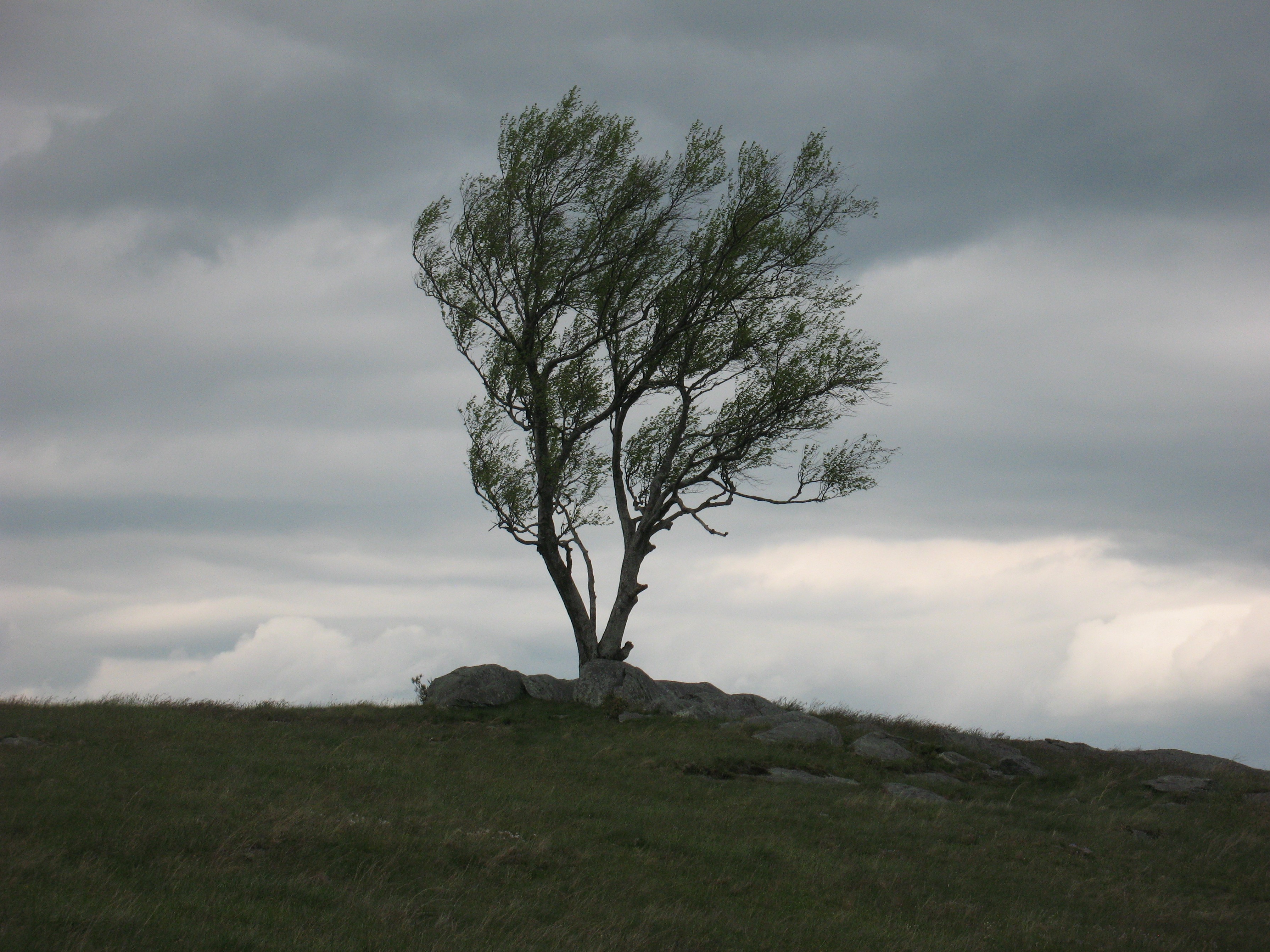
2020-11-03b Doughton Park Tree
.    .    .    .    .
Several friends have asked me to keep them informed whenever I schedule a guided naturalist hike in our area. I am planning one (maybe two) wildflower hikes in September as celebration of the founding of the Mountains-to-Sea Trail:
Friday, September 12
(and if there’s interest a reprise on Saturday, September 27).
Sign up at MeetUp.com to receive notifications and to register for events.
Thanks — Bill
 . 
 . 
 . 

Read Full Post »

IMG_4192_crop

Albert Mountain Sunrise

 . 
[with 3 poems by Kathy Ackerman]
 . 
Heritage Lost
 . 
Hills are keening,
yellowed voices of serious photos
call me home to “precious memories,
how they linger,
how they ever flood my soul.”
 . 
How in a displaced caravan
we went to lay her down
in shining soil,
flecks of coal on shovels
in the hills of familiar gravestones.
It had to be that church,
that pastor’s family name,
Rock of Ages, Beulah Land.
 . 
How odd to call it home and feel it so
without a waiting bed of down
to follow the wake,
all of us gone north for good,
except for this.
 . 
How we walked between
the railroad and the shallow ditch
collecting tadpoles in a pail
we’d flush in the motel’s aqua bathroom
because I would not understand.
Death, a newborn slippery thing.
 . 
How the stone had to be a heart
to bear the name of Mother,
how the heart had to be a stone
to be left behind
in its rightful place
in the hills near the church
near the home place bought by strangers.
 . 
We packed the memories once again
in bursting overnight bags,
left the motel beds unmade,
because we could
and settled into our procession.
CB radios, Thermoses, Styrofoam,
we headed back up north
to our factories, unions, high schools,
without looking backward.
 . 
Kathy Ackerman
from Coal River Road, Livingston Press, The university of West Alabama; © 2013
 . 
❦ ❦ ❦
 . 
Where is home? Is it a house number, 1074 Marcia Road, a side yard, fence, and oak tree I can still see as clearly as when I was 10? I could walk right through the carport sixty years later and show you exactly where we buried my hamster. Or is home a garage full of cardboard boxes and bric-a-brac from four other homes of parents and grandparents, houses you only spent a few dozens of nights in altogether? Is home the towns those houses occupied? The states?  Whose home is your home? Whose place is yours?
 . 
I was barely four when we moved from Niagara Falls to Memphis. Not until years later was I able to piece together the stories of my parents’ migration, how they drifted together across those red clay counties of piedmont North Carolina, then pinballed via Atlanta to New York before birthing me. All my solid early childhood memories abide in those eight years in Shelby County, Tennessee, that little four-square subdivision on the outskirts of Memphis.
 . 
Then we moved. And moved again. The sixth graders in Delaware mimicked my accent and immediately nicknamed me “Memphis.” It doesn’t take long for a 12-year old to figure out how important it is to fit in. For the next couple decades I can now see that I lived as if the place I was staying would never be the place I stayed.
 . 
Here in the rural South, when you meet someone new question number one is not, “What do you do?” but, “Where are you from?” One longs to fit in; one doesn’t want to whack the conversation with an axe by replying, “New York.” I invented my stock answer right quick: “Both of my parents are from North Carolina.” Subtext: “I want to be from North Carolina. I want you to let me be.”
 . 
I have now lived exactly 70% of my entire lifespan in North Carolina. NC driver’s license, NC property taxes, kids born in NC, grandkids too. Maybe being almost from here is an advantage. Every new state park we visit, every historical factoid, every endemic flower species I learn, every third generation progeny of a friend I greet while out walking – I tally them all securely in my calculus of belonging. Way back when Linda and I arrived in Durham a week after we’d married, a month before I started med school at Duke, we just assumed that in four years we’d be moving back to Ohio to be closer to her huge family. Now it’s been fifty-one years in The Old North State, forty-four of those in rural Elkin in rural Surry County. Lately we’ve started talking about downsizing, moving somewhere we can age in place through to the end of our allotted spans. Linda says, “You know where I’d really like to live?” Oh my God, is Ohio still calling her? Is the place we’ve been staying never to be the place we stay? She looks at me level, no joking here. “Winston-Salem.”
 . 
Well, I guess we are from North Carolina. It’s nice to be home.
 . 
 . 
❦ ❦ ❦
 . 
Cul-de-sac
 . 
From Coal River Road to White Mist Lane
is more than forty years,
several hundred miles
as the crow truly flies, one point to another,
and sometimes back,
no straighter than a crooked river
wrecked by mines.
 . 
Here the landscapers claw in stony earth
to sow some seed
while wings of straw fly it away.
My lawn’s a futile thing
where rocks and trees should be.
 . 
I stoop to gather stubborn stones,
pretend I do it for the grass,
but in their quartz and granite peaks
admittedly ground to bits by time
I find the mountain of my blood
and hear the ancient syllables spilled,
silenced now by cul-de-sac
and swaying Mylar storks,
a neighborhood of strangers
increasing overnight.
 . 
Kathy Ackerman
from Coal River Road, Livingston Press, The university of West Alabama; © 2013
 . 
❦ ❦ ❦
 . 
Linda spots the book on top of my pile, next in queue for reading, and its title speaks right up and makes its demands known. “We need to save this one for Jodi.” Who was born in Ohio but lives in coal country, and whose career has been to tell its stories as naturalist and interpreter in the New River Gorge near Beckley, WV. Indeed, I’ll share it with Jodi, this book I bought from a friend whose poetry I’ve admired for many years, whom I’ve come to know better through the North Carolina Poetry Society Board, and whose more recent book I featured here three years ago. Now I open the book, though, and out spill the connections and intersections. Kathy, just up the road there at Isothermal Community College, I never realized we’ve come from the same place!
 . 
Kathy Ackerman grew up in Ohio (like me, at least from 8th grade on) far from her birthplace and her family’s heritage. In later years she has mainly visited the old home state for funerals, but the landscapes, place names, family memories, and fortunes (or lack thereof) of West Virginia are the palette from which she paints these poems of Coal River Road. This collection is yearning for home, but home is something slippery and out of reach. A bright fleck in a stone might remind her of the mountain in her blood, but returning to stand on the that mountain she discovers a hint of strangeness and regret. Perhaps the yearning itself is home, the uprooted and cast adrift feeling that keeps a person looking for something solid, for something that means.
 . 
I identify with these poems. Kathy uses imagery and memory not just to disclose the past but to define the present. She can only be the person she is because she’s traveled the twisting roadways through old hollers and coves as well as the West Virginia Turnpike straight up to Ohio’s new sown lawns. And finally I-77 South. Although Kathy Ackerman didn’t settle in this state until a full ten years after I did, I can assure you that she is from North Carolina.
 . 
 . 
Coal River Road by Kathy Ackerman is available from Livingston Press. Her more recent book is Repeat After Me from Redhawk Publications (2022).
 . 
 . 
❦ ❦ ❦
 . 
Whitesville, WV
 . 
Because we never had the conversation
I am following a hearse that winds
down Coal River Road toward Whitesville.
 . 
How to say irrational to bury you here
in the only land we own outright,
owned for generations
though none of us can visit your grave
in less than a day.
 . 
These plots foreshadow the ending
no matter the story you wanted to tel.
you never wanted to return, like this or not.
 . 
You’d cringe to see this dingy place,
smelling of rot as if what remains
of the Big Coal River
seeps in each night while the corpses await
their faraway bereaved.
 . 
For once, I’m relieved to by unromantic.
That body is merely a souvenir
a keepsake – you wore it every day.
Symbol. Skin. Form.
 . 
I am relieved to know you’re not really here
though there’s nowhere else for us to go
to pay our respects. It is not respect
that brought you here, but silence,
the failure to make a better plan
because you never learned to say goodbye.
 . 
Kathy Ackerman
from Coal River Road, Livingston Press, The university of West Alabama; © 2013
 . 
❦ ❦ ❦
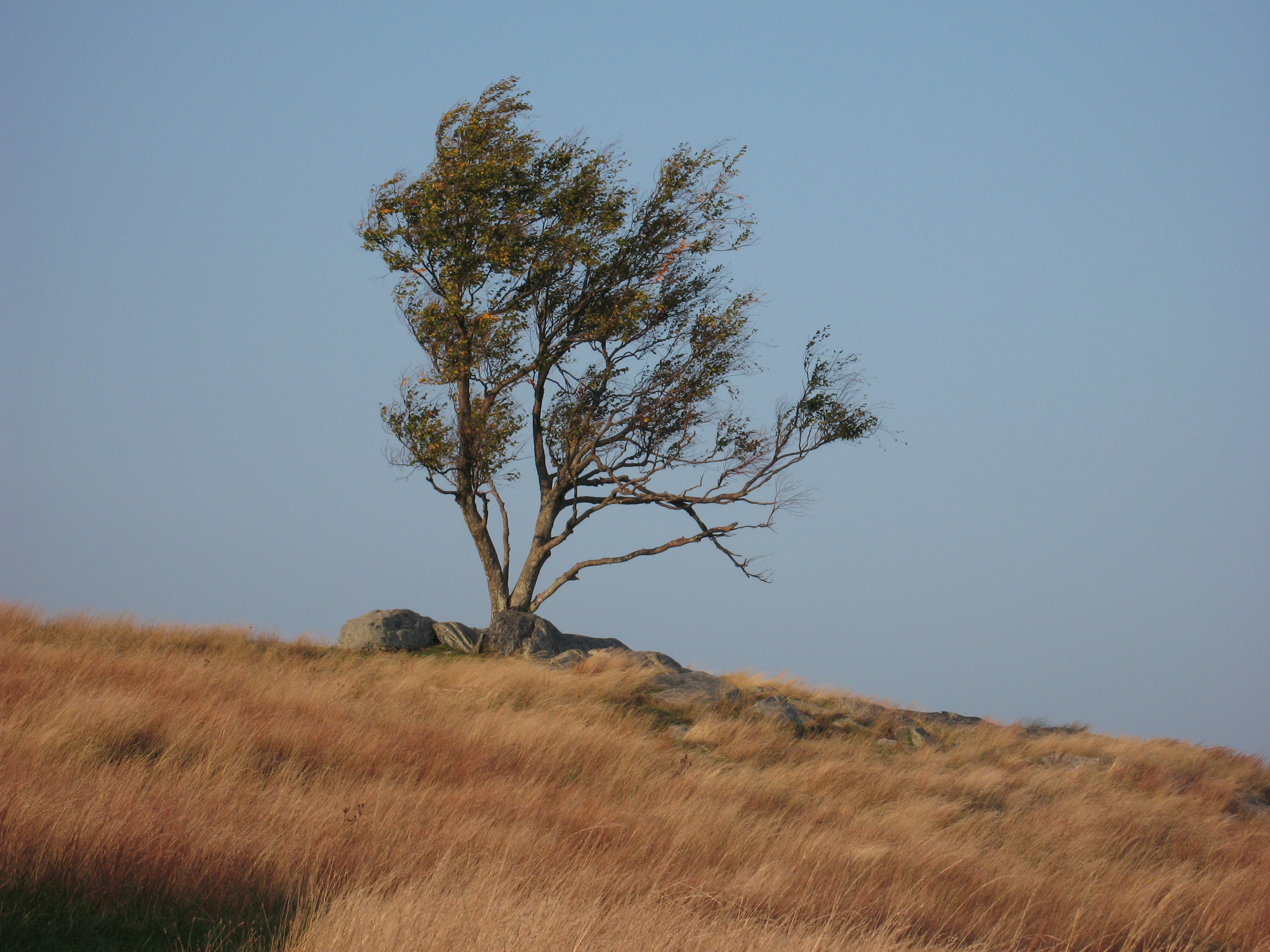
Doughton Park Tree 2020-09-08b

Read Full Post »

 + 
[poems from BRILLIG: a micro lit mag]
 + 
Ghazal for sunrise
 + 
Wrens are first out of bed at sunrise. Their sharp warbled song suits the sky’s deep red at sunrise.
 + 
Down the hill a deer slips out of mist. Then her fawn, ready to be fed, at sunrise.
 + 
Then a fieldmouse, light as a wisp, climbs a spent coneflower with most careful tread – at sunrise
 + 
The night’s winds are done. Above, only a last fading star, and a few clouds sill ragged at sunrise . . .
 + 
I join this pause to which all things have led (at sunrise), I close my eyes on what he last said, at sunrise.
 + 
Matt Snyder
from BRILLIG: a micro lit mag, Winter/Spring 2025
 + 
❦ ❦ ❦
 + 
Gravity is an illusion, a charade played out behind the scenes by matter as it warps spacetime. The illusion is complete within my deep never-spoken sense that somehow the universe ponderously orbits me. Where is my wider view? Long lens and tight focus blur everything except the center where for one moment light falls.
 + 
Thoreau sits beside the pond for hours so long and so still that the otters have come to consider him simply a natural element within the universe they inhabit. They pursue their plashy play all about him unperturbed. When the otters finally leave for elsewhere, Thoreau walks to town to buy a pair of socks.
 + 
Oh Mr. Lennon, my beloved, my idol, is life really what happens while you’re making other plans? Or is life the plans the universe has made for you whether you subscribed to them or not? Evidently the universe is not a bus you can hop off at the penultimate stop before you reach the bad side of town.
 + 
I’m trying to figure this out. The mockingbird doesn’t shut up when my neighbor fires up his Terrafirminator and attacks the clover. Just sings louder, it seems. And me? An hour walking in the woods, sweat and deep cleansing breaths, but driving home I hear again that last snarling conversation and begin another rehearsal of its next installment in my head. I thought I might have hopped off that bus, but no.
 + 
The titmouse perches above the peanuts I’ve laid out and squeaks and scolds with his head thrown back, ten iterations. Then he swoops down and pecks the hell out of them. What was he saying up there? “These are mine, bug off!” – or – “Hey world, good eats here!” What am I saying to the universe? Scratch that – what am I saying to myself?
 + 
 + 
❦ ❦ ❦
 + 
Vim
 + 
Your clay pots are stacked into towers.
Stakes propped in the garden shed corner.
Out-of-use stuff claims off-season place:
a montage of tools ready to oblige.
+++++++++++++++++++++++++++ Regret
drops by every day, helps leisure select midwinter
pastimes. Our most-recent waltz only a twitch
in the calf on gray afternoons. So much
overlooked when we busy ourselves.
 + 
I rake leaves wedged into fences. Sharpen tools
in case we plant again. Zest fallen out of favor,
the Almanac forecasts weather cycles, but desire
for a new garden is shelved.
++++++++++++++++++++++++ Verve fastened
behind the shed door, our pursuits dwindle.
Intuition must carry us through seasonal tedium,
and each loss it festers. You stare at me and ask,
+++++++ Tell me again where do seasons go?
 + 
Sam Barbee
from BRILLIG: a micro lit mag, Winter/Spring 2025
 + 
❦ ❦ ❦
 + 
 + 
When Deborah Doolittle first placed in my hands a copy of her hand-made lit mag BRILLIG, all I could say was, “O Frabjous Day!” The slim booklet is delicate yet solid with surprising heft; it is simple in its turning pages yet subtle and complex with its interlockings and interweavings, concealing treasures, revealing them. But glue and ink and color are not enough to create treasure. The words, the lines, the flow, the side-steps and juxtapositions – these poems by ten authors link arms and pull me into their circle.
 + 
If you were to step into my office and attempt to calculate the mass of processed printed-upon cellulose that surrounds you, you would intuit that I have a thing for words on paper. Oh yes, most every day I read from my bright paper-white monitor the poems the internet offers up to me, but if you were to step onto my back porch today when it’s 85 degrees and 85 percent humidity and discover me there with a book nonetheless, you would intuit that real creative thought requires an adequate escape velocity from computer gravity. And if a print journal’s appeal is an order of magnitude greater than poems online, then art and quirky originality, BRILLIG, is an order greater yet.
 + 
I unfold the pages, read backwards and forwards, turn and return. These poems surround me as if I am an element of the universe they inhabit. While they pursue their plashy play, I will abide in their circle. I have all the socks I need.
 + 
 + 
Deborah Doolittle contrives and creates BRILLIG: a micro lit mag with the help of artist friends and submissions of poetry. Each issue is published in a limited edition, but she no doubt has one she would like to send you and will make an extra copy if you subscribe.
 + 
 + 
❦ ❦ ❦
 + 
Onions
 + 
I think of you prepping risotto,
stirring the pan while you add
onions, red wine and broth.
you wore a red-striped apron.
I have it still. Should have worn it.
My shirt is dotted with oil.
Oversized sweet onions
roast in the oven, ready
to add life to a sandwich.
My eyes leak. Nose drips.
I yank a paper towel off
the rack and remember.
 + 
Patricia Joslin
from BRILLIG: a micro lit mag, Winter/Spring 2025
 + 
❦ ❦ ❦
 + 
 + 
Doughton Park Tree 2021-10-23
 + 

Read Full Post »

« Newer Posts - Older Posts »