Feeds:
Posts
Comments

Posts Tagged ‘Jacar Press’

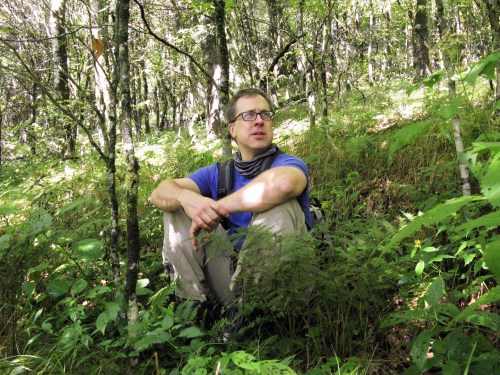
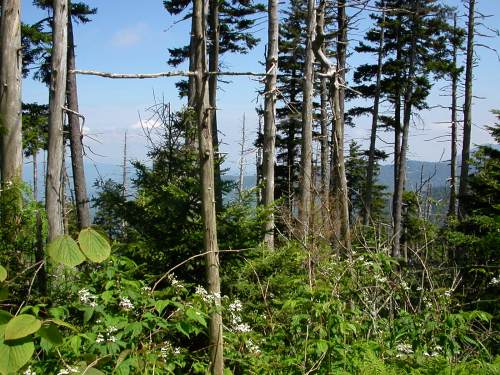
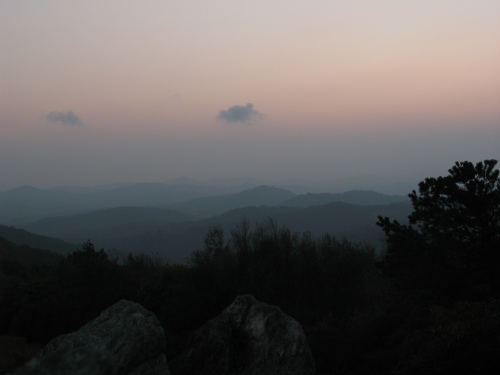
Appalachian Trail near Clingman’s Dome, 2003

[with two poems by Kathryn Stripling Byer]

.     .     .     .     .     .     .

Summer has skimmed the high ridge like a chimney swift, rarely perching for long. Now on September mornings you can see your breath. First frost certainly won’t dally. Above 6,000 feet you wonder, Where is the South in Southern Appalachians?

And what about these bleached spines and gnarled knucklebones? This phalanx of snags that palisades the highest elevations against the green upon green below? The balsam wooly adelgid arrived on Clingman’s Dome in 1957. By the 1980’s the tiny insect invader from Europe, order Hemiptera, had destroyed more than 90% of the Fraser Fir in Great Smoky Mountains National Park.

This year, though, the Park Service has declared a tenuous truce. Some of those dead snags are forty years old but younger trees spared by the adelgid have matured and are making fertile cones. The very oldest trees, with thicker bark, also seem less susceptible. The insects are still around but you have to hunt for them, whereas during the earliest infestations biologists described the branches covered in wooly bugs as if they had been “whitewashed.”

What is the fulcrum of this new equilibrium? Perhaps the adelgid found easy pickings among whole communities weakened for decades by acid deposition, bad air. Coal-burning power plants up the Appalachian ridge to Canada have added scrubbers. The red spruce that had stopped growing in the ‘80’s are laying on new rings of cambrium. Leave a patch of ground alone long enough and it will grow into what it is meant to be.

Or will it? Depends on what you mean by leave alone. The fir that survive are a little more resistant to the insect, a little more acid tolerant. But what happens as their subalpine microclimate becomes less like Canada and more like Atlanta? Scrubbers remove the nitrogen and sulfur that oxidize to form acids but when you burn carbon you get carbon dioxide. Can’t scrub that out. How many degrees of warming can Fraser fir tolerate? Go higher, it gets cooler. Here in the Park you can’t go any higher than Clingman’s Dome.

Mountain Angelica, Angelica triquinata (Apiaceae - parsley family)

.     .     .     .     .     .     .

Last week I shared two poems from Kathryn Stripling Byer’s first book (1986). The two poems that follow here are from her final book, Trawling the Silences, published in 2019 two years after her death.

Kay Byer takes me into wild places and she brings me home. She names the earth, just naming a thing is a prayer, and she leaves nameless the mysteries that mist from her verses into my soul. She has left this earth, and she has left this earth to me to hold close for the days I will remain. Notice. Learn. Cherish. Tell it.

.     .     .     .     .     .     .

Three for My Trail Guide
for Jim

1.

Ascent

Before I can catch
my breath you right away
start to identify

Wild Ginger,
Mayapple,
Bloodroot.

I’m dizzy with switchbacks
I see rising into
the hardwoods you hail

Sarvis,
Sycamore,
Tulip Tree.

Trillium sweeps down
the hillside like angel wings
come to rest creekside.

You chanting hepatica,
stonecrop, anemone,
we climb until

we reach the summit,
where underfoot
some stubborn lichen

you can’t name
has already claimed
the best view.

2.

Star Grass

You name it
and there it is
at the edge
of the outcropping
over the Gorge.

Not to worry,
I placate the ravens
that harry us,
we won’t be lingering
long in your aerie.

See? Even now we are
striding away
into star grass,
its small spikes of clear
recognizable light.

3.

Galax

Squatting behind bushes,
I smell it nearby, neither bear scat

nor carrion vine, to which naturalists
liken its scent, but the breath

of an old woman lowering herself
to her chamber pot, sighing

as I heard her sigh while I tried
not to listen. Hoisting my backpack

I leave her behind in the underbrush,
glad to be back on the trail

with you, sidestepping tree stump
and blowdown, splashing through

creek bed, striding from switch back
to switch back toward sky we see,

step by step, open its window,
when, almost to summit, I stop.

Breathing hard. The scent
of her following me.

Kathryn Stripling Byer, from Trawling the Silences (Jacar Press, 2019)

.     .     .     .     .     .     .
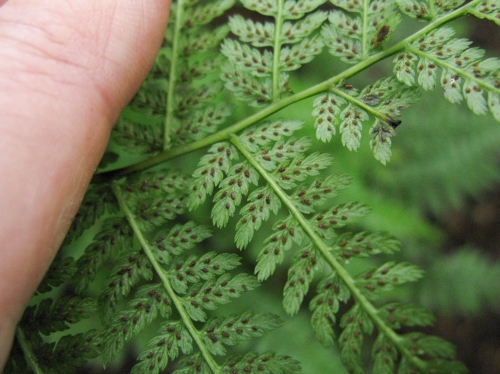
Silvery Glade Fern, Deparia acrostichoides (Dryopteridaceae - Wood Fern Family)

.     .     .     .     .     .     .

Trawling the Silences

This end-of-March day, I’d rather watch hawks surf the
thermals than contemplate what lies ahead.
Or behind in its wake. In the few hours left, let me keep
my doubts shut, my windows wide open, their sheer curtains
billowing. It’s March, after all, having come in
a lamb and departing a lioness, stalking my back yard,

leaving her paw prints alongside the patient ephemerals
rising again out of leaf litter. Squirrel corn. Spring beauty.
The first rue anemone. Today I would rather
read field guides, repeating the whimsical names
of our nice-dwelling mussels about to be wiped out by backhoes
and bulldozers. Pimpleback, Snuffbucket. Monkeyface
Pearlymussel. Don’t let their names be forgotten,
I’d pray if I prayed, though just naming a thing is a prayer,

wrote Simone Weil, turning her face to the almighty
silences. The silences. Where would we be
without them, what were we, what will we be, oh to be,
and again be, that damn linking verb. I’d rather be tracking
my lioness up to the rim of that mountain top,
I’d rather let be and let go. Let the anemone
cling, the hawks soar, the lioness squander another day
trying to find what she’s looking for. Give her another day,
I ask the Almighty. Give the birds one more day
scolding the rapscallion squirrels stealing birdseed.
I rest my case, carapace, my own little voice trawling
the silences, the bully wind boasting its presence in present-tense,
no linking verb to shut down the show. Let
my lioness lounge in the sally grass. Licking her paws.

Kathryn Stripling Byer, from Trawling the Silences (Jacar Press, 2019)
 

.     .     .     .     .     .     .

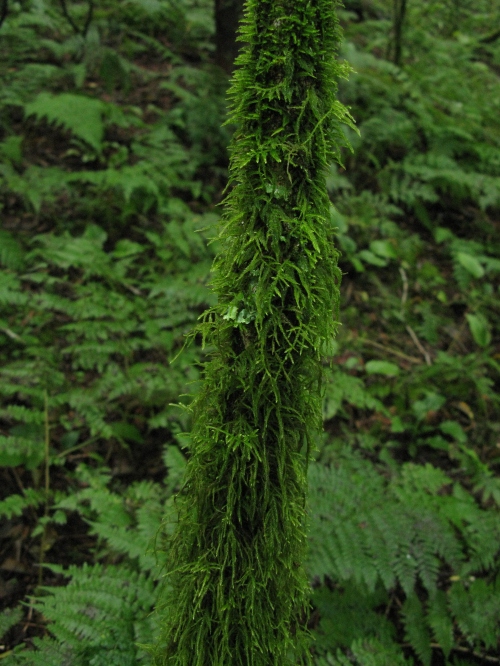
Spruce-Fir forests covered vast areas of the Southeast when glaciers reached their southernmost extent 18,000 years ago. As the glaciers retreated north the Spruce-Fir communities also retreated to higher elevations and now remain only along the highest peaks and ridges above 4,000 feet elevation, mostly higher. Clingman’s Dome at 6643 feet is the highest point in Great Smoky Mountains National Park and indeed along the entire Appalachian Trail. Its impressive swath of Spruce-Fir is also home to the rare Jordan’s Red-Cheeked salamander (Plethodon jordani) found only in the Park. The naturally acid soil and severe climate limit biodiversity compared to lower elevations, but other distinctive high elevation species include mountain ash (Rose family), mountain wood sorrel, mountain asters, glade fern. After sixty years the Fraser Fir seem to be surviving the balsam wooly adelgid invasion, air pollution, acid rain; it remains to be seen how long they will remain in the face of advancing climate change.

from SNAKE DEN RIDGE, A BESTIARY, illustration by Linda French Griffin

from SNAKE DEN RIDGE, A BESTIARY, illustration by Linda French Griffin

.     .     .     .     .     .     .

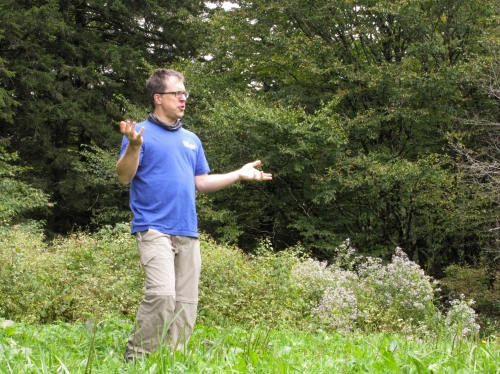
Photos by Bill Griffin from Southern Appalachian Naturalist Certification Program; Southern Appalachian Ecology, September 2020, Great Smokies Institute at Tremont; instructors Jeremy Lloyd and Elizabeth Davis.
 

.     .     .     .     .     .     .
IMG_1822

IMG_1609

Read Full Post »

[with two poems by Debra Kaufman]

Deep shade, red spruce, heavy moss – the trail switches up, cuts back, winds steadily higher. We can smell the transition, conifer tang, slow decomposition. We can feel it on our faces, in our pores, sweat cooling, wraith of mist blown up the ridge to envelope us. And we feel it somewhere deeper.

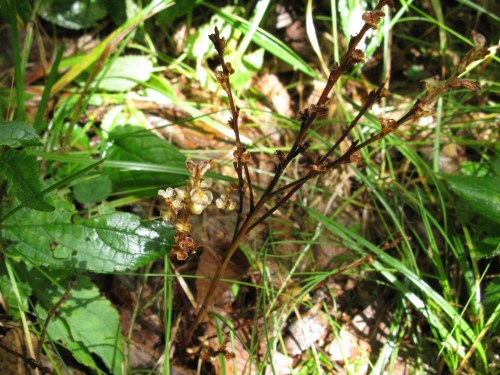
Something changes, so gradual we sense it before we know it. Daylight creeps through, one tree with toothed sun-colored leaves, then two; smell of spring and sweet flowering even at the end of autumn; witch hobble and pale mountain asters give way to dwarf goldenrod. Look, here are beech drops, flowers faded, seeds set, never green, their skinny bodies and appendages like effigies set among the trees they parasitize. We stop and breathe. Again, deeper. This is beech gap.

Leave a patch of ground alone long enough and it will grow into what it is meant to be. Its personality is in its community. Why does this beech gap persist? Its elders, Fagus grandifolia, stunted and twisted in communion with mountain maple, wood ferns, sedges – why not fir and spruce intruding? Elevation, precipitation, mountain aspect, soil pH? Centuries-old seed repository in the duff? Visitation by warblers, jays, and small mast-seeking mammals? Protection by allelopathic residues? Protection by mountain spirits?

All of these may define but don’t explain. It is the community that becomes itself: shallow spreading roots and pervasive mycelia, leaf and frond, sporangium and ovule, every one essential to the personality of place.

And you and I? We may choose how tall we stand. We choose which way we face, whether we learn from our elders, teach our children. We rest here for a few minutes and commune with this other. The silence of a ridge-crest glade: fragile or resilient? Retreat or restoration? Will we descend from the mountain and bring this peace, this purpose, into our own communities?

Beech drops, Epifagus virginiana, Orobanchaceae (Broomrape family)


.     .     .     .     .     .     .

These two poems by Debra Kaufman speak to me of reverence and restlessness, of longing for community and the fear of isolation. Are we welcome on this earth and will we welcome others? Will we create more than we destroy?

As described on the cover of her book, God Shattered, Kaufman discovers how personal disillusionment can be a guide to finding the godly within ourselves. These poems lead us to contemplate and understand our place in this fragile world.

.     .     .     .     .     .     .

Great White
An angel is nothing but a shark well-governed.
– Herman Melville, Moby Dick

Everyone carries a shadow.
The less it is embodied in the conscious self,
the blacker and denser it is.

Does a savage self always lurk
just below the surface,
on the hunt, no matter

our good intentions? Is our higher
nature ready to do battle against the dark,
harpoon at the ready?

If, as the Buddha says, there is no I,
does awareness reside
between empty spaces?

I understand so little.
But I can see Aleppo is rubble,
its people scattered;

anyone who listens can hear the cries
of girls being shuttled into brothels,
can imagine comforting someone suffering

here or half the world away.
How do we stop what is sacred
from being ravaged,

witness life out of balance yet not despair?
There must be ways
toward doing what is right.

Why else, as Job asked, would
light be given to a man
whose way is hidden?

The great white shark
is nearly extinct. It can sense
a beating heart over a mile a way.

.     .     .     .     .     .     .

Welcome

You, one of seven billion born
helpless, nearly hairless,

one more chimp-cousin
in our midst:

Will you be swaddled,
neglected, anointed,

will you breathe air
that smells like rain?

Which foods will sustain you,
upon what ground

will you walk? What storm,
fires, floods will sweep

over you, what languages
will you learn, what

dances, what prayers?
Here is my hope for you,

little stranger: may you feel
beholden to this wondrous planet,

may you take your hungry,
humble place in it,

may you dedicate your life
to making it a world worth

revering, holding, passing on.

poems by Debra Kaufman from God Shattered, Jacar Press, © 2019

.     .     .     .     .     .     .

Debra Kaufman grew up in the Midwest but has lived in North Carolina for thirty years. She has published three poetry chapbooks and four full length poetry collections: God Shattered, Delicate Thefts, The Next Moment, and A Certain Light.

.     .     .     .     .     .     .

The Beech Gap is a rare subtype of Northern Hardwood Forest, found scattered in small patches surrounded by Fraser Fir and Red Spruce in Great Smoky Mountains National Park and elsewhere at the highest elevations of the Southern Appalachians. The Beech, mixed with small numbers of Buckeye, Birch, and Maple species, are stunted by the cold climate and high winds, with an open understory but relatively rich herb layer. Some patches in the Smokies are fenced to prevent destruction by invasive non-native wild pigs. Why this seemingly stable climax plant community remains stable and is not overtaken by Spruce-Fir remains a mystery.


.     .     .     .     .     .     .

All photos by Bill Griffin from Southern Appalachian Naturalist Certification Program on Southern Appalachian Ecology, September 2020, Great Smokies Institute at Tremont; instructors Jeremy Lloyd and Elizabeth Davis.

.     .     .     .     .     .     .
 

IMG_7952


Read Full Post »

Our habitual experience is a complex of failure
and success in the enterprise of interpretation.
If we desire a record of uninterpreted experience,
we must ask a stone to record its autobiography.
Alfred North Whitehead, Process and Reality

One day the world’s unhappiest man decided to just stuff it all. His business partner had cheated him out of a fortune. His wife had left him. For the business partner. His son was in Rehab. His best friend had gotten himself elected to Congress . . . Republican. Every day the post delivered another stack of rejection slips. “Screw it,” said the world’s unhappiest man.

The world’s unhappiest man had read that scientists had discovered the world’s happiest man living in a small monastery in Nepal, so he tossed an extra pair of socks into a backpack and got on a plane, a bus, a donkey cart, a yak, his own two feet. As he walked upward through the mountains he gave his last rupee to a beggar, but he wasn’t happy. He recalled the happy days with his wife and truly wished for her to be happy again, but he wasn’t happy. He finally figured out that his son was going to have to take responsibility for his own life, but he wasn’t happy. He totally forgot about politics and for a minute he was almost happy. It occurred to him that he would probably write a poem about all this and he thought, “I’ll be happy if it’s any damn good.”

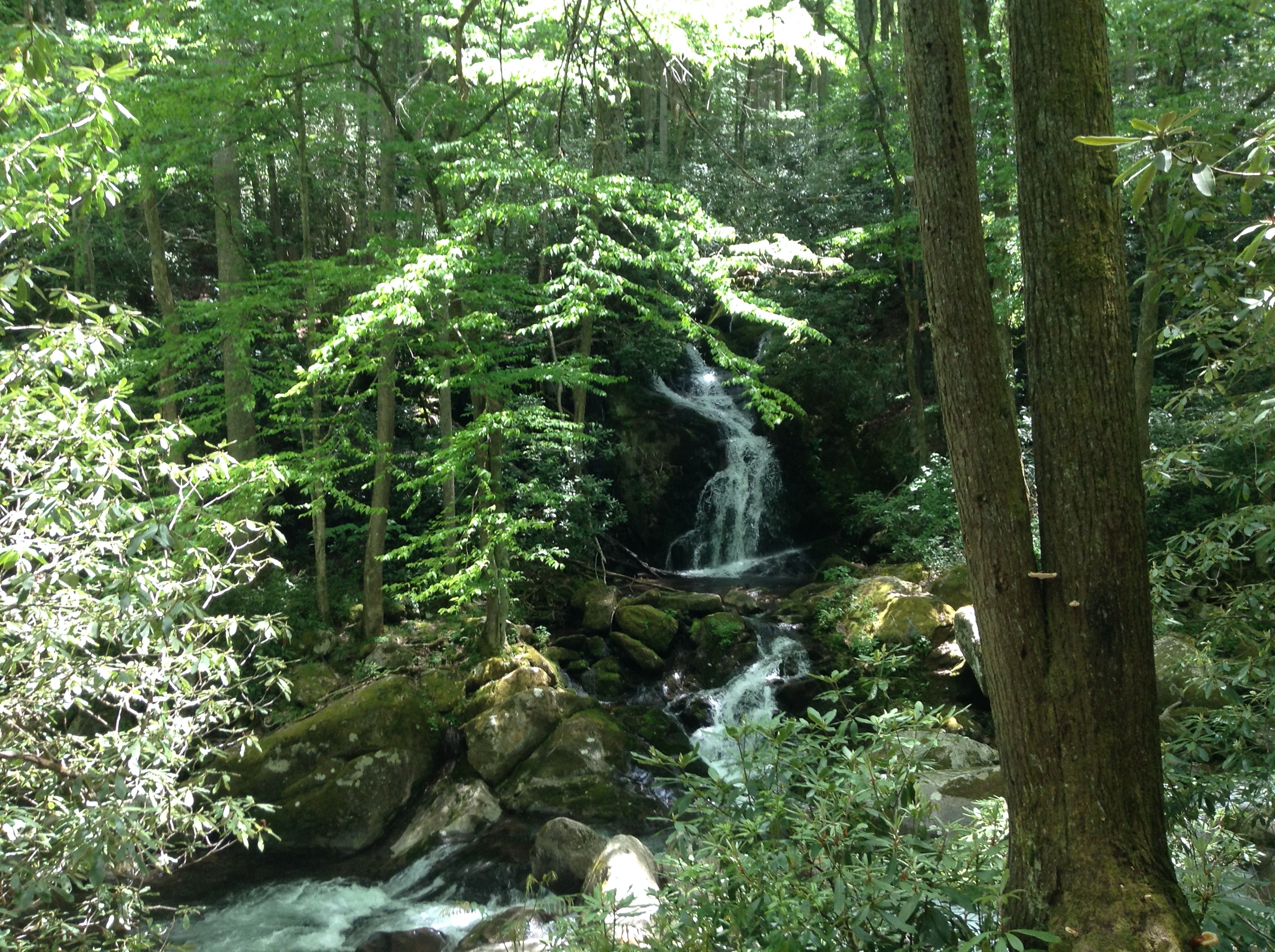
Mouse Creek Falls, GSMNP, 5/2015

A funny thing happened. The clean mountain air, the music of singing birds and laughing brooks, the mighty Himalayas on the horizon – yeah, yeah, whatever. He wasn’t happy.

The world’s unhappiest man finally arrived at the monastery with holes in his shoes, holes in his socks, holes in his heart. He crept into the chilly closet where the world’s happiest man lived and waited while the monk finished his meditation. When the monk opened his eyes, he smiled and welcomed the world’s unhappiest man and said, “People have called me the world’s happiest man, but now that you are here with me my joy is complete.”

The world’s unhappiest man sat down next to the monk and began thinking about that.

*      *      *      *      *

What does it mean to be happy? God knows.

But what does it take to be human? Sitting down next to another.

These poems by Richard Krawiec in his new book, Women Who Loved Me Despite, are not often happy, but there is joy in these lines. Not the easy joy of summer mornings and wrens singing, but the hard-won joy of darkness and pain shared with another.

And there is mercy here, dropping as the gentle rain from heaven upon the place beneath. Mercy for the writer who has walked the unforgiving mountain and now sits down to consider. Mercy for us, the readers, who share that walk and that considering and discover, not happiness, but the possibility that we might still be connected, each with the other.

Big Creek, Walnut Bottom, GSMNP, 5/2015

*      *      *      *      *

by Richard Krawiec

Lux Aeterna

I stand on the corner of a downtown street
tapping my feet to a klezmer trio
frenzied strokes of bass and fiddle,
rolling runs from a concertina,
conjuring twirling scarves and gypsies.
In five minutes the bells will strike,
so I turn and race to my friend’s concert,

enter the Cathedral of All Souls
breathless and sweaty as the singers
begin to raise their voices in Lux Aeterna;
the hush builds until the sopranos
pierce the dark inner encavement,
arched steeple-space misted green
and blue from the stained glass robes
of Mary, Joseph, the infant looking down.

Seated to the side of the main aisle,
I watch an aged man’s breathing
start to slow; he slumps sideways,
caught by a woman’s surprised hands.
Two men dressed in choirboy robes,
rush to comfort; one presses the pules
the other encircles shrunken shoulder,
hugs close a gray-crowned head.

Come Holy Spirit the choir sings,
the mass continues, through cleanse . . .
heal . . . joy everlasting . . . broken loaves
of brown wheat. The singers repeat
the sermon litany . . . blessed are . . . blessed are . . .
while EMS, clad in black, rush in and
crimp the man sideways into a wheelchair.
I leave the wine for the darkened streets.

One girl, a mountain Dorothy,
ripped leggings and shiny shoes,
gutter-throats an Appalachian lament
to the faceless mannequin in a storefront
window. It’s wearing a party dress
woven from condoms, black skirt accented
with white. The girl turns away from the bills
I flutter, finger-picks a banjo run of escape
taps a rhythm on the brick sidewalk,
toe plates sparking. Above her, night-scattered
stars loom down. She closes her eyes to embrace
everything as light, and nothing as eternal.

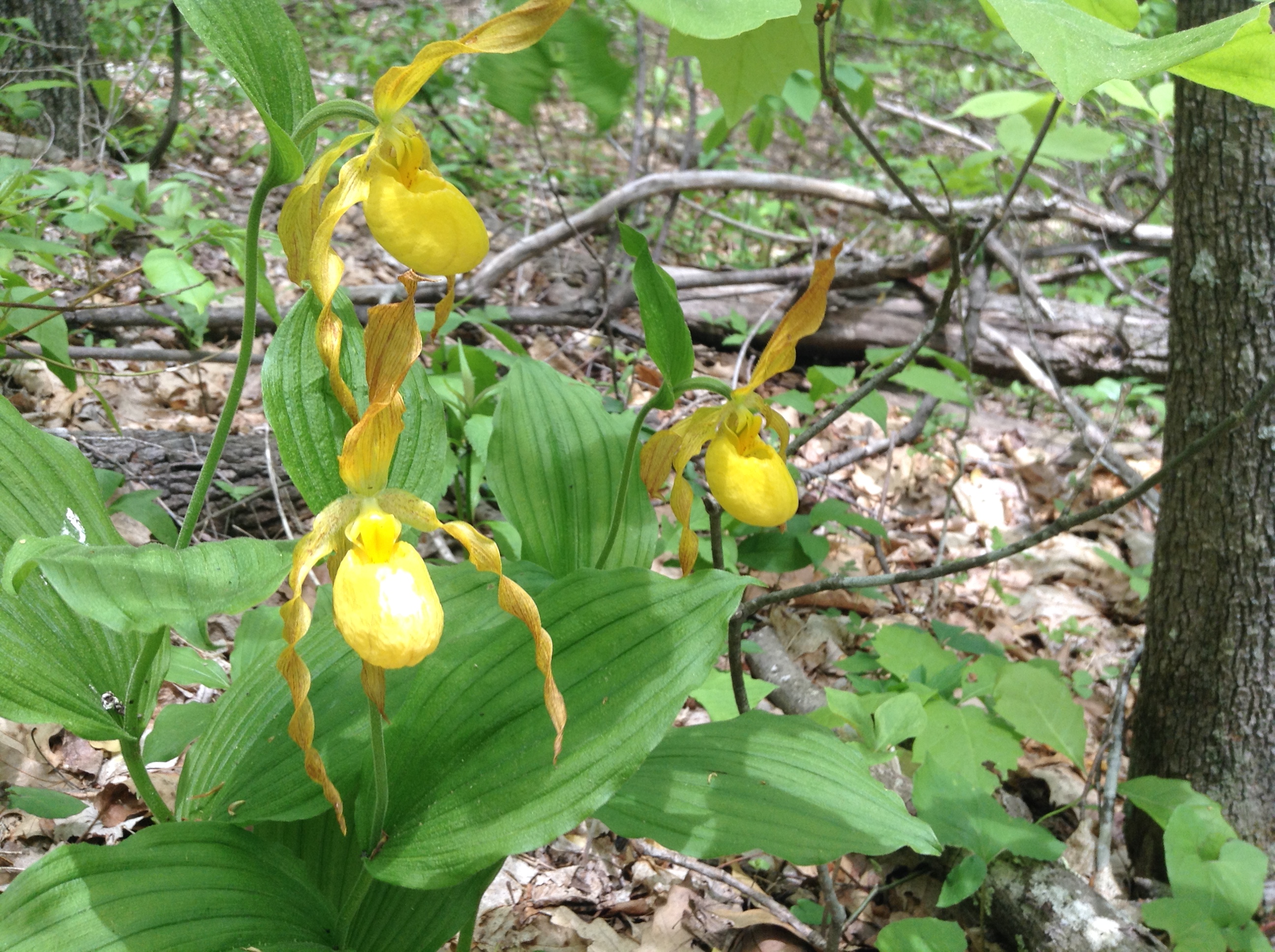
Yellow Ladies' Slippers, Appalachian Trail, 5/2015

*      *      *      *      *

Richard Krawiec – poet, novelist, playwright; editor, publisher, educator – lives in Raleigh, North Carolina. Women Who Loved Me Despite is published by Press 53 in Winston-Salem, which also published an earlier collection by Richard, She Hands Me the Razor.

Richard is the founder of Jacar Press in Raleigh.

*     *     *     *     *

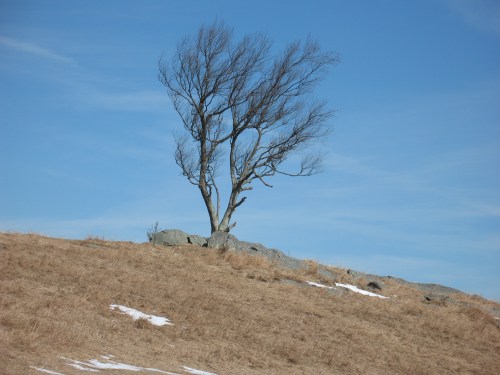
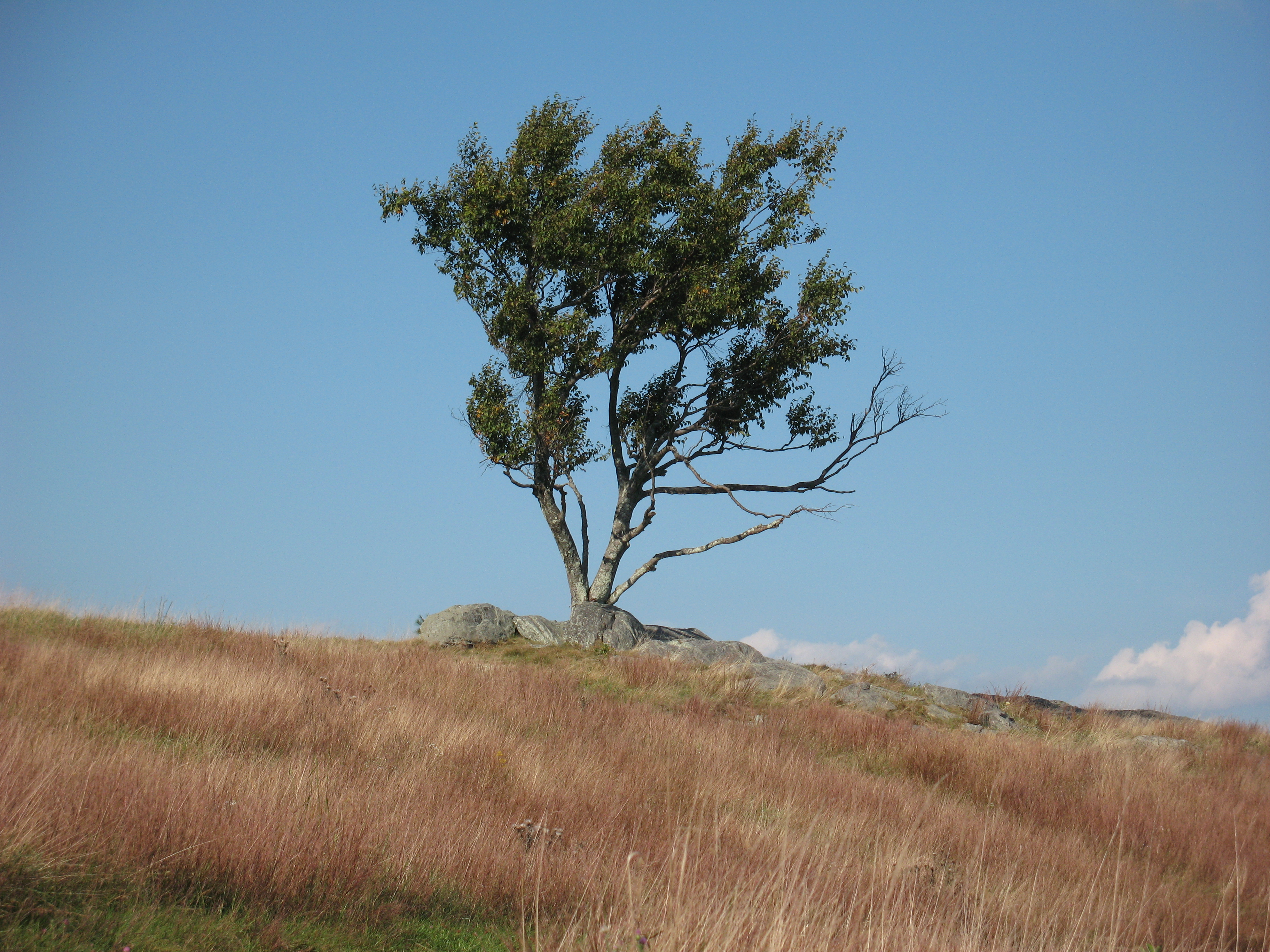
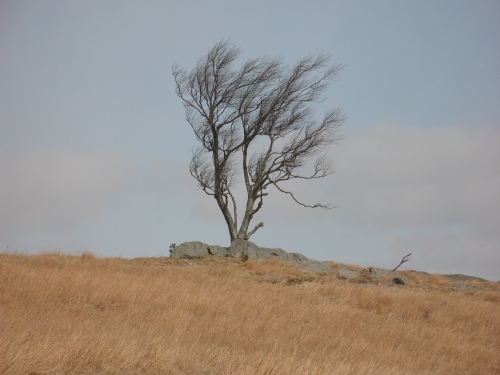
Doughton Park Tree #2


Read Full Post »

« Newer Posts - Older Posts »