Feeds:
Posts
Comments

Posts Tagged ‘GSMNP’

 . 
[with poems by the 2023 Tremont Poetry Cohort]
 . 
Awaken
 .  . 
You came because the river quiets your soul,
the sassafras soothes and sweetgum settles.
Have you gotten your breath? Do you remember who you are?
Leave us, now; it’s our time to sleep. You go, awake.
 . 
Sarah Small / Alcoa, Tennessee
postcard – Mother bear & cubs
 . 
❦ ❦ ❦
 . 
The Little River is singing ‘October Blues’ and I can listen if I’ll just roll down my window. Leaving the Smokies on a Sunday morning, who would have imagined such a glut of traffic, but I can make the choice to gentle my right foot and blend with the flow. And here on the right comes another choice: I pull off at Chimneys and flush the press of schedule and itinerary from my mind.
 . 
A ten minute climb into old growth hardwood cove and road noise no longer penetrates. Every few steps another chipmunk whistles its alarm. Fecund – whoever coined that word was smelling this place. The carpet is bright green hepatica saving up to flower in just a few months, the understory is summer seedhead bounty and autumn wood asters blooming like crazy, and the overstory is way up there, crooked and knobbed, reaching and mingling and only allowing an occasional glimpse of Balsam Point.
 . 
I’ve been waiting since breakfast and now I pull out the small slip of lined paper Renée gave me, a personal parting note; she prepared one for each of us in the cohort. “Read it later,” she had said. I’m going to trust she won’t mind if I share one line: “I came to this conference with some heaviness and I’m leaving with light and a sense of belonging.” A mystery, a wonder, an inexplicable blessing that in just a few days eight strangers can so deeply connect.
 . 
 . 
❦ ❦ ❦
 . 
[untitled]
 . 
You’re not a flightless bird,
+++++ your wings held tight
against your breast;
+++++ unfurl your plumage,
Go from here with boldness,
+++++ revel in your glory.
 . 
Jeannine Jordan / Lima, Ohio
postcard – Wild Turkey
 . 
 . 
Community
(the Park speaks)
 . 
Inspire, breath in, be filled with spirit –
think I’d tip you like a funnel and pour
right in? Look around this circle and take
a lesson from the Queen of Connection.
 . 
Bill Griffin / Elkin, North Carolina
postcard – entrance to GSMNP
 . 
❦ ❦ ❦
 . 
Frank fans the deck and asks us each to select one. They’re postcards, of Great Smoky Mountains National Park, face down so we can’t see what we’ve picked. “The card has picked you,” Frank suggests. “What is it telling you about why you are here and what you’ll take with you when you leave?”
 . 
This is our last exercise during our last session of this inaugural Tremont Writers’ Conference. Can it be only three days ago that Frank X Walker introduced himself to us as an artist who speaks Poet? Besides the language of linebreak and word choice, what Frank so incisively speaks is creativity, challenge, connection, community. Oh yes, we learn to critique each other’s poems through his quiet observations. Yes, we engage in color studies and sound studies and we write to prompts. But Frank is not teaching us to be writers – he is teaching us to be human. His carefully considered comments touch our gifts and expose our needs, and even more than that he weaves us seven into a whole whose true commitment is to bring out the best in each other.
 . 
After ten or fifteen minutes of writing – channeling the voice we are hearing in our card’s image – Frank stops us and presents his next to last prompt: now break that all down into four lines. We probably should have seen this coming. We really aren’t ready, though, for his final instruction. He has us each pass our card two people to the left, write our home address on the fresh card we’re holding, then pass it back right to its original owner. Each of us will write our four-line poem on our card and mail it, and in a few days we will each receive a poem from one other member of the cohort.
 . 
We won’t be driving home from this gathering to resume our scribbling in isolation. We will be watching the mailbox (and text messages) with a tingle. We are now a creative family. We are connected.
 . 
 . 
❦ ❦ ❦
 . 
The Experience
 . 
Like me, a yearling bear,
caged and carried away.
You came for the experience.
Imagine me gone. Write it.
 . 
Kim Hayes / Weaverville, North Carolina
postcard – Ursus americanus, Black Bear
 . 
 . 
Somewhere, Sometime
 . 
Sunlight  in this open field
Safely wander, graze
Trust the treeline
Grow. (I am growing, too.)
 . 
Suzanne Bell / Pisgah Forest, North Carolina
postcard – deer graze in Cades Cove
 . 
❦ ❦ ❦
 . 
Connecting People with Nature is the motto of Great Smoky Mountains Institute at Tremont. Amen! In completing the Southern Appalachian Naturalist Certification Program at Tremont, I have felt the web of connections forged there welling up in me and changing me. One begins with the name of a thing, then comes to recognize how it makes its living and gets along with its neighbors, until at last there dawns an appreciation of the deep interdependence and kinship of all life, place, and planet. One living community.
 . 
But if ecology is the study of living communities, poetry also has its ecology. How does the poem bring together all these living bits that make it come alive? Its images, its allusions, its music? How does the poem make its world equally real to or perhaps even more real than the world speeding by outside my window?
 . 
It seems to me that the technique we learn at Tremont, the Naturalist Method, is entirely congruent with the Poetic Method – Pay Attention; Ask Questions; Make Connections; Share. All of this we try to do when we “speak Poet.” And Frank X Walker has certainly enabled every bit of this in us during our few days of communion with mountains, rivers, bears, each other. It is a language of laughter and surprise. It is a language of change and growth. It is a language of discovery, insight, and awe. We are leaving Tremont bubbling with its voice and overflowing with its joy. Poetry, and Nature, are how we connect.
 . 
 . 
 . 
❦ ❦ ❦
 . 

[untitled]
 .
Born on the top, nestled through the sides, tumbled to the bottom.
Again and again.
Those mountains captured and created.
Then they carried.

Renée Whitmore / Vass, North Carolina
postcard – sunrise through mountains in Cades Cove

 . 
 . 

Clouds in my Skin

You are here
Not to burn through the mist
To roll around in the slick slopes
Of your soft hope—this knowing, this peace

Sophia Fortunato / Bozeman, Montana
postcard – mountain ridges fading into blue mist

 . 
❦ ❦ ❦
 . 
The Poetry Cohort of the First Tremont Writers’ Conference, October 15-29, 2023, is Jeannine Jordan, Bill Griffin, Sophia Fortunato, Sarah Small, Renée Whitmore, Kim Hayes, and Suzanne Bell. Our teacher, mentor, guide, and brother is Frank X Walker from Lexington, Kentucky, speaker of poetry, professor at University of Kentucky, and former state Poet Laureate.
 . 
Other instructors at this inaugural conference are Janet McCue (Non-Fiction) and Annette Saunooke Clapsaddle (Fiction) and the featured speaker is Richard Powers, Pulitzer Prize-winning author of The Overstory. Jeremy Lloyd, Tremont Manager of Field and College Programs, has been the primary organizer, assisted by Tremont staff Elizabeth Davis, Erin Cantor, Lyndsey Kessler, education director John DiDiego, and many others.
 . 
This conference was also made possible through the integral participation and partnership of Great Smoky Mountains Association and Creative Services Director Frances Figart. Thank you!
 . 
 . 
 . 
 . 
 . 
❦ ❦ ❦
 . 
IMG_1783

Read Full Post »

[poems by Bill Griffin, John Morgan, Anne McCrary Sullivan]

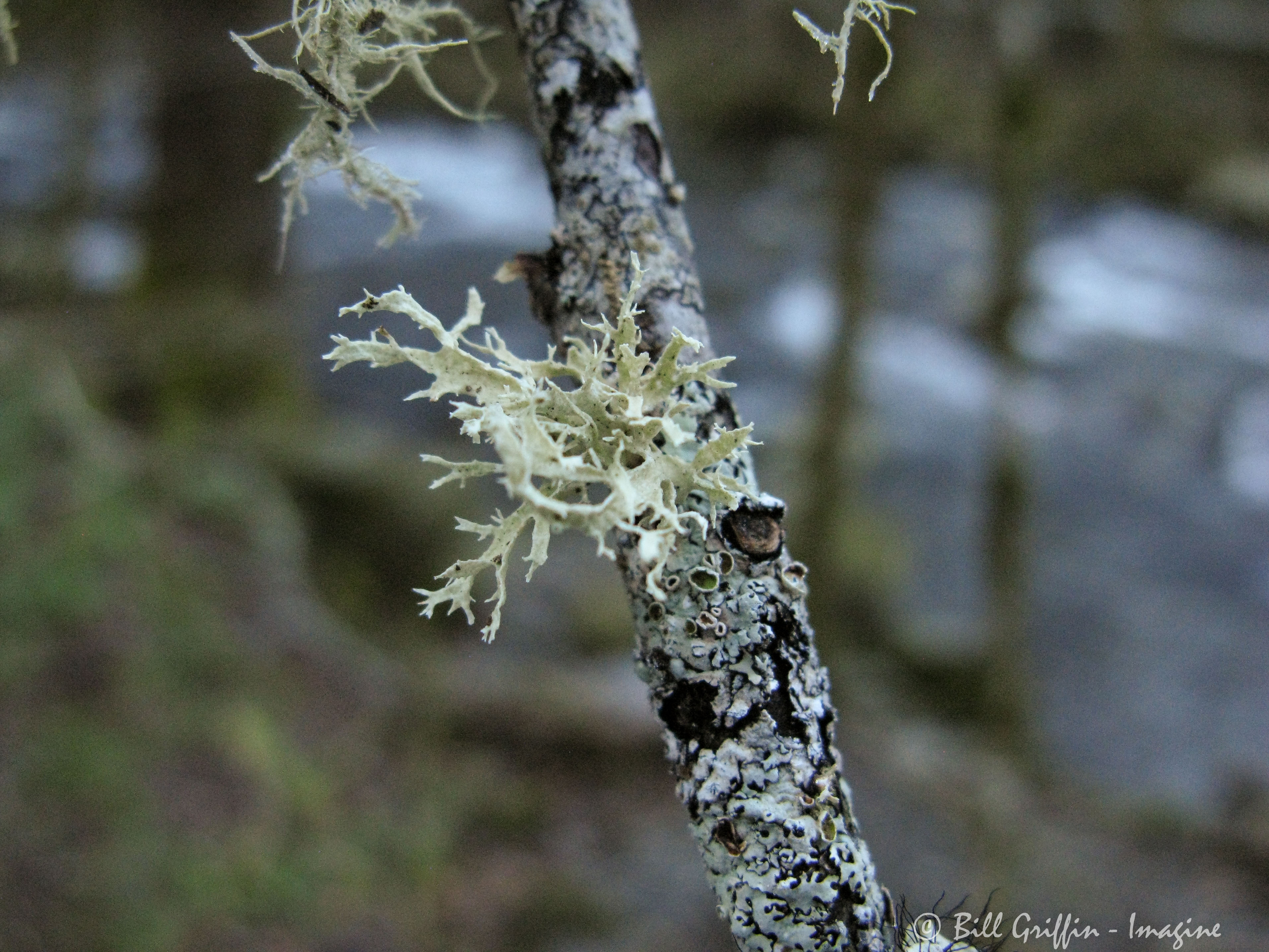
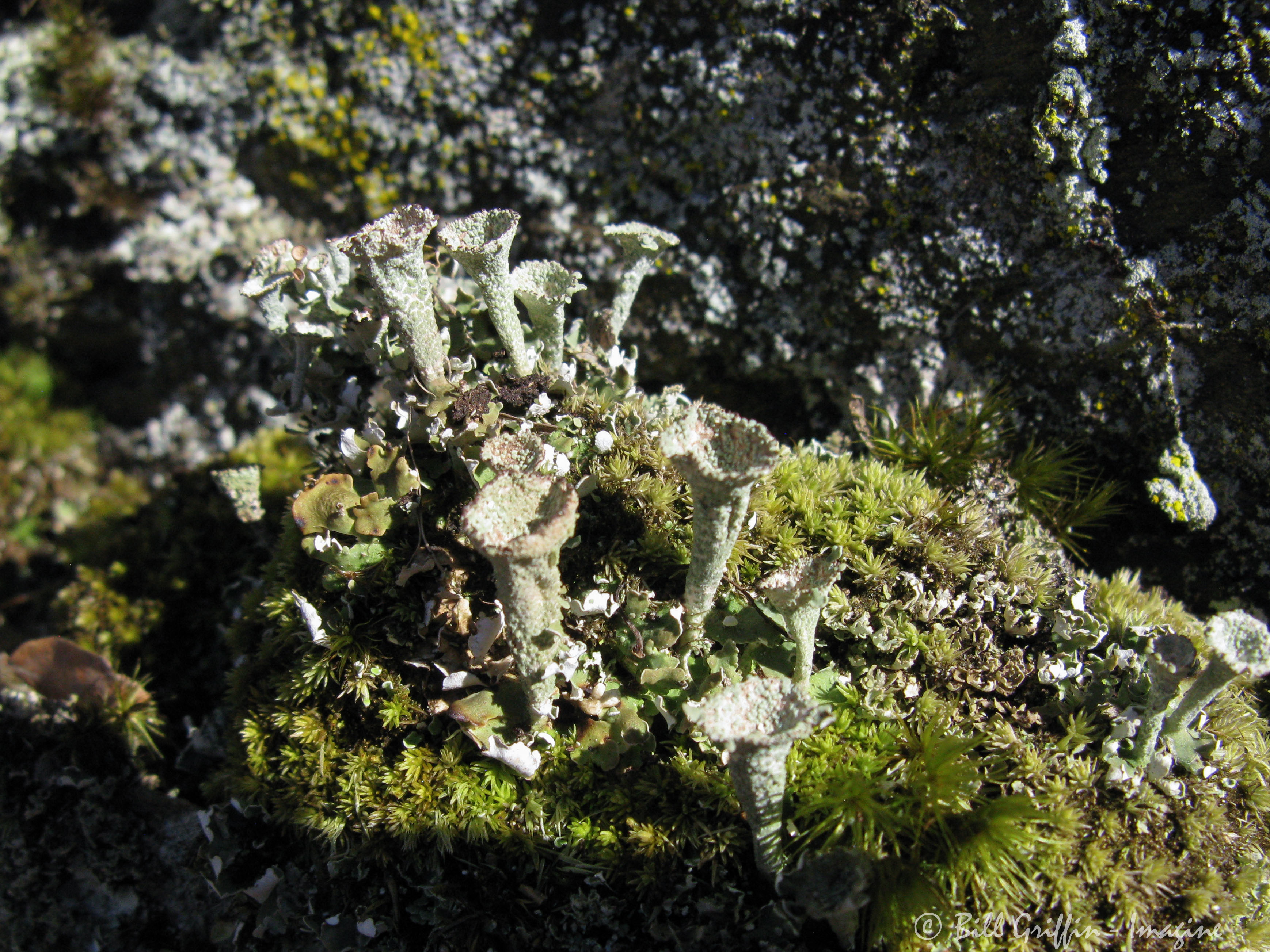
Always something new. Trees I’ve passed a dozen times, these stones, did they always look like this? Oh sure, no doubt those gray-green blotches scattered here & there just so sparked some cryptic synapse of recognition: lichen. But slow down, kneel, look close and learn, understand a fragment of what is happening here and has been happening for too long to grasp. Always something new to discover.

How do they do it? Fungal hyphae, infinitely winding threads coil to embrace their chosen algae, held in their arms like waifs. Separate them, fungus and plant, separate kingdoms, and the textbook shows their single forms: flask of gray goo, flask of green. Let them mingle, though, and they create miniature cityscapes, ramparts, pastorales wilder than the dreams of Seuss.

But that fungal/algal friendship – it’s not all long-stemmed roses and dark chocolate. In school I learned lichen = symbiosis, mutual give and take, but there’s evidence of some darker biochemical power-brokerage at play. Fungus need’s sugar from algae’s photosynthesis to live (or some fungi hook up with cyanobacteria). Algae get a scaffold for stability, a moist enclave, protection from the sun. But fungus tweaks its algae to make them spill more sugar, and no algal cell is ever free to leave. Vaguely sinister.

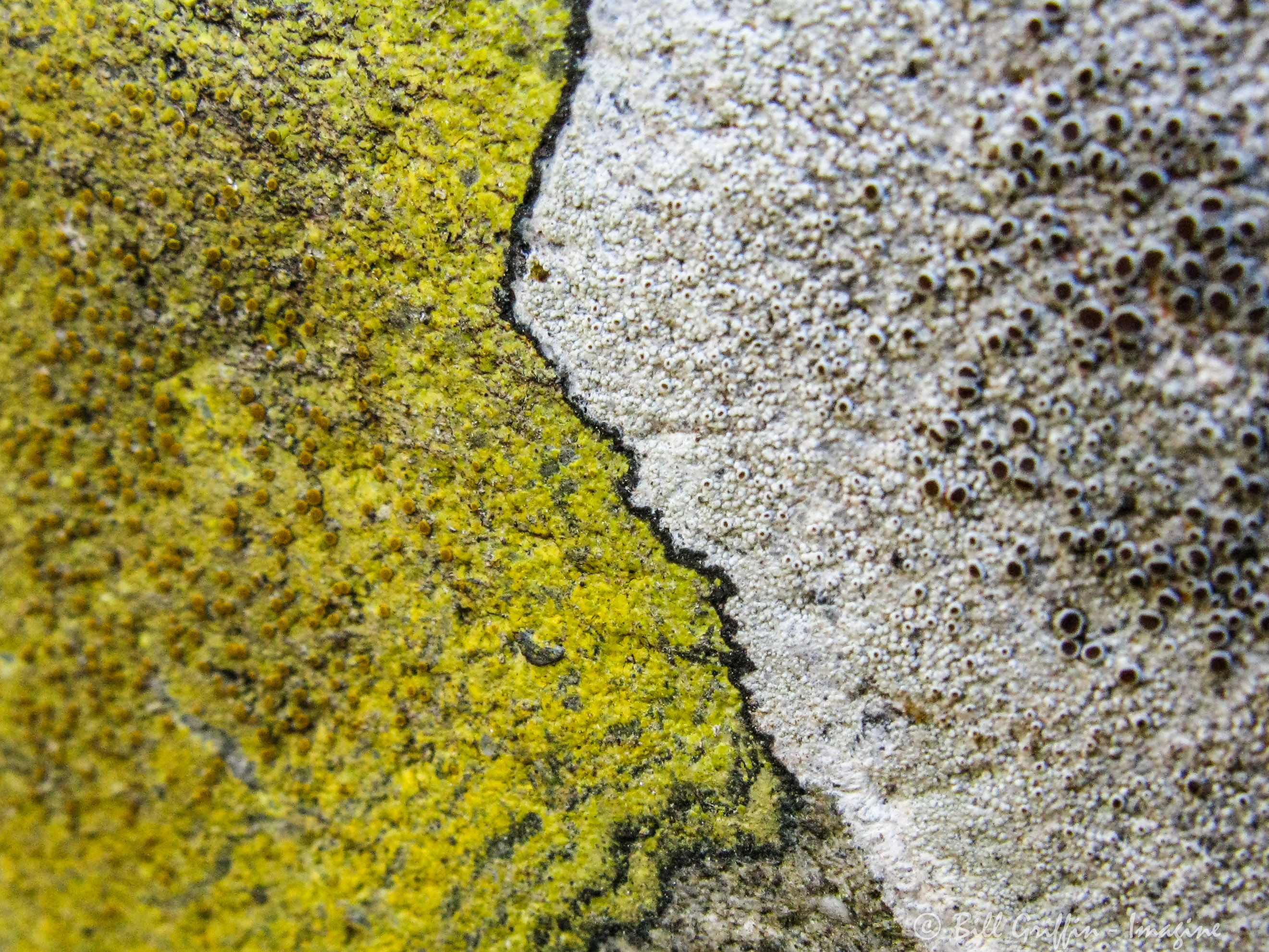
Still the two together create a world neither could create alone. How old is it, that 7 cm patch of speckled gray on the rock face half way up Lumber Ridge, staking its stark black divide between the creeping yellow patch adjacent? How long have they been growing there? Ten years? A hundred? Nine hundred species of lichens in the Smokies (at least!) making infinitesimal advances, making spores or little baby lichen granules for the next boulder over, the next bare patch of bark – stable, solid partnerships of mycobiont/photobiont as old as stone. As everlasting and as changeable, evolving, as this gradually eroding ridge.

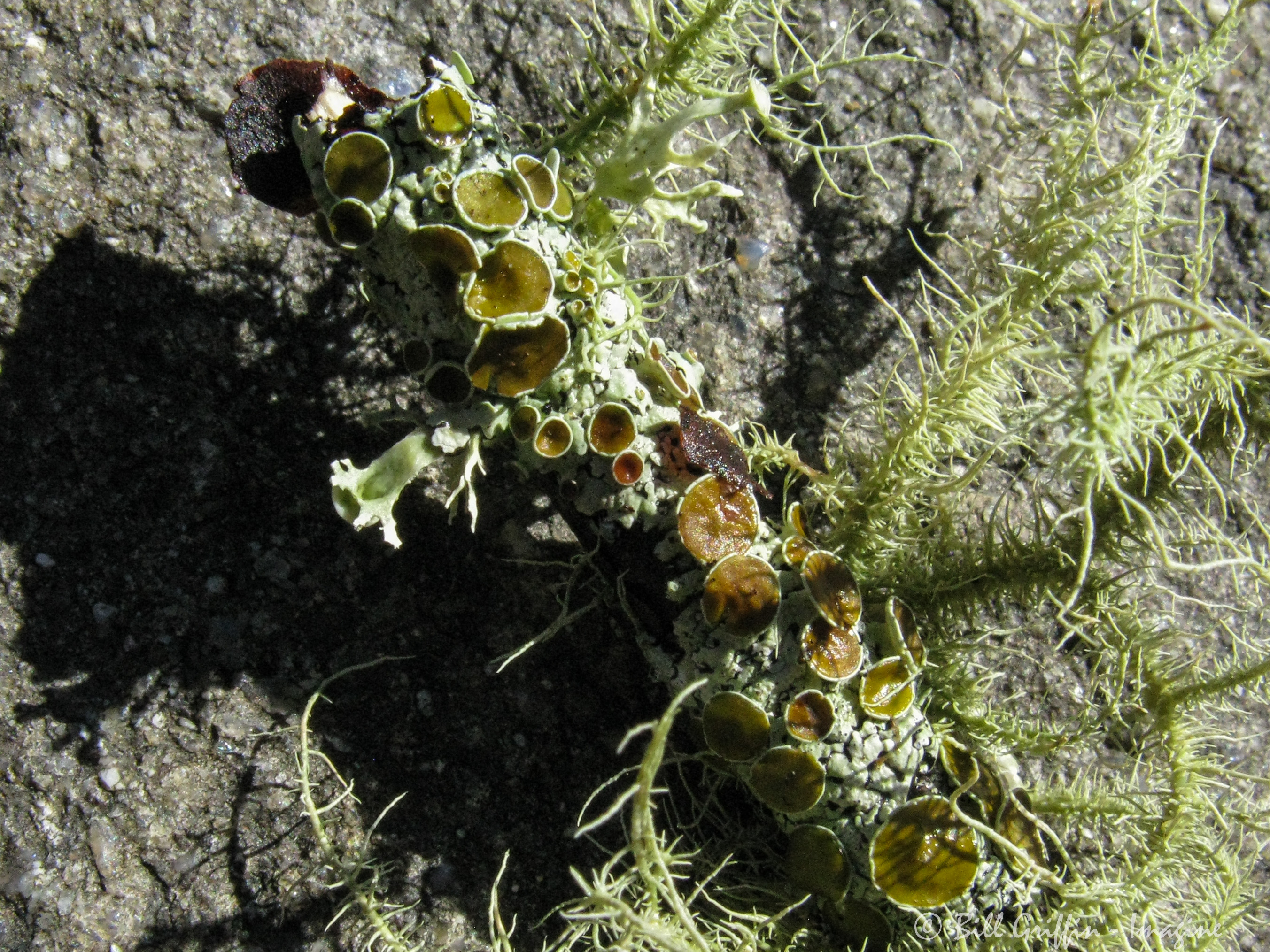
I will never walk this way again without wondering. Actually, I’ll never walk anywhere without lichen – between the boards on my porch, on every tree (look close!), even thriving on that old junker someone’s hauling west on US 421. I can’t help it now, noticing their different forms and colors. Their sweet pocked apothecia. Their spreading. Lichens, steadfast, pursue their wonderfully odd and ancient lifestyle and I am becoming something new.

.     .     .     .     .    .     .

.     .     .     .     .    .     .

Becoming Something New
+++ Lichens are a lifestyle.
+++ Dr. James Lendemer, NY Botanical Garden

Mountains stretch themselves beneath
the undifferentiated open,

overhead unblinking: ridgeback, rock face,
cove & holler to the sky

look like Chigger Thicket, Princess Shingles
cradled in arms of ageless folded earth

upholding hornbeam, hemlock, oak
yet closer each bole the shepherd

of its own beloved
flocks, foliose & fruticose,

spire cleft & spore sac all sustained
upon the nod of small green globes,

embrace of interlacing hyphae.

From two as far removed as earth and sky
comes something new.

Perhaps we shouldn’t name it love, this dance
so intimate, maybe just the way

life gets things done, gets through
with welcome damp, a speck of sun

for sustenance, enfolding arms
to lean into each other, but consider this:

can any two who persevere
in all this ancient making kingdom

ever take more than they give?

Bill Griffin – for John DiDiego and the Likin’ Lichens course of the Southern Appalachian Naturalist Certification Program, Great Smokies Institute at Tremont

Chigger Thicket – Usnea stigosa
Princes Shingles – Cladonia strepsilis
+++ Thanks to Dr. James Lendemer for the common names of lichen
+++ and for opening the door to worlds unseen . . .

.     .     .     .     .    .     .


.     .     .     .     .    .     .

Poetry and the National Park Service

Sometimes a poem takes me to a new place of heart and spirit, like walking through a national park takes me to a new place of earthforms and creatures. These are experiences of curiosity, wonder, awe, renewal – in the encounter I become something new.

The National Park Service is all about poetry. The National Historic Site Longfellow House – Washington’s Headquarters includes many resources from Romantic nature poetry to Emerson and transcendentalism. Other links at NPS.gov range from Mary Oliver and Ed Roberson to Kathy Jetñil-Kijiner and Arther Sze. Over the years many writers have served as poets-in-residence in various parks; poems they wrote during these times are featured online and I’m sharing two today. The Park Service recognizes the importance of poetry at the interface between human person and nature, as is in this online statement:

Unlike most Romantic nature poetry, which primarily focused on the sentimental beauty of nature, many modern nature poems examine ecological disasters or human’s role in the environment’s decline. Through poetry, these “eco-poets” explore this ever-evolving relationship between human and nature. Some poems bring awareness to ecological crises or challenge readers to reflect on their own relationship with nature. Still, some are odes of gratitude to nature or elegies for the changing environment, and others are a call to action.

National Park Service nature poetry resources
Poems by Poets-in-Residence at National Parks
Henry Wadsworth Longfellow nature poetry at NPS.GOV

.     .     .     .     .    .     .

.     .     .     .     .    .     .

Vision

Followed a fox toward Polychrome Pass.
Red smudged
with black along its lean rib-cage,

it rubs its muzzle on a former meal,
ignores the
impatient poet on its tail.

Then nearing the overlook, sun shearing
through low clouds
transmutes the view to glitter. Everything’s

golden, scintillant. I feel like a seedpod wafted
into space and
check my shaky hands on the steering wheel.

As the road crests over its top, boundaries
dissolve. Beside that
sheer intractable edge, I greet my radiant center,

discharge all my terms. How easy it seems
to channel between
worlds, my old self dying into a new,

with nothing firm to hold me here
but love. And that’s
what nature has it in its power to do.

John Morgan
from his poetry collection entitled The Hungers of the World: Poems from a Residency, written after a stay at Denali National Park in June, 2009.

Of his time in the park John writes, “Being in residence means, in a sense, being at home, and having the wonderful Murie Cabin to live in made me feel a part of the wilderness whenever I stepped outside. Over the course of ten days the boundary between myself and the natural world grew very thin. These intimations culminated, toward the end of my stay, with the experience recounted in the poem Vision.”

.     .     .     .     .    .     .

At Season’s End, Singing to The Alligator

I was prepared to arrive at the slough and for the first time
find no gators there, but there was one swimming steadily
away from the boardwalk. I watched.

I began to sing to him (I don’t know why), hum rather.
He slowed down. A coincidence probably. I kept humming.
He stopped, turned sideways, looked at me.

I came then as close to holding my breath
as one can while humming.

He began to submerge (felt safer that way, I suppose)
but did not submerge completely. I hummed.

Slowly, he swam toward me
stopped directly beneath me
hung in the water the way they do
legs dangling, listening.
(Be skeptical if you will.
I know that gator was listening.)

We stayed that way a long time,
I leaning over the rail humming,
he looking up at me, attentive—
until he folded his legs to his body,
waved that muscled tail and left me

alone, dizzy with inexplicable joy.

Anne McCrary Sullivan
from Ecology II: Throat Song from the Everglades, a book of poems inspired by her residency at Everglades National Park.

Of her art Anne writes, “Poetry is a way of seeing. It requires heightened attention to detail and a sensitivity to pattern and relationship. It looks simultaneously at inner and outer worlds, locates connections, and ultimately presents a meaning-charged kernel of experience.”

{Sounds to me like naturalist methods and poetry involve parallel attitudes and aptitudes. – Bill}

.     .     .     .     .    .     .

.     .     .     .     .    .     .

2017-03-06a Doughton Park Tree

Read Full Post »

[with 4 poems by Jane Mead]

What is Leafy yet has no Leaves?

On our way home Mike and I pull over at Newfound Gap but not for the Appalachian vistas: it’s our last stop to hunt lichens before we leave the Smokies. And maybe an opportunity to spread some lichen joy.

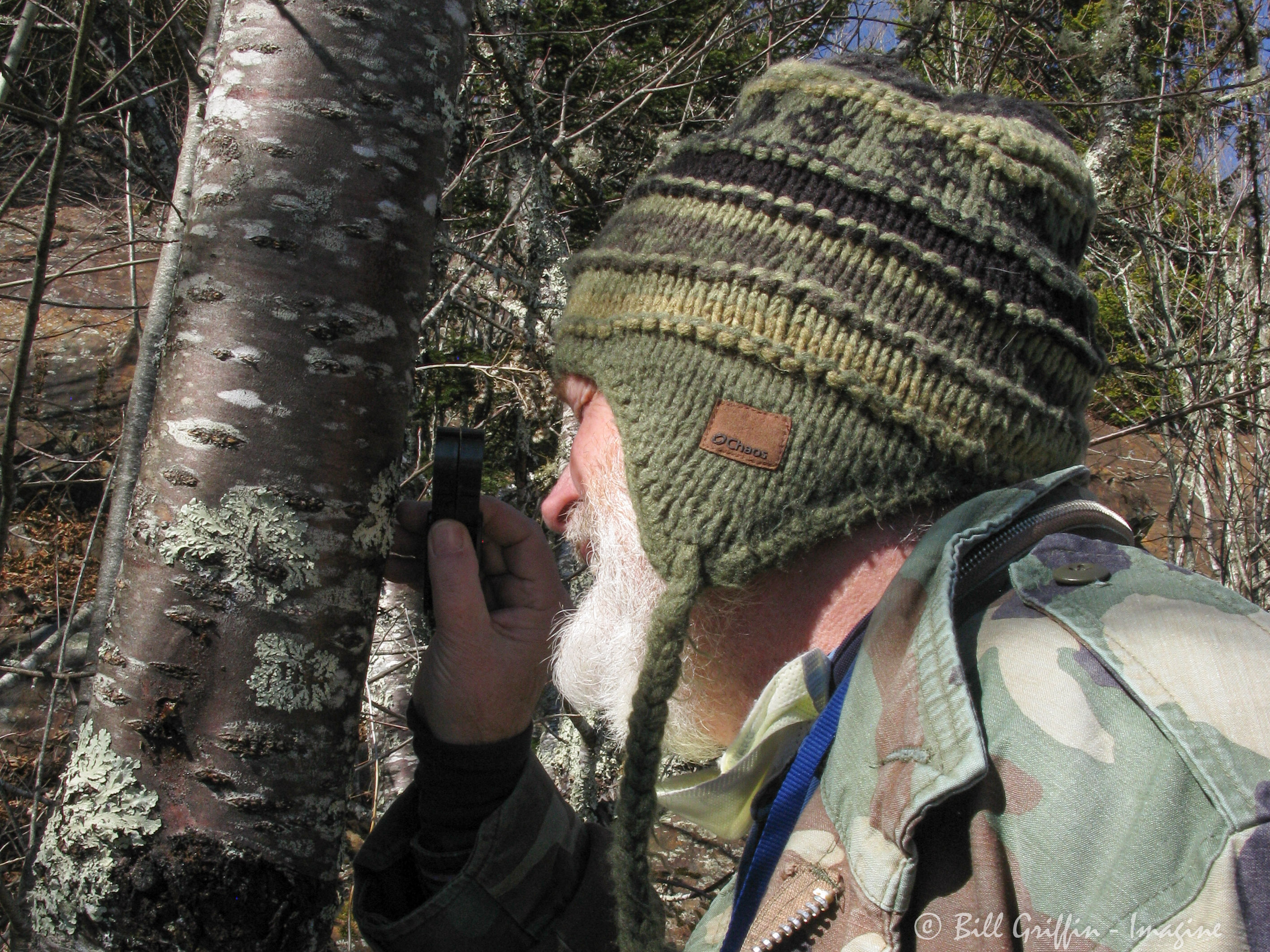
No need to hunt – stop moving long enough and a lichen will find you. Two old guys squinting through magnifying glasses at rocks and bark, though, and it also isn’t long before a passing family asks, “What gives?” “Looking at all the lichens,” Mike answers. “What’s a lichen?” Jackpot! Mike begins to tell their story . . . “a whole little world of fungus and algae” . . . while I wander on.

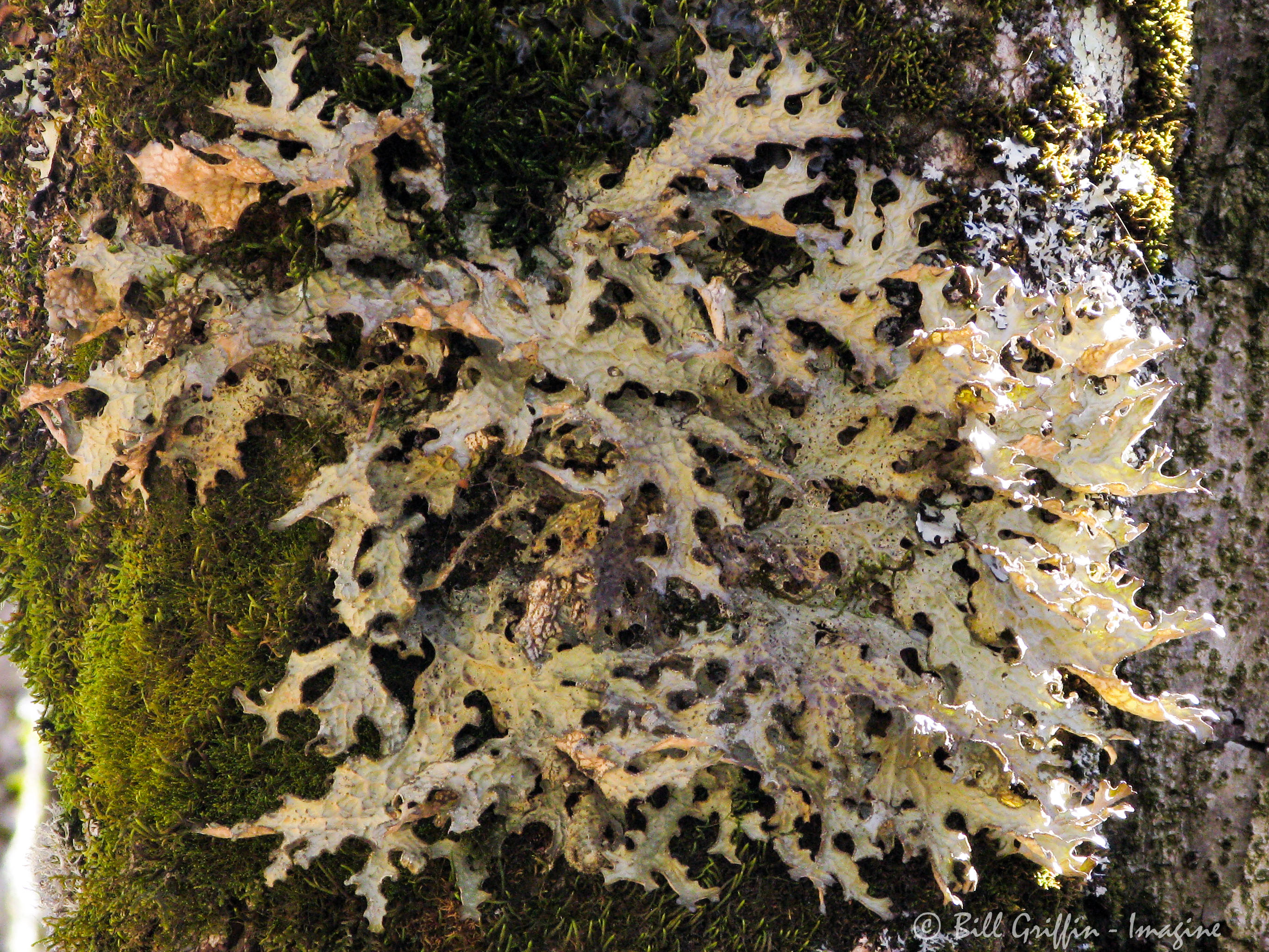
Now a couple asks me why I’ve raised my camera toward this one tree among the millions. Spreading from its bark are crooked fingers, hands of crones, veined, flattened, beseeching. “That’s lichen?” says the woman when I tell her. “I thought it looked like wind had plastered leaves against the trunk.” Exactly, that’s just how it looks. But it has no leaves!

Lobaria pulmonaria: Lungwort, you need a new name. Not even remotely kin to spiderworts, toothworts, liverworts, you are no wort at all – though your presence is atmosphere’s benediction. Draw deeply, my lungs! Exhale wonder! What shall we call you, Leafy without Leaves? Troll’s Greeting? Across the Aisle? Or maybe simply Lichen Welcome.

.     .     .     .     .     .     .

.     .     .     .     .     .     .

Three Candles
And a Bowerbird

I do not know why
the three candles must sit
before this oval mirror,

but they must. –
I do not know much
about beauty, though

its consequences
are clearly great – even
to the animals:

to the bowerbird
who steals what is blue,
decorates, paints

his house; to the peacock
who loves the otherwise
useless tail of the peacock –

the tail we love.
The feathers we steal.
Perhaps even to the sunflowers

turning in their Fibonacci
spirals the consequences
are great, or to the mathematical

dunes with ripples
in the equation of all things
windswept. Perhaps

mostly, then, to the wind.
Perhaps mostly to the bowerbird.
I cannot say.

But I light the candles: there is
joy in it. And in the mirror
also, there is joy.

Jane Mead (1958-2019)

.     .     .     .     .     .     .

These poems by Jane Mead appear in To the Wren: Collected & New Poems (Alice James Books, Farmington ME, © 2019). The book spans three decades of Mead’s life: running her family’s vineyards in Napa Valley; the death of her mother; her own cancer which ultimately took her life. All through her poetry there is a fierce seeking for identity – But always it’s either I or world. / World or I.  Relentlessly she seeks justice for the earth, for creatures, for the self. Poet Gerald Stern writes, “Jane Mead’s mission is to rescue—to search and rescue; and the mind, above all, does the work…. Her poems are a beautiful search for liberation and rebirth.” Nature is not something we write about; nature is what we are.

[Above poem excerpt by Jane Mead is from In Need of a World.
Three bright yellow lichens of the Smokies found at Newfound Gap:
= Xanthomendoza weberi
= Caloplaca falvovirescens, “Colonel Mustard”
= Caloplaca flavocitrina, “Continental Firecrackers”
++++  – – Species identification revised 2/28/2022 after review by Dr. Lendemer]

.     .     .     .     .     .     .

The Argument Against Us

The line of a man’s neck, bent
over welding, torchlight breaking
shadows on his face, hands cracked
into a parched map of fields he has woken –
the gods wanted us.

Think of their patient preparation:
the creature who left the rocking waves behind,
crawling up on some beach, the sun
suddenly becoming clear. Small thing
abandoning water for air, crooked body
not quite fit for either world, but the one
that finally made it. Think of all the others.

Much later, spine uncurls, jaw pulls back, brow-bone
recedes, and as day breaks over the dry plain
a rebellious boy takes an upright step
where primitive birds are shrieking above him.

He did it for nothing. He did it
against all odds. Bone of wrist, twist
of tooth, angel of atoms – an infinity
of courage sorted into fact
against the shining backdrop of the world.

The line of one man’s neck, bent –
torchlight breaking shadows on his face.

There was a creature who left the waves behind
and a naked child on a windy plain:
when the atom rips out into our only world
and we’re carried away on a wave of hot wind
I will love them no less: they are just how much
the gods wanted us.

Jane Mead (1958-2019)

.     .     .     .     .     .     .

The Geese

slicing this frozen sky know
where they are going –
and want to get there.

Their call, both strange
and familiar, calls
to the strange and familiar

heart, and the landscape
become the landscape
of being, which becomes

the bright silos and snowy
fields over which the nuanced
and muscular geese are calling.

Jane Mead (1958-2019)

.     .     .     .     .     .     .

To the Wren, No Difference
No Difference to the Jay

I came a long
way to believe
in the blue jay

and I did not cheat
anyone. I
came a long way –

through complexities
of bird-sound and calendar
to believe in nothing

before I believed
in the jay.

Jane Mead (1958-2019)

.     .     .     .     .     .     .

.     .     .     .     .     .     .

When Mike Barnett and I stopped at Newfound Gap (on US 441 smack in the middle of Great Smoky Mountains National Park) we were returning from the weekend lichens course at Tremont, part of the Southern Appalachian Naturalist Certification Program. We bow down in gratitude to John DiDiego, Education Director at Great Smoky Mountains Institute at Tremont, for convincing Dr. James Lendemer to teach this course. Dr. Lendemer is chief lichenologist at New York Botanical Gardens and literally wrote the book: Field Guide to the Lichens of Great Smoky Mountains National Park (which weighs 1.48 kg, not so much a “field guide” as an entire encyclopedia!).

Dr. Lendemer in his book names L. pulmonaria “Crown Jewel of America” – it is the biggest baddest lichen of them all. Thank you, James – we love lichens! Thank you GSMIT and SANCP and GSMNP. And thanks to all you little fungal hyphae, algal photobionts, cyanobacteria – you look mah-velous.

Resources:

More by and about Jane Mead at Poetry Foundation.

Field Guide to the Lichens of Great Smoky Mountains National Park, Erin A. Tripp and James C. Lendemer, University of Tennessee Press, Knoxville, © 2020.

Great Smoky Mountains Institute at Tremont, Southern Appalachian Naturalist Certification Program.

.     .     .     .     .     .     .

2019-02-09 Doughton Park Tree

Read Full Post »

Older Posts »